
March 10, 2026
What To Wear For Your Engagement Photos
Planning your engagement photos can feel exciting, but choosing outfits that look great on camera (and still feel like you) is where most couples get stuck. The right styling can make your gallery feel polished, cohesive, and natural without looking overdone or forced. In this guide, we will walk you through practical outfit decisions, color pairings, and common mistakes so you can show up confident and photo-ready.

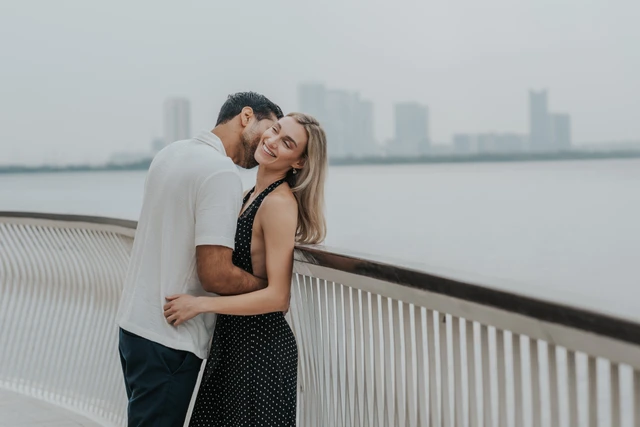
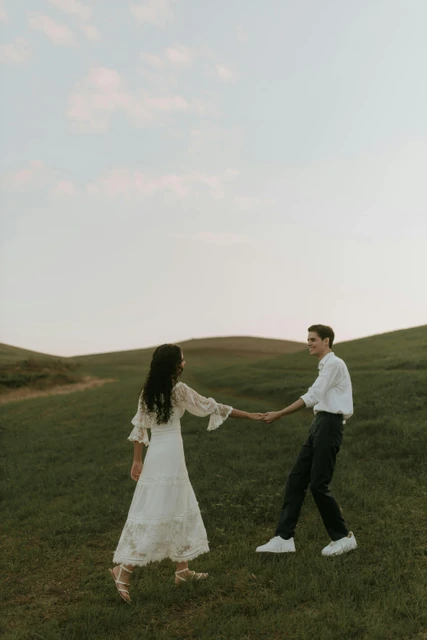
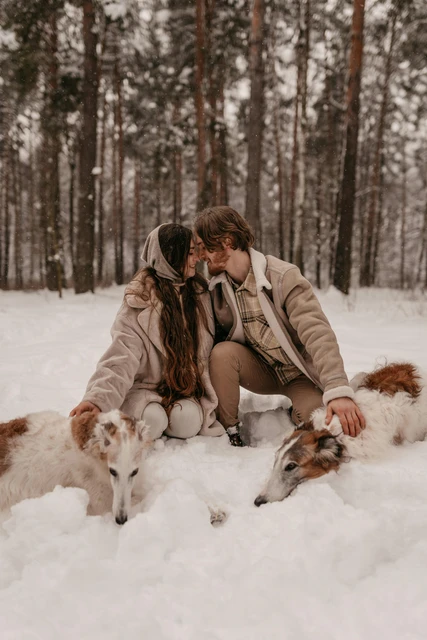
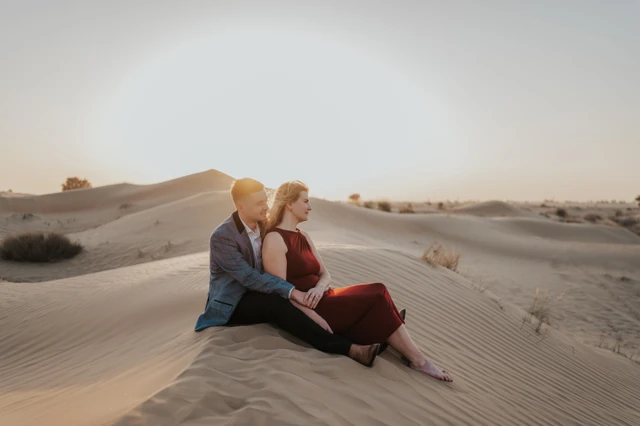
Table of Contents
What to Wear for Engagement Photos: A Practical Couple's Style Guide
This guide cuts through all of that. It gives you a simple system for making decisions quickly, then gets into the details for wherever you are shooting: city streets, coastline, mountains, forest, or desert. By the end you will know exactly what to wear, what to avoid, and how to make sure your outfits work as hard as your photos deserve.


Save This Engagement Outfit Guide for Later
Planning your engagement shoot soon? Save this guide so you can quickly pick outfits and colours that photograph beautifully.
Save on PinterestThe Style Rules That Make Engagement Photos Look Effortless
The first is to go for outfits that work together rather than match exactly. Wearing identical outfits looks stiff and a little old-fashioned. Wearing completely different things with no connection between them can make the photos feel like two separate shoots at the same time. The sweet spot is choosing outfits that feel like they belong in the same world: similar colour families, similar levels of dressing up, similar energy. You do not need to plan this down to the last detail. Just check that your two outfits look good side by side before you leave the house.
The second is the movement test. Before your shoot day, put your outfit on and sit down, walk around, hug someone, spin, crouch, and laugh. If any of those movements make you feel uncomfortable, pull at the fabric, show something you did not plan to show, or make you self-conscious, that outfit is not going to work on the day. The best engagement photos come from people who are relaxed and moving freely. Anything that gets in the way of that will show up on camera.
The third is the 4-step shortcut for anyone who is feeling overwhelmed. Pick one outfit each that feels completely like you. Find two or three colours that appear in both outfits to connect them. Make sure you can both move easily in what you are wearing. Pack one backup piece each in case of weather changes, spills, or wind. That is the whole system. Everything else in this guide is just the finer detail on top of it.
How to Pick Colours and Outfits That Look Great Together
The colours that look best in photos across almost every setting are soft and natural: cream, ivory, warm white, dusty rose, camel, sage green, warm tan, slate blue, and soft terracotta. These tones are gentle enough that they do not fight the background behind you, they photograph well in both bright and low light, and they look good next to almost any other colour in this family. When both of you are dressed in this kind of colour range, the photos feel calm, warm, and classic without looking staged.
A few colours to be careful with. Very bright white is hard for a camera to handle in strong sunlight and can look cold and flat against most natural backgrounds. Very dark colours like black and deep navy are not wrong, but they soak up light in a way that can make the person wearing them look less visible in wide shots. Bold patterns and large prints pull the eye toward the fabric and away from your faces, which is the opposite of what you want. A small, delicate texture or print is fine. A large floral or a busy stripe is not.
Think about what your two outfits look like when you are standing side by side. One flowy and one more fitted works well. Both flowy works beautifully at the beach or in the desert. Both very fitted can look a little stiff depending on the setting. The main thing to avoid is one person feeling very dressed up while the other feels very casual. That gap shows clearly in photos and makes the whole gallery feel a little unbalanced.
City Engagement Outfits: Clean and Camera-Ready
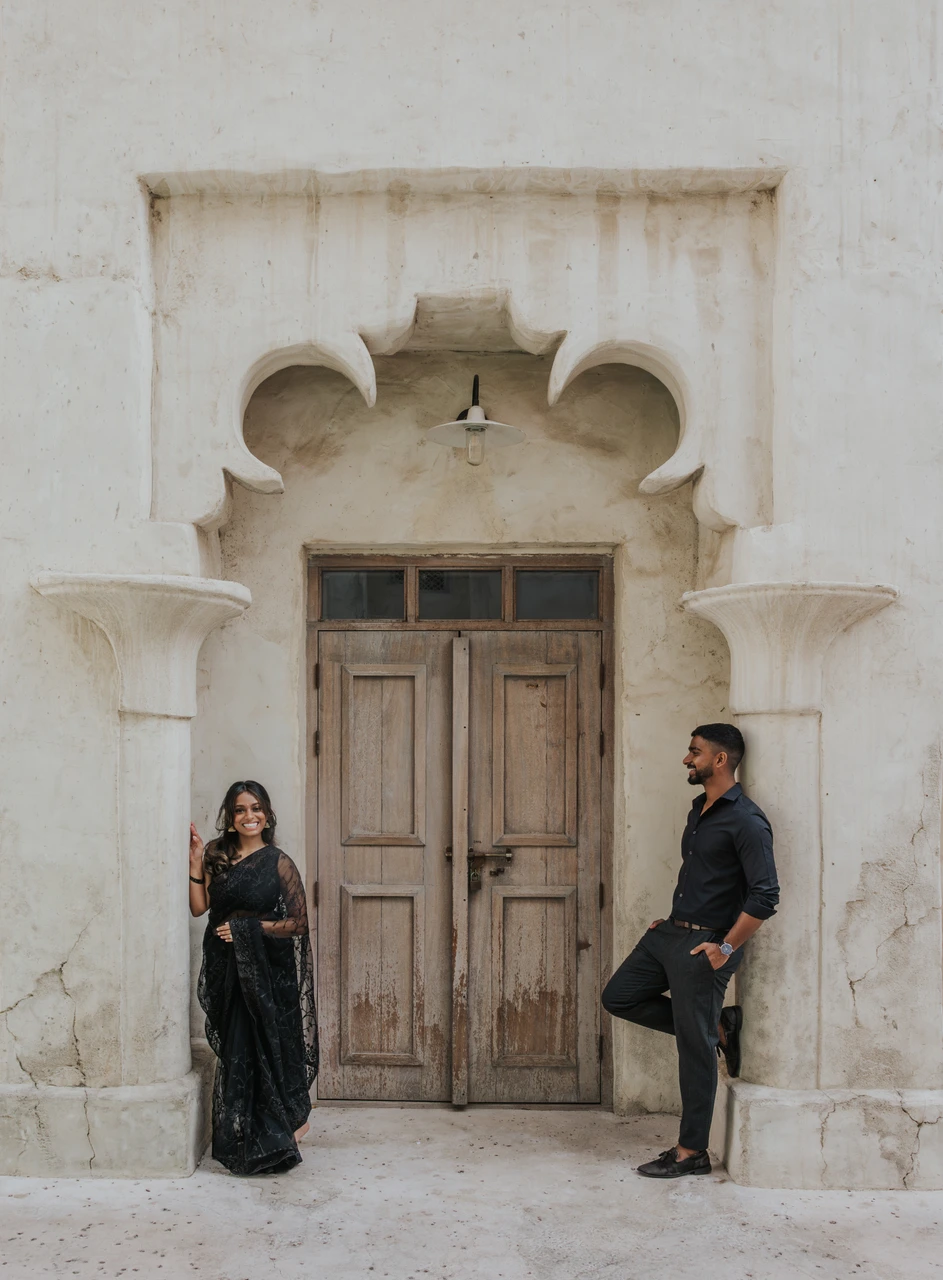
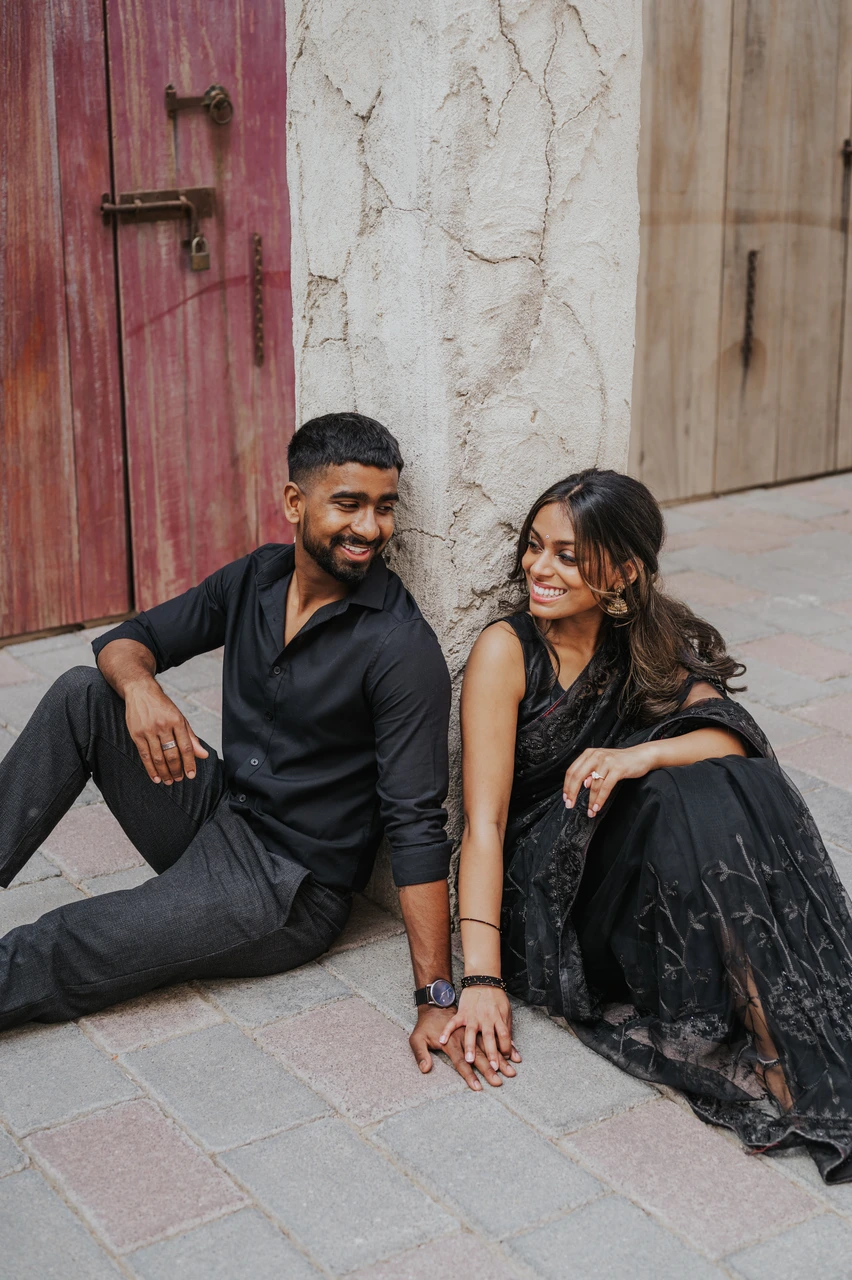
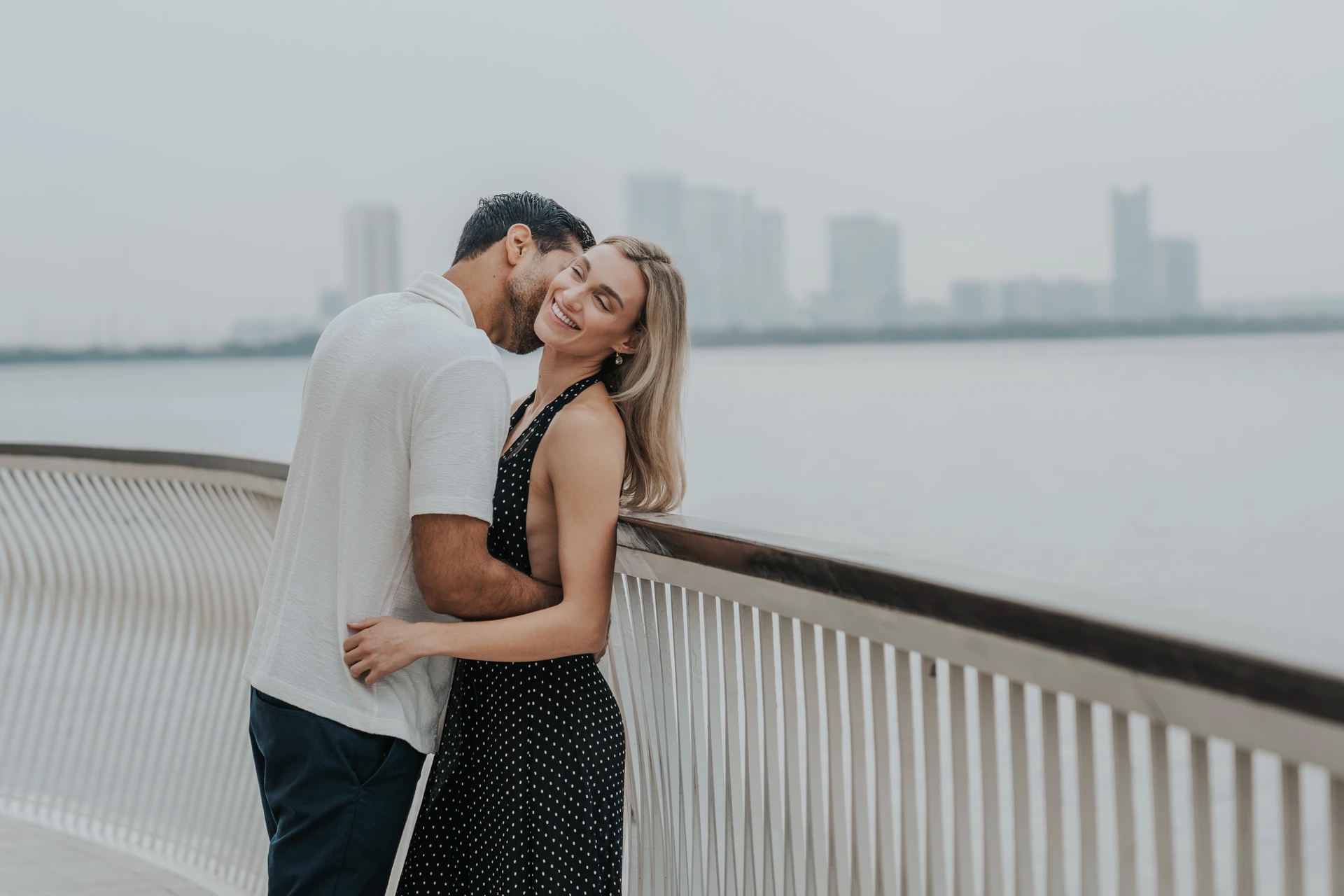
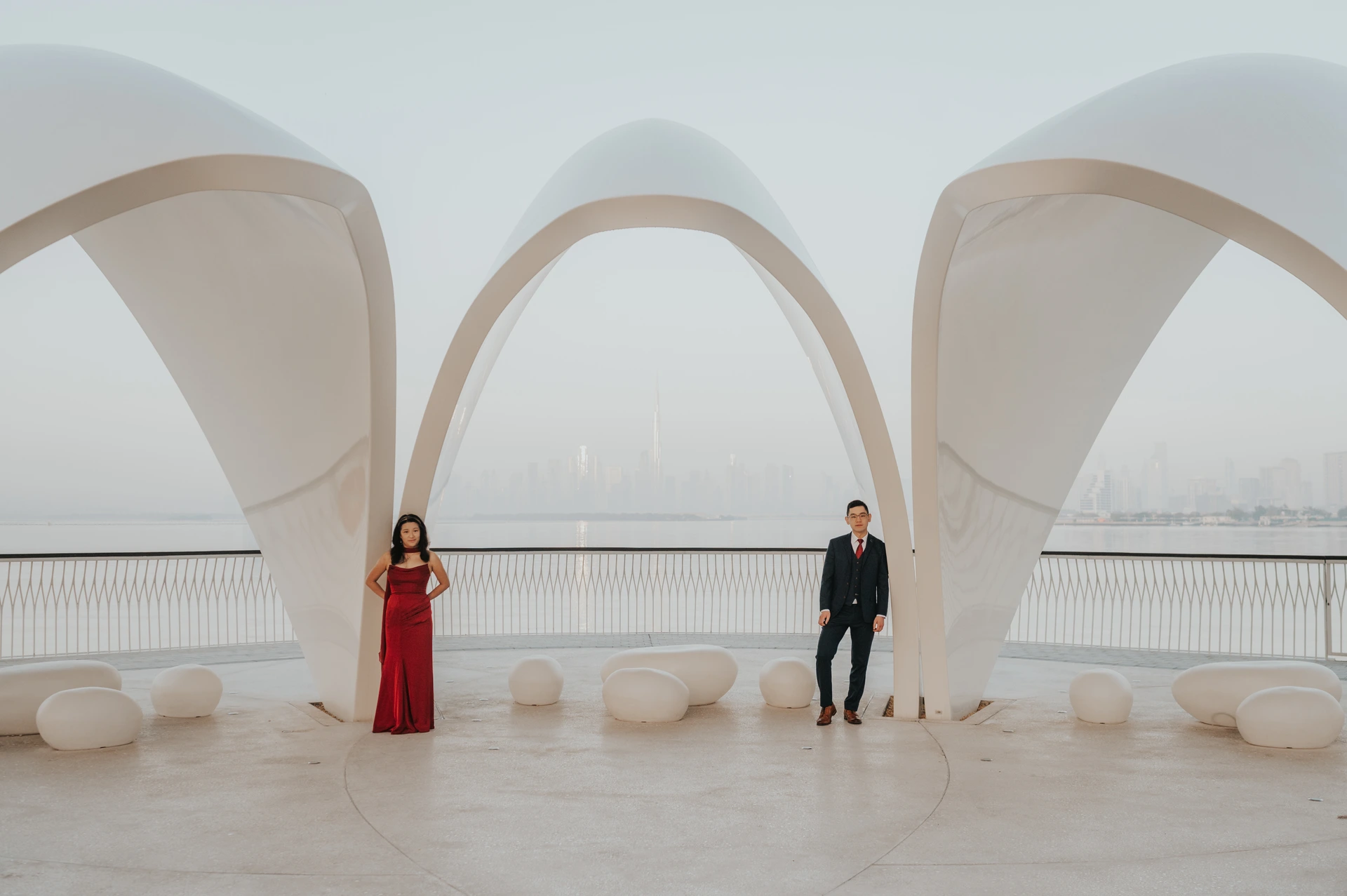
Outfits with a clear, clean shape work best in cities. Fitted trousers, a structured dress, a well-cut jacket: these sit well against buildings and streets in a way that very loose or very casual clothes sometimes do not. You do not need to be formal, but the photos will look more put-together if your outfits have some shape to them.
Soft warm tones like cream, dusty rose, camel, and sage green stand out naturally against grey stone and glass. They create a gentle contrast that looks really beautiful in photos. Very dark colours can blend into shadowy city backgrounds in wide shots. Very pale colours can wash out if you are shooting in direct sunlight bouncing off glass buildings.
Fabric with a flat, non-shiny finish photographs much better in cities than anything shiny or reflective. Shiny fabric picks up reflections from buildings and pavement and it can look distracting. Linen, soft cotton, and jersey all work really well. For shoes, remember that city shoots often involve walking between spots on hard pavement. Wear shoes you can actually walk in. If you want heels, bring flat shoes for the walking parts and change for the portrait moments.
Beach Engagement Outfits: Move with the Wind, Not Against It
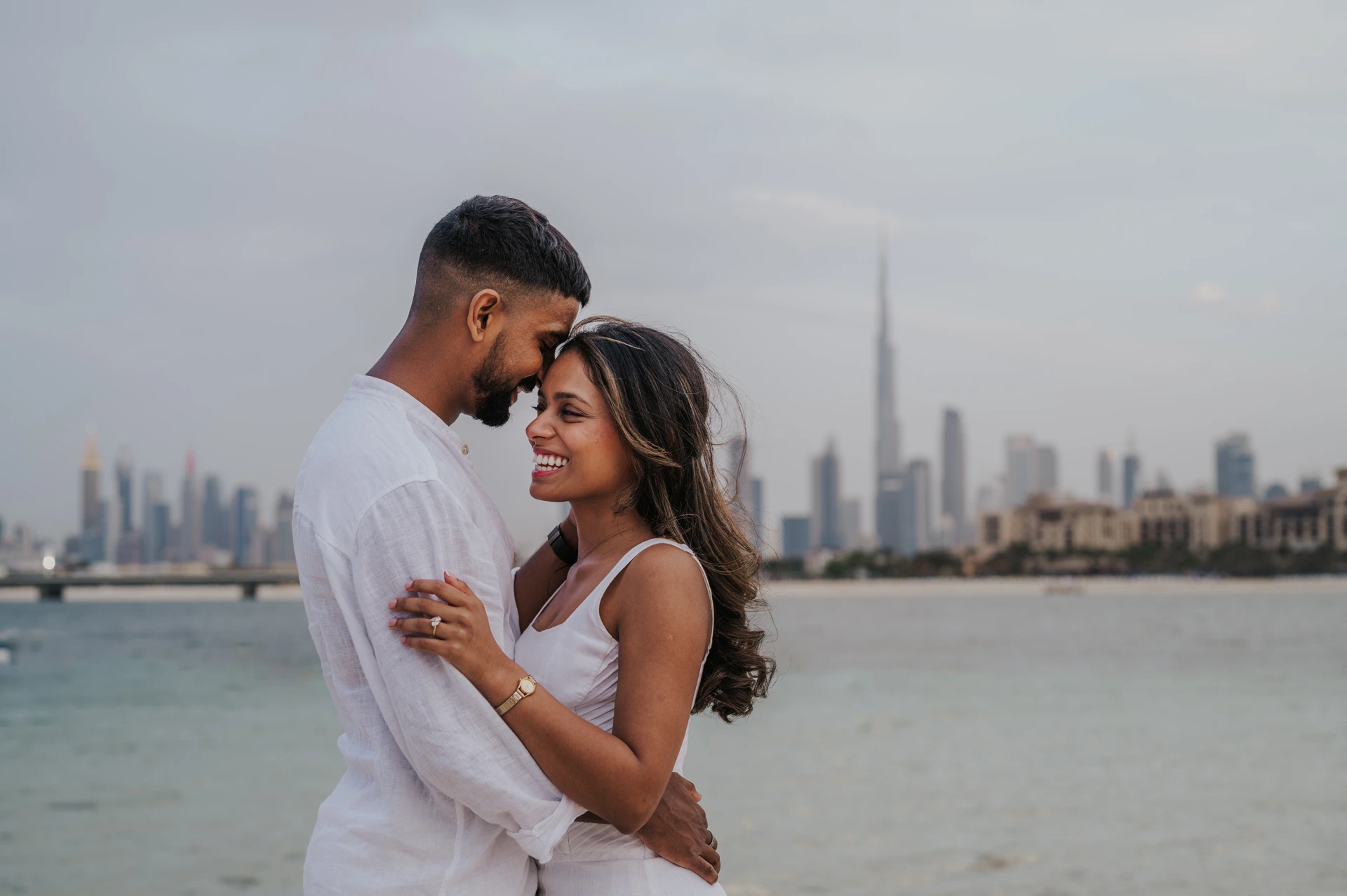
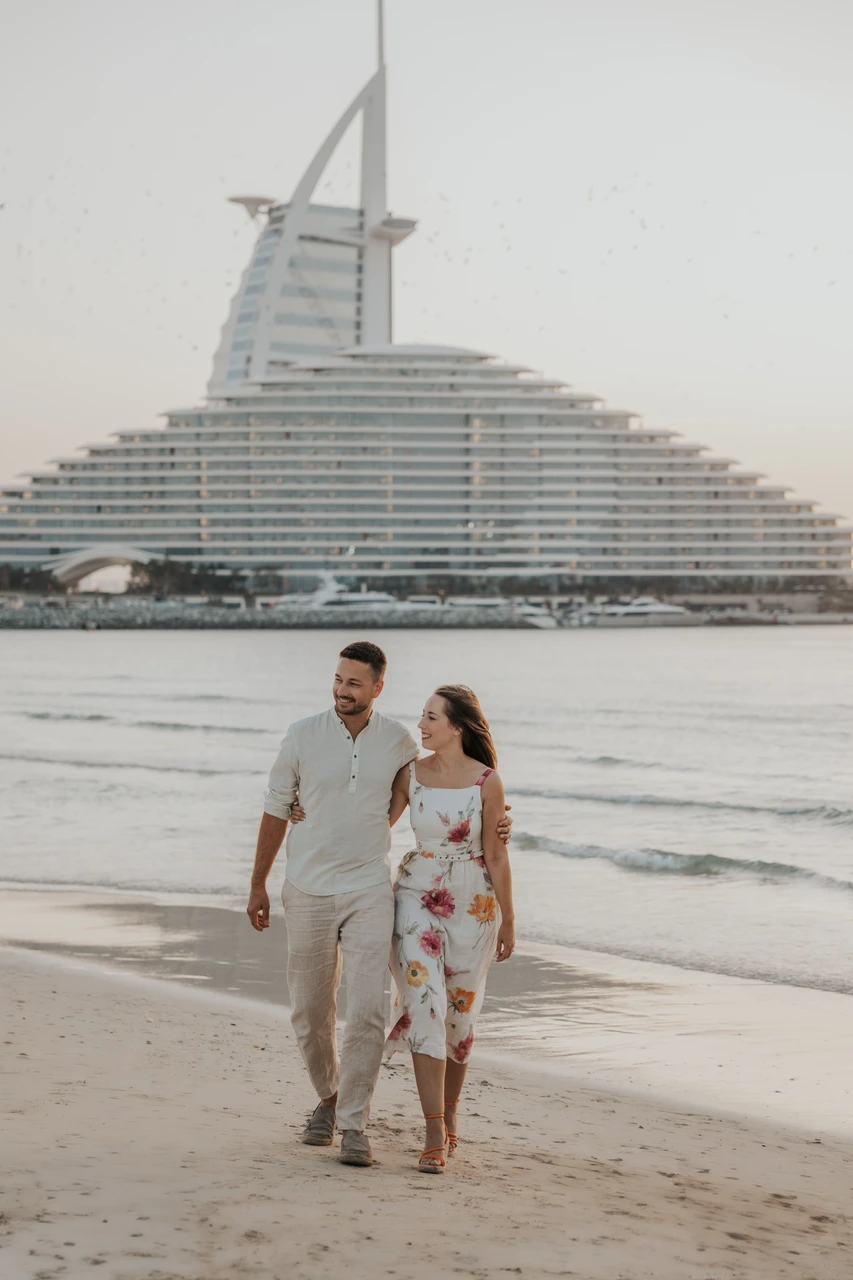
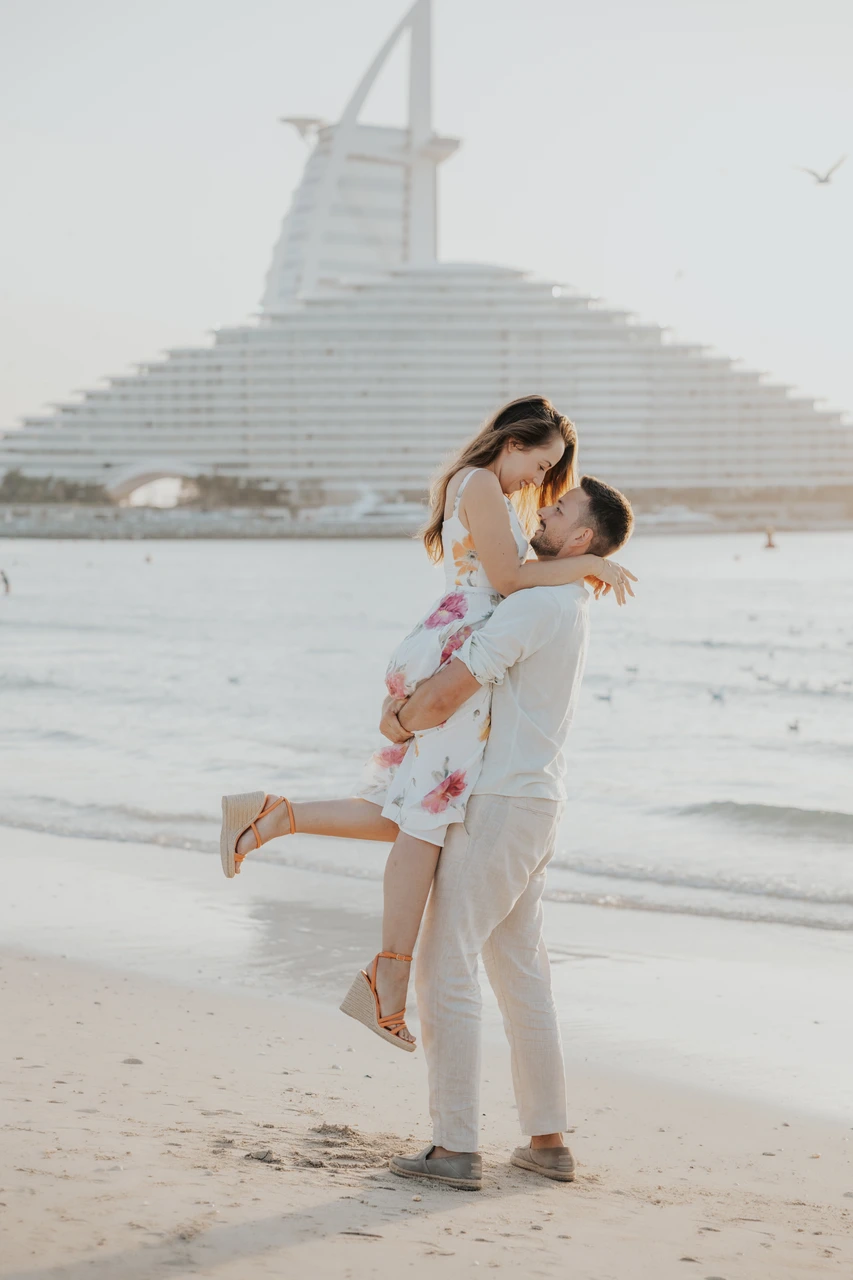
Light flowing fabric in the breeze looks absolutely stunning in photos. A dress that catches the wind and billows out to one side creates the kind of natural movement that is very hard to fake anywhere else. This is the magic of beach shoots. The fabric needs some weight to it though: too light and it flies completely out of control, too stiff and it does not move at all. A medium-weight fabric like soft linen or thin cotton hits the sweet spot of moving beautifully without becoming impossible to manage.
How long the dress is matters more at the beach than anywhere else. A long flowing dress that sweeps the sand looks incredible in photos but it also picks up sand and moisture at the bottom. If you are shooting near the water or on wet sand, a slightly shorter length gives you the beautiful movement without the practical problems. For him, linen trousers in a soft natural colour and a relaxed open-collar shirt look far better at the beach than anything formal.
Soft warm neutrals, pale blush, ivory, and sage green all look beautiful against the blue of the water. Avoid very bright colours as they can look out of place against natural coastal tones. Plan your hair for wind too. A style that looks good when it moves, like loose waves or a soft low bun, is much easier to work with than something that needs to stay perfectly still. Go barefoot or wear simple flat sandals. Heels sink immediately into sand and look uncomfortable in photos because they are uncomfortable.
Mountain Engagement Outfits: Layers That Look Good and Keep You Warm
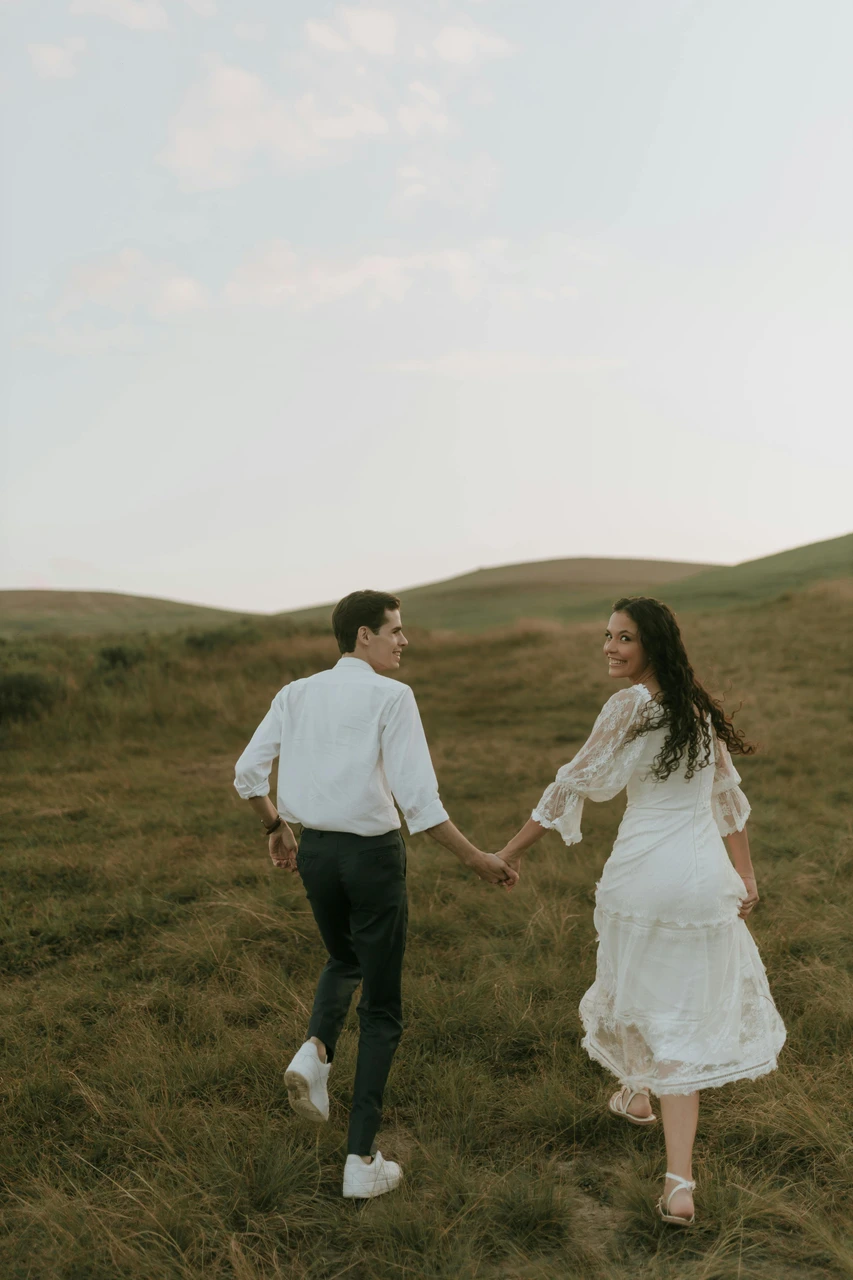
The trick is to layer with pieces that each look like you chose them on purpose. A soft chunky knit over a simple dress looks beautiful in mountain photos and comes off easily as the day warms up. A long coat in a warm earthy tone adds a lot of interest to wide shots and gives you warmth for the early part of the session. A lightweight scarf in a matching colour can be worn, held, or draped depending on how cold it is and always looks natural in photos.
Deep and rich colours work brilliantly in mountain settings: forest green, warm burgundy, rust, mustard, camel, and warm cream all look stunning against rocky peaks, autumn trees, and wide open skies. These are the tones you see in every beautiful mountain portrait because they are warm and natural against a setting that can sometimes feel very cold and grey.
Shoes really matter on a mountain shoot. If your session involves any walking on uneven ground, go for grip and stability over looks. Clean ankle boots or sturdy boots with good soles look great in mountain photos and mean you can walk to the best spots without worrying. Avoid heels entirely. The ground is too unpredictable and the photos will show that you are uncomfortable. Pack extra layers in your bag and bring a backup top in case the wind picks up or the temperature drops.

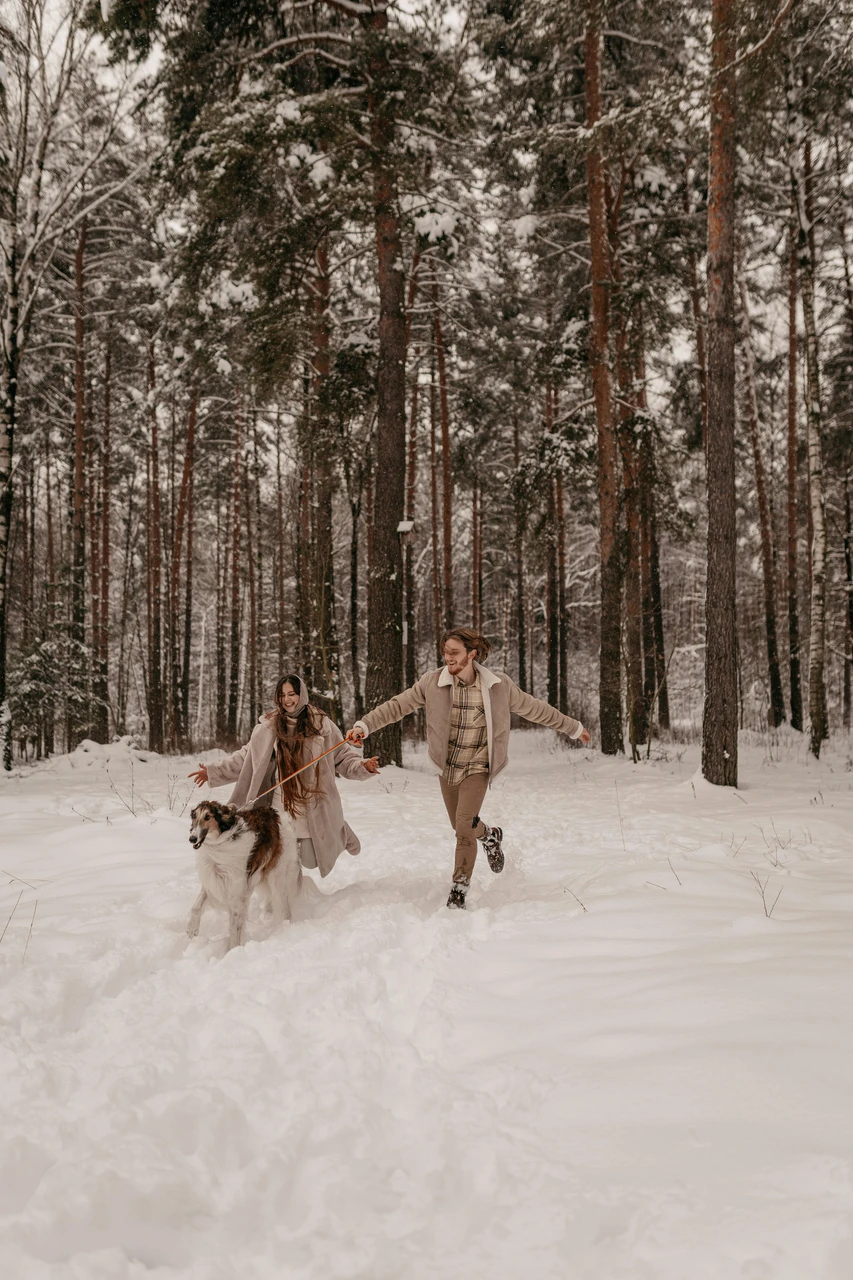
Forest Engagement Outfits: Stand Out From the Green
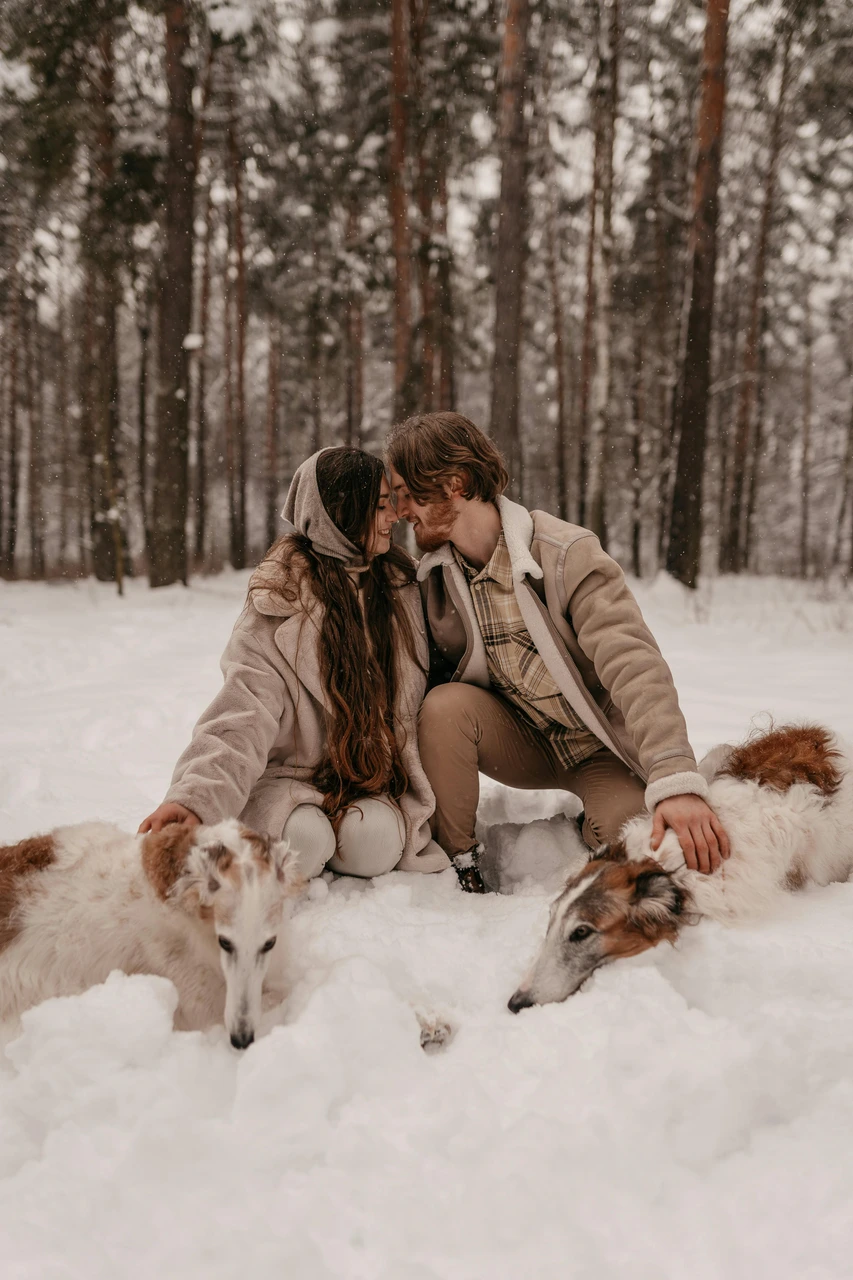
Avoid anything in the green or khaki family: olive, camouflage tones, and dark green all risk disappearing into the background in wide shots. The colours that stand out beautifully against green are warm and light: cream, ivory, warm white, pale yellow, dusty rose, soft lavender, and warm rust all create a lovely contrast with the trees and the ground behind you.
The light in forests is usually soft and even because the leaves filter the sun, which means you have more freedom on timing than at a beach or in an open field. The one thing to watch for is that in very thick green trees, the light bouncing off all that green can give a slight green tint to skin, especially for anyone with lighter skin tones. Wearing warm colours like cream and dusty rose helps avoid this and keeps your skin looking warm and healthy in the photos.
Light fabric that moves a little in the gentle breeze works really well in forests. Long flowing dresses look wonderful here and the movement adds life to the photos. One practical note: forests can be muddy and the ground is often uneven. Flat shoes or clean boots are the right choice. Check the location in advance and bring an extra pair of socks if there is any chance of wet ground.
Desert Engagement Outfits: Warm Tones, Flowing Fabric, and Flat Shoes
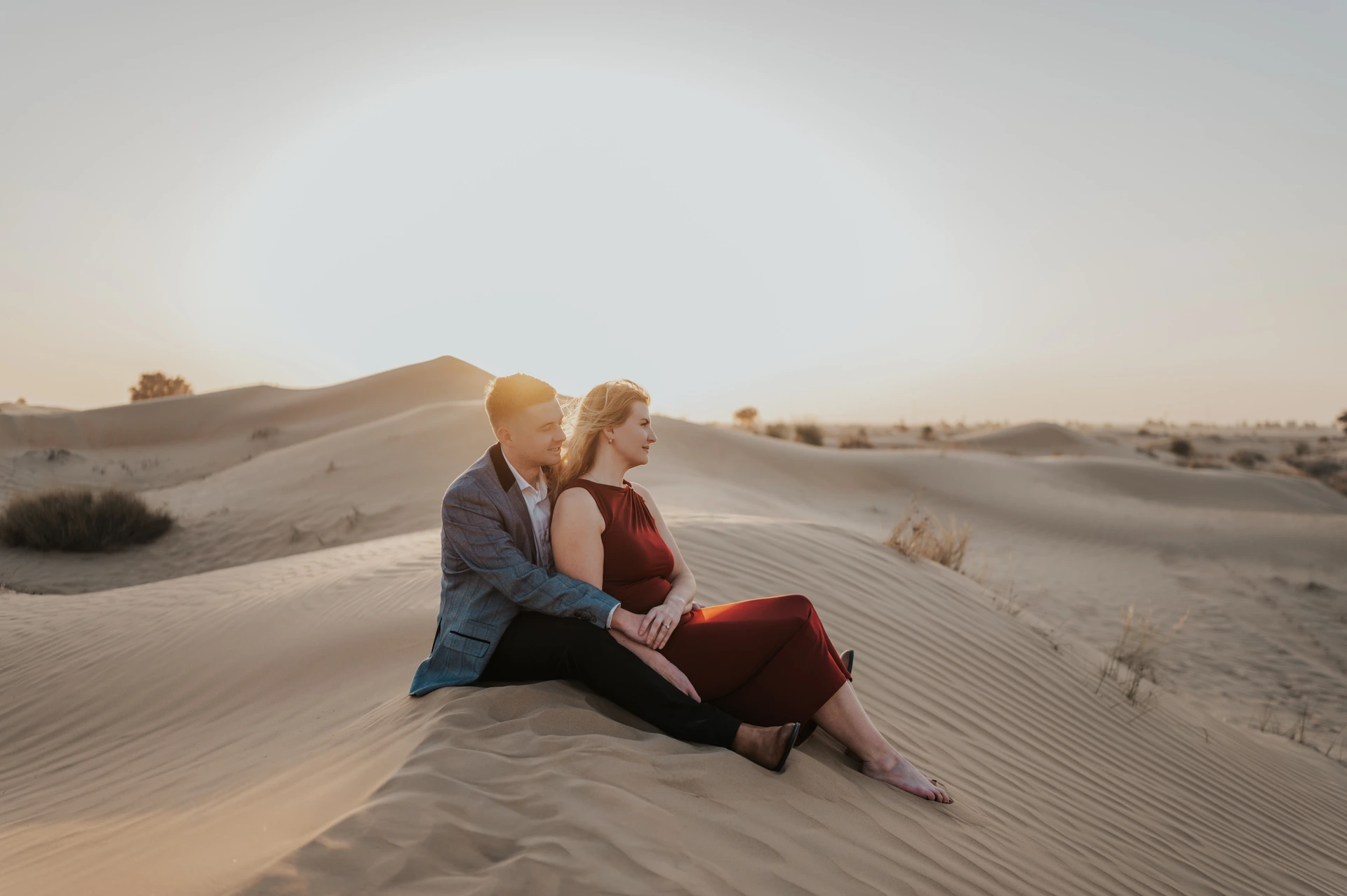
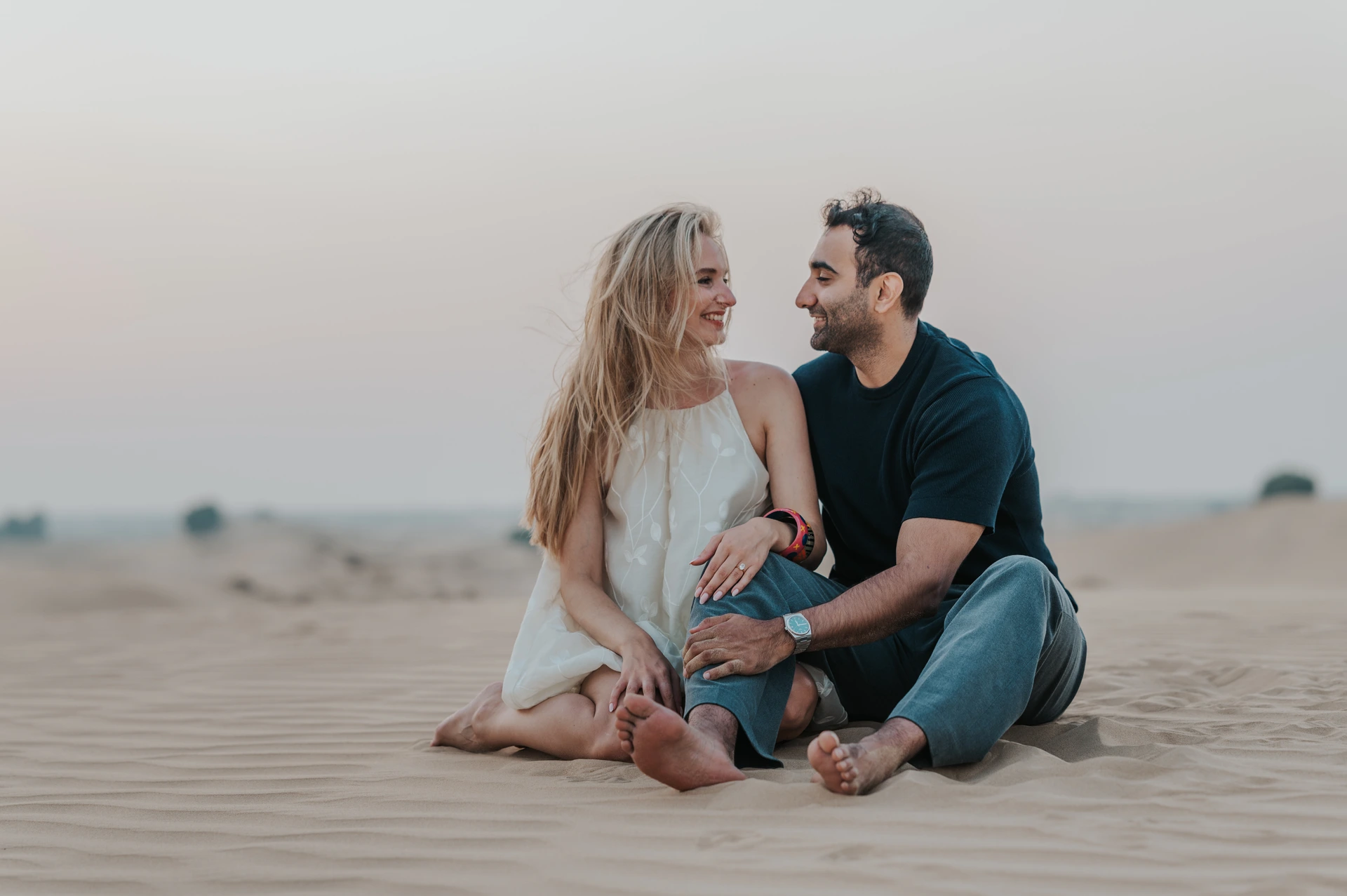
The colours that look most beautiful against sand dunes are warm and earthy: cream, ivory, warm white, soft terracotta, camel, warm rust, and sage green all feel natural in the desert and glow in the early morning light. These tones look like they belong there, which gives the photos a calm and effortless quality. Avoid very bright whites: they can look cold and washed out against warm golden sand, especially in strong light. Avoid very dark colours too: they show up dust and fine sand in a way that is very visible on camera.
Fabric choice matters in the desert for two reasons. The first is visual: light flowing fabric in the desert breeze creates some of the most beautiful natural movement of any location type. A dress that catches the early morning wind and sweeps out to one side against a golden dune looks absolutely magical. The second is practical: you will be walking on sand and the desert temperature can swing from cool and fresh at sunrise to very hot by mid-morning. Light, breathable fabric keeps you comfortable across that range. Avoid anything thick or stiff.
Footwear at a desert shoot is simple: flat sandals or bare feet. Heels sink immediately into sand and make walking very hard. Bare feet on warm sand look beautiful in photos and feel wonderful in the early morning when the sand is still cool. Bring flat sandals for the walk to your spot and go barefoot once you are in position. One practical note: sunscreen can transfer onto light fabric. Put it on well before you get dressed and give it time to fully soak in.
Summer vs Winter: What Actually Changes on Camera
In summer, the main challenge is bright harsh light. Stark white fabric bounces this light strongly and can look blown out and flat in photos. Soft ivory, cream, and warm white handle bright summer light much better than pure white. Light fabric is important for your comfort but it is also important for the photos: if you are visibly hot and uncomfortable, it shows in your face and your posture. Choose the most breathable version of whatever you plan to wear and book your session for early morning or late afternoon when the light is softer and the heat is lower.
In winter, the main challenge is flat grey light and the risk of both of you looking cold and stiff. Rich, warm colours do a lot of work here: burgundy, rust, warm camel, forest green, and deep navy all look beautiful against winter skies and bare trees in a way that pale colours sometimes do not. Layering with pieces that add visual interest is your friend in winter: a beautiful coat, a soft scarf, a warm knit. Just make sure your layers can come off quickly if the light gets good and your photographer wants to move fast.
One thing that dates engagement photos faster than anything else is following a very specific trend. Outfits that feel strongly tied to a moment in fashion tend to look clearly dated within a few years. The safest and most beautiful choice in any season is something that feels like you, fits you well, and moves comfortably. Those photos still look great twenty years later.
Shoes, Accessories, and the Backup Kit That Saves Sessions
Shoes are the most commonly missed detail. The wrong shoes change the way you stand, the way you walk, and the way you feel, and all of that shows in photos. The simple rule is: wear shoes you can move naturally in. If you cannot walk comfortably, laugh freely, or stand for a long time without pain, those shoes are not right for the session no matter how good they look. For most outdoor locations, flat shoes or clean minimal trainers are the most practical and the most beautiful choice.
For jewellery and accessories, less is almost always more in engagement photos. The goal is for your faces and your connection to be the most interesting thing in the frame. Jewellery that catches the light and pulls the eye, very large earrings, or things that need constant adjusting all take attention away from where it should be. One simple piece each is the sweet spot: a delicate necklace, a clean watch, a ring. If in doubt, leave it out.
The backup bag is something most couples never think about until they wish they had. Pack a small bag the night before with: a plain top or light layer for each of you in case of spills, wind problems, or a temperature change; a small stain pen; a hair tie and a few pins; and a warm layer if there is any chance of cold. This takes about ten minutes to put together and takes away the low-level worry of something going wrong on the morning.
How to Style Your Photos for Save-the-Dates, Your Wedding Website, and RSVP Cards
Save-the-dates need a wide, clean, open shot where both of you are clearly visible and the setting is easy to recognise. This is usually one of the first photos taken in the session when the light is at its best. The outfit you wear for this shot needs to look great at a small size because save-the-dates are often printed quite small. Very busy patterns and very similar colours between the two of you can make the image look muddy at small sizes. Clean, different tones work best here.
Your wedding website usually features a mix of wide shots and closer portrait shots, so having a range of photos matters more here than for any single use. A second outfit that is slightly more relaxed than the first gives you a natural shift in mood and look that makes a wedding website feel fuller and more personal. It is also a great way to show two sides of your relationship: the dressed-up version and the everyday version.
RSVP cards and digital assets often crop to a square or a close portrait frame, which means what people see is mostly from the waist up. Make sure the top half of each outfit, the neckline, the colour, the fabric, looks exactly as good as the full look. A beautiful top paired with shorts for comfort that never appears below the waist in the final crops is a totally fine approach for a summer session.
Travaya's photographers shoot engagement sessions all over the world and they are happy to talk through which shots you need for your specific wedding stationery and website before the session starts. Just mention it when you book and they will plan the timing to make sure you come away with everything you need.
Need Help Styling Your Engagement Photos?
Message us on WhatsApp and we will help you choose outfits, color pairings, and photo ideas that look perfect for save-the-dates, wedding websites, and RSVP cards.
Frequently Asked Questions
One or two is the right range for most sessions. One outfit gives you a focused and consistent gallery that feels clean and put-together. Two outfits gives you a natural change in mood that works really well for wedding websites and stationery where you want variety. More than two in a standard session means you are spending time getting changed instead of taking photos, and the gallery often ends up feeling scattered rather than varied.
Go for outfits that work together rather than matching exactly. Wearing identical outfits looks stiff in photos and rarely feels natural. The goal is for your two outfits to feel like they belong in the same world: similar warmth, similar level of dressing up, one or two shared colours. Check that they look good side by side before the session and you will be fine.
Soft warm neutrals work best against city backgrounds. Cream, camel, dusty rose, sage green, and warm ivory all create a gentle and natural contrast with concrete, glass, and stone. Avoid very dark colours that blend into shadowy backgrounds in wide shots and very shiny fabrics that pick up reflections from the buildings around you.
A medium-weight flowing fabric is the sweet spot: light enough to move beautifully in the breeze, heavy enough that it does not fly completely out of control. Soft linen and thin cotton both work really well. Avoid very light and very stiff fabric. Plan your hair for movement too, as a style that looks good when it moves will make the whole session feel much more relaxed.
Choose layers that each look like they were chosen on purpose. A soft knit over a simple dress, a long coat in a warm earthy tone, a lightweight scarf in a matching colour: each of these adds warmth without adding bulk. The key is to make sure each layer looks good both on and off so your photographer can work with you at any temperature during the session.
Avoid anything in the green or khaki family as it will blend into the background in wide shots. Also avoid very busy prints and dark colours that absorb the soft forest light. Wear warm light tones like cream, ivory, dusty rose, and warm rust and you will stand out naturally and beautifully against the trees.
At least two weeks before the session is ideal. This gives you time to try everything on together, do the movement test, sort out any changes or replacements, get things pressed, and pack your backup bag without rushing. Leaving it until the night before is the most common cause of outfit stress on the morning of a session.
Yes, easily. Plan for at least one wide open shot early in the session for save-the-date use. If you want variety for your wedding website, a second more relaxed outfit gives you a natural change in mood. Just let your photographer know what you need before the session starts and they will plan the route to make sure you come away with everything.


Articles Connexes

Dubai Proposal Guide: Ideas, Costs, Locations & How to Plan It
A complete guide to planning a proposal in Dubai, from location style and privacy to budget, timing, photographer flow, and what to wear.

Marriage Proposal Heart Setup in Dubai
A practical Dubai guide from Travaya.
Proposal Ideas in Dubai: The Complete Guide
A practical guide to proposal ideas in Dubai with setup options, real costs, and timing tips.