
March 8, 2026
How to Include Motion and Candid Moments in Couple Photos: Prompts, Practice, and What to Do the Night Before
Planning a couple photoshoot in Dubai can feel exciting and a little overwhelming when you start comparing locations, timing, and styling choices all at once. When you're ready to book, you can browse our Dubai couple photoshoot packages to see what each session includes. The good news is that with the right plan, your session can feel calm, natural, and genuinely fun, while still giving you polished photos that match the exact mood you want. In this guide, we will walk you through the practical decisions that matter most so everything flows smoothly from the first planning step to the final frame.
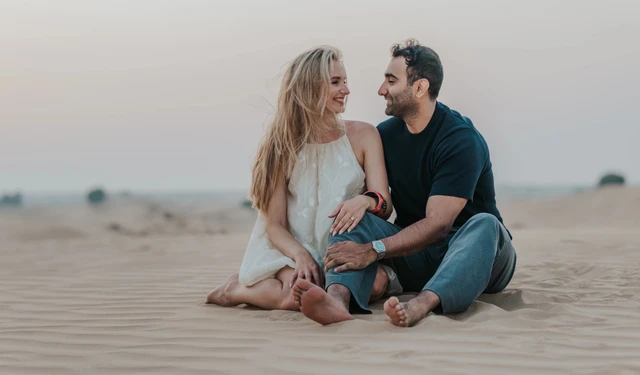


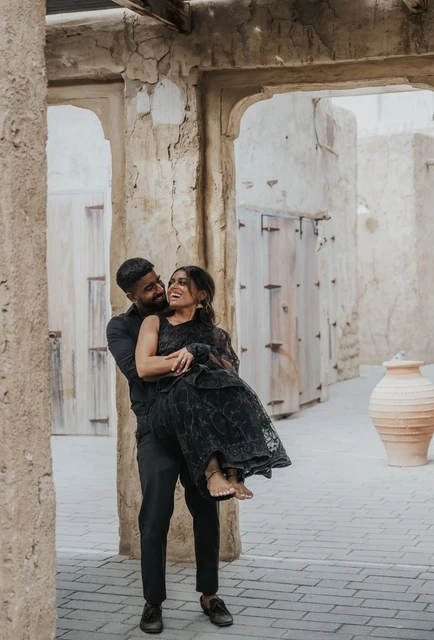
Table of Contents
How to Create Natural Candid Moments During a Couple Photoshoot
How to Get Motion and Candid Moments in Couple Photos Without Feeling Awkward
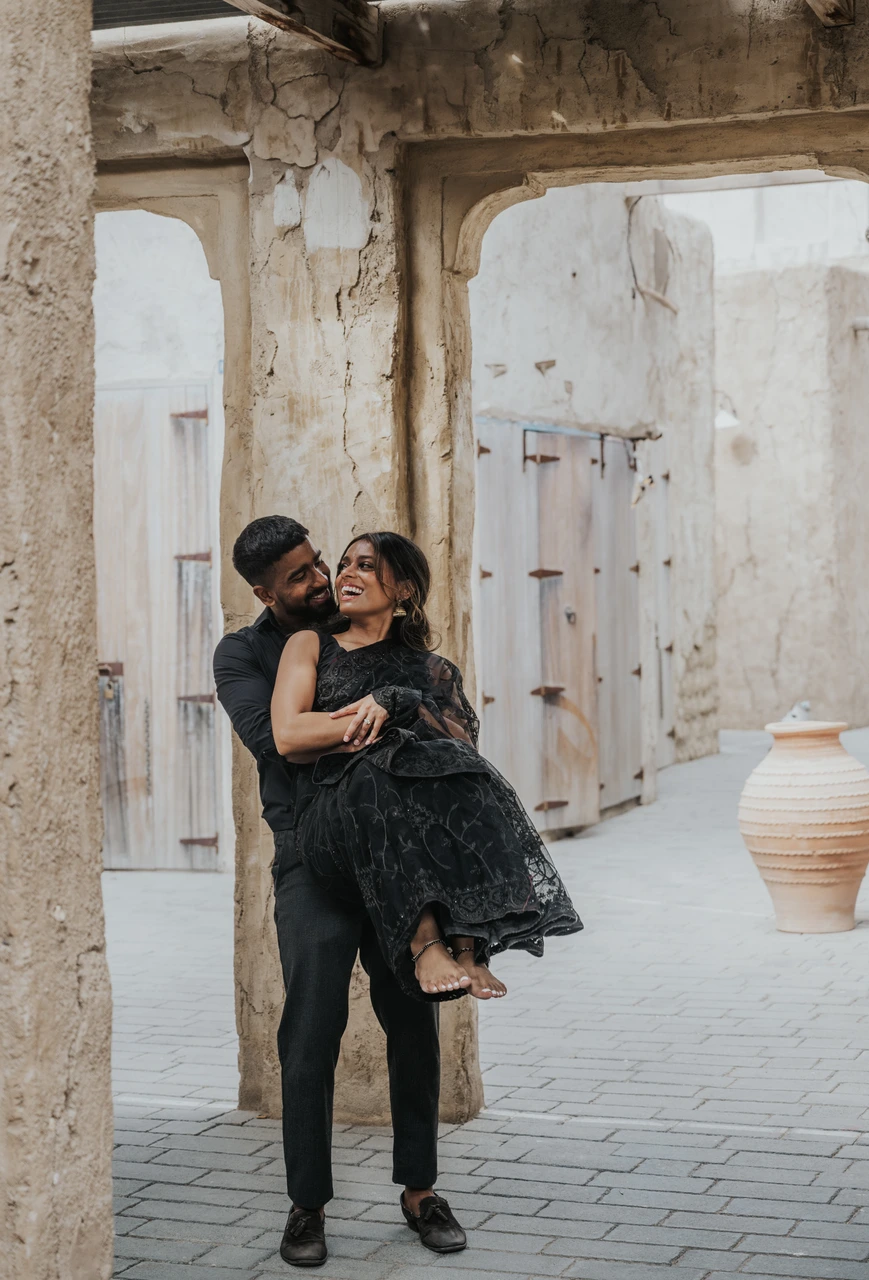
Motion is the cure for awkwardness. When you’re standing still and staring at a lens, your brain has nothing to focus on except the fact that someone is looking at you. The moment you start walking, or laughing, or doing literally anything together, that self-consciousness has nowhere to live. Your brain shifts from ‘am I making the right face’ to ‘I am doing a thing’ and your face just... relaxes. That’s where the best photos come from.
The practical magic of motion in couple photos is that it creates variety almost automatically. A single 10-minute walk along a beach path gives your photographer dozens of different frames: the wide shot as you approach, the closer moment when you pause, the laugh that happens mid-step, the look you give each other when you think no one’s watching. One simple prompt, one beautiful stretch of light, and a full set of images that tell a real story.
Photographed by Travaya Photographers

Candid Does Not Mean Your Photographer Is Just Waiting and Hoping
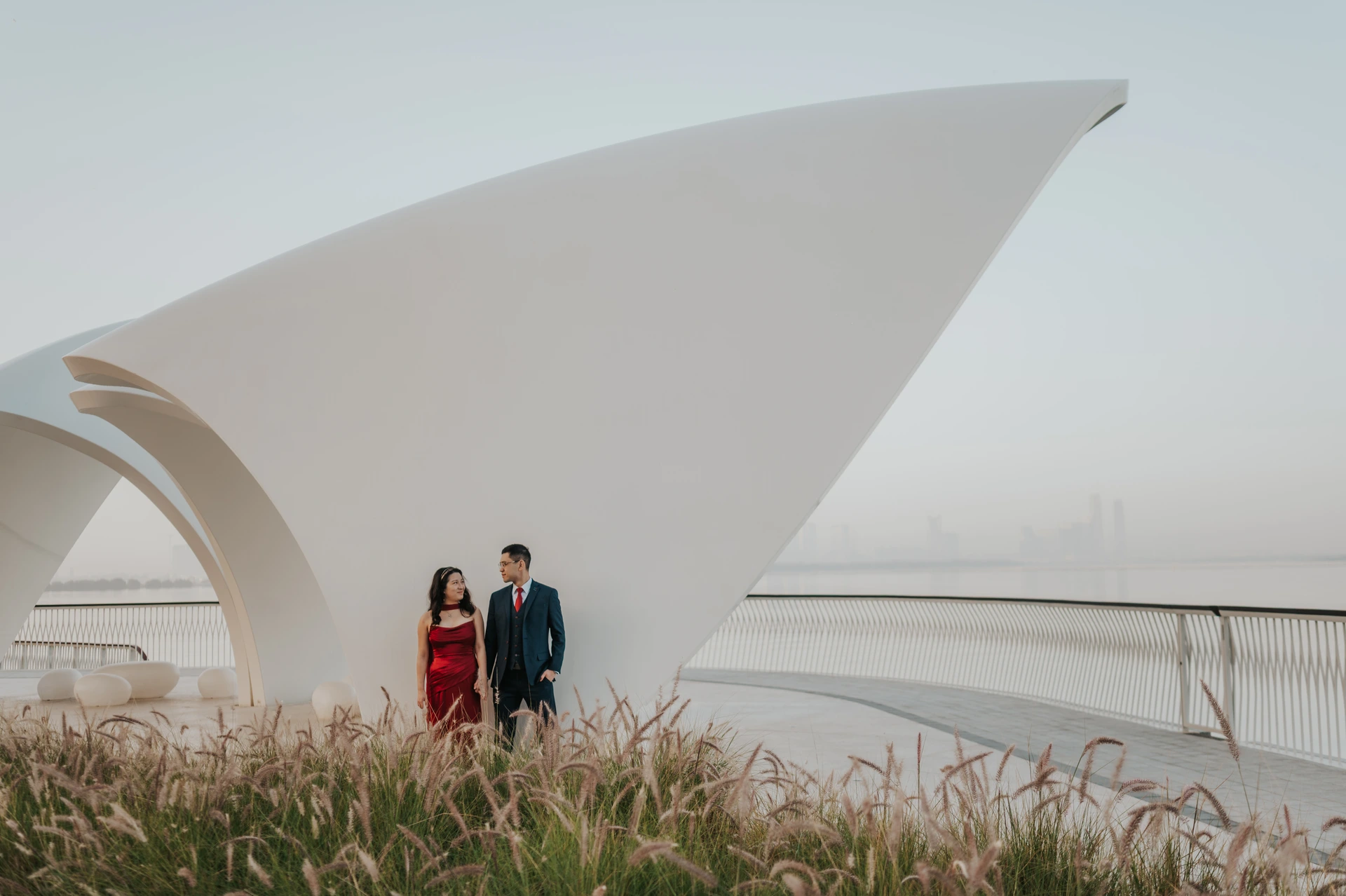
The cycle looks like this. Your photographer gives you a cue: walk toward me and tell each other something that made you laugh this week. You start moving and talking and immediately stop thinking about the camera. Something real happens, a genuine smile, a nudge, a look. Your photographer catches it. Then they give you a new cue and the whole thing resets. That four-beat rhythm of cue, move, pause, reset is running quietly in the background of almost every great couple photo ever taken.
Knowing this makes the whole experience feel completely different. You are not expected to spontaneously be photogenic. You are expected to respond to simple instructions and let your photographer do the rest. That is a much more manageable job and honestly a much more fun one. The best sessions feel less like a photoshoot and more like a very lovely afternoon that someone happened to be photographing.
Photographed by Travaya Photographers
The Best Motion Prompts for Couples: From Gentle to Playful
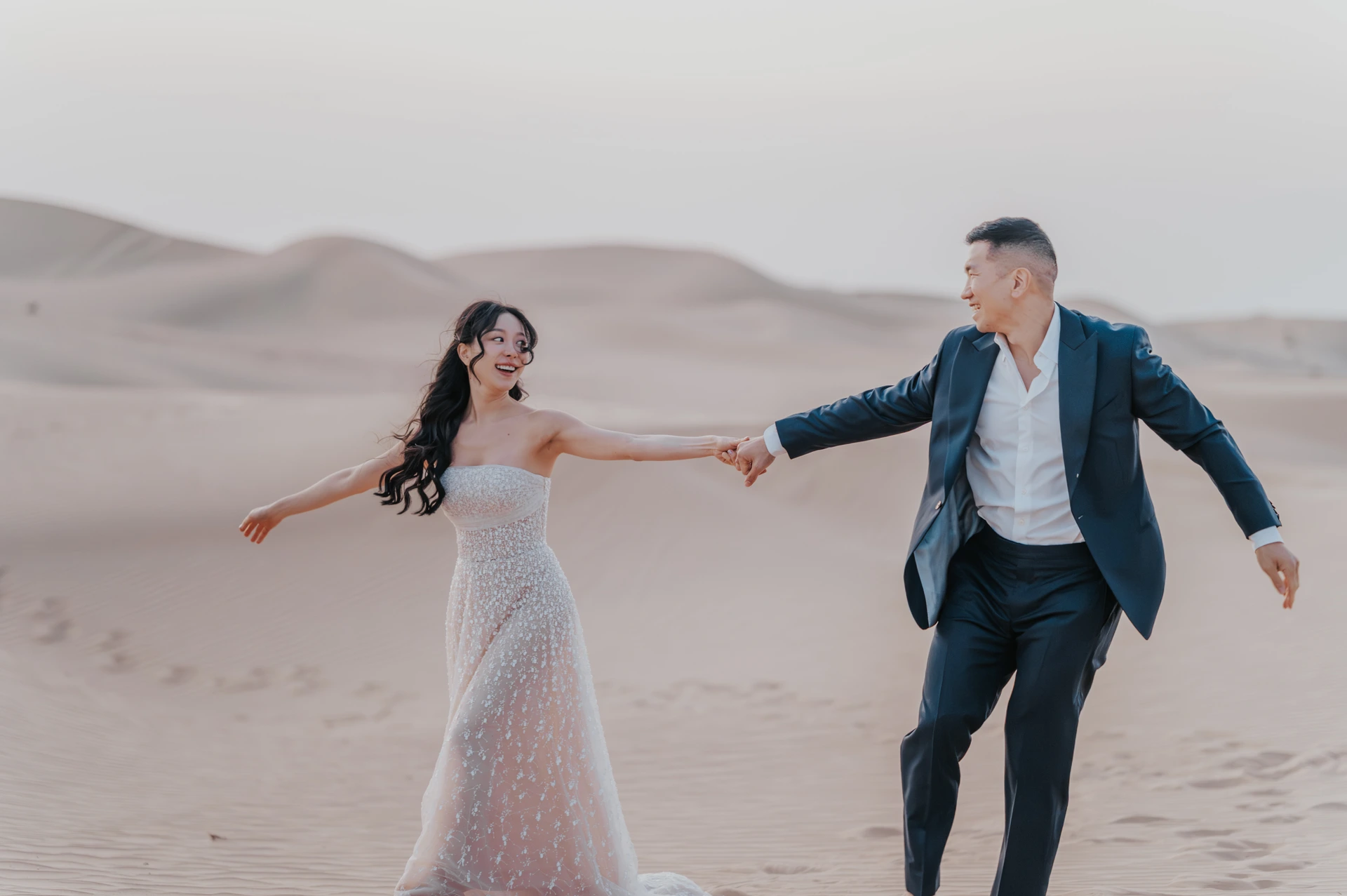
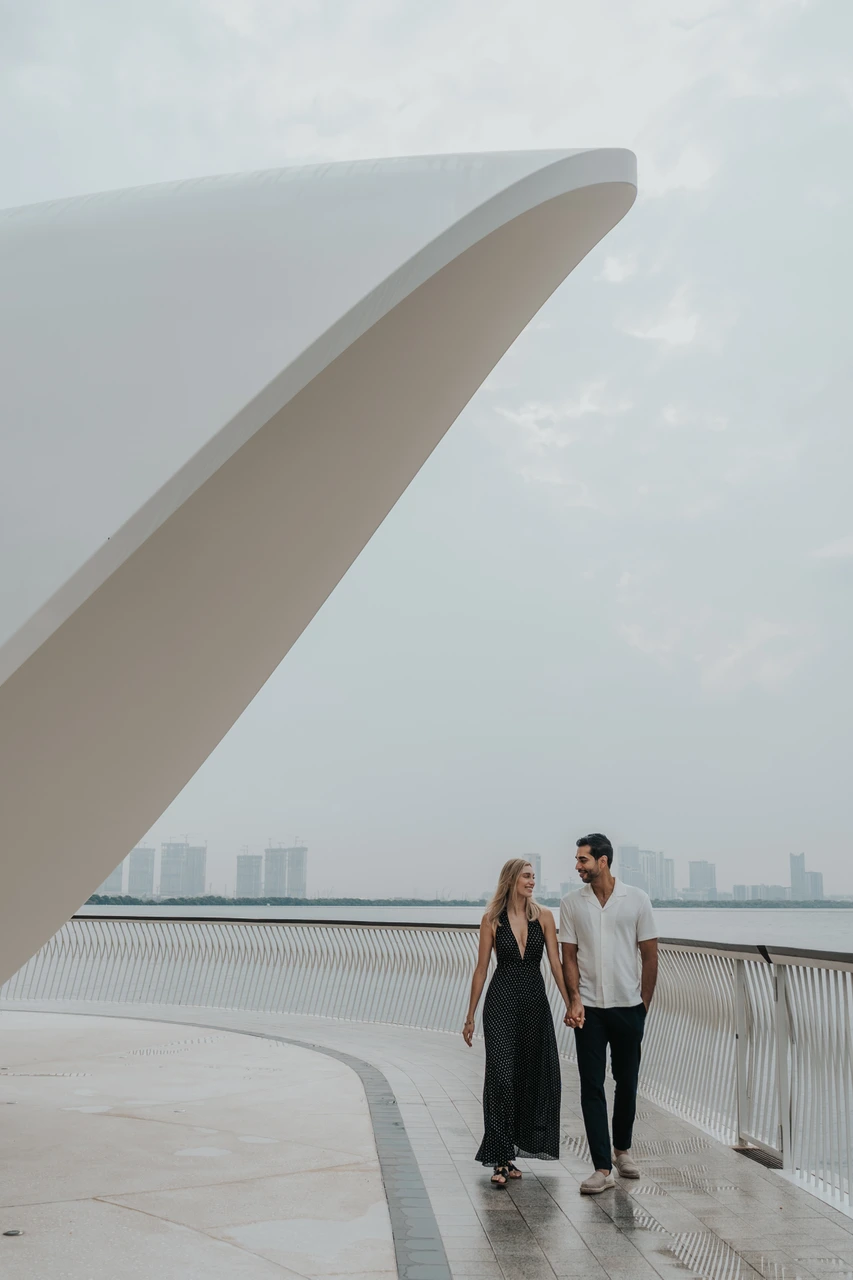
Your photographer might say: "Walk toward me slowly, holding hands, and just talk about something." What they mean is: forget the camera exists for a moment. Walk like you’re heading somewhere together, not performing a walk. The conversation is just there to give your brain something to do so your face relaxes naturally. It doesn’t matter what you talk about: your next holiday, what you want for breakfast, literally anything. Try it tonight: walk from one end of your living room to the other holding hands while chatting. Do it twice. That’s it. You’ll be amazed how natural it already feels.
Your photographer might say: "Stop where you are and just look at each other for a few seconds." What they mean is: don’t smile on command, don’t do anything in particular, just pause and look. The frames that come out of this are some of the most quietly beautiful of any session because they catch the real way you two look at each other when nobody is asking you to perform. Try it tonight: stop mid-walk, face each other, and hold that look for five seconds. It feels slightly intense and that’s completely normal. On the day it produces the photos people frame.
Your photographer might say: "Walk ahead, and on three, both look back at me." What they mean is: walk away naturally, then the simultaneous look-back creates a spontaneous shared reaction that is almost impossible to fake. When you both turn at the same time and catch each other’s eye first instead of the camera, something real happens in that split second and the photographer catches it. Try it tonight: walk away from each other down a hallway, count to three out loud, and both look back. Notice what happens on each other’s face. That thing is exactly what the camera is going to catch.
Your photographer might say: "One of you walk ahead, then the other pulls you back." What they mean is: create a little playful resistance. One person takes a step forward like they’re heading off, the other reaches out and pulls them gently back by the hand or the arm, and whatever happens in that moment is the photo. It always produces something real: a laugh, a look, a little surprise. Try it tonight and take turns being the one who gets pulled back. Notice how quickly it turns into something genuinely funny. That energy is exactly right.
Your photographer might say: "Try to spin each other without falling over." What they mean is: have a go at it and don’t worry about how it looks. The spin itself is rarely the photo. What the photographer is waiting for is the laugh that happens when it goes slightly wrong, or the look on her face as she comes back around. It’s a chaos prompt and it works because it completely removes any remaining self-consciousness. Try it tonight in the kitchen. It will be ridiculous. That’s the point.
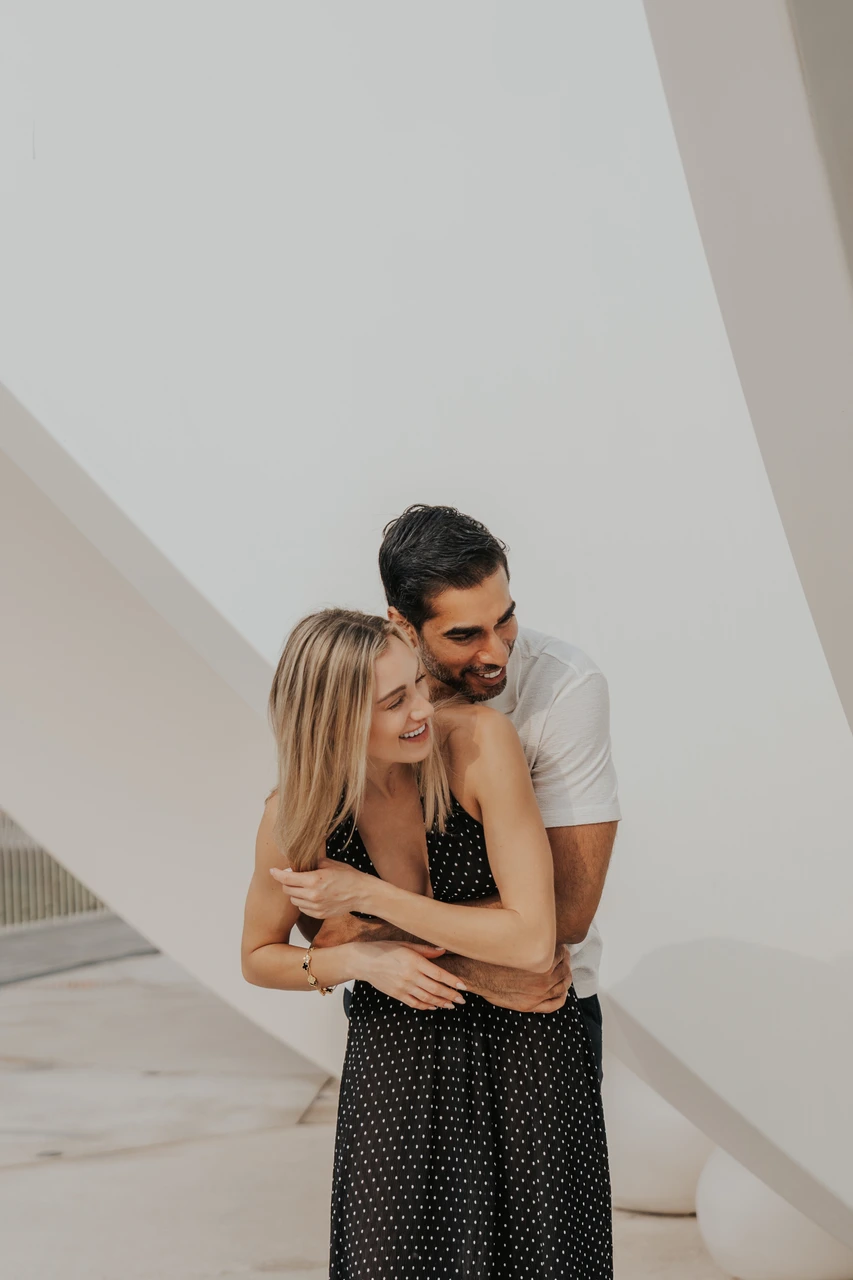
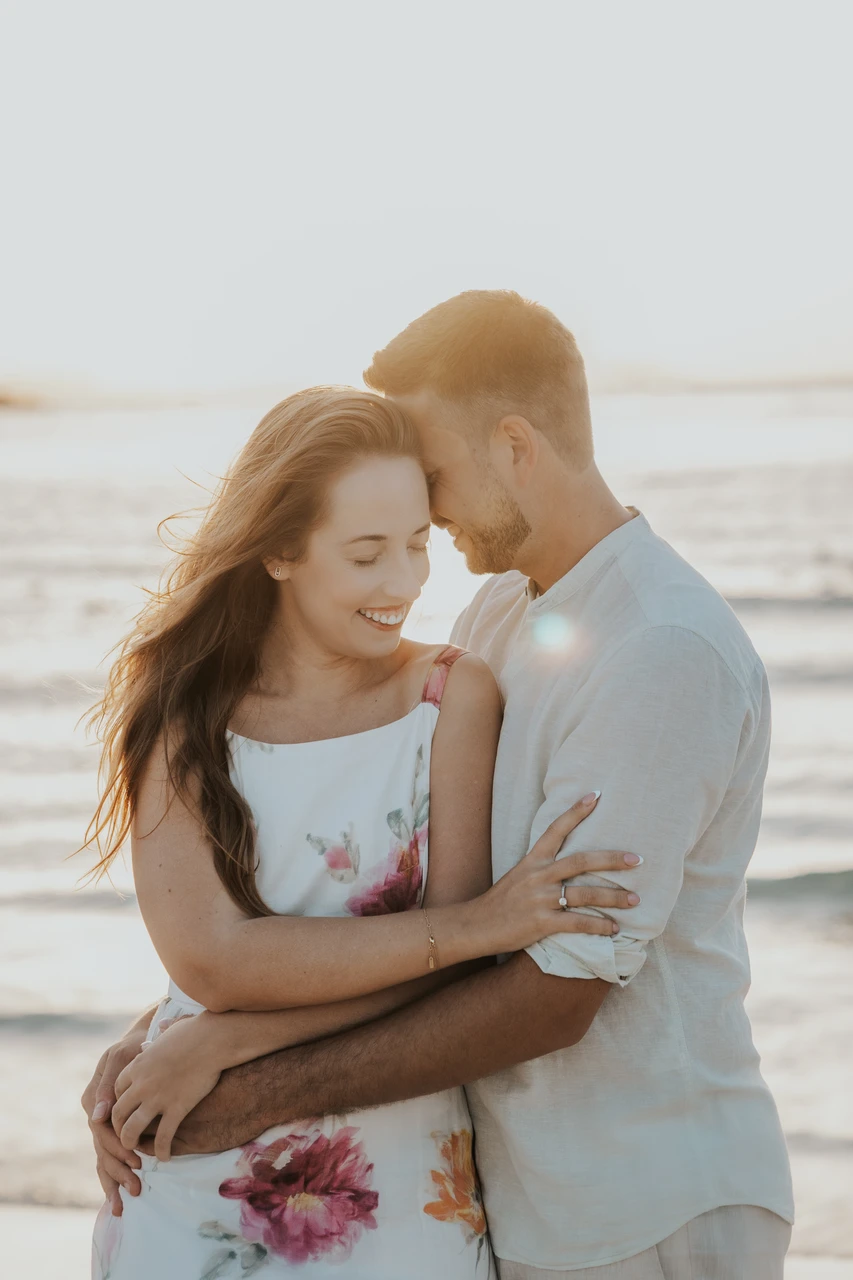
Your photographer might say: "Put your foreheads together and just breathe for a moment." What they mean is: get close, close your eyes if it feels right, and stop performing entirely. This is the quietest prompt in the whole session and it produces some of the most emotional images. There’s nothing to do except be close and still. Try it tonight: stand close, touch foreheads, take a slow breath each. Notice how it feels. On the day it will feel even better with beautiful light around you and a photographer who knows exactly when to press the shutter.

The 15-Minute Practice Routine That Makes Shoot Day So Much Easier
The first three minutes are just about standing close. Face each other, stand closer than feels natural, and hold that for a moment. Most couples underestimate how close they should be in photos and end up looking like colleagues rather than partners. Getting comfortable with close proximity before the shoot means you won’t flinch on the day when your photographer says ‘closer please.’
The next four minutes are for walking. Walk slowly toward an imaginary camera together. Then walk away from it. Then stop mid-walk and face each other. Try the approach from different angles. This feels slightly ridiculous in your living room and that’s completely fine. The point is that by the time you’re doing it on a beach or in a laneway with a real photographer, your body already knows the movement and does it without hesitation.
The four minutes after that are for the playful prompts. Try the spin. Try the dramatic dip. Try whispering something into each other’s ear and see what face the other person makes. Laugh about how it feels. Laughing in practice means you’ll laugh naturally on the day rather than producing the slightly terrified grin that shows up when people try to look happy on command.
The final four minutes are for the quiet ones. Foreheads together. One of you rests your chin on the other’s shoulder. Stand side by side looking at something in the distance. These feel almost too easy and they are meant to. Finishing practice on a calm, still note means you go into the next morning feeling settled rather than buzzed.
The whole thing takes 15 minutes and costs nothing. Couples who do it consistently say they felt twice as relaxed when the real shoot started. The camera stops being the thing you’re reacting to and starts being just another part of a morning you were already enjoying.
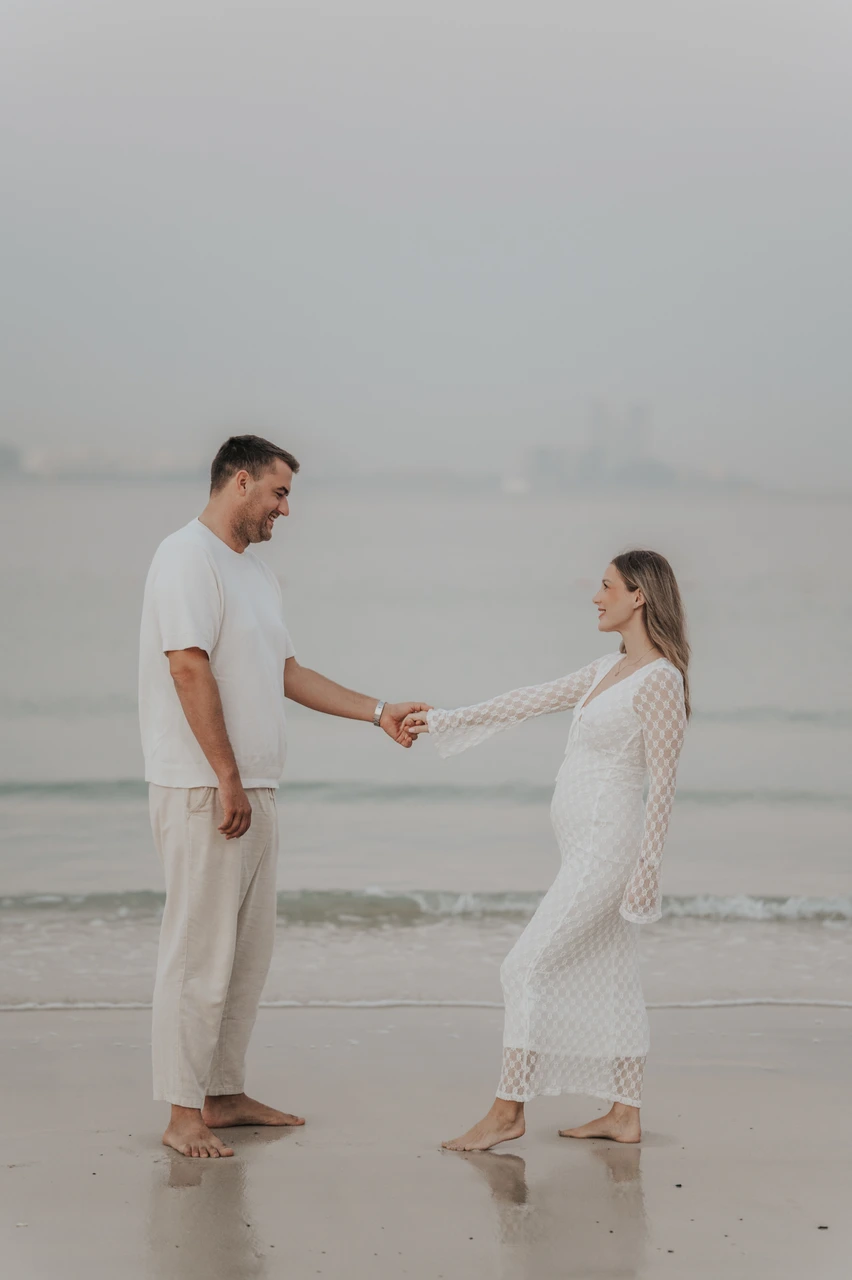
What to Wear If You Want Your Photos to Actually Move
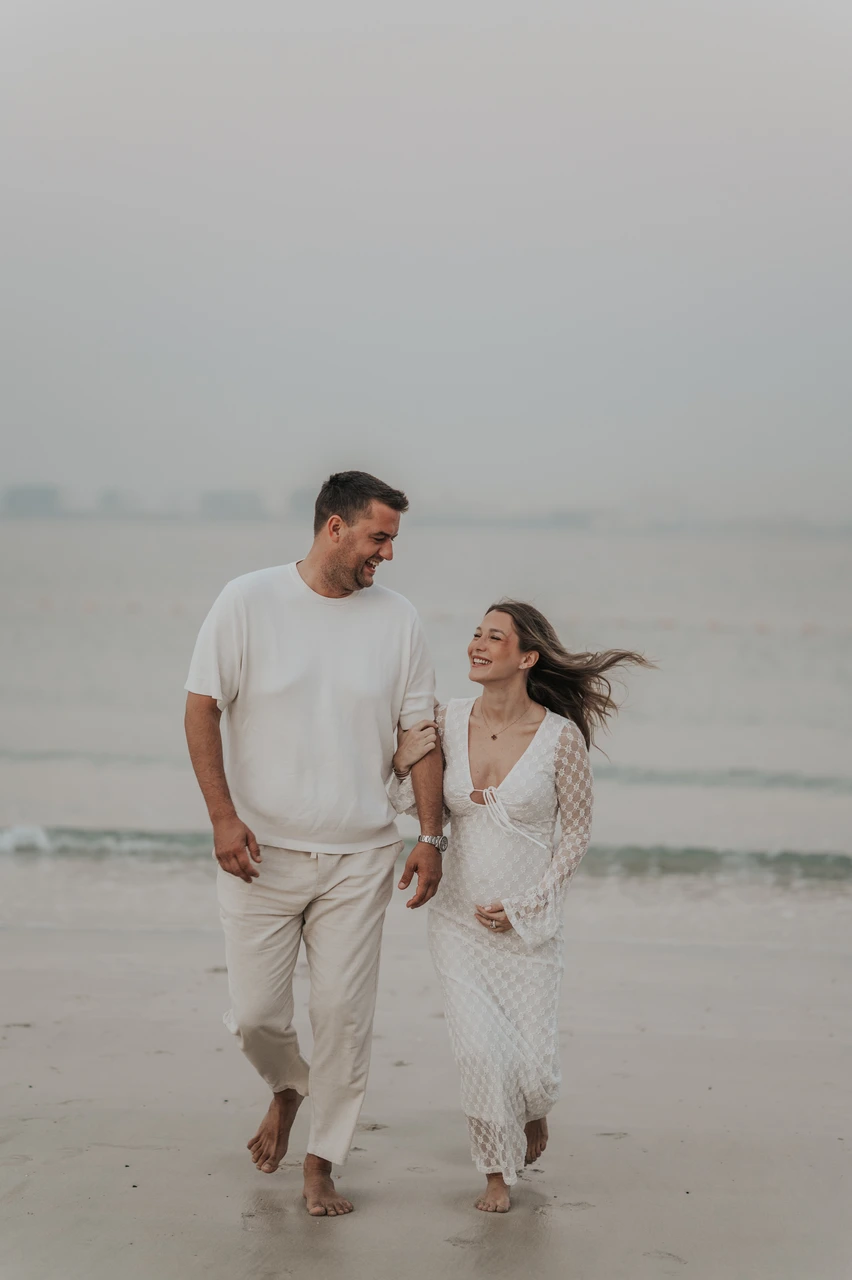
Flowing fabric is your best friend for motion shots. Lightweight chiffon, soft georgette, or loose linen catches the breeze and creates natural movement in every frame without you having to do anything extra. When you walk, it moves. When you spin, it lifts. When you stop, it settles back beautifully. That quality is almost impossible to fake in a rigid or structured fabric and it makes an enormous difference to how the photos feel.
Shoes matter more than people think. Heels on soft sand or uneven ground are uncomfortable, distracting, and genuinely limiting when it comes to walking and moving naturally. Flat sandals or bare feet are almost always the better choice for outdoor sessions, both for comfort and for photos. If you love a heel, save it for a short stretch of flat ground where you can move confidently, then take them off for the rest of the session. For indoor or urban sessions, a comfortable low heel or a clean flat works well and won’t slow you down.
Hair that moves looks alive in photos. A loose wave or soft half-up style catches the light and the breeze in a completely different way from a very structured or tightly pinned look. If it’s windy on the day, some movement in the hair adds to the energy of the photos rather than working against it. Bring a couple of simple pins so you can put it up quickly if you want a different look mid-session, but start loose.
The outfits that cause the most problems in motion photos are the ones that require constant managing: very short skirts that need holding down in a breeze, structured jackets that restrict how you hold your arms, tight trousers that limit your stride, anything with a complicated neckline that shifts when you move. The test is simple: put the outfit on at home the evening before and walk around in it. Sit down, stand up, spin once. If something feels restrictive or needs adjusting, it will feel ten times worse in the middle of a photoshoot.


Save This Before Your Shoot Day
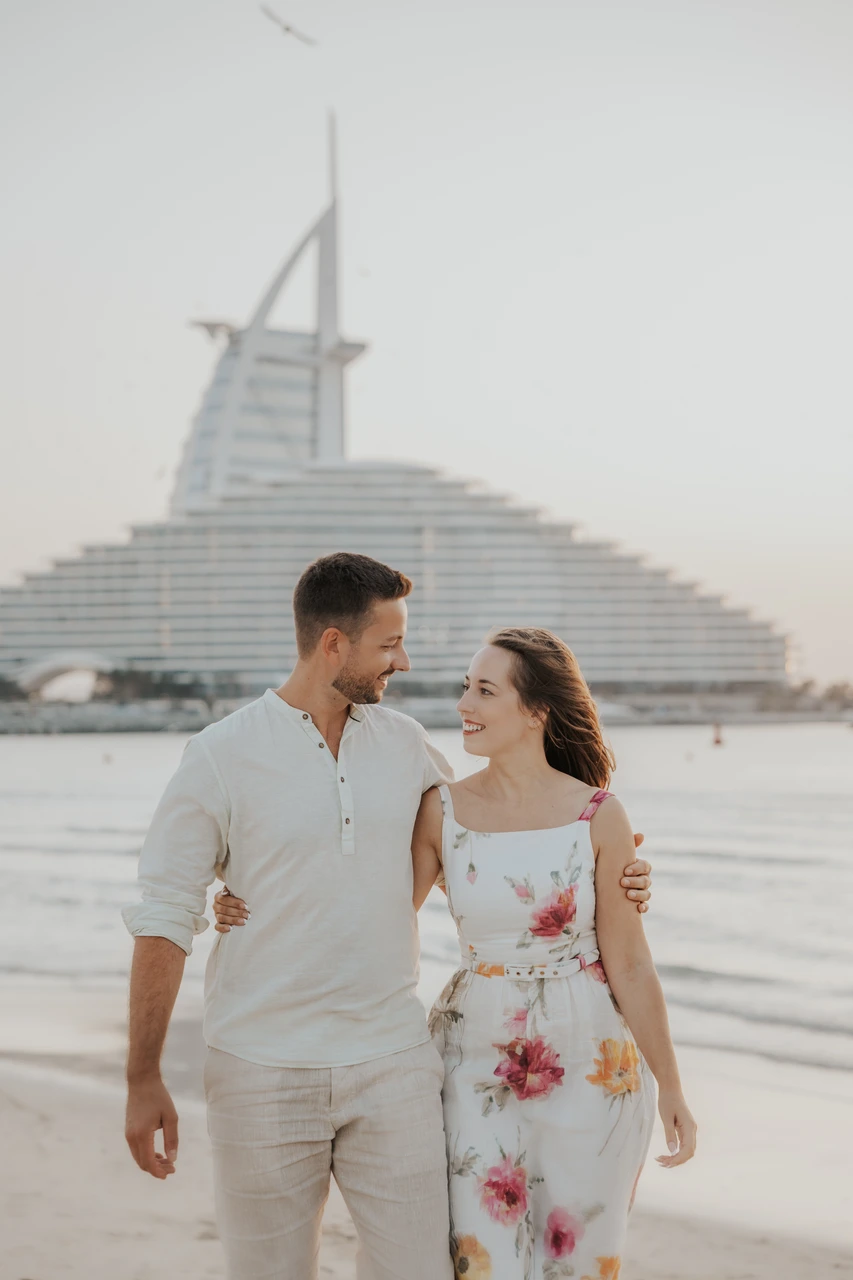
If you want photos that feel like you - not stiff poses - save these candid prompts now and keep them ready for your Dubai couple session.
Save This GuideHow the Scene Changes the Prompts: Dunes, Beach, and City Walking Routes
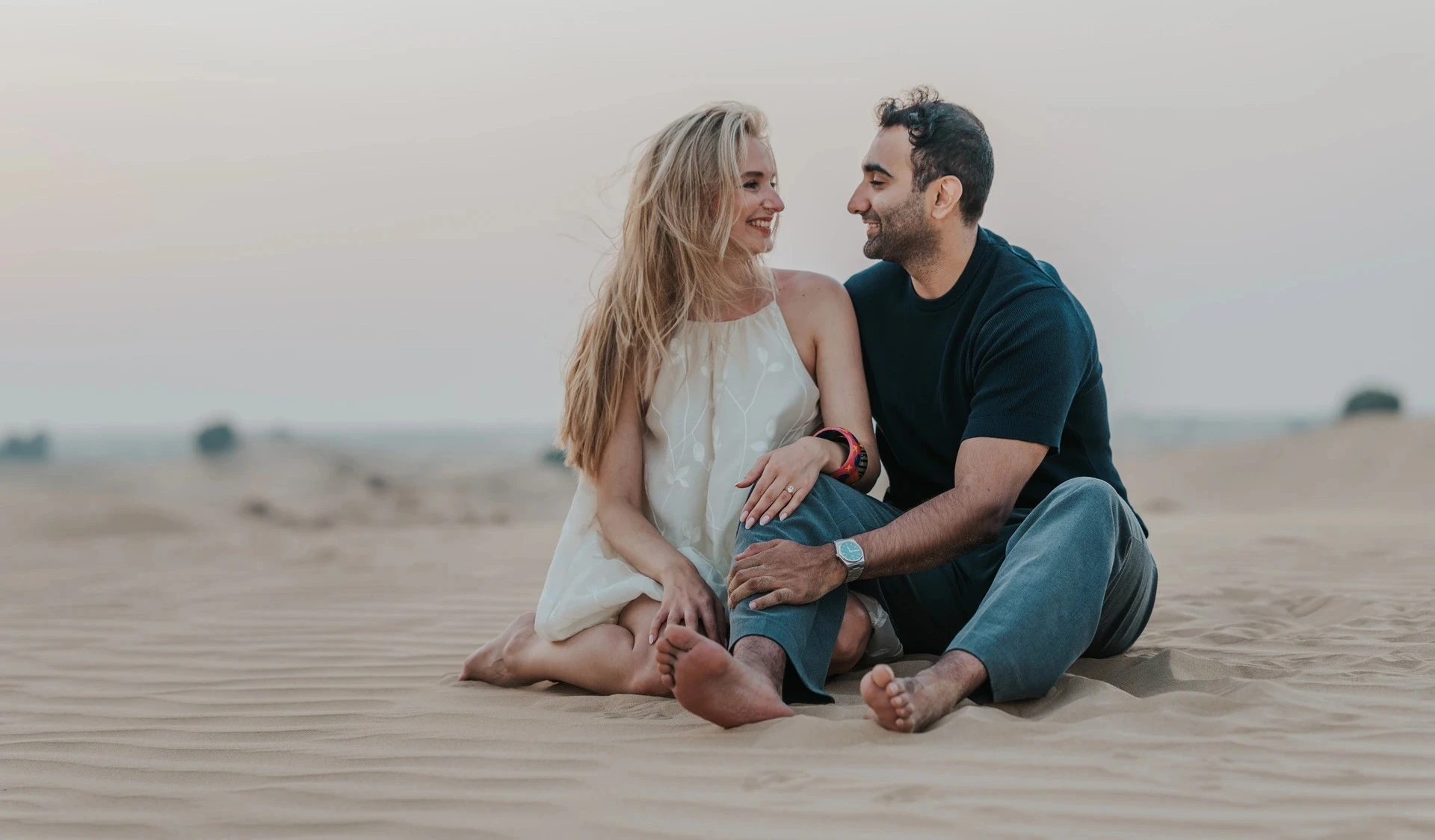
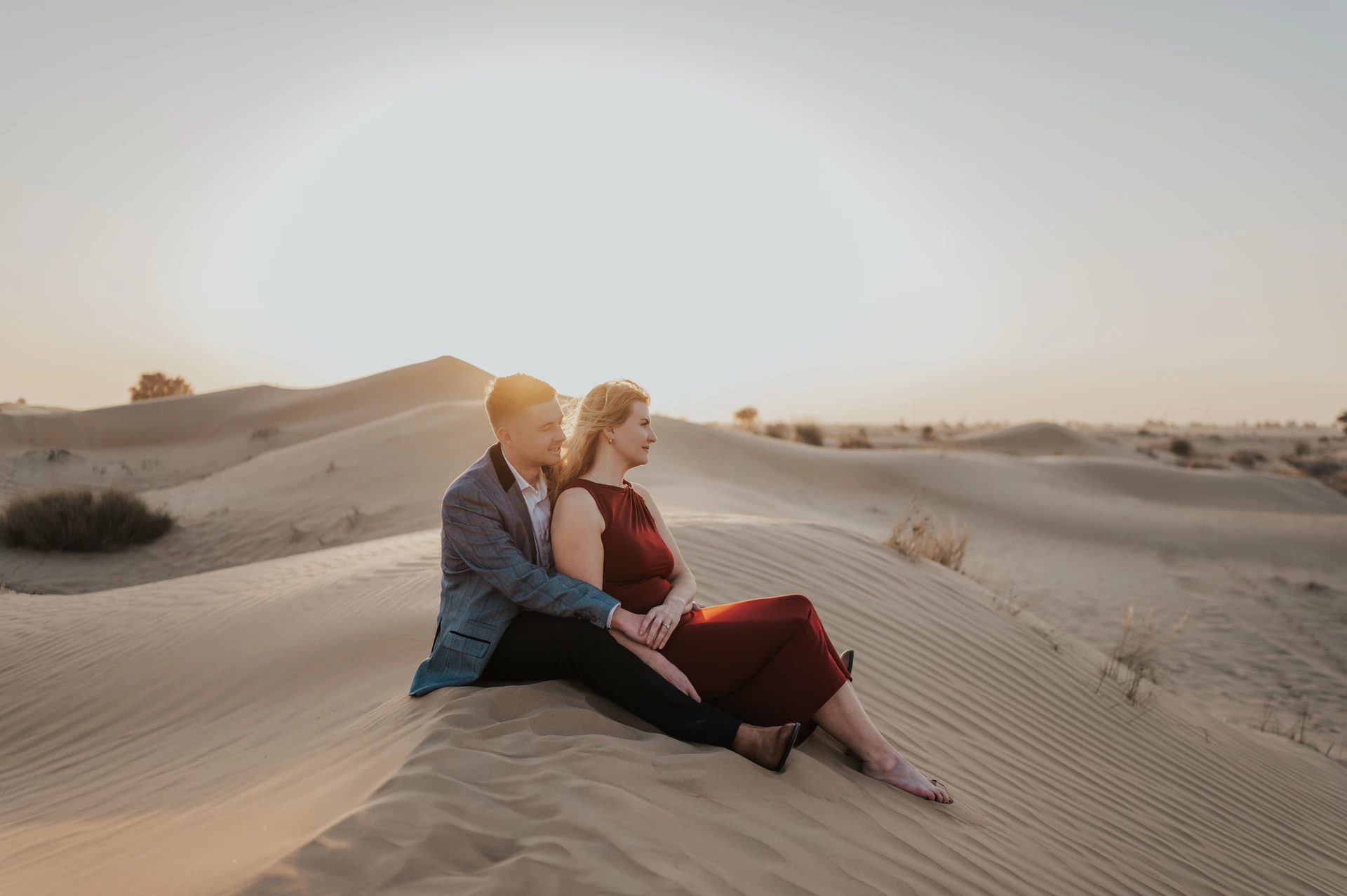
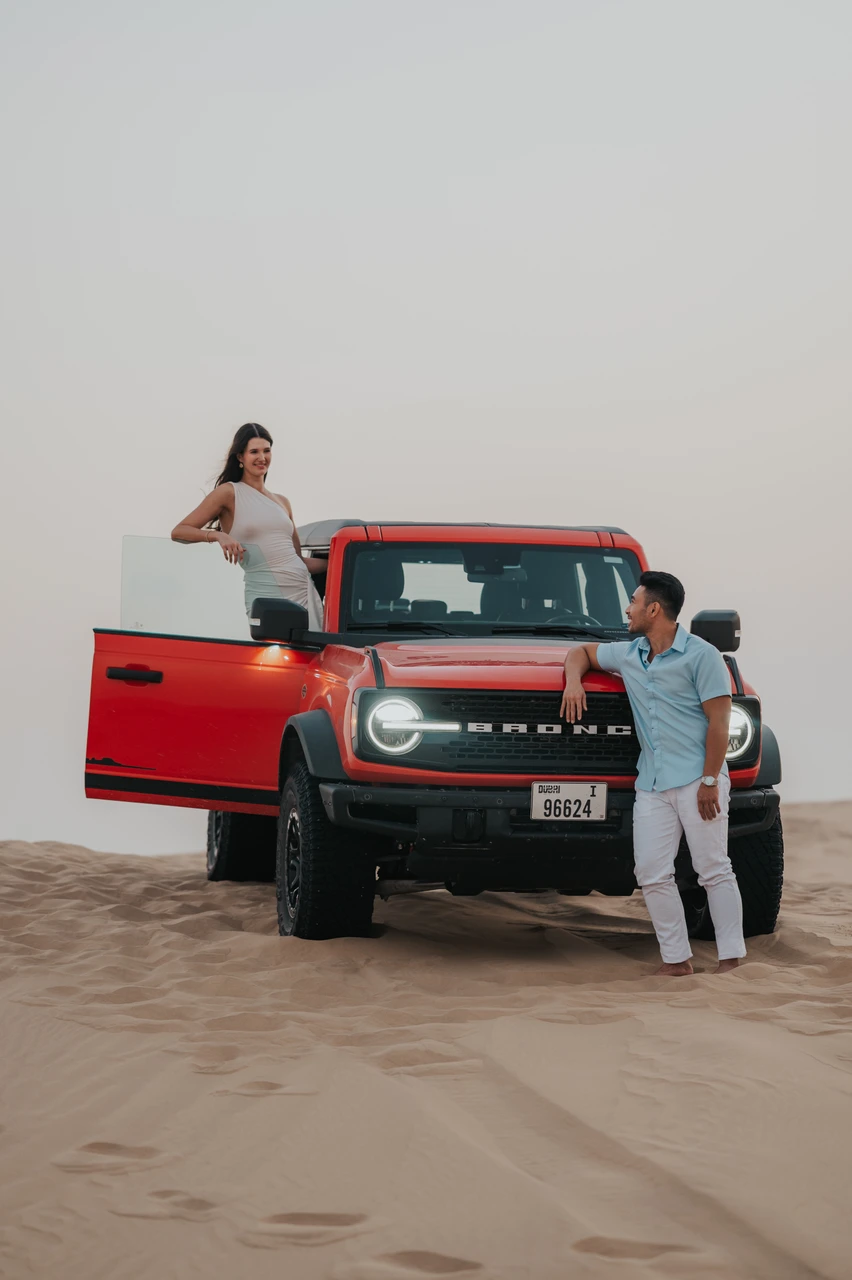
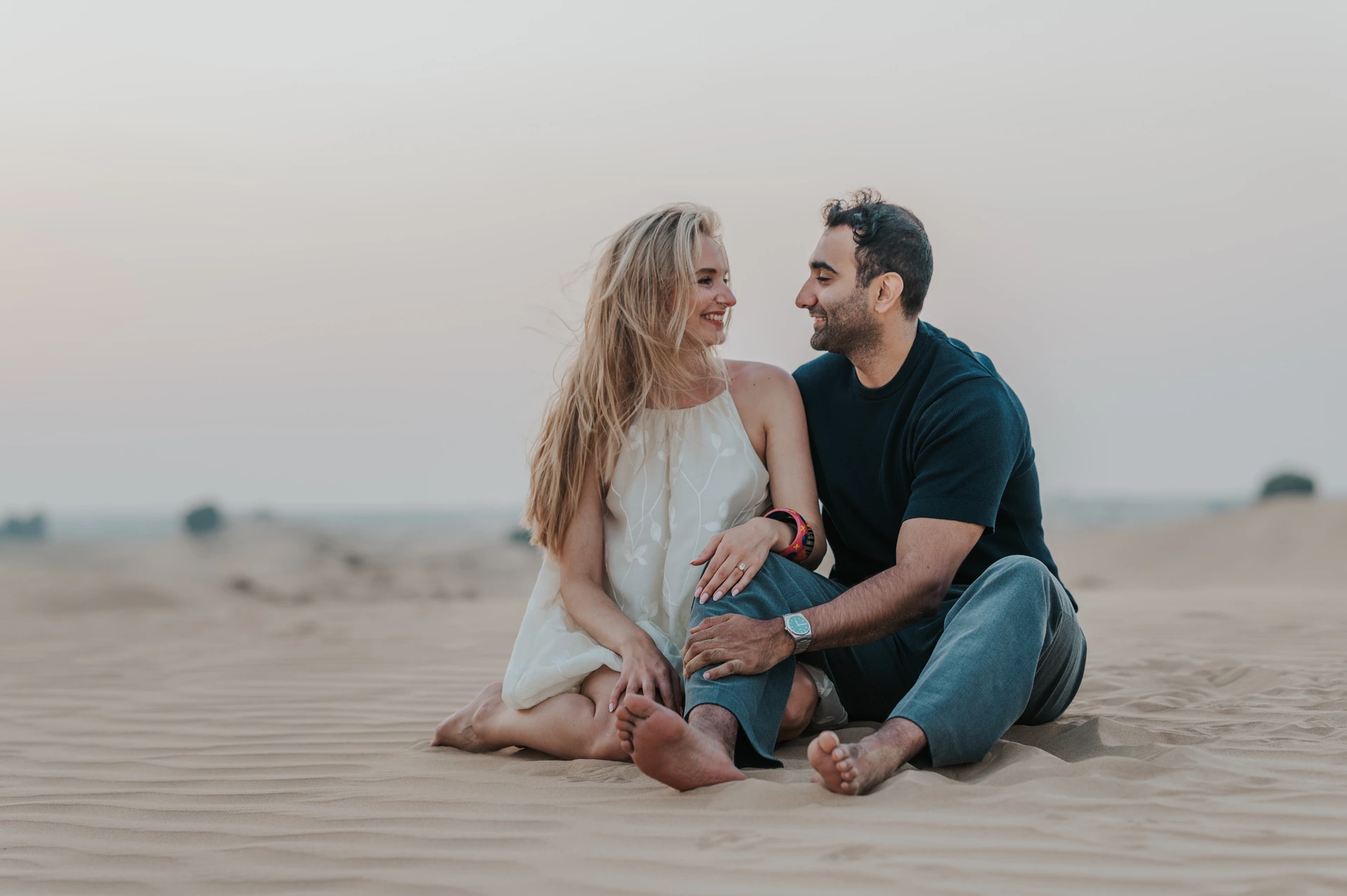
In the desert dunes the best movement is slow and deliberate - and if you're still deciding between a sunrise or sunset slot, our guide to couple photoshoot Dubai sunrise vs sunset breaks down exactly how the light and mood differ between the two. Walking on soft sand is naturally unhurried and that pace looks absolutely beautiful on camera because it reads as calm and cinematic rather than rushed. The walk-along-the-ridgeline prompt is one of the most stunning in any photographer’s toolkit: two people silhouetted against the sky at the top of a dune, moving slowly together. The one movement to avoid is running or fast movement on soft sand, which is physically tiring, kicks up dust, and tends to look effortful rather than graceful. Let the landscape do the dramatic work and keep the movement gentle.
On the beach the breeze becomes an active part of the session and you want prompts that use it rather than fight it. Walking along the shoreline toward the camera with the wind behind you creates that perfect flowing-fabric, moving-hair frame that beach photos are famous for. Pausing at the water’s edge and just looking out together gives your photographer a beautiful natural moment with the light reflecting off the water. The one thing to watch on a beach is the walking-toward-camera prompt in strong wind: face-on into a gusty headwind is uncomfortable and shows. Walk across the wind or with it behind you instead.
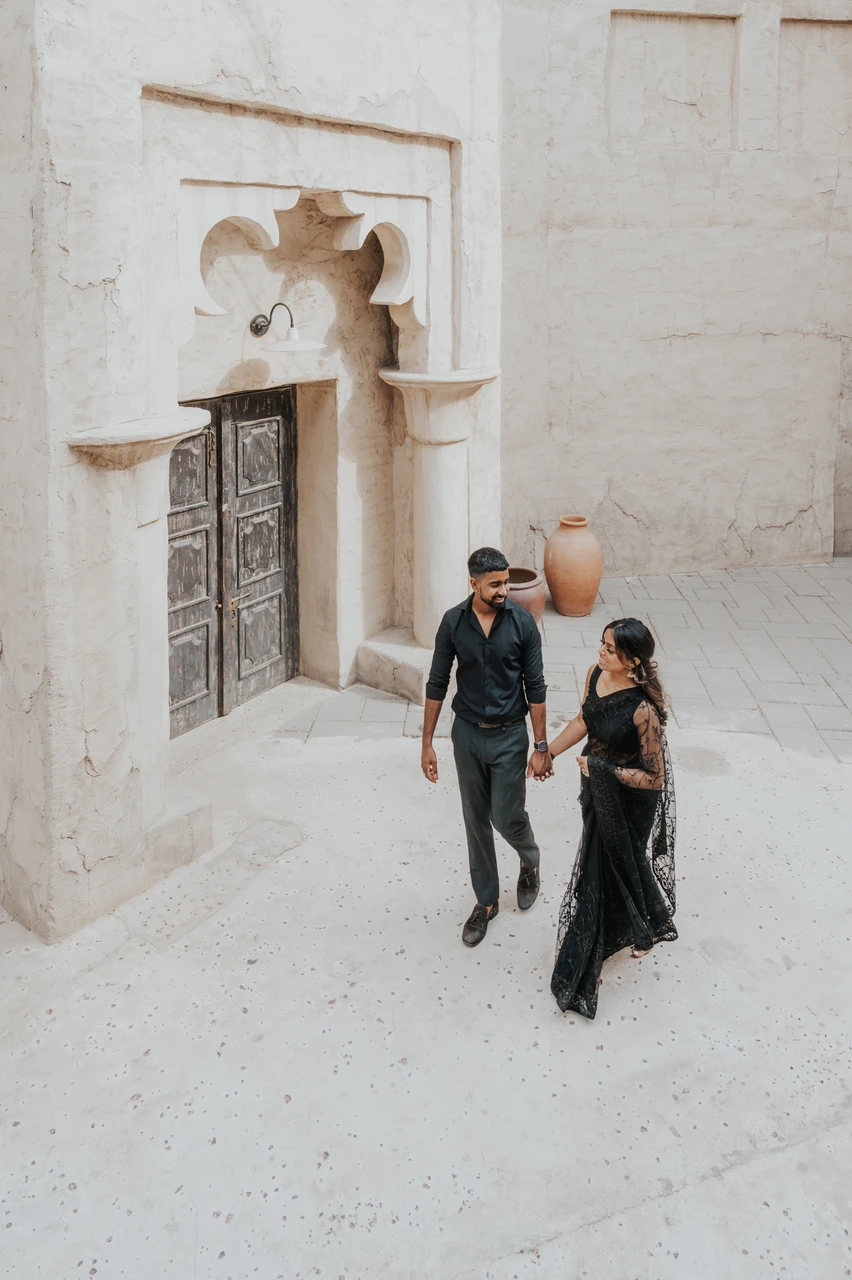
On a city walking route like a heritage laneway or a Creek promenade the movement that works best is exploration energy. Walk like you’re genuinely discovering the place together: pausing to look at something, leaning in to read a sign, one of you pointing something out to the other. This kind of movement looks completely natural because it is: you’re doing exactly what two people exploring a beautiful place would do. The stop-and-look-at-each-other prompt in a narrow lane with beautiful walls on both sides produces some of the most romantic frames of any session. The caution here is pacing: move slowly enough that the camera can keep up with you and that the background actually registers in the frame.
Photographed by Travaya Photographers
How to Stay Relaxed and Keep the Energy Going on Shoot Day
When you feel yourself stiffening up, take a breath and reset. Three things work reliably well for this. The first is a proper breath together: both of you stop, take a slow breath in and out, and then carry on. It sounds almost too simple but it physically releases tension in a way that shows immediately in the next set of frames. The second is a short walk break with no camera: just walk somewhere together, talk about whatever, forget the shoot for two minutes. The third is switching to a completely different prompt: if you’ve been doing quiet intimate frames, jump to something playful. If you’ve been laughing and energetic, slow right down. The change of gear resets the energy better than pushing through the same mode.
The best candid moments very often happen right after someone says something that isn’t a prompt at all. A photographer who makes a terrible joke. A comment about how ridiculous the dip prompt looked. Something one of you says to the other that has nothing to do with the session. These real, unguarded reactions are what the best photographers are always watching for and they happen naturally when the session feels more like a fun morning out than a professional shoot.
Travaya’s photographers guide these prompts through the whole session so you never have to remember what’s coming next or worry about what to do with your hands. The practice routine the evening before simply means you arrive already comfortable with being close and moving together, which makes the whole thing easier and more fun from the very first frame. The prompts, the pacing, and the energy resets are all handled for you. Your job is just to show up and enjoy the morning.

Want Your Couple Photos to Feel Like You?
We'll help you plan a relaxed Dubai couple session with natural prompts, the right timing, and a photographer match that fits your vibe.
Your Motion and Candid Couple Photos Checklist Before Shoot Day
Do the 15-minute practice routine at home: close standing, slow walking, playful prompts, quiet finish. Put your outfit on and move around in it: walk, sit, spin once. If something restricts you, swap it out now. Decide on loose hair or a simple soft style that moves well. Pack flat shoes or sandals for outdoor sessions and bring something to tie your hair back with if it gets windy. Pick two or three prompts from the list above that feel fun to you and mention them to your photographer before you start. Check exact Dubai sunrise and sunset times for your shoot date so you know precisely when your best light window starts. Get an early night and eat a proper breakfast. A relaxed body shows in every single frame.
That’s genuinely all you need. Browse our Dubai couple photoshoot packages and the rest is already taken care of.
Photographed by Travaya Photographers
Frequently Asked Questions
Move. That’s the real answer. The moment you have something to do together, the camera stops being the thing you’re reacting to. Start with the gentlest prompts: slow walk, stop and look at the view, stand close and breathe. Your photographer will ease you in gradually and the camera shyness almost always disappears within the first 10 minutes once you’re both in motion and focused on each other rather than the lens.
Fifteen minutes the evening before is genuinely enough. You’re not rehearsing a performance, you’re just getting comfortable with being physically close and moving together so that your body already knows what to do when the prompts come on the day. More than 20 minutes of practice can actually make you feel more self-conscious rather than less.
Yes, easily. A mix of walking prompts, pause-and-look cues, and one or two playful moments gives your photographer everything needed for a complete and varied gallery. The variety comes from different distances, angles, and light as much as from different movements. You don’t need a long list of prompts for great results.
Very short skirts that need holding down in the wind, tight trousers that limit your stride, structured jackets that restrict how you hold your arms, and anything with a complicated neckline that shifts when you move. The test is putting the outfit on at home and walking around in it. If you’re managing it rather than wearing it, choose something else.
Sharp frames first, always. Motion blur is a beautiful creative effect but it works best as a small addition to a gallery that already has strong sharp images. Let your photographer lead on this: if the light and movement are right for blur they’ll suggest it naturally. Don’t plan your session around it.


Our Dubai Shoots:
Book your Dubai couple Photographer!
Start BookingENJOY $20 OFF
Your first photoshoot when you become an email subscriber.
Verwandte Artikel

Dubai Proposal Guide: Ideas, Costs, Locations & How to Plan It
A complete guide to planning a proposal in Dubai, from location style and privacy to budget, timing, photographer flow, and what to wear.

Marriage Proposal Heart Setup in Dubai
A practical Dubai guide from Travaya.
Proposal Ideas in Dubai: The Complete Guide
A practical guide to proposal ideas in Dubai with setup options, real costs, and timing tips.