
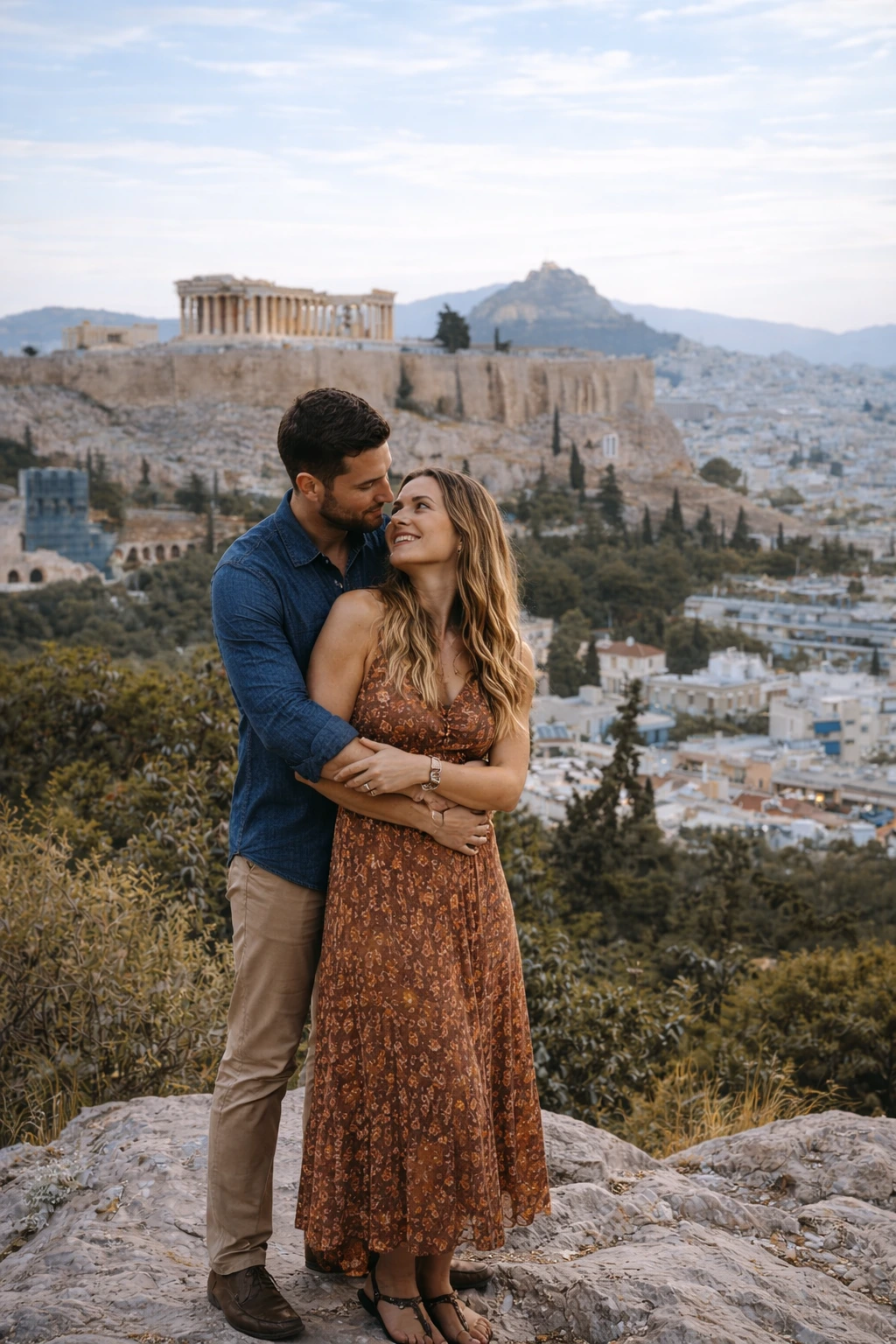
An Athens Rooftop Couple Photoshoot with Acropolis Views
The lift doors open, the city noise drops a little and suddenly the Acropolis is there, floating above a jumble of pale roofs. It is a brilliant place to photograph two people in Athens. It is also a real property, with staff, tables, guests, wind, opening hours and its own idea of what can happen on the terrace.
That is what makes a rooftop session different from walking up a public hill. The photographs begin with a written yes from the property. Once that is settled, the photographer can build a short, beautiful session around the exact view, the direction of the light and the way the rooftop actually works.
This guide is for a couple who want the Acropolis in the story without turning the evening into a production. It covers how to secure the right access, read the view before booking, choose clothes that behave in a breeze and give the venue and photographer one clear plan.
Updated

Table of Contents
Why a rooftop changes the Athens story
The terrace also gives a session a natural rhythm. You can begin with the city in daylight, move into softer portraits as the sky warms, then finish with the monument illuminated after dusk if the access window allows it. There is less walking than a hill route and usually a lift, although the final steps and accessibility still need checking with the property.
Privacy is never automatic. A hotel bar may be serving guests. A restaurant roof may be laying tables. A private apartment terrace may belong to a booked room, and an events rooftop may be available only through a hire agreement. The word rooftop tells you the height, not the conditions.
The best version feels wonderfully simple: one confirmed space, one useful view and enough time for the two of you to forget about the edge of the frame.
Get the rooftop yes before planning the pictures
Request the answer in writing. The useful confirmation names the terrace, date, arrival time, session length, group size and equipment. It should also say whether other guests will be present, which areas remain open, and whether the photographer must register at reception. If a staff contact will be on duty, keep that name and number with the booking.
Ask about the practical details at the same time:
- Is the terrace exclusive, semi-private or open during normal service?
- Are tripods, flash, large props, flowers or drinks allowed?
- Is there a changing space, secure place for a bag and accessible lift route?
- Can furniture be moved, and who is permitted to move it?
- What happens if the roof closes because of wind, rain or an event?
- Are there dress rules or minimum-spend conditions during restaurant hours?
This is private-property consent, not a general Athens permit. Larger commercial productions, drones, protected sites and occupied public space can bring different rules. For a light couple session on a private roof, the property is the first authority on access, while the photographer should flag any plan that goes beyond the agreed footprint.
Choose the Acropolis view, not only the venue name
Ask the property for a current phone photograph taken from the approved area at roughly the time you want to visit. A short video turning from left to right is even more helpful. Your photographer can then answer four practical questions: how large the Acropolis will appear, where the sun will sit, whether the background has visual interruptions and how much space exists to step back for a full-length portrait.
Distance is not automatically a weakness. A smaller Acropolis can look elegant when the city forms layers beneath it. A close view has immediate drama but leaves less room to vary the composition. Decide whether you want the monument to dominate every frame or appear as one recognisable chapter in a gallery about the two of you.
Check railings too. Solid walls can hide the lower city when the camera is held at portrait height. Glass catches reflections. Open metal rails may be visually light but limit where a couple can stand safely. A photographer can work with any of these when the layout is known before arrival.
Time an Athens rooftop couple photoshoot around the terrace
The roof’s orientation matters more than a generic sunset time. The setting sun may sit behind you, skim across the terrace or disappear behind a neighbouring building before the official sunset. A venue photograph and compass check help the photographer set an arrival time for that exact roof.
Normal service matters as much as the sky. A restaurant terrace may be calm before dinner and crowded precisely when the light turns warm. A hotel roof may restrict photography after opening. An events terrace may offer a short exclusive setup window before guests arrive. Ask which twenty or thirty minutes create the least conflict, then let the photographer decide how to use them.
Arrive ready. Changing a full outfit, unpacking props and deciding where to stand can consume the best light. The efficient version is to meet downstairs, confirm access with staff, make any final adjustments, then step onto the terrace together.
Dress for wind, warmth and the property
Soft tailoring, a midi dress with some weight, a fitted layer or a shirt that can be tucked securely all work well. Bring a jacket, wrap or overshirt even on a warm Athens day because the temperature can change quickly after sunset. If your hair is long, a simple clip or pins create an option without forcing one style for the whole session.
Coordinate with the rooftop rather than matching each other. Cream, olive, rust, navy, soft blue and warm neutrals sit comfortably against stone, planting and an evening sky. Very tiny checks or stripes can shimmer in digital photographs. Bright white can work beautifully, but some restaurant terraces have strong spotlights after dark, so texture helps it keep detail.
Footwear should suit the actual surface. A terrace may combine tile, decking, shallow steps and metal thresholds. If you want heels, carry a stable alternative and ask whether the venue has any footwear rules. Keep pockets light, leave large bags downstairs when secure storage exists, and treat a coat or glass as part of the scene only when it adds something.
Build variety without leaving the roof
Movement keeps the photographs relaxed. Walk a short line together, turn towards the view, straighten a collar, share a quiet sentence or lean into the breeze for a moment. The photographer can repeat an action from a new angle without asking you to perform the same smile.
Furniture can help when it is already in the approved area. Two chairs create a conversational frame; a table and drinks make the session feel like an evening together. Keep logos, service clutter and other guests out of the composition where possible. Staff, rather than the couple, should decide whether anything moves.
The Acropolis does not need to appear in every photograph. A close portrait against the final light makes the wide views feel more valuable when they return. A gallery with scale, touch, movement and atmosphere will remember the evening better than twenty versions of the same skyline pose.
Keep a weather fallback that still feels special
A covered roof section or interior window may preserve the Acropolis relationship. A hotel lounge can create a polished city-night chapter when photography is permitted. A nearby street can offer warm façades and movement, while a public hill is a separate plan with different walking, light and access needs.
Decide the order of choices before the date: covered position first, interior second, nearby street third, reschedule if none of those delivers the experience you want. Confirm any cancellation fee, room condition or restaurant spend directly with the property. Clear terms are much more romantic than negotiating in a lift lobby while the clouds gather.
What an Athens rooftop couple photoshoot feels like
There is a wide photograph with Athens around you. There is a closer one while the last direct light catches the edge of a face. Someone’s hair moves, you both laugh, and that becomes the frame you did not know you wanted. A few minutes later the sky cools and the Acropolis begins to glow.
Then the session ends on time. The terrace returns fully to the property, the camera goes away and the rest of the evening can become dinner or a drink. Because the permissions and timing were handled earlier, the photographs feel like part of a date instead of a negotiation with a view.
Plan your Athens rooftop couple photoshoot
Begin with the kind of roof you can genuinely access, then share the written terms, a current view photograph and your preferred date with the photographer. That is enough to assess light, spacing, equipment and a realistic weather alternative before you commit to the final timing.
Explore the options with a photographer in Athens. Mention whether you are staying at the property, whether the roof will be private or operating normally, and how important sunset and the illuminated Acropolis are to you. A clear little brief can turn a very big view into an easy evening together.
Athens rooftop couple photoshoot FAQs
Practical answers for arranging a private-property rooftop session in Athens
Yes. A hotel, restaurant, apartment or events terrace is private property, even when members of the public can book a table. Ask the property for written permission that covers one professional photographer, the agreed time, equipment and approved area.
Not necessarily. A booking gives you the service described in its terms, not automatic permission for a professional shoot. Tell the venue exactly what you plan and ask whether a room, table, private hire or separate fee is required.
The best window depends on the terrace’s direction, neighbouring buildings and operating hours. A short period before sunset through early blue hour can give useful variety, but the photographer should set the time from the exact roof rather than a citywide rule.
Agree a covered position, permitted interior option or nearby street fallback before the date. The property decides whether the roof is safe to open. Check its rescheduling and cancellation terms as part of the access agreement.
Only when the property has approved them. Handheld cameras keep the footprint small. Stands, flash, large flowers, candles, drones and decorative setups change the risk and disruption, so include them in the original request.
Choose clothes that move well without needing constant adjustment, bring a light layer for after sunset and wear shoes suited to tile, decking or steps. Also check the venue’s current dress code if the terrace operates as a restaurant or bar.
Yes, when the transfer adds a genuinely different chapter. A nearby street can bring movement and warm façades. A public hill requires more walking and its own timing, so it works better as a planned second location than an emergency extra.


Our Athens Shoots:
Book your Athens couple Photographer!
Start Booking
A Plaka Couple Photoshoot Through Athens' Loveliest Streets

An Anafiotika Couple Photoshoot Beneath the Acropolis
Turn Your Athens Couple Photoshoot Into a Brilliant Date
How to Make Your Athens Honeymoon or Anniversary Photoshoot Personal

Athens Engagement Photos: Romantic Ideas That Feel Like You
Natural Athens Couple Photos Without Awkward Posing
ENJOY $20 OFF
Your first photoshoot when you become an email subscriber.
Related Articles

A Plaka Couple Photoshoot Through Athens' Loveliest Streets
Choose the loveliest Plaka streets for your couple photoshoot, with an easy flower, shutters, steps and colour route that respects the neighbourhood.

An Anafiotika Couple Photoshoot Beneath the Acropolis
Plan a quiet Anafiotika couple photoshoot with kinder light, sensible shoes, a small gallery footprint and respectful use of the residential lanes.
Turn Your Athens Couple Photoshoot Into a Brilliant Date
Turn an Athens couple photoshoot into a relaxed date with an easy walk, one meaningful activity, thoughtful coffee timing and a lovely plan for afterwards.