
October 9, 2026
Best Places to Propose in Venice: Gondolas, Canal Corners and Lagoon Views
A gondola slips beneath a bridge, the water catches a row of pink and ochre houses, and suddenly the ring in your pocket feels very real. Venice can make a proposal feel wonderfully cinematic. It can also give you several completely different versions of that moment within one short walk.
The best choice isn't simply the most famous pin. It's the setting that fits how you want to arrive, where your photographer can wait without spoiling the surprise, and what you want to do after the yes. Start with one question: do you want to be on the water, beside it, or looking back at the whole city?
Updated

Table of Contents
The best places to propose in Venice at a glance
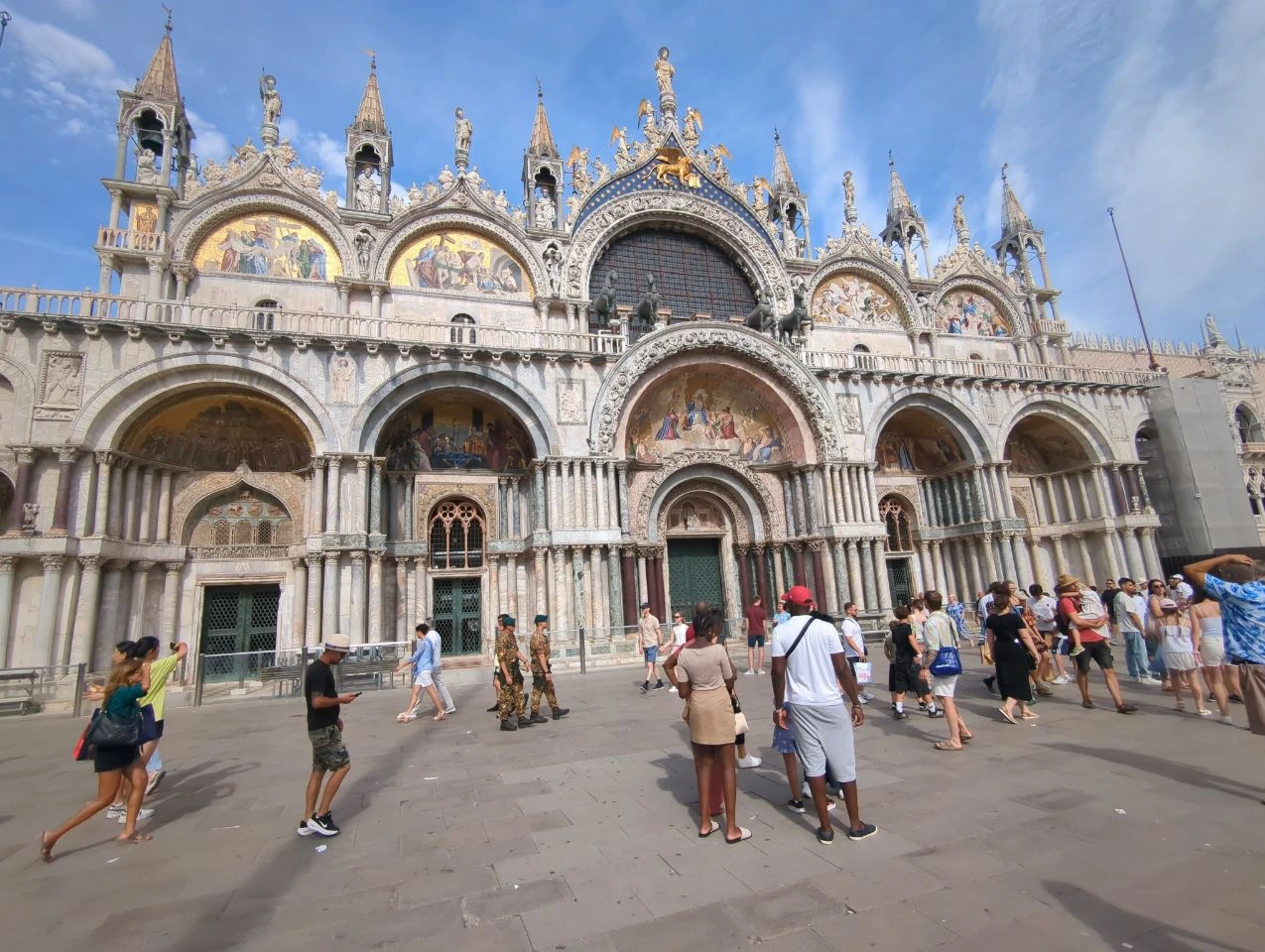
Piazza San Marco: grand, open and full of scale. The Basilica facade, arcades, Doge's Palace side and lagoon waterfront all feel different, even though they're minutes apart. Best for: you love Venice at its most recognisable and don't mind sharing the atmosphere with the city around you.
Rialto: famous bridge or full bridge view. Propose on the bridge for movement and city energy, or stand on a nearby canal edge so the whole arch appears behind you. Best for: you want an instantly recognisable backdrop and can plan the exact side, light and photographer position.
A quiet canal bridge: smaller, softer and more personal. When you stand on one bridge and your photographer waits on another, the canal and old houses create natural layers between you. Best for: you want the proposal to feel like part of a Venice walk rather than a stop at a major landmark.
San Giorgio Maggiore: Venice across the lagoon. You travel to the island and look back towards San Marco, with more water and sky in the frame. Best for: the journey across the lagoon feels exciting and you want the city at a distance.
Accademia: a broad Grand Canal chapter. The view towards Santa Maria della Salute gives you sweeping water and palazzi while keeping you within a city walk. Best for: you want a big Venice view without making a separate island trip.
Libreria Acqua Alta: quirky, bookish and full of character. This is a working shop with narrow aisles, visitors and cats, so it works best as an agreed, subtle option or a later photo stop. Best for: books are genuinely part of your story and you're happy to keep the moment small.
A private rooftop or palazzo: arranged and separate. A booked terrace, garden or salon can give you a defined space, a weather alternative and time for flowers or a toast when the venue confirms them. Best for: control and privacy matter more than spontaneity.
That's the quick answer. The lovely part is working out how each option actually unfolds.
A Venice gondola proposal: on the water or after you arrive?
With the photographer on board, you keep every expression close. This is the strongest choice when you care most about the exact second your partner realises what's happening. The cover story can be a short holiday photoshoot, which explains the camera without revealing the ring. Sit so your faces stay visible, agree a quiet bend or bridge with the gondolier, and wait until the boat is steady before you reach for the ring. A gondola is charmingly narrow, so this is more eye contact and happy disbelief than sweeping canal panorama.
The natural flow is simple:
1. Board at the agreed stazio with the photographer already introduced as part of the outing.
2. Let the ride settle before the gondolier slows at the chosen point.
3. Ask the question, enjoy the moment, then continue to a planned landing for portraits on foot.
With the photographer on land, the gondola becomes part of a wider Venice scene. Your photographer waits on a bridge or canal bank while the gondolier approaches the agreed sightline. This can create a beautiful image of the two of you, the boat, water and facades together. It needs a precise boarding point, route and cue because gondolas don't all follow one standard path. Your expressions will be smaller in the frame, but the city has a much bigger role.
With the proposal after landing, the arrival becomes the surprise. A lovely version is to arrive by gondola, step onto a suitable quay, walk around the corner and find the photographer waiting with a bridge behind you. Your partner gets the romance of the ride without trying to kneel in a moving boat, and you both have more room when the question comes. It also makes the switch into celebratory portraits feel completely natural.
That landing has to be checked close to the date. A quay that works at lower water can be wet or unusable at a different tide, and an empty dock isn't automatically free for a planned stop. Agree a public, usable arrival point and a nearby land-based alternative. The tide chooses the practical window first; your preferred light fits inside it.
Venice's municipal gondola page currently lists the standard public tariff as €90 for 30 minutes from 9am to 7pm and €110 for 35 minutes from 7pm to 4am. A specific route, the photographer's seat, a longer pause, music or other extras need their own confirmation. Treat the gondola booking and photography plan as two connected arrangements, not one assumed package.
San Marco gives you four proposal moods, not one square
The Basilica facade is the most detailed view. Gold mosaics, layered arches and sculpted figures fill the background. The daytime square can be busy with visitors and temporary stalls, while a very early visit can create far more room for walking photographs. Early timing improves your chances of a clean line, but it doesn't turn a public square into a private set.
For the proposal, walk towards a small agreed mark with the photographer waiting off your direct line. Ask with enough distance from the facade to keep its upper detail in frame, then move towards the arcades. Don't tie this exterior plan to the Basilica's opening time. You're using the public square, not planning an indoor shoot.
The arcades feel more intimate and graphic. Columns and repeated arches create a clear frame, while the shade can soften hard light or light rain. They also give your photographer a believable place to wait. Walk beneath the portico, pause at the chosen opening and turn towards each other. Afterwards, you can step back into the square for wider portraits without changing neighbourhood.
The Doge's Palace side brings pale stone and lagoon light. This suits a proposal that starts as a waterfront stroll. Your photographer can work from farther along the promenade, then follow you towards the palace facade and nearby canal views once the surprise is over.
The waterfront around the two columns makes the sky and water part of the moment. It's more open than the Basilica side and gives the island skyline room to appear. Keep the main pedestrian route clear and choose a standing point rather than setting up anything that occupies the square.
If the open square is lively, that doesn't ruin San Marco. It simply changes the story. The arcades, palace side and waterfront let you keep the same grand Venice chapter while shifting the camera direction. That's much more useful than waiting for a famous square to become empty by magic. Venice has many talents; standing still for your schedule isn't one of them.
Rialto can be the stage or the background
On Rialto itself, you're inside the movement of Venice. The steps, stone balustrades and stream of people make the moment feel public and energetic. A photographer can blend into the bystanders near an agreed side, capture the question, then reveal themselves as you cross towards quieter lanes. This suits you if applause, passers-by and a little city buzz would make the moment more joyful rather than less personal.
From a nearby canal-side position, the full arch becomes the backdrop. Your photographer can wait across the water or farther along the bank, keeping you large enough in the frame while showing the bridge behind. Local proposal reportages show this flow working well: the question near Rialto, a breath to take it all in, then portraits through the lanes towards San Marco or the Bridge of Sighs.
Light and water level affect the exact side. One quieter side can offer more shade and richer colour, but its lower pavement can be reached by high water. Check the tide, foot traffic and usable edge before the day, and keep a second point on higher ground within the same area.
After the yes, don't race straight to another icon. Take a few minutes on the nearby steps or lanes while the emotion is still gloriously written all over your faces. Then add one wider canal portrait. Rialto has already done its job.
Quiet canal bridges make the photographer part of the geography
Two nearby bridge-to-bridge setups can give you especially useful camera lines. In both, you can stand on a small bridge while the photographer works from another bridge at a similar height. Water, railings and houses create layers without asking anyone to block the crossing. One angle can finish with a little lane behind you; the other can place a house facade beyond the canal. They feel like two different Venice stories from the same small cluster.
This is where a surprise can feel wonderfully natural. You're simply walking. Your photographer is already waiting on the opposite bridge, looking like another visitor. You reach the agreed centre or stop near the rail, turn towards your partner and ask. Once you've had your moment, the photographer crosses to meet you and the session continues through the linked square and waterside steps.
Cannaregio and Fondamenta della Misericordia bring a longer, lived-in canal edge, bridges and bacari into the background. Choose it when you'd rather celebrate with an aperitivo nearby than move straight into another monument. Ponte Chiodo is often mentioned because of its unusual open edge, but that feature isn't an invitation to pose close to the drop or obstruct the route. Use a safe standing point and let the bridge's shape stay in the composition.
The Bridge of Sighs works best as a layered background. Choose an angle where the scene stacks through several bridges and buildings, with a flowered back route in the other direction. The familiar bridge becomes part of the depth rather than the only subject. It fits naturally after San Marco, especially when the photographer has already chosen a viewpoint with enough public space for both of you.
Small canal corners can also be honest exclusions. Wooden docks, hotel landings and boat moorings can look beautiful, but they aren't automatically public proposal locations. Boat use, hotel access and water level decide whether they're available. When the access isn't clear, use the nearby public bridge or fondamenta and keep the same water-and-facade feeling.
San Giorgio Maggiore or Accademia: choose how far Venice sits behind you
Plan it as its own chapter. ACTV's Line 2 serves the San Giorgio stop, but timetables can change, so check the current service in both directions. Agree which arrival you are taking, where the photographer meets you and how much time sits between the proposal and the return boat. The open waterfront can feel breezy, which is lovely for movement and worth considering for hair, clothing and audio if you're recording the moment.
Your photographer can wait along the waterfront while you walk towards the agreed view of San Marco. After the question, stay on the island for a short set of portraits rather than watching the clock from the first hug. If transport or wind makes the island plan awkward, the San Marco waterfront offers a related lagoon feeling without the crossing.
Accademia gives you a broad water view while keeping the proposal inside a walking route. From the bridge, the Grand Canal opens towards Santa Maria della Salute, palazzi and passing boats, with plenty of sky and water along the axis. The bridge itself remains a busy crossing, so treat it as the reveal view and use a nearby approach or waterside point for the actual pause when that works better.
Choose San Giorgio when the island trip and distant city are part of the romance. Choose Accademia when you want that wider scale without separating the proposal from your walk through Dorsoduro.
For the portraits that follow, explore Venice photoshoot options and decide whether the lagoon view or a walk through the lanes should lead.
Libreria Acqua Alta and private venues need an invitation, not an assumption
If books genuinely mean something to you both, contact the shop and discuss the idea. Keep the proposal subtle, use the time and area they approve, and make it easy for visitors to keep browsing. If that conversation doesn't produce a clear arrangement, visit together after the proposal for a few quick photographs. The place keeps its charm without carrying the entire surprise.
A private rooftop, palazzo or hotel terrace is the opposite choice. You're booking a defined experience. The Peggy Guggenheim Collection, for example, publishes event options for its roof terrace and other spaces, while The Gritti Palace describes a private rooftop terrace and event planning. Those pages prove that arranged spaces exist; they don't prove availability, price or permission for your date.
Ask the venue to confirm the exact room or terrace, access time, photographer permission, weather alternative, guest limit and what can be set up. A reservation for dinner or a hotel room doesn't automatically include event use of every photogenic space. Once the agreement is clear, the photographer can plan around it with far more control than any public square can offer.
This route suits flowers, music, a toast or family waiting out of sight, provided the venue includes them in writing. It also gives you a true indoor or covered alternative if the booking includes one. Privacy comes from the reservation, not from calling a pretty corner "secret" on the internet.
How to time the best places to propose in Venice
For San Marco, Rialto and Accademia, an early start often gives the photographer more freedom to choose a camera direction and lets the architecture breathe. It still isn't a guarantee of empty surroundings. If dawn would make your partner suspicious or miserable, choose a place that suits a later hour. A private venue, Cannaregio walk or evening gondola may feel far more like the two of you.
For a gondola or low quay, check the tide as well as sunset. The City of Venice publishes real-time high-water information and directs visitors to its tide-monitoring forecasts. Use that current forecast close to the date. A beautiful low landing may need to become a higher bridge approach or an arranged indoor space when water reaches the route.
For rain, think in connected alternatives. San Marco can shift from the open square to its arcades. A canal proposal can move to a higher bridge or covered street. A booked venue can use the room named in the agreement. Spare shoes or discreet covers can keep a wet walk from becoming the whole story. The plan changes shape, but the question remains exactly where it belongs.
Venice also has clear rules for larger or obstructive photography activity. The city's Film Commission guidance says permission is required for crews of more than six people, more than one tripod, or activity that can impede normal pedestrian, vehicle or water traffic. A discreet couple and photographer is a very different footprint from a decorated setup with equipment. Keep public routes clear and confirm permits when your plan grows beyond the light-touch version.
Turn the proposal into one lovely Venice route
For San Marco, propose at the chosen facade, arcade or waterfront point, then walk towards the Bridge of Sighs and one quieter canal. For Rialto, use the bridge or canal bank for the question, then move through the lanes for close portraits before finishing by the water. For a gondola, let the ride lead into a landing and short bridge cluster. For San Giorgio, stay on the island long enough to enjoy the skyline before returning.
Send your photographer a recent photo of the two of you, the exact clothing plan and the contact number that won't appear on your partner's lock screen. Agree one meeting pin, one cue and one fallback. Your photographer should know where to wait before you arrive, which direction you will face and where the first post-proposal portrait happens.
You can book a Venice proposal photographer with Travaya and plan the timing, meeting point, photographer position and nearby alternative together. That leaves you with one job on the day: be present enough to remember what your partner says before the cheering, kissing and very enthusiastic ring photographs begin.
Ready to plan your Venice proposal?
Send your date, the atmosphere you love and whether you picture water, a bridge, a landmark or a private space. We'll help turn it into a clear proposal flow with one main moment, one nearby alternative and a photographer who knows exactly where to be.
FAQs about the best places to propose in Venice
Straight answers for the last details before you choose your Venice proposal plan.
The City of Venice currently lists the standard gondola fare as €90 for 30 minutes during the day and €110 for 35 minutes from 7pm. Photography, a specific route, extra time, music, flowers or a private setup are separate arrangements, so confirm the complete plan before the day.
A discreet couple-and-photographer plan that keeps public routes clear has a different footprint from a larger production. City Film Commission guidance requires permission for crews above six people, more than one tripod, or activity that can impede normal circulation, so confirm the current rules when you add equipment, decoration, musicians or a team.
Yes, with a tide-aware alternative. Check the city's current forecast, choose a higher or covered nearby point, and bring practical footwear for the walk. If guaranteed cover matters, book a venue that confirms an indoor space in the agreement.
ACTV Line 2 serves San Giorgio, with the island a short waterbus trip from the San Marco side. Check the current outward and return timetable shortly before the date, then leave enough time after the proposal to enjoy the waterfront without rushing for the next boat.
Only treat it as a planned proposal setting after the working bookshop agrees to the idea. Its narrow, visitor-filled spaces aren't reliably private, so keep the request subtle or make it a post-proposal photo stop if no arrangement is confirmed.
Choose something special that still works on bridges, steps and damp stone. Comfortable shoes or a spare pair make the route easier, while a private terrace or palazzo can support a dressier look with much less walking.


Our Venice Shoots:
Book your Venice proposal Photographer!
Start Booking
How to Propose in London

Our 12 Favourite Places to Propose on Holiday

What Does a Marriage Proposal Mean, and Why Does It Matter?

Why Do We Propose With a Ring? The Meaning Behind the Tradition
Can You Propose Without a Ring? Thoughtful Ways to Make It Special

Nervous About Proposing? How to Stay Calm in the Moment
ENJOY $20 OFF
Your first photoshoot when you become an email subscriber.
Related Articles

How to Propose in London
Make the surprise feel like you.

Our 12 Favourite Places to Propose on Holiday
A city view, a gondola ride, a walk beside the sea: explore twelve proposal destinations and find the holiday you would both love to remember.

What Does a Marriage Proposal Mean, and Why Does It Matter?
You may have talked about marriage for months and still feel emotional when the question comes. Here is why a proposal can matter, and how to make the moment yours.