
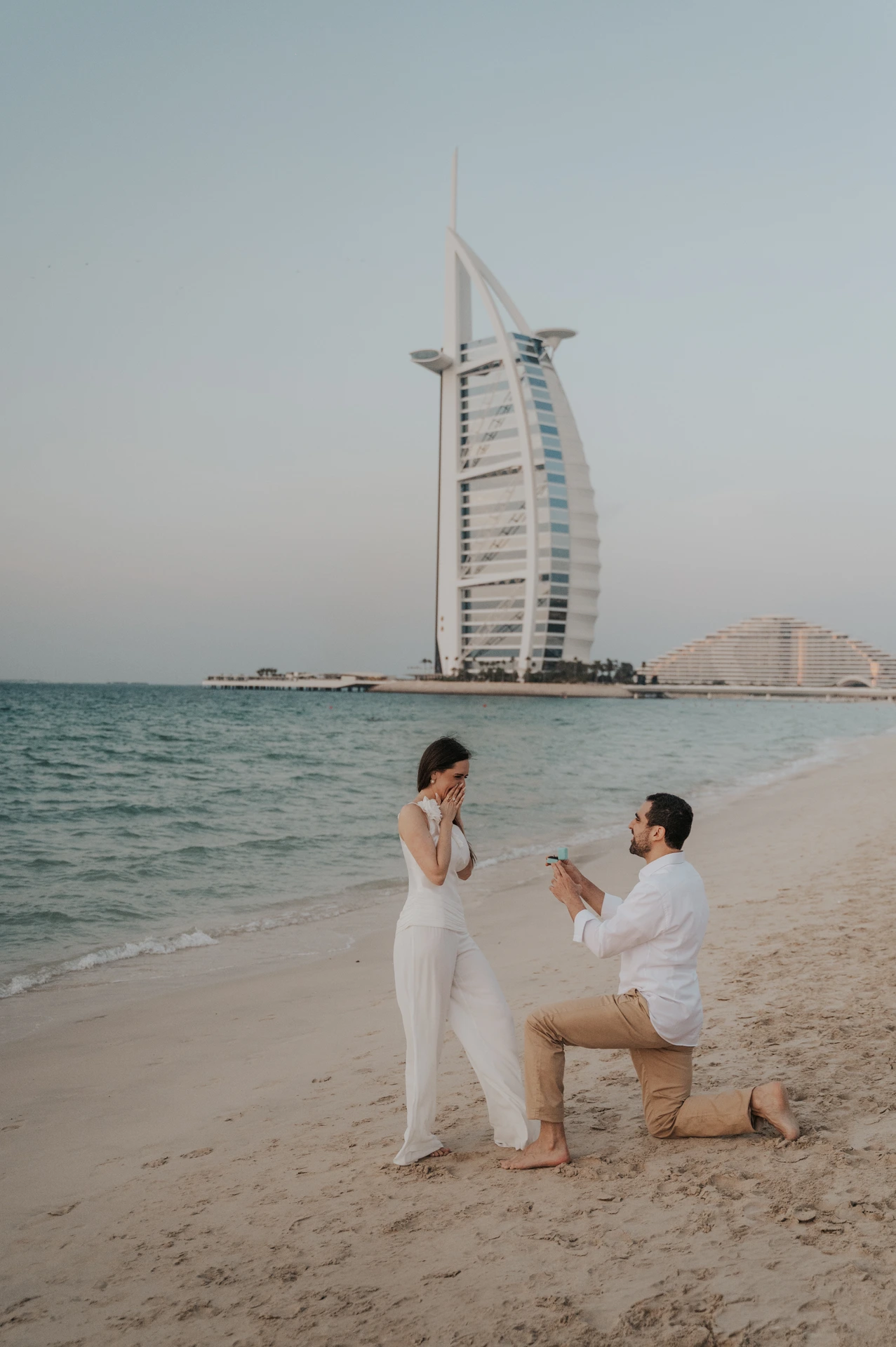
Nervous About Proposing? How to Stay Calm in the Moment
You have checked the pocket with the ring in it. You know where you are going. Then your partner takes your hand and suddenly the perfectly ordinary walk to dinner feels rather enormous. If you are nervous about proposing, you can give yourself something simpler to do than trying to feel completely calm: take the next step, look at the person you love and leave yourself room to be human.
Updated

Table of Contents
You can feel ready and still feel nervous
Try naming the particular worry. Is it getting the ring out? Forgetting what you wanted to say? Being watched? A specific concern gives you something small to prepare for, instead of a whole evening to worry about.
If the worry is that you have not discussed marriage or do not know whether you want the same future, give that conversation about what a marriage proposal means its own time before arranging a surprise. The suggestions here are for finding your way through the moment of asking.
Give each worry somewhere to go
The NHS problem-solving guide makes a similar distinction between problems you can act on and hypothetical worries. For your proposal, you could make a short note with the concern and one next action beside it. Once the entrance has been confirmed, you have answered that question. You do not need to reopen the map every time the feeling returns.
Keep the note small. Three useful answers are easier to find than a long list of every possible mishap. If another person is helping, give them the questions that belong to their part of the plan. You can ask a photographer to confirm where they will wait; you do not have to work out their whole shooting position yourself.
The remaining butterflies are allowed to come with you. The note is there to make the practical part clearer, without turning calmness into another thing you must achieve.
Keep some of the day comfortably ordinary
That might be a normal breakfast together, a gentle wander near your hotel or a quiet hour with a book while your partner gets ready. Choose an activity you can enjoy without needing to keep checking the time. If dinner is much later, leave room for lunch or a snack instead of spending the whole day running on anticipation.
There is no need to arrange a strenuous distraction or fill every gap with sightseeing. Comfortable shoes for the approach, a drink of water and enough time to get dressed are ordinary details that can make the evening more pleasant.
If you want to tell someone how you feel, choose one person who will listen without adding ten new ideas. A friend who can say, ‘Yes, you have thought this through,’ may be more helpful that afternoon than a group chat debating whether you should change the location.
Before you leave, make the first step familiar
Keep your plan for the moment short enough to remember: reach the agreed place, turn towards your partner and begin. An entire speech running through your head can make the walk feel like an exam. One opening thought is easier to carry.
If you would like a quiet exercise before leaving, the NHS breathing guide for stress suggests breathing gently and regularly, without forcing it, for at least five minutes. Counting can help if it feels comfortable. You can try it earlier in the day without expecting it to switch your feelings off.
If you have not yet found the thought you want to begin with, our guide to what to say when you propose can help you prepare it. Once you have something that sounds like you, give yourself permission to stop editing it on the day.
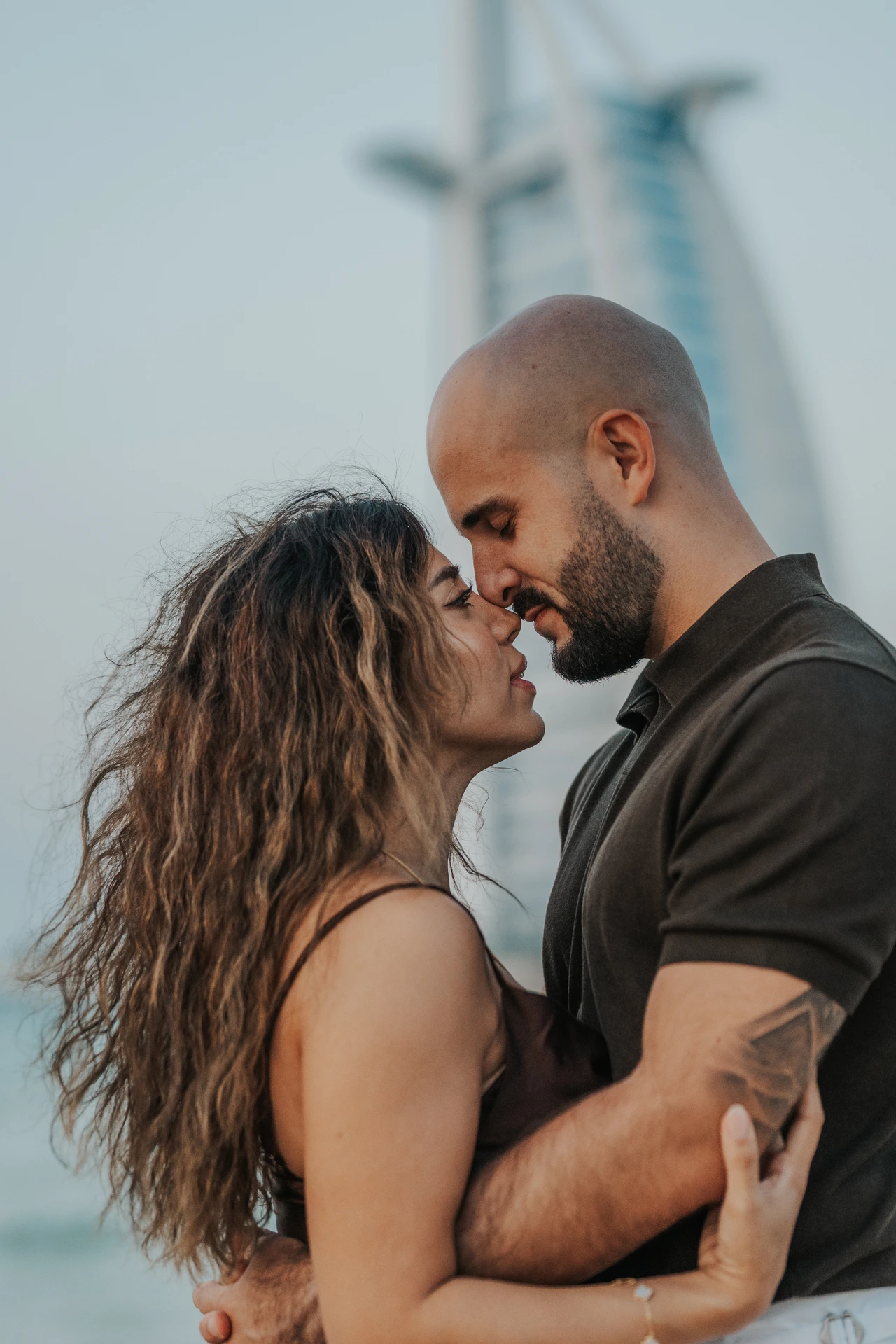
A close portrait leaves room for the expressions between you.
On the way, let an ordinary conversation be enough
Agree any necessary messages with your photographer or coordinator beforehand, so you know when to check your phone. Once you have the update you need, put it away. You will have more room to notice your partner when you are not repeatedly reading the same confirmation.
For a Dubai trip, our guide to keeping a proposal a surprise covers the discreet communication and arrival details. Set those up before the day, then let the journey be a journey together.
If keeping the secret makes you seem distant
A small, honest sentence can help: ‘Sorry, I got caught up in my thoughts. What were you saying?’ You can take an interest in what they are doing without explaining the surprise. You do not need an invented emergency to account for every distracted moment.
If you are late, let the relevant person know and find out what can change. Try to avoid making your partner responsible for a deadline they do not know about. They may have stopped to photograph a view because, as far as they know, the two of you are on a relaxed walk.
And if they notice that something is happening, you can still share the moment you planned. A half-guessed surprise does not oblige you to construct a more complicated story or put the question off just to outsmart them.
When being photographed is part of the worry
You could say, ‘I would love the reaction photographed, but I do not want to be directed while I am asking.’ Ask how the photographer will work at your particular location and when they will introduce themselves. Knowing the difference between candid coverage and portraits afterwards can make the arrangement easier to picture.
A photographer may suggest where to stop so they can see you both. Agree that beforehand, then let it become one simple part of the plan. You should not be trying to monitor a camera while listening to your partner. A hug, a turned head or a hand coming up to wipe away a tear belongs to the experience.
If the concern is more about an audience than the photographs, our proposal ideas for someone who dislikes attention explore ways to shape the setting. You might prefer a quieter spot, or photographs taken after a private question. Think about what both of you would welcome; the camera does not have to occupy the same role in every proposal.
At the spot, take a moment before you begin
If a photographer is involved, follow the simple cue you agreed. You do not need to keep searching for the camera or checking your expression. This is the part where you can pay attention to the person beside you.
If people are standing exactly where you hoped to stop, pause and use the alternative already agreed with your photographer. A delay can be frustrating, but you can still make a fresh decision about the next step. You are allowed to wait until the moment feels comfortable enough to begin.
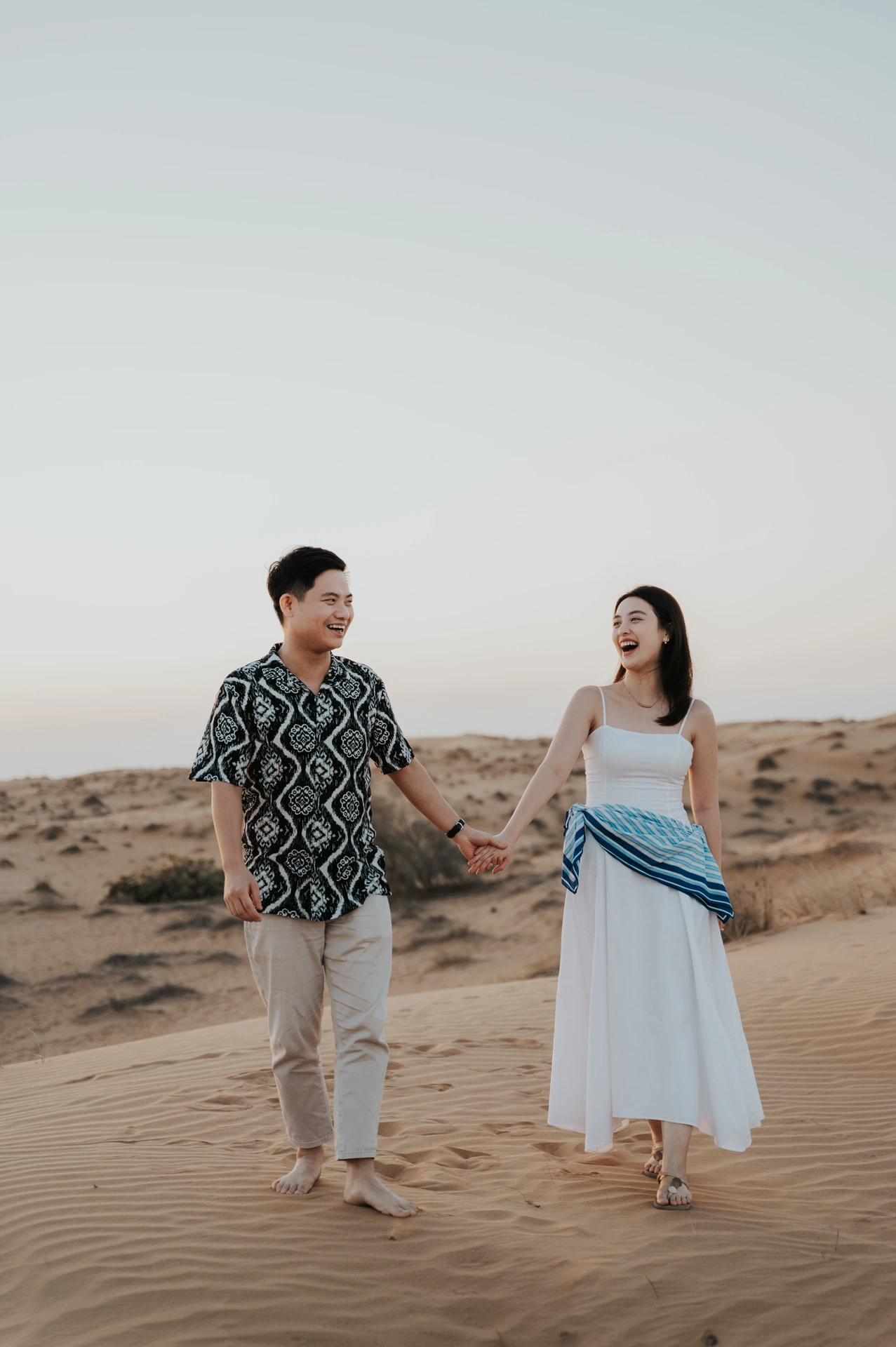
A couple stands together on the Dubai dunes.
When the place looks different from the picture in your head
For a passing interruption, wait. You can keep looking at the view or continue the conversation while someone walks through. For an uncomfortable spot, use the alternative you discussed and tell your photographer before moving. If your partner needs a break, take it. Being heard by the person you love matters more than reaching a particular mark on the pavement.
It helps to have decided which details you care about most. Perhaps you want the question to be private, but do not mind if the skyline is partly hidden. Perhaps the meaningful place matters, but you would be happy to return at a different time. Knowing that makes a small change easier to judge.
Once you have started asking, an interruption does not require a full restart. If a noise covers a sentence, pause and repeat just what your partner could not hear. If the moment genuinely feels wrong, you can stop and choose another time. A reservation can be rearranged or discussed; it does not decide when you must ask.
If your hands shake or your words disappear
If you begin to cry, take a pause. You can smile, look at your partner and say, ‘Give me a second. This means a lot to me.’ There is no need to squeeze every planned sentence out before you ask the question.
And if your mind goes blank, come back to one thing you know you want them to hear. A simple thought about your life together can lead into ‘Will you marry me?’ You can tell them the rest later, perhaps over dinner when you both have time to sit with it.
Try to leave the moment as it happened. A missed line does not need a restart, and your partner does not need to recreate a reaction for a photograph.
You may notice yourself speaking more quickly than you intended. Finish the sentence you are in, look up and allow a breath before the next one. Your partner is close enough for a conversation. You can speak at the volume you would normally use with them, rather than projecting to anyone who happens to be nearby.
After the question, leave room for the answer
Resist filling every second with another explanation. Stay with them and listen. If they need more time, give them that space. The proposal is a moment you are sharing, and their response deserves room alongside everything you have prepared.
Your partner might reach for you before you finish, or ask, ‘Are you really asking me?’ Answer them. You can follow that exchange instead of trying to recover the exact order you had in mind. If they take a step back because they are surprised, stay attentive rather than automatically moving closer. Let them show you what feels comfortable.
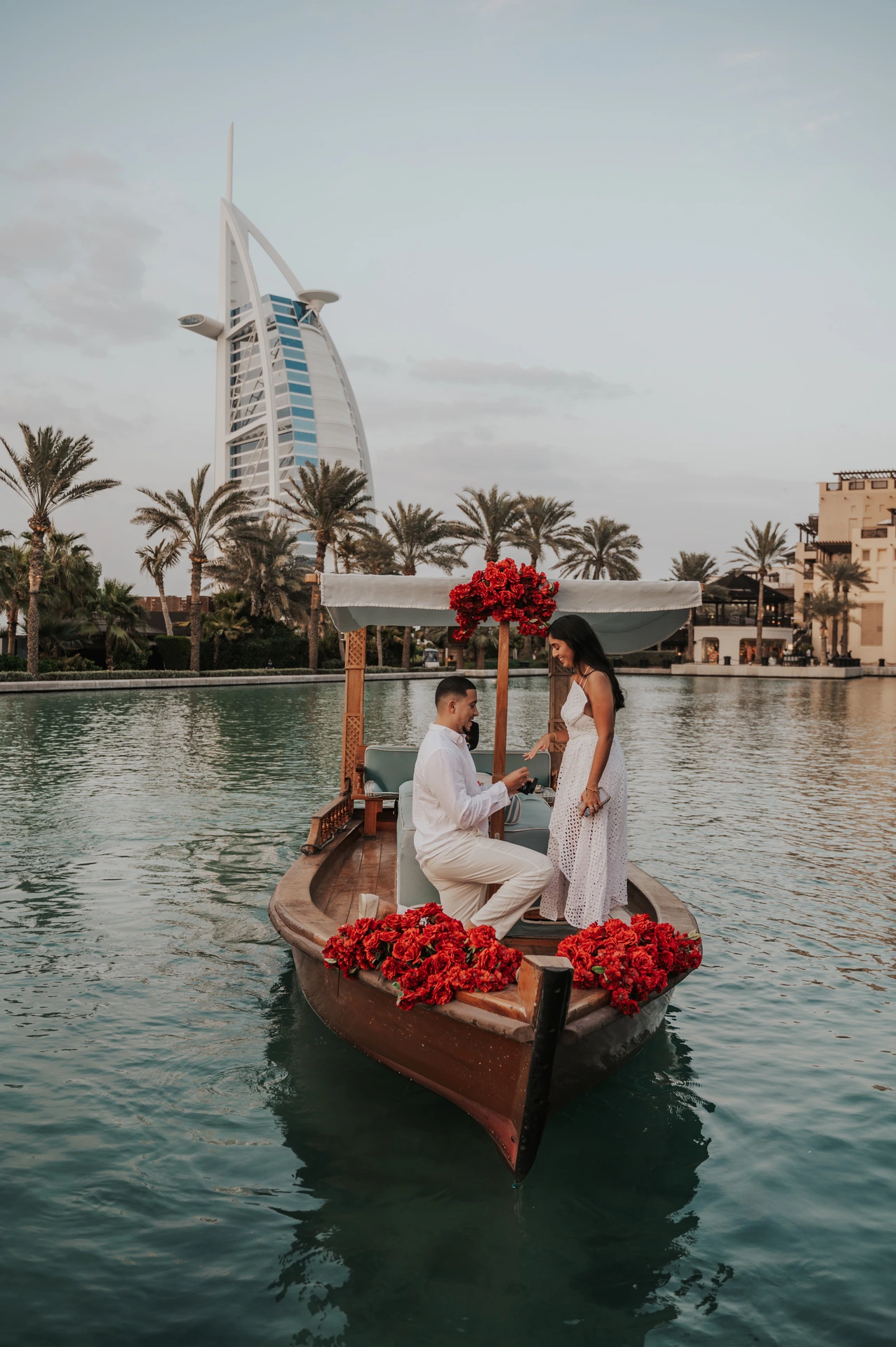
A proposal on a decorated abra at Souk Madinat.
You can still feel shaky after the yes
Leave some space before the next reservation, too. A walk to dinner is much nicer when you can stop to look at the ring again without watching the clock. If you are arranging coverage in Dubai, our guide to choosing the length of your proposal photography session helps you allow for the question, the reaction and the photographs you want afterwards.
You also get to choose how much to share straight away. If your phone begins to fill with messages from people who knew the plan, one brief update can be enough. You can save the detailed retelling for later. This gives your partner time to hear how it happened from you before the evening becomes a series of calls.
Before going to sleep, you might write down one detail you want to remember: the first thing they said, the way you both laughed, or what you ordered afterwards. It can be a private note, with no need to turn the experience into a polished announcement.
Let someone else hold the practical details
If you are proposing during a Dubai holiday, you can book a proposal photographer in Dubai and agree those details with Travaya beforehand. Then, when you turn towards your partner, the photographs can happen around the moment you have been waiting to share.
Planning a proposal in Dubai?


How to Propose in London

Our 12 Favourite Places to Propose on Holiday

What Does a Marriage Proposal Mean, and Why Does It Matter?

Why Do We Propose With a Ring? The Meaning Behind the Tradition
Can You Propose Without a Ring? Thoughtful Ways to Make It Special
How to Travel With an Engagement Ring Without Spoiling the Surprise
ENJOY $20 OFF
Your first photoshoot when you become an email subscriber.
Related Articles

How to Keep Your Dubai Proposal a Surprise
Practical help with the discreet part of your Dubai proposal: cover stories, supplier messages, ring access, arrival changes and the photographer cue.

Dubai Proposal Photography: Do You Need 30, 60 or 90 Minutes?
Choose between 30, 60 and 90 minutes of Dubai proposal photography, with room for the question, reaction and the portraits you want afterwards.

Proposal Planning Checklist Dubai
A complete step-by-step proposal planning checklist for Dubai, covering location, timing, logistics, styling, photography, and celebration.