
What to Say When You Propose Without Sounding Scripted
You open a note on your phone, type your partner's name, then delete the next sentence three times. Somehow, the person you talk to every day has become the hardest person to write for. Let's make the words feel familiar again, with a few personal prompts and room for your own voice.
Updated

Table of Contents
Begin with something you have noticed about them
Answer in rough notes, or record a voice message that you keep for yourself. Think about their interest in your slightly obscure hobby, or the little conversation you always have on the way home.
Choose a detail that makes you think, 'Yes, that is us.' You might find your opening in a sentence you already say casually. Explain why it matters to you.
Specific appreciation gives you useful material. The Gottman Institute's guide to sharing fondness and admiration suggests connecting a quality you value with a real example of it. For your proposal, that could mean noticing their curiosity, then remembering the afternoon they listened while you explained something you love. You are showing what the quality means in your own life.
Find your material in ordinary life
A shared memory is another starting point. Choose one you both remember fondly, then ask yourself why it stays with you. Was it the place, the feeling of being understood or the way you solved a problem together? The answer is usually more useful than recounting every stop on the trip.
Finally, picture an ordinary part of the future you would enjoy repeating. A Sunday routine can say as much about the life you want as a faraway ambition. Write several possibilities, then select the one that feels most true. The other notes can stay in the letter.
Give one thought enough space to become a proposal
Imagine you love the way your partner makes space for your interests. The raw thought might be, 'You ask about the things I care about, even when they aren't your thing.' You could follow it with what you want to give back: 'I want to keep being that person for you, too.' The question can follow naturally.
The future you describe can include ordinary pleasures. You might be looking forward to making a home together, continuing a shared ritual or simply being there for each other. Choose something that belongs to the future you have discussed, rather than introducing a major new expectation inside the proposal.
Turn a rough thought into your own sentence
Now add something specific: 'When I start talking about a new idea, you put your phone down and ask me about it.' That gives the compliment a recognisable shape. Next, explain why it matters: 'I feel like the things I care about have a place in our life together.'
You might then choose a more conversational final version: 'I love how interested you are in the things I care about. You make me feel heard. I want to keep doing that for you too, and build our life together. Will you marry me?'
The aim of the edit is to uncover what you mean. You can keep the first, simpler version if that is how you speak. The detail is there to help you find the thought, and you do not have to include every step you wrote along the way.
A few small examples, in different voices
For someone naturally direct: 'I love coming home and finding you there. I love knowing we get to talk about our day. I want to keep building this life with you. Will you marry me?'
For a playful couple: 'You still let me choose the film after all those terrible recommendations. I love how much we laugh together, even on the boring days. I'd really like a lifetime of those evenings. Will you marry me?'
For someone who notices the little things: 'You remember the names in every story I tell you. You ask how things went. I feel so loved in all those tiny moments, and I want you to feel that with me. Will you marry me?'
For a couple who have spent time apart: 'I used to count the days until we could be in the same place. Now I get to make you coffee in the morning. I want a whole life of being here with you. Will you marry me?'
For a couple who enjoy discovering places together: 'I love the way an ordinary afternoon turns into an adventure with you. Even when we take the wrong turning, I am glad we are there together. I want to keep finding our way through life with you. Will you marry me?'
For someone who wants to keep it very short: 'I love you, and I love the life we are making together. Will you marry me?'
Notice that each example has one central thought. You do not need to borrow the relationship details, the joke or the exact rhythm. Replace them with something your partner would recognise. If you would never say 'a lifetime of evenings' in conversation, change it to a phrase that feels at home in your mouth.
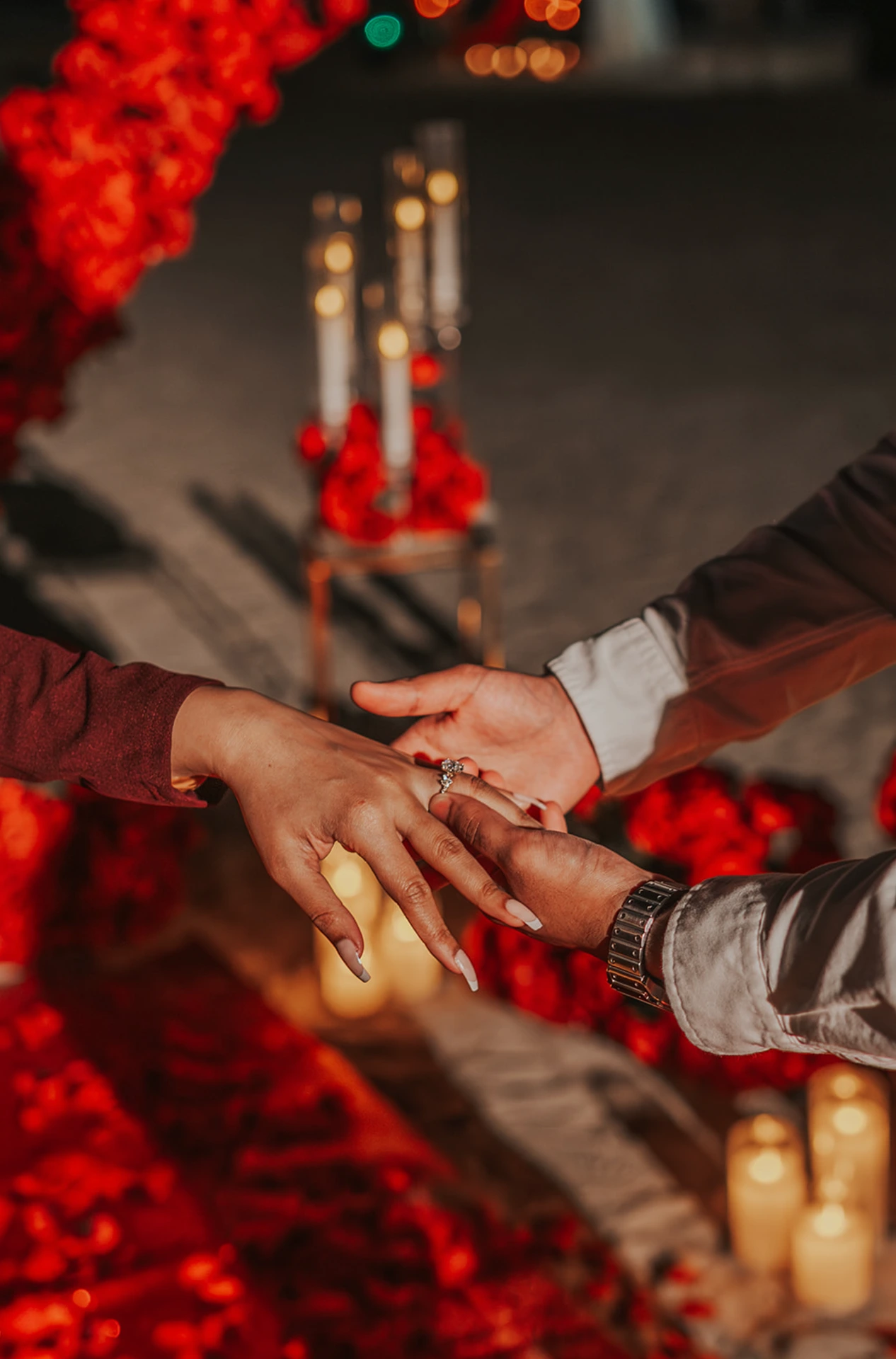
There is room for the small details as well as the big question.
How much do you actually need to say?
Read your draft aloud at a comfortable pace and imagine your partner standing or sitting with you. Does the story stay focused? Have you already made the point before another paragraph begins? Look for any sentence that repeats the same feeling without adding a new detail.
If you have a longer draft, choose the part you would most regret leaving unsaid. Let that be the heart of what you say aloud. Everything else can become the letter, a conversation over dinner or words you share later in the evening. Keeping the spoken version shorter is useful when it helps you pay attention to your partner's response.
Read it aloud and listen for yourself
A useful editing test is to listen without looking at the page. Record a private voice note and play it back once. Does each sentence sound like something you mean? Is there a line you keep rephrasing when you speak? That spoken version may be the one to keep.
You can shorten sentences that carry several ideas. Instead of joining a memory, a compliment and a promise with three uses of 'and', give the strongest thought its own sentence. Leave out any introduction that explains how difficult the speech was to write. You can begin with the thing you wanted your partner to hear.
Keep humour affectionate and promises believable
Leave out jokes that turn the question into a test: teasing them about being difficult to live with, suggesting they should feel lucky or making the answer seem inevitable. Something that works as a casual joke between you may land differently when a ring appears.
Be careful with sweeping promises too. You can say you want to listen, make time for each other or keep building the life you have discussed. Promising never to disagree or never to let them down asks the words to do too much. A sincere intention can feel more personal when it reflects how you already try to show up.
Keep private struggles and other people's stories out unless you know your partner would welcome them being mentioned in that setting. You can acknowledge what you have grown through together without retelling a painful chapter at the moment you ask.
Let the extra words live in a letter
Reading a short note during the proposal is also completely fine. If having it in your hand helps, you can explain that you wrote something because it matters to you. Leave space to look up and connect with your partner as you read.
Keep pressure out of the words. What the ring cost, who is expecting an announcement and how hard you worked on the surprise do not need a place in the question. Your partner should have room to answer for themselves.
Decide which version they will receive first. If you hand over a long letter before asking, allow them to read it without expecting an immediate spoken reaction. If you ask first, you can say afterwards that there is more you wanted to put into words, then give them the letter when you sit down.
A note on your phone is practical too. Open it before the moment and make the text comfortable to read, so you are not searching through messages with the ring in your other hand. A paper card can be easier outside or somewhere you do not want to take out a phone. Choose whichever you can use comfortably.
Practise the beginning, and have somewhere to go if you forget
Reduce the rest to two or three words that remind you of your meaning. For the coffee example, that could be 'distance, mornings, together'. Those reminders give you somewhere to return to.
And if everything disappears? You can say that you had more words planned, take a breath and tell them the most important thing. You can ask the question while feeling emotional. Once you have asked it, allow a pause and listen. There is no need to fill every second.
Short prompts are a recognised speaking aid: Toastmasters' guide to useful notes describes using key points to remember what you want to cover. A proposal only needs the parts that help you. You can keep the full wording if reading it feels right, or use a few reminders if that feels more natural.
During a practice run, try beginning again from the middle. Can you return to the thought about your future without reciting every earlier line? That shows you where the meaning is clear and where you are relying on one precise sequence of words. You are preparing for a conversation that may include a laugh, a question or an interruption.
Choose a moment when your partner can hear you
If you are proposing during a Dubai holiday, a beach or skyline view can frame the moment beautifully. Discuss a spot where you can speak comfortably when you plan your Dubai proposal photography. Ask the photographer to agree your position and approach beforehand, so you can keep looking at your partner while speaking.
Our guide to keeping a Dubai proposal a surprise covers the arrival and photographer cue. For bookings and the rest of the evening, use the Dubai proposal planning checklist. Settle those details before writing another version of your speech.
Think about the level of personal detail that belongs in that setting. If people may be close enough to hear, you can keep a deeply private memory for the letter and say the part you are both comfortable sharing aloud. Our ideas for a partner who dislikes attention can help you choose the surroundings before deciding how much to say there.
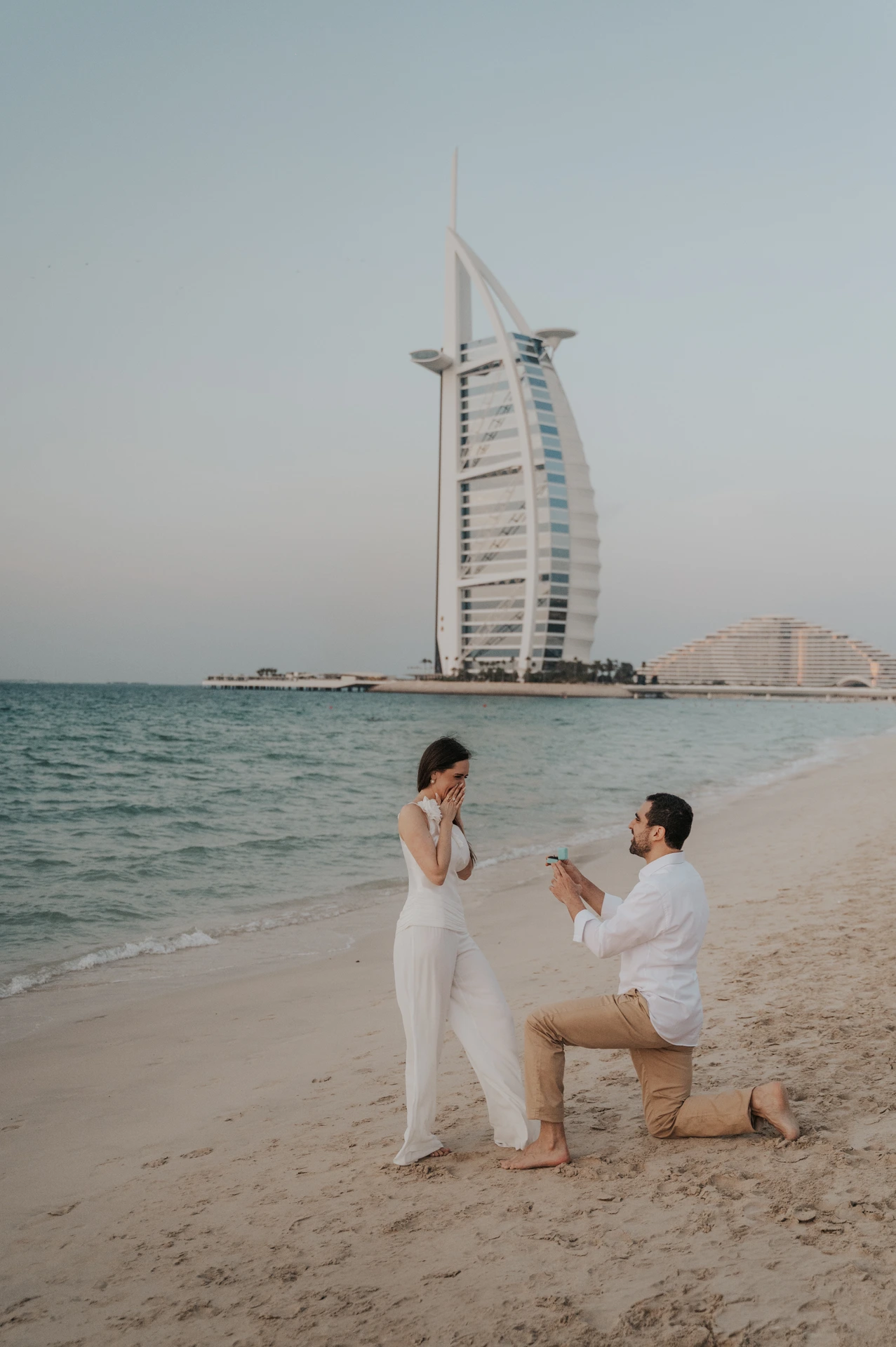
A proposal on a Dubai beach, with the couple facing one another.
Decide whether you want to hear the words again
If you want spoken words recorded, ask specifically about audio before booking video. A film edited to music and a recording of the question are different things. Microphones, distance and background sound need a plan of their own; our proposal photos and video guide explains what to discuss.
You can also keep your note and write down your memories afterwards. The version you say aloud might be shorter, shakier or funnier than the one you prepared. Leave room for that. You are talking to someone who already knows your voice.
If the words are private, say that when discussing the recording. Ask which parts may be shared and let your partner have a say before you post anything. A short clip for the two of you and a public engagement film can serve different purposes.
Planning your own proposal in Dubai?


How to Propose in London

Our 12 Favourite Places to Propose on Holiday

What Does a Marriage Proposal Mean, and Why Does It Matter?

Why Do We Propose With a Ring? The Meaning Behind the Tradition
Can You Propose Without a Ring? Thoughtful Ways to Make It Special

Nervous About Proposing? How to Stay Calm in the Moment
ENJOY $20 OFF
Your first photoshoot when you become an email subscriber.
Related Articles

How to Keep Your Dubai Proposal a Surprise
Practical help with the discreet part of your Dubai proposal: cover stories, supplier messages, ring access, arrival changes and the photographer cue.

Dubai Proposal Photos, Video or Both: What Should You Book?
Photographs to print, a film to watch together, or both? Choose the right coverage for your Dubai proposal, from the surprise to the words you want to keep.

Proposal Planning Checklist Dubai
A complete step-by-step proposal planning checklist for Dubai, covering location, timing, logistics, styling, photography, and celebration.