
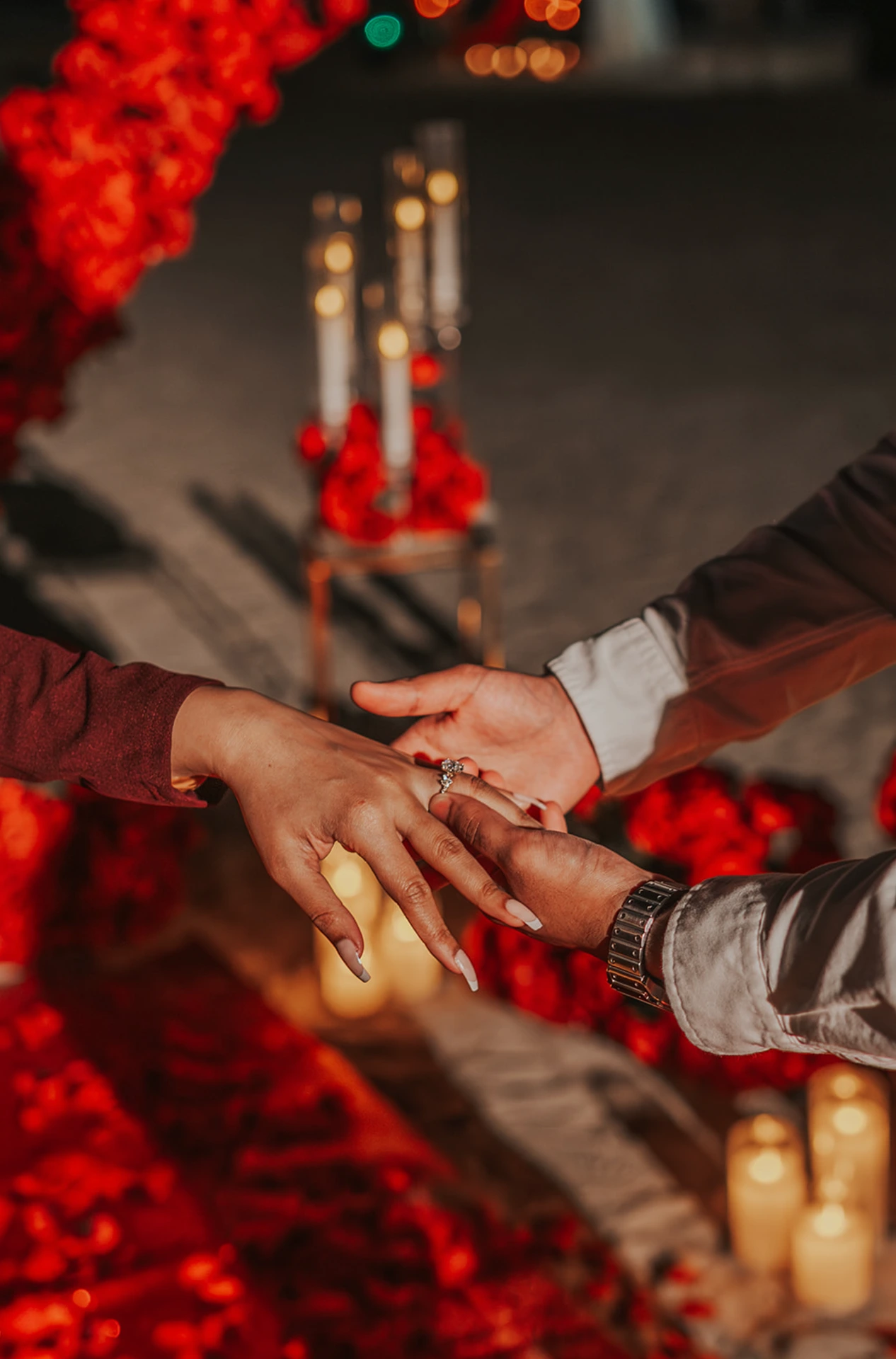
Why Do We Propose With a Ring? The Meaning Behind the Tradition
There is something about opening a ring box that can make an ordinary evening feel completely different. Before a word is said, that small object carries a rather big question. We give engagement rings because they turn an intention to marry into something visible: a gift, a reminder and, for couples who want one, a symbol to wear as life carries on. The history behind that gesture is fascinating, although it has changed considerably along the way. Here is where the tradition comes from, what the ring can mean and how to make it personal.
Updated

Table of Contents
Why a ring makes such a meaningful gift
It can also tell other people that you are engaged, although wearing one is a personal choice. The same ring may carry a private meaning that nobody else can see. Perhaps the colour reminds you of a place you love, or it belonged to someone important in your family.
The circle offers an easy image of continuity, with no obvious beginning or end. You can enjoy that symbolism without needing every part of the tradition to have one ancient explanation.
A real piece of history: the Roman betrothal ring
That wording matters. A historical betrothal ring and the engagement ring in a jewellery shop today belong to different social worlds, and older objects do not always fit neatly into our modern categories.
Still, there is something moving about seeing a surviving object associated with a couple joining their lives so many centuries ago. We do not need to invent their love story to appreciate that connection.
Before the familiar solitaire, there were other ways to say it
You can understand its appeal without knowing anything about jewellery history. Two people reaching towards each other is a wonderfully direct image.
Stones have varied too. GIA's account of engagement rings through the ages describes sapphires and rubies appearing before diamonds became part of the story. The familiar diamond solitaire is one chapter in a much longer history of people choosing objects to express something important.
Two halves, one ring, a whole lifetime
It is a striking way to picture the beginning and end of life. The museum explains the ring as both a wedding ring and a reminder of mortality, with an inscription about the couple being joined together. This is a specific historical object, rather than evidence that every couple wore or used gimmel rings in the same way.
The imagery may be more dramatic than anything you would choose now. What makes it relevant is the care put into expressing a life together through the design itself. A ring could contain a message, an image and even a private discovery for the person who wore it.
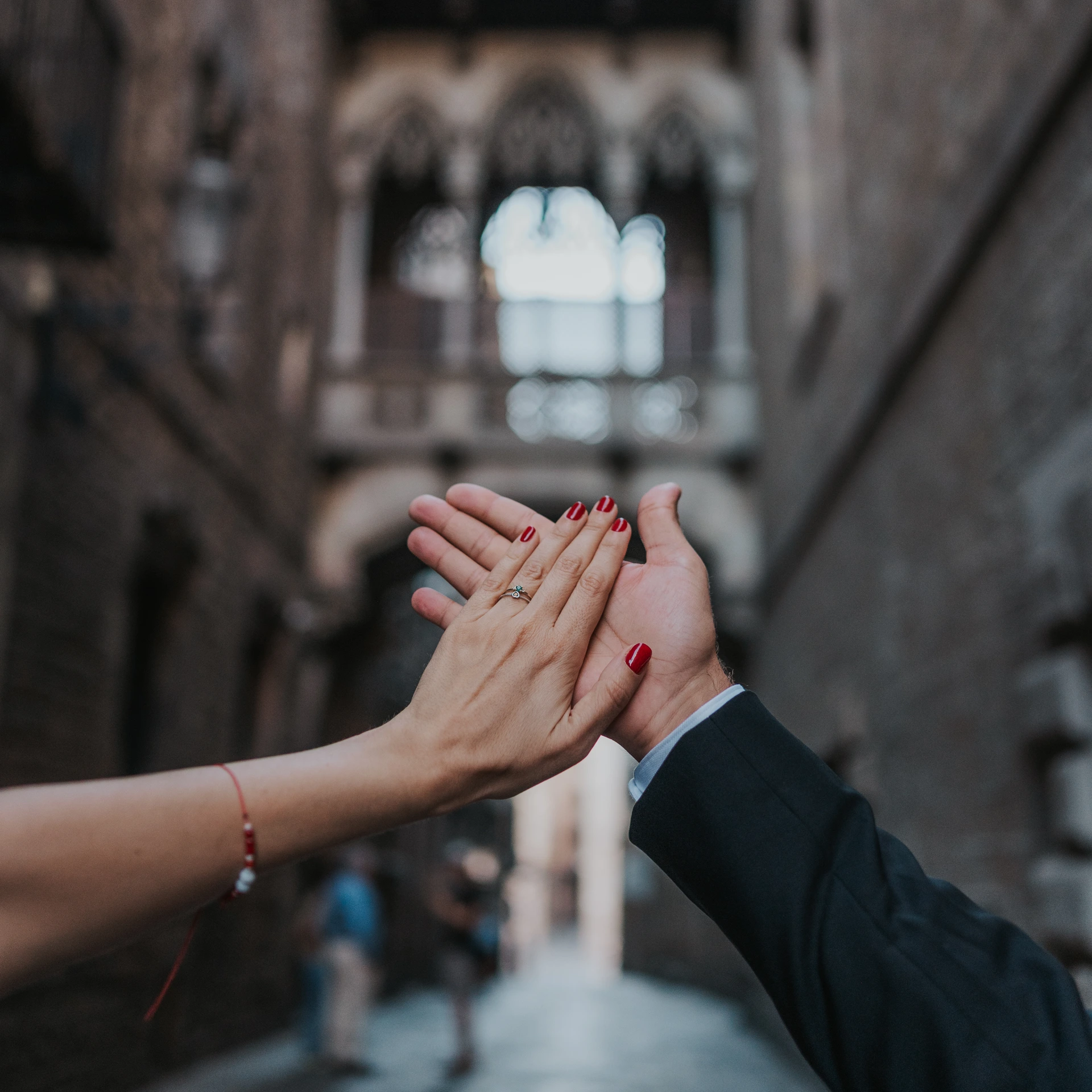
A modern engagement ring photographed in Barcelona’s Gothic Quarter.
How diamonds became part of the proposal story
Much later, advertising helped strengthen the connection between diamonds and lasting love. De Beers credits copywriter Frances Gerety with creating 'A Diamond Is Forever' in 1947.
The distinction is useful: engagement rings, including diamond examples, existed long before that campaign. Marketing helped shape the image many of us recognise today.
A diamond can be a beautiful choice if your partner loves one. Its place in popular culture does not turn it into a requirement, and choosing a different stone does not change what you are asking.
And what about the ring finger?
It is not a special anatomical connection. The Hand Society's guide to blood vessels explains the network carrying blood through the hand and arm and back towards the heart.
Which hand a ring belongs on also depends on the tradition you follow and what feels comfortable to you. If your families have different customs, that is a good reason to talk about them. You can decide together which details you want to carry forward.
Why the history does not fit into one neat origin story
A museum can date a ring and explain what its design suggests. That does not always tell us exactly how it was presented, what the couple said or whether their families arranged the match. A first surviving record also leaves open the possibility of earlier examples that have not survived.
So enjoy the romance of the tradition while keeping a little space for uncertainty. The clasped hands, hidden inscriptions and joined hoops are already rich enough. Your own ring can belong to that long interest in making feeling visible without carrying every historical custom forward.
Is an engagement ring different from a wedding ring?
How you wear them afterwards is yours to decide. You might enjoy both rings together, prefer one on its own or use the same ring for both occasions. The important practical question is whether the person wearing it actually likes having it on their hand.
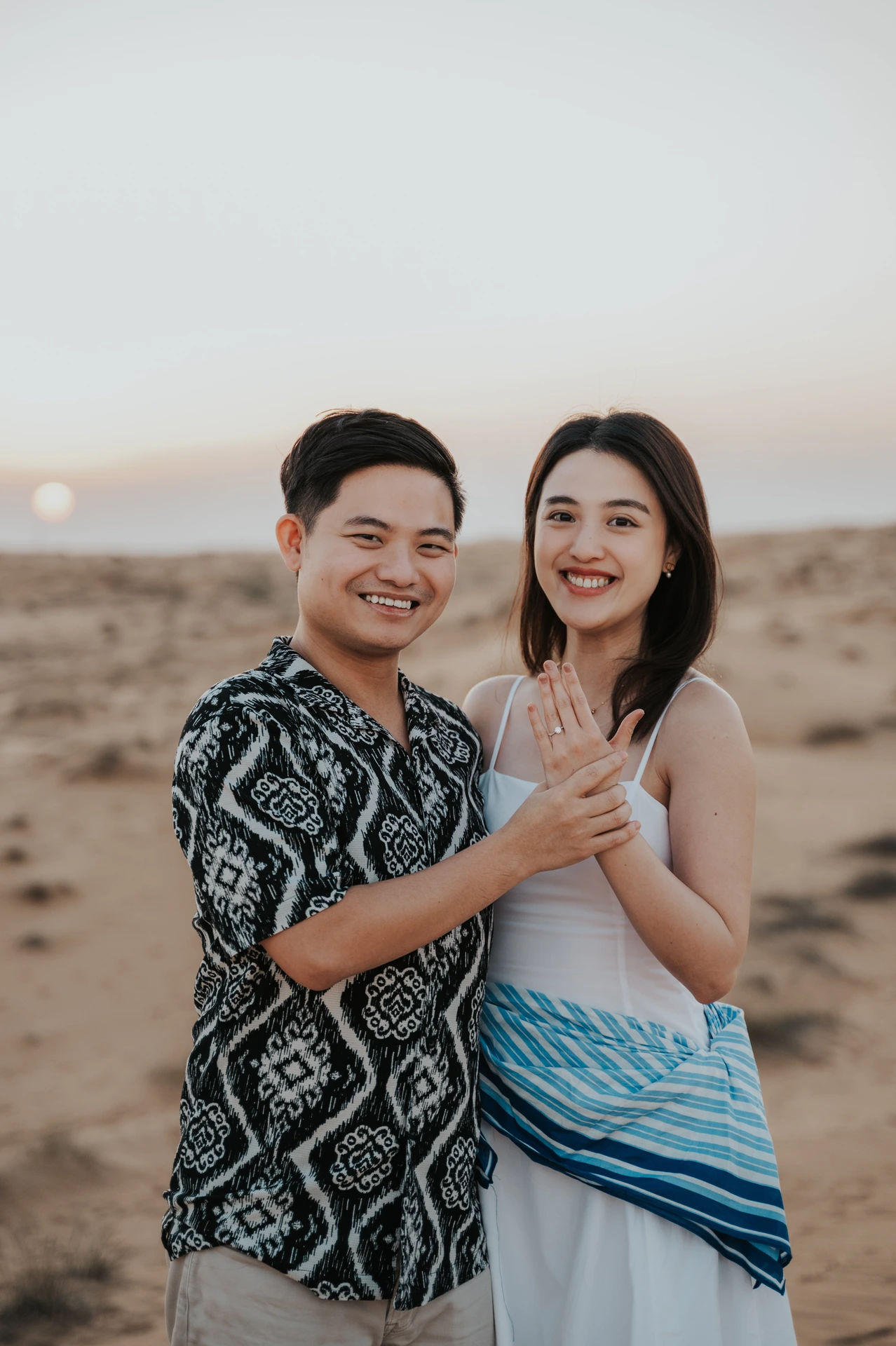
A couple shows the ring during a desert portrait in Dubai.
Why give the ring at the moment of asking?
For someone who has always pictured a ring box opening, that recognition may be part of the excitement. For someone who helped choose the ring, seeing it again can carry a different pleasure: the decision you made together has reached the moment you have been looking forward to. A surprise is only one possible source of emotion.
You can also let the question have room before thinking about what your hands are doing. There is no need to move through asking, answering, opening the box and putting on the ring as though you are following stage directions. You might pause, hug or look at the ring together. Those are part of the exchange too.
And the ring does not have to appear at that exact second. Choosing or giving it after you have agreed to marry can be its own celebration. Its meaning comes from the understanding you share about it.
Which parts of the tradition do you want?
A conversation about this need not reveal when or where you will ask. It simply helps you understand what would make your partner happy. If they love the idea of a surprise ring, enjoy choosing it. If they would love to choose with you, that can become a happy memory of its own.
When the ring comes from your family
If you are thinking of offering a family ring, share that story with your partner when the time is right. A simple detail can say more than a long account of its value. Perhaps it was worn by someone who always made room for you at their table, or someone whose relationship you admired.
Leave room for your partner's feelings about the object as well. Family significance and personal taste do not always line up automatically. It helps to understand whether they would enjoy an heirloom before making it central to the proposal, and to discuss any family expectations about keeping its design unchanged.
You can ask a jeweller about its condition and suitability before deciding how it will be worn. If it cannot comfortably become an everyday ring, it may still have a place in a celebration. The important thing is to offer the story with warmth, while giving the person receiving it a real say in what happens next.
A meaning that becomes clearer with time
Imagine looking at it while waiting for the train home from your honeymoon, or noticing it in a photograph from a completely unplanned afternoon. It can appear quietly in the background of a life, well beyond the proposal and wedding pictures. That possibility is part of why people become attached to objects that might look quite ordinary to somebody else.
You do not have to design all of that meaning in advance. A ring need not represent your entire relationship through the perfect combination of stone, metal, engraving and family history. One detail you care about is plenty to start with.
It is also fine if you relate to jewellery differently. Some people enjoy the daily reminder; others keep a ring for occasions or prefer another way to mark their commitment. The object can be important without becoming a test you have to pass through wearing it in a particular way.
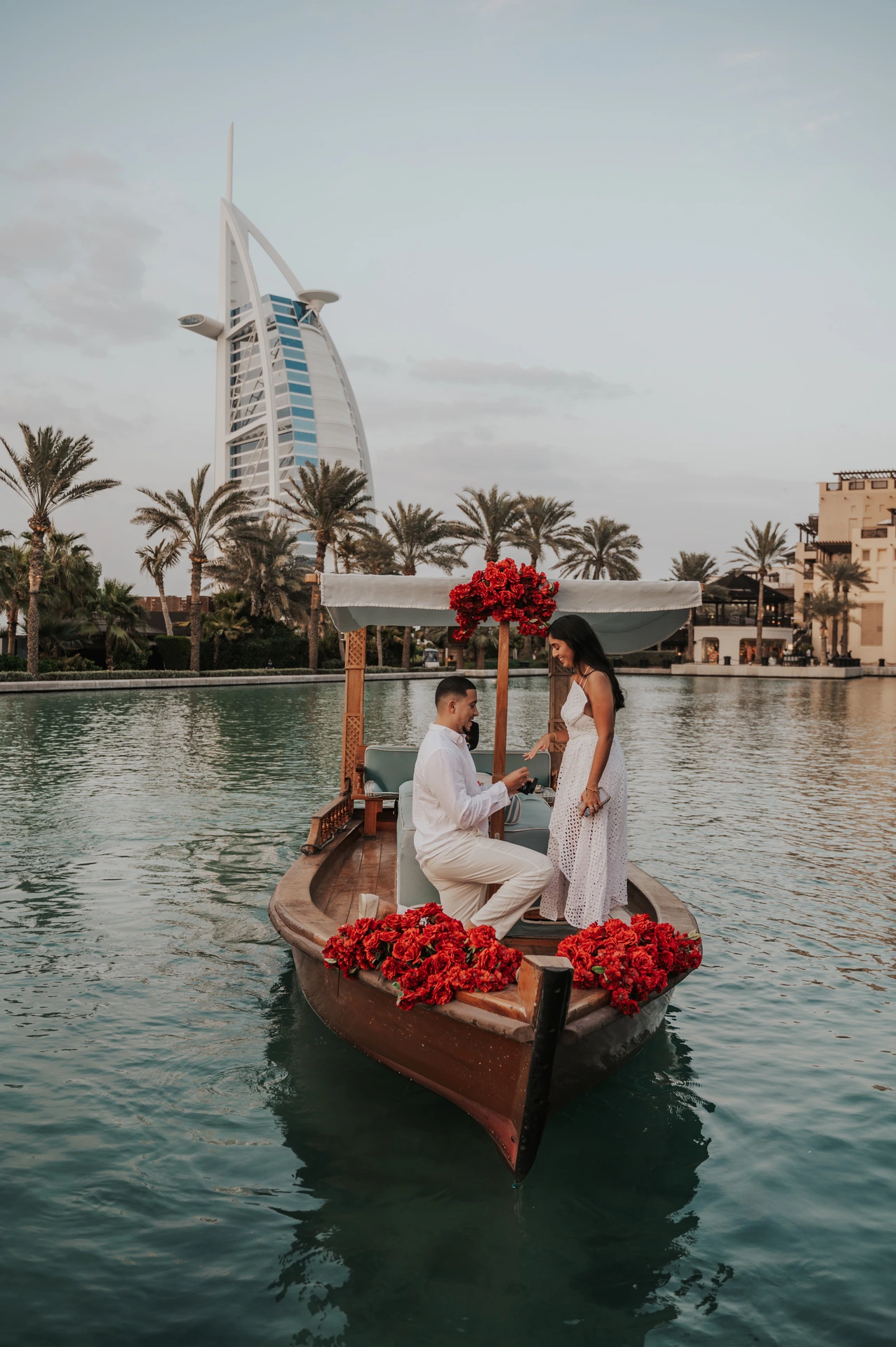
The setting can become part of the memory attached to the ring.
Choose something that belongs in your life together
Give the budget the same care. Choose an amount you feel comfortable with alongside the life you are planning together. A ring should be a gift you are glad to give, with room for your other priorities too.
The proposal around it can follow that same approach. If Dubai is where you are planning to ask, our affordable Dubai proposal ideas can help you think through the setting and celebration without adding every possible extra.
If you would like to explain why you chose it when you ask, keep that thought close to the relationship itself. Our guide to what to say when you propose can help you find words that sound like you.
The moment becomes part of the ring's story
For a Dubai holiday, an experience you would both enjoy is a good starting point. Our Souk Madinat abra proposal guide explores one way to build an evening around the water. If you would like photographs, you can plan proposal photography in Dubai around the moment you want to share, discussing the setting and how discreet you would like the photographer to be.
If you include photographs, think about what you would enjoy seeing alongside a close view of the ring. Your hands together can show the detail while keeping the person wearing it in the picture. A wider photograph can hold the setting, and a quiet portrait afterwards can bring you back to how it felt to be there together.
Tell your photographer if an inscription, family connection or particular design detail has meaning for you. They can discuss how to include it in the session. There is no need to interrupt the actual question to display the ring towards a camera; you can make time to look at it properly once you have had a moment together.
And if you prefer photographs on another day, the ring can simply come along as part of what you wear. Our engagement photo outfit guide can help you plan a comfortable look for the setting you choose.
The ring will have its own history from then on: the place, the words, the way you held each other afterwards. That is the part only the two of you can give it.
Planning a proposal in Dubai?


How to Propose in London

Our 12 Favourite Places to Propose on Holiday

What Does a Marriage Proposal Mean, and Why Does It Matter?
Can You Propose Without a Ring? Thoughtful Ways to Make It Special

Nervous About Proposing? How to Stay Calm in the Moment

How to Travel With an Engagement Ring Without Spoiling the Surprise
ENJOY $20 OFF
Your first photoshoot when you become an email subscriber.
Related Articles

Affordable Proposals in Dubai: Beautiful, Meaningful Ideas That Fit Your Budget
A practical guide to planning affordable proposals in Dubai without compromising the experience.

Abra Proposal at Souk Madinat Dubai
A practical guide to planning an abra proposal at Souk Madinat Dubai, with timing, flow, photography, and dinner recommendations.

What To Wear For Your Engagement Photos
A practical style guide for engagement photos, from outfit pairings to camera-friendly color choices.