

Table of Contents
A City That Keeps Giving You Reasons to Look Up
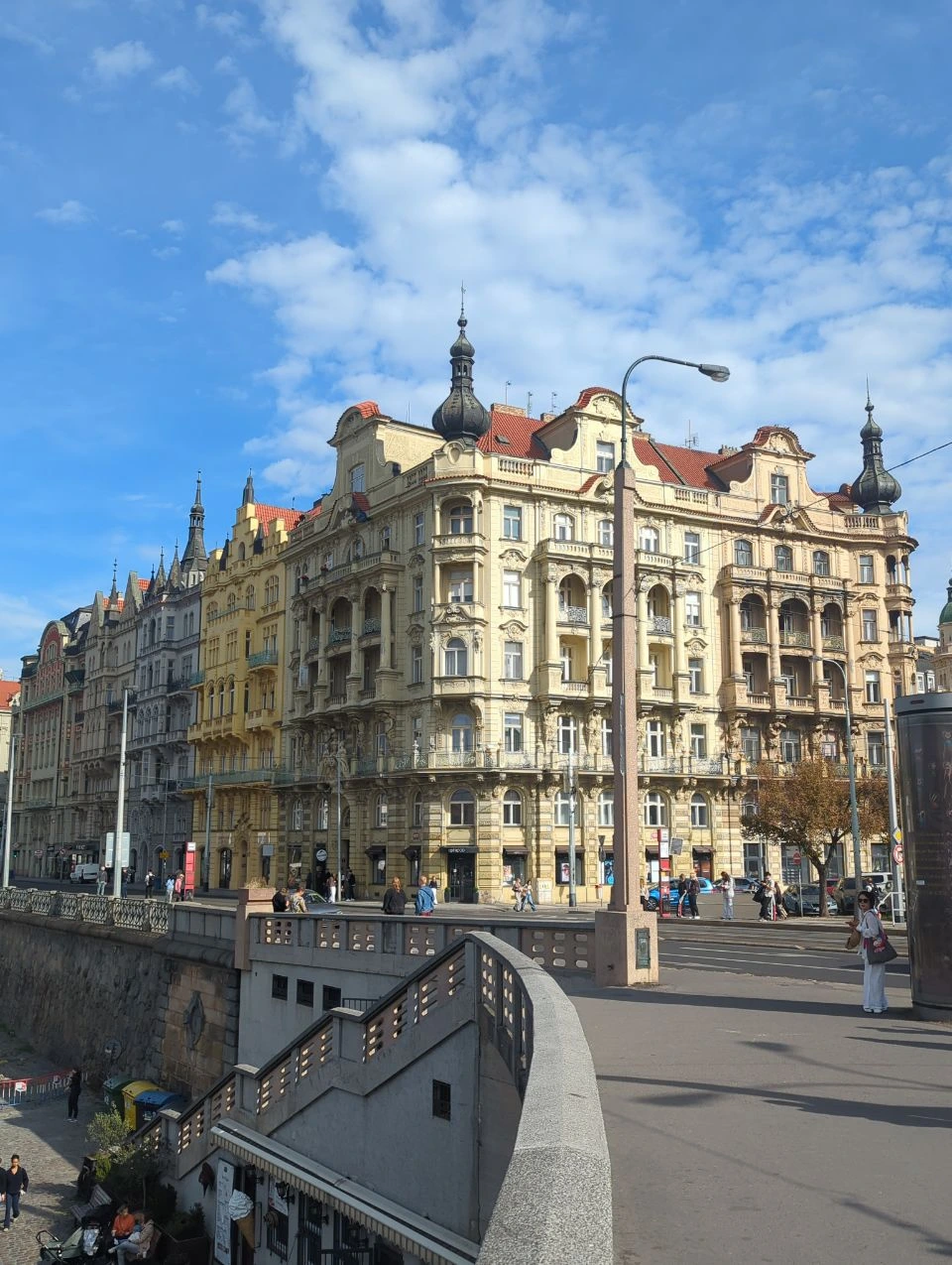
The buildings don’t all belong to one time or one style. Tall Gothic churches, curving Baroque fronts, richly decorated Art Nouveau buildings and bold modern shapes sit within the same city. You can enjoy them without learning a long list of dates. Knowing a few things to look for simply makes the walk more interesting, especially when two very different buildings turn up beside each other.
This guide is for choosing the buildings and details you’d love to see in your Prague photos. There’s room for the famous sights, of course, but also for the smaller discoveries that make a holiday feel like yours.
Gothic Prague: That First Look at St Vitus Cathedral
Those pointed shapes and the sense of height are useful clues to Gothic architecture. St Vitus grew over hundreds of years, and some of its pointed towers were added much later. Those different chapters are part of what makes it interesting. The pleasure is in seeing the distant landmark become a real place, full of details you couldn’t possibly pick out from the river.
Prague Castle itself is a whole complex of buildings, gates and courtyards. Give it some room in your day. The cathedral, surrounding buildings and nearby streets offer different things to enjoy, rather than one quick stop at a castle front door. Check the official opening information if you want to go inside: the grounds and individual buildings have different schedules.
Baroque Prague: Curves and Colour in Malá Strana
For a clear example of Baroque architecture, look for St Nicholas Church on Malostranské náměstí, Lesser Town Square. Its great dome and rounded forms give it a very different feel from the pointed shapes at St Vitus. Baroque buildings often have a sense of movement, with curved walls and decoration that reaches out from the surface. Here, those ideas are easy to enjoy with your own eyes.
The church interior is a separate visit, with paintings, sculpture and the space beneath that huge dome. If it’s on your list, check the church’s visitor information. Make sure you’ve chosen the Lesser Town church: Prague also has a St Nicholas Church on Old Town Square. A beautiful church is still a beautiful church, but it’s nice to arrive at the one you meant!
Art Nouveau: A Little More Time at Municipal House
This is one of Prague’s best-known Art Nouveau buildings. The style often draws on flowers, leaves and flowing lines, turning practical things such as doors, lamps and railings into something worth enjoying in their own right. Municipal House mixes several influences, so there’s no need to treat every decoration as a test of your new architecture knowledge. Let it be a bit of holiday curiosity.
The dark Powder Gate Tower stands right beside it. Its Gothic shapes make the contrast especially striking: two neighbours with very different personalities. This is a particularly rewarding stop when you want a taste of Prague’s different styles without travelling across the city.
There’s more inside Municipal House, too, including its Art Nouveau rooms and Smetana Hall. A guided tour can make the building a fuller part of your day. Check the current tours and visiting information before you plan around one; seeing the outside doesn’t mean every room is open to wander into.
Three Grand Buildings, Three Different Outings
The Historical Building of the National Museum stands at the upper end of Wenceslas Square. There’s a pleasing sense of arrival as the building grows larger along the approach. Its balanced front and central dome make it a strong landmark, with the long square stretching away below. It’s a good choice if you enjoy a grand city setting and would like to make a museum visit part of the outing.
The National Theatre belongs to a different Prague scene. Here, the building’s rich roofline meets the open space beside the Vltava. A walk by the river gives you time to enjoy the theatre as part of the city around it, with water and bridges close by. The river gives the outing room to grow, with a long look at the water and a stroll beside some of the city’s grand old buildings.
The State Opera offers another impressive front, with a broad entrance and a neat balance between its two sides. It’s near the National Museum, though roads and crossings shape the walk between them. The opera and the museum’s historical building are both described as Neo-Renaissance: later buildings that took ideas from Renaissance architecture. They add another chapter to a walk through the city, with their own love of balance and decoration.
For a look inside the theatres, use the National Theatre’s visit information to find the current options. A performance, a tour and a quick look at the outside are different plans, each with its own time to allow.
The Dancing House and Its Colourful Neighbours
The contrast with the older buildings nearby is a big part of its charm. Their straighter rows of windows, balconies and colourful fronts make the Dancing House’s curves feel even more surprising. Give those neighbours a little attention, too. They help make this corner of Prague interesting, and there’s plenty to admire beyond the famous building itself.
The building was completed in 1996, so it belongs to a much newer chapter of the city. Seeing it after the castle or Municipal House brings home just how varied Prague can be. Your photos can hold those different sides of the same holiday: old stone, painted houses and this wonderfully odd pair of towers.
It’s a busy road junction, so enjoy it from the pavements and use the crossings. You can appreciate the building from outside; any visit to an interior venue needs its own access check.
The Details You Didn’t Put on the Map
It’s lovely to have both kinds of memory: the great building you recognised straight away and the small detail you found for yourself. A street can give you colour, depth and character without a famous monument at its end. Those places often make beautiful holiday backgrounds, too, because they hold the feel of Prague’s everyday streets.
Looking from the public pavement is enough to enjoy many of these details. An attractive doorway or open gate isn’t an invitation to enter someone’s home or private courtyard.
Choose a Part of Prague That Makes You Curious
For a shorter look at contrasting styles, Municipal House and the Powder Gate are a lovely starting pair. You can spend time enjoying the buildings and nearby streets without making a long list of other places you must reach. A tour inside Municipal House can be the main event if you’d like more depth.
The National Theatre and Dancing House suit a day with a riverside walk, while the National Museum and State Opera make another nearby pair. Choose the combination that makes you curious. Leave enough time to enjoy being there, with room for a pause when something catches your eye.
Trams can help you move between areas, but allow for the walk to the stop, waiting and any changes. Use DPP’s current travel information when planning the journey. If hills, steps or uneven paths are a concern, check the whole route as well as the building entrance.
Leave a Little Room for the Day Itself
Choose a small number of buildings you really want to see, then leave room for the streets between them. A visit inside, a stop for something warm or an unexpected favourite doorway can become the bit you talk about afterwards. That’s a good reason to give Prague a little breathing space in your day.
For an interior visit, check the venue’s current opening times, tickets and photo rules. Public visiting access doesn’t automatically cover a professional photoshoot. We can check the arrangements for a setting you’d love to include when planning your Travaya session.
Bring Home Your Own Prague Story
Tell us which side of Prague you love, from grand old streets to playful modern buildings. We’ll help plan your Travaya photoshoot and arrange a trusted photographer, so you can enjoy discovering the city together.
A Few Questions for Your Prague Walk
Municipal House and the neighbouring Powder Gate give you a close comparison of Art Nouveau and Gothic architecture. For a bigger outing, choose St Vitus Cathedral at Prague Castle and St Nicholas Church in Lesser Town, allowing for the hill and your chosen route.
No. Prague has buildings from many periods, and some combine several styles. Municipal House is known for Art Nouveau, while the National Museum’s historical building and the State Opera are Neo-Renaissance. Even St Vitus includes much later additions to its medieval beginning.
The one on Malostranské náměstí in Lesser Town, below the castle. Prague also has a St Nicholas Church on Old Town Square, so check the square name when looking up directions or tickets.
Many fronts can be enjoyed from public streets and squares. Interiors, tours, towers and some managed areas have their own admission arrangements. Check the particular place you want to enter, especially if you’re planning around a timed visit.
Yes. Tell us which buildings or kind of streets you have in mind. We’ll help choose a manageable route and check the relevant access arrangements, so the setting fits your time, walking comfort and plans for the day.


Our Prague Shoots:
Book your Prague Photographer!
Start Booking
Hidden Photo Spots in Prague: Streets and Surprises

Best Places for a Photoshoot in Prague

Prague’s Beautiful Bridges: Photo Spots and River Walks

Prague Old Town Photo Spots: Squares and Little Streets

Prague’s Astronomical Clock: Lovely Views and Visiting Tips

Prague Tram Photo Spots: Three Lovely Places to Explore
ENJOY $20 OFF
Your first photoshoot when you become an email subscriber.
Related Articles

Hidden Photo Spots in Prague: Streets and Surprises
Discover Prague beyond its famous views, with small houses in Nový svět, old streets around Loreto and colourful corners near the Lennon Wall.

Best Places for a Photoshoot in Prague
Choose a Prague photoshoot setting that feels right for you, from Charles Bridge and Kampa to colourful Old Town, castle streets and green parks.

Prague’s Beautiful Bridges: Photo Spots and River Walks
Find your favourite Prague bridge, from the statues of Charles Bridge to castle views, decorated lamps and a green island below Legion Bridge.