
October 6, 2026
Vajdahunyad Castle photo spots: a walk from gate to lake
A stone bridge leads to a great arched gate, pointed towers rise between the trees and a chapel doorway draws you into layer after layer of carving. Vajdahunyad Castle brings a wonderfully different side of Budapest into your photographs. Here in City Park, the pleasure is in turning a corner: a leafy statue, an elaborate roof or a view across the water can change the whole mood of the walk.
You can make a lovely set of portraits by choosing a few of those scenes and giving each one time. Begin with the castle spread out behind you, move closer to its stonework, then leave room for a quieter picture beneath the trees. These six settings offer a starting point, with the order shaped around your favourite photographs, the light and the routes open on the day.
Updated

Table of Contents
Choose a castle walk with six different scenes
For photographs, that means you can move from a fortress-like entrance to an ornate palace façade without leaving the castle surroundings. Choose the contrast you love most. The bridge and lake give you water and towers; the chapel brings carved stone close around you; the trees and Anonymus statue create a smaller, more enclosed scene.
Our visit on 2 October 2026 was in the late morning. Sunlight was strong on several façades, the chapel entrance had people coming and going, and the waterside views were framed by leaves. Those photographs show the range available on that visit. An earlier start, another season or an overcast day will change how you use it.
Vajdahunyad Castle photo spots begin at the bridge
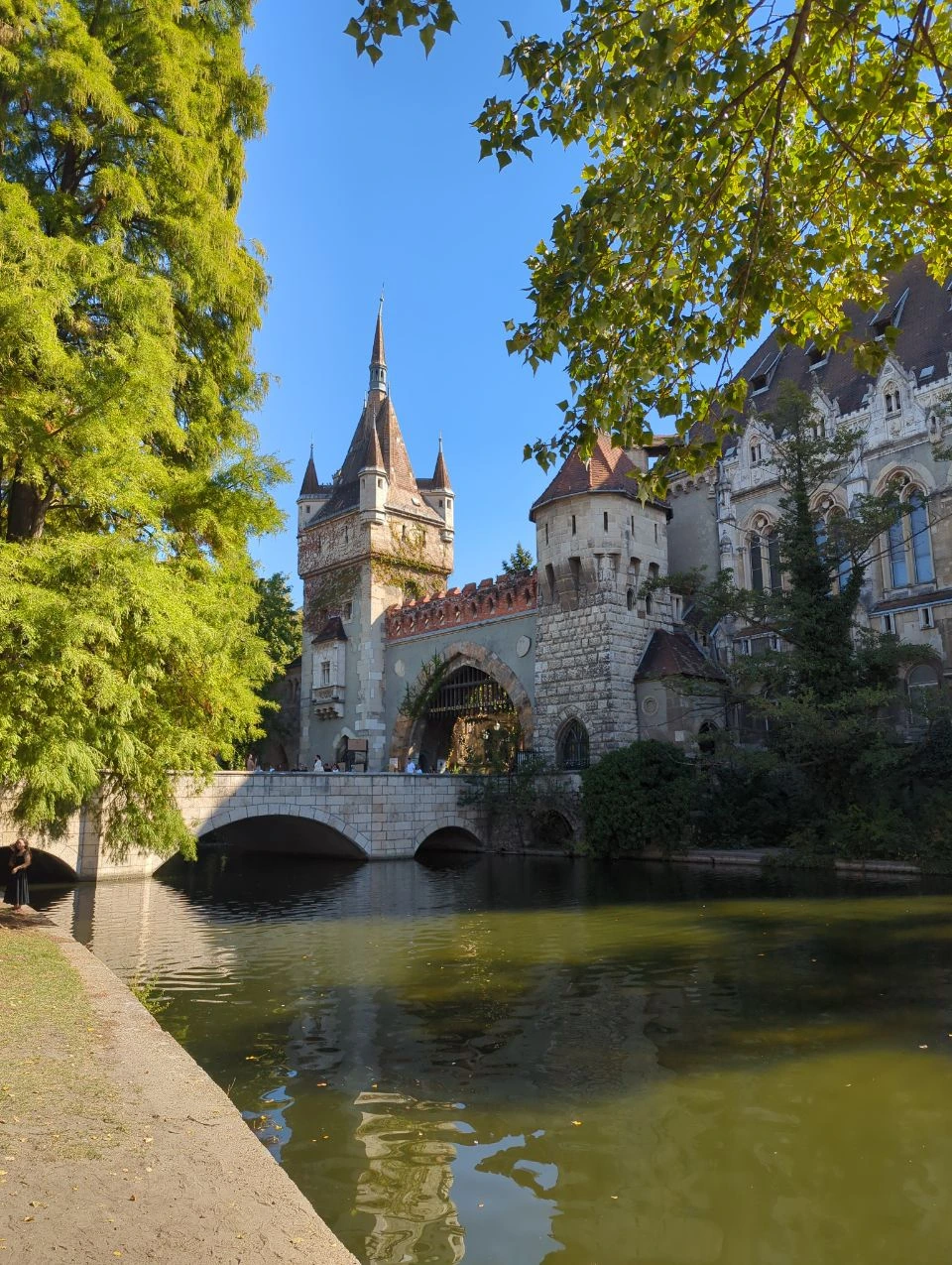
Liget Budapest identifies the entrance as Hidaskapu, approached over a lion-decorated stone bridge. From the side, you can see the bridge above the water and the gate beyond it. A more direct view towards the opening places greater emphasis on the entrance itself. Take a moment to compare those two pictures before deciding where people belong.
For a portrait from the waterside path, you could stand together to one side of the frame, leaving the gate visible beside you. Keep a comfortable distance from the water and stay on the ordinary walking surface. The camera can then include enough of the bridge to show how it connects with the castle, while your faces remain an important part of the photograph.
The crossing is also a route for other visitors. If you want a picture on the bridge, wait for a natural gap and keep the pause brief. You can make the wider architectural photograph from a position that doesn't interrupt people entering. Afterwards, come closer for a portrait with just the arch and some stone behind you. That gives the entrance two roles in the finished set: a grand introduction and a more personal moment.
Let the Ják Chapel arch frame you
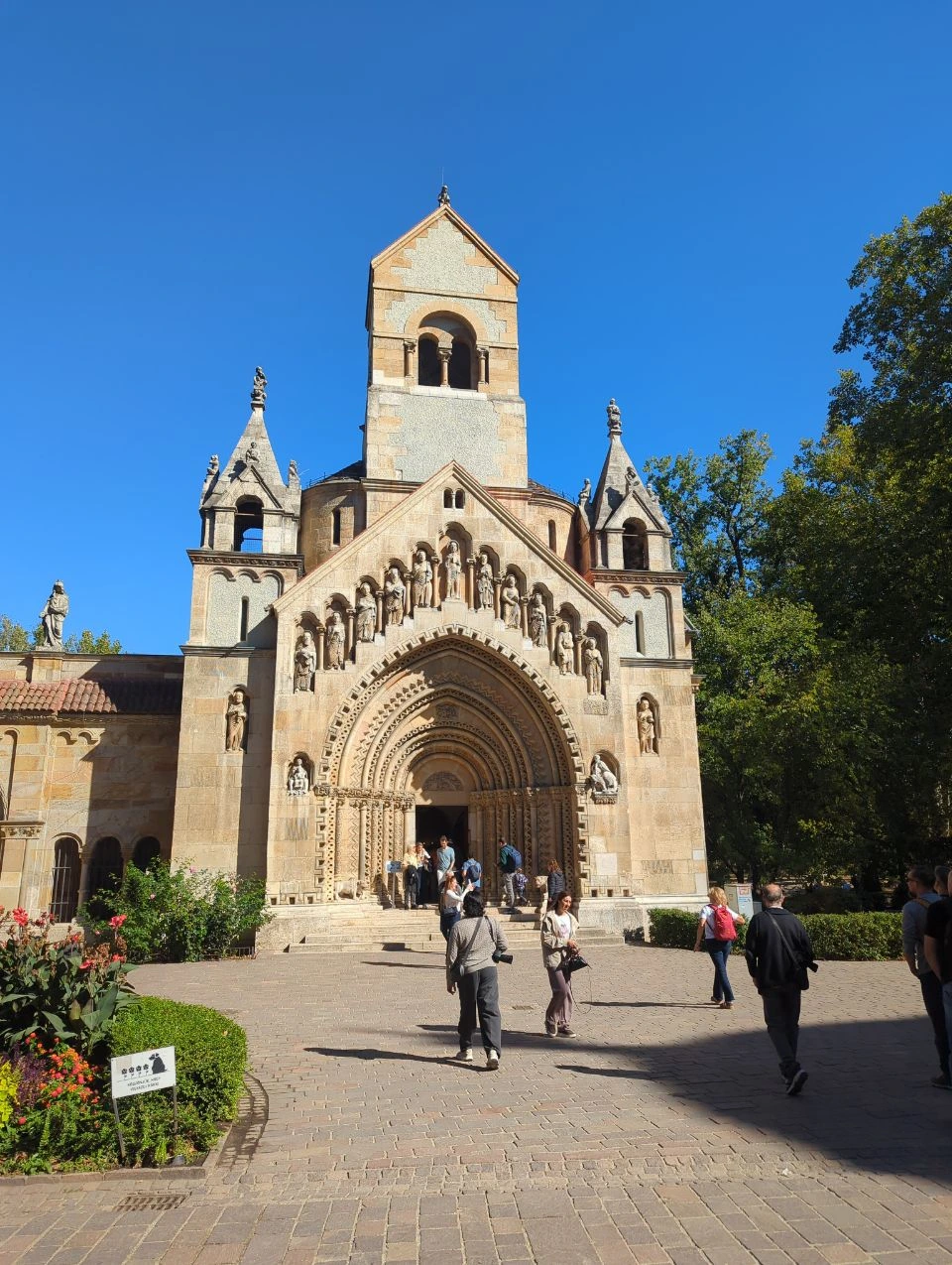
From farther back, a full-length photograph can include the doorway and much of the front. As the camera moves closer, the repeated arches become a frame around your shoulders. Try a position slightly forward of the deepest part of the recess: it may bring more light onto your faces while keeping the carving around you. Look at the result before moving nearer to the door.
There are steps at the entrance, visible in our photograph. You can work from the courtyard paving if those steps don't suit you, using the arch as a background. A picture made from the side can also catch the depth of the carving and leave the doorway available to people entering or leaving.
On our late-morning visit, visitors gathered across the front and around the door. If that happens during your walk, enjoy a detail photograph or continue to another setting before returning. A closer portrait can use part of the arch without needing the whole courtyard empty. Keep the entrance clear, especially when people are using the chapel for worship or a ceremony.
Pause with Anonymus beneath the trees
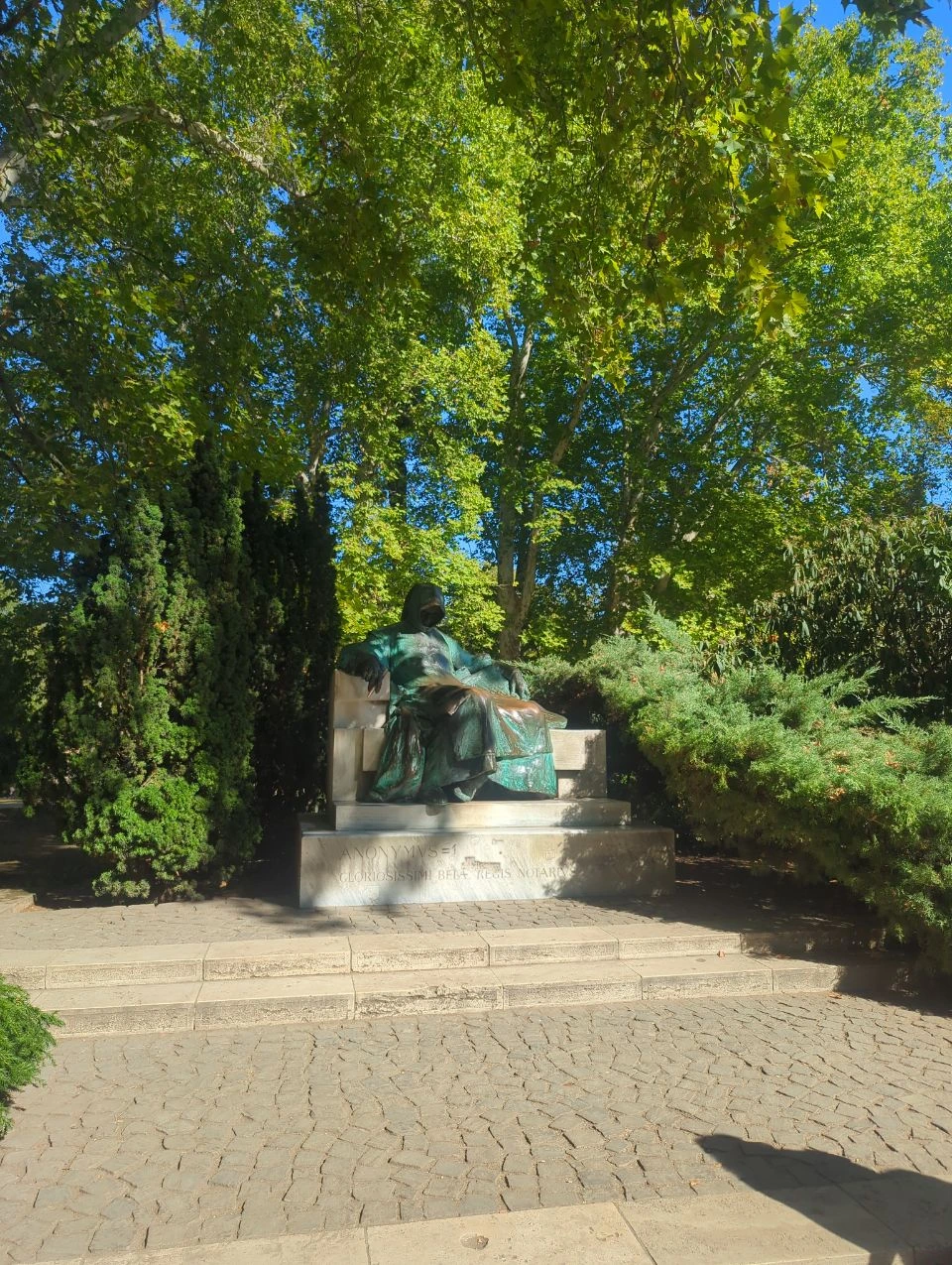
Our photograph shows patches of sunlight across the bronze and the paving, with deeper shade beneath the trees. For a portrait, check how that patterned light falls on your own faces. A small move may take you out of a bright patch while keeping the statue visible behind one shoulder. Let the sculpture have some breathing room instead of placing your head directly over its outline.
This is also a good place to make a picture of the setting on its own. Include the hood, the folds of the robe and a little of the greenery, or step back for the whole seated figure. Keep the stone base free of bags and posing, and use the public paving in front.
Between photographs, pause to notice how much quieter the colours feel here than at the sunlit chapel. Bronze, leaves and shade give the walk a different rhythm, even if there are other visitors nearby.
Look up at the sculptural roof
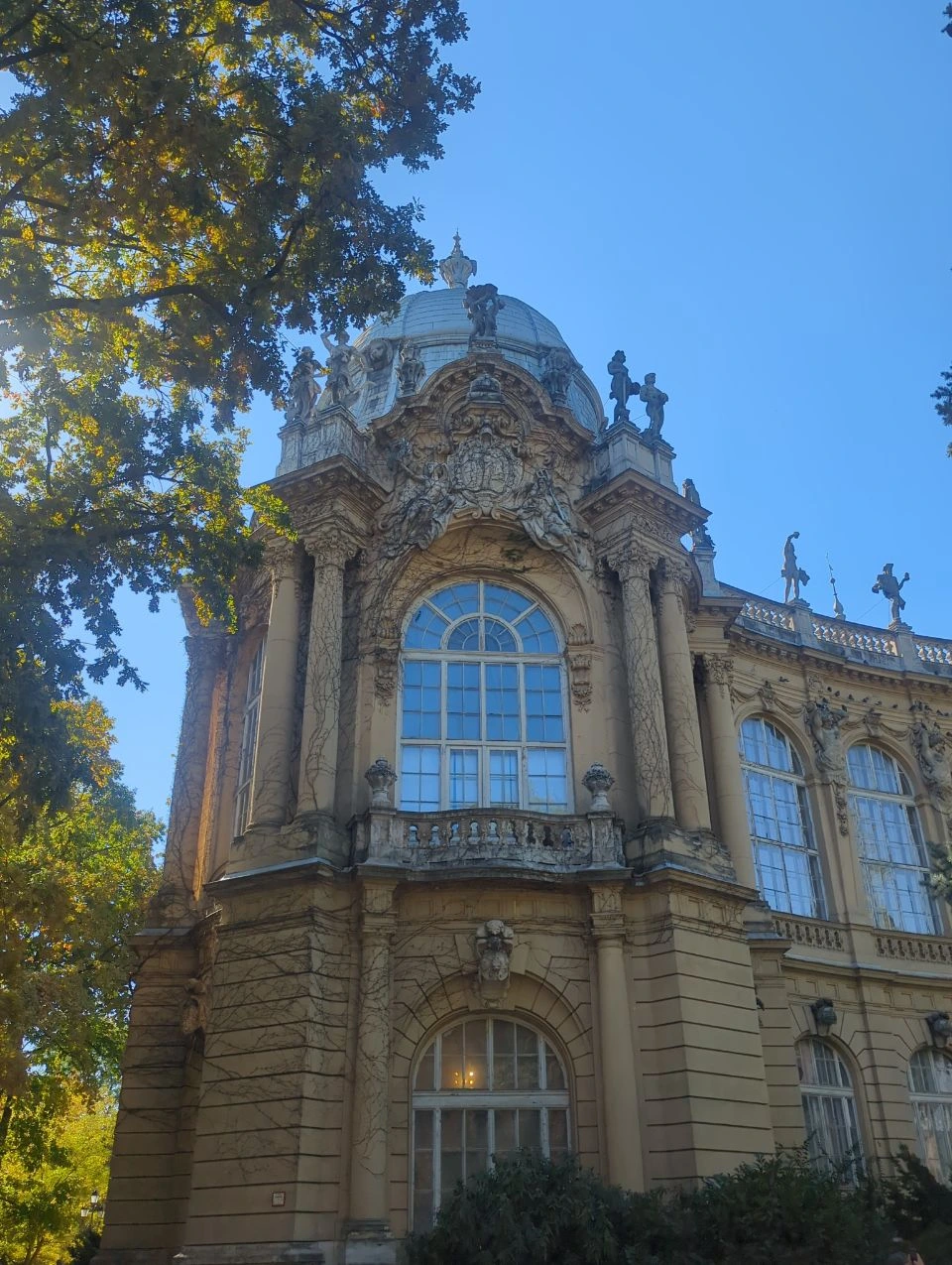
Give this detail a photograph of its own. Look for a position on the public path where the figures are separated clearly against the sky. The tops of trees can hide part of the roof from one angle and frame it neatly from another. Moving a little sideways may be more useful than moving closer.
You can include the arched window beneath the roof to connect the ornament to the building. A tighter picture can concentrate on a small group of figures and the curve beneath them. Leave some sky above the highest point so the decoration has room in the frame.
These architectural pauses help the photographs tell the story of the walk. Alongside portraits, you'll have the details that made you stop and look up, giving the set a sense of discovery as well as a record of where you stood.
Turn a corner for towers and patterned tiles
Start by looking for a gap between the branches that leaves the roofline clear. Then choose where you feel comfortable standing on the path. Keeping the tower slightly to one side of you can make it easier to read than placing it directly above your head. The trees can remain at the edges, adding a softer shape beside the straight walls.
If you enjoy photographs with movement, use a short, clear section of the path for a slow walk together. Let your shoulders turn towards each other, then pause for a still picture. You don't need to cover much distance to create a different expression or a relaxed change of posture.
The patterned tiles are worth a closer image afterwards. A small part of the tower, roof and blue sky can show the colours more clearly than a wide photograph. Give the architecture its moment, then move on while the walk still feels unhurried.
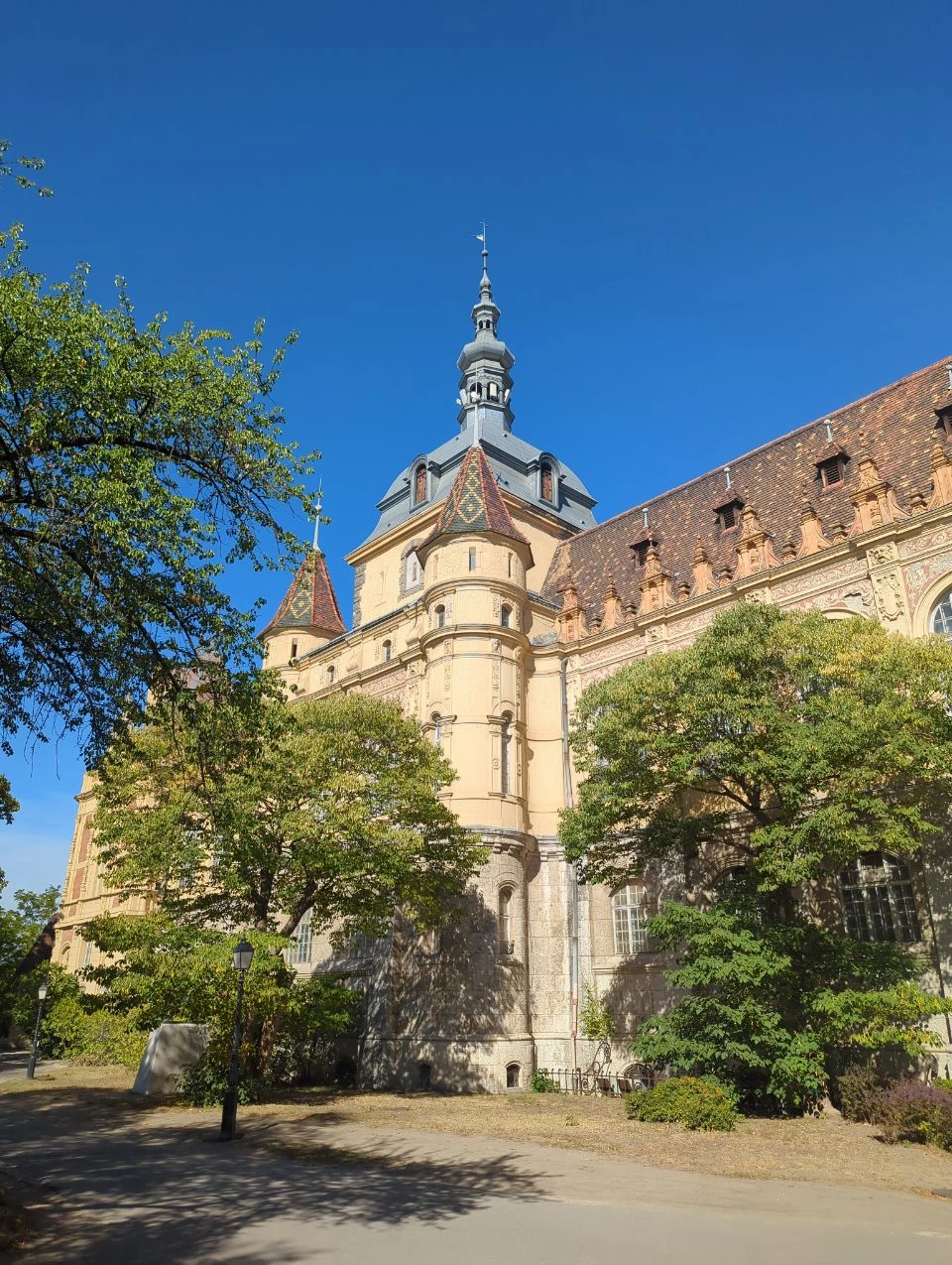
Find Vajdahunyad Castle views across the water
Use the public paths and crossings to compare the openings between trees. A small change in position can reveal a tower that was hidden or bring too much foliage across the building. Find the clearest view available, then decide whether you want an architectural photograph, a portrait or both. The gaps between branches change as leaves grow and fall.
For a portrait, leave enough space around the people for the castle to remain recognisable. Standing slightly to one side can keep a distinct tower visible across the water. Dark leaves behind dark clothing may make a figure difficult to see, so check whether a lighter patch of background separates you more clearly. You can also come closer for a picture where expressions lead and the distant roofs simply suggest the location.
Keep people and the camera on the normal path, with room to pass. Decorative edges and waterside stonework can appear in a photograph without being used as seats or platforms. Once you have the wider view, turn towards each other for a quieter picture. The same backdrop can carry a grand castle scene and a small moment between the two of you.
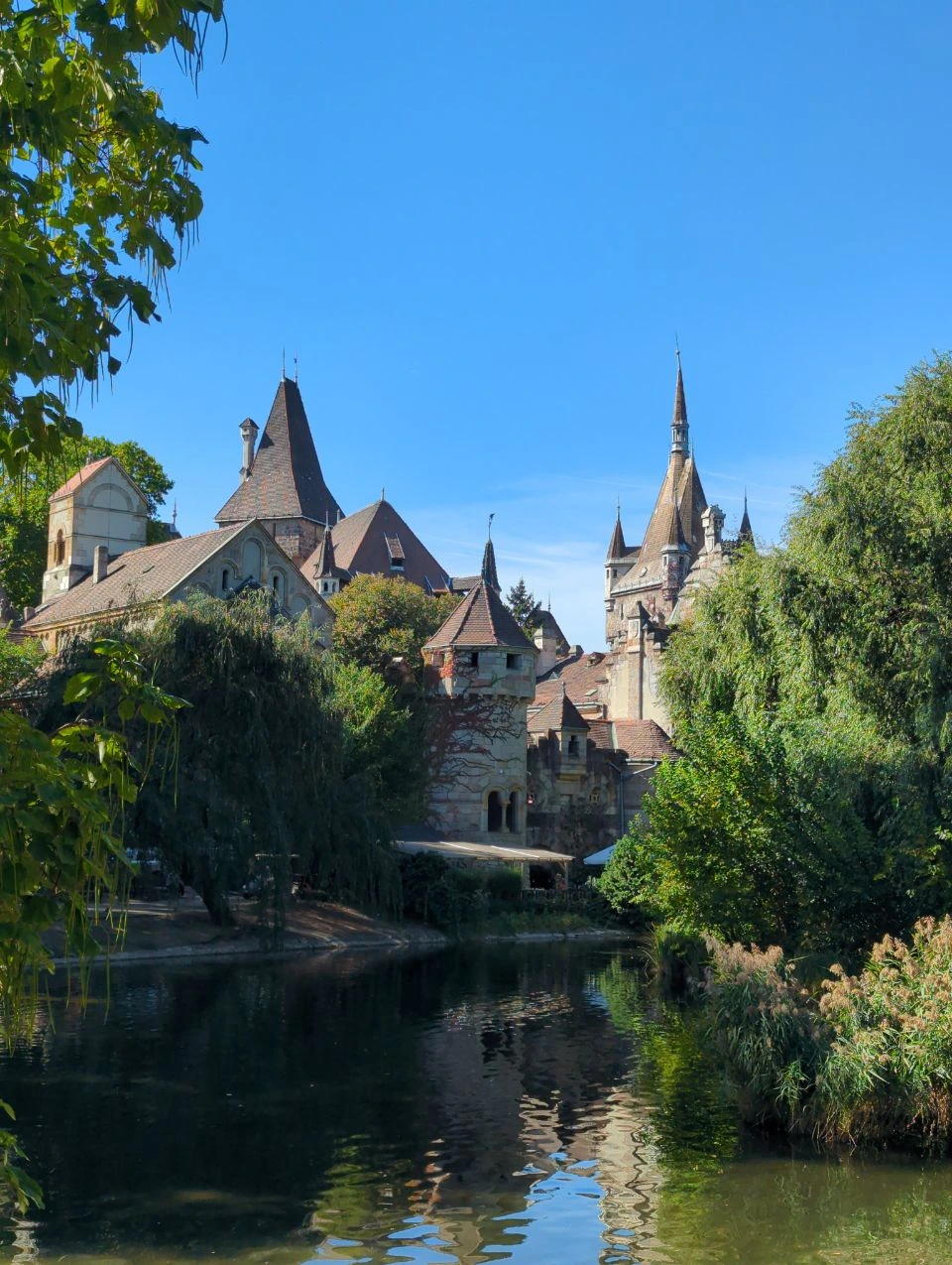
Plan for the lake you find on the day
On 2 October, we photographed water beside the entrance and beneath the tree-framed towers, while a separate large recreation basin nearby was drained with work equipment present. Both scenes existed during the same visit. If a particular water view is central to your plans, ask for a recent check of that exact position.
Our Budapest photoshoot season guide compares the wider changes in greenery, light and clothing, with seasonal features treated as possibilities rather than guarantees.
A reflection also depends on what the water is doing. Ripples can break the castle into loose shapes, as in our images, and leaves or darker shade can cover much of the surface. Enjoy those textures if they suit the picture. You can also include less foreground and let the towers, trees and sky carry the scene.
If the outlook disappoints on the day, the chapel, sculpture and side façades give you several alternatives. Keep boating or skating as a separate activity to arrange around its own opening dates, admission and weather conditions.
Choose light that suits faces and façades
An earlier visit may give you a better chance to work around the entrance before more visitors arrive, but the late-morning photographs here don't establish a guaranteed quiet hour. Check access for your planned arrival and leave enough flexibility to start elsewhere if a doorway is occupied.
In strong sun, look at faces before committing to a beautiful wall. If you're squinting, turn slightly or move to a suitable shaded position. Under trees, watch for small bright patches across foreheads and cheeks. A shift of a step or two can sometimes put both people in more even light while preserving the same background.
Cloud can make close portraits easier by softening the contrast between light and shade. The chapel's carving and the bronze statue still have texture without a blue sky. For a wider scene, leave less blank sky in the picture and give more space to the stone, leaves or water. Choose clothes you can move in, with a layer to put on between photographs if you're chilly.
Give the walk a comfortable pace
For a walk focused on the two of you, the Vajdahunyad Castle couple photoshoot guide shows how to mix broad castle views, closer portraits and natural moments in City Park.
A useful starting sequence is the bridge view, chapel, one sculpture or façade, then the opposite waterside path. It moves from the castle's broad outline to closer details before opening out again. Change the order when the light or a clear doorway gives you a reason to do so; you can enjoy a satisfying walk without completing every stop.
For a short visit, the bridge and chapel give you two strong architectural settings. Choose the bridge and a tree-framed water view if greenery appeals more. Keep a few minutes between them for walking, checking the next background and simply enjoying being together.
When discussing a Budapest photoshoot, name your two favourite scenes and the pace you'd enjoy. That helps make the conversation concrete, whether you picture a gentle wander with a few portraits or more time spent on the castle's small details.
Arrange your arrival and outdoor access
The BKK travel information and journey planner can help you choose an arrival for your actual date and starting point. Include the final walk through the park when setting the meeting time. If you're arriving by car, confirm a permitted drop-off point and the onward route; a courtyard photo position isn't automatically a place a vehicle can reach.
These ideas focus on outdoor views. A museum visit or a chapel interior needs its own check of current opening arrangements and photography permissions. Public access to one part of the complex doesn't settle access to all the others.
If you're using a wheelchair, bringing a pushchair or avoiding steps, discuss the precise approach and intended positions in advance. The photos show stone paving and steps at the chapel, while the waterside routes need their own check. Choose suitable stops, allow breaks and confirm the whole journey from transport to meeting place, rather than judging access from a single attractive photograph.
Make these castle pictures yours
FAQs
Everything you need to know about our service
Discuss whether to move the time, shorten the outdoor walk or arrange another setting. Trees and decorative doorways don't guarantee dry shelter, and a museum ticket doesn't automatically allow a portrait session indoors. If you still want to photograph outside in light rain, agree the practical plan together and choose footwear suited to wet paving.
Raise the details with your photographer and the relevant venue before fixing the plan. A wedding group, equipment or use of a particular interior may require arrangements beyond an ordinary visit. Confirm any permissions, fees and access that apply to your intended activity. Keep public entrances available and don't assume a ceremony or private area can become part of the shoot.
Treat it as a different plan to the daylight scenes shown here. Confirm which routes and entrances are open, whether the lighting suits portraits and how you'll return afterwards. Our late-morning visit doesn't establish evening access or illumination. If the carved details and leafy water views are your priorities, daylight is the simpler starting point to discuss.
You can discuss a second location, but allow time for the journey and decide which place deserves the best light. City Park and the Danube viewpoints are separate settings; travelling between them changes the pace of the outing. With limited time, a few well-chosen castle scenes can give you a varied set without spending much of the visit in transit.


How to Propose in London

Couple Photoshoots in London

Best Photography Spots in Lisbon: Choose the Look You Love

Our 12 Favourite Places to Propose on Holiday

What Does a Marriage Proposal Mean, and Why Does It Matter?

Why Do We Propose With a Ring? The Meaning Behind the Tradition
ENJOY $20 OFF
Your first photoshoot when you become an email subscriber.
Related Articles

How to Propose in London
Make the surprise feel like you.

Couple Photoshoots in London
Choose the London setting you love, and we’ll shape one relaxed route around it.

Best Photography Spots in Lisbon: Choose the Look You Love
Choose the Lisbon photo setting that suits you, from Alfama lanes and hilltop views to Bica, Belém, MAAT, the Tagus and yellow trams.