

Table of Contents
Which of the best photography spots in Lisbon suits you?
For rooftops and scale, look to Portas do Sol, Santa Luzia or Graça. These miradouros open Lisbon behind you, but each surrounds you with something different. Portas do Sol is broad and recognisable, Santa Luzia adds tiles and planting, and Graça feels more like a neighbourhood terrace.
Bica and Chiado suit anyone drawn to steep streets and city movement. Rails, balconies, façades and the drop towards the river give the photos bold lines and plenty of movement. This is Lisbon in motion, even when the funicular is not running.
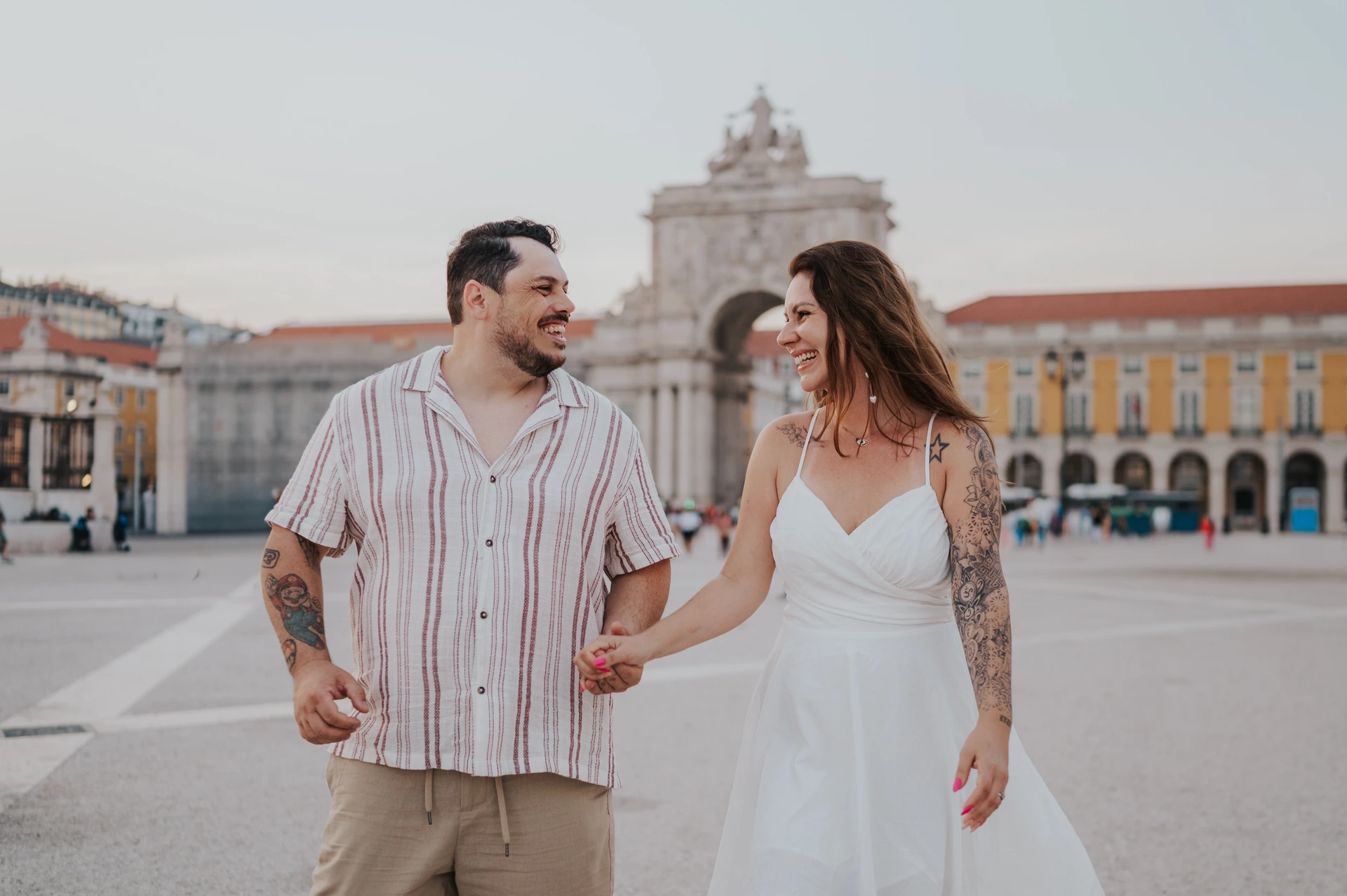
Praça do Comércio works beautifully for clean architecture. Yellow façades, repeating arcades, patterned paving and the Rua Augusta Arch give you several striking backgrounds without a long walk.
Lapa and Estrela bring a calmer side of Lisbon. Residential tile streets, the basilica and a leafy garden soften the pace. It suits anyone who wants colour without the busiest old-city setting.
Belém is the pick for monuments and open river space. Pale stone, broad paths and the Tagus give your photos plenty of space while keeping Lisbon's riverside character clear.
MAAT and the waterfront reveal modern Lisbon. White curves, open sky, bridge views and reflections replace historic-city detail with a simpler, more modern setting.
Start with a favourite Lisbon street, then enjoy the extra colour if a tram passes. The setting should still feel unmistakably Lisbon when none appears.
The strongest plan usually combines one favourite setting with one nearby place that feels a little different. Old lanes plus a viewpoint works. Tiles plus a garden works. Modern architecture plus the river works. You may already know which of those combinations feels most like your trip. Alfama plus Belém usually leaves too much of a short session for travelling between the two areas.
Alfama gives your photographs an old-city story
Best for: couples who want movement rather than formal posing, solo travellers who like street atmosphere, and families comfortable with a compact walk. It also suits anyone who wants their photos to capture the feeling of a neighbourhood as well as its famous sights.
Plan for a slower pace: Alfama rewards time to wander. Its cobbles and slopes are part of the old-city magic, so choose shoes with grip and a route without unnecessary climbs. The neighbourhood is still very much lived in, which means leaving doorways clear and enjoying quiet lanes when they appear rather than expecting them on demand.
You can find plenty of variety without walking far. One photo can show the full slope of a street, another can focus on a tiled wall, and a nearby staircase can give you a completely different view. That is more interesting than trying to create every photo in the same alley.
If these intimate streets feel like your Lisbon, the Alfama photoshoot route shows how to follow them downhill from Graça towards the Sé. It includes the order and timing, so you can enjoy the tiled lanes, stairways and changing views without spending the session retracing your steps.
Lisbon viewpoints turn rooftops and sky into the backdrop
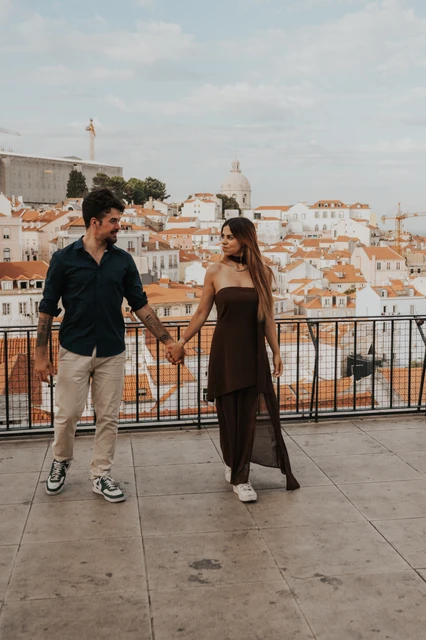
Portas do Sol is the classic sweep. Terracotta roofs, church towers and the Tagus open behind the terrace. Choose it when the city itself should be instantly clear and you want space to include more of Lisbon in your photos. This is a shared public viewpoint, so other visitors will naturally be part of the setting.
Santa Luzia brings the scene closer. Visit Lisboa highlights its decorative tiles, garden, pond, church domes and river view. The pergola, benches and azulejo panels mean you can include tiles, greenery and small details as well as the skyline.
Graça feels like a neighbourhood pause. Trees, church stone, seating and everyday terrace life can sit beside the panorama. It suits a relaxed story where the view is present without dominating every image.
Choose Senhora do Monte when you want wide views and plenty of open sky. Lisbon seems to open beneath you, with a simpler setting that lets the panorama feel wonderfully large. Reaching it involves a steeper arrival, and the hilltop can be windy or busy, but it's the strongest choice when you want the city and sky to bring the drama.
Pick a viewpoint by what should surround you. Portas do Sol gives you rooftops. Santa Luzia adds tiles and greenery. Graça feels relaxed and local. Senhora do Monte gives you the widest sense of the city and sky. Our Lisbon viewpoints guide shows you the climb, atmosphere and best match for each place.
Pairing one viewpoint with nearby Alfama can create a lovely shift from open views to close streets. Trying to collect all four usually produces four similar panoramas and much more climbing than most people expect.
Bica and Chiado bring steep lines and city movement
Choose it if: you picture Lisbon through hills, rails and yellow transport, prefer a city walk to a viewpoint pose, or like architecture with a little bustle in the photo.
Expect a lived-in street: Bica's energy comes from residents, pedestrians and deliveries moving through the scene. The Elevador da Bica was listed as temporarily closed when checked on 11 October 2026, but the slope, rails, balconies and river direction still create a brilliant photograph. Check its status again near your date. Choose Bica for the street itself, then treat a moving funicular as an unexpected extra if service resumes.
Let the slope do the creative work. From the pavement, the rails guide your eye downhill while the façades and distant river add depth. If a vehicle passes safely, it adds another burst of Lisbon life; if not, the street is already strong enough to carry the photograph. Staying off the tracks and road keeps the experience relaxed for you and the people using the street.
If Bica has won you over, the Bica photoshoot route connects its dramatic slope with Chiado and Rua de São Paulo. It also shows how the walk stays full of colour and city movement even when the funicular is not running.
Praça do Comércio gives you three looks in one square
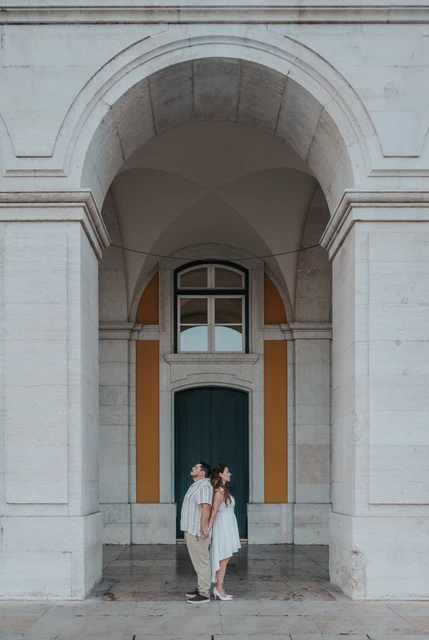
The arcade look: the stone arches and hanging lamps create a more sheltered setting. Shade can make this especially useful when direct light is strong, although the exact brightness changes with the time, weather and which side of the square you use.
The open-square look: symmetry and bold colour take over. You can include the arch or statue in a wider view, then move closer to use the yellow walls as a simple background. Pedestrians and city movement belong here, so your photographer can work with the natural gaps as people cross the square.
The river-edge look: sky, water and passing boats soften the grandeur of the square and give the photographs a lighter finish. Start on the dry upper promenade, then use the lower waterside steps only when conditions make them safe and accessible.
Keep the public square in mind: Praça do Comércio feels grand, with visitors and city life moving through the background. Events and strong midday light can change the clearest view, but the arcades provide a beautiful alternative when shade needs to lead. The Lisbon midday photoshoot guide helps make that brighter time feel purposeful rather than limiting.
Lapa and Estrela mix azulejos, calm streets and greenery
Best for: families who appreciate room to pause, maternity sessions that need a kinder pace, couples who want a residential Lisbon story, and anyone whose favourite photographs combine architecture with greenery.
Enjoy the neighbourhood pace: Lapa and Estrela feel calmer than central Alfama, although they remain part of everyday Lisbon. The garden may contain families, events and changing seasonal planting, while the tiled streets are people's homes. Embrace that natural atmosphere, leave entrances clear and let quieter corners become welcome discoveries.
If you're choosing what to wear, the detailed tiles are worth keeping in mind. Simple fabrics and calmer colours help you stand out clearly against patterned walls. In the garden, a little movement in the clothing can work beautifully among the softer backgrounds.
The Lapa and Estrela photoshoot route shows how tiled residential streets, basilica stone and garden greenery can flow through a 60 or 90-minute session. Choose this side of Lisbon when you want colourful tile streets and a relaxed garden in the same session.
Belém creates spacious photographs around stone and water
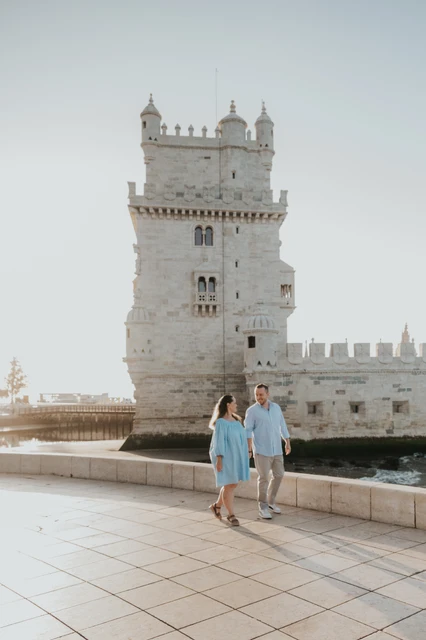
Prepare for open river light: Belém gives you wonderful space, but it also brings more sun, wind and reflection than Lisbon's sheltered lanes. Its famous monuments attract visitors, and conservation work or events can change which views are available. Build the photographs around the exterior riverfront first, where the stone, water and sky already tell the full story.
Belém looks wonderfully simple on a map, but its waterfront deserves a more thoughtful choice than trying to walk all of it. Choose one main place, then add only what fits comfortably nearby. The Belém photoshoot route compares a focused hour with a longer journey towards the gardens and tower.
Most importantly, give Belém enough time of its own. Combining it casually with Alfama asks the session to cross Lisbon between two very different parts of the city. Either one offers enough variety for a full session. Choosing both makes sense only when the duration, transport and purpose are planned for it.
MAAT and the Tagus show Lisbon's modern side
The result feels modern, open and bright. Walking along the curved façade lets the white curves guide the view towards the river. Turn towards the water and you'll see more sky and open space. Closer photos can focus on the white building and its shadows, while wider views can include the bridge and sky.
Plan for bright, breezy conditions: MAAT's open riverfront changes how its white curves and reflective surfaces appear. Begin with the public ground-level promenade, where the architecture, bridge and water already provide plenty of variety. Check any additional museum or roof access separately rather than making it essential to the session.
The Tagus waterfront setting guide compares the different ways the river can shape Lisbon couple photographs. Choose MAAT when you want your gallery to feel clean, contemporary and open to the horizon rather than filled with decorative old-city detail. Pair it with one nearby historic Belém setting when you want a contrast.
Let Lisbon's trams join the scene naturally
The best tram location is already a good location without the tram. In Alfama, the rails and façades already give you a recognisable Lisbon setting. Near Estrela, the basilica and surrounding streets provide the background. At Portas do Sol, the terrace and rooftops remain the main event. If a tram appears safely, it adds movement and colour. If not, you still have a lovely Lisbon photograph.
Enjoy the moment from proper pedestrian space, with roads, rails and stops left clear. A photographer can watch for a tram's approach and be ready when one appears, but the best photograph is always one that keeps the experience relaxed and safe.
The Lisbon tram photoshoot guide compares five different settings and helps you decide when to wait and when to keep exploring. The most memorable tram photograph usually begins with rails, façades and a slope you love; the passing yellow carriage simply brings it to life.
Pair nearby Lisbon photo spots instead of chasing the whole city
Bica plus Chiado combines the steep rail street with squares, façades and café-city atmosphere. The streets feel lively and unmistakably urban throughout the session.
Praça do Comércio plus the river edge gives architecture, shade, patterned paving and water in a compact plan when walking time should stay low.
Lapa plus Estrela moves from residential azulejos to basilica stone and garden greenery. The pace feels gentler without becoming visually repetitive.
MAAT plus one nearby Belém landmark creates the strongest old-and-new waterfront contrast. It needs a carefully planned route because the riverfront distances are larger than they first appear on a map.
Some famous places are simply too far apart to combine comfortably. Alfama and Belém each deserve enough time to work. Senhora do Monte and MAAT may both have broad views, but they are far apart and offer very different surroundings. Staying within one or two nearby areas gives you more time for the small, personal moments that make the session memorable.
Once you have found your setting, give it the time of day that lets it shine. Lisbon's hills, open waterfronts and shaded arcades respond differently to light and crowds, so there is no single winning hour for the entire city. Curious when your favourite spot feels best? The Lisbon timing guide breaks it down by location, light and crowd flow.
Turn your favourite Lisbon look into a realistic plan
Then choose one must-have and one flexible extra. Your must-have is the setting you would still love if the weather shifted or the tram never arrived. The extra sits nearby and can change. That gives you a reliable plan while leaving room for something spontaneous.
Finally, check the real conditions close to the date. Transport changes, restoration work appears, gardens host events and public viewpoints remain public. A flexible plan helps everyone stay relaxed when conditions change.
If you would like help turning that favourite look into a private session, our Lisbon photographers can shape the location, timing and route around your group and pace. We'll help you choose the part of Lisbon that feels most like you, with enough time to enjoy it properly.
Ready to choose your Lisbon setting?
Send Travaya your date, favourite mood and who is joining. We will help you turn it into a realistic plan.
FAQ about the best photography spots in Lisbon
Quick answers for choosing your Lisbon photography setting.
Choose Alfama with one nearby viewpoint if you want the most recognisable mix of tiled lanes, rooftops and the Tagus. Choose Praça do Comércio instead when you want bold architecture and less walking between backgrounds.
Praça do Comércio offers the most visual change within one compact area. Santa Luzia also combines tiles, planting and a smaller panorama without requiring a long route, although reaching the hill still needs planning.
Alfama gives you varied old-city façades, while Lapa and Estrela offer calmer residential tile streets. Choose the area by overall mood rather than searching for one wall, and keep entrances and residents' paths clear.
Yes, from suitable pedestrian areas while keeping roads, rails and stops clear. Choose a worthwhile street even if no tram passes, then let a passing vehicle add colour if operations and traffic cooperate.
They are in the same city but not one compact photographic area. Combining them can work in a deliberately longer plan with transport, but a short session is usually stronger when it gives either the old city or the western riverfront proper attention.
Choose Jardim da Estrela when a gentler pace, greenery and places to pause matter most. Praça do Comércio is the stronger compact option with fewer transitions, while a short Belém riverfront plan offers broader paths and open views. Let mobility, shade and the children's energy decide between them.


Our Lisbon Shoots:
Book your Lisbon Photographer!
Start Booking
How to Choose One Alfama Street for Your Couple Photos

How to Choose an Azulejo Background for Your Lisbon Couple Photos
How to Recognise an Overlooked Lisbon Couple Photo Spot
Praça do Comércio Couple Photos: Choose the Arcade, Arch or River View

Belém Tower Couple Photos: Three Ways to Make the Most of Water, Light and Views
Which Tagus Waterfront Setting Suits Your Lisbon Couple Photos?
ENJOY $20 OFF
Your first photoshoot when you become an email subscriber.
Related Articles

How to Choose One Alfama Street for Your Couple Photos
Alfama can make you want everything at once: patterned tiles, worn doors, steep steps, slivers of sky and lanes that seem to fold into each other. Trying to collect every postcard detail, however, can leave you spending more of your session watching your footing and changing locations than enjoying the person beside you. Start with one main street and one backup spot just around the corner. One street will not suit every couple. If recognisable landmarks are central to the photographs you want, several locations may make sense. But if you love Alfama for its faded tilework, close lanes, weathered details and intimate atmosphere, one carefully chosen pocket can offer plenty of variety without turning the session into a route march.

How to Choose an Azulejo Background for Your Lisbon Couple Photos
You have found three tiled façades in Lisbon, and all three look beautiful on your phone. One has an intricate blue-and-white motif, another is gloriously colourful, and the third feels unmistakably Portuguese. The real question is not which wall is prettiest. It is which one suits the photograph you want, what you are wearing and the way you hope to remember the day. The best choice makes the image feel unmistakably Lisbon while leaving room for you to look like yourselves. Someone viewing the photograph should notice a shared glance, a hand at a waist or the movement of a dress before beginning to inspect the tile pattern. To choose well, consider the intended composition, how the motif behaves from camera distance, your outfits, the usable pavement, nearby entrances and the conditions on the day.
How to Recognise an Overlooked Lisbon Couple Photo Spot
A pedestrian wanders into the background. The sun slips away from the tiled wall. A delivery van settles into the neat patch of street you had pictured using. Nothing dramatic has gone wrong, but the photograph you imagined five minutes ago has vanished. That is Lisbon for you: gorgeous, lively and always changing. Choosing a couple photo spot here takes more than finding somewhere lovely on a map. The useful question is whether a corner offers flattering light, safe movement, varied compositions and an easy alternative when conditions shift. When it does, you can keep walking, chatting and enjoying each other’s company until your shoulders drop, the camera fades into the background and the photographs start to feel unmistakably like the two of you.