
October 9, 2026
How to Choose One Alfama Street for Your Couple Photos
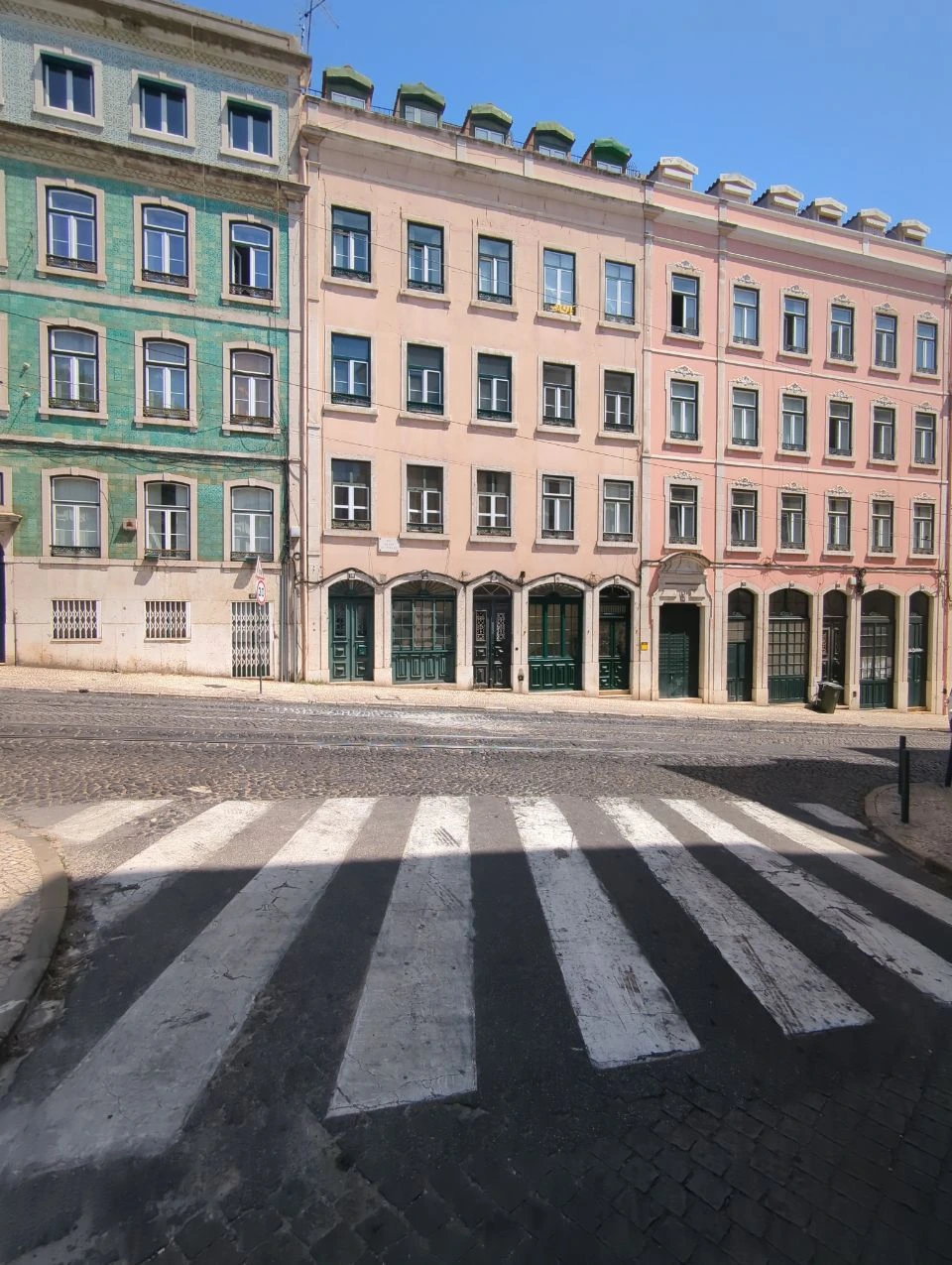
Alfama can make you want everything at once: patterned tiles, worn doors, steep steps, slivers of sky and lanes that seem to fold into each other. Trying to collect every postcard detail, however, can leave you spending more of your session watching your footing and changing locations than enjoying the person beside you.
Start with one main street and one backup spot just around the corner.
One street will not suit every couple. If recognisable landmarks are central to the photographs you want, several locations may make sense. But if you love Alfama for its faded tilework, close lanes, weathered details and intimate atmosphere, one carefully chosen pocket can offer plenty of variety without turning the session into a route march.
Updated

Table of Contents
Why one Alfama street can be enough
You might walk towards the camera, turn back when one of you says something funny, then pause beside a tiled façade while the wider street disappears from view. By moving closer, changing direction or using the lines of the surrounding buildings, your photographer can create wide, mid-distance and close photographs without losing the setting’s sense of place.
The same tiled wall can appear as part of a full street scene, a colourful background for a portrait and an abstract pattern behind your hands. A bend in the lane might create depth in one direction and a quieter architectural frame in the other. Steps can provide leading lines from below, a higher viewpoint from above and a natural way for you to move together.
This variety depends less on covering distance than on choosing a street with several workable angles. A famous view that offers only one practical position may produce less variety than an unassuming lane with good depth, an interesting wall and enough space to change perspective.
The photographer’s ability to alter distance matters too. A wider frame establishes Alfama around you. A medium composition captures your movement and body language. A close portrait brings attention back to your expressions. Those changes can happen within the same few metres when the street has been selected for the way it works, not merely for how it appears in one online photograph.
Start with comfort, not the postcard view
Reject any street where either of you would concentrate more on staying upright than on each other. Physical uncertainty often appears in photographs as guarded movement, held breath, shortened steps or a hand that never quite leaves the wall. A dramatic staircase is not a useful setting if it prevents you from relaxing.
Comfort does not require choosing the flattest or simplest street available. It means finding terrain that both of you can use with confidence. One couple may be perfectly happy walking on a moderate incline but dislike uneven steps. Another may prefer a short staircase with a sturdy landing to a long stretch of polished cobbles. Judge the actual movement involved rather than relying on broad labels such as “steep” or “easy”.
Think about the pauses as well as the walking. You may be able to cross a sloping lane without difficulty but feel uncomfortable standing sideways on it for several minutes. Check whether there is a stable place to stop, turn towards each other and change position without placing strain on an ankle, knee or back.
Tell your photographer about mobility needs or terrain concerns before the shortlist is made. You do not need to justify wanting fewer steps, gentler ground or shorter walking distances. Specific information is more useful than simply asking for an accessible area. Explain which movements or surfaces are difficult, what footwear you expect to use and how long you are comfortable standing.
Choose the Alfama detail you care about most
“Alfama character” is too broad to guide the choice. Steps, tiles, doors and street depth create different moods, and one street does not need to contain all of them.
Steps bring rhythm and changing height to a photograph. They can create a playful sense of movement, with one of you turning back while the other catches up, or give the photographer strong repeating lines. A broad staircase may feel open and architectural, while a narrow flight can create a more enclosed, intimate frame.
Tiles offer colour and repetition without requiring a grand view. A tiled façade might hold a full-length portrait, then become a wash of colour behind clasped hands or a close embrace. Look beyond the simple presence of tiles. Consider their scale, condition and position, and whether they remain visible from the distances at which you feel comfortable being photographed.
A large tiled wall may dominate a wide frame but become visually busy in a portrait. A smaller section beside a plain doorway may provide a better balance between local detail and clear attention on you. The right choice depends on whether you want the pattern to lead the image or quietly establish the setting.
Doors and smaller architectural details can calm the scene and draw attention towards a glance, a hand at the waist or the way you lean together. Their colours and shapes can frame you without competing with your expressions. Do not use a doorway as a seat, prop or posing space unless you know that doing so is appropriate.
Street depth works particularly well when you want movement. Layered façades, bends and repeated forms can make it feel as though you are discovering the neighbourhood together, disappearing around a corner and returning towards the camera. A curved lane can hide distractions farther away, while a straighter one may create stronger lines and a greater sense of distance.
Also consider how the feature relates to your clothes. Strongly patterned outfits may compete with intricate tiles, while pale or neutral clothing can stand out beautifully against richer colours. Dark clothes may separate clearly from a sunlit wall but lose definition in a heavily shaded lane. This does not mean coordinating every colour precisely. It means checking that the setting and clothing will not fight for attention.
Ask which ingredient you would be genuinely disappointed not to see in the final gallery. Let that preference lead the choice.
Check whether the street has room to work
Picture the session in progress. Is there enough room for both of you and your photographer? Can the photographer change distance safely? Can residents, workers and pedestrians still pass? If you plan to walk through the frame, can everyone remain safely away from moving traffic?
Reject any street where the intended photographs would obstruct an entrance, pedestrian route or traffic lane.
Do not judge usable space only by the width of the lane. A wider street may have parked vehicles, tables, bins or construction barriers that leave very little room. A narrower lane may contain a small recess or turning where the photographer can work without standing in the flow of pedestrians. What matters is the space that can actually be used.
Consider the photographer’s position as carefully as your own. A composition may seem possible from where you are standing but require the photographer to step into traffic, back towards an uneven edge or block somebody else’s route. If a photograph depends on an unsafe or inconsiderate camera position, it is not a workable photograph.
Entrances need particular care. An attractive door may appear unused during a brief visit but still serve a home, shop or shared building. The plan should leave enough room for somebody to enter or leave without asking you to move first. The same applies to staircases, passages and loading areas.
An empty background cannot be guaranteed on a shared street. The aim is not to find a place where ordinary neighbourhood life disappears, but one where your session can coexist with it.
Score promising streets without letting beauty hide a problem
Score each criterion from 0 to 2. A score of 0 means unsuitable or absent, 1 means workable with a limitation and 2 means strongly suited to your plans.
| Criterion | 0 | 1 | 2 |
|---|---|---|---|
| Terrain comfort | Uncomfortable for either of you | Manageable with a limitation | Comfortable in your planned clothing and footwear |
| Preferred visual feature | Missing or impractical | Present in one usable view | Strong in several compositions |
| Secondary visual variety | No useful alternative detail | One additional option | Several complementary details |
| Wider-view potential | Cluttered or unsafe | One workable direction | Several usable directions |
| Close-portrait potential | Background remains distracting | One clean close angle | Several simple close backgrounds |
| Passing space | Pausing would obstruct others | Workable between passing groups | Room to work while keeping access clear |
| Immediate backup | None identified | Requires a noticeable move | A nearby wall, turn or lane works |
| Ease of staying compact | Requires repeated relocation | Mostly contained | Several photographs possible within a few metres |
This Travaya scorecard is a planning guide, not an accessibility assessment or official rating.
A score of 0 for terrain comfort or passing space is a deal-breaker, regardless of the total.
Among the streets without a deal-breaker, choose for fit rather than raw score. Give the greatest weight to the visual feature you care about most and the usefulness of the immediate backup. A high-scoring street is only valuable if its strengths match the photographs you want.
Look closely at limitations hidden inside a score of 1. “Manageable with a limitation” could mean you are comfortable for a few minutes but would not want to repeat the same walk. “One workable direction” could mean the street depends heavily on a particular camera position. Decide whether the limitation affects a minor preference or something central to the session.
If two options finish with similar scores, choose the one with fewer conditions attached. A street that works only when a doorway is unused, a delivery space is clear and the light comes from one direction is more fragile than one with slightly less drama but several dependable angles.
The scorecard should explain your decision, not make it for you. Use it to expose trade-offs that a beautiful reference photograph might conceal.
Choose one nearby backup and keep the plan compact
If the main street is defined by steps, identify an adjacent wall or architectural detail for simple close portraits. If tiles are the main attraction, check whether the façade offers several useful crops or whether another tiled section sits close by. If street depth matters most, find a tighter angle for moments when the longer view becomes busy or temporarily cluttered.
The backup does not need to match the main view exactly. It should preserve enough visual continuity that the final photographs still feel connected. Similar wall colours, related tile patterns or the same quality of old stonework may be sufficient.
Choose something that changes the practical conditions as well as the composition. A second long street view will not help if the problem is pedestrian activity. Another staircase will not solve uncertain footing. The backup should offer what the main street lacks, whether that is a simpler background, firmer ground, shade or a position farther from the flow of people.
It must also be genuinely nearby. If reaching it requires a substantial climb, transport or a planned chain of stops, it no longer belongs to a compact plan. Ideally, you should be able to identify it from the main position or reach it by turning a corner.
Agree in advance on what would prompt the switch. That might be temporary building activity, difficult light, heavier pedestrian movement or an unexpected access problem. A clear trigger prevents you from waiting too long for conditions to improve when a workable alternative is already available.
Recheck the exact Alfama pocket before the session
The check should cover:
- the current condition of cobbles, slopes and steps
- comfortable places to stand, turn and walk
- clear entrances, pedestrian routes and camera positions
- deliveries, traffic, building work or other temporary restrictions
- the intended wider view and close-portrait angle
- the condition and availability of the nearby backup
Current light matters as much as current access. A lane previously seen in soft shade may receive strong direct light at another time of day or season. Tall buildings can also create sharp divisions between sun and shade, leaving one of you brightly lit while the other falls into darkness.
Your photographer should know which direction remains flattering if the light becomes harder and which close angle works if the wider street turns bright or patchy. The backup may need to provide shade rather than merely a quieter background.
Weather can change the practical character of the ground. Cobbles that feel secure when dry may become slippery after rain, while a sheltered-looking wall may sit beneath dripping balconies or drainage points. If wet weather is possible, the final check should consider grip, standing space and the safest approach to the street.
Journey planning is a separate question. Official Lisbon Metro and CARRIS updates can help you check services towards Alfama, but they cannot confirm the gradient, steps, surface or accessibility of the final lanes. Those details must be assessed at the exact spot.
If the street no longer works, move to another shortlisted option. The purpose of making a shortlist is to preserve the kind of photographs you want even when the original choice becomes impractical.
Plan your Alfama couple session with Travaya
Want help finding an Alfama pocket that suits you both? Explore Travaya’s photographers in Lisbon and plan a relaxed session around the streets and details you love most.
FAQs about choosing an Alfama street for couple photos
Share your planned clothing and footwear, any movement or balance concerns, the walking distance you are comfortable with and the Alfama detail you most want in the photographs. Specific information helps the photographer compare streets according to your needs.
Choose the street with fewer conditions attached. A dependable pocket with several usable angles and an immediate backup is usually a stronger choice than one that works only when the light, access and pedestrian activity are all favourable.
It should be reachable without transport, a substantial climb or another planned route. A wall, turning or neighbouring section of lane is close enough if it changes the practical conditions and gives the photographer a genuinely different option.
No. It is a personal planning tool. If either of you has specific accessibility requirements, discuss the exact surfaces, gradients, steps and approach with your photographer rather than relying on a numerical score.
Use the backup or another shortlisted street. Building work, access restrictions, wet surfaces and unexpected street activity are practical reasons to change the plan, not reasons to force a location that no longer suits you.


Our Lisbon Shoots:
Book your Lisbon couple Photographer!
Start Booking
How to Choose an Azulejo Background for Your Lisbon Couple Photos
How to Recognise an Overlooked Lisbon Couple Photo Spot
Praça do Comércio Couple Photos: Choose the Arcade, Arch or River View

Belém Tower Couple Photos: Three Ways to Make the Most of Water, Light and Views
Which Tagus Waterfront Setting Suits Your Lisbon Couple Photos?
What to Wear for Lisbon Couple Photos: Dress for the Setting and the Walk
ENJOY $20 OFF
Your first photoshoot when you become an email subscriber.
Related Articles

How to Choose an Azulejo Background for Your Lisbon Couple Photos
You have found three tiled façades in Lisbon, and all three look beautiful on your phone. One has an intricate blue-and-white motif, another is gloriously colourful, and the third feels unmistakably Portuguese. The real question is not which wall is prettiest. It is which one suits the photograph you want, what you are wearing and the way you hope to remember the day. The best choice makes the image feel unmistakably Lisbon while leaving room for you to look like yourselves. Someone viewing the photograph should notice a shared glance, a hand at a waist or the movement of a dress before beginning to inspect the tile pattern. To choose well, consider the intended composition, how the motif behaves from camera distance, your outfits, the usable pavement, nearby entrances and the conditions on the day.
How to Recognise an Overlooked Lisbon Couple Photo Spot
A pedestrian wanders into the background. The sun slips away from the tiled wall. A delivery van settles into the neat patch of street you had pictured using. Nothing dramatic has gone wrong, but the photograph you imagined five minutes ago has vanished. That is Lisbon for you: gorgeous, lively and always changing. Choosing a couple photo spot here takes more than finding somewhere lovely on a map. The useful question is whether a corner offers flattering light, safe movement, varied compositions and an easy alternative when conditions shift. When it does, you can keep walking, chatting and enjoying each other’s company until your shoulders drop, the camera fades into the background and the photographs start to feel unmistakably like the two of you.
Praça do Comércio Couple Photos: Choose the Arcade, Arch or River View
Praça do Comércio gives you golden façades, sweeping arcades, the Rua Augusta Arch, shifting skies and the Tagus in one wonderfully photogenic square. The clever bit is not trying to squeeze everything into every photograph. Each view creates a different mood, and choosing the right two or three will give your gallery far more personality. The plan is simple: sequence the arcade, Arch and river compositions around the light, pedestrian flow and the balance of architecture and water you want. Keep that order flexible. A beautifully clear Arch deserves quick attention, glowing river light may be too good to leave until later, and the arcade is lovely when you want to start gently and settle into the session.