
October 9, 2026
Which Tagus Waterfront Setting Suits Your Lisbon Couple Photos?
You’ve saved three Lisbon waterfront photographs: one with sweeping contemporary curves, one with a vast monument beside the river and one glowing with yellow façades. Each is unmistakably Lisbon, but each creates a completely different mood.
One well-chosen setting can give you walking photographs, seated moments, close portraits and wide views without rushing across the city. Focus on the version of Lisbon you most want around you while you are together.
Updated

Table of Contents
Choose the version of Lisbon you want around you
- Sleek and spacious: MAAT
- Grand and cinematic: Padrão dos Descobrimentos
- Warm and lively: Praça do Comércio
These descriptions are starting points rather than rigid rules. Framing, light and the way you move together will shape the final gallery, but the setting determines its underlying character.
MAAT for contemporary lines and layered river views
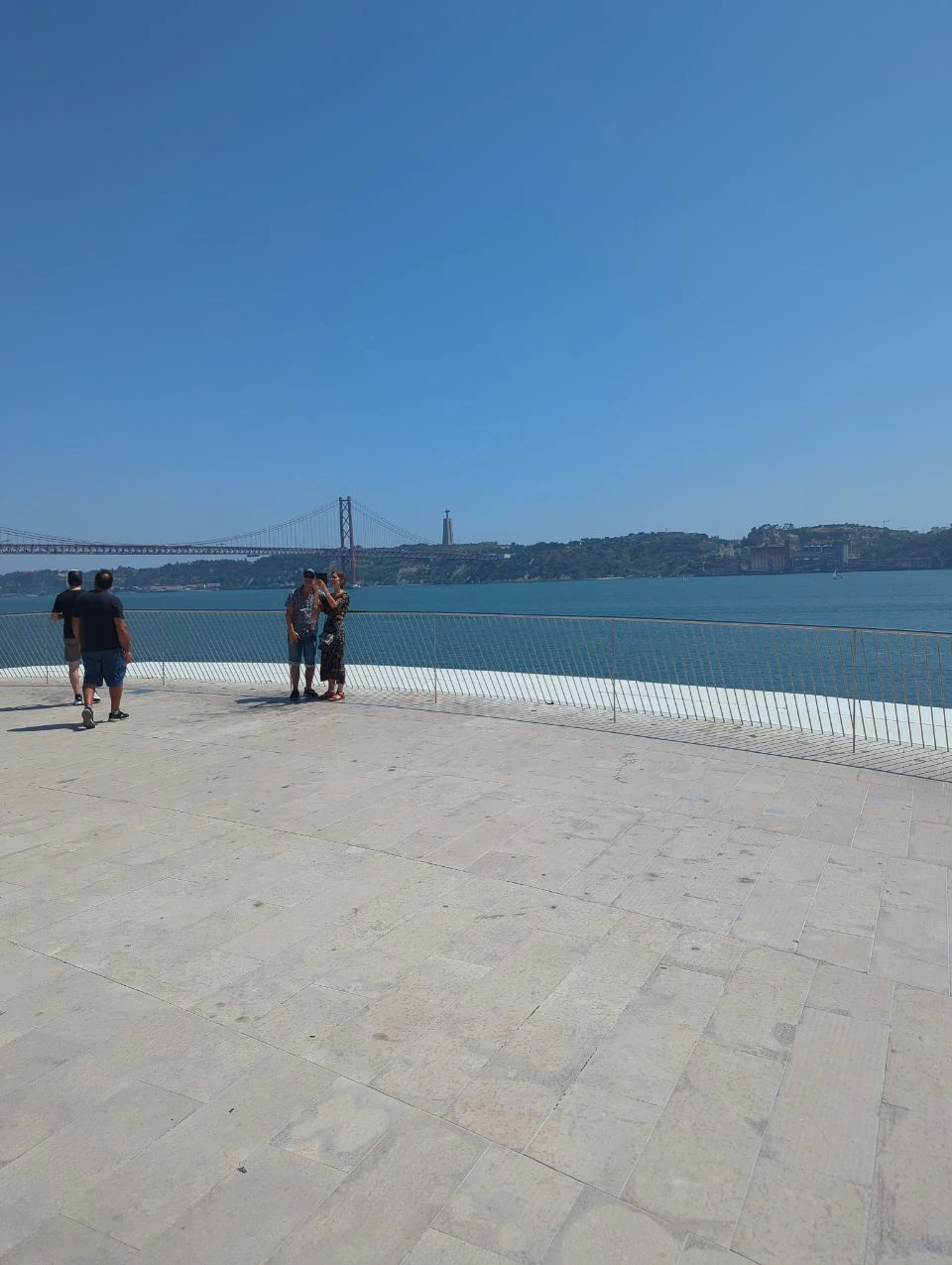
During an October 2026 location scout, Travaya found an accessible promenade angle that brought the Tagus, the 25 de Abril Bridge and distant Cristo Rei into one composition. The strength of this view lies in its layers. The couple remains the emotional focus, while the river creates depth and the bridge or Cristo Rei quietly establishes the location.
A close portrait can reduce the surroundings to pale architecture, texture and light. Step further back and the Tagus begins to enter the frame. From a suitable wider position, the bridge or Cristo Rei can add context without competing for attention.
This flexibility makes MAAT particularly useful when you want a varied gallery without changing location. Walking beside the curved façade can feel graphic and energetic, especially when the building’s lines lead towards you. A seated pause creates a quieter mood. Changing the distance or turning towards the river then produces a wider photograph with more breathing room.
The architecture can also help couples who feel unsure about posing. Instead of standing still and trying to manufacture a moment, you can follow the curve of the building, walk towards the water or stop briefly to look back at each other. These small actions give the photographer genuine movement to work with.
MAAT’s visual identity remains strong even when every landmark is not visible at once. Some photographs may be almost entirely architectural, while others place you within a broad waterfront scene. The gallery still feels coherent because the same pale forms, open space and riverside atmosphere run through it.
Greenery and pockets of shade can offer additional possibilities, although planting, shade and temporary installations change throughout the year. A photograph saved months earlier should therefore be treated as inspiration, not as a guaranteed arrangement of every background detail.
The October 2026 scout also found the nearby pier closed off. The observed compositions were made safely from the public promenade rather than from the pier. Its status may have changed since then, but a session should never depend on a structure being accessible. The promenade already provides strong architectural and river views when the photographer chooses the angle carefully.
MAAT’s official information is useful for directions, museum opening hours, accessibility and visitor services. Conditions on the outdoor promenade may follow a different pattern, so the practical plan should be based on what is open and usable close to the session date.
If you want to keep walking after MAAT, the Belém waterfront route compares a focused hour with a longer garden extension.
Padrão dos Descobrimentos for monumental scale
That scale does not mean every photograph must feel formal or distant. A session can begin with a wide walking frame that establishes the setting, then move closer as one of you reaches for the other’s hand, turns towards a private comment or laughs at something between you. The transition from monumental scenery to a closer interaction gives the gallery both spectacle and warmth.
The monument’s strong structure can support compositions in which you are deliberately not the largest element. This works well for couples who enjoy photographs that feel connected to travel, architecture and place rather than a gallery made entirely from close portraits. It also creates images in which Lisbon is more than a blurred background.
Once a few wider frames have established Padrão, you can turn towards the river for quieter photographs. The monument does not need to appear in every image for the session to retain its Belém identity. Water, open sky and the surrounding promenade can provide visual relief between more imposing compositions.
This is especially useful if you like the grandeur of the monument but do not want it to dominate the entire gallery. A deliberate sequence might move from a broad establishing photograph to a medium walking frame, then towards a closer moment with only the Tagus behind you. The location remains consistent while the emotional distance changes.
The openness of the waterfront is one of Padrão’s strengths, but it also influences what is practical on the day. Strong sun may make one orientation uncomfortable or create shadows that distract from expressions. Visitors, temporary barriers or maintenance work can interrupt a perfectly clean silhouette.
A photographer can respond by adjusting the distance, waiting for a brief opening or using a different stretch of water. These changes do not weaken the choice of location. Padrão’s value comes from its overall scale and setting, not from reproducing one exact reference image.
Praça do Comércio for colour and city energy
This compact progression is one of the square’s greatest advantages. You can create distinct looks without leaving the area or breaking the flow of the session. One photograph might use the symmetry of the buildings, another the scale of the square and another the transition between city and river.
Closer portraits can retain the square’s warm colour even when little of the Tagus is visible. Wider photographs can place you within the formal architecture or use open paving and sky to create more space around you. The location is therefore not limited to one classic postcard composition.
Praça do Comércio is particularly effective when you want Lisbon’s movement to remain part of the story. Passing visitors and ordinary city activity do not automatically spoil the atmosphere. Used carefully, they can make the photographs feel connected to a real day in central Lisbon rather than isolated from it.
The key is deciding how prominent that movement should be. A wider frame may allow people in the distance to contribute energy and scale. A closer photograph or a slight change in direction can reduce distractions when the focus needs to return to expressions and touch.
Wind can add to the sense of movement across the square, while changing light can alter the façades from soft and subdued to rich and graphic. The result is often less controlled than a quiet architectural corner, but that liveliness is precisely why some couples will prefer it.
Choose Praça do Comércio if you want the waterfront to feel inseparable from the city around it. The Tagus matters here, but so do colour, symmetry, footsteps and the changing rhythm of a central public square.
Let wind, light and reflections shape the photographs
Clothing choices can make that easier. Fabric with some movement can look beautiful beside the river, but anything requiring constant adjustment may pull your attention away from each other. The same applies to hair. The aim is not to eliminate every sign of wind, but to prevent it from controlling the session.
Light changes the mood just as strongly. Brighter sun can intensify the yellow façades of Praça do Comércio or produce striking shadows around MAAT’s curved surfaces. Softer light may feel more comfortable for close portraits in which subtle expressions matter.
There is no single perfect type of light for every Lisbon waterfront session. The useful question is how the available light supports the atmosphere you chose. Graphic sun may suit the modern geometry of MAAT, while softer conditions can make an exposed riverside scene feel gentler. At Padrão, the direction of the light may determine whether the monument works best as a clear focal point or a more subdued background.
Your photographer may briefly turn you away from the most obvious view to find kinder light on your faces. Once the close photographs are complete, the river or landmark can return in a wider frame. This is often more effective than remaining fixed in one position simply because it resembles a saved image.
Reflections should be treated as a bonus rather than a promise. They depend on the weather, direction of the light, water and available surfaces at that particular moment. If a useful reflection appears, the photographer can work with it quickly. Your choice of location should not depend on one being present.
Match one waterfront setting to the time you have
A seated pause can change the pace once the session is under way. It creates room for quieter interaction without asking you to perform affection or hold a complicated pose. Remaining in one area gives this progression time to happen.
Changing districts too quickly can interrupt that rhythm. Travel consumes part of the booked session and introduces uncertainty around traffic, public transport, parking and walking time. Even when two places look close on a map, the practical journey may be longer once meeting points and access routes are considered.
A second waterfront can still be worthwhile when its appearance is central to what you want. The important question is whether the additional setting will contribute more than the time lost reaching it. If it is included, check the route close to the date and allow enough time for delays without turning the session into a race.
For many couples, one location will produce the stronger gallery. Staying in place allows the photographer to notice how the light is changing, find quieter moments between visitors and move gradually between close, medium and wide compositions. It also gives you more time to relax into being photographed together.
Make a final check before the session
At MAAT, confirm that the intended sections of the public promenade are open. Do not assume that the nearby pier or any other structure seen in an older photograph will be available.
At Padrão dos Descobrimentos, check whether temporary works, barriers or organised activity affect the monument-and-river view. The location can still work if one angle is unavailable, but knowing in advance makes it easier to choose a suitable meeting point.
At Praça do Comércio, look for events that may change how people move through the square. A busy public space does not need to be empty, although stages, fenced areas or large gatherings can affect the compositions available.
Public access does not necessarily cover every professional or commercial setup. Current requirements should be checked with the relevant venue or local authority, particularly if the photographer plans to use lighting stands, tripods or other equipment beyond a handheld camera.
If a reference angle is unavailable, the first response should be to find another secure composition within the same area. A change in direction, background, distance or lens choice may preserve the character you selected and produce something more personal than a direct copy.
Keep entrances and established paths clear. Choose secure footing and avoid positions where either of you needs to monitor the river edge, passing bicycles or a stream of pedestrians. A place that was quiet during a previous visit may be busy when you arrive, so privacy should never be treated as guaranteed.
The most useful plan is specific about atmosphere but flexible about exact frames. Decide whether you want contemporary space, monumental scale or warm city energy, then allow the photographer to respond to the conditions that actually appear.
Plan your Lisbon waterfront couple session
Explore Travaya’s Lisbon photographers and find someone who can turn your preferred waterfront atmosphere into a relaxed, workable session.
Frequently asked questions
Not necessarily. Museum opening information and conditions on the outdoor promenade may differ. Check the current route and public access arrangements shortly before the session rather than assuming that one automatically determines the other.
Yes. Compare the atmosphere of each setting rather than debating individual reference photographs. If one of you prefers recognisable Lisbon architecture and the other prefers intimate portraits, choose a location that supports both wider and closer framing.
It can feel noticeable at first, but movement usually helps. Walking and talking give you something to focus on besides the camera. Your photographer can also adjust the direction or distance when a particular area becomes distracting.
Protect the atmosphere you chose rather than one exact composition. If an angle is blocked or the light is uncomfortable, a nearby position can often retain the architecture, colour, river or sense of scale that made you select the location.


Our Lisbon Shoots:
Book your Lisbon couple Photographer!
Start Booking
How to Choose One Alfama Street for Your Couple Photos

How to Choose an Azulejo Background for Your Lisbon Couple Photos
How to Recognise an Overlooked Lisbon Couple Photo Spot
Praça do Comércio Couple Photos: Choose the Arcade, Arch or River View

Belém Tower Couple Photos: Three Ways to Make the Most of Water, Light and Views
What to Wear for Lisbon Couple Photos: Dress for the Setting and the Walk
ENJOY $20 OFF
Your first photoshoot when you become an email subscriber.
Related Articles

How to Choose One Alfama Street for Your Couple Photos
Alfama can make you want everything at once: patterned tiles, worn doors, steep steps, slivers of sky and lanes that seem to fold into each other. Trying to collect every postcard detail, however, can leave you spending more of your session watching your footing and changing locations than enjoying the person beside you. Start with one main street and one backup spot just around the corner. One street will not suit every couple. If recognisable landmarks are central to the photographs you want, several locations may make sense. But if you love Alfama for its faded tilework, close lanes, weathered details and intimate atmosphere, one carefully chosen pocket can offer plenty of variety without turning the session into a route march.

How to Choose an Azulejo Background for Your Lisbon Couple Photos
You have found three tiled façades in Lisbon, and all three look beautiful on your phone. One has an intricate blue-and-white motif, another is gloriously colourful, and the third feels unmistakably Portuguese. The real question is not which wall is prettiest. It is which one suits the photograph you want, what you are wearing and the way you hope to remember the day. The best choice makes the image feel unmistakably Lisbon while leaving room for you to look like yourselves. Someone viewing the photograph should notice a shared glance, a hand at a waist or the movement of a dress before beginning to inspect the tile pattern. To choose well, consider the intended composition, how the motif behaves from camera distance, your outfits, the usable pavement, nearby entrances and the conditions on the day.
How to Recognise an Overlooked Lisbon Couple Photo Spot
A pedestrian wanders into the background. The sun slips away from the tiled wall. A delivery van settles into the neat patch of street you had pictured using. Nothing dramatic has gone wrong, but the photograph you imagined five minutes ago has vanished. That is Lisbon for you: gorgeous, lively and always changing. Choosing a couple photo spot here takes more than finding somewhere lovely on a map. The useful question is whether a corner offers flattering light, safe movement, varied compositions and an easy alternative when conditions shift. When it does, you can keep walking, chatting and enjoying each other’s company until your shoulders drop, the camera fades into the background and the photographs start to feel unmistakably like the two of you.