
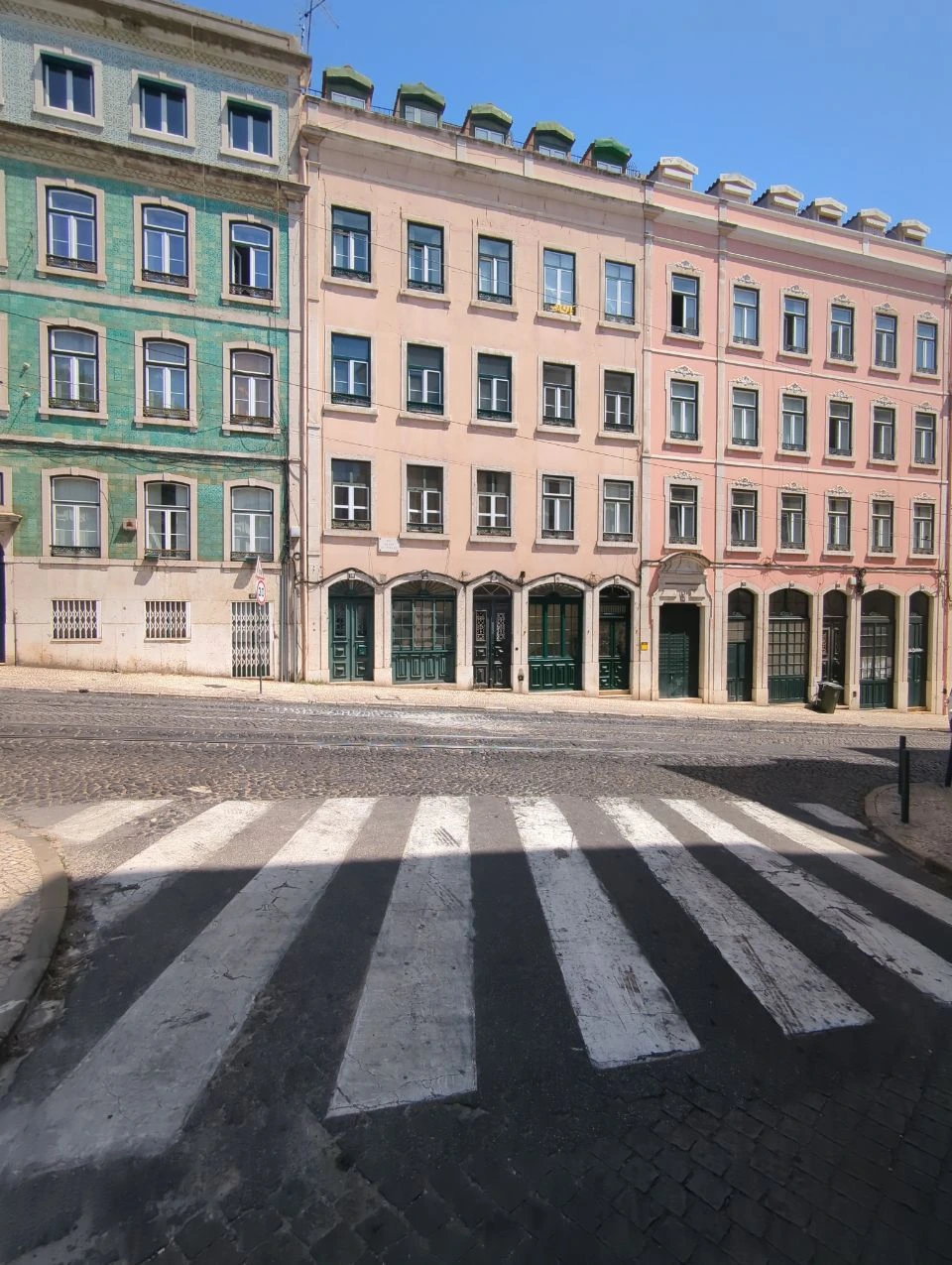
Lisbon Tram Photoshoot: Five Distinct Settings and When to Wait for the 28E Tram
There’s an unmistakable thrill when one of Lisbon’s yellow trams appears between the tiled façades. It brings a flash of colour and energy to the photograph. The setting already gives you a strong Lisbon portrait, with any passing tram becoming a lovely extra.
Think of this as choosing your favourite Lisbon atmosphere, not following a Tram 28 itinerary. Graça gives you pale church stone, plenty of pavement space and a curving street on the 28E route. Escolas Gerais brings the façades close around a bend in one of Lisbon’s historic streets. Santa Luzia and Portas do Sol bring together tiled walls, garden details, rooftops, domes and river views. Sé feels dramatic beneath the cathedral, while Estrela pairs pale basilica stone with greenery and a gentler pace.
Updated
Table of Contents
Start your Lisbon tram photoshoot with a strong tram-free picture
You’ll stay in legal pedestrian areas throughout, whether that’s a pavement, terrace or forecourt. Your photographer will choose the exact position on the day after checking the crowds, traffic, barriers and access, keeping everyone comfortably clear of the road and tram tracks.
That means you can keep walking, talking and turning towards each other while your photographer watches the street. Even if no tram appears, those small interactions create relaxed portraits filled with tiles, stone and everyday Lisbon atmosphere.
Graça gives you stone, sky and a graceful street curve
Start beside the church wall or on the broad pedestrian forecourt, where you can walk, turn or stand comfortably away from the rails. Your photographer can frame you from the pavement on the outside of the curve.
The tram-free frame is all about pale stone, changing light and that graceful bend. A closer composition can bring out the texture of the church, while a wider one lets the street and sky give the photograph a lighter, more expansive feeling.
A yellow tram looks lovely along the curve, but there’s no rush. Once the stone-and-sky portrait is in the bag, keep enjoying the moment while the curve stays open behind you. If people or traffic fill the view, that’s the perfect cue to finish with the portrait you already love. Graça is especially appealing for couples who want romantic energy without the enclosed feeling of a narrow street.
Escolas Gerais brings you close to the textures of old Lisbon
Stand on the pavement beside the textured façades, using a recess only when it forms part of the safe pedestrian space. From the opposite pavement, your photographer can use the bend to bring tiles, balconies and worn plaster into the frame. If crowds or traffic make the wider view less useful, they can frame you more closely and let those same details create an intimate old-Lisbon portrait.
Even without a tram, the narrow turn creates a layered portrait with a strong sense of depth. A closer composition keeps the focus on you, while the street disappearing around the bend gives the photograph a quiet sense of movement.
Because the view is tight, it changes quickly as people and traffic pass. Stay for the tram only while the bend remains open; the old-city portrait already works without it.
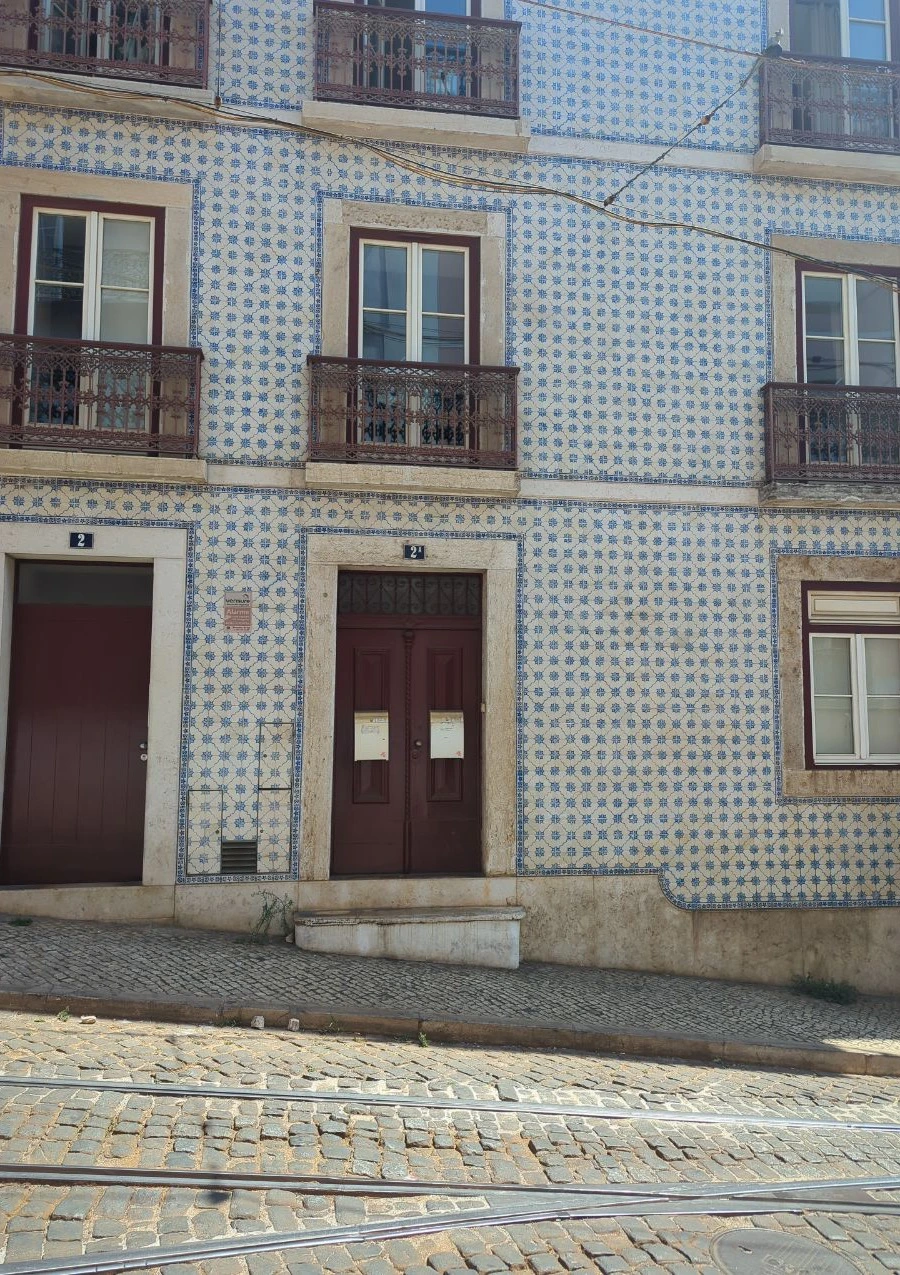
Santa Luzia makes the tram a small part of a much bigger Lisbon scene
Begin beside the tiled wall or leafy garden edge on the pedestrian terrace, where colour, texture and soft greenery already create a beautiful Lisbon portrait. From farther along the terrace, your photographer can include the rooftops, domes and river, or use a nearby pavement if it offers the stronger view that day.
There are several strong tram-free portraits to choose from. You might be framed against blue-and-white tiles, placed between leafy garden details or photographed with Lisbon’s roofs rolling towards the river. If Santa Luzia feels crowded, nearby Portas do Sol can give you more sky and distance. We can simply use whichever viewpoint works best that day as your main scene.
Busy moments are easy to work around here because several terrace views sit close together. Once the terrace portrait is complete, your photographer can keep the street in view briefly while the angle remains clear. If crowds or traffic weaken it, move on to the stronger terrace scene. That freedom works especially well for couples, families and maternity portraits.
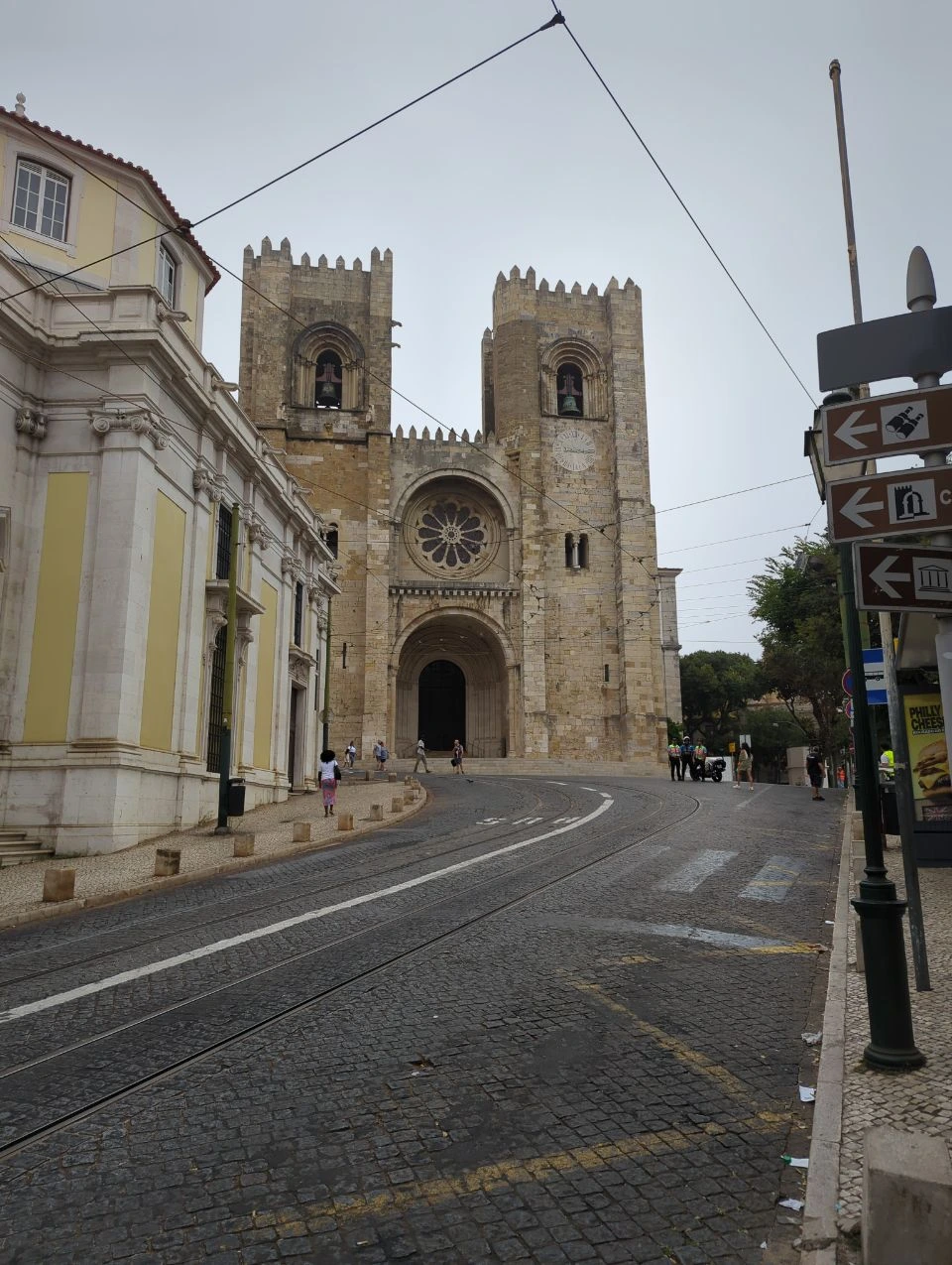
Sé Cathedral gives you Lisbon's boldest stone-and-tram contrast
Stand on the pavement beside the cathedral frontage, with the stone rising immediately behind you. From a public pedestrian corner across the street, your photographer can frame both the cathedral and the sloping 28E corridor.
Without a tram, the cathedral already anchors the composition. A close frame brings out the weathered stone and carved details, while a wider portrait places you above the descending street. Either approach feels unmistakably Lisbon before anything enters the background.
Sé works best when the sloping street remains visible behind you. Once the cathedral portrait is in the bag, keep the street in your background for a few more photographs. If it stays clear, a yellow tram may add that brilliant dash of colour; if not, the stone has already done the dramatic work.
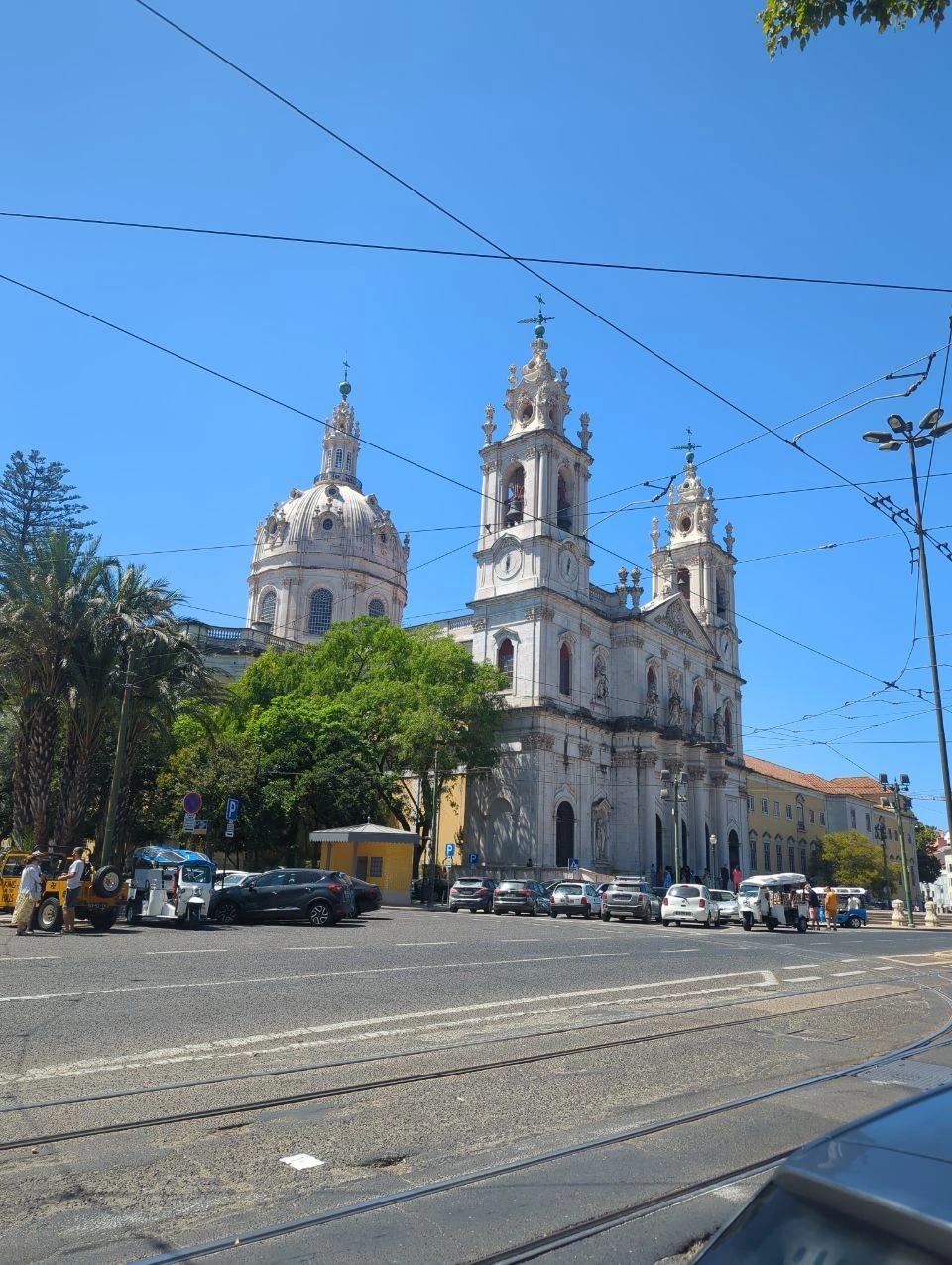
Estrela is the softer tram setting for greenery and pale stone
Begin on the basilica’s pedestrian forecourt, where there’s room for walking, flowing clothes and relaxed family interaction. Your photographer can work from another part of the forecourt to place the pale stone behind you, then use a nearby pavement only if it offers a clearer view of the greenery or street.
Before a tram appears, the basilica gives you a clean, luminous background. A closer frame highlights its architectural details, while a wider portrait creates an airy sense of place.
After completing the basilica portrait, your photographer can leave room for the street in the background briefly if it still strengthens the picture. If it doesn’t, continue into the Estrela gardens, where Estrela becomes wonderfully soft and green. This setting particularly suits families, maternity portraits and couples who prefer room to move.
How long to wait during your Lisbon tram photoshoot
For the latest 28E updates, CARRIS is our go-to official source. Everything here was checked on 4 September 2026, from the official CARRIS route to the practical details at all five settings. On your shoot day, we’ll look once more for diversions, changed stops or temporary service updates, then shape the photography plan around what’s happening rather than a particular tram or arrival time.
Choose the Lisbon setting that suits your photographs
Plan your Lisbon photoshoot
Lisbon tram photoshoot FAQs
Estrela is usually the easiest choice for a long or delicate outfit because its broader pedestrian areas allow calmer movement and more room in the frame. Santa Luzia can give you greater scenic variety, although crowds may reduce the usable space. On the day, we can minimise movement between angles and prioritise dry, stable paving after rain.
Your photographer will choose the exact spot when you arrive, as barriers, parked vehicles, crowds and temporary access conditions can change. They’ll choose the safest available pavement, terrace or forecourt, keeping everyone comfortably away from traffic and the tracks. If the preferred view isn’t available, we’ll use a nearby angle or frame the portrait more closely.
Couples can choose any of the five settings according to the mood they prefer. Graça and Sé suit more architectural portraits, while Escolas Gerais creates a closer old-city feeling. Santa Luzia offers the greatest scenic variety, and Estrela is particularly comfortable for families, maternity sessions and anyone bringing a buggy.
The tram may be partly hidden, or it may make the composition feel cluttered and draw attention away from you. If its colour works as a subtle background detail, we can include it. When it doesn’t improve the scene, we’ll keep the stronger tram-free photograph and move on.
Sometimes. Santa Luzia, Portas do Sol, Escolas Gerais and Sé can pair naturally with a few nearby walking portraits when crowds, access and your booked time allow. Choose your main setting first, then let your photographer decide on the day whether a short extension can be added without rushing the session.
Yes. We’ll check [CARRIS](https://www.carris.pt/) on the day for diversions, stop changes or temporary service updates, then adapt the shoot if needed.


Where to Propose in Florence: Choose the Proposal Style She Would Love
Where to Propose in Florence: Choose the Proposal Style She Would Love
What to Wear for a Temple Photoshoot in Bangkok
What to Wear for a Rome Photoshoot: An Outfit That Moves With You
What to Bring to a Bangkok Photoshoot
Wat Pho or Wat Arun: Which Bangkok Temple Is Better for Photos?
ENJOY $20 OFF
Your first photoshoot when you become an email subscriber.
Related Articles
Where to Propose in Florence: Choose the Proposal Style She Would Love
Find the Florence proposal setting that feels most like her, from peaceful gardens and hidden viewpoints to classic landmarks and stylish rooftop evenings.
Where to Propose in Florence: Choose the Proposal Style She Would Love
Discover where to propose in Florence, from quiet gardens and hidden viewpoints to classic landmarks, romantic rooftops and relaxed Oltrarno streets.
What to Wear for a Temple Photoshoot in Bangkok
Choose a comfortable, respectful and photogenic outfit for a temple photoshoot at Wat Pho, Wat Arun or the Grand Palace in Bangkok.