

October 3, 2026
Fira photo spots: caldera views, Three Bells and lower lanes
The caldera is the first thing you'll want to photograph in Fira. Then an orange stair catches your eye, a white arch opens onto the sky, and a red wooden door makes you forget the sea for a moment. That's the lovely part of a photo walk here: the huge view and the little details belong together. You can bring home the Santorini skyline you hoped for, with a few pictures that feel much more your own.
Updated

Table of Contents
Start with the Fira photo spots around the cathedral
Keep the beginning simple. The cathedral, neighbouring promenade and central lanes offer enough changes of colour and shape for a lovely first set of photographs. You can spend time looking at the buildings as well as through the gaps between them. A few steps towards a doorway can change the picture more than another long stretch of walking.
From this central area, choose the branch that appeals to you. North towards Firostefani, the Three Bells and distant Skaros become part of the story. Down in Kato Fira, smaller lanes give you doors, a weathered church and the town rising above you. Those are alternatives to explore, not a circuit you have to finish. Pick the photographs you most want, then give yourself time to enjoy making them.
White arches, decorated doors and open water
For a portrait, think about how much of the building you want around you. A wider photograph can keep the full curve of an arch and some of the space beyond. A closer one might need only pale masonry behind a shoulder and a little light on a face. Take a moment to look before picking your place. The most inviting background isn't always the first one beside the entrance.
If the courtyard is open, follow the church's visiting rules and leave room for people going to worship. For a photo session, ask the church for permission first: being open to visitors doesn't cover that. You can still make the cathedral part of your walk from the surrounding public area. The open caldera view nearby gives the architecture a wonderful companion picture: white curves in one, water and volcano in the next.
Orange steps and a place for you in the picture
The staircase can be part of your photograph without becoming somewhere you stand. The same goes for a hotel terrace or an appealing doorway. Stay on a public lane that's open to visitors and let the building add the colour. A small change in where you hold the camera can show more of the railing, less of a terrace, or a larger stretch of water, without stepping into someone else's space.
Near the promenade by Rastoni Concept Bar, the low-wall views offer another idea: a photograph of you with the volcano still visible behind. Stay on the lane side and look at how your head and shoulders sit against the water. Turn a little and Fira's buildings can join the background. It's a lovely answer to that familiar holiday problem of coming home with dozens of beautiful places and hardly any pictures of yourself in them.
If you're there together, begin with a wider picture that keeps the setting, then come closer for one where your expressions matter more. You needn't keep the whole caldera in every photograph. A little white architecture and a slice of blue can say plenty, especially when you're looking at each other rather than concentrating on the camera.
Look back over the roofs
Give the layers a moment. Try including a nearby roof, a church farther away and a gap of caldera between them, rather than immediately looking for the widest possible view. Colourful bell-tower details and bright window surrounds can also make a smaller picture when the skyline feels busy. You don't need a name for every building to notice how beautifully they sit together.
The outer alleys towards the cable-car area give you another way to explore central Fira. Wander along with the other visitors, then pause where there's room for a picture. A comfortable gap is a lovely chance to catch the town as it is, with people enjoying the lanes around you and space for everyone to keep moving.
Firostefani, with Skaros in the distance
Skaros is a particularly satisfying shape to include from a distance. Let it sit beyond a white wall or below the higher village, giving the photograph something solid to hold onto among the pale buildings and blue water. Seeing it from here is a pleasure in its own right. If walking to the rock is what you have in mind, our separate Imerovigli and Skaros photo guide covers that different outing.
Keep an eye on the small things too. You might spot a painted gate, a bell tower or the decorative boat on a roof near Vallas Café and want a closer photograph. If the boat is still there, enjoy it from the public lane below and keep your feet off the roof. These little discoveries are part of the fun of leaving enough time between the views you already know you want.
The Three Bells, blue dome and changing backdrop
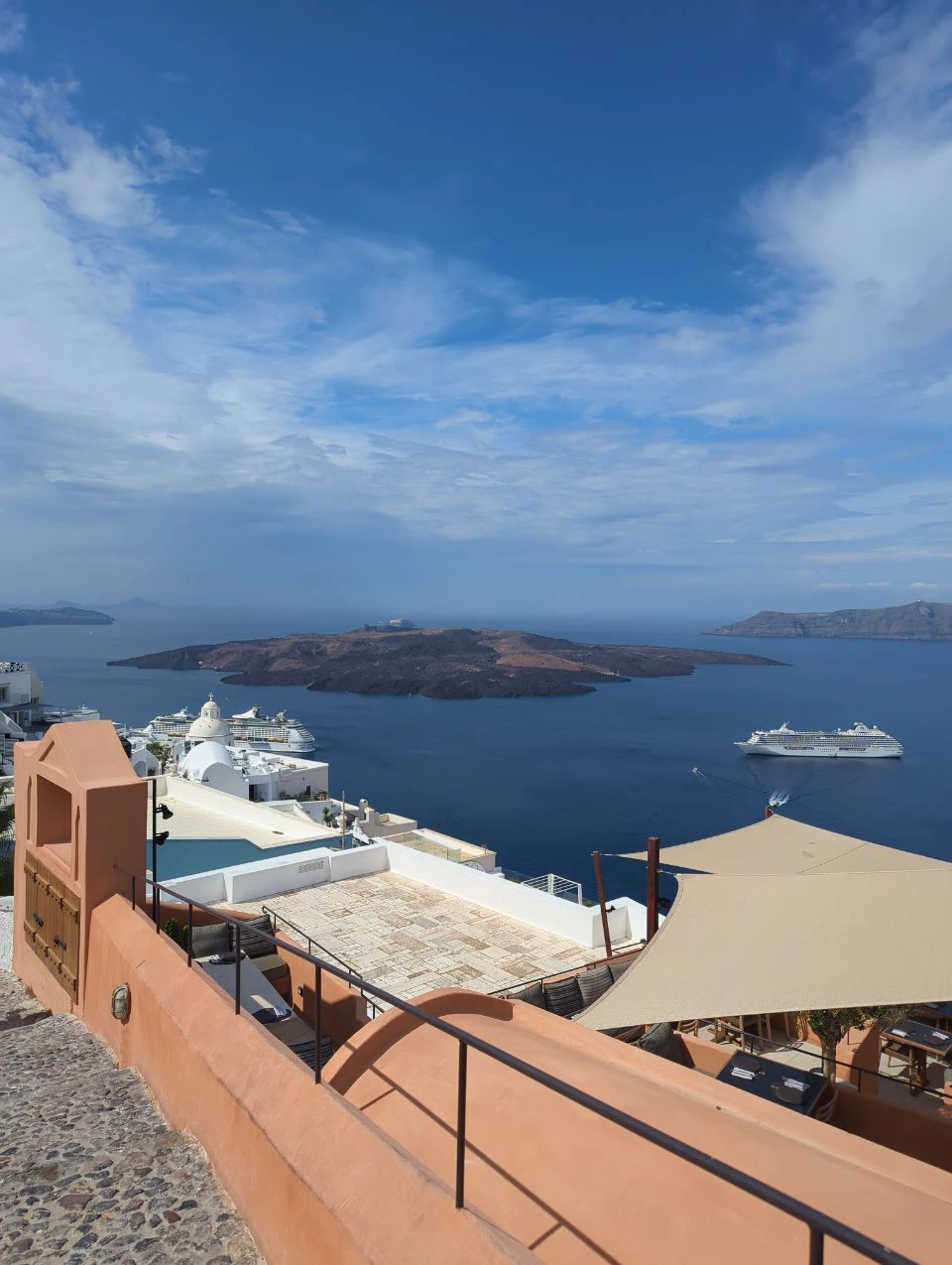
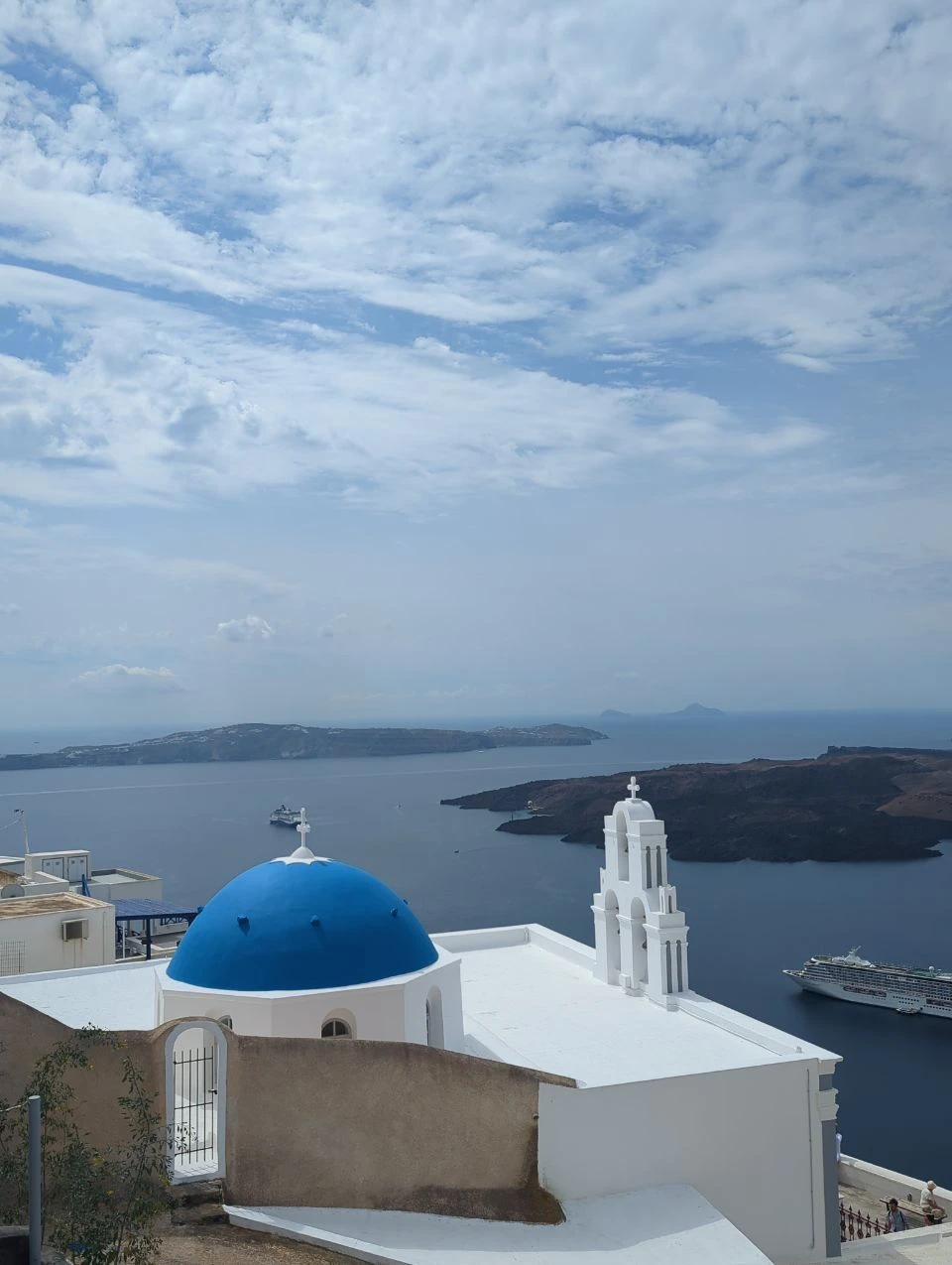
The original view shown here includes ships in the water. Yours might too. You can keep them as part of the scene, or try a closer picture that gives the dome and bells more space. The wide version tells you where the church sits; the closer one lets those blue-and-white shapes carry the photograph. Neither needs to be an exact copy of someone else's holiday picture.
At the overlook, enjoy the dome and bells from the open viewing area. Keep your feet on the ground: there's a drop beyond the wall. Take your turn when others are waiting, then give them room for their picture too. If you'd like a portrait together, look for a public-lane view with enough space to stand comfortably. That may give you more freedom to turn towards each other than the busy overlook.
Lower Fira turns the town into your background
From the public lane, shift a little and see what appears. A tower may emerge, or a roof may stand clear of the hillside behind it. The pleasure is in finding a few shapes that belong together in your picture, with enough space to appreciate each one.
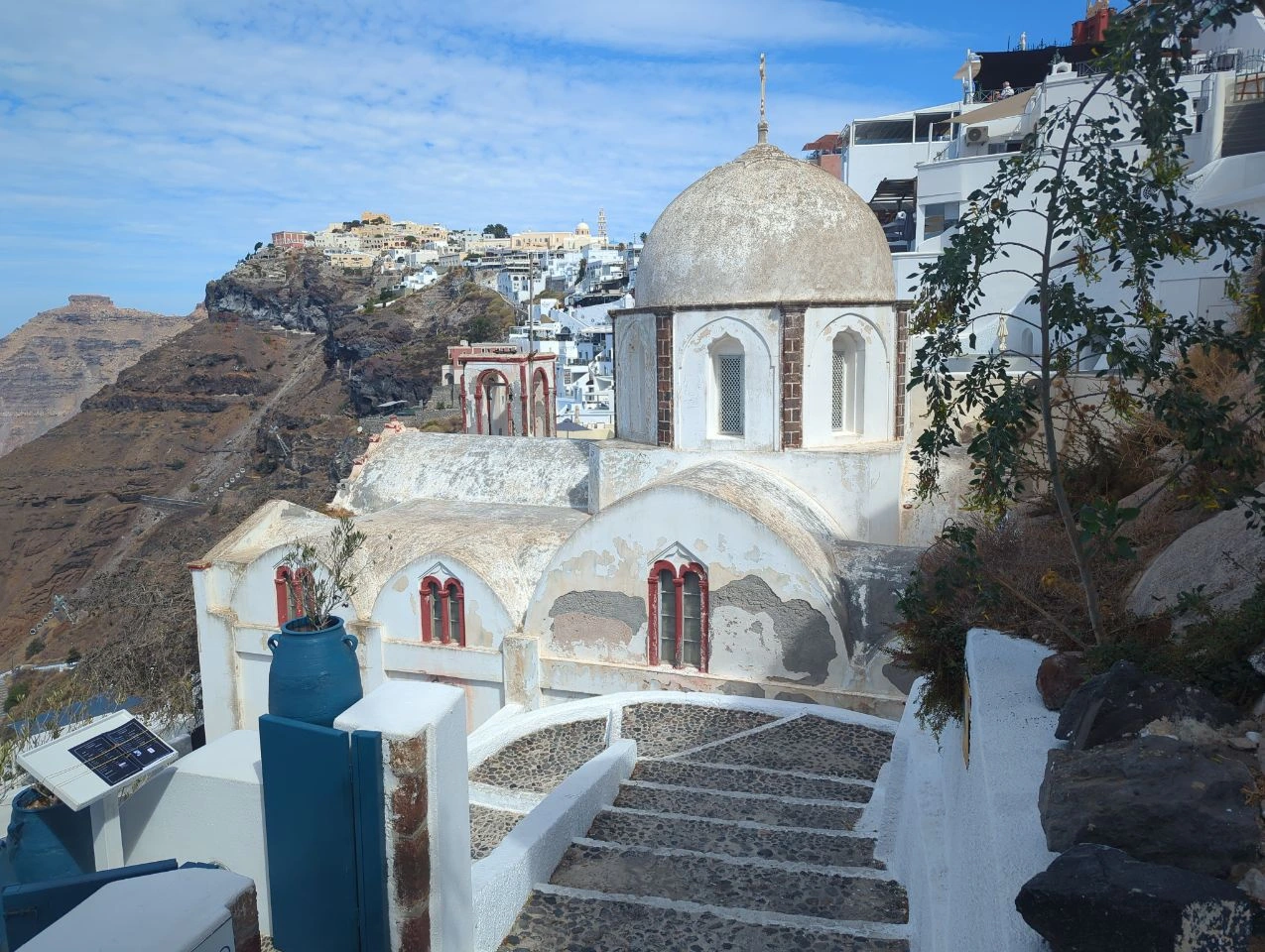
The weathered church in the opening photograph is beside a bend in descending stone steps. Its worn white walls, small reddish window frames and bell arch have a very different character from the polished blue-domed postcard view. Keep the bend of the steps in your picture, with upper Fira and Skaros giving the church a much larger setting.
Try a closer photograph of the small windows or bell arch too. Choose the lower lanes if these close, slightly worn details appeal to you, and keep the climb back in mind as you decide how far to continue. You can finish with a few pictures you love without following every stair that disappears around a corner.
A red door is worth a closer look
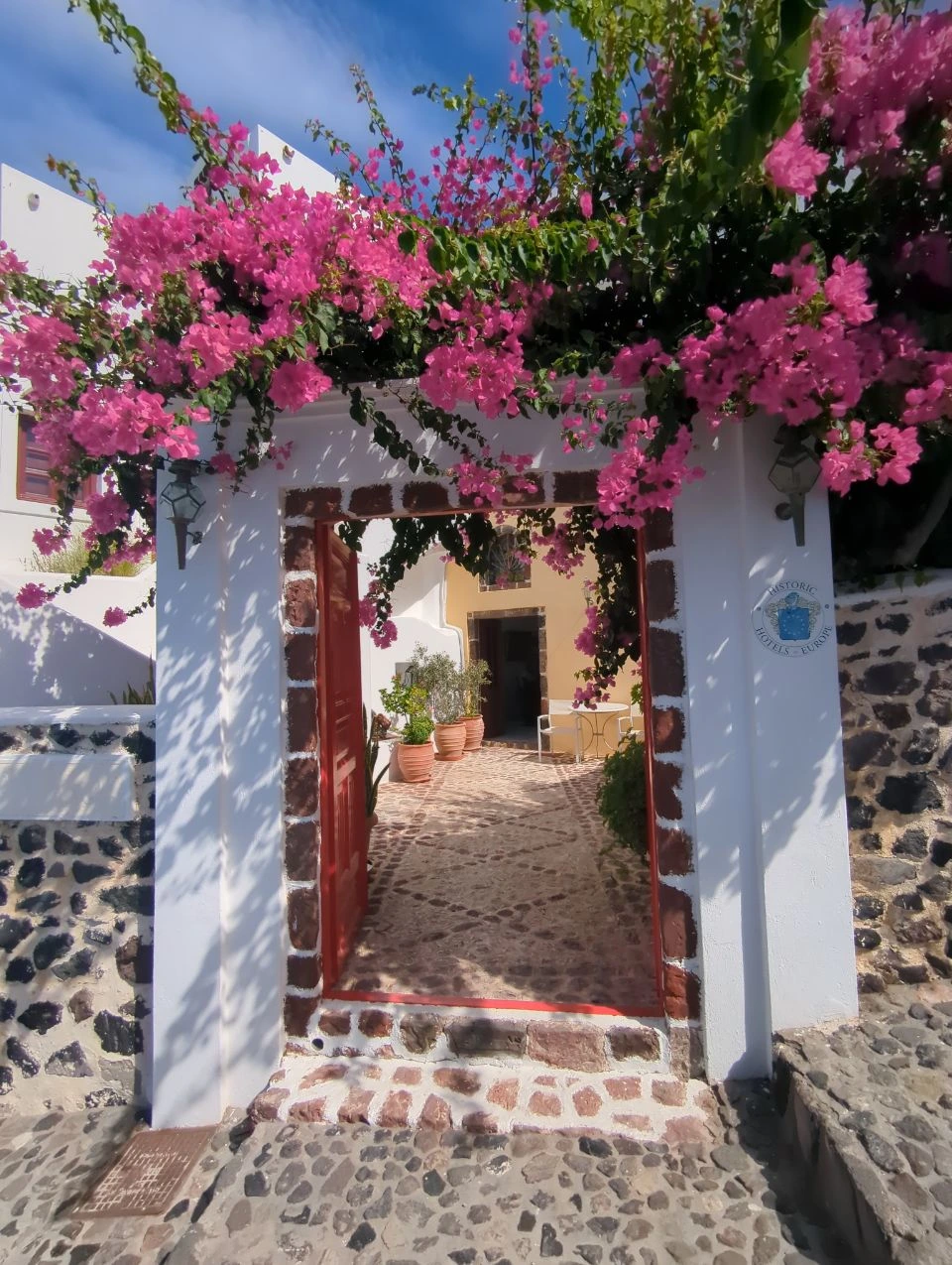
Make the picture from the public lane, leaving the threshold for the people using the hotel. You might include the whole doorway and its surround, or come in closer on the wood and lanterns. This is a good moment to let the sea disappear from the photograph altogether. The colour, materials and small signs of daily life can carry it.
Doors may be closed and flowers may look different when you visit. Let the actual scene guide you. A red panel against white masonry can still be lovely without a curtain of pink blooms, just as a worn handle can be more interesting than another wide photograph. The pleasure is in noticing what's there that day.
Morning, cloudier light and a town beginning to glow
In stronger daylight, turn your attention to the buildings for a while. The shadow inside a white arch, the dark line of a railing and the colour of a door can all look striking. They give you something different to photograph while you wander, and you can return to pictures of each other when you find light that feels comfortable.
Clouds can bring a different kind of beauty. In local photographer Anna Sulte's Fira engagement session with Jenny and Kantcho, the planned sunset was cloudier than expected. She describes how the light worked with the woman's dress and the man's light-blue shirt. Their photographs are a lovely reason to feel excited about a cloudier evening too.
Evening can change the town again. In her Firostefani photography guide, Anna describes a session moving from daylight through sunset into the softer blue of dusk and the first town lights. You might come home with portraits against pale walls, the warm colours of sunset on the water and buildings beginning to glow. You can stay with a manageable area and let the light provide the change.
If you're looking forward to pictures of those first town lights, tell your photographer you'd love to stay until they come on. A shorter walk can be just as satisfying if daylight is what appeals to you. Weather and the time of year will shape what's possible; our guide to the best time for Santorini photos helps you compare the wider island options.
Make room for the people coming with you
Help everyone look forward to the walk by asking your photographer about the approach, surfaces, steps and way back from your chosen meeting place. Firostefani has stairs, and the lower lanes descend through the town; a nearby view isn't necessarily step-free. Those details help you choose a walk that suits your group.
Comfortable shoes make it easier to enjoy the walk between photographs. Bring another pair if you'd like to change, and agree a suitable place to do that with your photographer. Keep water and what you need for the day's conditions together in a small bag. Then, when a doorway or view catches your eye, you have fewer things to put down and gather up again.
Agree the exact public place where you'll meet your photographer, so you have a familiar landmark to look for when you arrive. The cathedral is a helpful landmark for finding your bearings, but your session may begin elsewhere. Check the official KTEL website for journeys on your date and the return you need. If you're coming through the Old Port, include the journey up to town before the session.
The Old Port is a separate outing
If the cable car is part of your Old Port plan, check that day's operation and leave room for the full journey around any fixed return or meeting time. The operator describes about three minutes in the car between the Old Port and Fira, with queuing, boarding and reaching your next stop taking additional time. Planning for all of it helps you give the waterfront pictures the attention you came for.
If you've seen reports that the Old Port steps are closed, there's a newer update: the 3 August mayoral decision lifted July's closure. We checked this on 7 October 2026. Under the separate April 2026 Gazette, you can generally visit the port and path, but the waterfront area marked A on its map is still closed to visitors. The April rules run to 31 March 2027 and may change, so check the latest official updates before setting off and follow the signs and barriers when you're there.
Bring your favourite Fira scene home
Would you love photographs of yourselves here, with the caldera and a few of those smaller details in the story? Tell us when you're coming, who's joining you and which part of Fira has caught your eye. Our Santorini photographers page is the place to explore a session and get help choosing the setting. We'll help you arrange a local photographer, so you can spend more of the walk enjoying it together.
Fira photo spots FAQs
For a passenger or vehicle ferry, look for Athinios on your arrival details: it's the main ferry port, separate from the Old Port, with road connections. The Old Port beneath Fira serves cruise tenders and local boat trips. Check the port named on your ticket or excursion before arranging to meet someone, so you both head to the right place.
The restored cathedral contains colourful mosaics and icons, with frescoes by local artist Christoforos Asimis. It can be a lovely cultural pause alongside the outdoor walk. Check current visiting arrangements and ask about photography inside.
The similar names make more sense once you separate the town from the island: Fira is the town, while Thira or Thera is also used for Santorini itself. Fira's name developed from Thera, which explains the family resemblance.


How to Propose in London

Couple Photoshoots in London

Best Photography Spots in Lisbon: Choose the Look You Love

Our 12 Favourite Places to Propose on Holiday

What Does a Marriage Proposal Mean, and Why Does It Matter?

Why Do We Propose With a Ring? The Meaning Behind the Tradition
ENJOY $20 OFF
Your first photoshoot when you become an email subscriber.
Related Articles

How to Propose in London
Make the surprise feel like you.

Couple Photoshoots in London
Choose the London setting you love, and we’ll shape one relaxed route around it.

Best Photography Spots in Lisbon: Choose the Look You Love
Choose the Lisbon photo setting that suits you, from Alfama lanes and hilltop views to Bica, Belém, MAAT, the Tagus and yellow trams.