
October 6, 2026
Buda Castle sunrise photos: a palace terrace walk for portraits
The first colour over Pest can make Buda Castle feel wonderfully still. Across the Danube, Parliament and Chain Bridge emerge beyond the trees; behind you, the palace dome waits for the sunlight. A little later, pale stone can turn peach, iron gates draw fine lines against the sky and the gardens give you somewhere to slow down between photographs.
The palace terraces offer more than one reason to get up early. You can begin with Budapest spread out behind you, then move into a carved gateway, a sunlit façade or the detail of Matthias Fountain. The trick is to choose the pictures you care about most and leave enough freedom for the light, weather and open routes to shape the rest of the morning.
Updated

Table of Contents
Choose the photographs that make an early start worthwhile
Think first about what you want to see in the photographs. A broad river portrait puts the two of you within Budapest's landscape. A picture through the gateway feels more enclosed, with stone and iron around you. The palace façade and garden create another look again, especially when the light picks out the dome and long rows of windows.
You don't need to give every scene equal time. If the skyline is what drew you here, let that be the first priority while the early colour is still in the sky. If you're more excited by the palace architecture, a slightly later part of the morning may give you the warmth you imagined. Agree the priority before setting an alarm, then let the remaining pictures grow from it.
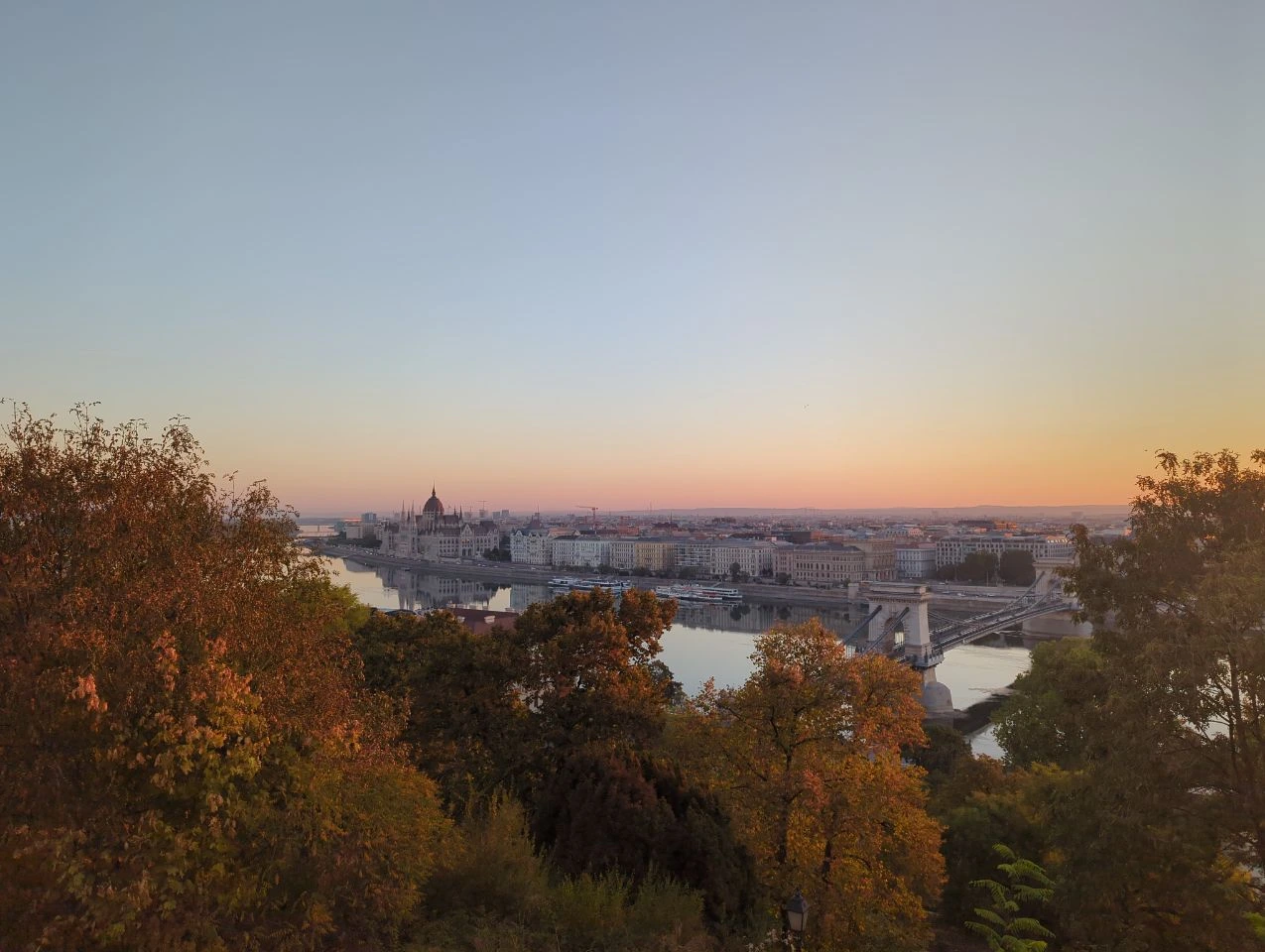
Begin with Buda Castle's Danube view
Start with a picture of the city on its own. It helps you see which landmarks are clear from the public position you've chosen and how much the trees cover. Foliage changes through the year, so a gap in an October photograph may look quite different in spring or summer. Work with the view that's there rather than searching for a precise copy of one image.
For a portrait, keep enough distance between the camera and the people to show the setting without making faces disappear. You might stand together slightly to one side, leaving a clear piece of river or bridge beside you. A small move along the permitted terrace can change whether a branch, dome or distant roof seems to sit directly behind someone's head.
Keep your feet on the ordinary walking surface and stay within any barriers. The view is already elevated; a higher perch isn't needed. Let the panorama be expansive in one photograph, then move closer for another where a smile matters more than fitting in every landmark. Together, those two pictures can hold both the scale of Budapest and the feeling of being there.
Find a new frame through the carved gateway
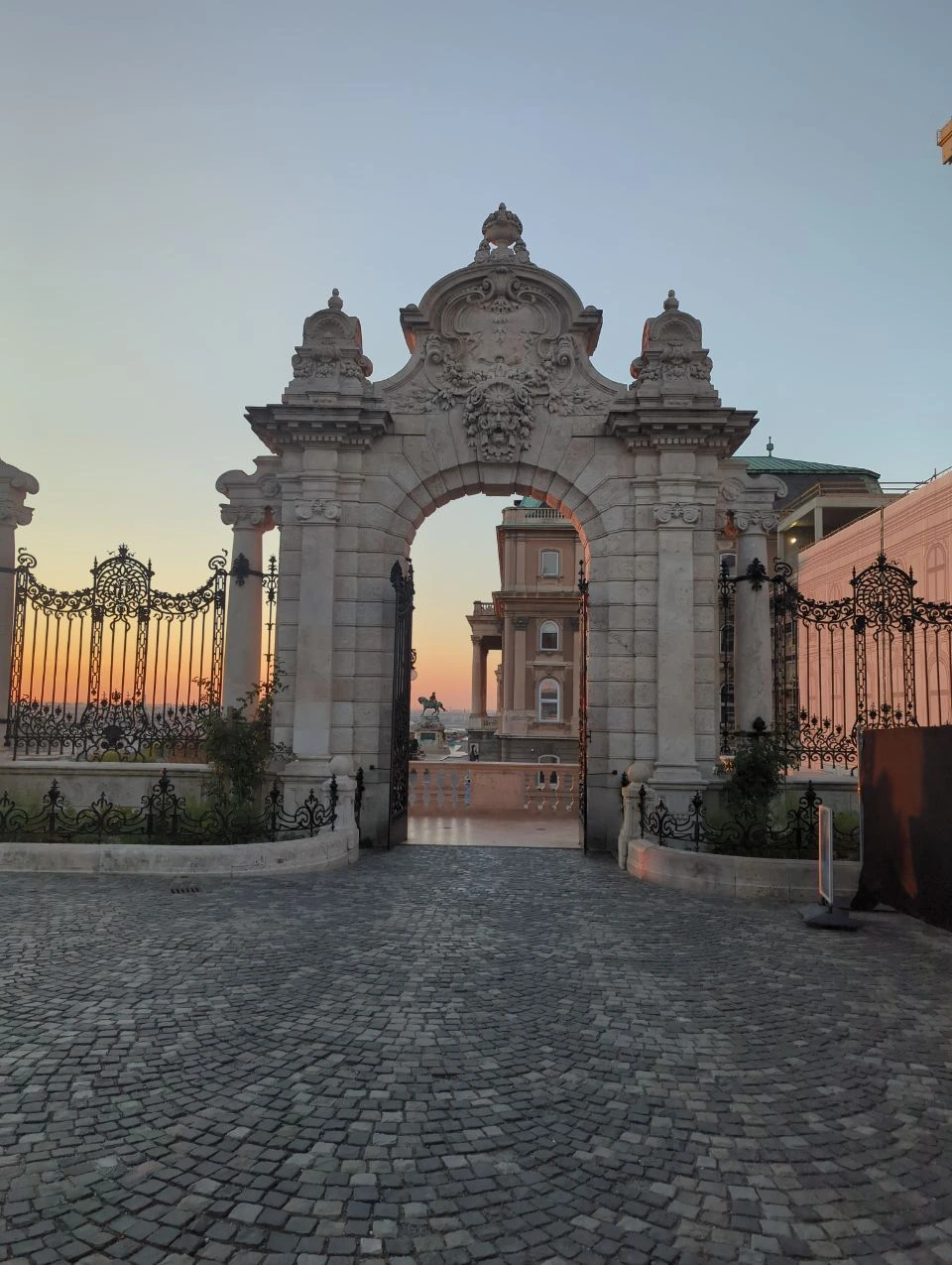
Let the photographer stand a little back from the opening while you pause where the passage is clear. Being a short distance beyond the arch may show more of its shape around you; standing nearer brings the carved edges closer to your face and shoulders. Try one position at a time, keeping the route available to other visitors.
The camera's height changes how the background lines meet you. If a balustrade runs through the middle of a face in the picture, a small adjustment can separate the two. Look for enough clear space around your heads, then let the palace details stay as part of the setting. You don't need to centre every object within the opening.
On our visit, the gate also screened work taking place to one side. That was a useful angle on that day, not a permanent clear view. If barriers or coverings have changed, use the part of the arch that's available or move on to another scene. The photograph can keep its sense of stone, depth and early light without depending on one exact position.
See Habsburg Gate and the Turul from below
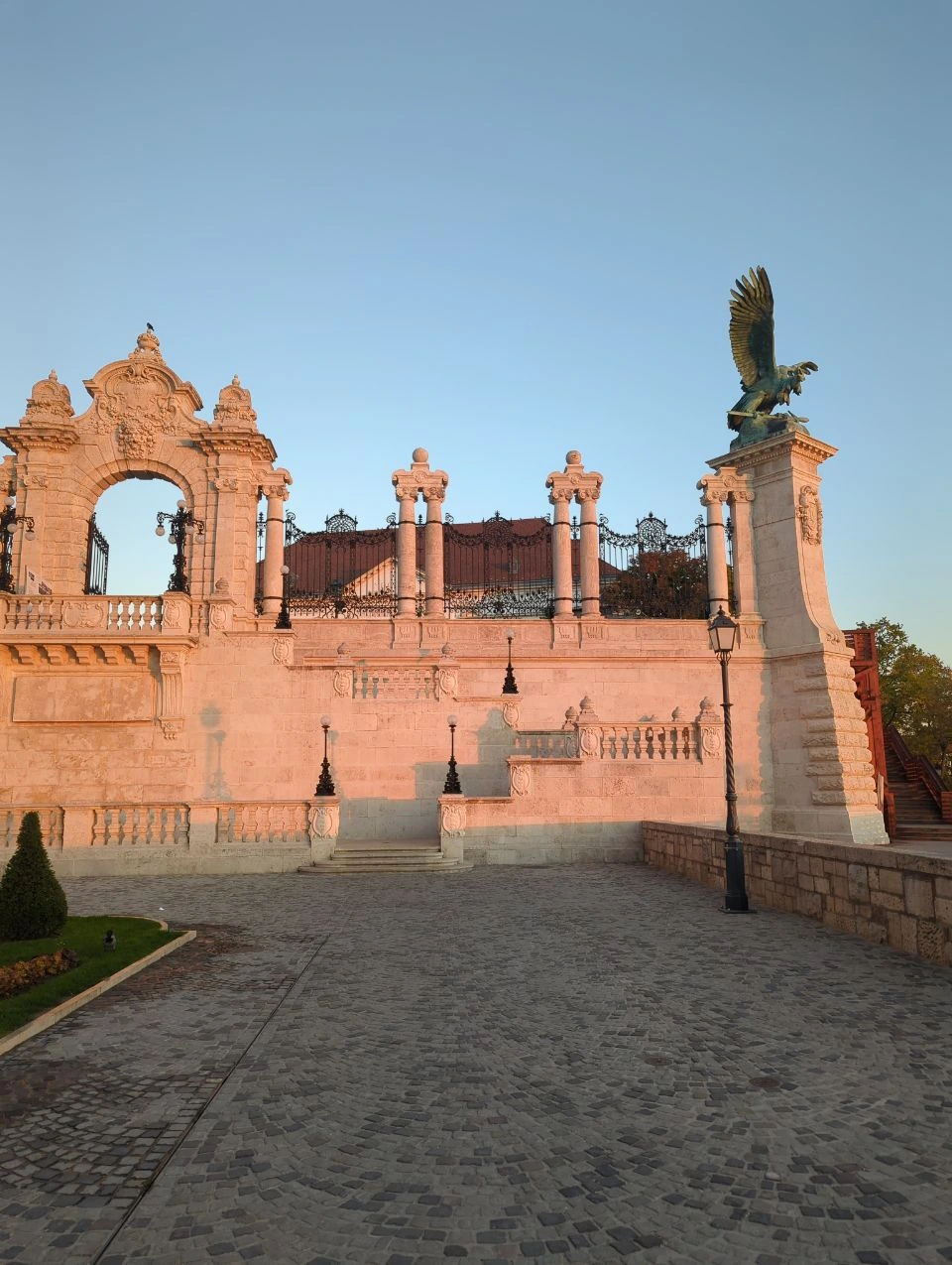
This lower view gives you something different from looking through an opening. The broad wall can sit behind a full-length portrait, while the gate and bird add detail higher in the picture. Leave space above the Turul's wings if you're including it, and check that the top of the photograph doesn't cut awkwardly through the ornament.
On our morning, warm light spread across the stone, with the darker ironwork standing out clearly. You can make a wide architectural picture first, then choose a smaller stretch of wall for people. The lower paving gives the scene a sense of scale; a person doesn't have to stand immediately beneath the statue to belong in the photograph.
If this side is in less flattering light when you arrive, enjoy the stonework as a detail and save your closer portraits for another part of the terraces. Each view can have its own moment.
Let the palace dome and gardens fill the background
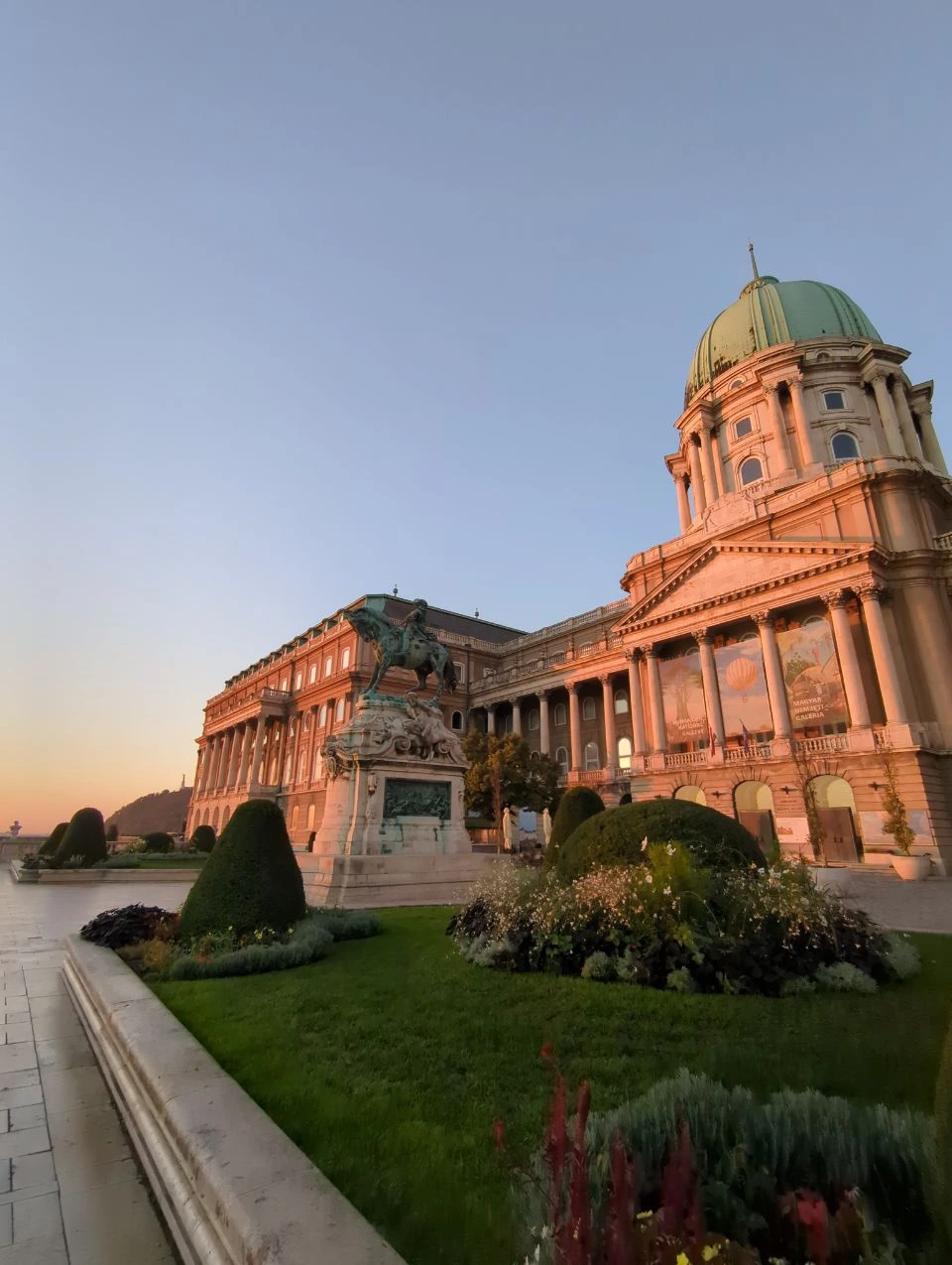
This is the Savoyai Terrace area. The Hungarian National Digital Archive identifies the rider in front of the palace as Eugene of Savoy, in a sculpture by József Róna. The monument gives the garden view a clear centre, but it doesn't have to dominate every portrait.
Use the public paving beside the planting and look for a line that leaves the dome visible. A photograph taken at an angle can show the façade stretching away behind you, while a closer view might use only a few windows and the top of a shrub. Keep the planting intact and let it sit at the edge of the frame rather than stepping into a bed for a better position.
For two people, this is a pleasant place for a short walk together. Move along a clear stretch of paving and turn slightly towards each other. The palace is grand enough to carry the background; a quiet conversation or an easy smile can give the foreground all it needs. You can also take a still portrait, with the monument off to one side and the dome rising beyond.
Use the terrace levels for a different portrait
If a suitable flight is open and comfortable for you, decide the position before moving. The photographer can stay on a landing while you take a few steps to another level, then pause with a secure footing. Keep both of you within the normal route and leave room for anyone passing. There's no need to pose while stepping backwards or balancing on an edge.
Look at the background from the camera's position before settling into the photograph. A small height change may bring more palace stone behind you or move a railing away from your face. If the stairs don't suit your shoes, mobility or the people with you, the level garden and façade scenes already offer plenty of variety. This is an optional extra, not something you need to complete the walk.
Pause at Matthias Fountain
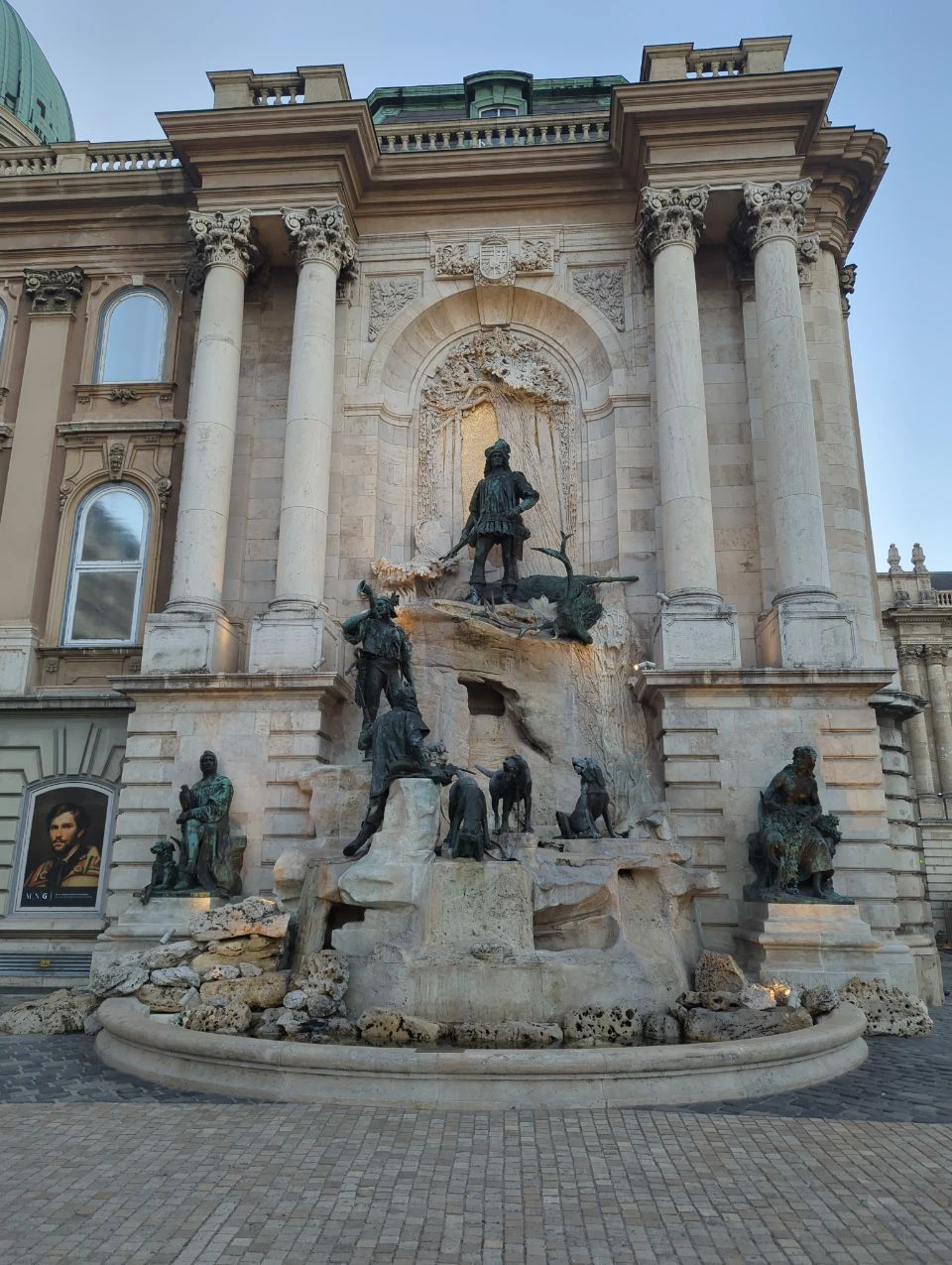
The fountain was in shade when we reached it on 2 October, with nobody standing in front of it at that moment. That gave us time to notice the layers after photographing the brighter façade. On another morning, the light and number of visitors may differ, so let the scene determine how long you stay.
For a portrait, stand on the public paving with enough distance from the fountain to keep the people separate from the busiest sculpture. A full-length picture can show the height of the group, while a closer one might include only some of the bronze figures and pale stone. Keep the basin and sculptural ledges out of the posing plan.
Make a few detail photographs too: the hounds, the texture of the bronze or the way the hunting scene sits within its architectural frame. The fountain doesn't need to be flowing for these details to be interesting. Treat any moving water as part of the conditions you find, and leave space for other visitors to enjoy it while you make your pictures.
Choose the light for your Buda Castle sunrise photos
For a skyline portrait, bright sky behind you can leave faces comparatively dark. Turn slightly and see whether that brings more light onto your expressions while keeping the river in the background. A close picture may need a different direction from the broad city view. Your photographer can work with those choices; you don't have to make every photograph from the same standing position.
Once sunlight reaches a façade, look at how it falls across you as well as the building. Warm stone can be beautiful while a person faces harsh glare. Change the angle or make the architectural image first, then look for a more comfortable patch for portraits. The gate and fountain offer different surroundings if the open terrace becomes too bright for the picture you want.
Cloud can soften the light and reduce the difference between the sky and faces. You may lose a colourful horizon while gaining gentle light for the stone, greenery and expressions. If the city is hazy, let an arch or the palace façade carry more of the photograph. The morning still has useful possibilities even when the distant skyline isn't crisp.
For rain or strong wind, agree a practical alternative with your photographer before setting out. Our rainy-day Budapest photoshoot guide explains how routes and pacing can adapt to wet weather. An open terrace and a decorative gateway don't guarantee shelter. A coat between photographs and a little time to settle after the journey can make an early start much more enjoyable.
Plan your Buda Castle arrival for dawn
BKK's current funicular information lists 08:00 as the usual first service and announces a maintenance closure from 5 to 16 October 2026. The funicular is unavailable during that period, and its normal start is too late for many dawn plans anyway. Check the operator's current notice for your date before treating it as an option.
For an early arrival, use the BKK journey planner with your actual day and intended arrival time, or arrange a suitable permitted drop-off point. BKK lists buses 16, 16A and 116 as approaches to the upper area, but check which service and stop work from your starting point at that hour. Build in time for the final walk from transport to your meeting place.
If you prefer walking uphill, check the route in daylight beforehand where practical. Steps, slopes and different terrace levels are much easier to understand when you're not hurrying towards a brightening sky. Choose footwear you can walk in comfortably and allow time to change or tidy clothing once you're there.
Agree a specific meeting place on the palace side of Castle Hill. “Buda Castle” covers too much ground for a last-minute search before sunrise. Confirm the open approach and an alternative meeting point if a passage has changed, so you can begin the morning calmly.
Leave space for the morning to unfold
If you’re visiting as a couple, our Buda Castle couple photoshoot guide shows how these gateways and terraces can become a relaxed portrait session.
A useful order on a clear morning is the skyline while colour remains above Pest, then the gate or façade as the stone catches light, with the fountain providing a closer view later. Change that order if the light or an open route makes another choice easier. The best sequence is the one that lets you enjoy the surroundings and make the photographs that matter to you.
The National Hauszmann Programme is restoring and rebuilding parts of the Palace District, and our own gateway photograph shows how work can affect a view. Follow the public route available on the day and respect barriers. If a favourite frame is unavailable, another section of palace stone, a garden edge or the river panorama can still give the morning a strong sense of place.
For a Budapest photoshoot, it helps to name two or three favourite scenes when discussing the plan, along with your pace and any access needs. That leaves room for the small moments between them: noticing the first light on the dome, stopping to look across the river or sharing a quiet smile before the city becomes busier.
Make your Buda Castle morning yours
FAQs
Everything you need to know about our service
Discuss the exact approach and photo positions before committing to a dawn route. The palace visitor guide describes lifts serving Horseherd Court from Palota út and onward to the palace courtyard, but that doesn't confirm their operation at your planned hour or a continuous step-free route to every terrace. Ask for a current check of surfaces, slopes, lifts and the meeting point. You can focus on a smaller selection of suitable positions instead of including the optional stair photographs.
No. These location ideas concern outdoor views and public approaches. Being able to photograph the dome from a terrace doesn't provide access beneath it or to museum rooms. If you also want an interior visit, check the relevant venue's current opening hours, admission and photography arrangements separately. Leave enough time between plans to finish your photographs, reach the right entrance and enjoy the visit without rushing.
Possibly, if the available time, route and light suit both stops. Fisherman's Bastion and the palace terraces are separate places on Castle Hill, with different architecture and approaches. Choose which location should get the best early light, then allow extra time for the walk between them. Leave a few minutes to settle into the second stop before taking more photographs. If time is tight, spending it at the setting you love most can feel much more relaxed.
An early start can be appealing, but this remains a public place. Our quiet October visit doesn't establish privacy or reserved use on another date. Discuss a comfortable pause, the photographer's position and an alternative if people are nearby or a route has changed. If you need guaranteed seclusion or special access, those arrangements would need to be confirmed separately before choosing the terrace for that moment.


How to Propose in London

Couple Photoshoots in London

Best Photography Spots in Lisbon: Choose the Look You Love

Our 12 Favourite Places to Propose on Holiday

What Does a Marriage Proposal Mean, and Why Does It Matter?

Why Do We Propose With a Ring? The Meaning Behind the Tradition
ENJOY $20 OFF
Your first photoshoot when you become an email subscriber.
Related Articles

How to Propose in London
Make the surprise feel like you.

Couple Photoshoots in London
Choose the London setting you love, and we’ll shape one relaxed route around it.

Best Photography Spots in Lisbon: Choose the Look You Love
Choose the Lisbon photo setting that suits you, from Alfama lanes and hilltop views to Bica, Belém, MAAT, the Tagus and yellow trams.