
October 8, 2026
What Happens if It Rains During Your Budapest Couple Photoshoot?
You have chosen your outfits, pictured that gorgeous Budapest skyline and checked the forecast one more time, only to find a row of rain clouds staring back at you. The good news is that rain does not automatically mean cancelling your couple photoshoot. Quite often, it simply changes the route, pace and look of the session.
A useful Budapest rain plan works with the weather that actually turns up. You might spend more time among beautiful façades and compact courtyards, then return to wider city views if the shower eases. The aim is not to pretend the rain makes no difference. It is to keep the experience enjoyable, make sensible choices and create photographs that still feel unmistakably Budapest.
Updated

Table of Contents
What rain changes about a Budapest couple photoshoot
The pace may become gentler too. Wet paving calls for slower movement, while wiping glasses, adjusting a coat or waiting for people to pass can take a few extra minutes. A compact route helps enormously. Instead of rushing towards the next famous sight, you can stay within one area and create variety through movement, camera angles and architectural details.
That can still produce a wonderfully complete gallery. You might begin with a close portrait against carved stone, wander through a courtyard, use a gateway to frame the street beyond and finish with a wider city view when the rain softens. Budapest will still be present in the photographs, even when every image does not depend on a sweeping panorama.
Of course, rain cannot promise quiet courtyards, convenient cover or perfect reflections. A recess that looks protected might still catch wind-driven rain, while an attractive doorway may be busy or needed for normal access. Your photographer can prepare clever alternatives, then choose what works safely and comfortably on the day.
How to choose between continuing, pausing, rerouting and postponing
When the rain is manageable, the wind is light and the ground still allows confident movement, the session can often continue with a shorter route. If a heavier shower looks temporary, it may be possible to pause, provided there is a confirmed safe and suitable place to wait. A pretty arch or recess should not automatically be treated as a dry waiting spot.
Rerouting is often the simplest answer when the original sequence no longer makes sense. An exposed terrace might be swapped for a courtyard, gateway or detailed street façade in the same area. Postponing or stopping becomes the sensible choice if there is lightning, strong wind, flooding, ice, dangerously slippery ground or anything else that makes moving or photographing unsafe.
Your comfort matters well before the weather becomes officially dangerous. If you are cold, soaked through or thinking only about where to put your feet, it will be difficult to enjoy the experience. A shorter, focused session can be far lovelier than pushing through the original route just because it was written down.
It also helps to treat Buda, central Pest and City Park as distinct areas, rather than quick substitutes for one another. One local provider advertises a 90-minute photo walk, which is a useful reminder of how much session time transport can absorb, although it does not define a standard Travaya session length. In wet weather, repeatedly crossing the city can mean extra waiting, wetter belongings and less energy for the photographs.
Choosing one main area and one nearby variation gives your photographer room to adapt without turning the session into a race across Budapest. It also leaves space for brief pauses, busy moments and, importantly, time to enjoy being together.
How to make an umbrella feel natural in your photographs
Your photographer can work from the open side of the umbrella, change the camera height or use the canopy as a soft frame while keeping both faces visible. You might be asked to turn together, angle the umbrella away from the lens or pause underneath it while looking at each other.
It does not need to appear in every photograph. During a lighter spell, you can fold it together, carry it at your side or place it safely out of frame for a few minutes. That gives the gallery more variety and avoids having the same shape above your heads in every composition.
And if umbrella handling turns out to be rather less graceful than expected, that is completely fine. Your photographer can simplify the movement, move in closer or choose a background that requires less walking. Natural photographs come from real interaction, not from pretending the weather is effortless.
Strong wind is the exception. A canopy that suddenly pulls can affect your balance on wet steps and become awkward around other pedestrians. If gusts make the umbrella difficult to control, fold it away. Budapest’s architecture can still frame the photographs beautifully, and no picture is worth wrestling with a runaway umbrella.
When wet streets and reflections can work
When everything comes together, your photographer may lower the camera so a puddle or shallow water feature fills part of the foreground. You may only need to pause beside it or take a few careful steps. There is rarely any reason to stand in the water, enter a roadway or block a busy walkway for the effect.
Kossuth Lajos Square is a good example of why it pays to stay flexible. During a field visit on 30 September 2026, the shallow water feature in front of the Hungarian Parliament Building had promising reflection potential, but barriers limited how closely it could be approached and which angles were available. The water level, restrictions and appearance of the surface may all be different on your session date.
Luckily, a flawless mirror image is not the only lovely result. A small shimmer beneath a street lamp can brighten the foreground, while broken reflections on textured paving add depth without taking over the picture. If the water, light or safe camera position is missing, your photographer can move on instead of spending precious time trying to force the shot.
A compact Castle Hill plan for manageable rain
During a field visit on 30 September 2026, the small courtyard at Fisherman’s Bastion offered several photographic possibilities within roughly 15 minutes. A couple could move between the courtyard, a short tunnel, nearby steps and the fountain without much walking, which is especially helpful when every step takes a little longer on wet stone.
The courtyard works for both close portraits and wider photographs featuring recognisable architecture. The short tunnel can place a darker frame around the brighter exterior, changing the mood without requiring another landmark. Depending on the wind and visitor movement, it may offer brief partial cover, but it is best viewed as an atmospheric passage rather than a weatherproof refuge.
The lower Bastion gateways add layered arches and views through towards the stairway. They can give photographs depth when mist or a pale sky makes the distant skyline less useful. Their availability and ticket status should be checked near the session date, as arrangements seen on one visit may change.
Close by, the recessed exterior portal at Matthias Church brings beautiful carved detail to a close portrait. It is still an active church entrance, so services, weddings and visitor activity can affect whether it is usable. Like the tunnel, it may briefly reduce exposure from a particular direction, but it is not dependable shelter.
If Fisherman’s Bastion is crowded or too exposed, Buda Castle may provide a nearby change of scene within the wider Castle Hill area. On 2 October 2026, its palace terraces were unusually quiet at dawn after the Bastion had been busy. That shows how a local adjustment can help a session flow, although it cannot promise empty terraces on another morning. The terraces remain open to the weather and only make sense when the rain, wind and footing feel comfortable.
This allows a Castle Hill route to expand or shrink with the conditions. In steadier rain, you can focus on courtyards, stone details and framed passages. If the shower lightens and the surfaces remain safe, the session can open out towards a terrace or broader city view without depending on it.
A practical Pest architecture plan
Around St Stephen’s Basilica, the broad square and exterior steps can support wider compositions in light rain. The surrounding streets offer a more intimate scale. Your photographer might place the Basilica at the end of a lane, use shopfront light in the foreground or capture you walking beneath an umbrella with less open sky filling the frame.
Some local sessions have found the Basilica area unusually peaceful in the morning, including a documented sunrise session in 2025. That makes an earlier start worth considering, but it cannot guarantee an empty square. Deliveries, services, events and everyday city life can change the atmosphere quickly, so the plan should remain enjoyable when other people are around.
The Opera exterior brings columns, lamps, entrance steps and richly decorated façades into a small area. It supported a short sequence during a relatively quiet afternoon observation on 30 September 2026, although tours, performances and arriving visitors may change the usable space. Its real strength is the amount of visual detail close together, not a promise of quietness.
Being able to photograph outside either building does not include indoor access. At the Basilica, the exterior steps, church interior and panorama are separate experiences with their own arrangements. The Opera also requires separate confirmation for interior entry or photography. Unless permission has been arranged, the rain plan should rely on the exteriors and surrounding streets.
Parliament is better treated as a deliberate extension than an emergency escape from the weather. Kossuth Lajos Square is open and exposed, travelling there takes additional time and security barriers may affect the available angles. It is worth adding when the façade or possible water reflections are important to your chosen style and the conditions suit the journey. Otherwise, a focused Basilica and Opera sequence will usually feel more relaxed than dashing between major sights.
A City Park option for lighter rain
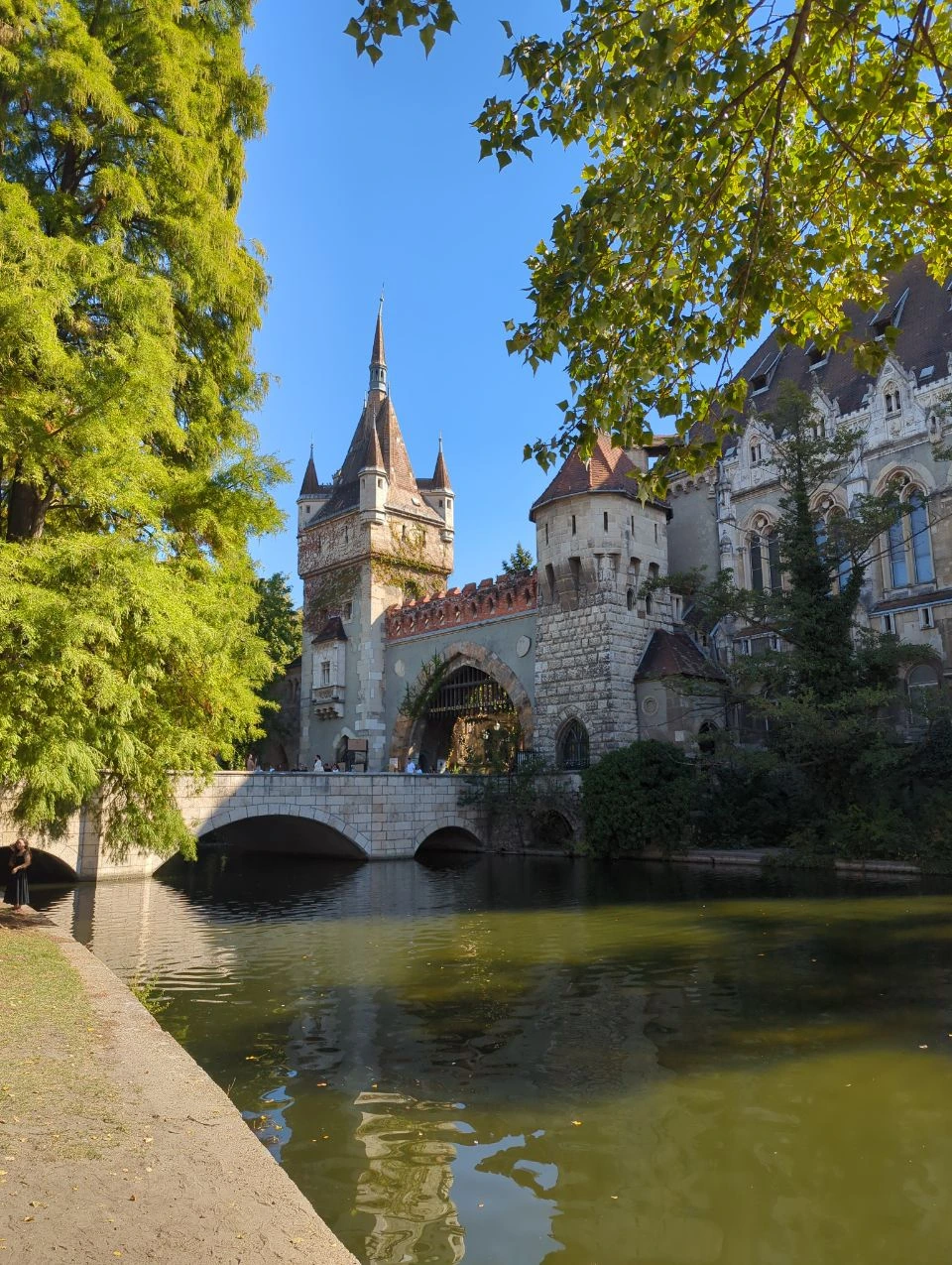
Vajdahunyad Castle’s exterior includes brick arches, recessed doors and courtyard views that work beautifully at close range. You might walk through a gateway, pause beside textured stone or cross the courtyard while your photographer changes position. These details create variety without needing a long walk or a completely open viewpoint.
Ják Chapel adds another richly detailed exterior. Its religious use may affect access, and the surrounding area was busy during a late-morning field visit. Arriving earlier could improve the chances of a calmer setting, though it cannot guarantee one. Your photographer can simply change angle or continue elsewhere if the chapel is active or the approach becomes crowded.
If the rain remains light, nearby paths can introduce trees, muted greenery and a softer background after the denser architecture. These stretches are more exposed, and wet leaves or smooth paths may call for especially slow movement. The park section should feel like a bonus rather than something the gallery needs to be complete.
The Museum of Ethnography roof garden offers contemporary lines and a different elevation, but it is exposed to rain and wind. It is not a shelter option. Whether it belongs in the route depends on current access, surface conditions and the weather at that moment.
What to bring for a wet-weather couple shoot
Bring one dependable shared umbrella that is comfortable to hold, quick to open and manageable around other people. Transparent or neutral designs can look understated and allow light to reach your faces, but they are preferences, not rules. If you already own a dry backup, it is sensible to pack it too.
Footwear with reliable grip matters more than wearing the most delicate option in your wardrobe. Wet stone, metal and smooth steps can become slippery, so choose shoes that let you walk, stop and turn with confidence.
A warm or water-resistant outer layer will help during pauses and route changes, even if you remove it briefly for a photograph. A small dry cloth is handy for glasses, phones, hands and anything else that collects rain.
Try to keep the rest of your belongings compact and easy to protect. The less you need to juggle, the more easily you can move, pause and enjoy the session.
Plan a Budapest couple shoot that can happily adapt
Explore Travaya’s Budapest photographers and find someone who can shape a primary route and a nearby alternative around your dates, favourite visual style and comfort with changeable weather.
Frequently asked questions about rainy Budapest couple photoshoots
The broad plan can be discussed in advance, but the most useful decision often comes close to the session, when your photographer can assess the current rain, wind, access and surface conditions. Choosing one main area beforehand keeps that same-day decision pleasantly simple.
Possibly, if there is a confirmed safe place to wait and enough session time remains. A tunnel, arch or recessed doorway should not be assumed to provide suitable shelter, especially in wind-driven rain or when it is needed for public access.
Tell your photographer as soon as you feel uncomfortable. They can switch to closer frames, pause for a practical adjustment or shorten the route. A damp hem may be manageable, but being cold or soaked should never become part of the creative plan.
Do not assume so. Confirm the arrangement before the session and bring a dependable shared umbrella if requested. Equipment varies between photographers, and strong wind may make an umbrella unsuitable regardless of who supplies it.
No guaranteed indoor alternative is included in this plan. The tunnels, gateways and recessed entrances mentioned here are exterior architectural features that may provide framing or brief partial cover. They are not verified weatherproof spaces, and permission to photograph outside does not include permission to move the session indoors.


Our Budapest Shoots:
Book your Budapest couple Photographer!
Start Booking
A Couple Photoshoot at Fisherman’s Bastion: How the Session Unfolds

The Best Budapest Streets for Natural Couple Photos

How to Prepare for a Couple Photoshoot in Budapest

A Romantic Couple Photoshoot at Buda Castle: A Gentle Palace Walk for Two

Photos with the Hungarian Parliament: which side should couples choose?

A Fairytale Couple Photoshoot at Vajdahunyad Castle
ENJOY $20 OFF
Your first photoshoot when you become an email subscriber.
Related Articles

A Couple Photoshoot at Fisherman’s Bastion: How the Session Unfolds
A couple photoshoot at Fisherman’s Bastion can give you loads of variety without needing an elaborate plan. Its pale stone arches, stairways, towers and open terraces create natural opportunities to walk, pause and enjoy each other’s company, with Budapest ready to sweep into the background whenever you want a wider view. You do not need to arrive knowing how to pose. The architecture gives you something to move through and respond to, while your photographer can offer simple prompts as the session unfolds. The result is a connected gallery filled with close portraits, playful moments and expansive city scenes, rather than a string of stiff poses.

The Best Budapest Streets for Natural Couple Photos
You turn a corner, the buildings open slightly and a familiar Budapest landmark appears between the façades. One of you notices it first; the other follows their gaze without breaking stride. The landmark places you in the city without taking over the photograph. You are still walking, talking and looking at each other rather than queuing for a formal pose in front of a monument. That is one of the loveliest ways to photograph a couple in Budapest. A leafy path below the Castle District feels very different from the grand approach to St Stephen’s Basilica, yet both give you space to move and respond naturally. The question is not which backdrop looks most impressive, but where you are most likely to loosen up and enjoy the walk.

How to Prepare for a Couple Photoshoot in Budapest
Budapest can feel completely different from one street to the next. You might walk hand in hand beneath the pale arches of Fisherman’s Bastion, hear a tram rattling beside the Danube, then warm your hands around coffee on a neighbourhood boulevard that feels far removed from the main sights. That variety is exciting, although choosing where to go can feel harder than it needs to. Begin by deciding how you want the photographs to feel, then choose a setting that supports that atmosphere. A little planning goes a long way. The light, crowds, hills, cobbled streets and walking distances can all shape how comfortable you feel. Once those details are working for you, the session becomes less about collecting landmarks and more about enjoying Budapest together.