
October 8, 2026
A Couple Photoshoot at Fisherman’s Bastion: How the Session Unfolds
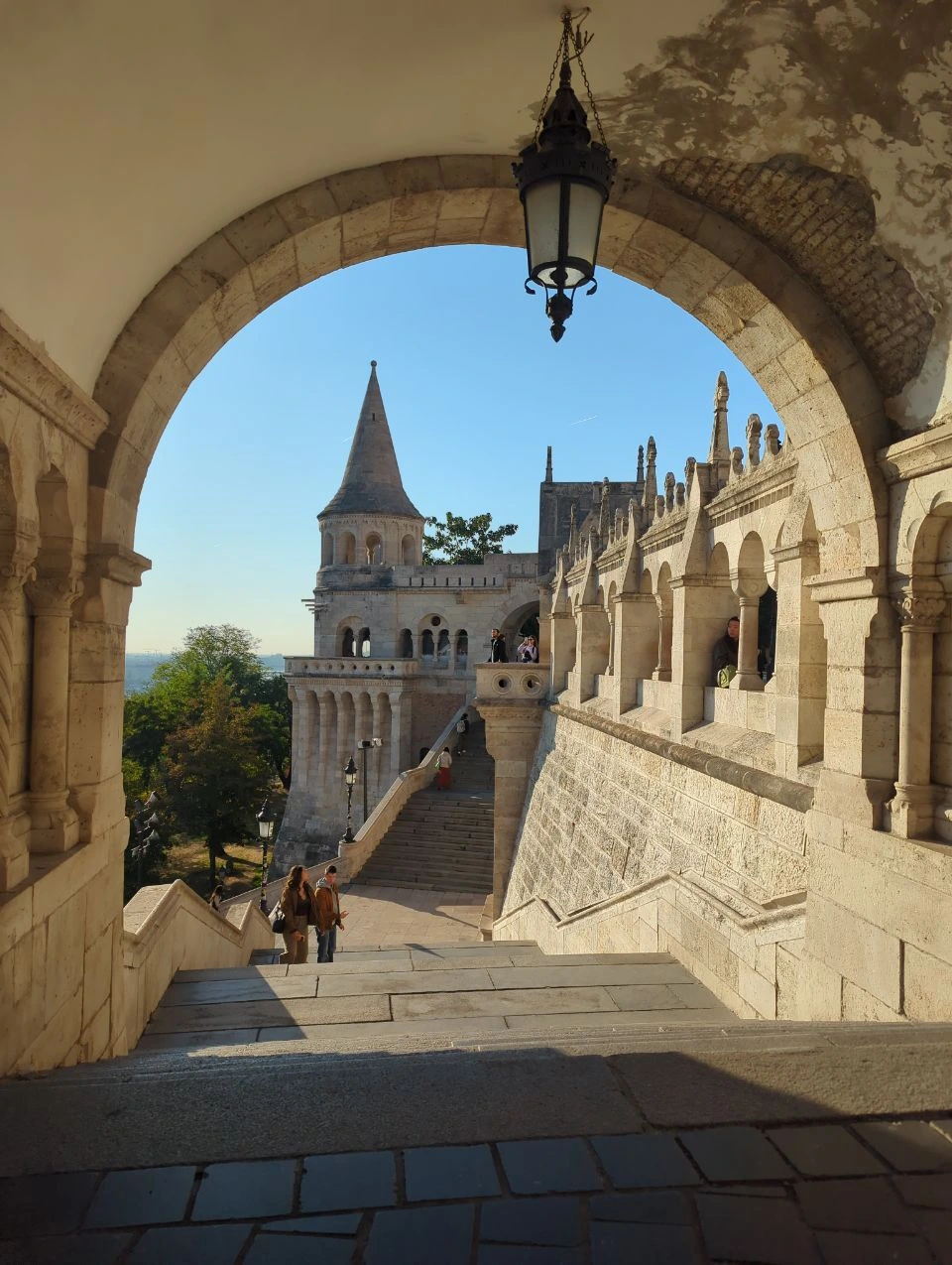
A couple photoshoot at Fisherman’s Bastion can give you loads of variety without needing an elaborate plan. Its pale stone arches, stairways, towers and open terraces create natural opportunities to walk, pause and enjoy each other’s company, with Budapest ready to sweep into the background whenever you want a wider view.
You do not need to arrive knowing how to pose. The architecture gives you something to move through and respond to, while your photographer can offer simple prompts as the session unfolds. The result is a connected gallery filled with close portraits, playful moments and expansive city scenes, rather than a string of stiff poses.
Updated

Table of Contents
Why Fisherman’s Bastion offers so much variety
Your photographer can use the stonework as an intimate frame, step farther back to show the Bastion’s scale or turn towards the Danube for a broader city view. All of this is possible within a relatively compact area, so you can create plenty of variety without spending half the session travelling between unrelated landmarks.
Before the shoot, have a quick chat about how you want the gallery to feel and choose the two types of photograph that matter most to you. Perhaps you love intimate portraits and playful movement, or maybe striking architecture and an unmistakable Budapest view are top of your list. Sharing those priorities gives your photographer a helpful starting point while leaving room to follow the best light and open spaces on the day.
Saved photographs can be useful for showing what catches your eye, but try not to make one exact replica the goal. The most memorable images will come from the real conditions and, more importantly, the way the two of you naturally connect.
A natural route through Fisherman’s Bastion
That order is wonderfully flexible. If the light looks gorgeous in one area or a usually busy space suddenly clears, your photographer may switch things around. Think of the route as a relaxed emotional flow rather than a checklist, moving from gentle observation into closer interaction and then towards a stronger sense of place.
Exploring one connected space properly can be far more rewarding than racing between landmarks. Even a small courtyard can produce several distinct images when the camera angle, your position or the amount of visible architecture changes. One frame might focus almost entirely on an expression, while the next pulls back to reveal the stonework around you.
This takes pressure off both of you. There is no list of compulsory spots to complete. You can enjoy each part of the Bastion for as long as it remains visually useful, comfortable and fun, then move on naturally.
Using the arches for close portraits
You will not necessarily be asked to stand perfectly still beneath an opening. You might walk through it, pause at the edge, lean in towards each other or turn towards the light. Tiny changes like these alter the balance of the frame and usually feel much more natural than holding a rigid, symmetrical pose.
The light matters just as much as the shape of the arch. Standing very close to a bright opening can leave the scenery behind you much lighter than your faces. Moving a little deeper into the stonework may create softer, more even light, while stepping towards the edge can produce something brighter and airier.
Popular openings are not always immediately available. During one early-morning observation, a well-known arch already had a queue between roughly 8.00 and 8.30 am. Conditions vary, so treat any particular opening as a nice possibility rather than a must-have. Your photographer can use a neighbouring arch, reverse the composition, move in closer or return if the space clears later.
Quite often, the quieter opening creates the better photograph anyway. Beautiful light, clean framing and a genuine expression matter far more than copying the precise perspective from somebody else’s gallery.
Bringing movement into your photographs
Even a difference of two or three steps can transform the composition. It might create space between your faces, reveal more of the staircase or allow the stone lines to lead the eye towards you. Once you meet on the same level again, the frame instantly becomes closer and more balanced.
The best movement is usually simple enough that you do not have to perform it. Walking slowly, adjusting your pace or stopping naturally tends to look better than repeating anything complicated. If a prompt feels awkward, say so. It can be shortened, reversed or swapped for a quieter moment that suits you better.
Lower gateways can also add depth, even when the skyline is out of view. They are especially useful if the panorama-facing side is crowded or the sky is much brighter than the foreground. The photograph can still feel unmistakably connected to Fisherman’s Bastion without relying on a famous city view.
These walking and in-between frames help the finished gallery breathe. They may be gentler than the big scenic images, but they connect the close portraits with the wider architectural photographs and keep the story from feeling static.
Creative ways to use balconies and walkways
One of you might stay closer to the camera while the other steps into a neighbouring space. The architecture then has room to appear between you, while eye contact or body position keeps the connection clear. When you come back together, the mood changes naturally without needing a completely different location.
This works particularly well where repeating arches or turrets create depth. The person farther away becomes part of the architecture, while the person nearer the camera gives the frame an immediate human focus. It can look wonderfully cinematic even though the action itself is very simple.
If a particular balcony or level is unavailable, the idea is still usable elsewhere. Another opening, a lower landing or a short stretch of walkway may offer all the separation needed. The point is to play with distance, not to claim one specific platform.
Including Parliament without letting it take over
A wider photograph can include Parliament and the surrounding city, followed by a closer frame centred on your expressions. The first image celebrates the setting, while the second brings the attention right back to the two of you. Together, they feel much more personal than a gallery full of travel postcards.
The balance depends on distance and perspective. When the photographer steps back, you become smaller within the cityscape. From a closer position, Parliament can remain recognisable while your expressions carry more visual weight.
Light will also influence the precise angle. If the sky is much brighter than your faces, moving deeper into an arch or turning slightly may create a more balanced exposure. When the light is softer, an open position can work beautifully and allow more of the river and skyline into the frame.
If Parliament is one of your priorities, mention it before the session. Your photographer can then watch for a strong moment and position, while retaining the freedom to adjust if the light or surroundings offer something even better.
When Fisherman’s Bastion is busy
Crowds usually change the rhythm of a session rather than ruin it. If a group occupies an open terrace, you can turn inward for closer frames and return when the space shifts. Short walking sequences work well too, as you do not need to hold one position for long.
A brief pause can be worthwhile when people are clearly about to move, but waiting ages for one exact background is rarely the best use of your session. When an attractive opening appears, you can use it efficiently, enjoy the moment and move on before the space changes again.
Thoughtful framing can make other visitors far less noticeable without requiring the Bastion to be empty. A lower angle may place you against the sky, a tighter composition can remove a busy passageway and an arch can conceal activity just outside the opening. People farther away may simply become tiny details within a larger architectural scene.
The area around Matthias Church and the Holy Trinity Column can also provide different stone details, backgrounds and light when attention is concentrated on the Bastion. These nearby spaces are handy alternatives, not extra attractions you have to squeeze into the session.
A little patience and courtesy goes a long way in a shared public space. No photograph is worth blocking a staircase or occupying a narrow opening for ages. Working in short bursts keeps the session flowing while leaving room for residents, worshippers and other visitors to pass.
What to check before the photoshoot
Start by agreeing on an unmistakable meeting point. Fisherman’s Bastion has several entrances, levels and connecting areas, so simply saying “at the Bastion” could leave you waiting in completely different places. Reconfirm the spot shortly before the session and consider sharing a live location or photograph if the meeting point is difficult to describe.
It is also worth checking the latest access information. Official visitor guidance currently describes the general terraces and balconies as accessible throughout the day and year, including public holidays, but that does not mean every tower, upper terrace or walkway will always be open or free. Charges, maintenance, events, church services and temporary restrictions can affect individual areas. A position you spotted in an older gallery may therefore be unavailable, so keep the route flexible.
If substantial equipment such as tripods, stands or lighting is involved, your photographer should confirm any relevant current restrictions. General visitor information may not answer every equipment question, and a handheld session is naturally less complicated than a production that occupies extra space.
Comfortable, secure shoes are a very good idea for the uneven stone and stairs. If either of you needs step-free access, let the photographer know in advance and check the latest accessible routes. The session can then favour flatter terraces, lower gateways and smaller movements instead of repeated changes of level.
Choose clothes that let you walk, turn and climb stairs without constant readjustment. Layers are useful because the open terraces can feel noticeably windier than the sheltered arches, especially during an early session. You do not need to match the pale stonework. It matters much more that your outfits feel comfortable together and suit the mood you want.
Fisherman’s Bastion is predominantly outdoors, so have an honest weather plan. The arcades may provide limited cover from rain or snow, but they are not a complete indoor backup. Check the forecast, bring sensible layers and agree beforehand whether unsuitable weather would mean changing the start time, shortening the outdoor portion or moving to a genuinely covered alternative.
Keep bags and valuables manageable too. Anything you bring will need to travel between levels and be supervised while you are being photographed. Packing lightly makes it much easier to change position quickly and lowers the chance of leaving something behind.
Finally, remember that the Bastion, church entrances, gateways and passageways remain shared spaces throughout your session. Use stairs and narrow openings briefly, then step aside when somebody needs to pass. Keep both feet and all equipment on proper walking or standing surfaces, never on walls or parapets.
Ready to plan your Budapest couple photoshoot?
Look for a photographer whose work has the mix of natural connection, beautiful architecture and city views that makes you both excited. You can explore Travaya’s photographers in Budapest and choose a style that feels completely right for the two of you.
Fisherman’s Bastion couple photoshoot FAQs
That depends on how much variety you want, how quickly you relax in front of the camera and whether another location is included. A shorter session can focus on a few nearby settings, while extra time gives your photographer more flexibility to follow changing light or briefly return to a busy area. Ask what can realistically fit within your chosen package.
An outfit change can add variety, but it also takes time and requires somewhere suitable to change. At a public outdoor landmark, one carefully chosen outfit is often the easiest option. If two looks matter to you, discuss where the change could happen and how much photography time it will use before the day.
Not at all. Cloud can soften strong shadows and make faces easier to photograph in exposed areas. The mood may be quieter than it would be in bright sunshine, but the arches, stonework and skyline can still look gorgeous. Rain, strong wind or poor visibility may call for a bigger adjustment.
Yes, as long as the travel time fits comfortably within the session. A second location can add contrast, but every transfer reduces the time available for photographs. Choosing one complementary place thoughtfully is usually better than rushing through several landmarks.
It depends on the photographer’s editing policy and how complicated the frame is. A small distraction may be easy to remove, while rebuilding a crowded terrace can require extensive retouching or may not be practical. Check what level of background editing is included rather than assuming every visitor will disappear.
Turnaround times, gallery sizes, image selection and retouching vary between photographers and packages. Before booking, confirm when you can expect delivery, how the photographs will be supplied and whether you will select the final images yourselves.


Our Budapest Shoots:
Book your Budapest couple Photographer!
Start Booking
The Best Budapest Streets for Natural Couple Photos

How to Prepare for a Couple Photoshoot in Budapest

A Romantic Couple Photoshoot at Buda Castle: A Gentle Palace Walk for Two

Photos with the Hungarian Parliament: which side should couples choose?

A Fairytale Couple Photoshoot at Vajdahunyad Castle

A Relaxed Couple Photoshoot on Margaret Island, Budapest
ENJOY $20 OFF
Your first photoshoot when you become an email subscriber.
Related Articles

The Best Budapest Streets for Natural Couple Photos
You turn a corner, the buildings open slightly and a familiar Budapest landmark appears between the façades. One of you notices it first; the other follows their gaze without breaking stride. The landmark places you in the city without taking over the photograph. You are still walking, talking and looking at each other rather than queuing for a formal pose in front of a monument. That is one of the loveliest ways to photograph a couple in Budapest. A leafy path below the Castle District feels very different from the grand approach to St Stephen’s Basilica, yet both give you space to move and respond naturally. The question is not which backdrop looks most impressive, but where you are most likely to loosen up and enjoy the walk.

How to Prepare for a Couple Photoshoot in Budapest
Budapest can feel completely different from one street to the next. You might walk hand in hand beneath the pale arches of Fisherman’s Bastion, hear a tram rattling beside the Danube, then warm your hands around coffee on a neighbourhood boulevard that feels far removed from the main sights. That variety is exciting, although choosing where to go can feel harder than it needs to. Begin by deciding how you want the photographs to feel, then choose a setting that supports that atmosphere. A little planning goes a long way. The light, crowds, hills, cobbled streets and walking distances can all shape how comfortable you feel. Once those details are working for you, the session becomes less about collecting landmarks and more about enjoying Budapest together.

A Romantic Couple Photoshoot at Buda Castle: A Gentle Palace Walk for Two
You begin beneath pale stone arches, close enough to spot the carved details and watch the light shifting around the gateway. There is nothing to perform and no grand entrance to perfect. The architecture brings all the drama you need, leaving you free to settle in, stay close and enjoy being there together. A Buda Castle couple photoshoot can feel wonderfully unlike a production. Think of it as a shared palace walk through gateways, along stairs and terraces, and towards Matthias Fountain. This experience stays around the palace exterior, so it is separate from Fisherman’s Bastion and the other Castle Hill attractions. Within one connected setting, you can create grand architectural portraits, affectionate close-ups and sweeping Budapest views without spending half the session travelling across the city.