
October 8, 2026
How to Prepare for a Couple Photoshoot in Budapest
Budapest can feel completely different from one street to the next. You might walk hand in hand beneath the pale arches of Fisherman’s Bastion, hear a tram rattling beside the Danube, then warm your hands around coffee on a neighbourhood boulevard that feels far removed from the main sights.
That variety is exciting, although choosing where to go can feel harder than it needs to. Begin by deciding how you want the photographs to feel, then choose a setting that supports that atmosphere.
A little planning goes a long way. The light, crowds, hills, cobbled streets and walking distances can all shape how comfortable you feel. Once those details are working for you, the session becomes less about collecting landmarks and more about enjoying Budapest together.
Updated

Table of Contents
Choose a Budapest setting that suits your relationship
Fisherman’s Bastion and Castle Hill suit couples drawn to romantic architecture and expansive views. The Bastion’s arches, turrets, steps, benches and pale stone provide plenty of variety within a relatively compact area. A photographer can move from wide views to quieter close-ups without needing to cross the city between compositions.
The surrounding Castle Hill terraces create a broader sense of Budapest. Depending on the precise position and current access, photographs may include the Danube, its bridges, Parliament, Matthias Church and rooftops layered across the hills. The skyline can feel grand without dominating every frame, particularly when you are photographed walking into the view or turning towards each other as the city opens behind you.
This area does involve changes of level. Steps, sloping streets and uneven surfaces may affect anyone with limited mobility, so discuss an accessible route before the shoot if necessary. Castle Hill also covers a much larger area than the name suggests. Two terraces that appear close on a map may feel quite different once hills and pedestrian routes are taken into account.
Parliament, St Stephen’s Basilica and central Pest create a more formal urban mood. Parliament offers imposing scale, symmetry, steps, windows, doors and strong architectural lines. It can suit elegant outfits and composed portraits, although direct sunlight, temporary barriers or public events may occasionally limit the most obvious angles.
St Stephen’s Basilica and its surrounding streets provide another stately option, with the possibility of combining grand architecture with a more intimate walk through central Pest. The Basilica may be particularly meaningful if you became engaged nearby, visit it whenever you return to Budapest or associate the area with an important part of your relationship.
Beside the Danube, the mood becomes less formal. Walking along the embankment allows the water, bridges and skyline to shift naturally behind you. Passing trams, changing reflections and a little wind can introduce movement without requiring elaborate posing. The Buda and Pest banks provide genuinely different perspectives, so decide which buildings and bridges matter most before choosing a side.
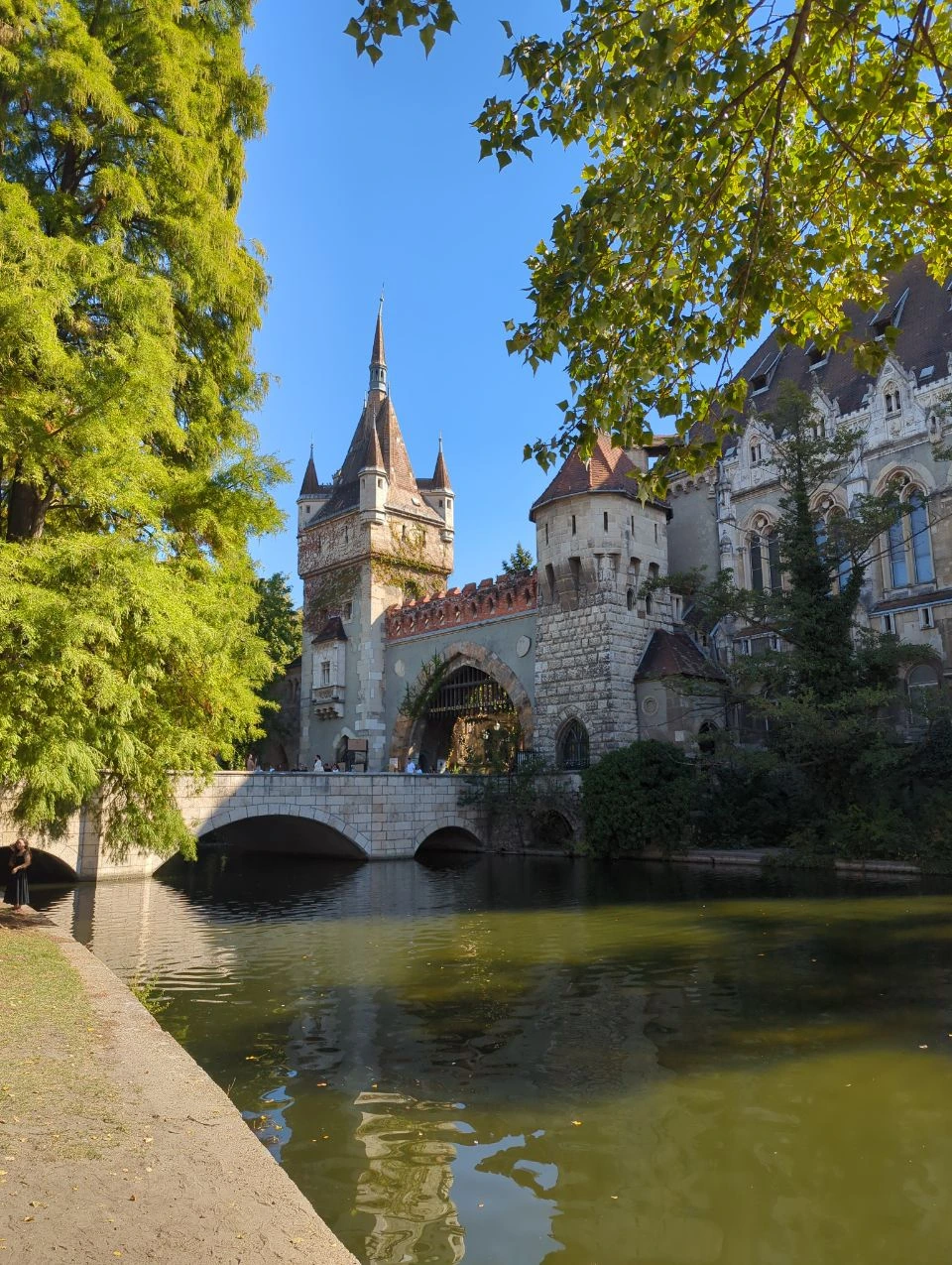
City Park and Margaret Island offer a softer alternative to Budapest’s monumental stone. City Park can combine paths, planting, water and the architectural textures around Vajdahunyad Castle. Margaret Island offers gardens, ponds, bridges and medieval remains within a greener sequence.
Both locations work well when you want room to walk without making a famous building the centre of every photograph. They can also balance a shorter architectural session elsewhere. Planting, water levels and public activity change through the year, so recent images and current conditions are more useful than assuming the parks will look exactly as they did in another season.
Bartók Béla Boulevard and neighbourhood streets suit couples who want the session to feel like an enjoyable city date. The boulevard is known for its cafés, restaurants, bars and galleries, creating opportunities for relaxed street photographs rather than a succession of landmark portraits.
This option may feel more personal if drinking coffee, browsing bookshops or wandering through lived-in streets reflects your relationship better than posing beneath a famous turret. If you hope to photograph inside a particular café, gallery or other private business, ask for permission beforehand rather than assuming that professional photography will be allowed.
Personal meaning should carry as much weight as instant recognition. You may always walk beside the river when you visit, have a favourite corner near the Basilica or want to return to the place where one of you proposed. A location connected to your history can make even a simple photograph more valuable years later.
Plan one rich location or a modest photo walk
Fisherman’s Bastion and the surrounding Castle Hill terraces can provide architectural details, skyline views and quieter paths without requiring a transfer across the city. Parliament and a nearby stretch of the Danube can create a similarly coherent pairing, moving from formal symmetry to looser riverside photographs. A Castle Hill terrace followed by a planted path can introduce greenery without breaking the visual story.
Staying in one area reduces travel, protects your energy and gives the photographer time to respond to changing light or public activity. It can be particularly helpful if you are wearing formal clothes, carrying an extra pair of shoes or working with limited mobility. One location does not mean one background. A well-chosen area may contain arches, walls, steps, open views, shaded corners and pedestrian streets within a short distance.
A photo walk creates variety through movement. Rather than travelling to several disconnected landmarks, you follow a deliberate sequence in which the background changes gradually. A carefully planned 90-minute session may be enough for a modest route, but the realistic length depends on terrain, pedestrian crossings, public transport and the number of stops rather than the distance shown on a map.
Budapest’s hills and surfaces can make a short route slower than expected. Cobbles, stairways, bridge crossings and traffic lights all take time. Gellért Hill is a demanding climb, so travelling uphill and walking down may be more comfortable, although slopes and steps can still remain. Build the route around the less mobile or less energetic person rather than assuming both of you will enjoy the same pace.
If you want photographs in both Buda and Pest, allow properly for the river crossing. Changing banks can transform the skyline, but walking to a bridge, waiting for transport or navigating traffic reduces the time available for photography. When the session is short, choosing one side will often produce a more cohesive set than rushing between distant landmarks.
Transfers also affect how you feel. Repeatedly checking directions, carrying belongings and watching the clock can drain the energy you wanted to bring to the photographs. Decide which setting matters most, then treat anything else as a considered addition rather than another item to collect.
Once you have a route in mind, check how much time to allow for a Budapest couple photoshoot before booking.
Choose the light without expecting empty streets
On one observed morning in October 2026, Fisherman’s Bastion was crowded at sunrise and became easier to photograph roughly 40 minutes later. On a different day, a nearby Buda Castle terrace felt much calmer at dawn. These observations are not forecasts for every morning, but they show why sunrise should be chosen for the quality of the light rather than as a promise of empty arches.
Consider the appearance you prefer, whether you will genuinely enjoy the start time and how comfortable you feel being photographed around other people. A very early alarm may be worthwhile if you love cool morning light and feel alert at dawn. If either of you will be tired, cold or irritable, a later session may produce much warmer expressions even when more people are nearby.
The photographer should plan the order of locations around the direction of the light and the spaces available. At a busy architectural site, that may mean beginning with an open view, using closer compositions while activity changes and returning to a particular feature when a workable angle appears. Flexibility within a small area is often more useful than committing the entire session to one exact viewpoint.
A later shoot can still include quieter-looking photographs. Side streets, shaded façades and tighter framing can reduce visual distractions, while riverside walking photographs benefit from the movement already happening around you. The aim is not necessarily to make Budapest appear deserted, but to keep the focus on your connection.
Weather also changes how the city looks. Cloud cover can soften shadows on detailed façades, while direct sun may create stronger shapes and contrast. Wind can add movement beside the river but may also affect hair, clothing and comfort. Ask your photographer how the chosen location behaves in different conditions rather than relying on a single ideal forecast.
Our comparison of sunrise versus sunset in Budapest looks at how that choice changes the main settings.
Dress for movement, weather and Budapest’s surfaces
Begin with the route. Cobbles, stairs, grass, gradients and long riverside paths place different demands on clothing and footwear. A long hem can look striking against the stone of Castle Hill, while delicate shoes may suit the formality of Parliament. Neither choice will feel elegant if you spend the session lifting fabric on every step or taking tiny, uncomfortable strides.
Try both complete outfits before travelling. Walk at a normal pace, sit down, turn towards each other and lift your arms. Notice whether waistbands shift, collars bunch or sleeves restrict movement. Test how the fabric behaves near an open window or outdoors if wind is likely. A flowing skirt can look beautiful beside the river, but an extremely light fabric may need constant attention on an exposed embankment.
Shoes deserve particular thought. You can wear comfortable shoes while moving between locations and change into dressier ones near the main scenes. Agree when and where the change will happen so it does not interrupt the route or leave one person standing with bags while the other gets ready.
Layers are useful on an early terrace or beside the Danube, where wind can make the temperature feel cooler than expected. Choose pieces that belong with the outfit and can be worn naturally in some photographs. A coat that looks intentional is easier to manage than one you feel compelled to remove every time the camera appears.
Keep belongings to a minimum. Phones, room keys, water and a small grooming kit may be useful, but bulky bags can become a repeated distraction. Decide in advance who will carry essential items and whether anything can be left securely at your accommodation.
Avoid introducing completely new clothes on the day. Shoes that have never been worn, a jacket that only looks good while standing still or a dress that requires constant adjustment can make you unusually aware of your body. Comfort is not separate from appearance. It helps you move with confidence and keep your attention on your partner.
For colours, layers and shoes that work with different backdrops, see what to wear for couple photos in Budapest.
Tell your photographer what helps you feel natural
Tell your photographer what tends to make you tense and what usually helps. You may prefer clear physical direction at the beginning, or you may relax more easily when given something to do together. Mention if either of you dislikes holding a pose, feels uncomfortable with public affection or becomes self-conscious when strangers watch.
Simple prompts can create natural movement without asking you to perform. You might walk shoulder to shoulder while talking about what you noticed that morning, or pause at the end of a terrace and look across the city before turning towards each other. The prompt gives you a shared focus, while the photographer watches for the expressions and gestures that happen around it.
Discuss any mobility considerations, injuries or physical differences before finalising the route. This is not only about avoiding stairs. It may affect how long you can stand, which side feels comfortable when walking together or whether sitting photographs would be welcome. Sharing that information allows the photographer to guide you without repeatedly suggesting movements that do not feel good.
It is also worth checking that the photographer’s working style suits you. Some offer detailed direction throughout the session, while others provide a loose structure and leave more room for interaction. Neither approach is universally better, but a mismatch can leave one couple feeling controlled and another wondering what they are supposed to do.
You can also explain what you value most in photographs. Perhaps you care about affectionate close-ups more than wide skyline views, want plenty of movement or prefer a quieter kind of intimacy. A short conversation gives the photographer a clearer basis for choosing prompts and compositions while still allowing spontaneous moments to happen.
These ideas for natural couple photos without awkward posing offer small tasks you can discuss with your photographer.
Confirm the practical details shortly before the shoot
Confirm the intended sequence, approximate walking time, gradients, transport and where the session is expected to finish. This matters if you have dinner reservations, childcare arrangements or onward travel. It also helps you decide what can realistically be carried throughout the shoot.
Check the latest forecast and wind shortly before the session. At the same time, review current access information for locations that may be affected by maintenance, public events or temporary restrictions. If a venue or landmark publishes official visitor information, use the most recent update rather than an old travel article or photograph.
Agree on an atmosphere-compatible backup. If the original plan centred on monumental architecture, another Castle Hill terrace or a change of angle near Parliament may preserve the intended mood better than moving to an unrelated park. If rain affects a neighbourhood session, covered streets or a café that has granted permission may suit the original idea better than crossing the city in search of dry weather.
Light rain does not automatically end a shoot, but everyone should understand the threshold for changing the route, delaying the start or rescheduling. Clarify how that decision will be made and when. This is particularly important if hair, make-up, delicate clothing or accessibility needs make wet conditions difficult.
Share public spaces respectfully. Stay on permitted paths, keep entrances and working pavements clear, and do not climb on walls or ruins for a photograph. Budapest’s landmarks remain active civic, religious and visitor spaces, so the session should work around the setting rather than obstruct it.
Place your outfits, shoes and essential items together the night before. Charge your phone, check the meeting pin and allow more travel time than the route appears to require. Beginning without a last-minute search for a jacket, earring or taxi gives you a much better chance of arriving calm and ready.
Ready to plan your Budapest couple photoshoot?
Explore Travaya’s photographers in Budapest to compare packages and availability, then discuss your preferred setting, timing and route with the photographer who best suits your plans.
Frequently asked questions about Budapest couple photoshoots
Only if an item has genuine meaning or fits naturally into what you will be doing. A book, flowers or another small personal object can add context, but bulky props may need to be carried across hills and cobbled streets. You should still be comfortable being photographed without them.
Yes, but tell the photographer privately in advance. The meeting point, camera position, signal and immediate plan afterwards need to be arranged carefully. Make sure the proposed location is accessible and that the surprise does not depend on an exact public space remaining empty.
You can, provided there is a suitable place to change and enough time in the booking. A full change may take longer than expected once privacy, walking and belongings are considered. For a shorter shoot, changing a jacket, layer or accessory can create variety with much less interruption.
No. Discuss privacy before booking and check the photographer’s contract for any image-use terms. If you do not want photographs published on websites or social media, make that preference clear before the session rather than waiting until images have been delivered.
Contact the photographer as soon as you know there is a delay. A late arrival may shorten the available photography time, especially when the booking must finish at a fixed hour or the route depends on a particular period of light. Keeping the first location close to the agreed meeting point makes it easier to adapt.


Our Budapest Shoots:
Book your Budapest couple Photographer!
Start Booking
A Couple Photoshoot at Fisherman’s Bastion: How the Session Unfolds

The Best Budapest Streets for Natural Couple Photos

A Romantic Couple Photoshoot at Buda Castle: A Gentle Palace Walk for Two

Photos with the Hungarian Parliament: which side should couples choose?

A Fairytale Couple Photoshoot at Vajdahunyad Castle

A Relaxed Couple Photoshoot on Margaret Island, Budapest
ENJOY $20 OFF
Your first photoshoot when you become an email subscriber.
Related Articles

A Couple Photoshoot at Fisherman’s Bastion: How the Session Unfolds
A couple photoshoot at Fisherman’s Bastion can give you loads of variety without needing an elaborate plan. Its pale stone arches, stairways, towers and open terraces create natural opportunities to walk, pause and enjoy each other’s company, with Budapest ready to sweep into the background whenever you want a wider view. You do not need to arrive knowing how to pose. The architecture gives you something to move through and respond to, while your photographer can offer simple prompts as the session unfolds. The result is a connected gallery filled with close portraits, playful moments and expansive city scenes, rather than a string of stiff poses.

The Best Budapest Streets for Natural Couple Photos
You turn a corner, the buildings open slightly and a familiar Budapest landmark appears between the façades. One of you notices it first; the other follows their gaze without breaking stride. The landmark places you in the city without taking over the photograph. You are still walking, talking and looking at each other rather than queuing for a formal pose in front of a monument. That is one of the loveliest ways to photograph a couple in Budapest. A leafy path below the Castle District feels very different from the grand approach to St Stephen’s Basilica, yet both give you space to move and respond naturally. The question is not which backdrop looks most impressive, but where you are most likely to loosen up and enjoy the walk.

A Romantic Couple Photoshoot at Buda Castle: A Gentle Palace Walk for Two
You begin beneath pale stone arches, close enough to spot the carved details and watch the light shifting around the gateway. There is nothing to perform and no grand entrance to perfect. The architecture brings all the drama you need, leaving you free to settle in, stay close and enjoy being there together. A Buda Castle couple photoshoot can feel wonderfully unlike a production. Think of it as a shared palace walk through gateways, along stairs and terraces, and towards Matthias Fountain. This experience stays around the palace exterior, so it is separate from Fisherman’s Bastion and the other Castle Hill attractions. Within one connected setting, you can create grand architectural portraits, affectionate close-ups and sweeping Budapest views without spending half the session travelling across the city.