
October 8, 2026
How Much Time Do You Need for a Couple Photoshoot in Budapest?
For most couples, 60 minutes is the sweet spot for a Budapest photoshoot. It gives you time to settle in, get comfortable in front of the camera and explore one main area without spending the whole session watching the clock.
The best duration depends less on how many landmarks you have saved and more on what it takes to move between them. Walking comfort, mobility, clothing, transport and current access conditions all shape what will feel enjoyable. The aim is simple: choose the shortest session that comfortably fits the variety you genuinely want.
Updated

Table of Contents
How long should a Budapest couple photoshoot be?
These are helpful planning bands, not fixed Budapest rules. Every photographer structures their packages differently, so a particular duration does not automatically guarantee a certain number of photographs, backgrounds or landmarks. Meeting points, pedestrian traffic, weather, mobility needs and temporary restrictions can all affect what is realistic on the day.
Instead of asking only how many locations will fit, think about how much of your booking you want to spend being photographed. A skilled photographer can create very different images within a surprisingly small space, while travelling to a second famous sight might use precious minutes without adding much to the story.
That difference between visual variety and geographic variety is the key to choosing well.
Is 30 minutes enough for one Budapest location?
Fisherman’s Bastion shows just how much variety can exist in one confined area. On one early-morning visit, a small square offered around 15 minutes of distinct compositions. Towers created a grand establishing view, windows provided close framing, and steps worked beautifully for walking and seated photographs. Lamps, benches, a tunnel and a fountain added further possibilities without requiring a trek across Castle Hill.
That does not mean you are guaranteed the same route or gallery. Pedestrian flow, barriers and access arrangements can change, and your photographer may spot completely different angles. The useful takeaway is that variety can come from perspective, height, movement and framing, rather than sheer distance.
The exterior of the Hungarian State Opera offers a similarly compact mix. Its columns, carved details, lamps and steps can support several architectural compositions close together, while the nearby metro entrance can add a more urban feel. Event activity and street conditions may affect how much space is available.
For something softer and greener, the Japanese Garden on Margaret Island brings bridges, ponds, rocks, cascades and varied planting into a relatively small area. Its colours, foliage and water features naturally change through the year, but it is a great example of how several moods can fit into a short session without turning it into a long walk.
Thirty minutes leaves very little room for hunting for each other, sorting out clothes after arrival or deciding where to begin. It works best when the plan is delightfully simple: one place, one outfit and creative variety drawn from what is already around you.
What does a 60-minute photoshoot add?
The extra time also lets your photographer move between wider scenes, close portraits and natural movement without treating every interruption as a mini crisis. A few pedestrians crossing the frame or a quick pause to adjust clothing becomes manageable instead of stressful.
One reported engagement session around St Stephen’s Basilica began with its grand architecture before continuing through the surrounding historic streets. The atmosphere changed, but the route remained compact rather than turning into a transfer across Budapest.
The Parliament area can offer a similar balance. During one visit, its square-facing façade, nearby gardens, benches and water feature provided both monumental views and gentler portrait settings within the same general area. Barriers limited some positions around the doors and steps, while planting and water features can change, so the exact possibilities are never completely fixed.
The tree-lined gravel paths below Castle Hill provide another useful planning idea. Although the precise park entrance observed during research was not confirmed and should not be treated as a meeting point, the wider principle still holds: one connected green area can offer shade, curved paths and calm backgrounds without needing a headline landmark at every turn.
A 60-minute booking is not simply two half-hour sessions stuck together. Its real value is the relaxed start, the chance to respond to your surroundings and enough time for a few nearby transitions while keeping most of the hour focused on photography.
Why choose 90 minutes for a Budapest photo walk?
That extra half-hour creates a much easier rhythm. You can walk side by side, pause when the light looks gorgeous and keep chatting between more deliberate portraits. Your photographer can capture those in-between moments too, using natural movement and interaction instead of stopping the session whenever you leave a formal backdrop.
A carefully chosen stretch of the Danube can work beautifully. Bridge perspectives and river views shift as you move along the promenade, but the story remains visually connected. Your photographer can select the bank and walking direction according to the light, pedestrian flow and current access, rather than trying to hop between unrelated districts.
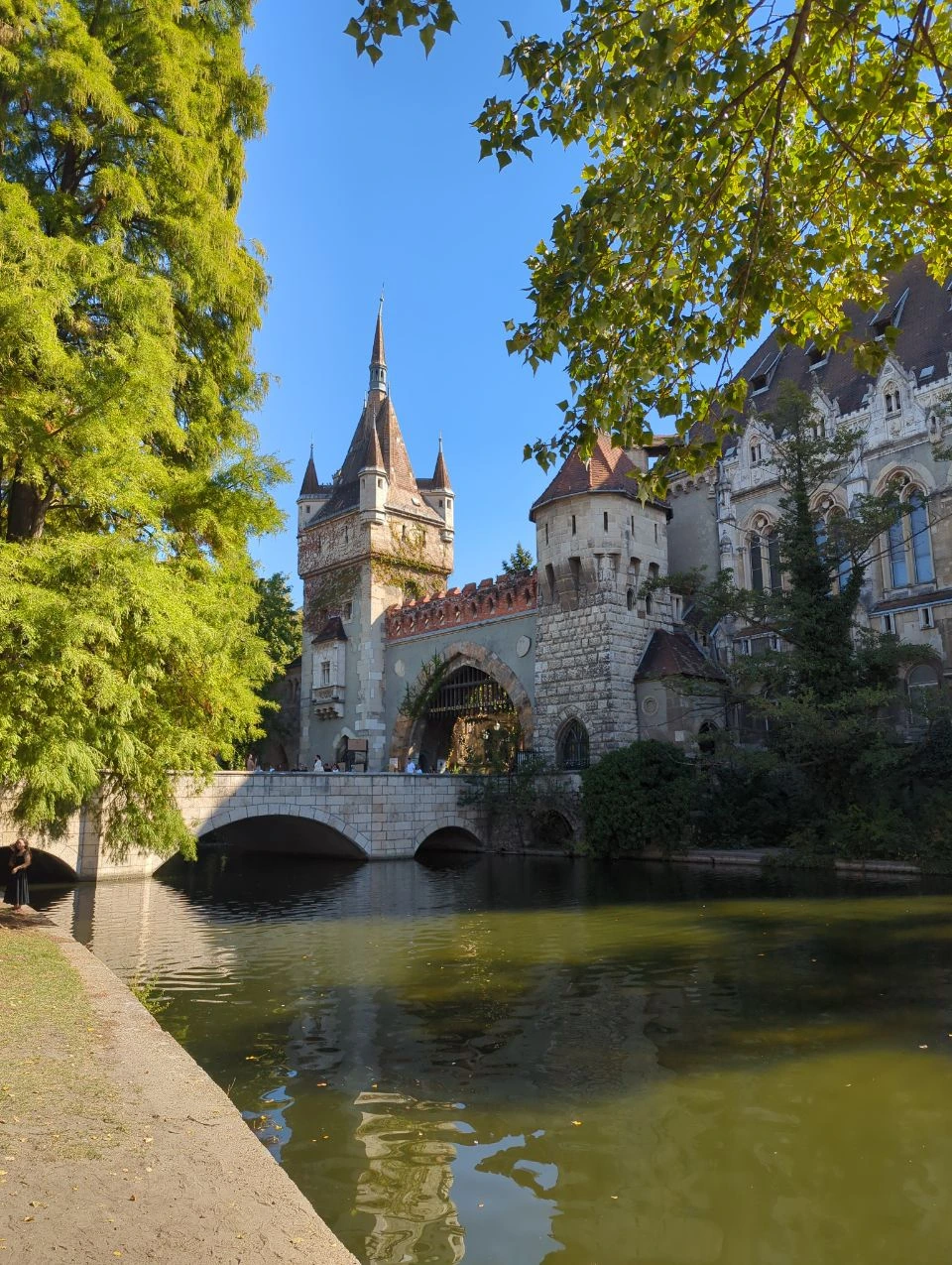
City Park offers a greener version of the same idea. Around Vajdahunyad Castle, architecture, water, benches, paths and trees can support an unhurried wander through one coherent area. The scenery changes gradually, allowing room for both polished portraits and less posed walking photographs without losing time to a vehicle transfer.
A neighbourhood can be just as rewarding. Budapest’s official tourism material presents Bartók Béla Boulevard as a defined walk between Kosztolányi Dezső Square and Szent Gellért Square. That does not tell us how long a photoshoot should take, but it does show how façades, cafés and everyday street life can give one district enough personality for a connected visual story.
Even with 90 minutes, it pays to stay geographically disciplined. One neighbourhood, one park or one considered stretch of riverfront will usually feel more relaxed than a collection of disconnected landmarks. If a suggested route includes several far-apart names, ask how many minutes will be spent travelling rather than taking photographs.
When do two hours or more make sense?
Buda and Pest sit on opposite sides of the Danube, so combining them is a real route decision rather than a quick change of background. Reaching a bridge, waiting for transport, navigating traffic and walking from a drop-off point all use time. Pairing historic, elevated Buda with a more urban or river-level Pest setting can create a lovely contrast, but it should be intentional.
If one side already provides the architecture, views and atmosphere you want, staying there may produce a calmer experience and a more coherent gallery. Crossing the river earns its place when the second area offers something more meaningful than another recognisable landmark.
Gellért Hill can also justify a longer session. Travellers who inspected the area found the climb substantial and preferred travelling uphill before walking down. Even then, transport did not remove every ascent. Services, road access and drop-off options can vary, so a car or bus should not be expected to deliver you directly to every viewpoint.
The physical effort matters just as much as the minutes. Slopes and steps can feel considerably harder in formal clothes or unsuitable shoes, especially when you are carrying a coat, bag or other belongings. Extra coverage allows a steadier pace and short rests, but it cannot make the terrain disappear.
An outfit change is another genuine interruption. You need privacy, somewhere practical to change and a tidy plan for managing shoes, accessories and the first outfit. Research did not identify reliable public changing facilities or a standard Budapest policy, so this needs to be discussed directly with your photographer.
Ideally, the second outfit should create a clear and worthwhile shift in mood. If it is very similar to the first, staying present in the session may be more rewarding than disappearing to change. Longer coverage works best when the extra movement or clothing serves a clear creative idea.
Choose a route, not a list of landmarks
There is a big practical difference between discovering another angle and changing geography. Turning from a grand façade towards an arcade changes the composition. Walking around a corner into a quiet street changes the mood. Crossing the Danube or taking a taxi into another district changes the location, and that journey may produce very few photographs while still using your booked time.
A one-place session keeps the focus firmly on photography. A one-district session adds streets, greenery, terraces or river views in a natural sequence. A multi-part route includes a proper transfer and should deliver enough contrast to justify the time and energy it requires.
Comfort can completely change the realistic scope. Cobbles, gravel, slopes and steps feel different in smart shoes than they do during an ordinary sightseeing day. Even a modest route can become tiring once you add a handbag, coat or spare outfit. As discomfort creeps in, posture, patience and natural interaction can all take a knock.
Mobility should shape the plan from the beginning. A flatter route with predictable surfaces may be far more enjoyable than struggling towards a famous elevated viewpoint. You will not lose Budapest’s character. Your photographer can express it through architecture, river views, street details or greenery that better suits your pace.
Working space matters too. During one daytime visit, an open gravel area on the Pest bank beside Chain Bridge provided more room to pause and move than the bridge’s pedestrian route. Availability and ground conditions can change, but the trade-off is useful to remember: the most iconic position is not always the easiest place to relax together.
A good route also needs a little flexibility. Flowers and foliage are seasonal, water features may not be running, and river levels can affect what is visible around the banks. Barriers, maintenance and events may close a familiar angle. When the route is coherent, your photographer can move a short distance to another suitable background instead of abandoning the whole plan.
A collection of attractive location names is not yet an itinerary. The real plan should explain how the spaces connect, what the walking feels like and which element can be dropped if conditions change.
The Budapest couple photoshoot planning guide helps you turn that choice into a compact route and a practical brief for your photographer.
How light and crowds affect what fits
It is still worth keeping expectations realistic. Another photographer described calm conditions near the Basilica as unusual. Across 73 Budapest field observations made between 30 September and 2 October 2026, nearby attractions behaved quite differently. The palace terraces at Buda Castle were quieter at dawn than Fisherman’s Bastion had been for the same travellers, while the Basilica approach was busy around midday during that visit.
In other words, sunrise can be gorgeous, but it does not come with a guaranteed empty square. Visitors, deliveries, events, maintenance and temporary barriers can affect public spaces at any hour. Weather may also change the usable light, the comfort of exposed viewpoints and the safety of wet or uneven surfaces.
A longer session gives you flexibility, not control. It can make room for a short pause while pedestrians pass or a move towards a quieter angle, but it cannot turn a public attraction into a private studio.
The handiest fallback is usually nearby. A side street, sheltered arcade, garden path or open area can preserve the intended mood without launching an unplanned journey across Budapest. Agreeing on that alternative before the shoot keeps everything flowing if rain, crowds or restricted access interrupt the first idea.
Use the Budapest sunrise and sunset comparison to weigh the light and atmosphere alongside the time you have.
What should you ask your photographer before booking?
Then get clear on the practical route. Ask where the booking starts and ends, which geographically separate areas are genuinely realistic, and whether walking, waiting, taxis or public transport count towards the booked time. Photographers handle those minutes differently, so the answer needs to come from the person you are considering.
Confirm the exact meeting point too, particularly for a short session or a large attraction with several entrances and terraces. A precise map pin or clearly recognisable landmark prevents both of you from wandering around a busy public space as the clock ticks.
If you are thinking about changing clothes, discuss where you could do it, how much privacy is available, what will happen to your belongings and whether changing time is included in the session. That conversation may also help you decide whether the second look is truly worth the interruption.
Share any mobility needs and your likely footwear before agreeing to the route. Ask about stairs, cobbles, gravel, slopes and the longest stretch of uninterrupted walking. Your photographer can then suggest comfortable alternatives while there is still plenty of time to plan.
Finally, agree on a nearby fallback for rain, crowds, barriers or changed access. It is also sensible to ask what would be simplified if you arrived late or a transfer took longer than expected. The strongest plan protects your priority setting or mood, so an unexpected change does not turn the rest of the session into a scramble.
Ready to plan your Budapest couple photoshoot?
Browse Travaya’s couple photographers in Budapest and share the atmosphere, locations and photographs you love most. With those priorities in mind, your photographer can recommend a comfortable route and a session length that feels fun rather than overstuffed.
Frequently asked questions
Aim to reach the agreed meeting area around ten to fifteen minutes before your booking starts. That leaves time to find the precise meeting point, make any tiny adjustments and begin without a rush. For an early session, check the journey in advance because transport frequency and street access may differ from daytime conditions.
Keep it light and easy to manage. A small bag with the essentials is usually much simpler than several loose coats, shopping bags or accessories. Ask whether there will be a safe place to set it down while photographs are taken, and do not assume your photographer can carry or supervise belongings in a busy public space.
There is no need to match exactly. Outfits usually look more natural when the colours and level of formality work together without being identical. Think about the surroundings, but give just as much attention to movement and footwear. Clothes that look fabulous while standing still can become distracting if they restrict walking or need constant adjustment.
Ask how and when your photographer makes weather decisions. Light rain, heavy rain, strong wind and extreme temperatures may call for different responses, from using nearby shelter to changing the starting point or rescheduling. Cancellation and rearrangement terms vary, so check the policy before booking rather than trying to untangle it on the day.
Gallery size, editing style, selection methods and delivery times vary between photographers and packages. Check exactly what your booking includes, whether you will select favourites yourself and when the edited gallery is normally delivered. Session length alone does not determine a reliable photograph count.
Usually, yes, provided it is easy to carry and genuinely meaningful to you. Tell your photographer beforehand so they can consider it when planning poses and movement. Large, fragile or valuable objects can complicate a walking route, particularly around crowds, steps or places without secure storage.


Our Budapest Shoots:
Book your Budapest couple Photographer!
Start Booking
A Couple Photoshoot at Fisherman’s Bastion: How the Session Unfolds

The Best Budapest Streets for Natural Couple Photos

How to Prepare for a Couple Photoshoot in Budapest

A Romantic Couple Photoshoot at Buda Castle: A Gentle Palace Walk for Two

Photos with the Hungarian Parliament: which side should couples choose?

A Fairytale Couple Photoshoot at Vajdahunyad Castle
ENJOY $20 OFF
Your first photoshoot when you become an email subscriber.
Related Articles

A Couple Photoshoot at Fisherman’s Bastion: How the Session Unfolds
A couple photoshoot at Fisherman’s Bastion can give you loads of variety without needing an elaborate plan. Its pale stone arches, stairways, towers and open terraces create natural opportunities to walk, pause and enjoy each other’s company, with Budapest ready to sweep into the background whenever you want a wider view. You do not need to arrive knowing how to pose. The architecture gives you something to move through and respond to, while your photographer can offer simple prompts as the session unfolds. The result is a connected gallery filled with close portraits, playful moments and expansive city scenes, rather than a string of stiff poses.

The Best Budapest Streets for Natural Couple Photos
You turn a corner, the buildings open slightly and a familiar Budapest landmark appears between the façades. One of you notices it first; the other follows their gaze without breaking stride. The landmark places you in the city without taking over the photograph. You are still walking, talking and looking at each other rather than queuing for a formal pose in front of a monument. That is one of the loveliest ways to photograph a couple in Budapest. A leafy path below the Castle District feels very different from the grand approach to St Stephen’s Basilica, yet both give you space to move and respond naturally. The question is not which backdrop looks most impressive, but where you are most likely to loosen up and enjoy the walk.

How to Prepare for a Couple Photoshoot in Budapest
Budapest can feel completely different from one street to the next. You might walk hand in hand beneath the pale arches of Fisherman’s Bastion, hear a tram rattling beside the Danube, then warm your hands around coffee on a neighbourhood boulevard that feels far removed from the main sights. That variety is exciting, although choosing where to go can feel harder than it needs to. Begin by deciding how you want the photographs to feel, then choose a setting that supports that atmosphere. A little planning goes a long way. The light, crowds, hills, cobbled streets and walking distances can all shape how comfortable you feel. Once those details are working for you, the session becomes less about collecting landmarks and more about enjoying Budapest together.