
October 8, 2026
A Relaxed Couple Photoshoot on Margaret Island, Budapest
Budapest may be famous for grand façades, elegant bridges and sweeping Danube views, but Margaret Island offers something softer. Think leafy paths, ponds, gardens, old stone walls and little architectural surprises, all connected by a walk you can enjoy together.
It is a lovely choice if you would rather move, chat and explore than work through a string of formal poses. You can start with easy walking photographs, ease into quieter portraits and choose only the settings that genuinely add something to your gallery.
The result is not a race around every island attraction. It is a relaxed Margaret Island couple photoshoot shaped around your comfort, energy and the conditions on the day.
Updated

Table of Contents
Why choose Margaret Island for a couple photoshoot?
Rather than posing in front of one dominant building, you can wander through a series of smaller scenes. A tree-lined path gives you room to walk and talk. Water and planting soften close portraits. Benches and pergolas make sitting together feel natural, while ruins and the Water Tower bring in texture without taking over the whole gallery.
Those gentle changes help the photographs feel connected. You might cross a little bridge, pause beside a pond and later settle into a quiet portrait near an old doorway. The background evolves, but the session still feels like one shared afternoon rather than several separate mini shoots.
Most importantly, the two of you remain the focus. Margaret Island can still look unmistakably Budapest, especially if you finish near Margaret Bridge, but the city does not have to shout in every frame. You can keep most of the session green and intimate, then save one lovely Parliament-and-Danube view for the finale.
What does a relaxed photoshoot actually feel like?
Your photographer might begin by asking you to walk across a bridge, follow a curved path or turn towards each other when you reach a certain spot. Movement helps your posture and expressions settle naturally because your attention is on the setting and on each other.
Every couple likes a different amount of guidance. You might love clear, regular suggestions, or you may prefer one gentle prompt followed by space to find your own rhythm. Tell your photographer what makes you feel comfortable. Good direction should give you confidence without making every moment feel rehearsed.
Once you have warmed up, the pace can slow. You could sit shoulder to shoulder on a bench, lean together beside a railing or pause within a historic doorway. Still portraits often feel much easier after you have already spent time walking, chatting and having a laugh.
Your photographer may make small practical adjustments along the way, such as moving you into softer light, changing the angle of your shoulders or stepping sideways to tidy the background. These little refinements are there to make the photograph work, not to turn you into professional models.
You do not need to perform constant affection either. A beautiful photograph might come from listening to your partner, walking at slightly different speeds, looking across the water or sharing a quiet pause. If a prompt feels unlike you, say so. There is always another way to create the moment.
Margaret Island is a public place, so weather, visitor activity and personal confidence will affect how the session feels. Starting with movement and introducing quieter portraits gradually is a simple, sensible way to take the pressure off.
Build your Margaret Island route in flexible clusters
For a compact northern session, the Japanese Garden and nearby Bodor Musical Well work beautifully together. You get water, bridges and layered planting first, followed by one small architectural feature. It is a gentle option if you have limited energy, prefer less walking or simply want the gallery to feel visually focused.
With more time, you can add a middle cluster. Pick either the open flower garden or the Rose Garden according to which looks best on the day, then choose one ruin complex for historic texture. The Water Tower exterior can provide a bolder geometric contrast. A second ruin is only worth adding if it brings a genuinely different composition.
The southern part of the island can be your ending, but it is never compulsory. The paths, greenery, seating and flower beds around the large Musical Fountain may support a final stroll even if no display is running. From there, Margaret Bridge can add Parliament and the Danube when you want one recognisable city view.
The route can also run in reverse. Light, crowds, temporary works and your preferred finishing point may make another order more practical. A busy garden can be swapped for a nearby setting, the middle cluster can disappear altogether, or the session can finish before the bridge if the gallery already feels complete.
Walking comfort matters far more than the number of attractions covered. Formal clothes, uncomfortable shoes, hot weather, rain or limited mobility can all make a shorter route the happier choice. Exact walking times, distances and step-free suitability need to be checked for your chosen stops rather than guessed from a map.
A good way to plan is to choose two priorities and one bonus. You might care most about the Japanese Garden and one ruin, with the city view included only if time, light and energy allow. That gives your photographer a clear creative brief while leaving enough flexibility to make smart decisions on the day.
Begin with the Japanese Garden and Bodor Musical Well
You could cross a bridge together, pause beside the water and carry on along a planted path while your photographer alternates between wider garden scenes and closer portraits. Water may add reflections and depth, rocks can shape the edge of the frame, and foliage can create a beautifully simple background.
There is plenty of variety without constantly relocating. Your photographer can find several angles around one small area while you continue the same easy walk. That usually feels much more relaxed than stopping every minute to start a completely new pose.
The bridges need not become grand, staged centrepieces. You might walk one behind the other, meet halfway or pause at the side to look towards the pond. If one bridge is busy, another corner can often do the same photographic job without waiting for the whole garden to empty.
Close to the garden stands the Bodor Musical Well, the smaller of Margaret Island’s two musical landmarks. It is a compact, pavilion-like heritage structure and provides a neat shift from the garden’s organic shapes to more formal architecture.
The present structure was installed in 1936 as a reproduction of an earlier well. A municipal account reported repairs in 2023, but its current operating status and performance schedule still need a fresh check if hearing it play matters to you.
Even without music, the pavilion is useful photographically. Its decorative structure can frame a slightly more composed portrait after all that garden movement. A few minutes beside or beneath it may be plenty, so it never needs to become the star of the session.
Together, the Japanese Garden and Bodor Musical Well can make a complete short shoot. The garden brings movement, water and close leafy compositions, while the well gives you a distinct architectural finish without a marathon trek across the island.
Choose the garden pause that suits the day
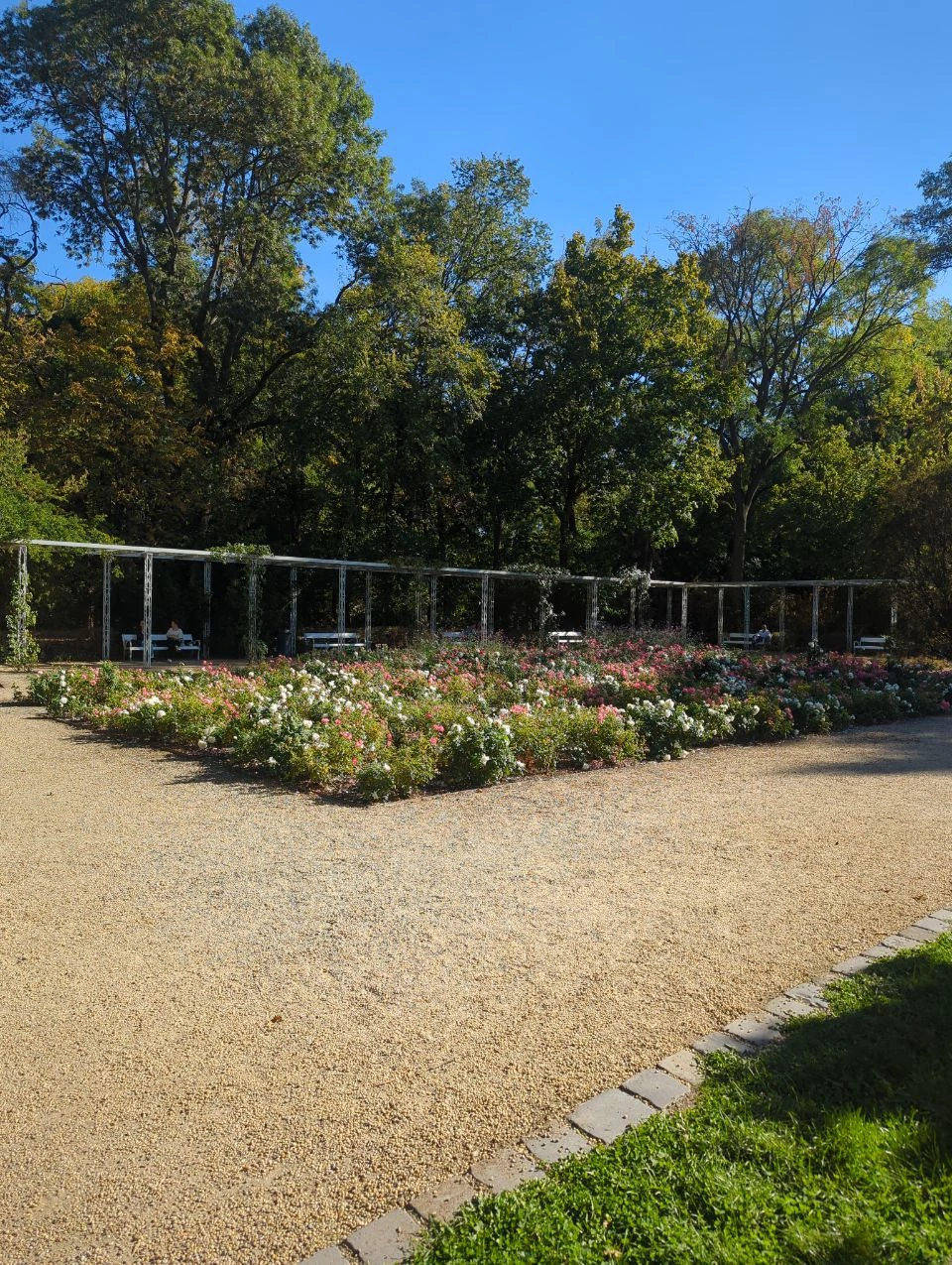
On 2 October 2026, the open garden had colourful beds, lawn and a path around its edge. When the display is looking lively, that open layout is well suited to wider walking photographs with colour surrounding you. The path also lets everyone enjoy the beds without stepping into the planting.
Its official name was not verified, so calling it the “Garden of Light” would be misleading. It is more accurate to describe the setting by what is actually there: flower beds, lawn and a perimeter path.
The Rose Garden creates a slower pause. Benches make sitting together feel purposeful, while pergolas and patches of shade can help shape closer portraits. It may be especially welcome after an active start or whenever one of you fancies a breather.
A seated photograph can stay wonderfully simple. Sit close, turn slightly towards each other and carry on talking while your photographer changes position. The bench gives your bodies a natural resting place, which often feels easier than standing still in the middle of an open lawn.
Gardens change, of course. Planting, colour, foliage, water levels, shade and visitor numbers all vary with the season, weather and maintenance. The open garden had relatively few visitors during one early-afternoon observation on 2 October 2026, but that does not promise privacy on another date. The winning choice is whichever garden is visibly at its best when you arrive.
Add ruins and architecture without turning it into a history tour
The Dominican convent ruins include layered wall lines, former doorways and shaded areas. From permitted visitor positions, those openings can frame the two of you or add depth behind a walking photograph. One partner moving towards the other through a doorway can create a lovely natural moment without anyone stepping onto the remains.
The Franciscan ruins have a broader, roofless church form, with surviving wall sections visible from the path. They suit a more open composition than the tighter, layered frames available around the Dominican site.
One ruin complex is usually enough for a shorter session. Choose the Dominican ruins if you like doorways and overlapping stone walls, or the Franciscan site if a wider roofless structure appeals more. Include both only when the second location adds something meaningful and the extra walking still feels enjoyable.
Stay on permitted paths, stairs and visitor surfaces throughout. Historic masonry is not a seat, shortcut or posing platform, and nobody should climb or stand on the remains. Your photographer can create plenty of variety with the openings, shadows, wall shapes and surrounding space. Viewpoints observed in 2026 may also be affected by current access arrangements, so follow the signs and barriers in place on the day.
The Water Tower offers a completely different contrast. Completed in 1911, it rises above the greenery with a strong vertical shape and much cleaner geometry than the gardens or ruins. Used for a handful of frames, its exterior can refresh the visual rhythm before the route returns to softer paths and planting.
Only the exterior was observed during the field visit, and that is already enough for a striking architectural portrait. If you hope to enter the tower or use an exhibition or panoramic area, confirm the current visitor arrangements separately.
One ruin and a brief stop outside the Water Tower can add plenty of variety. You still get that sense of Margaret Island’s history, but the experience remains centred on the two of you rather than becoming a guided architectural survey.
Finish with the fountain surroundings or a Budapest view
Even if no water display is running, the fountain area can still be useful for photographs. Broad paths, seating, greenery and flower beds offer space for a final walk or a quieter portrait before leaving the island.
Construction was observed around this area on 2 October 2026. That is simply a dated field observation, not proof that works are still continuing or that the fountain is currently closed. If access or a performance matters to your plan, check the latest information shortly before the session.
Margaret Bridge can then provide a final change of scale. After the enclosed gardens, paths and ruins, the view opens towards Parliament and the Danube. Saving it until the end makes Budapest feel like a proper reveal without turning the whole photoshoot into a landmark tour.
Your photographer can begin with a wider composition that places you within the river view, then move closer while keeping Parliament recognisable in the background. It is a strong conclusion to a gallery that has otherwise remained soft, leafy and intimate.
A lower stony shore was visible from the bridge during the 2026 visit, but visibility is not the same as safe or legal access. River levels and access conditions can change, so the shore is not part of this route. You can achieve the intended Parliament-and-Danube view without descending to the water.
What should you check before your photoshoot?
If you particularly want to hear or see either musical landmark operating, check its current status and timetable. The 2023 repair report for the northern well and the construction seen near the southern fountain in October 2026 cannot tell you what either feature will be doing on your date.
Confirm current visitor arrangements for any building you hope to enter, including the Water Tower. Happily, its exterior works perfectly well as a backdrop, so the route does not need to depend on admission.
Photography requirements are also worth checking if your session involves tripods, freestanding lights, assistants or other substantial equipment. A couple with one photographer and a handheld camera may be treated differently from a larger commercial production, so do not assume that the absence of a clearly published restriction settles the question.
Talk through mobility needs before choosing your stops. Check the relevant entrances, path surfaces, stairs, seating and step-free alternatives, as well as current toilet availability and seasonal facilities. A list of locations alone cannot provide reliable walking times or accessibility details.
Weather and visible conditions may change the order. Your photographer can reverse the route, delay a crowded stop or substitute a nearby scene while protecting the two places you care about most. Rain, heat, wind and available daylight can all make a compact cluster more enjoyable than a long island crossing.
An early session may bring softer light and fewer visitors, as photographers often find elsewhere in Budapest, but sunrise is not a magic promise of an empty island. Pick a time that suits your energy, clothing, preferred route and finishing light.
Cycling is not automatically the easiest way to connect the locations either. Rules and practicality can vary between paths, and looking after bicycles may interrupt the easy walking rhythm of the shoot. Check the relevant rules before building bikes into the plan.
The route guidance here draws on nine Margaret Island observations from the field visit on 2 October 2026. Treat those details as a carefully researched starting point, then use fresh conditions to shape the final plan.
Plan a relaxed Margaret Island photoshoot
Tell us whether you fancy a short garden wander, a touch of historic texture or one final view across the Danube. You can find a photographer in Budapest who will shape the route around your style, comfort, mobility needs and whatever Margaret Island is doing on the day.
Frequently asked questions about Margaret Island couple photoshoots
It can be a great fit if walking feels easier than prolonged posing. Crossing a bridge, following a path or responding to one simple prompt gives you something natural to do while you settle in. It is still a public setting, so nobody can promise instant confidence, but clear guidance and a gradual move from active photographs to quieter portraits can make everything feel much less intense.
Not at all. Choose a few settings with different photographic roles, such as a garden for movement, one ruin for texture and an optional river view. Your available time, walking comfort, mobility needs and the day’s conditions should guide the final selection. Leaving out a stop is good editing, not a missed attraction.
The Bodor Musical Well is a small, pavilion-like heritage structure near the Japanese Garden in the north. The Musical Fountain is a much larger feature in the south, surrounded by broad paths, seating and planting. They are separate places, and you should check current information if seeing either one operate is important.
They might be, but garden colour and visitor levels naturally change with the weather, season, maintenance and time of day. The field observations describe one October visit, including relatively few people at one open garden during the early afternoon. Your photographer should choose the garden that looks and feels best when you are actually there.
Yes, subject to current access. One ruin complex is often enough, with the choice depending on whether you prefer layered doorways or a broader roofless structure. Stay on permitted visitor surfaces and never climb or stand on historic masonry. The Water Tower exterior can provide a strong architectural backdrop without making entry part of the plan.
Yes. Margaret Bridge can give you that final city view while allowing the rest of the session to remain greenery-led. It works particularly well as a change of scale after the gardens and historic settings. Whether it belongs in your route will depend on the light, current conditions, walking comfort and how much a recognisable Budapest background matters to you.


Our Budapest Shoots:
Book your Budapest couple Photographer!
Start Booking
A Couple Photoshoot at Fisherman’s Bastion: How the Session Unfolds

The Best Budapest Streets for Natural Couple Photos

How to Prepare for a Couple Photoshoot in Budapest

A Romantic Couple Photoshoot at Buda Castle: A Gentle Palace Walk for Two

Photos with the Hungarian Parliament: which side should couples choose?

A Fairytale Couple Photoshoot at Vajdahunyad Castle
ENJOY $20 OFF
Your first photoshoot when you become an email subscriber.
Related Articles

A Couple Photoshoot at Fisherman’s Bastion: How the Session Unfolds
A couple photoshoot at Fisherman’s Bastion can give you loads of variety without needing an elaborate plan. Its pale stone arches, stairways, towers and open terraces create natural opportunities to walk, pause and enjoy each other’s company, with Budapest ready to sweep into the background whenever you want a wider view. You do not need to arrive knowing how to pose. The architecture gives you something to move through and respond to, while your photographer can offer simple prompts as the session unfolds. The result is a connected gallery filled with close portraits, playful moments and expansive city scenes, rather than a string of stiff poses.

The Best Budapest Streets for Natural Couple Photos
You turn a corner, the buildings open slightly and a familiar Budapest landmark appears between the façades. One of you notices it first; the other follows their gaze without breaking stride. The landmark places you in the city without taking over the photograph. You are still walking, talking and looking at each other rather than queuing for a formal pose in front of a monument. That is one of the loveliest ways to photograph a couple in Budapest. A leafy path below the Castle District feels very different from the grand approach to St Stephen’s Basilica, yet both give you space to move and respond naturally. The question is not which backdrop looks most impressive, but where you are most likely to loosen up and enjoy the walk.

How to Prepare for a Couple Photoshoot in Budapest
Budapest can feel completely different from one street to the next. You might walk hand in hand beneath the pale arches of Fisherman’s Bastion, hear a tram rattling beside the Danube, then warm your hands around coffee on a neighbourhood boulevard that feels far removed from the main sights. That variety is exciting, although choosing where to go can feel harder than it needs to. Begin by deciding how you want the photographs to feel, then choose a setting that supports that atmosphere. A little planning goes a long way. The light, crowds, hills, cobbled streets and walking distances can all shape how comfortable you feel. Once those details are working for you, the session becomes less about collecting landmarks and more about enjoying Budapest together.