
October 6, 2026
Margaret Island photo spots: a garden-to-ruins walk
A rose garden bench, a little domed pavilion and a doorway through medieval stone can all belong to the same Budapest afternoon. Margaret Island brings those settings together in a green stretch of the Danube, with enough variety for photographs that feel quite different from one another. You can make a longer walk of it or settle into a few favourite corners. Either way, there's plenty here to enjoy between pictures.
On our early-afternoon visit on 2 October 2026, we started in the northern Japanese Garden, wandered through the central gardens and ruins, then continued south. Roses were still showing colour, sunlight picked out the high stone walls, and the large southern fountain was fenced for work. That last detail matters for planning: the gardens and architecture give you a lovely outing, but a fountain show isn't part of the current route.
Updated

Table of Contents
Choose the Margaret Island photo walk that suits you
For a central walk, choose the Water Tower exterior, Saint Margaret's convent ruins and the flower gardens. This gives you the widest mix of height, stone, planting and places to pause. The gardens can involve a little loop, depending on which paths you follow. Our visit doubled back among them; don't read the order below as a straight line between every stop.
The longer option joins those northern and central settings before continuing to the separate Franciscan ruins farther south. It works well if walking is part of the pleasure. The park operator describes the island as about 2.5 kilometres long, but a photography route with garden detours covers a different distance. Allow for the return journey too.
As a planning suggestion, leave 60–90 minutes for a few nearby settings, or two to three hours for a leisurely longer walk with photographs and rests. Those are flexible allowances, separate from your journey onto the island. A slow hour among the roses and ruins can be more memorable than reaching every landmark with one eye on the clock.
The Japanese Garden's close, leafy frames
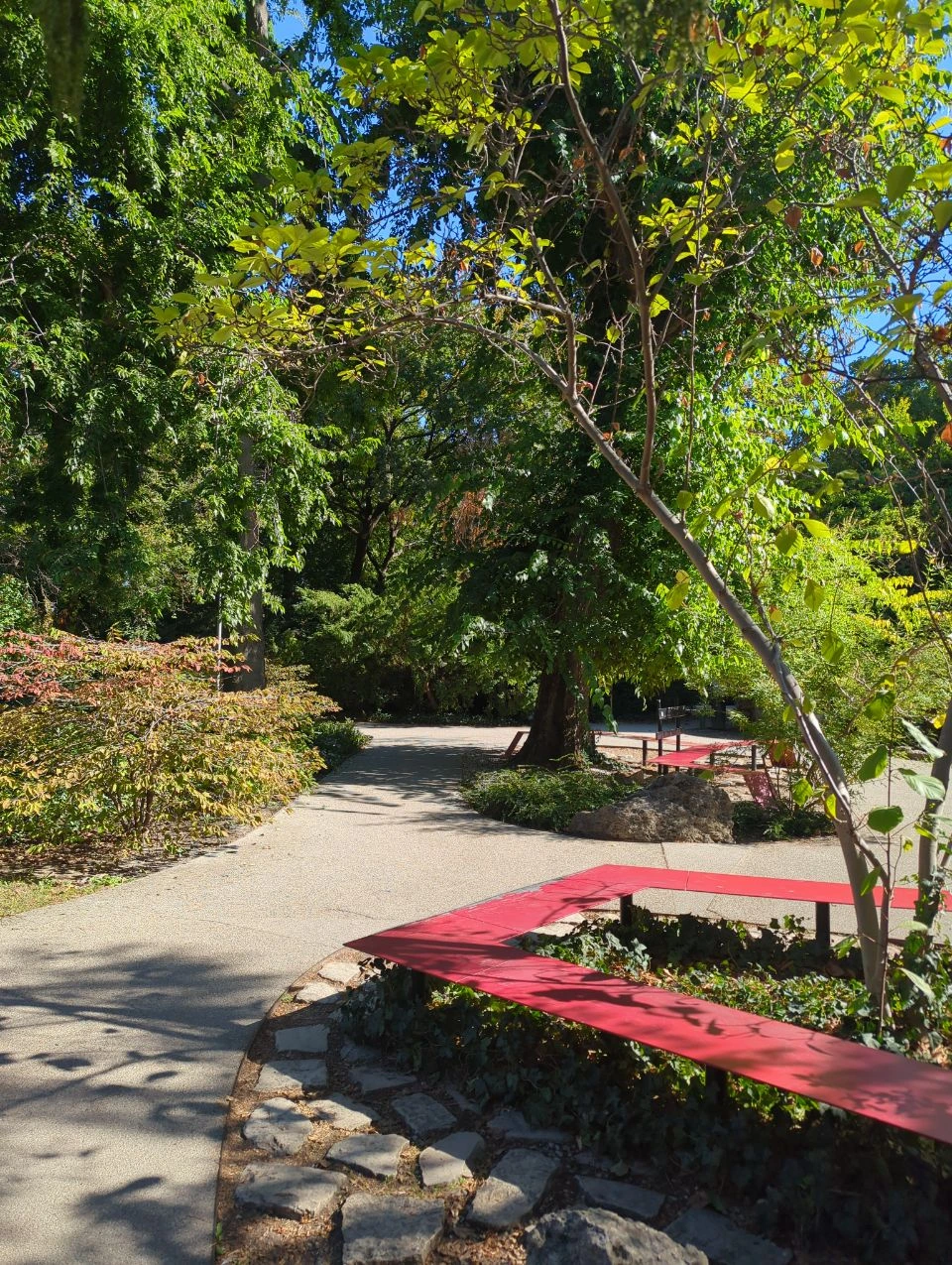
Try a photograph along the path rather than straight across it. The bend gives your eye somewhere to travel, while a little foliage near the edge can soften the frame. Leave enough of the route visible to show that you're in a garden. A tight crop can be lovely, but one wider picture keeps the memory of the place as well as the person.
Elsewhere on our walk through the garden, we noted small bridges, water, rocks and varied planting. If those parts are open, let the winding paths lead you towards a different scene. Choose whichever corner is looking good on your day.
With two people, a few steps together can work beautifully here. One person turning towards the other often feels more natural than both looking at the camera throughout. Use an open stretch of path, let other visitors pass, and enjoy the garden as you find it. The planting will bring its own seasonal character.
The Bodor Musical Well is a small architectural stop
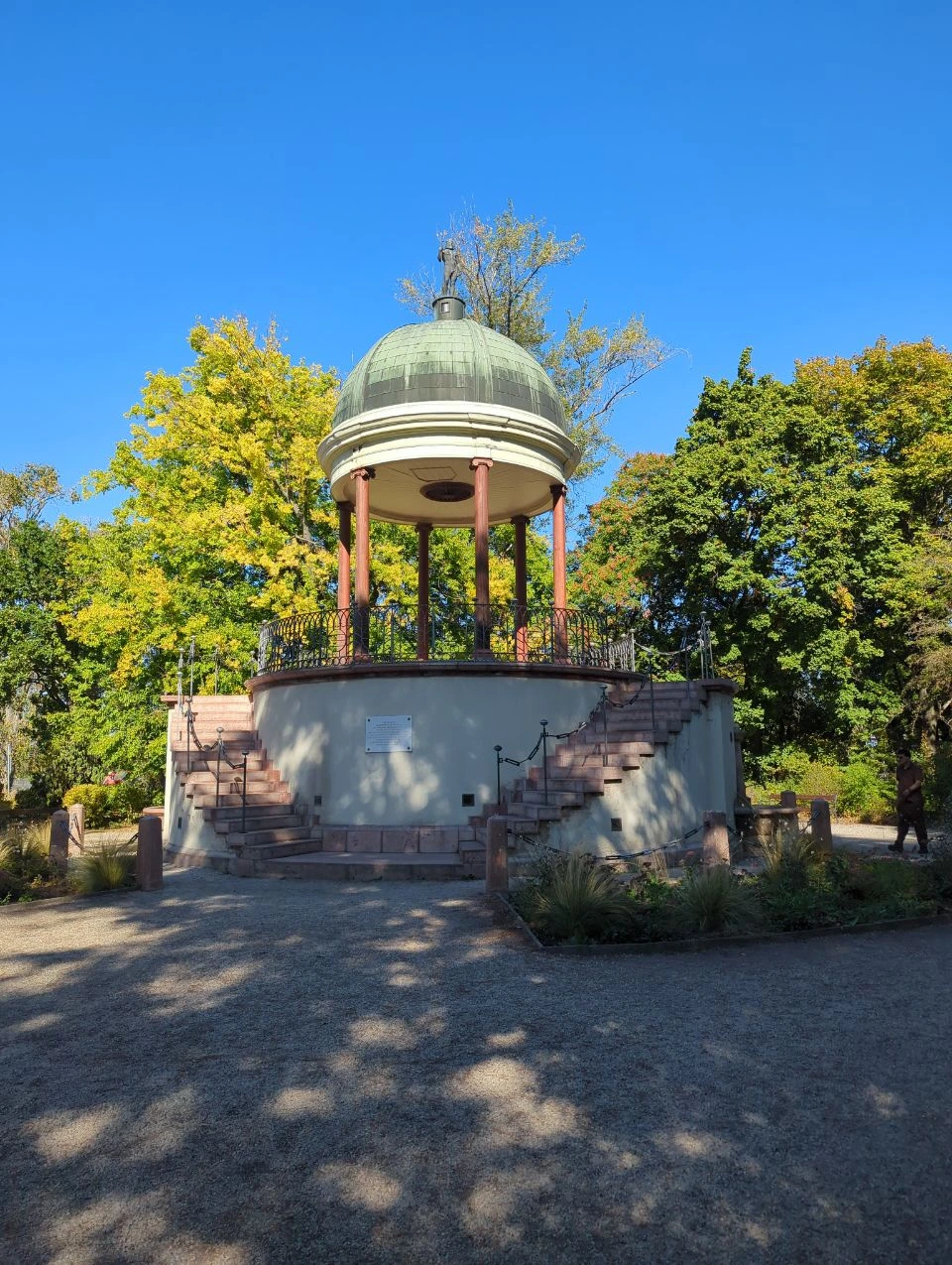
Stand far enough back to see how the stairs balance one another. For a picture of the pavilion itself, that symmetry is the attraction. For a portrait, placing someone a little off-centre lets the structure remain clear behind them. Check that the dome or a column doesn't appear to grow out of their head; a small move sideways often makes a noticeable difference.
The pavilion was built here in 1936 as a copy of an older musical well in what is now Târgu Mureș. Budapest's account of its 2023 repairs describes the music mechanism and rotating Neptune figure. We didn't hear it play during our visit, so treat any music as a bonus to a worthwhile architectural stop.
This is the northern Bodor Musical Well. The large Musical Fountain near the southern entrance is a separate landmark, with its own operating conditions. Keeping the two names distinct will make both your map searches and your plans easier.
Give the Water Tower room in the frame
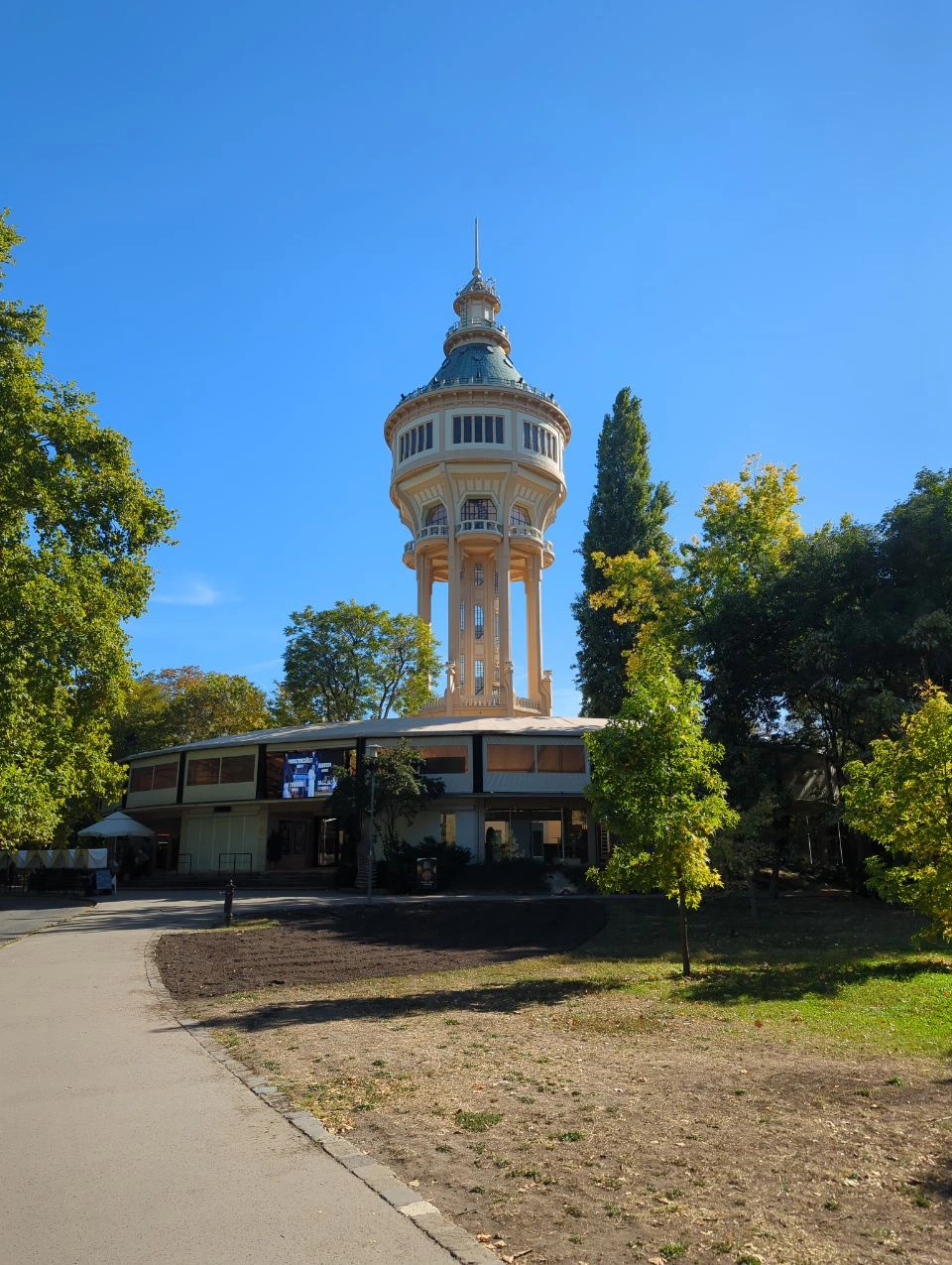
Step back until you can keep its top comfortably inside the photograph. If someone is standing very close to the camera, they can easily overwhelm the tower; bringing them a little farther into the scene helps the two share the frame. The theatre entrance and surrounding greenery give you useful scale. They also make the photograph more specific than a tightly cropped tower against an empty sky.
Completed in 1911, the building served the island's water supply and was designed with a lookout function. The Water Tower operator gives its history and current visiting information. We photographed the exterior and didn't climb it, so the images here show the view from the park.
The theatre is also a reason to check what's happening on your chosen day. An event could change how busy the approach feels, even if you only want an exterior photograph. Read the operator's current programme alongside the visiting information, and leave the entrance clear when people are arriving. The tower will still give you its tall outline from farther back.
Decide separately whether going inside belongs in your afternoon. A tower visit adds an activity, a ticket decision and stairs to what can otherwise be an outdoor walk. You can get a distinctive island photograph from the approach without making the climb a requirement for everyone in your group.
Stone doorways at Saint Margaret's convent
Our images show rough masonry, red brick visitor paths and a small pale arched structure among the remains. A wider photograph can hold those different textures together. For a portrait, look along a permitted path towards a gap in the walls, so the stone gives the picture depth without becoming a heavy backdrop pressed directly behind someone.
We also found a modern raised viewing platform reached by steps. From above, the room outlines are easier to read. That can be a useful establishing photograph, while a picture at path level feels more personal. There's no need to reach the higher viewpoint to enjoy the site or make a good portrait.
It was quiet when we visited, which made the ruins a lovely place to linger. That isn't a promise of privacy on another afternoon. Keep photographs within the visitor spaces, leave the masonry untouched and avoid asking someone to perch on a wall. The permitted paths already offer plenty of ways to include the stone.
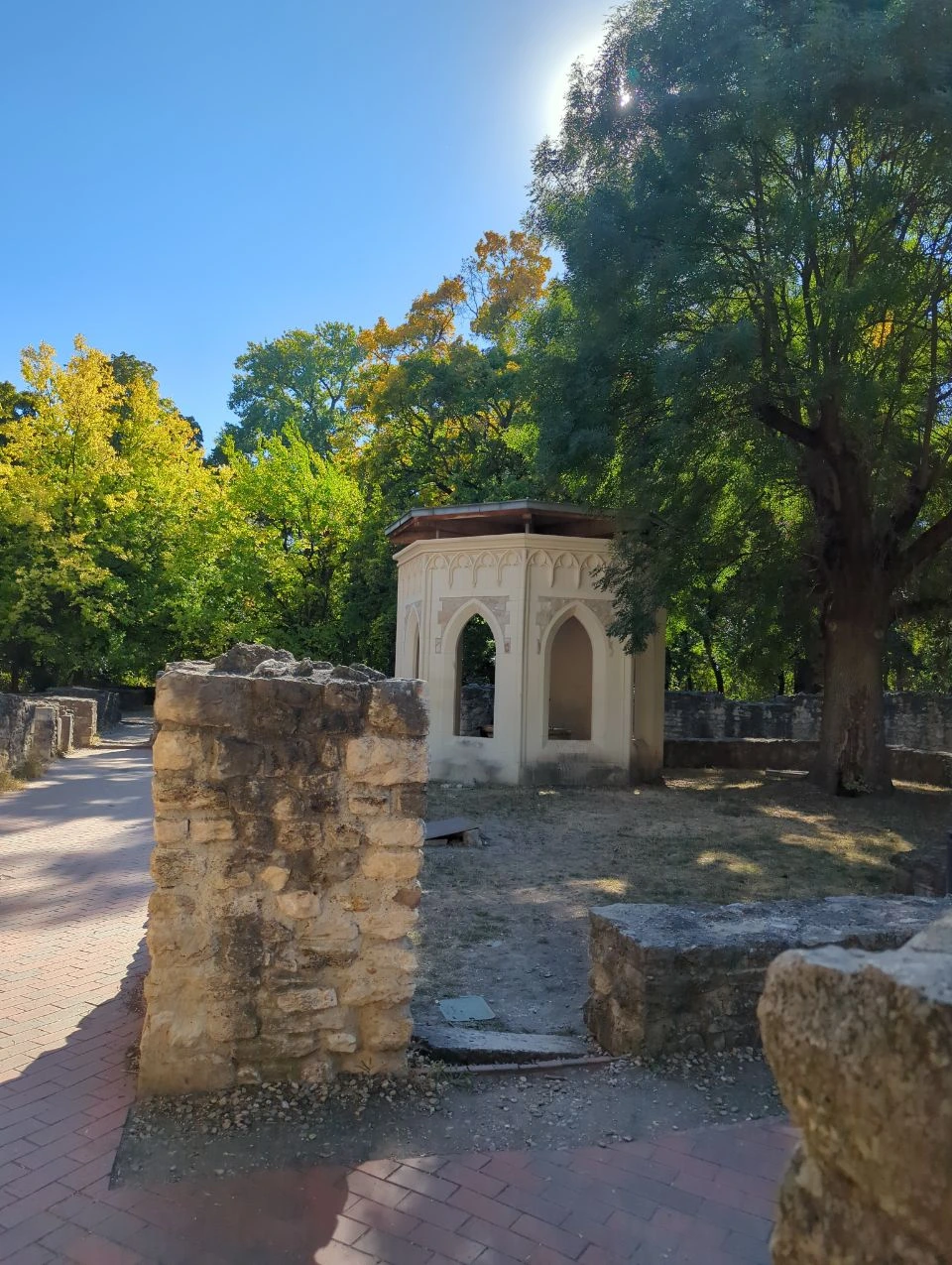
Flowers, rose beds and a softer pause
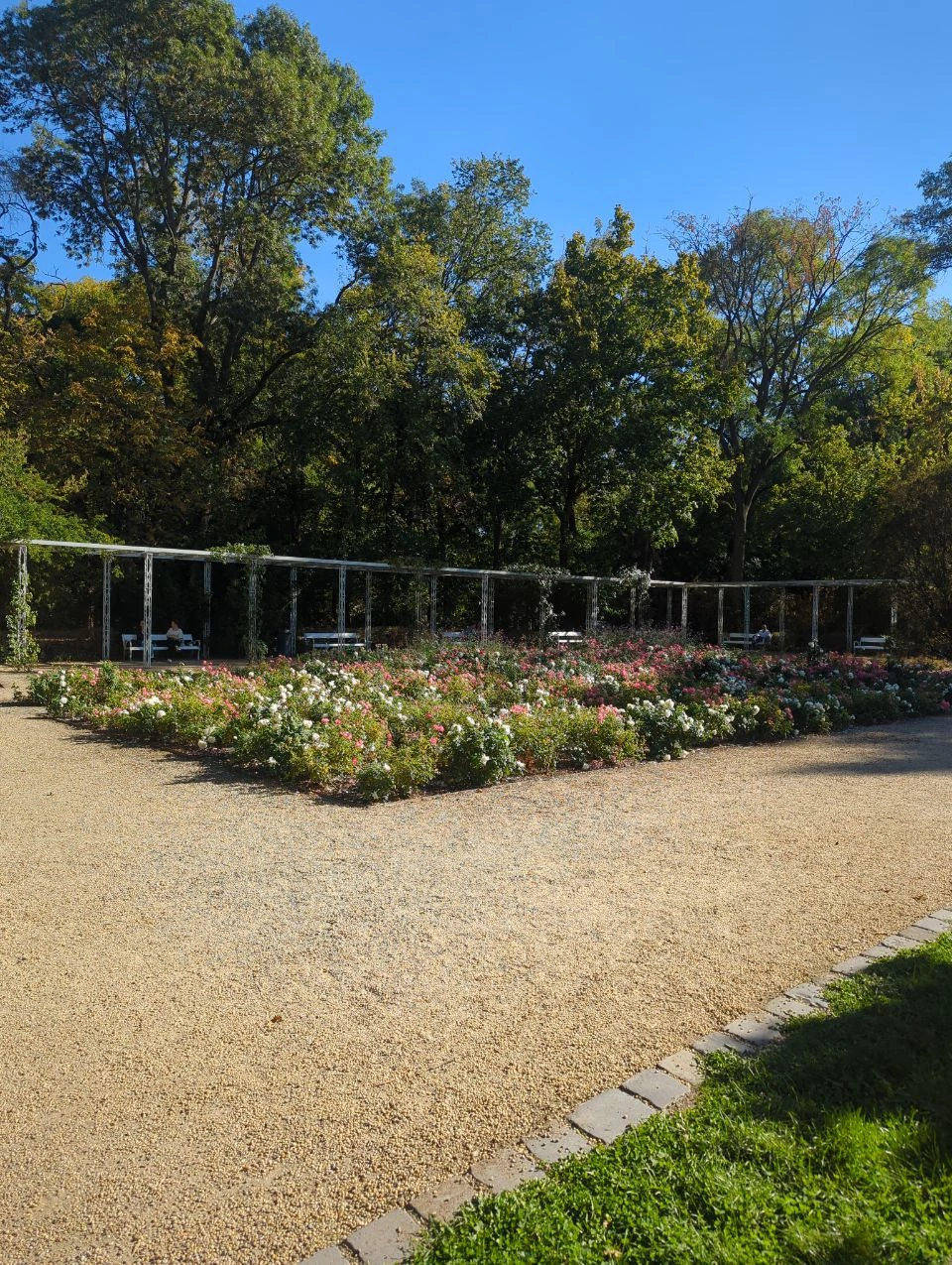
Nearby, the Rose Garden feels more enclosed. Our photograph has pink and white roses in front, with pergolas, benches and trees behind. It's a scene that suits a seated portrait or a quiet conversation, especially after the more upright architectural pictures at the tower. The benches are shared, and people were using them during our visit, so let the available space guide you.
You don't need to put flowers around every edge of the frame. A small patch of colour beside a hand or shoulder can be enough to establish the setting. At the open garden, try showing more of the curved path. By the rose beds, a closer picture can bring the flowers and the person into a gentler balance. Stay on the paths and photograph across the planting.
We saw flowers on 2 October, but that single visit can't tell you what will be blooming on your date. Colour, density and maintenance vary. The pergolas, benches and greenery are part of the appeal too. Those softer backgrounds are worth considering for a Budapest photoshoot, particularly if you like close portraits with colour and greenery.
The separate Franciscan church ruins
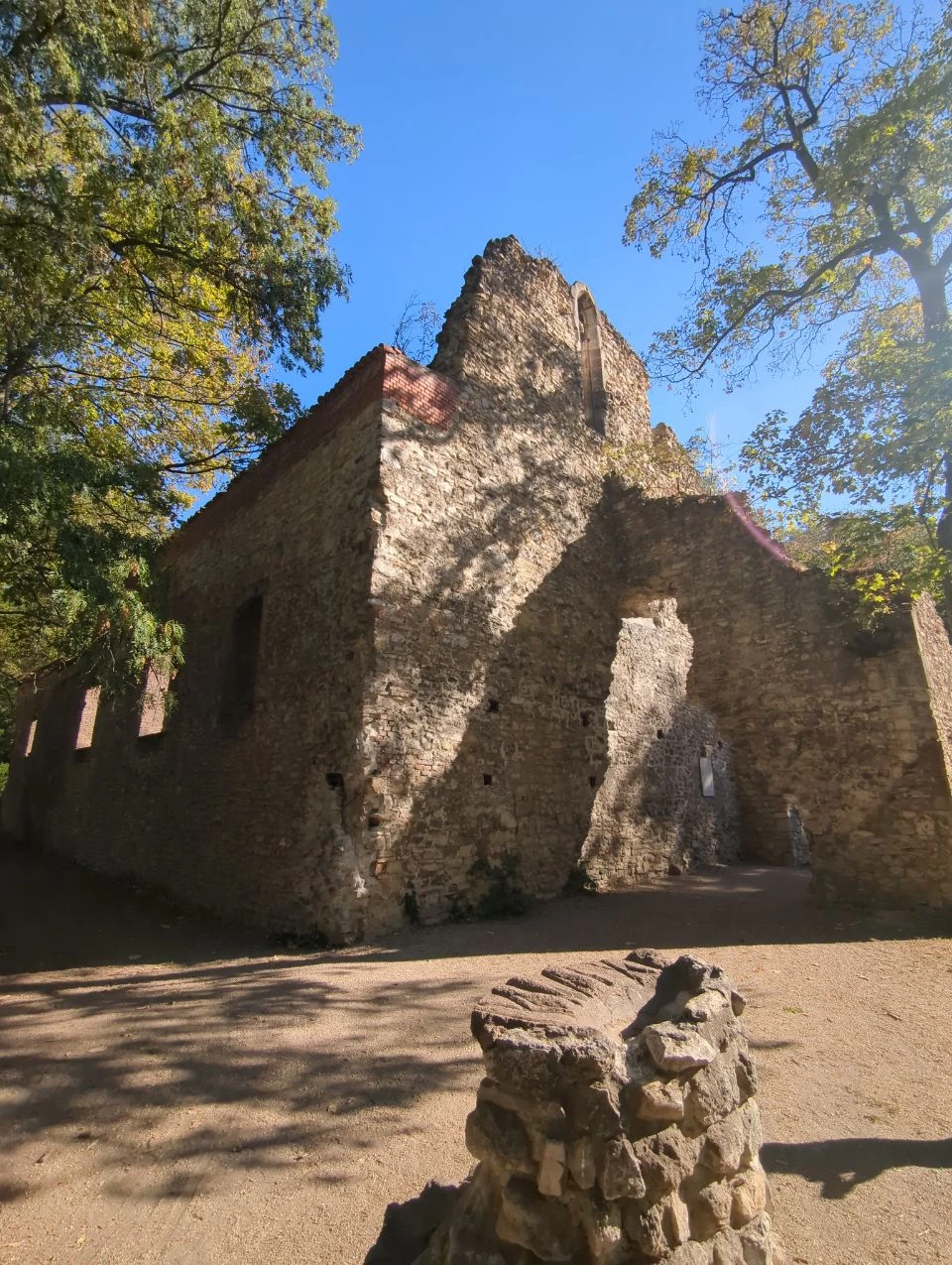
Our favourite overall angle was from the path near the small well-like feature at the front-left. From there, the front and a long side wall appear together, giving the photograph more shape than a straight-on view of one flat surface. Treat that as an angle to explore from the visitor space, rather than an exact point you must reach.
The arch offers a more intimate alternative. A person seen through an opening can become the centre of the photograph while the rough stone supplies a strong border. Leave some breathing room around their outline. If the bright ground beyond distracts from their face, change your position or make a wider architectural picture instead.
These walls make a satisfying final main stop on a longer walk. Look back once you've moved away: the tall remains against the trees can be more striking than the view from directly underneath. You can finish with that sense of scale, then continue towards your exit without needing another round of portraits.
Plan around the southern Musical Fountain renovation
When we reached the fountain on 2 October, fencing enclosed the basin and work was visible. There were no jets or a performance. For an October visit, plan your portraits around the gardens, pavilion, tower and ruins instead, and check the operator's latest information before a future trip.
You may still pass the fountain area on your way towards Margaret Bridge, subject to the arrangements around the works. If it's simply your exit route, there's no need to make it a compulsory photography stop. By this point, a longer walk has already offered plenty of variety.
Find light that suits your Margaret Island photos
Before settling into a portrait, look at the person's face rather than just the background. Dappled light can put a bright patch across one cheek and leave the eyes dark. Moving a step or two into more even shade is often enough. Make sure both people share similar light if you're photographing a couple; otherwise one can disappear into shadow.
On an overcast day, the gardens may give you more freedom to turn in different directions without finding the sun in someone's eyes. Stone and foliage can still bring texture when the sky is plain. Later light may change the atmosphere again, but tall trees can shade a chosen corner well before sunset. Keep the order flexible when a particular setting looks especially inviting.
Season changes the kind of picture you can make too. When flower colour is sparse, give more attention to the garden's curves, the pavilion's shape and the stone openings. If foliage is particularly striking, allow a wider frame to show it. You can keep the same loose route while changing which details lead the photographs, instead of trying to reproduce a bloom-filled image on a different date.
Leave time to enjoy the island
If you're visiting as a couple, choose one setting each before you arrive. You might prefer the rose beds while your partner likes the stone arch. That small decision gives both of you something to look forward to and takes away the feeling of working through someone else's list. You can leave the rest open to whatever catches your attention.
Before leaving a favourite stop, check a couple of pictures at full size. It's much easier to take another photograph while you're still beside the roses than to discover a closed eye once you've reached the southern ruins. Keep that check brief, then carry on enjoying the walk.
For children or anyone who tires quickly, keep a central or northern visit as a complete plan in its own right. Add another stop only if the group still wants to walk. A comfortable bench break, a drink and time to look around can be more valuable than extending the route to collect one last backdrop.
Arrange your arrival and comfortable walking route
BKK's current timetable lists bus 26 through Margitsziget between Göncz Árpád városközpont M and Nyugati pályaudvar M. Use the journey planner for your actual date, origin and chosen island stop. Check the final walk from that stop as well; “Margaret Island” is a large destination, not a precise meeting point beside a particular bench.
If you're meeting someone, agree a named landmark and a recognisable public approach. Share the route you'd like to cover and any walking limits in advance. The tower climb, Bodor steps and raised ruin viewpoint are separate choices from photographing those places from nearby paths.
For a wheelchair, buggy or anyone avoiding stairs, check your exact route: garden entrances, path surfaces and the distances between stops. Keep a shorter option ready, with time to adjust once you can see the conditions.
Make your island photographs yours
The Margaret Island couple photoshoot guide shows how to turn those settings into a relaxed session with just a few stops.
Margaret Island photo walk FAQs
Everything you need to know about our service
Most of these settings are outdoors. Trees and pergolas offer shade, but they aren't dependable rain shelter. Keep an indoor alternative or another time in mind if dry portraits are important to you, and allow extra care on wet paths and steps.
The operator lists 153 steps. Check its current visiting arrangements before adding the climb, and decide whether it suits everyone joining you. The exterior is a worthwhile photography stop on its own, so the rest of your island walk needn't depend on going up.
Choose something you can comfortably walk and sit in, with shoes suited to paths and the weather. A light extra layer can help when you move into shade or pause for pictures. Keep bags manageable if you're planning the longer route between gardens and ruins.
Yes, by allowing a separate stop around Margaret Bridge for a Danube or Parliament view. The gardens are strongest for greenery and close architectural detail. Leave time to change scenes and choose a suitable pedestrian position rather than expecting the skyline behind the roses.


How to Propose in London

Couple Photoshoots in London

Best Photography Spots in Lisbon: Choose the Look You Love

Our 12 Favourite Places to Propose on Holiday

What Does a Marriage Proposal Mean, and Why Does It Matter?

Why Do We Propose With a Ring? The Meaning Behind the Tradition
ENJOY $20 OFF
Your first photoshoot when you become an email subscriber.
Related Articles

How to Propose in London
Make the surprise feel like you.

Couple Photoshoots in London
Choose the London setting you love, and we’ll shape one relaxed route around it.

Best Photography Spots in Lisbon: Choose the Look You Love
Choose the Lisbon photo setting that suits you, from Alfama lanes and hilltop views to Bica, Belém, MAAT, the Tagus and yellow trams.