
October 6, 2026
Budapest Basilica and Opera photo walk: two landmarks, many moods
St Stephen’s Basilica appears at the end of a city street, then opens out above a broad square. At the Hungarian State Opera, the pleasure is closer: a carved face over an arch, the curve of a lamp, a column catching the light. Put the two together and you've got a Budapest photo walk with a lovely change of scale, from the grand building behind you to details you can stop and admire together.
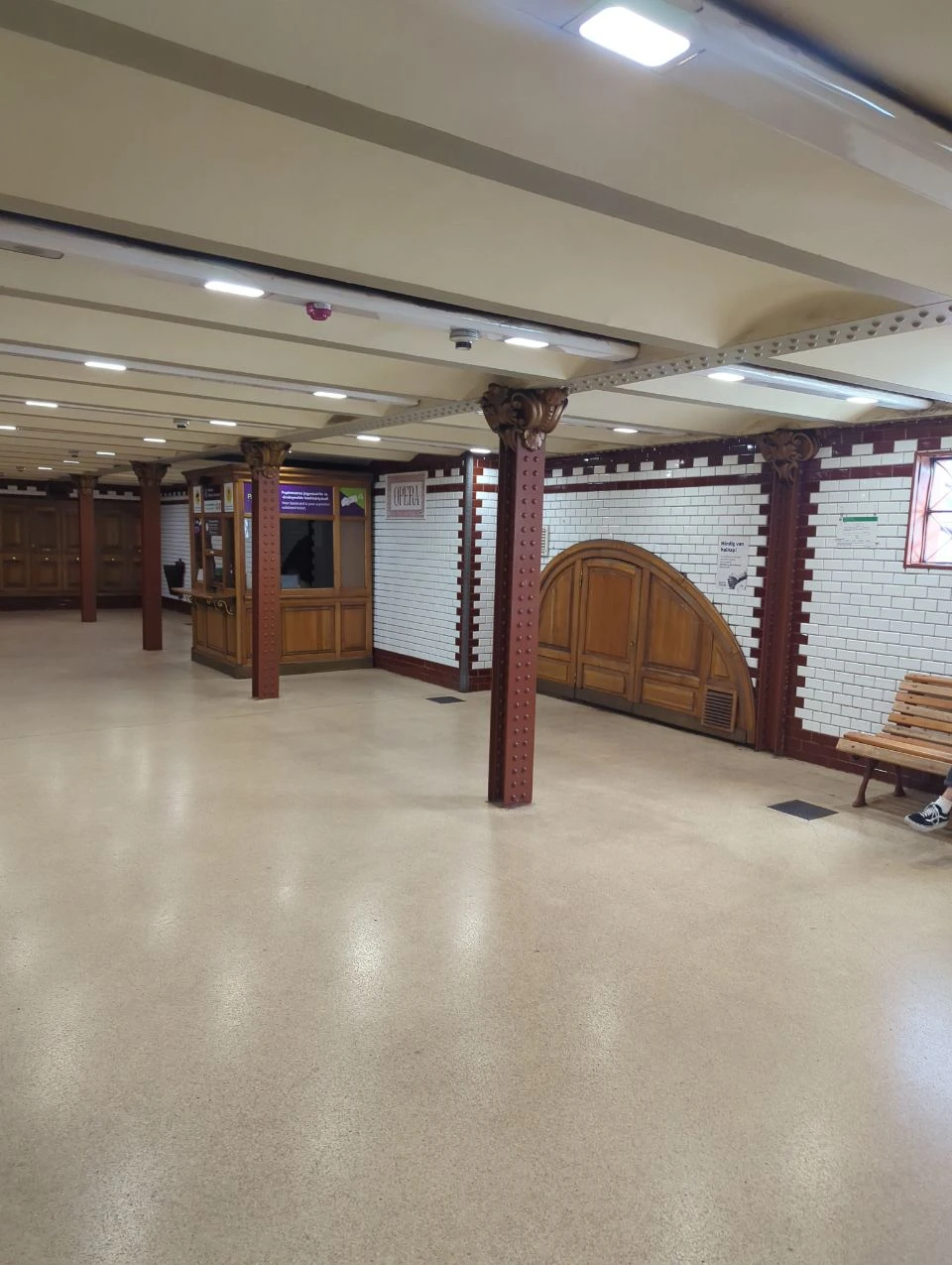
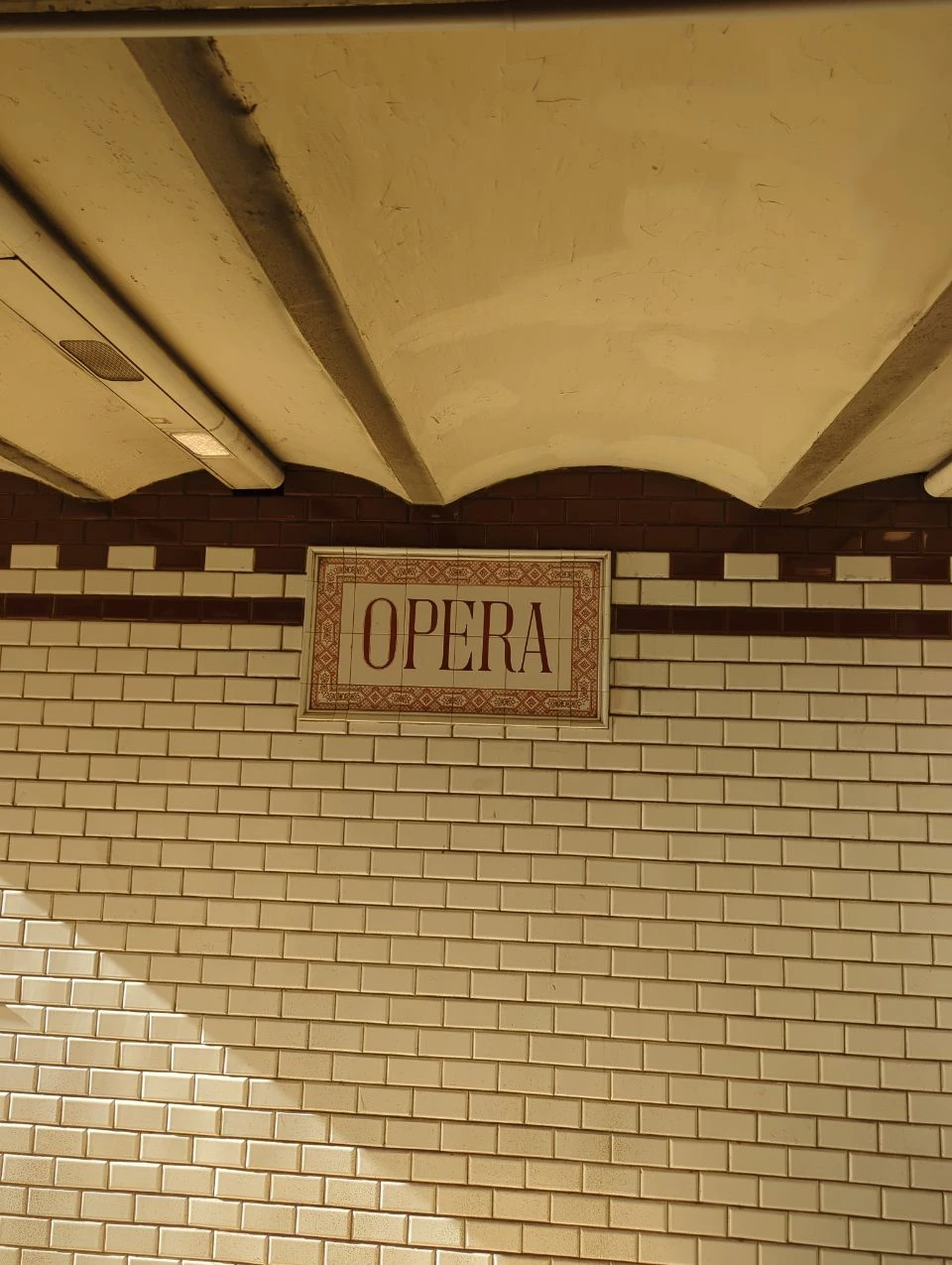
We photographed these settings on 30 September 2026. The Basilica square was bright and busy, a narrower street gave us a backlit view of the dome, and there were only a few people outside the Opera. The nearby M1 station added tiles and a ceramic name sign to the afternoon. Those scenes give you plenty of choice, whether you'd like a short portrait stop or time to wander between both landmarks.
Updated

Table of Contents
Choose the picture before you choose the stop
If your time is short, choose one Basilica setting and the Opera exterior. You'll still get two distinct moods: the church rising beyond the city around it, then arches and columns at closer range. Add another Basilica angle if you enjoy exploring, rather than treating three church views as something you must collect before moving on.
You can make that choice around the people in the pictures too. Someone who loves a wide city scene may prefer more space and architecture around them. Someone who wants a closer portrait may enjoy the quieter scale of a column or a narrow glimpse of the dome. Agree one favourite each if you're visiting as a couple, and leave the rest of the walk flexible.
The station is an optional detail for a journey that already uses M1. The outdoor scenes make a complete walk on their own. Decide how much time you want to spend looking, walking and taking photographs before adding an indoor tour or another stop.
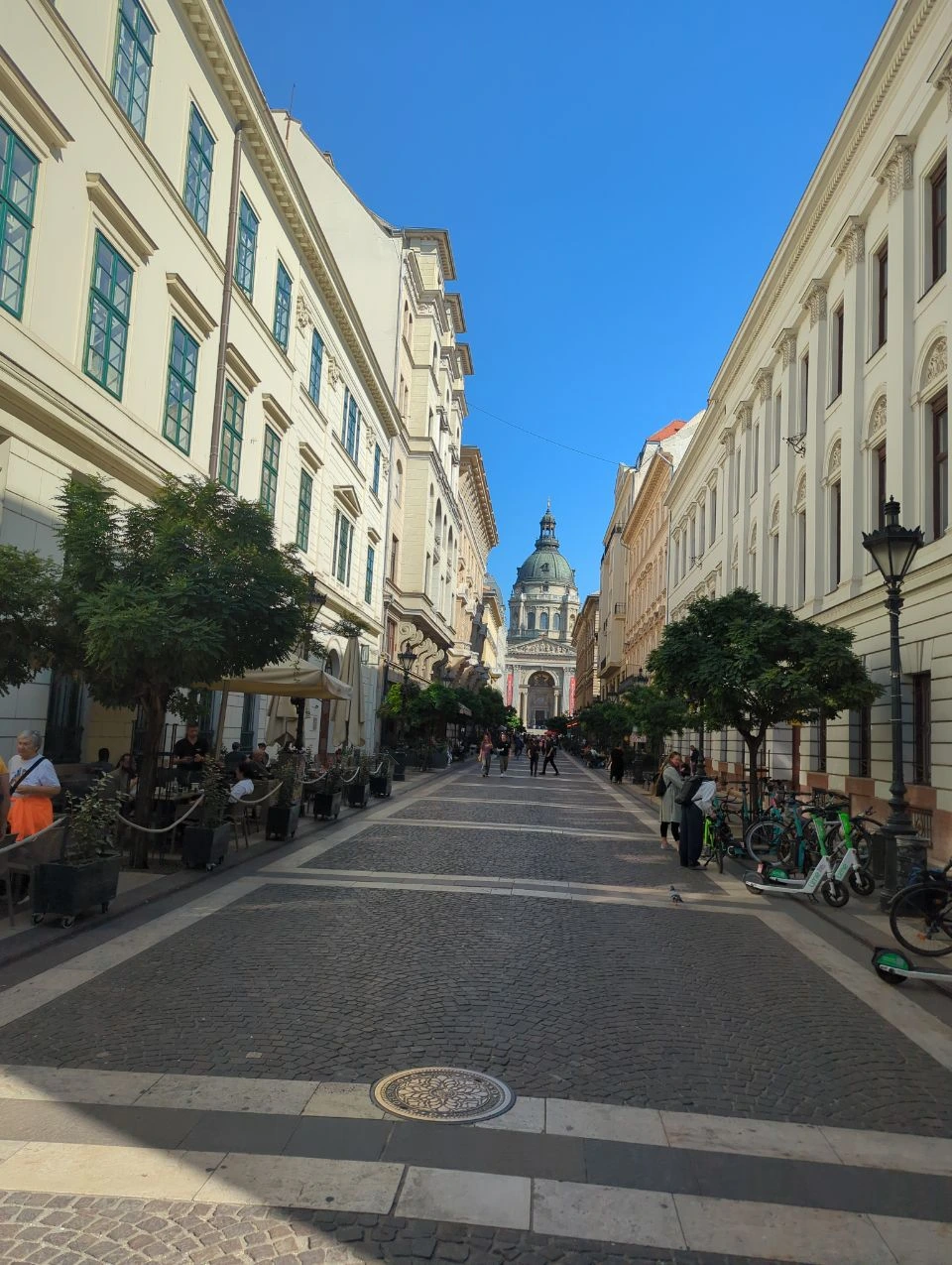
Let the street lead you towards St Stephen’s Basilica
A portrait can use those lines without being perfectly centred. Try placing someone slightly to one side, leaving a clear view towards the building behind them. If two people are walking together, a small gap between their shoulders may help keep their outlines distinct. The street can do much of the framing, so a relaxed movement often works better than an elaborate pose.
Look at how much of the church remains visible before settling into a picture. Standing very close to the camera can make a person cover the entire doorway or dome. A little more distance may let the building and the people share the frame. Then take a closer portrait too, with only a recognisable part of the Basilica behind them.
Choose a position with comfortable public space and let the street keep working around you. Café seating, bicycles, delivery vehicles and pedestrians can change which angle is useful. Wait for a natural gap or move along a little. The pleasure of this setting is its lived-in character, and a few passing people can be part of that memory.
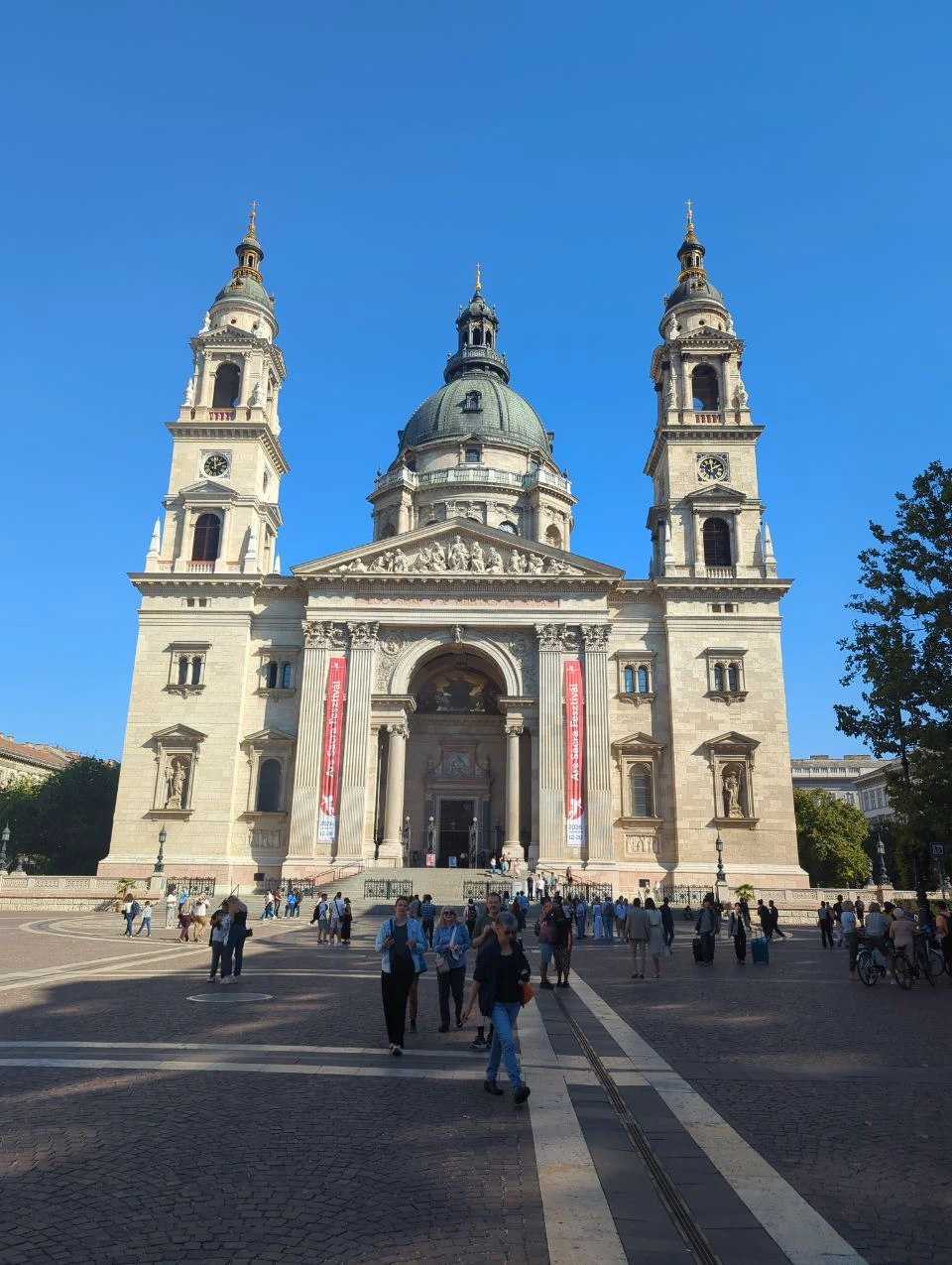
Use the square for scale, steps and a full façade
Begin farther back if you want the whole front in the photograph. Check the top of the frame so a tower hasn't been cut off, then look at how small the people have become. You may prefer to keep only part of the building and make the portrait easier to read. A full façade picture and a closer portrait don't need to be the same photograph.
Nearer the entrance, the steps and doorways change the scale again. Use an open area where you can pause without getting in the way of people entering the church. A person standing at a slight angle can bring some movement to the formal stone behind them. The symmetry is there when you want it, but the building is just as interesting from a little off-centre.
The square was lively in strong sunlight when we visited. Waiting for it to empty would have meant missing the atmosphere we came to enjoy. For a cleaner frame, make the people in your portrait more prominent and include less of the busy ground. For a wider city picture, let some of the movement remain. Both can be lovely records of the same visit.
Find a side-street view with the dome in the frame
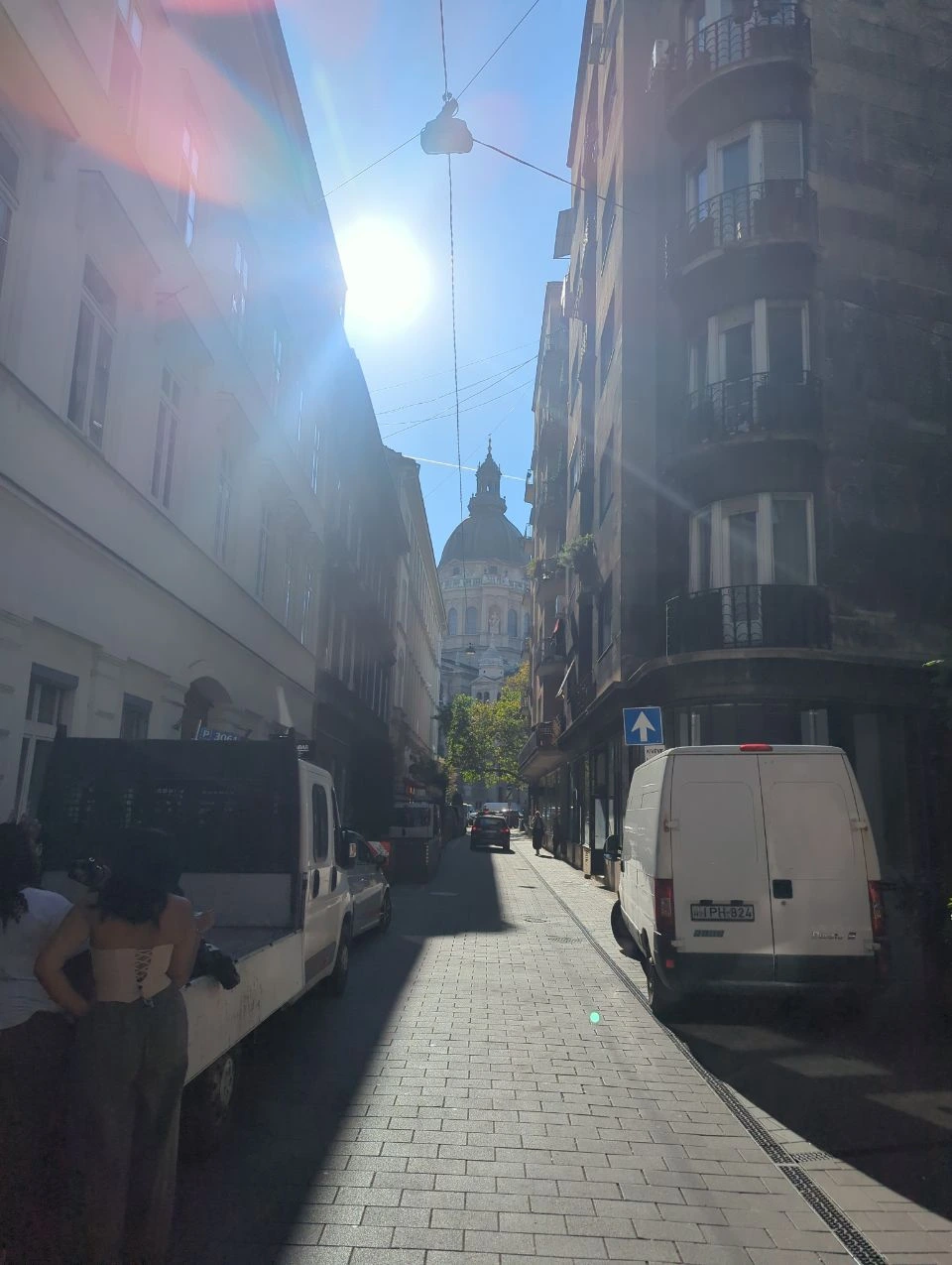
A partial landmark can work especially well with a closer portrait. Leave enough of the dome visible to tell you where you are, then let the surrounding walls form the edges of the picture. With two people, try keeping them a little lower in the frame so the church still has space above them. You can suggest its height without showing every part of it.
We found fewer people here than in the front square, although another visit may feel different. If a vehicle or delivery makes your chosen view awkward, walk on and look for another opening towards the church. There are plenty of reasons to enjoy a side street without insisting on one exact camera position.
When the sun is behind the dome, check that faces are still clear. A little brightness around the building can add atmosphere; flare that hides the people may be less useful. Change your angle slightly and look again. The softer, imperfect edges are part of this scene's charm.
Two landmarks with an architectural connection
Ybl also designed the Neo-Renaissance Opera House, which opened in 1884, according to the Opera's construction history. That makes a useful thread to notice as you walk between them: two major Budapest landmarks with a shared architectural name, serving very different purposes.
You don't need to turn the outing into a history lesson to enjoy that connection. Look at the balance of openings, the stone decoration and the way each building meets the space in front of it. The Basilica gives you a large square and a rising dome; the Opera brings your attention towards its entrance and layers of detail. Let those differences shape the photographs.
Move from open square to the Opera’s carved stone
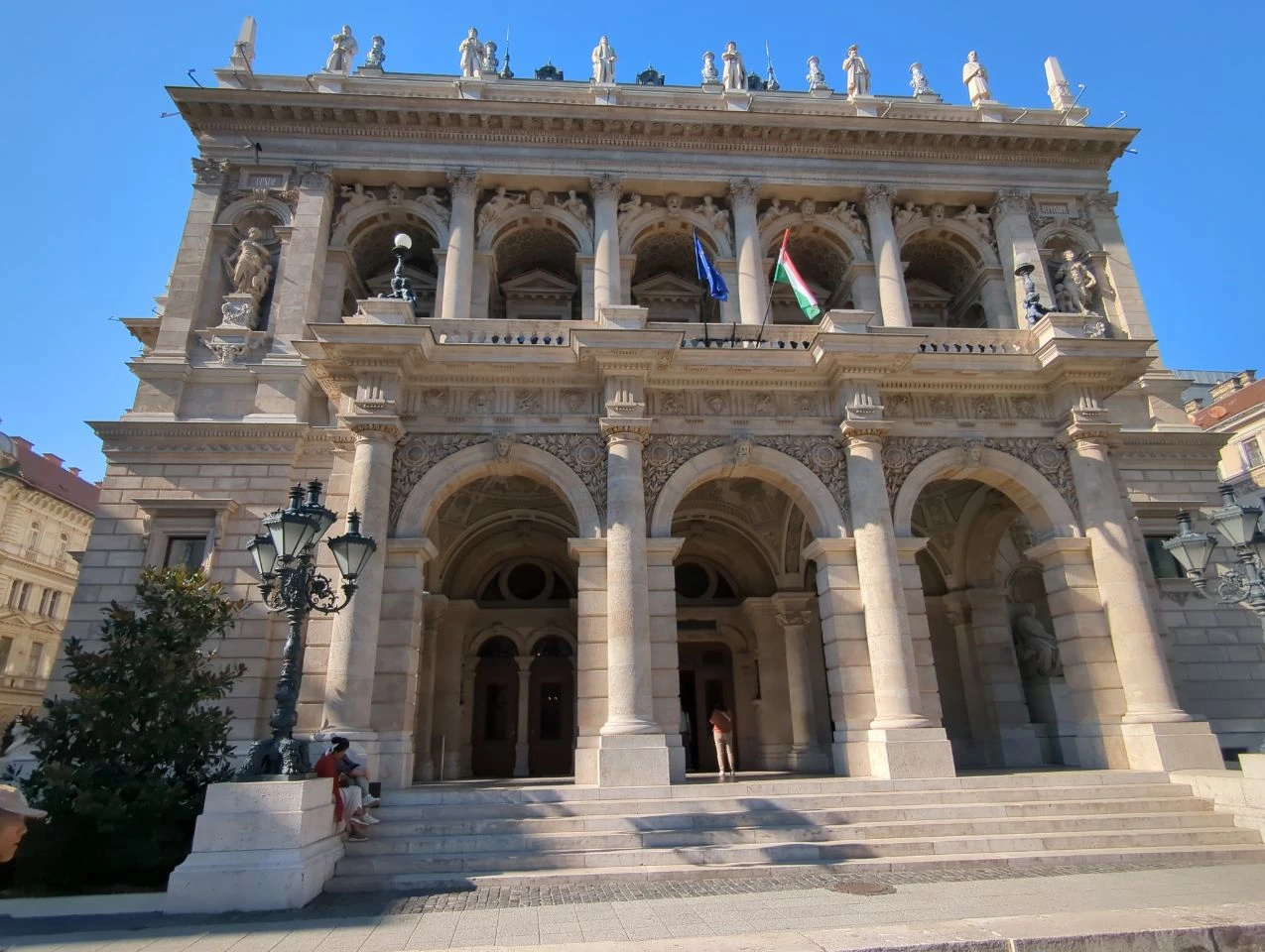
The Opera's façade guide identifies Liszt and Erkel in niches beside the main entrance, with more composers represented above. It also draws attention to the ornate lights and colourful ceramic decoration. Knowing that gives you a reason to look up and around, instead of seeing the building only as a background behind two people.
The same guide describes two marble sphinxes at the side entrances, one with a laurel wreath and the other with a theatrical mask. Look for those small clues to the building’s purpose as you explore its public approaches. A detail photograph can become more memorable when you know what caught your eye, and it adds something different beside a picture of the whole façade.
For a close portrait, place a column towards one edge of the frame and leave some darker space behind the person. The difference between lit stone and shadow can bring depth to the picture. Check that a lamp or carved shape doesn't sit awkwardly behind their head; a small move sideways can make the composition feel much calmer.
For a wider photograph, let several arches remain visible so their repeated shapes create a rhythm. You might stand together looking towards a detail, or take a few steps along the public pavement. Keep the entrance and steps available to people using the venue. The scene works best when you can enjoy its detail without turning the arrival area into a fixed set.
There were few people outside during our visit, but a tour group or performance arrival can change that quickly. If the centre is busy, look towards another part of the façade or give yourself a short pause. You don't need to spend an hour here to come away with a varied set of photographs.
Take an optional look at Opera station’s tiles
Notice the contrast between a wider view of the hall and a picture of one patterned surface. The first gives you a sense of the place; the second can hold the name and colour in a much simpler frame. You can enjoy both as part of looking around while travelling, with passenger movement taking priority.
For a planned station photo session, use BKV's photography and filming application guidance. It asks applicants to describe the intended purpose and circumstances to its press office, and work mustn't disrupt passenger or vehicle operations. Follow staff instructions and normal travel rules too. A valid transport ticket doesn't settle the arrangements for a planned shoot.
If the station doesn't fit comfortably into your journey, leave it out. The outdoor route already gives you a strong change of scene, and there is no need to build the afternoon around an underground portrait.
Choose light that suits the people in your photographs
At each setting, look at faces as well as the architecture. If someone is squinting, turn them slightly or try a patch of more even light. With a couple, make sure one person hasn't ended up in deep shade while the other is brightly lit. Moving a step or two can help without losing the background you liked.
An overcast day can give you more freedom to turn towards different parts of a façade. On a bright day, shade may be useful for closer pictures while the sunlit building remains visible behind. In the narrower streets, tall buildings can change the light quite sharply over a short distance, so look at what's happening when you arrive.
A later visit may bring a softer mood, but choose it around your date and the actual conditions. Leave time to explore before the light changes, and remember that the easiest place for a wide building photograph may differ from the most comfortable place for faces. You can make those two pictures at different moments in the walk.
Give the city-centre walk time to unfold
The route can be as simple as the approach street, the front square and the Opera façade. If the side-street view appeals, make it a small detour around the Basilica before continuing. Let the order respond to an inviting patch of light or a busy entrance. You can reverse the walk if the Opera is a more convenient starting point for your day.
Plan a pause for enjoying the city as well as taking pictures. Nearby cafés and restaurants were part of the atmosphere around the Basilica on our visit. Sitting down for a drink can make the outing feel less hurried, particularly if one of you enjoys photography more than the other. There's no reward for covering every frame without having time to notice the place.
For a walk that leaves room for coffee and conversation, these Budapest photoshoot date ideas can help shape the rest of the outing.
Keep interior visits separate from the outdoor route
From the terrace, the city becomes the view below you. That can be a lovely addition, but it changes the purpose of the stop: you're looking out from the Basilica instead of placing it behind you. Allow time for the visit and its access arrangements, especially if the group has different interests or walking needs.
The Opera's guided tour is another separate choice. Its current English tour lasts about an hour. Rehearsals can make the auditorium unavailable and change the route, while tours don't take place during performances. Book for the building visit itself rather than assuming one particular room will be available for your photograph.
The tour permits non-commercial photography without flash or tripods. Those conditions don't automatically cover a professional portrait session, so discuss that directly with the venue if an interior setting matters. You can enjoy the outside of both buildings without making either indoor visit a requirement for your photo walk.
Plan a comfortable arrival and meeting point
The Opera's transport guidance lists Opera on metro line M1. Use Budapest's current journey planner for your arrival and departure, including any access needs. The station can be a convenient way to join or leave the area, but you can keep the whole photography route above ground if that suits you better.
A precise meeting point is helpful for a Budapest photoshoot. Agree a recognisable public position at your first landmark, rather than simply “near the Basilica”, and share any limits on walking or stairs. Keep bags manageable and choose comfortable shoes for the paving. If someone needs a step-free route, check the particular crossings, entrances and transport connection before committing to optional steps or indoor visits.
Make the walk feel like your own Budapest
Basilica and Opera photo FAQs
Everything you need to know about our service
Choose clothes you can walk and sit comfortably in. Simple colours can stand out against detailed stonework without needing to match the buildings. If a different pair of shoes matters for portraits, carry it and change at a suitable place between stops.
Keep the plan flexible. The outdoor walk doesn't include guaranteed shelter or indoor access, and a tour has its own booking conditions. A shorter outing, a different time or another agreed setting may be more comfortable than trying to complete every street photograph in persistent rain.
Yes. Start with your phone's normal lens instead of zooming heavily towards the distant Basilica. In the backlit dome street, tap on a face to adjust focus and exposure, then check the result: a bright sky can leave people much darker than you intended. Try a slightly different position if the balance isn't working.
Arriving on M1 makes the Opera a practical starting point. If you've separately booked an interior visit at either landmark, work backwards from its entry time and leave a buffer for finding the entrance. Keep the photography stops flexible so you can put the camera away without rushing to your booking.


How to Propose in London

Couple Photoshoots in London

Best Photography Spots in Lisbon: Choose the Look You Love

Our 12 Favourite Places to Propose on Holiday

What Does a Marriage Proposal Mean, and Why Does It Matter?

Why Do We Propose With a Ring? The Meaning Behind the Tradition
ENJOY $20 OFF
Your first photoshoot when you become an email subscriber.
Related Articles

How to Propose in London
Make the surprise feel like you.

Couple Photoshoots in London
Choose the London setting you love, and we’ll shape one relaxed route around it.

Best Photography Spots in Lisbon: Choose the Look You Love
Choose the Lisbon photo setting that suits you, from Alfama lanes and hilltop views to Bica, Belém, MAAT, the Tagus and yellow trams.