
October 8, 2026
How to Feel Less Watched During a Rome Couple Photoshoot
You love the idea of having photographs together in Rome. You are rather less keen on standing in the middle of a piazza while strangers watch you hold a kiss for what feels like half the afternoon.
That is completely understandable. It does not mean you are bad at photographs, and you certainly do not need to discover dazzling new confidence before booking a session.
A gentler start might look like this: you walk towards a softly lit doorway, touch shoulders for the final two steps and hear that the photograph is finished almost as soon as you arrive. The camera comes down, you carry on walking and nobody asks you to freeze an expression while Rome bustles around you.
The city does not need to be empty for that approach to work. People may still be nearby, and somebody might notice the photoshoot. What can change is how long you spend posing openly, where the camera points, how close it comes and how quickly the plan changes when a composition no longer feels comfortable.
Updated

Table of Contents
What feeling less watched can realistically mean in Rome
Perhaps you do not mind a few people appearing in the background, but hate holding a pose while they pass. Maybe the difficult bit is having a camera close to your face, being asked to kiss in public, hearing instructions called across a square or wondering how long you are supposed to remain perfectly still.
Untangling those details is useful because comfort looks different for everyone. One person may happily walk through a lively piazza but avoid looking directly into the lens. Another may prefer one clearly explained stationary pose to several walking sequences. You might enjoy a wide city view with distant figures in it, yet feel awkward when a passer-by stops right beside you.
It is also worth remembering that a peaceful-looking photograph does not prove the setting was peaceful. Framing shows one carefully selected slice of a much larger public place. There might be a tour group beside the photographer, pedestrians behind a column or a queue just beyond the edge of the picture.
The reverse is true too. A lesser-known street is not automatically more comfortable. If people and traffic approach from several directions, there is nowhere sensible to pause and the photographer is still deciding what to do, it can feel more exposed than a famous landmark with a well-prepared side angle.
The realistic goal is not to manufacture privacy. It is to work out what would make the experience feel lighter for you. That might mean fewer recognisable people in the background, less time holding a pose, more distance from the camera, gentler affection or a clear agreement that any setup can end immediately.
No photographer can promise that Rome will be empty, that nobody will look or that every nervous feeling will vanish. They can choose camera positions, movement, framing and route transitions that ask less of you at any one time. That thoughtful bit of planning can make a surprisingly big difference.
Tell your photographer what actually makes you uncomfortable
Try completing this thought: “I am usually fine until…” Perhaps it is until the camera comes close, somebody asks you to kiss, strangers stop to watch, instructions become loud or a pose carries on longer than expected. Each answer points towards a different solution.
If one of you feels more camera-shy, mention that before the session. You do not need matching confidence levels. The more hesitant person might prefer to begin beside their partner, avoid direct eye contact with the lens at first or hear the full prompt before the camera is raised.
Be honest about public affection too. Holding hands, linking arms, leaning together or walking shoulder to shoulder can show plenty of connection without turning the session into a public performance. Kissing, dancing and dramatic dips are optional, not compulsory items on some secret couple-photoshoot checklist.
Camera distance is another useful thing to test. Some people relax when the photographer steps farther away. Others dislike not being able to hear the instructions or tell when a sequence has finished. Neither response is wrong, so you can try both and decide what feels better in practice.
The way instructions are given matters as well. A quiet cue nearby may suit you much better than enthusiastic direction across a piazza. Clear endpoints help too. “Walk to that doorway once” or “Stay here for five seconds” feels wonderfully manageable because you know exactly when the moment ends.
Agree on a simple stop signal before you begin. “This feels too exposed” or “Can we change this?” is enough. You should not have to defend the feeling or complete the pose first. The photographer can lower the camera, suggest another option and continue when you are ready.
That conversation cannot guarantee instant confidence on the day, but it makes your boundaries part of the plan from the beginning. They should never feel like an inconvenient surprise halfway through the route.
Begin somewhere contained with one simple action
One documented 2023 session near Piazza di Spagna began at a lit doorway before moving into lateral compositions around the Spanish Steps. The useful idea is the progression, not the crowd conditions reported on that particular morning. Today’s pedestrian flow, works and access arrangements could be completely different.
Starting at the doorway gave the couple time to find a rhythm before entering a much broader architectural scene. That principle works in all sorts of places. A smaller opening composition lets you discover how the photographer communicates, how quickly each frame is made and whether you prefer movement or a short stationary portrait.
Movement often helps because it gives you something specific to do. It does not magically make every photograph natural, and it will not suit everyone, but it replaces an open-ended pose with an action that has a clear beginning and finish.
A good prompt might be: walk together to the edge of the doorway, look towards each other for the final two steps and stop there. The photographer should already have checked the light and background. You complete the action once, perhaps twice if you are genuinely happy to, instead of pacing along the same pavement while the composition is still being invented.
There is no need to perform elaborate laughter or gaze adoringly at each other on command. You can chat about breakfast, squeeze hands or simply look ahead. A clean walking profile can be every bit as lovely.
The photographer might then suggest one quick still frame in the same contained space. You stand together, hear one clear adjustment and move on once the image is made. It is a gentle step from movement to stillness, without suddenly planting you in an enormous open foreground.
Small practical details can keep this easy. Shoes that catch on cobbles, a bag with nowhere to go or an outfit needing constant adjustment can turn a tiny prompt into a production. Decide what you will carry and make sure your footwear can handle the planned surfaces.
The point is not to impose the same opening routine on every couple. It is simply to make the first request clear, brief and easy to finish before uncertainty has a chance to build.
For more ideas that stay small and easy to finish, explore these natural couple-photo prompts for Rome.
Use camera direction and Roman architecture to shape the frame
Around the Colosseum, for example, a photographer can build the image around arches, stone geometry or a raised edge. You might walk along a paving line or pause shoulder to shoulder while the structure provides the drama. The landmark remains instantly recognisable, but you are not being asked to compete with it through an elaborate pose.
Camera direction can also change what you notice during the photograph. If the photographer works across the main pedestrian flow rather than straight along it, you may be looking at your partner, an architectural detail or the building itself instead of watching people approach. Other visitors might remain beside or behind the photographer. They have not disappeared, but they may occupy much less of your attention.
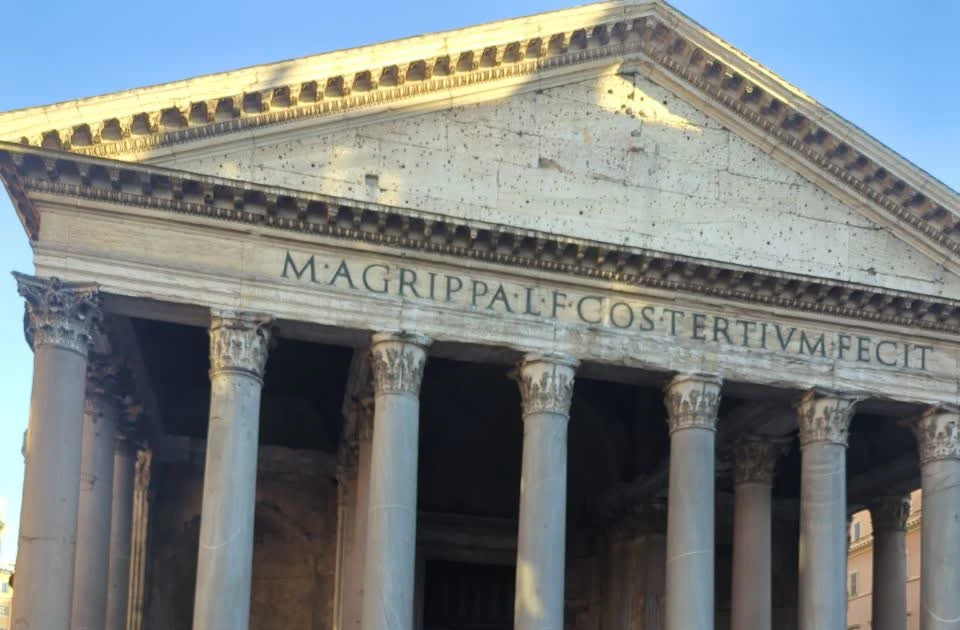
At the Pantheon, the courtyard fountain can provide a foreground while the camera faces towards the building. It helps organise the scene and may make passing pedestrians less dominant in the composition. It is an alternative view of a familiar place, not a promise of an empty square.
Fountains, foliage, balustrades and stretches of masonry can all create useful visual separation when they genuinely serve the picture. The photographer still needs to check that the angle is flattering, safe and considerate of everybody else using the space.
This is why a location’s name tells you only so much. A celebrated place with workable light, several camera directions and enough room for one quick action may feel surprisingly easy. A quieter-sounding street with one exposed sightline may not.
The better question is: what can the photographer do if the first angle is busy? Roman architecture can redirect sightlines and visual emphasis beautifully. It cannot create privacy. If a column or fountain makes bystanders less prominent, brilliant. If you still feel uncomfortable, that is useful information and a good reason to change the plan.
Let the photographer test distance before moving closer
A wider frame may actually include more people, not fewer. Its advantage is sometimes about emphasis rather than numbers. Rome occupies more of the photograph, and you are not presented as the only event in it. That can feel much gentler if intense camera attention is what bothers you.
The photographer might begin farther back while you walk a short distance or look across a view together. There is no need to announce every shutter press. You still know photographs are being taken, but the camera is not immediately close to your face.
Distance should always be tested, not treated as a universal solution. If you cannot hear the prompt, have no idea where to stop or feel stranded in an open area, the photographer is too far away for that moment. Shouting directions is hardly helpful when the aim is to attract less attention.
A better rhythm may be for the photographer to explain the action nearby, step back just far enough to create the frame and then return. A simple hand signal can show that the sequence is finished.
Some couples prefer the opposite arrangement and feel happiest when the photographer stays close enough for an ordinary conversation. That is completely valid. A nearby camera is not automatically intrusive, just as a distant one is not automatically discreet.
Closer portraits can come later, once you have found a rhythm and decided you want them. They should still be purposeful. The photographer explains what the frame needs, makes it and lowers the camera, rather than turning proximity into a prolonged examination of your expression.
Use level changes and route transitions as natural resets
A documented 2023 couple session used an elevated Colosseum view before moving closer for a second composition. On that particular visit, the higher position helped the photographer work outside the principal crowd flow. It is a useful illustration of route design, not a reliable recipe for finding fewer people today.
A 2015 engagement session provides another dated example. The photographer moved from Ponte Sant’Angelo towards the lower Tiber and reported fewer people nearby at that moment. The level change affected the background and the couple’s relationship to bridge traffic. It does not prove that the riverbank is now consistently quiet, open or suitable for a session.
Public terraces, parks, streets, viewpoints and riverbanks are still public. Visitors can arrive, access points can close and useful sightlines can be blocked. Current conditions need checking rather than assuming an old gallery still reflects the route.
There are physical trade-offs too. Elevated viewpoints and lower-river paths can involve stairs, slopes, uneven cobbles or longer walks than the photographs suggest. Formal shoes have a habit of making a romantic route feel rather less romantic after ten minutes. Tell the photographer about mobility needs, fatigue concerns or restrictive clothing before the route is chosen.
The walks between major settings can also become welcome resets. The camera can stay lowered while you chat, drink some water and enjoy the city. Near the next stop, the photographer might make one quick image beside a colourful façade or along a shaded lane, then put the camera away again.
Those connecting photographs can give the final gallery a lovely sense of movement through Rome. More importantly, they prevent the experience from becoming a repetitive cycle of arriving, posing in an exposed foreground and rushing towards the next landmark.
Not every transfer needs to produce a photograph. Sometimes the best part of the route is simply having a few minutes to breathe, fix a sleeve and be yourselves.
Decide in advance what happens when an angle feels too busy
It helps to agree that the photographer will make a quick decision instead of waiting indefinitely for the original idea to work. They might turn the camera in another direction, move you a few metres towards a prepared architectural edge or replace a held pose with one short walking sequence. If the route and your mobility allow it, a change of level could open a different sightline. If none of those options feels comfortable, you leave the image and continue.
That adjustment should happen briskly. Reframing means choosing an alternative the photographer has already considered, not experimenting while you remain posed in the open. They should understand the intended picture before asking you to step into its foreground.
Sometimes the background is still workable but the setup needs shortening. Five purposeful steps, one glance towards the architecture or a brief pause together may be all that is required. Once the frame is made, the camera comes down.
Moving on can sound as simple as, “We have it. Let’s go.” It may also mean accepting that the photograph is no longer worth taking. Skipping an image is a successful decision when the setup clashes with the comfort boundaries you discussed.
A short wait can make sense if a group is clearly passing through and you are happy to stand aside. It should be a conscious choice, not the automatic strategy. You do not owe one famous background an unlimited supply of patience.
Rome offers countless possible frames. Protecting your energy for the rest of the session is far more valuable than wrestling with one stubborn angle.
Keep timing, access and transfers flexible
Timing is useful, but it is only one part of the plan. Camera direction, workable light and enough room for a short prompt may matter more than arriving at a landmark at a supposedly perfect hour. Older session reports can inspire ideas, but they cannot predict today’s crowds.
Access needs its own check. Security arrangements, managed routes, restoration work and temporary closures can change where people may stand or which entrance is available. Official site operators or the relevant authorities should be consulted close to the session, particularly when archaeological grounds, paid entry, tripods or substantial professional equipment are involved.
Transfers deserve the same care. A journey described as quick in an old photographer’s report may take much longer after road changes, traffic restrictions or new pedestrian measures. ATAC is the appropriate official source for current public transport information, but the route should not depend on an unverified fixed journey time.
A little breathing room between locations makes everything nicer. It gives you time to walk comfortably, pause when needed and absorb a small access change without the whole session beginning to feel like a race. Flexibility works best when it is built into the plan before anything goes sideways.
Plan a Rome couple photoshoot around your comfort
Rome may be lively, public and unpredictable, but that does not mean your session has to revolve around lengthy poses. Clear prompts, tested camera distance, purposeful movement and quick changes of composition can keep the experience feeling much lighter.
Explore couple photographers in Rome and tell them what would help you feel comfortable, whether that is quieter direction, less public affection, shorter setups or more space from the camera. Ask how they adapt a route when a planned frame no longer works.
The best plan is not necessarily the one with the longest landmark list. It is the one that leaves enough room for Rome to be Rome and for the two of you to be yourselves.
FAQs about feeling less watched during a Rome couple photoshoot
An early session may improve the chance of cleaner angles, but it changes probability rather than creating certainty. Crowd levels vary with the date, weather, events, works and temporary controls. Ask what the photographer would change if the first composition is busy instead of relying on timing as the only solution.
Do not assume extensive background removal is included. Complex editing may be unavailable, limited or charged separately, so confirm the policy before booking if this matters to you. Thoughtful framing can reduce visible bystanders, but people may still be nearby even when the finished photograph looks beautifully uncluttered.
Say so before the session, and repeat it on the day if needed. You can hold hands, walk, lean together or choose another interaction that feels natural to you. You may also decline any prompt. A couple photograph does not need a kiss or a dramatic pose to show connection.
No. They are public places, and conditions can change from one visit to the next. They may offer different sightlines, greenery, a useful level change or more room for a particular composition, but none should be presented as reliably quiet. Current access, walking distances, stairs and surfaces should all be checked.
Ask the photographer to change direction, move a few metres, shorten the setup, use one brief action or try another level where access and mobility allow. If the alternative still feels uncomfortable, leave the image and continue. Adapting the plan is part of a well-designed public photoshoot, not a sign that it has failed.


Our Rome Shoots:
Book your Rome couple Photographer!
Start Booking
Couple Photos in Rome at Midday: Shade-First Routes That Still Look Like Rome

Cloudy Rome Couple Photos: How to Use Soft Light Across the City

How to Choose a Roman Forum Viewpoint for Your Couple Photos

Janiculum Couple Photoshoot: Dome Views, Green Walks and the Fontanone
Pincio Terrace or Piazza del Popolo First? A Couple’s Route from Square to Skyline

Villa Borghese for Couples: Lake First or Skyline First?
ENJOY $20 OFF
Your first photoshoot when you become an email subscriber.
Related Articles

Couple Photos in Rome at Midday: Shade-First Routes That Still Look Like Rome
Rome at midday is bright, busy and gloriously full of life. Stone piazzas glow, shadows sharpen and the city carries on around you at full volume. That does not make every landmark unusable. With a clever route built around real shade, brief hero frames and comfortable transitions, you can enjoy the experience and come home with photographs that feel unmistakably Roman.

Cloudy Rome Couple Photos: How to Use Soft Light Across the City
You pictured Rome in warm evening light: honey-coloured stone, long shadows and a streak of colour behind the skyline. Then the forecast filled with little grey clouds. When you only have a few days in Rome, that can feel like a setback. In practice, it simply changes how your photographer uses the city. Thin cloud, white overcast and heavy storm cover all behave differently. The question is not whether Rome will still look beautiful, but where its stone, streets and shadows will come alive beneath the sky you have.

How to Choose a Roman Forum Viewpoint for Your Couple Photos
Stand above the Roman Forum with Rome spread beneath you, and the choice can seem simple: find the widest view and stand in front of it. Scooters hum below, warm light catches the columns, and the city briefly feels still. Yet the biggest panorama does not always make the strongest photograph. You might want layers of ruins that place you unmistakably in Rome. You might prefer a quieter terrace where your expressions, clothes and body language lead the frame. For a proposal, the deciding factor may be whether you can arrive naturally while your photographer waits unnoticed.