
October 8, 2026
Cloudy Rome Couple Photos: How to Use Soft Light Across the City
You pictured Rome in warm evening light: honey-coloured stone, long shadows and a streak of colour behind the skyline. Then the forecast filled with little grey clouds.
When you only have a few days in Rome, that can feel like a setback. In practice, it simply changes how your photographer uses the city.
Thin cloud, white overcast and heavy storm cover all behave differently. The question is not whether Rome will still look beautiful, but where its stone, streets and shadows will come alive beneath the sky you have.
Updated

Table of Contents
Why cloudy weather can work beautifully in Rome
Thin cloud may soften direct sunlight while leaving a clear sense of direction. You can still see gentle shadows, warmth in the stone and brighter areas of sky. The result often feels luminous rather than dull, especially when the cloud is high and sunlight continues to filter through it.
Bright, even cloud can soften harsh contrast across an open square, although the sky itself may appear pale and featureless. Faces may be evenly lit, but the surrounding scene needs enough shape, texture or depth to stop everything merging into the same soft tone.
Dense cloud can deepen the colour of old masonry and make narrow streets feel rich and atmospheric. It may also quieten reflections on the river and soften distant views. Broken cloud is less predictable, with the brightness changing from one minute to the next.
Even beneath cloud, the light still has a direction. One part of the sky may be brighter, particularly near the horizon or where the cloud is thinner. Your photographer may turn you towards it, then shift slightly to give your faces more shape. A step or two can make a noticeable difference.
Broken cloud can require faster decisions. A square that looks muted one moment may brighten suddenly as the sun reaches a gap. Rather than waiting for the light to settle, your photographer can work with those changes, using the brighter intervals for wider views and the softer moments for closer photographs.
This is why the weather app’s cloud symbol is only a starting point. The forecast helps you prepare, but the sky above Rome determines where you stand, which direction you face and how much of it appears in the frame. That responsiveness can make the session feel spontaneous rather than compromised.
How soft cloud changes your Rome photographs
That flexibility is particularly helpful in Rome, where the best view of a landmark is not always the angle with the easiest light. The Pantheon’s façade, the statues of Ponte Sant’Angelo and the receding ruins around the Roman Forum all have fixed positions. Softer conditions may give your photographer more freedom to choose an angle for the architecture as well as for your faces.
It can also make movement feel less restricted. You might cross a square, turn towards each other on a bridge or pause halfway through a conversation without worrying that every change of direction will produce an abrupt shift from light to shadow. The photographer can concentrate more on timing gestures and expressions.
Rome photographs do not need a sunset to feel warm, expressive or full of atmosphere. When the sky is quiet, other details can take over: warm masonry against a deep entrance, skin against weathered brick, elegant clothing beside rough ruins or a hand held beneath a line of columns.
This can change the emotional balance of the gallery. Sunset naturally draws attention towards the horizon and the colour of the sky. Overcast conditions can bring attention closer to you. A laugh halfway across a bridge, a coat adjusted in the breeze or a quiet pause beneath the Pantheon’s columns may become more important than the weather itself.
The result can feel intimate without losing its sense of place. Rome remains present through scale, texture and architectural detail, while your interaction becomes the thread connecting each setting.
Where cloudy light gives you more freedom in Rome
The piazza offers a monumental façade and enough space for wide compositions. Closer to the building, the columns create a strong architectural setting for quieter photographs. Moving between the open square and the portico changes the visual scale without requiring a long transfer.
Ponte Sant’Angelo offers a different kind of structure. Its statues, railings, long central line and view towards Castel Sant’Angelo create depth even beneath a pale sky. You might walk between the statues with your coats moving in the breeze as the fortress grows larger behind you. The bridge is rarely private, but its architecture gives your photographer several ways to frame around passing people.
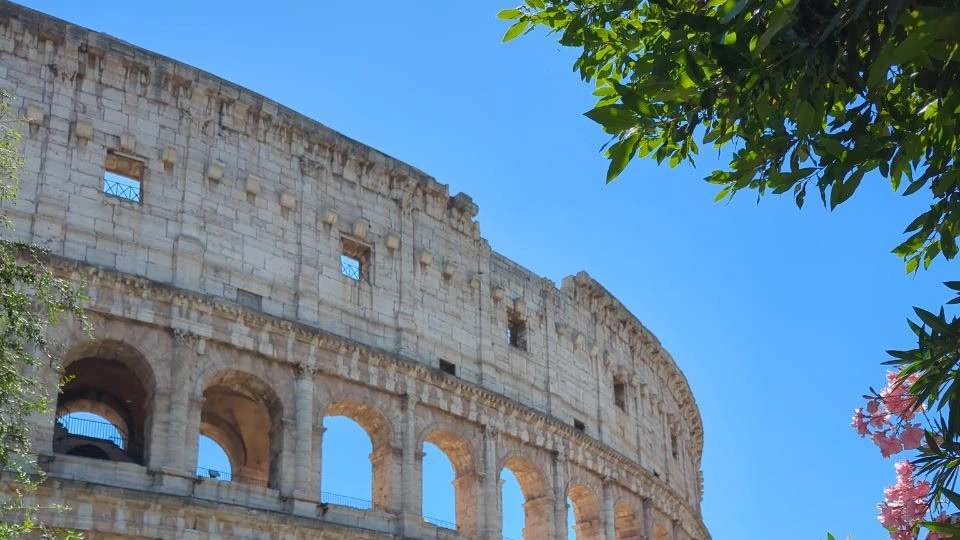
Forum viewpoints can place you against layers of arches, columns, broken walls and changing ground levels rather than relying on an expansive sky. An elevated or angled view can also keep the Colosseum unmistakable without depending on the busiest ground-level composition. Haze may soften the furthest ruins, but the nearer layers can still give the scene depth.
The Spanish Steps area provides several kinds of background within a relatively compact setting. The sweep of the staircase can establish the location, while doorways and side streets offer stronger edges and closer compositions. This variety is useful when the open steps and the surrounding sky feel too bright or exposed.
Doorways, fence alcoves, narrow streets and colonnades become especially useful when an open setting starts to feel visually pale. Repeating columns add depth and rhythm. An arch can frame both of you while allowing a glimpse of the city beyond. A street that bends out of sight can suggest movement without needing a famous monument in every frame.
These places are not secondary versions of Rome. After the scale and noise of a monumental piazza, a narrow street gives you room to walk shoulder to shoulder and stop performing for the camera. Rome still feels unmistakable in a worn doorway, the curve of an arch, a shadowed lane or the sudden view of ruins at the end of a street.
The strongest location choice depends on what the cloud is doing at that moment. A textured sky may support a wider view above a bridge or dome. A white sky may favour the shelter and structure of a portico. Dense cloud may suit the earthy colour of ruins and brick, while shifting brightness may reward a location with several useful angles close together.
How your photographer keeps cloudy Rome photographs from looking flat
A darker street opening, weathered wall or recessed doorway can create separation between you and the surroundings. It gives the eye somewhere to settle and prevents skin, clothing, paving and sky from becoming one broad area of similar brightness.
Movement helps as well. Walking towards each other, crossing a bridge, turning beneath a colonnade or adjusting a coat introduces shape without requiring theatrical posing. Clothing shifts, hands move and the distance between you changes naturally. Those small variations can create visual energy even when the light remains steady.
A little space between you and the background is particularly helpful around ruins and viewpoints. Standing directly against a busy wall can allow its texture to compete with your expressions. Moving forward keeps the architecture recognisable while giving the photograph a clearer sense of depth.
Your position relative to the brightest part of the sky also matters. Facing the brighter area can give both faces clean, even light. Turning partly away may create more modelling and shadow. If the brightness is coming from one side, your photographer can use it almost like a very large window.
The sky itself needs to earn its place. Defined cloud, a clean silhouette or breathing room around a dome may justify a wider composition. If it is a featureless white field, showing less of it can make the photograph stronger. At the Pantheon, stepping beneath the columns and leaving only a narrow strip of sky above the roofline allows expressions, gestures and architecture to take priority.
Paving, statues, ruins and street texture often say more about Rome than another large area of empty sky. A lower viewpoint may emphasise cobbles and footsteps, while a closer crop can concentrate on faces and the details of the surrounding stone.
Cloud also changes colour. Pale travertine may lose some of the golden glow associated with low sunlight. Rather than forcing warmth everywhere, careful editing can preserve the cooler atmosphere while giving the stone enough richness to feel true to Rome.
Your photographer will prioritise natural-looking skin. If the sky is much brighter than everything else, it may remain pale, and that is usually better than forcing in artificial-looking detail. Editing can refine captured colour and contrast, warm the stone and balance shadows, but it cannot recreate genuine cloud texture that the camera never recorded.
A flexible Rome route that does not depend on sunset
Begin with the landmark you would be most disappointed to miss. It might be Piazza della Rotonda, Ponte Sant’Angelo or a Forum viewpoint. Starting there protects the emotional heart of the session if rain arrives, access changes or moving through the city takes longer than expected.
Then shift into a contrasting setting nearby. A doorway, narrow street, alcove or colonnade offers deeper backgrounds and a more intimate atmosphere. You move from broad Rome to close, textured Rome without sacrificing much of the session to travel.
The transition should feel natural on foot. A route works best when the spaces between its main stops contain useful streets, arches or façades of their own. That gives the photographer options if a planned square is crowded or the light changes before you arrive.
An overlook can be an optional addition when visibility, access and mobility allow. Layered ruins or rooftops can provide context without sunset colour, but there is little value in forcing a distant panorama when haze has swallowed the skyline.
A bridge or river setting can make a beautiful finish when conditions cooperate. Walking beside the Tiber or pausing against the railings introduces water, stone and movement after the denser architecture of a piazza or street.
Transfers need to be judged realistically. Rome can look compact on a map while still involving slow pedestrian routes, traffic, waiting time and uneven ground. A location that adds only a few minutes by car may take much longer once you include reaching the pick-up point and getting through traffic.
Check ATAC shortly before the session if the route depends on public transport, as delays and journey times can change. Your photographer may also adjust the order of locations if one area is likely to become busier or less accessible later.
What still matters on a cloudy day
Crowds do not automatically prevent good photographs, particularly in places with strong architectural lines. A photographer can wait for brief openings, use people as part of the atmosphere or frame more tightly. What cloud cannot do is guarantee an empty background at a famous landmark.
Rain, wind, wet paving and poor visibility affect comfort as well as photography. A distant viewpoint may lose its appeal when the skyline disappears into haze. An exposed bridge can become unpleasant before a nearby colonnade does. If holding each other beneath shelter feels more enjoyable than battling wind beside the river, the plan should change.
The intensity and duration of rain matter more than the mere presence of a shower symbol. A brief shower may only require a pause beneath an arcade. Sustained rain can affect clothing, hair, walking speed and the safety of polished stone or worn steps.
Cobbles, stairs, slopes and uneven paths also deserve consideration. A visually ambitious route is not worthwhile if it leaves either of you uncomfortable. Current visitor and accessibility guidance for the Colosseum, Roman Forum and Palatine should be checked through the official archaeological park shortly before the session.
Temporary closures, restoration work and security controls can alter familiar views. Barriers may appear around fountains, archaeological sites or sections of a square with little relevance to the weather forecast. A nearby alternative is therefore useful even when the day is expected to remain dry.
Commercial photography rules and restrictions can vary between sites and may change. Public-looking places should not automatically be treated as continuously accessible or unrestricted, particularly if the session involves tripods or lighting equipment. Your photographer can confirm the relevant current guidance while refining the route.
What to wear, bring and decide before the session
You do not need matching outfits. Coordinated tones usually look more natural than identical colours, particularly when coats, scarves or other layers may appear in some photographs but not others. Consider how the fabrics move as well as how they look while you are standing still.
Comfortable shoes matter on cobbles, slopes and stairs. If you would like to wear smarter shoes in the photographs, carry them between locations and change when you arrive. Shoes with reliable grip become particularly important if the paving is wet.
Bring a light raincoat or sturdy umbrella if showers are possible. A compact umbrella that turns inside out in the first gust is unlikely to help on an exposed bridge. Simple colours generally sit more naturally within Rome’s streets than a large logo or a highly patterned canopy.
A removable layer gives you an easy way to adjust if the temperature changes. It can also create variety without a full outfit change. Keep anything you carry light enough that moving between locations remains comfortable.
Choose the atmosphere you prefer before the session. You might want grand city views, closer photographs among streets and columns or a mixture of both. Tell your photographer about walking limits, mobility needs and any location you would rather drop than rush.
It is also worth discussing your tolerance for light rain. Some couples are happy to continue through a brief shower, while others would rather pause under shelter and protect their clothing. Agreeing on that preference beforehand makes weather decisions easier in the moment.
Plan photographs that feel like Rome in any light
If you would like help developing a route suited to the forecast, your comfort and the character of the city, you can find your photographer in Rome. The right plan will make space for changing conditions without turning your time together into a race between landmarks.
FAQs about cloudy Rome couple photos
Usually not. A cloud symbol covers many different conditions, from thin high cloud to dense rain-bearing cover. The more useful questions are whether heavy rain, strong wind, poor visibility or unsafe walking conditions are expected.
Your photographer can change your direction, position or framing as the contrast increases. A flexible route does not depend on the light remaining identical from beginning to end.
Yes, particularly during light rain. A sturdy umbrella in a simple colour is easier to integrate than one with bold branding, although wind may make it more practical to photograph beneath architectural shelter.
Not necessarily. Soft light often suits walking, talking and close interaction. Direction still matters, so your photographer may make small adjustments to where you stand or which way you turn.
No forecast will remove every uncertainty. It is more useful to agree on a compact main route and refine the order shortly before the session, once the likely rain, visibility and transport conditions are clearer.


Our Rome Shoots:
Book your Rome couple Photographer!
Start Booking
Couple Photos in Rome at Midday: Shade-First Routes That Still Look Like Rome

How to Choose a Roman Forum Viewpoint for Your Couple Photos

Janiculum Couple Photoshoot: Dome Views, Green Walks and the Fontanone
Pincio Terrace or Piazza del Popolo First? A Couple’s Route from Square to Skyline

Villa Borghese for Couples: Lake First or Skyline First?

Trevi Too Crowded? Nearby Rome Alternatives for Couple Photos
ENJOY $20 OFF
Your first photoshoot when you become an email subscriber.
Related Articles

Couple Photos in Rome at Midday: Shade-First Routes That Still Look Like Rome
Rome at midday is bright, busy and gloriously full of life. Stone piazzas glow, shadows sharpen and the city carries on around you at full volume. That does not make every landmark unusable. With a clever route built around real shade, brief hero frames and comfortable transitions, you can enjoy the experience and come home with photographs that feel unmistakably Roman.

How to Choose a Roman Forum Viewpoint for Your Couple Photos
Stand above the Roman Forum with Rome spread beneath you, and the choice can seem simple: find the widest view and stand in front of it. Scooters hum below, warm light catches the columns, and the city briefly feels still. Yet the biggest panorama does not always make the strongest photograph. You might want layers of ruins that place you unmistakably in Rome. You might prefer a quieter terrace where your expressions, clothes and body language lead the frame. For a proposal, the deciding factor may be whether you can arrive naturally while your photographer waits unnoticed.

Janiculum Couple Photoshoot: Dome Views, Green Walks and the Fontanone
From Janiculum, Rome unfolds in layers of terracotta roofs, pale stone, umbrella pines and distant domes. It is a gorgeous first impression, but the panorama is only the beginning. Stay a little longer and your photographs can move from sweeping city views to relaxed walking portraits, then finish against the grand arches of the Fontanone. That variety is exactly why Janiculum can deserve a complete couple photoshoot rather than a rushed viewpoint stop. The most natural sequence is the panorama, a greener walk and the fountain, giving the gallery a lovely progression from epic to intimate to architectural. It is a flexible plan, though. Your photographer may reverse, shorten or reshape it according to the light, visibility, access and activity on the day.