
October 8, 2026
Trevi Too Crowded? Nearby Rome Alternatives for Couple Photos
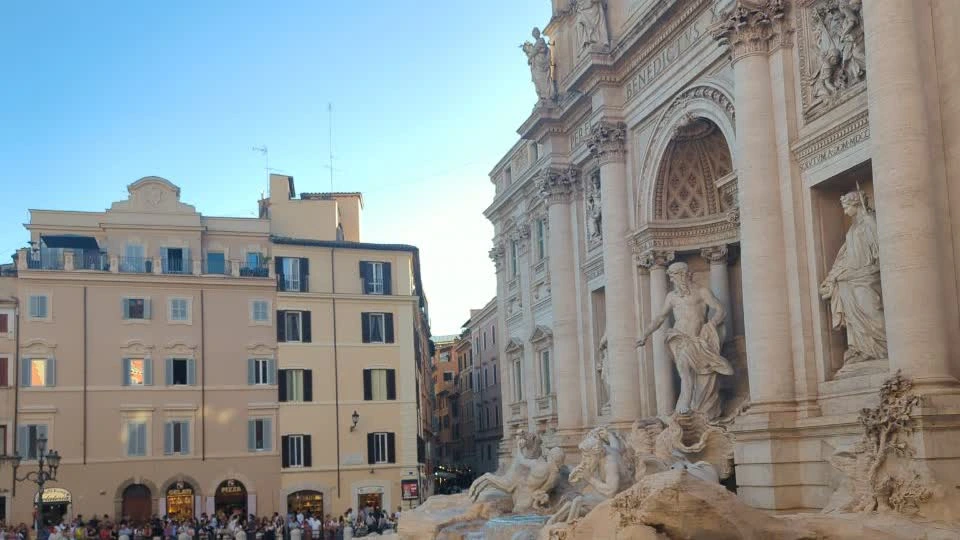
Trevi Fountain may be the Rome photograph you have pictured most clearly: moving water, pale stone and theatrical sculpture rising behind you. Then you hear the fountain before you can see it properly and edge into a square full of people trying to capture the same view.
A crowd does not automatically rule Trevi out. The decision is whether you can still connect, move and enjoy the moment. If you can, the fountain may deserve a brief attempt. If the pressure of the square is making you stiff or self-conscious, better photographs may be waiting around the next corner.
Updated

Table of Contents
Is Trevi still working for your photos?
Then consider how naturally you can move. A busy background can give the photograph energy and a genuine sense of place, particularly when people are circulating rather than standing in a solid wall. The problem begins when you cannot walk a few steps, turn towards each other or settle into a natural moment.
Your own response to the crowd matters just as much as its size. Some couples quickly forget the people around them, while others become aware of every phone and passing group. Neither reaction is wrong. The useful test is whether you are still paying more attention to each other than to everyone else.
Trevi is working when the fountain remains recognisable and the crowd still leaves room for an authentic interaction. Once managing the surroundings becomes the central activity, the setting is no longer giving you the photograph you came for.
The square and Trevi’s lower viewing area work differently
Trevi’s official website, checked on 8 October 2026, says that the current access arrangements began on 2 February 2026. The published opening hours for the lower area are 09:00 to 22:00 from Tuesday to Thursday and at weekends, and 11:30 to 22:00 on Monday and Friday. Normal last admission is at 21:00, although official exceptions may be announced.
This distinction matters when planning an early session. An early arrival may improve the conditions in the public square, but it should not be treated as a promise of immediate access to the area beside the water.
Check the official notices shortly before your shoot. Opening times, barriers and access arrangements can change, and instructions given by staff on the day take priority over an earlier plan.
When one tighter Trevi frame is enough
A photographer can frame a smaller section so that moving water fills part of the background, carved stone gives the image its Roman character and your attention remains on each other. That narrow layer of water and sculpture may carry more feeling than a wide photograph in which you appear tense or disappear among other visitors.
This approach works particularly well if you want one definite Trevi memory rather than a long sequence of photographs at the fountain. The frame can concentrate on an embrace, a glance or a quiet portrait while excluding much of the busiest part of the square.
It is less suitable if the photograph you value depends on seeing the full façade, a substantial part of the piazza or several uninterrupted walking movements. Cropping more closely changes the nature of the image. It solves visual clutter, but it cannot recreate the spacious landmark portrait you may have imagined.
A photographer’s account from 2023 described one morning session with softer light and relatively few bystanders. Observations at approximately 06:45 and 08:30 showed how quickly the scene could change. Those examples demonstrate that timing can influence the experience, but isolated mornings cannot guarantee particular crowd levels or light.
Before the session, decide whether a close, recognisable photograph would genuinely satisfy you. If the answer is yes, a difficult square can still produce the Trevi image that matters without demanding a large part of the morning.
When to stop waiting and continue elsewhere
Leave when natural interaction remains impossible, the light has deteriorated or the delay is consuming too much session time. These are more useful signals than an arbitrary rule such as waiting for exactly five or ten minutes.
Do not stay solely because you have already invested time in trying. That time will not become more valuable if another attempt produces the same obstructed frame. The relevant question is whether the next few minutes have a realistic chance of improving the photograph.
Moving on can create an immediate shift in the session. As you leave the packed square, the sound of the fountain fades, the streets narrow and you can walk at your own pace again. Trevi may remain the opening image, but it does not have to determine the atmosphere of everything that follows.
Nearby alternatives to Trevi for couple photos
There is no need to compensate for leaving Trevi by collecting every nearby attraction. One or two settings that change the mood or composition will usually contribute more than a rushed sequence of landmarks.
Via della Dataria for doors, texture and movement
The resulting photographs can still feel distinctly Roman without relying on a single monument. Stone, scale, shadow and everyday street activity place you in the city while the composition remains centred on your interaction.
This can be especially valuable after Trevi. Instead of trying to hold a clear position in a crowded square, you can respond to the street as it unfolds. A doorway may create symmetry for a portrait, a narrow view may add depth behind a walking frame, or light between the buildings may suggest a natural place to stop.
A reported 2023 session elsewhere in central Rome used an illuminated doorway encountered along the way as a portrait setting. The practical lesson is not that one particular doorway will always be available. It is that a responsive photographer can recognise useful light, depth and architectural detail without depending on a predetermined spot.
Via della Dataria remains a working street. Deliveries, pedestrians, traffic, scaffolding and access to doorways can all affect the available compositions. Its value lies in having several possible visual elements rather than one photograph that depends on a particular doorway being clear.
The Pantheon approach for architectural scale
After the visual compression of Trevi, the area can restore breathing room to the composition. You might cross through the scene together while the Pantheon rises behind you, creating a contrast between your movement and the scale of the architecture.
This grandeur feels different from Trevi. There is no equivalent wall of sculpture and cascading water. The emphasis is on columns, geometry, stone and the way the building commands the surrounding space.
The fountain in Piazza della Rotonda may keep water within the visual story when the angle and conditions allow it. It works best as an additional layer within the piazza rather than as an attempt to imitate the character of Trevi.
Early timing may improve the chance of a clearer establishing photograph, but the Pantheon remains a major public space. Pedestrian flow, temporary barriers and changing light can alter the balance of the frame within minutes. Moving a short distance may be enough to replace a blocked view with a stronger composition.
Santa Maria sopra Minerva as an exterior pause
This recommendation concerns the exterior. Interior access for photography should never be assumed, and services, worship and ordinary church activity take priority. If the surroundings do not allow a respectful, uncomplicated photograph, skip the stop rather than trying to force it into the session.
Agree a flexible plan before the morning begins
The answers should be specific enough to guide a decision. “We want Rome” is too broad to help in a busy square. “We would be happy with one close photograph showing recognisable water and sculpture” creates a workable threshold. So does deciding that comfortable movement matters more than a complete view of the fountain.
A practical outline could begin with a brief Trevi attempt, continue through Via della Dataria and reach the Pantheon. Santa Maria sopra Minerva can remain a conditional exterior pause, while Piazza Navona should be added only if another water image would contribute something distinct.
This sequence is compact enough to adapt. It allows Trevi to be attempted without making every later photograph dependent on how long the fountain takes. It also gives your photographer several ways to change the visual rhythm, from close street portraits to larger architectural compositions.
Check current ATAC information on the day rather than relying on assumed routes or journey times. Central Rome can be affected by diversions, events and temporary restrictions. Compact equipment also makes it easier to move through busy streets without blocking circulation.
Around churches, respect services, worshippers and access conditions. In public squares, follow staff instructions and keep entrances and pedestrian routes clear. These practical boundaries help the session remain unobtrusive and allow changes of location to happen smoothly.
Explore Rome photographers
Explore and book a Rome photographer who can shape the session around current conditions and the photographs that matter most to you.
FAQs about planning around a crowded Trevi Fountain
Not necessarily. You can treat it as a conditional opening stop rather than the centre of the session. If a workable composition appears quickly, take it. If the surroundings immediately make you uncomfortable, continue to the quieter street photographs without treating the change as a failed attempt.
No photographer can reliably guarantee an empty public square. Timing, barriers, maintenance, visitor patterns and official access arrangements can all change. Ask instead how the photographer would frame a busy setting and what alternative they would use if the intended composition is unavailable.
Use only the locations that add a different visual quality. Via della Dataria, the Pantheon area and Piazza Navona do not all need to appear in the same gallery. A smaller number of well-used settings will usually feel more coherent than several rushed stops.
Interior access should not be assumed. Treat it as a possible exterior pause, with worship, services and church instructions taking priority. If indoor photography is important to you, it requires separate confirmation rather than being included as an automatic part of this route.
Agree which image is essential, which compromise would still feel worthwhile and what conditions will trigger a change of location. Those decisions allow your photographer to respond quickly without asking you to reconsider the entire plan while standing in a crowded square.


Our Rome Shoots:
Book your Rome couple Photographer!
Start Booking
Couple Photos in Rome at Midday: Shade-First Routes That Still Look Like Rome

Cloudy Rome Couple Photos: How to Use Soft Light Across the City

How to Choose a Roman Forum Viewpoint for Your Couple Photos

Janiculum Couple Photoshoot: Dome Views, Green Walks and the Fontanone
Pincio Terrace or Piazza del Popolo First? A Couple’s Route from Square to Skyline

Villa Borghese for Couples: Lake First or Skyline First?
ENJOY $20 OFF
Your first photoshoot when you become an email subscriber.
Related Articles

Couple Photos in Rome at Midday: Shade-First Routes That Still Look Like Rome
Rome at midday is bright, busy and gloriously full of life. Stone piazzas glow, shadows sharpen and the city carries on around you at full volume. That does not make every landmark unusable. With a clever route built around real shade, brief hero frames and comfortable transitions, you can enjoy the experience and come home with photographs that feel unmistakably Roman.

Cloudy Rome Couple Photos: How to Use Soft Light Across the City
You pictured Rome in warm evening light: honey-coloured stone, long shadows and a streak of colour behind the skyline. Then the forecast filled with little grey clouds. When you only have a few days in Rome, that can feel like a setback. In practice, it simply changes how your photographer uses the city. Thin cloud, white overcast and heavy storm cover all behave differently. The question is not whether Rome will still look beautiful, but where its stone, streets and shadows will come alive beneath the sky you have.

How to Choose a Roman Forum Viewpoint for Your Couple Photos
Stand above the Roman Forum with Rome spread beneath you, and the choice can seem simple: find the widest view and stand in front of it. Scooters hum below, warm light catches the columns, and the city briefly feels still. Yet the biggest panorama does not always make the strongest photograph. You might want layers of ruins that place you unmistakably in Rome. You might prefer a quieter terrace where your expressions, clothes and body language lead the frame. For a proposal, the deciding factor may be whether you can arrive naturally while your photographer waits unnoticed.