

Table of Contents
Decide which photograph needs priority
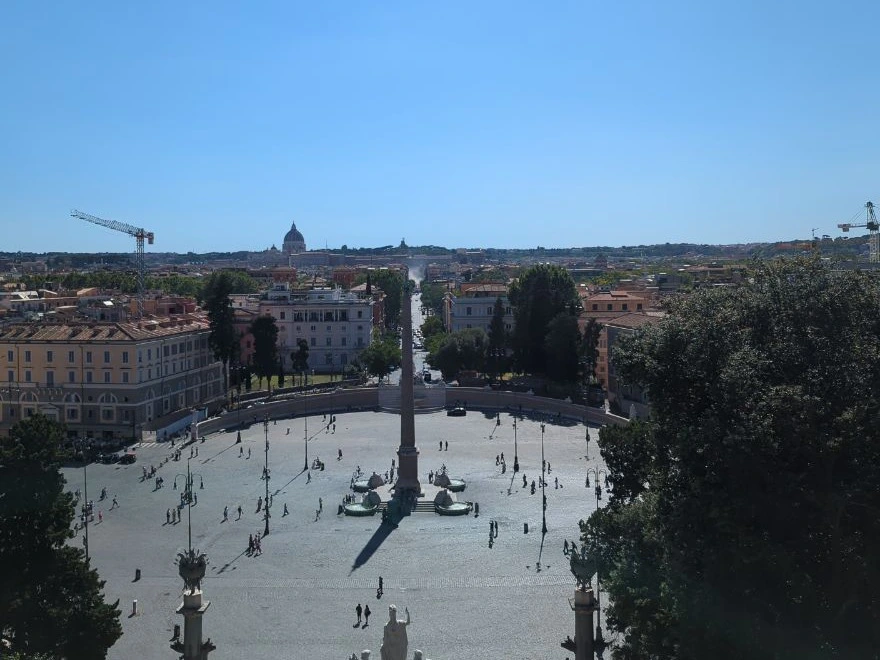
Choose skyline first when you want the lake to provide the quieter ending. After photographing the broad city view at Pincio, you can move into the park and finish beside the water, with the Temple of Aesculapius appearing across the lake.
Your preferred ending may not be the same as your non-negotiable photograph. You might want a lakeside finale but care most about securing the Pincio view. In that case, begin at the skyline. If boating is essential, the uncertainty surrounding the rental may make the lake the more sensible starting point, even when the city view is your preferred ending.
The best route therefore depends on two separate decisions: which photograph should conclude the story and which photograph would be most disappointing to lose.
Lake first: begin quietly and finish with Rome
These early photographs do not require elaborate posing. Small actions such as adjusting your partner’s jacket, brushing hair away from a face or walking at an unhurried pace can help you settle into the session. The aim is to create enough movement that you are responding to each other rather than waiting for the next instruction.
The lake is a public and often lively setting. Visitors may be walking around its edge while boats cross the background. Intimacy comes from careful framing, close interaction and well-timed moments, not from expecting the area to be empty.
The Temple of Aesculapius can appear naturally across the water without dominating every photograph. When the water is calm and the angle is favourable, its reflection may add symmetry. If the shore becomes busy, your photographer can move closer, use foliage around the frame or turn towards a quieter section of water.
The Temple does not always need to sit directly behind you. An off-centre view can preserve the atmosphere while keeping attention on your expressions. A partial glimpse between trees may feel more natural than repeatedly arranging yourselves in front of the same architectural background.
The walk towards Pincio can then become part of the session. Photographs taken in motion help connect the two locations and provide a visual change from stationary portraits beside the lake. Tree-lined paths, patches of open greenery and brief pauses along the way can all be used without turning every attractive corner into another compulsory stop.
This direction works particularly well when you are comfortable building towards the most recognisably Roman scene. Pincio becomes the practical destination, but the route remains flexible enough to account for visitor numbers, light and the pace at which you want to move.
Skyline first: secure Rome, then soften the story
An earlier start may bring softer light and more usable space, but it cannot guarantee an empty Pincio. Visitors, temporary events, maintenance and seasonal conditions can all affect the available positions. Starting there still gives your photographer time to respond before the rest of the session unfolds.
The strongest skyline photograph may not require you to stand directly against the viewpoint. Depending on the light and crowd, stepping back can place more of the park around you while retaining a glimpse of Rome below. Closer framing can also capture the atmosphere of the overlook without allowing railings, signs or passing visitors to take over the image.
Once the main city photographs are complete, the route can move into the park. Walking frames make the change in setting feel deliberate, while greenery provides a calmer visual bridge between Pincio and the lake.
Near the water, the framing can gradually become closer. You might walk along the shore as the Temple briefly aligns behind you, pause where the water is visible through the trees and finish with a close portrait that uses only a suggestion of the lake. The final photograph can feel contained and personal even though the session began above one of Rome’s grandest squares.
The principal trade-off is that any boating sequence will happen later. If the rental is unavailable or the queue has grown, the route needs to work from shore without leaving the conclusion dependent on a boat.
If the boat matters, begin with the uncertainty
Availability may change, so current prices, payment methods, ride duration, departure times, queues and weather arrangements should be checked close to your date. Even when the rental is operating, the wait may not fit comfortably within the time available.
Decide in advance how important the boat is:
- Essential: begin at the lake and assess the rental immediately.
- Optional: use it only when availability, conditions and waiting time suit the session.
Before boarding, agree where your photographer will stand. The shore position determines how much open water appears in the frame, whether the Temple can sit behind you and how long the camera can follow the boat through a useful angle.
The most effective composition may last only a few seconds as the boat turns. You may need to row into position, allow the boat to drift briefly and then continue before another boat enters the same part of the frame. The sequence is likely to feel active and spontaneous rather than private or perfectly controlled.
Clothing also deserves consideration. Very restrictive outfits can make boarding awkward, while delicate shoes or long hems may need extra care near the edge. Anything that requires lengthy adjustments reduces the short window in which the boat, Temple and light align well.
Keep a shore version ready. Portraits beside the water can still include the Temple, reflections and passing boats. Your photographer can vary the result through movement, focal distance and changes in angle, giving you the character of the lake without relying on the rental.
Match the route to your clothes, mobility and energy
Travelling between the lake and Pincio involves a reasonable amount of walking and may include stairs, depending on the route and arrival point. Anyone who needs step-free access should have the precise route checked shortly before the session. A general map of Villa Borghese does not necessarily show whether every path, entrance or temporary diversion will suit individual mobility needs.
Clothing changes the calculation. Formal shoes can make an otherwise manageable walk feel much longer. Restrictive outfits, long skirts, fitted jackets or heavy layers can slow the transfer and make repeated stops less comfortable. In warm weather, even a straightforward route may become tiring sooner than expected.
It can help to separate the outfit’s appearance from its practicality. A pair of comfortable shoes may be useful during the transfer even if you change into formal shoes for the photographs. Any change should be quick and discreet, since carrying several accessories or planning a full outfit transformation can consume time better spent photographing.
A compact session may offer more creative freedom than an ambitious route. Around the lake, a photographer can vary shore angles, Temple views, greenery, reflections and close interaction without requiring a boat. Around Pincio, the terrace and surrounding paths can provide city scale, walking photographs and tighter portraits within one general area.
Staying in one area also preserves time for pauses, clothing adjustments and changes in composition. It can be particularly effective for shorter sessions, couples who prefer a relaxed pace or anyone who would enjoy the photography less once the route becomes physically demanding.
If you want both locations, agree on a comfortable walking pace before the session. Build in enough flexibility that a slower transfer does not force you to rush through the second setting.
Let light shape the photographs, not control the route
At the lake, reflections are most useful when the water is relatively calm and the camera can find a clear angle. Ripples, moving boats and uneven light may interrupt a perfect mirror image, but they can also give the photographs texture and movement. The Temple remains recognisable even when the reflection is incomplete.
At Pincio, the most attractive direction is not always the one with the largest portion of skyline. Light on your faces, space around you and a clean separation from other visitors may matter more than including every possible landmark. A slightly narrower city composition can be stronger than a wide view that leaves you small or poorly lit.
Bright conditions do not automatically rule out either location. Shade near the trees can support closer portraits, while backlighting may soften a busy background. Cloudier weather can reduce harsh contrast and allow more freedom in where you stand, although the skyline may appear less defined.
Your photographer should respond to the available light while protecting the route’s central purpose. Chasing one brief patch of ideal light should not turn the session into a hurried crossing of the park.
How your photographer should protect the story
At Pincio, this means knowing more than one possible angle. If the busiest part of the terrace offers little room, a nearby position may still provide elevation, depth and a Roman background. Your photographer can move between wide and close framing, use a brief gap in foot traffic or place you farther from the rail where the crowd becomes less prominent.
The same judgement applies at the lake. A busy shoreline may look distracting from one direction but manageable from another. Trees, open water and changes in focal length can simplify the frame while retaining a clear sense of place.
Visitor flow matters because some positions are useful only for a few seconds at a time. Your photographer should be able to prepare the composition before asking you to step into it. That reduces waiting, keeps the interaction natural and avoids repeatedly interrupting other people using the park.
Extra stops should remain optional. Villa Borghese contains many tempting paths and viewpoints, but adding each one can weaken the overall pace. A brief stop is worthwhile when it contributes a genuinely different photograph, not simply because it is nearby.
Time and energy should also be protected across both main sequences. A long lakeside section can leave too little room for the Pincio photographs, while an extended search for a perfectly clear skyline can reduce the time available beside the water. Your photographer should monitor the session as it unfolds and recognise when enough variety has been created in one setting.
What to check shortly before your session
- Temporary works, public events, maintenance or restrictions around the lake and Pincio.
- Current ATAC information for the arrival point you intend to use.
- Any permit requirements that may apply to professional lighting, tripods or a larger production crew.
These details are unlikely to matter equally for every couple. A simple session with one photographer and handheld equipment may require very little logistical preparation, while a larger setup can involve different restrictions. The relevant checks should match the actual scale of the session.
Ready to plan your Villa Borghese session?
Explore Travaya’s Rome photographers and share the Villa Borghese photograph you most want the route to protect.
FAQs
Yes. The settings encourage different compositions. At the lake, the Temple can appear across the water while you walk, sit close together or interact near the shore. At Pincio, the greater depth suits wider standing portraits and movement away from the viewpoint. Changing your distance from the camera and using different actions prevents the two landmarks from producing repetitive photographs.
No. An off-centre Temple often creates a more natural composition and leaves room for water, trees or reflections. It can also appear briefly between foliage or sit softly in the distance. The architecture should establish the setting without competing with your faces.
Usually not. Some sections of the walk may offer attractive light and uncluttered backgrounds, while others are better treated simply as a transfer. Photographing every minute can make the session feel relentless and produce several similar walking images. Selective pauses generally create a stronger and more varied collection.
Shore-based photography is usually more practical because it preserves a stable viewpoint and allows the Temple, water and boat to be composed together. A photographer in the same boat would have limited space, less control over the background and greater difficulty showing the wider setting.
Yes. Overcast light can be soft and even, which is useful for close portraits and flexible positioning. The skyline may look gentler and reflections may be less pronounced, but both locations remain usable. Composition, interaction and the relationship between the two settings matter more than a guaranteed dramatic sky.
Only locations that create a clear visual change should be added. A tree-lined path or quiet patch of greenery can connect the lake and Pincio effectively, but several similar stops may consume time without improving the final gallery. Two strong anchor settings and a few selective transition photographs are usually more coherent than a long list of minor stops.


Our Rome Shoots:
Book your Rome couple Photographer!
Start Booking
Couple Photos in Rome at Midday: Shade-First Routes That Still Look Like Rome

Cloudy Rome Couple Photos: How to Use Soft Light Across the City

How to Choose a Roman Forum Viewpoint for Your Couple Photos

Janiculum Couple Photoshoot: Dome Views, Green Walks and the Fontanone
Pincio Terrace or Piazza del Popolo First? A Couple’s Route from Square to Skyline

Trevi Too Crowded? Nearby Rome Alternatives for Couple Photos
ENJOY $20 OFF
Your first photoshoot when you become an email subscriber.
Related Articles

Couple Photos in Rome at Midday: Shade-First Routes That Still Look Like Rome
Rome at midday is bright, busy and gloriously full of life. Stone piazzas glow, shadows sharpen and the city carries on around you at full volume. That does not make every landmark unusable. With a clever route built around real shade, brief hero frames and comfortable transitions, you can enjoy the experience and come home with photographs that feel unmistakably Roman.

Cloudy Rome Couple Photos: How to Use Soft Light Across the City
You pictured Rome in warm evening light: honey-coloured stone, long shadows and a streak of colour behind the skyline. Then the forecast filled with little grey clouds. When you only have a few days in Rome, that can feel like a setback. In practice, it simply changes how your photographer uses the city. Thin cloud, white overcast and heavy storm cover all behave differently. The question is not whether Rome will still look beautiful, but where its stone, streets and shadows will come alive beneath the sky you have.

How to Choose a Roman Forum Viewpoint for Your Couple Photos
Stand above the Roman Forum with Rome spread beneath you, and the choice can seem simple: find the widest view and stand in front of it. Scooters hum below, warm light catches the columns, and the city briefly feels still. Yet the biggest panorama does not always make the strongest photograph. You might want layers of ruins that place you unmistakably in Rome. You might prefer a quieter terrace where your expressions, clothes and body language lead the frame. For a proposal, the deciding factor may be whether you can arrive naturally while your photographer waits unnoticed.