
October 8, 2026
Couple Photos in Rome at Midday: Shade-First Routes That Still Look Like Rome
Rome at midday is bright, busy and gloriously full of life. Stone piazzas glow, shadows sharpen and the city carries on around you at full volume. That does not make every landmark unusable. With a clever route built around real shade, brief hero frames and comfortable transitions, you can enjoy the experience and come home with photographs that feel unmistakably Roman.
Updated

Table of Contents
A well-planned route makes midday in Rome work
A landmark might look magnificent from the middle of an exposed piazza, yet offer little shade, limited room to move and only one flattering camera angle. Add crowds, vendors, barriers or temporary works, and an apparently effortless photograph can involve far too much waiting in the sun.
A better route gives every location a job. Sheltered streets and architectural edges create comfortable conditions for close portraits, easy movement and those lovely in-between moments. A more exposed viewpoint can deliver the big Roman reveal without becoming somewhere you need to linger.
This balance keeps the session feeling like a fun afternoon together in Rome, rather than a frantic mission to collect every famous backdrop before your energy disappears.
Use the shade, reveal, shade method
These quieter spots help the photographs find their rhythm. Your photographer can capture close portraits, walking shots and relaxed interactions without asking a landmark to dominate every frame. Ochre walls, worn stone, ironwork, cobbles and layered architecture already say Rome beautifully.
Once you have settled in, step into the open for the hero view. A wide composition can establish the location, followed by a closer frame that keeps the two of you at the heart of it. There is no need to cycle through every possible pose. Get the photographs that clearly place you in Rome, then head towards the next sheltered section while everyone still feels fresh.
Returning to shade changes the mood naturally. After the drama of an ancient monument or city panorama, a cool stone wall or quieter side street brings the focus back to the two of you. That contrast creates plenty of variety without requiring a packed itinerary.
It also takes the pressure off any single viewpoint. If the landmark is crowded, a wider image can embrace the city as it genuinely looked that day. Your more personal photographs can happen just a few minutes away, somewhere with enough space to move, breathe and pay attention to each other.
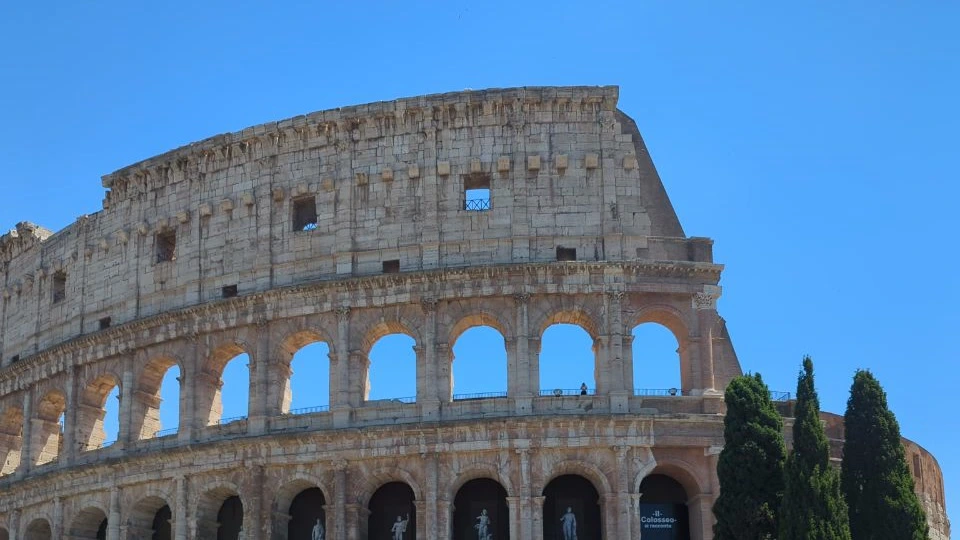
Ancient Rome: let the Colosseum feel like an arrival
Starting around the edges lets the Colosseum arrive gradually. Stone surfaces, fence lines and changes in level can give shape to walking photographs and closer portraits. You can move at an easy pace, turn towards each other and allow the scale of Ancient Rome to build behind you, rather than facing the monument squarely in every shot.
A clearer, slightly elevated position can then open up the view. The extra height might reduce some street-level clutter, although it cannot guarantee an empty background. The best midday frame will always depend on the available angle, the crowd and the direction of the light at that particular moment.
This gradual reveal gives the Colosseum much more impact. The opening photographs can play with texture, movement and anticipation before the setting suddenly expands. It feels far more exciting than repeating the same landmark backdrop throughout the gallery.
Ancient Rome is a brilliant fit when the Colosseum matters more to you than greenery or a long neighbourhood stroll. It brings monumental scale and instant recognition, while the nearby walls, passages and layered views stop every photograph from looking like a variation of the same tourist snapshot.
Crowds need not spoil it, either. Careful framing can place you against stone, sky or a strong architectural line while keeping the busiest areas outside the photograph. In a wider image, a little city activity can feel wonderfully honest and energetic. Central Rome is not empty at lunchtime, and it does not have to pretend to be. The trick is simply finding enough visual order for the two of you to remain the focus.
Villa Borghese: choose greenery, movement and breathing room
An archway along the route can bring a crisp change of mood. You might approach from opposite sides, meet beneath it and wander on towards the trees. It can create a lovely symmetrical portrait or a quick sequence of movement, but there is no need to make it carry the entire session. The surrounding paths and greenery give the route plenty of natural variety.
The park is especially appealing if you would rather interact than hold a string of fixed poses. Walking side by side, turning back towards each other or pausing at the edge of a path creates movement without complicated direction. Wider frames can show the landscape, while closer photographs keep that softer feeling of being tucked away together.
The Pincio panorama, or another exposed outlook, can then add a stronger dose of city drama. Haze, sunlight and crowd position will influence how clearly the skyline appears, so the final viewpoint is best chosen for the conditions on the day rather than treated as a guaranteed finishing shot.
Because greenery on its own can look less specifically Roman, architectural details make a real difference. Balustrades, stonework, an arch or a carefully framed city view can anchor the gallery firmly in Rome while preserving the park’s relaxed atmosphere.
Villa Borghese is the clearest choice if greenery, movement and breathing room matter more to you than ticking off a collection of major monuments.
Vatican-side streets: let the journey carry the story
You might walk side by side, stop near a textured doorway, turn a corner together or let the street draw you deeper into the scene. That gives the photographs a gentle progression: arriving, pausing, continuing and gradually revealing more of the neighbourhood.
This area is made for small interactions. Looking back towards your partner, crossing together or briefly stopping beside an old wall can feel much more convincing than repeatedly facing the camera. Long architectural lines also create depth while keeping the two of you visually connected.
Of course, conditions may have changed since that earlier scout. A particular street might still offer gorgeous Roman atmosphere without providing a clear view of St Peter’s Basilica, and that is perfectly fine. Texture, proportion and movement can create the stronger photograph in their own right.
The Vatican can remain part of the geographical story without filling every background. A distant dome or fleeting architectural glimpse may be all you need to set the scene, leaving the closer frames free to capture what it felt like to wander through Rome together.
Choose the Vatican-side streets when candid movement and local character sound more like you than a long landmark sequence.
Treat Trevi Fountain and the Spanish Steps as deliberate extras
The Trevi example considered during the research was photographed in the morning, when the light was softer and fewer people were around. At midday, expect a livelier scene, firmer light and less choice over where you can stand. If the fountain means something to you, it can absolutely be worth including. The aim is a clear, recognisable composition, not the illusion that you somehow booked the whole place for yourselves.
Trevi contains so much visual detail that your interaction can stay wonderfully simple. Look at each other, walk into position or pause together for a moment. In a busy public space, that often feels more natural than attempting an elaborate pose.
The Spanish Steps offer more ways to play with composition. One photographed session used a nearby doorway, different stair levels, intermediate landings and side-on geometry instead of depending entirely on the famous frontal view. At midday, you could begin with a closer portrait near the doorway before adding a landing or side angle with the stairs rising behind you.
That particular session started before dawn, which explains the unusually quiet steps. Its clever use of doorways, height and geometry remains useful, but its soft light and crowd levels are not a guide to what you will find at lunchtime.
The stairs can also demand more energy than photographs suggest. Moving between levels in warm weather can affect your clothing, footwear and general enthusiasm, so there is no prize for using every possible angle. One or two strong positions can tell the whole story without turning the shoot into a workout.
Neither Trevi Fountain nor the Spanish Steps needs to dominate the route. They work beautifully as vivid extras once the session already has a comfortable visual foundation elsewhere.
Keep the route compact enough to enjoy
Trevi Fountain and the Colosseum sit in separate photographic clusters. During one real couple session, the pair travelled between them by taxi rather than treating the landmarks as an easy walking combination. They can be connected, but the transfer may not be quick or predictable. Traffic, restrictions, pickup points, road closures and public events can all reshape the journey.
If both locations are important, keep the Trevi sequence concise before travelling towards Ancient Rome, with enough flexibility in the schedule to absorb delays. Otherwise, staying within one area often creates a calmer and more varied gallery. Your photographer can change the scale, direction and pace of the images without sending you across the city. A wide environmental portrait, a close walking shot and a quiet moment beside an architectural detail can feel completely different while happening only minutes apart.
Frequent transfers interrupt the emotional rhythm, too. Every new location means arriving, assessing the surroundings and settling in again. With fewer stops, you have more time to reach that lovely point where you stop wondering what to do with your hands and simply respond to each other.
That matters even more in midday heat. Once shoulders tense and everyone starts dreaming about the next break, even a world-famous backdrop loses some of its sparkle. The most valuable landmark is one you can actually enjoy while you are there.
A cross-city journey can still earn its place when two areas offer genuinely different visual experiences or both hold personal meaning. Adding another stop simply because it is famous is much less likely to improve the final gallery.
Check shade, access and disruption shortly before the session
Your photographer should confirm where the shade is likely to fall at the actual session time and check for building works, barriers, changed vegetation and usable camera angles. Demonstrations, security restrictions, public events, road closures and transport disruption can affect both access and cross-city transfers. Surfaces, steps, accessibility and any location-specific rules for photography or equipment matter as well.
Each key section of the route should have a nearby alternative that serves the same purpose. If a favourite shaded wall is sunlit or occupied, a close doorway, corner or street edge can keep the session flowing. The replacement need not look identical. It simply needs to offer similar comfort, visual character and enough room to work.
Photographing around public-facing exterior viewpoints is also different from entering ticketed archaeological sites. Admission to the Colosseum, Roman Forum or Palatine is not automatically included in a session around their exterior surroundings. If you want photographs inside, check the official archaeological park shortly before finalising the plan for current opening hours, ticket prices, admission conditions, accessibility information and visitor rules.
Official guidance is also the place to confirm whether an organised session or professional equipment will be treated differently from casual personal photography. Requirements can depend on the exact location, activity and equipment, so an older article or previous experience is never a permanent rule.
Plan your couple photographs in Rome
Midday does not mean giving up the landmarks you love. It simply means choosing a route that lets shade do most of the work, then stepping into the sun for a few confident Roman hero frames.
If you would like help matching the route to your comfort, favourite atmosphere and must-have backdrop, find a couple photographer in Rome through Travaya.
Frequently asked questions
Choose breathable clothes that let you walk, turn and sit comfortably. Heavy or highly structured outfits can become uncomfortable in direct sun, while fabrics with natural movement look lovely in walking photographs. Think about how your colours will sit against warm stone, greenery or pale architecture, but choose clothes that still feel like you.
Not necessarily. Cobbles, steps and longer transitions can become tiring in formal shoes. Practical footwear can carry you between positions, with a quick change for photographs where your shoes will be visible. Keep the swap simple so it does not become a production of its own.
Bring water and keep everything else light. Too many belongings can slow each transition and create the recurring question of where to put them during photographs. If something is not needed for comfort, clothing or the session itself, it can probably stay at your accommodation.
Discuss them before finalising the locations. Rome’s cobbles, steps, uneven surfaces and changes in level can make a short distance tougher than it appears on a map. The route should consider the ground between viewpoints just as carefully as the viewpoints themselves, with accessible alternatives ready where needed.
Absolutely. A shade-first route is ideal for walking, chatting and taking short pauses in comfortable surroundings rather than holding formal poses for ages. Tell your photographer that you prefer movement-led direction so they can shape the locations and sequence around it.


Our Rome Shoots:
Book your Rome couple Photographer!
Start Booking
Cloudy Rome Couple Photos: How to Use Soft Light Across the City

How to Choose a Roman Forum Viewpoint for Your Couple Photos

Janiculum Couple Photoshoot: Dome Views, Green Walks and the Fontanone
Pincio Terrace or Piazza del Popolo First? A Couple’s Route from Square to Skyline

Villa Borghese for Couples: Lake First or Skyline First?

Trevi Too Crowded? Nearby Rome Alternatives for Couple Photos
ENJOY $20 OFF
Your first photoshoot when you become an email subscriber.
Related Articles

Cloudy Rome Couple Photos: How to Use Soft Light Across the City
You pictured Rome in warm evening light: honey-coloured stone, long shadows and a streak of colour behind the skyline. Then the forecast filled with little grey clouds. When you only have a few days in Rome, that can feel like a setback. In practice, it simply changes how your photographer uses the city. Thin cloud, white overcast and heavy storm cover all behave differently. The question is not whether Rome will still look beautiful, but where its stone, streets and shadows will come alive beneath the sky you have.

How to Choose a Roman Forum Viewpoint for Your Couple Photos
Stand above the Roman Forum with Rome spread beneath you, and the choice can seem simple: find the widest view and stand in front of it. Scooters hum below, warm light catches the columns, and the city briefly feels still. Yet the biggest panorama does not always make the strongest photograph. You might want layers of ruins that place you unmistakably in Rome. You might prefer a quieter terrace where your expressions, clothes and body language lead the frame. For a proposal, the deciding factor may be whether you can arrive naturally while your photographer waits unnoticed.

Janiculum Couple Photoshoot: Dome Views, Green Walks and the Fontanone
From Janiculum, Rome unfolds in layers of terracotta roofs, pale stone, umbrella pines and distant domes. It is a gorgeous first impression, but the panorama is only the beginning. Stay a little longer and your photographs can move from sweeping city views to relaxed walking portraits, then finish against the grand arches of the Fontanone. That variety is exactly why Janiculum can deserve a complete couple photoshoot rather than a rushed viewpoint stop. The most natural sequence is the panorama, a greener walk and the fountain, giving the gallery a lovely progression from epic to intimate to architectural. It is a flexible plan, though. Your photographer may reverse, shorten or reshape it according to the light, visibility, access and activity on the day.