
October 6, 2026
Gellért Hill photo spots: choose your Budapest view
From Gellért Hill, Budapest spreads out around the Danube in a way you can never quite see from street level. The castle gathers above one bank, Parliament rises across the water, and bridges connect the layers. It's a wonderful view to bring home. For a portrait, though, the interesting choice is what you put between yourselves and that skyline: trees, a clean terrace or a wide stretch of open air.
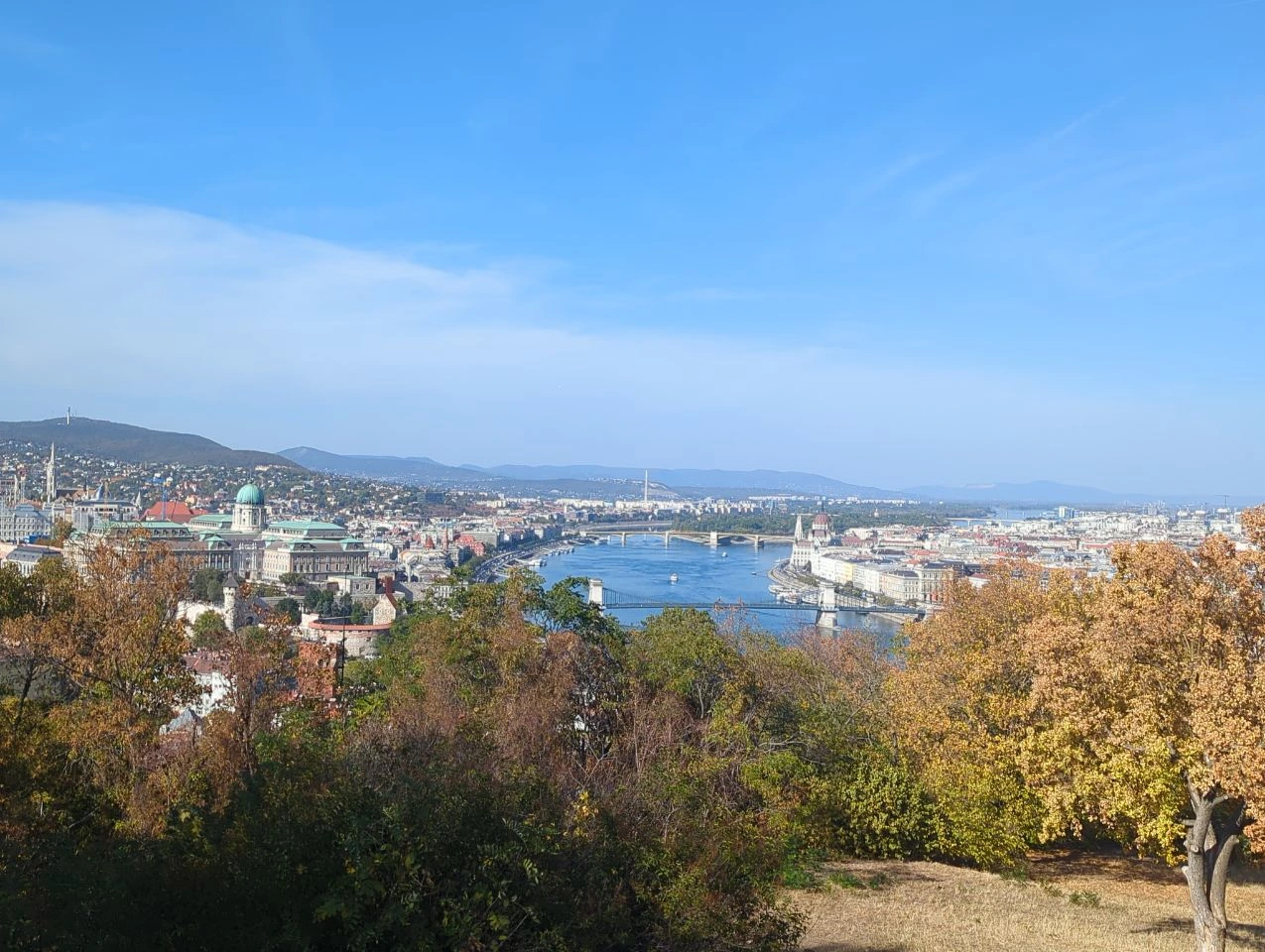
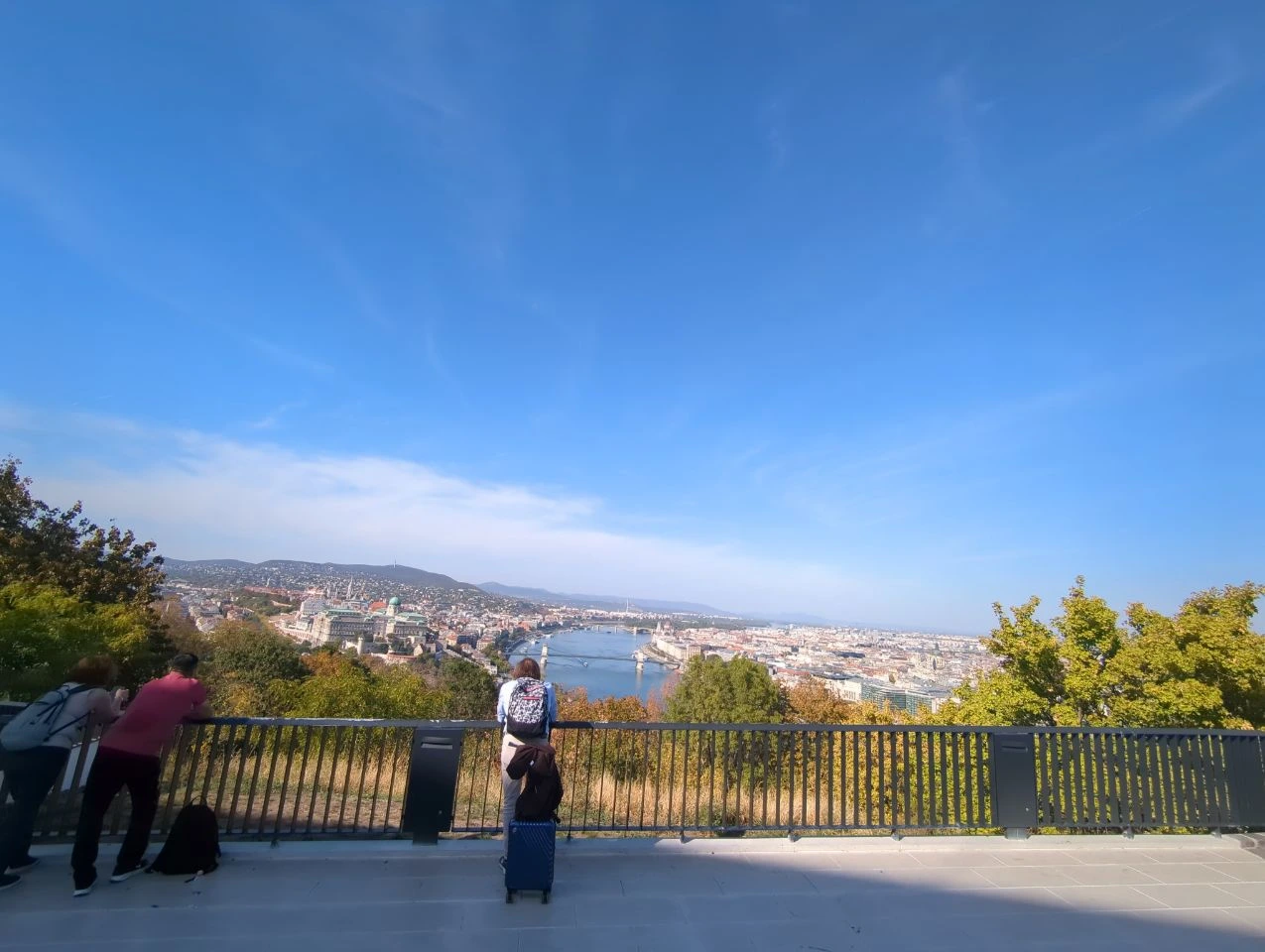
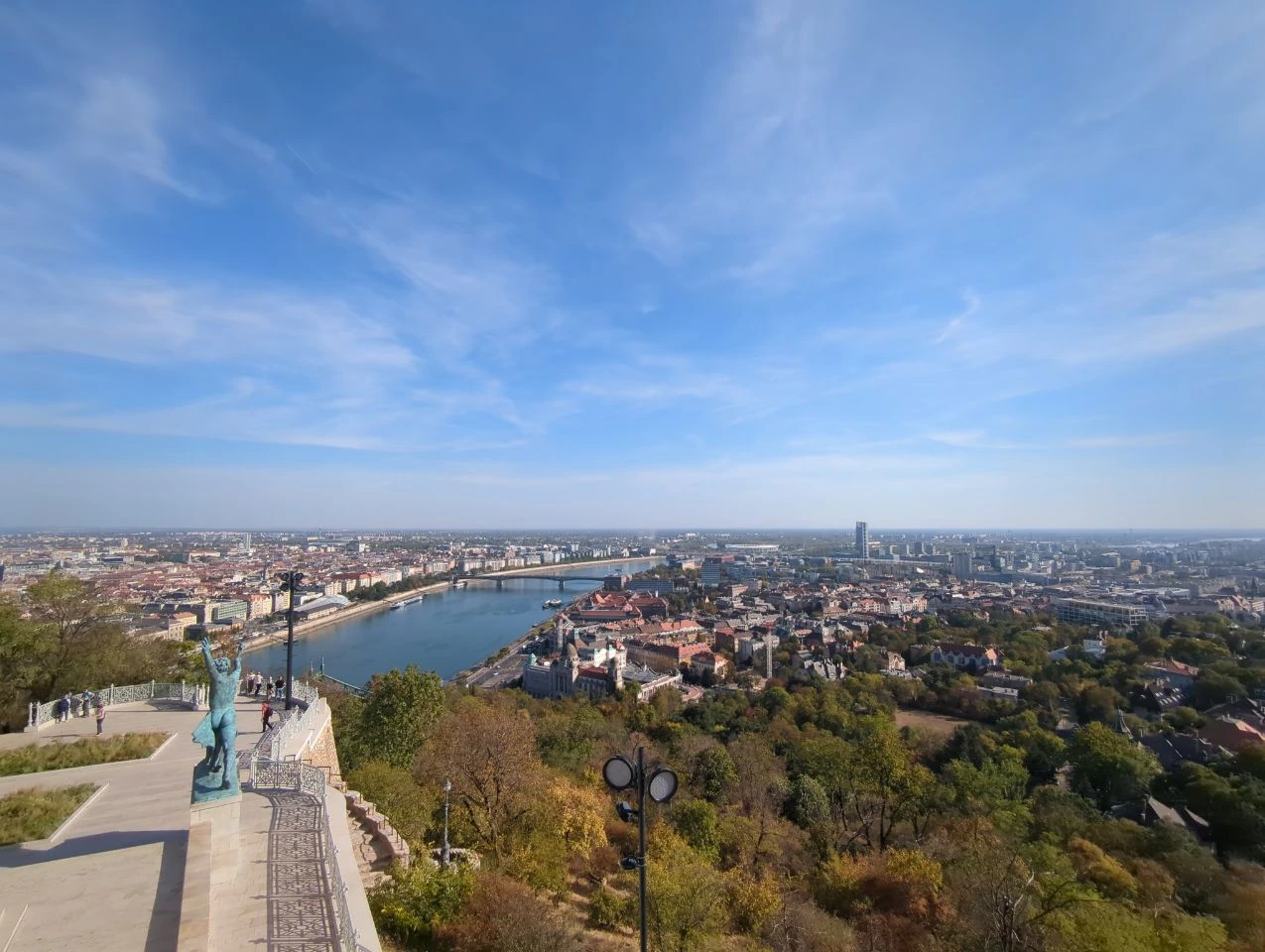
On our bright afternoon visit on 1 October 2026, those changes in foreground gave us three distinct settings. We found a green lookout, pale paving beside a dark railing, and a broader upper panorama with a statue and the river stretching into the distance. You can choose the mood that suits you or enjoy the variety as you walk. A good afternoon here doesn't depend on collecting every viewpoint.
Updated

Table of Contents
Choose the Gellért Hill photo setting that suits you
These choices can suit the same couple at different moments. You might want one picture that shows how much Budapest surrounds you, followed by something closer with your faces and expressions as the focus. If you're only stopping briefly, choose that priority first. It saves spending all your time moving between viewpoints without really enjoying one.
Once you've chosen a first setting, look at the walking connections before adding another. Gellért Hill has paths, steps and several levels. Two places that seem close on a map may involve a change of height, so follow current public routes and leave room to adjust your plan when you arrive.
The green lookout frames the city
This is the setting we'd favour for a closer portrait. Keep a little foliage at the edge and enough river visible to place the scene, but let the people remain easy to see. Two faces can disappear surprisingly quickly when you try to include every landmark. One well-placed stretch of skyline is often enough to make the photograph unmistakably about your trip.
We also noted benches arranged in a small circle nearby. They made a pleasant place to sit together and take in the view before moving towards the protected lookout. A pause like that can change the feeling of the pictures: you arrive at the rail already talking and looking around, rather than stepping into position and wondering what to do with your hands.
The area felt peaceful during our visit, but other visitors may be there when you arrive. Enjoy whichever bench is available and let the portrait follow naturally. Trees can offer gentler light for faces, although patches of sun and shade move. Take a moment to look at the light where you're standing, as well as at the buildings in the distance.
Pale paving and a cleaner railing line
The light ground gives a full-length portrait room to breathe. Try placing someone to one side of the frame, leaving the other side for the river. The railing makes a strong line through the picture, so notice where it crosses the person. A small change in camera height or position can stop it cutting awkwardly through a face or shoulder.
There was a stair nearby during our visit that could give the photographer a slightly higher position. If that stair is open and you can use it without blocking anyone, it may help show more of the city over the railing. You can also work from the terrace itself. The aim is a clearer frame from the visitor area, with everyone staying behind the barrier.
For two people, a little space between their outlines can help them remain distinct against a busy skyline. Then try a closer moment together for a different picture. You don't need a complicated pose: looking across the water, turning towards each other or taking a few comfortable steps can give the clean setting some warmth.
Go wider near the upper terrace
Give this kind of scene some room. A wide photograph can show the terrace, a stretch of river and the city beyond without making one building the subject. With a person in the picture, leave generous space around them. Their smaller size can help convey how expansive the view feels, particularly when the closer photographs from elsewhere on the hill sit alongside it.
Choose where the person stands by looking for separation. Against a dense patch of rooftops, their outline may be hard to read. A slightly different angle might put them against a clearer part of the view while keeping them well inside the permitted terrace. Use the public paths and signs to find an open position that works on your day.
This can be a brief, satisfying stop. Once you've made the broad photograph, put the camera down and follow the river with your eyes. There isn't always a reason to stay at the widest panorama for every portrait. The more sheltered, closer foregrounds can offer a different kind of picture when you continue walking.
Find your bearings at the renewed Citadella
The Citadella has reopened after its recent renewal, with new public park space within the walls. Its current park information describes planting and places to pause as part of the visit. That gives the top more variety than simply arriving, taking one panorama and heading straight down. Older descriptions of a closed fortress won't give you a complete picture of the current visit.
If a particular direction matters, the operator's viewpoint guide is useful. It describes views towards Elisabeth Bridge and Margaret Island from the North Bastion, and towards Liberty Bridge from the East Bastion. Choose a direction that includes the part of Budapest you're most curious to see from above.
The operator's description of the renewed complex also explains the eastern staircase connecting the Liberty Statue area with the courtyard and park. If you're happy using stairs, that's another connection to consider when looking at the site layout. Choose an entrance that fits the route you want, and confirm an appropriate alternative if stairs don't suit you.
Use the current site information to plan your visit, then give yourself time to notice how the view changes. The whole pleasure is in seeing the river and buildings rearrange as you move, with different pieces of Budapest becoming prominent.
Which Citadella viewpoints are free?
That distinction is useful if you've saved a photograph from a named terrace. Check which area it shows before making it the reason for your visit. A general reference to free Citadella views doesn't mean every platform is included. Equally, you can enjoy a rewarding photography walk around the public viewpoints without adding the exhibition.
The two named paid terraces offer different reasons to linger. The Roof Garden 360 provides an all-round panorama, while the Round Bastion Terrace opens towards Buda Castle. Read their descriptions alongside the public viewpoints before deciding. If one particular outlook matters to you, that comparison is more helpful than assuming a ticket automatically means the photograph you'll prefer.
If you do want to visit the exhibition, choose it as an activity with its own place in the day. Tickets use timed entry windows, and availability can affect your plans. Allow time to reach the entrance and enjoy the indoor visit instead of treating it as a quick passage to another photograph. Check the current booking details before setting the rest of your route.
The park also has seasonal opening hours, separate from the exhibition's. Check them particularly carefully for an early or late visit. A plan to photograph changing evening light needs to leave time to finish, find your way out and make the onward journey comfortably.
Getting uphill and walking down
BKK's current timetable lists bus 27 between Móricz Zsigmond körtér M and Sánc utca. The Citadella's arrival guidance recommends Búsuló Juhász (Citadella), followed by approximately 500 metres along Szirtes Road to the northern entrance. That's an approach to the complex, with further walking depending on the views you choose.
Use the journey planner for your actual starting point and date, and look at the remaining walking route. A bus ride doesn't deliver you directly into every photograph. The same applies if you prefer a taxi: agree a suitable public drop-off and check the final approach rather than expecting access to a particular terrace.
Before you begin descending, decide where you want to finish. A river-level stop, another bus connection and a return to your accommodation may call for different routes. Keep enough energy and time for that last part. Walking downhill still deserves comfortable shoes and attention, especially where there are steps or a steep surface.
Choose a comfortable route through the hill
The operator’s accessibility information states that the Citadella Park and Bastion of Liberty exhibition are wheelchair accessible, with lifts serving the Round Bastion's levels and access to park terraces and wall-walks. That applies to the renewed complex. It doesn't tell you that every approach from the river or path elsewhere on Gellért Hill is step-free.
For specific access needs, confirm the entrance, route and viewpoint with the operator before travelling. Ask about any lift you would rely on and the way between the transport stop and entrance. A useful plan joins those parts together; knowing that the destination is accessible is only one part of choosing a comfortable journey.
A clear meeting point is particularly helpful when you've arranged a Budapest photoshoot. Share any walking limits in advance too. “At Gellért Hill” leaves a lot of room for misunderstanding. A named entrance or clear public landmark is easier to find, and gives everyone a calmer start than searching for each other on different levels.
Gellért Hill photo spots in changing light
Look at faces first when you choose a position. At a shaded edge, watch for bright patches falling across one cheek or a forehead. A step into more even light can make a larger difference than moving to another viewpoint. With two people, check that one hasn't ended up in deep shade while the other is in full sun.
The pale terrace gives you fewer leafy edges to work with. If the light is uncomfortable, turn the people slightly or change the direction of the photograph before asking them to keep their eyes open towards the sun. You may decide that a wider scene suits the conditions better than a close portrait at that moment.
Later light can be an appealing reason to return. Choose a time for your travel date, check the forecast and opening hours, and arrive with room to explore before the light changes. Cloud, haze and season affect what you'll see. Plan for an enjoyable outing even if the sky never turns the colour you hoped for.
Give your viewpoint walk enough time
Begin with a moment to look around before taking pictures. Notice which part of the view draws you in, where people are gathering and where there is room to stand comfortably. That short pause often makes the first photograph more deliberate and helps you avoid spending the whole visit chasing a background someone else has just occupied.
You can also alternate the kinds of pictures you take. Make a wide view, a portrait and a small detail that means something to you, then walk for a while. At the next setting, change the emphasis. A short collection with different scales will tell the story of the afternoon more clearly than many versions of the same panorama.
If the climb does not suit your plans, compare other Budapest viewpoints for photography by their foreground, effort and access.
Make portraits comfortably in a public place
Keep bags close and shared paths clear. If someone else is taking a photograph, a brief pause may give them their turn without disrupting yours. A terrace feels more relaxed when everyone can keep moving, and you can often return to a promising angle after a few minutes elsewhere.
The Citadella's photography guidance permits private photographs in the park, at the Liberty Statue and along the promenade. Photography is also allowed in the exhibition without flash. Recording intended for public use requires prior arrangement and written permission from the operator, Várkapitányság. If you're planning a professional session or publication, clarify the intended use and location in advance; a general admission ticket isn't a photography permission for every purpose.
Plan your Budapest photographs
Gellért Hill photo FAQs
Everything you need to know about our service
Wear comfortable walking shoes between stops. If another pair matters for your portraits, carry it and change at a safe, level place. Choose clothes you can move in and keep an extra layer handy for pauses at an exposed viewpoint.
An open viewpoint offers little dependable shelter. In poor visibility, you may prefer a closer portrait setting elsewhere in the city; in rain or strong wind, reconsider the hill walk. Keep a flexible alternative rather than relying on a clear panorama at a fixed time.
Yes. Start with a normal view and move to a comfortable position within the visitor space. Keep the horizon level, check faces and background on screen, and take a separate wide picture if you want more of the skyline. Trying to fit everything into every portrait usually makes the people too small.
Yes, with time for a separate river-level stop. Liberty Bridge offers green ironwork and a closer view of movement across the Danube. Choose a permitted pedestrian position for that different scene, and plan the journey down before adding it to your afternoon.


How to Propose in London

Couple Photoshoots in London

Best Photography Spots in Lisbon: Choose the Look You Love

Our 12 Favourite Places to Propose on Holiday

What Does a Marriage Proposal Mean, and Why Does It Matter?

Why Do We Propose With a Ring? The Meaning Behind the Tradition
ENJOY $20 OFF
Your first photoshoot when you become an email subscriber.
Related Articles

How to Propose in London
Make the surprise feel like you.

Couple Photoshoots in London
Choose the London setting you love, and we’ll shape one relaxed route around it.

Best Photography Spots in Lisbon: Choose the Look You Love
Choose the Lisbon photo setting that suits you, from Alfama lanes and hilltop views to Bica, Belém, MAAT, the Tagus and yellow trams.