
How to Include Family in Your Proposal While Keeping the Moment Yours
Perhaps you can already picture your partner hugging their sister after the proposal. You can also picture wanting a few minutes alone together first. Those wishes can fit into the same lovely evening. Including family starts with deciding when their presence would feel welcome, and giving the two of you room to enjoy what is happening.
Updated

Table of Contents
Start with the moment your partner would enjoy
You can talk about these preferences while discussing marriage, without revealing your proposal date. A simple conversation about whether you would each want anyone there is more useful than asking relatives to guess. If your partner has already told you, let that answer guide the plan.
Family might mean parents and siblings, your children, close friends or the people you have chosen as family. There is no required guest list. Begin with who makes your partner feel comfortable, then choose whether they belong before, during or after the proposal.
A useful test is to picture the few seconds after you ask. Would your partner instinctively want to turn towards the people watching, or stay close to you and speak quietly? If you are unsure, our ideas for proposing to someone who dislikes attention can help you consider the setting. You can share the excitement widely later without putting everyone in the opening scene.
Find out what family traditions mean to each of you
In her Gottman Institute advice on family gatherings, therapist Liz Higgins encourages couples to approach family traditions with curiosity and discuss their own boundaries together. Her article concerns holidays rather than proposals, but that starting point is helpful here too: understand the meaning of a custom before assuming you both want to follow it.
If your partner welcomes a blessing, decide whose blessing matters and what you want to say. You could express how much you value their family and your hope to celebrate together. Keep your partner's own wishes at the centre of the conversation. And if different families expect different things, you can acknowledge both without creating a ceremony neither of you actually wants.
Before: let someone help in a personal, quiet way
Give each person a small, clear part that suits them. You do not need to open the whole proposal up for a group discussion. If a blessing or family conversation matters to your partner, follow the tradition in the way you have discussed together; relatives knowing first is not a requirement.
Once you know who is helping, keep the surprise easy to manage. Our guide to keeping a Dubai proposal a surprise covers the discreet messages and simple coordination that can support this part of the plan.
During: make being together feel comfortable
If you have a photographer, discuss where the family will stand. One group to the side may leave a clearer view of your partner's expression than a circle of people around you. Relatives holding phones in front of their faces can also end up blocking one another's view; decide whether everyone would enjoy simply watching.
Children can have a sweet, age-appropriate role if they want one, such as giving a card afterwards. Keep their participation optional and have an adult ready to help, so the moment does not depend on a child remembering a cue.
Give children a part they can enjoy, and an easy way to change their mind
UNICEF's guidance on communicating with young children recommends listening to their feelings, using language they can understand and speaking clearly. Applied to this occasion, that might mean asking, “Would you like to give us your picture after we have talked, or would you rather stay with your aunt?” Both answers can work beautifully.
Keep the explanation simple and the responsibility small. An adult can look after the ring, keep track of the timing and handle any last-minute change. A child does not need to safeguard an expensive surprise or deliver the perfect line for the proposal to happen. If they suddenly feel shy, the card can come out at breakfast the next day.
Where a marriage would bring households together, leave room for children's own questions about what it means. Those conversations deserve attention beyond the proposal itself. Let the adult commitment be yours to express, with children included in a way that suits their understanding. They can be delighted, distracted or thoughtful without having to perform a particular reaction for everyone watching.
After: ask privately, then bring everyone into the joy
For example, you could imagine a quiet walk followed by dinner with family nearby. The dinner gives everyone something to look forward to without putting them within earshot of the question. If the gathering will be a surprise too, be confident that your partner would welcome it. Otherwise, decide together afterwards when you want to see everyone.
Give one relative the job of waiting for your message. “We'll let you know when we're ready” leaves more breathing room than promising an entrance at an exact minute. A hug, a conversation and a few photographs can all take longer than you imagined.
Keep the next part easy to join. If you are going to dinner, allow time to return from the proposal location and freshen up without a roomful of people waiting for an entrance. You might even tell your partner about the gathering after the question and let them choose when to head over. “Your favourite people would love to celebrate with us when we're ready” feels different from discovering a crowd is waiting around the corner.
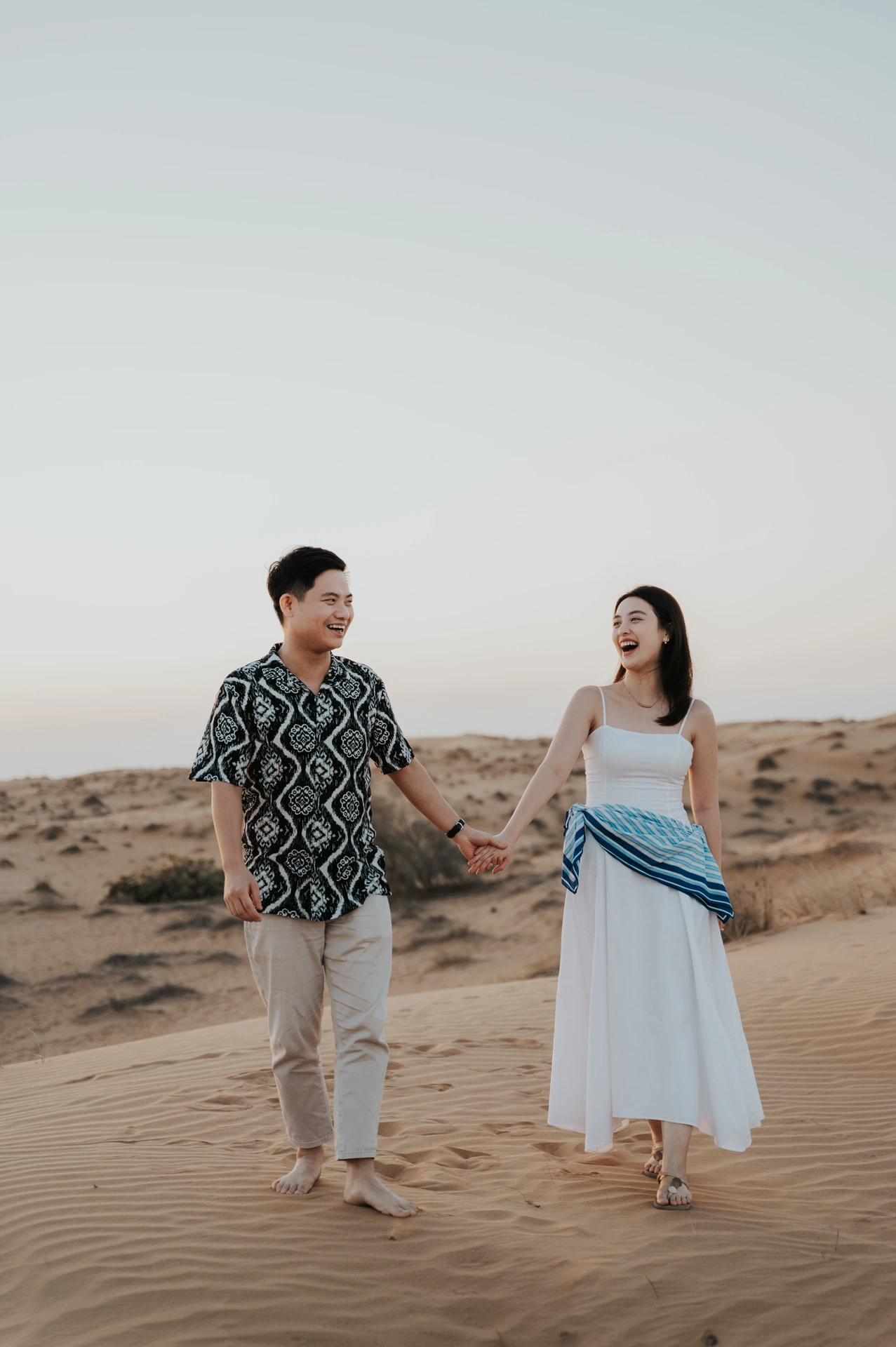
A desert portrait of two people enjoying a moment together.
Ask one trusted person to look after the family plan
A short message is often enough: “We are having the proposal on our own, then we'd love everyone to meet us for dinner. Please wait at the restaurant, keep the news off the family chat for now, and wait for my message before coming over.” Add who is attending, where they should go and what happens if you are later than expected. Give the coordinator any booking contact they actually need, without circulating the whole surprise.
Decide who will handle the ordinary things too: helping a grandparent find the entrance, bringing a child to the right place, or checking that someone travelling separately has arrived. If relatives are booking transport or paying for their own meal, explain that beforehand. People can enjoy being invited much more easily when they know what the invitation involves.
The coordinator's final job can be wonderfully simple: once you arrive together, put the planning away and join the celebration.
Let the guest list reflect your relationships as they are
Separated parents, strained relationships or relatives who do not get along may make one gathering feel difficult. Separate calls or small celebrations can be a thoughtful choice. You do not need to use the proposal as the occasion to repair a relationship, arrange an unexpected reunion or prove that everyone can share a table. Follow what your partner has told you about the people they want involved.
If someone important has died, ask yourself whether an acknowledgement would comfort your partner in this moment. A photograph at dinner or a private mention might feel right; a surprise public tribute could feel overwhelming. When you do not know, leave that choice for a conversation together afterwards. Remembering someone does not have to become part of the proposal to be meaningful.
Chosen family belong in these decisions too. The person who knows your partner best may be a friend who has been beside them for years.
When family are abroad, let the call fit around you
Check the time where relatives are staying, including the date if you are far apart, and have a rough idea of when a call might suit. Avoid promising a live broadcast unless you already know your partner wants one. A next-morning conversation can feel much nicer than everyone trying to stay awake for an uncertain time.
A voice note, a short recorded message or a photograph later can include someone who cannot join a call. If sharing the memory matters to you, our guide to proposal photos, video or both helps you think about what you would like to keep. Confirm delivery timing before promising family a professional photograph that evening.
If relatives do not share a language, separate calls can give each conversation more room. You might record a simple message together for one side of the family, then have a longer conversation with the other later. There is no need to combine everyone into one busy screen to make their involvement count.
A Dubai holiday can have a moment for two and a family celebration
When planning with a proposal photographer in Dubai, explain which people will be involved and when you want them to appear. Ask about a position that keeps the first photographs focused on the two of you, then a suitable place for family portraits if you would like them. Any group coverage should be agreed as part of the booking.
Our guide to choosing your proposal photography duration can help you allow room for both. If you are considering a celebratory meal by the sea, the Shimmers proposal and dinner guide explains why the proposal and the restaurant booking may need separate plans.
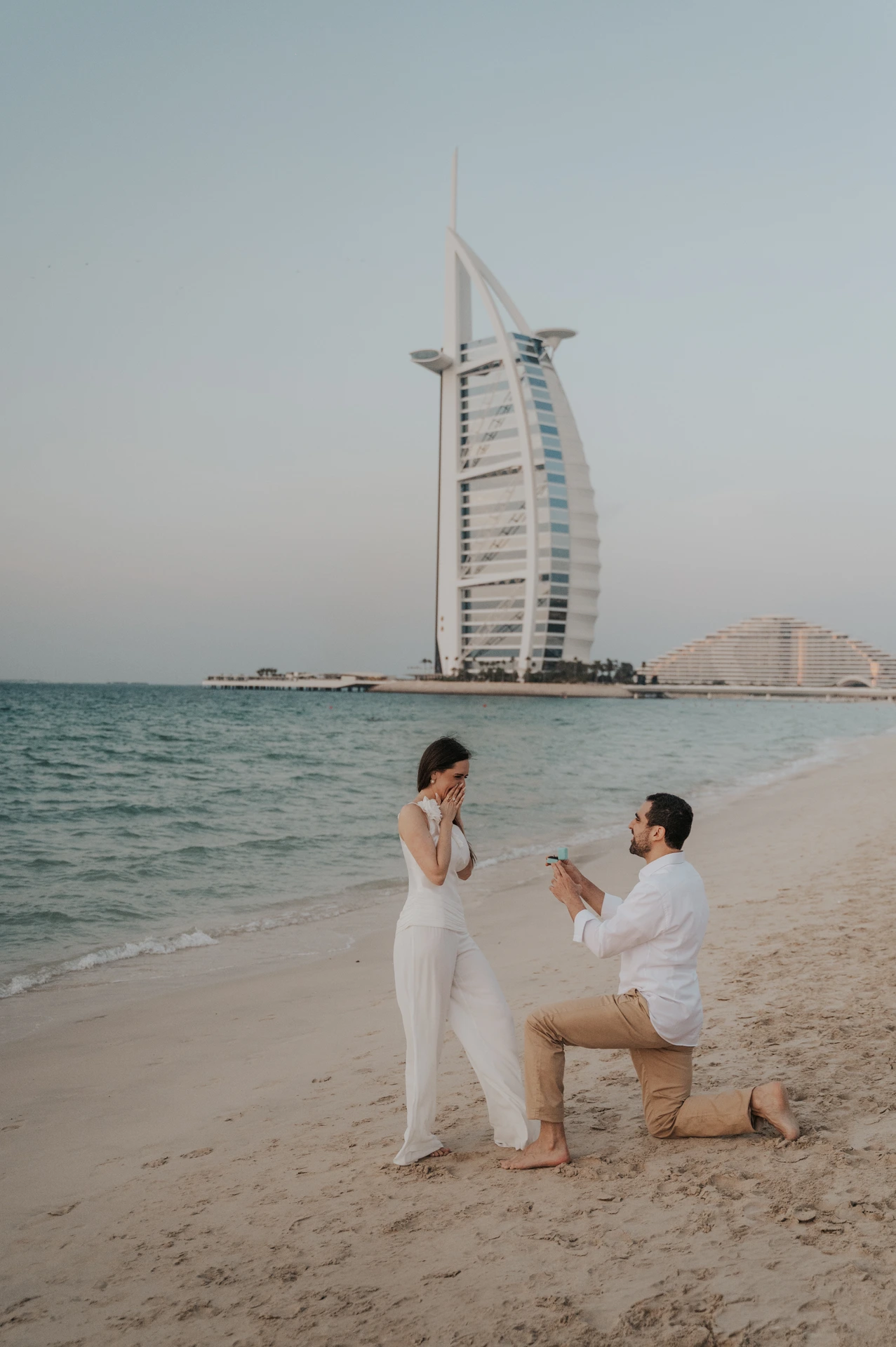
A beach proposal in Dubai can be one chapter of a bigger family holiday.
Plan a few family photographs, then let everyone enjoy themselves
Share that short list with your photographer in advance and confirm the time and coverage needed. Let the coordinator help identify people when it is time, especially if the photographer has not met them. Anyone who needs to leave early or would be more comfortable seated can be included first.
Leave room for the unscripted photographs too: your partner showing someone the ring, the first hug with a sibling, or a parent listening as you tell them how it happened. Those little exchanges help the pictures feel like your family. After the agreed group photographs, you can return to the table instead of keeping everyone waiting for another combination.
Before sharing the gallery more widely, check together which pictures you want to make public and whether anyone pictured would prefer their photograph to stay within the family.
Give enthusiastic relatives a kind, clear boundary
You also do not need identical numbers from each side of the family. Geography, closeness and complicated relationships may mean different forms of involvement. Keep the decision centred on what feels comfortable for you both, and use separate calls or celebrations if that would be easier.
Once you are ready to share the news, agree together who you would like to tell first. Ask relatives to wait before posting pictures or passing the news on. That leaves you the pleasure of making those first happy calls yourselves, whenever you are ready.
Planning your own proposal in Dubai?


How to Propose in London

Our 12 Favourite Places to Propose on Holiday

What Does a Marriage Proposal Mean, and Why Does It Matter?

Why Do We Propose With a Ring? The Meaning Behind the Tradition
Can You Propose Without a Ring? Thoughtful Ways to Make It Special

Nervous About Proposing? How to Stay Calm in the Moment
ENJOY $20 OFF
Your first photoshoot when you become an email subscriber.
Related Articles

How to Keep Your Dubai Proposal a Surprise
Practical help with the discreet part of your Dubai proposal: cover stories, supplier messages, ring access, arrival changes and the photographer cue.

Dubai Proposal Photos, Video or Both: What Should You Book?
Photographs to print, a film to watch together, or both? Choose the right coverage for your Dubai proposal, from the surprise to the words you want to keep.

Dubai Proposal Photography: Do You Need 30, 60 or 90 Minutes?
Choose between 30, 60 and 90 minutes of Dubai proposal photography, with room for the question, reaction and the portraits you want afterwards.