
October 3, 2026
Imerovigli photo spots: blue domes, flowers and Skaros
Come to Imerovigli for that wonderful sweep of sea, then let the smaller things catch your eye. A blue dome rises above pink flowers. White stairs turn between buildings. Skaros Rock gives the caldera a bold, dark outline, while the village continues along the cliff towards Fira. You can enjoy all those different pictures without making a hike the centre of your day. Here's how to choose the scenes you'll love, with a separate look at the walk towards the chapel beyond Skaros.
Updated

Table of Contents
A village walk with plenty to look at
You might come home with one photograph full of sea and dark volcanic islands, and another that's mostly the person you came with. Both belong to this walk. Begin with the white buildings against that enormous view, then let a turn in the lane or a colourful doorway draw you closer. Together, those pictures can bring back both the place and the pleasure of being here with someone.
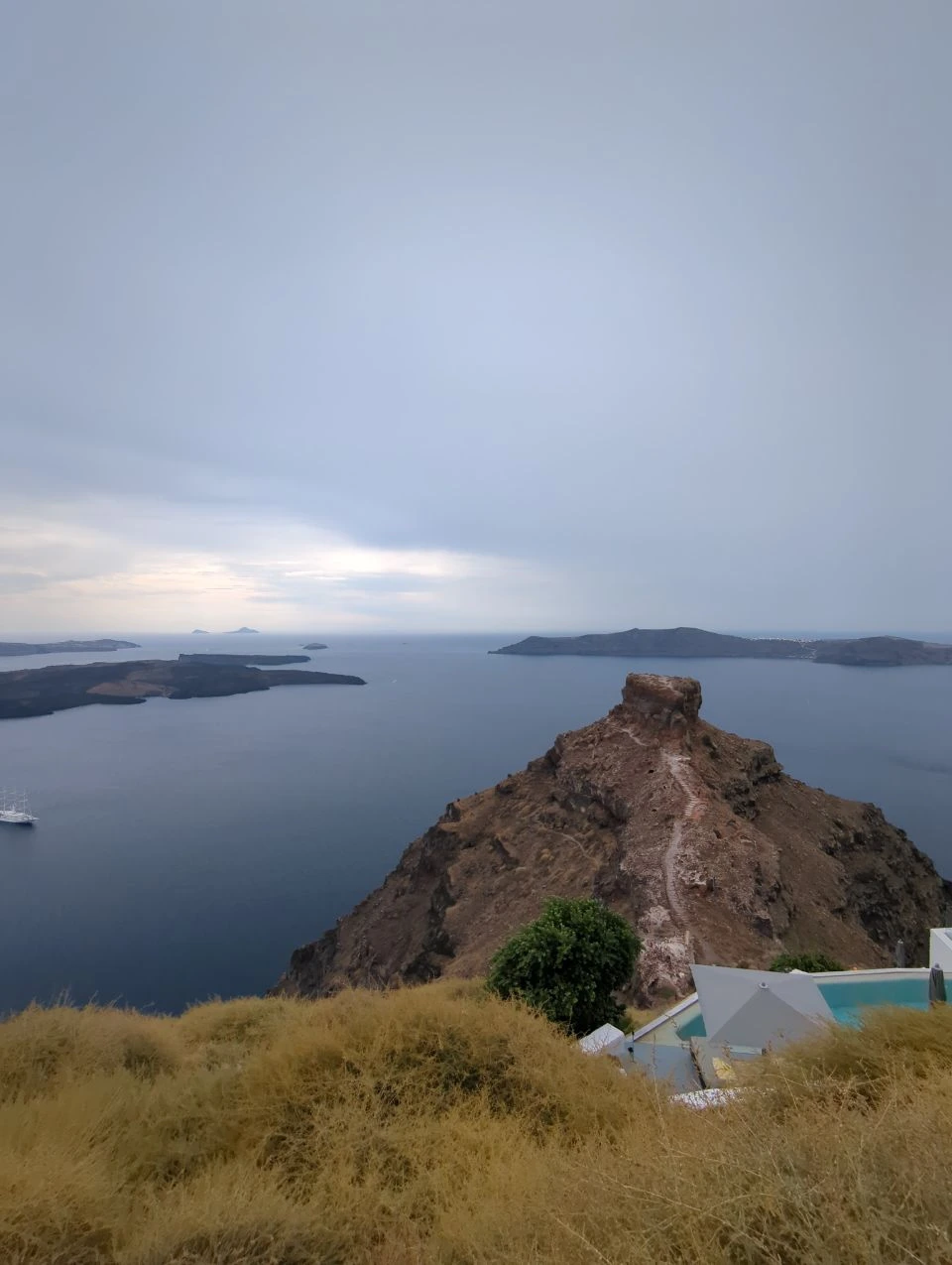
Skaros can be a highlight of your visit while your feet stay in the village. From Imerovigli, you can enjoy its whole outline, the path along its narrow neck and the sea around it. Walking down towards the rock is a separate outing, with more effort and different ground underfoot. Let your eye follow the coastline around it before you move on.
For now, let the village be the visit. Choose a few appealing scenes and follow the public pedestrian ways between them, adapting to signs and the space available. White roofs, church grounds and hotel terraces can blend together from above, but they aren't interchangeable places to stand. Give anyone arriving at a doorway room to come and go, then enjoy the view opening beside the buildings.
Give Skaros room in the picture
The view changes when white village buildings enter the foreground. Now the picture holds two very different Santorinis: the built-up cliff beside you and the bare outcrop ahead. Look along the curve of the coast as well as straight at the rock. That wider sweep is part of Imerovigli's pleasure, especially if your other holiday photographs have concentrated on a single church or doorway.
For a portrait, decide how much of that landscape you want to keep. A wide photograph may make you a small part of the scene, which can be lovely. Then come closer for a second picture where your expressions matter more. You and whoever's taking the photograph can both stay on the pedestrian path, leaving room for others to pass; a dramatic background doesn't require a dramatic place to pose.
There's a human story in that apparently bare rock, too. Skaros was the first Venetian capital of Thera, with a fortified settlement dating from the thirteenth century. The Ephorate of Antiquities describes an upper and lower castle, with houses whose outer walls helped form the town's defences. Looking across from Imerovigli, it's worth imagining the density of a settlement where today's view is mostly rock and fragments of masonry.
What survives is a ruined castle-city, not an intact castle with rooms to explore. Its history makes the outline more interesting without turning your photo stop into an archaeological expedition. Take a moment to notice the difference between the high rock and the ground around its base, where the lower settlement stood. Then look back towards the living village behind you: the old capital and today's white buildings tell very different parts of the island's story.
The blue dome above the flowers
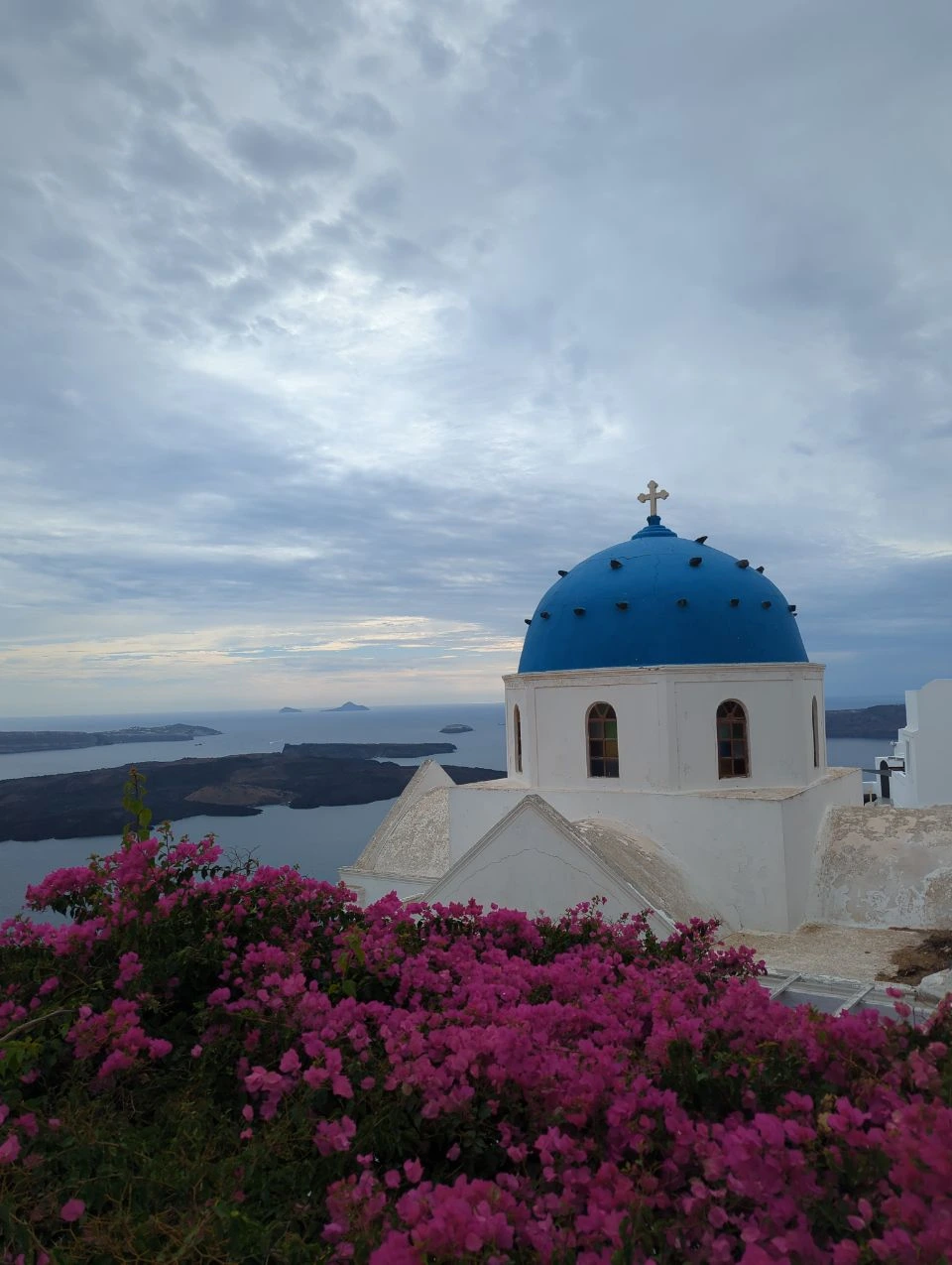
From the higher lane, the dome and flowers can make a beautiful picture all by themselves. A high wall separates you from the church below, so the view that catches your eye may leave little useful space for a person in the same photograph. Enjoy the colour and the caldera from an ordinary standing position. You can save your portrait for somewhere with room on the pedestrian path, without climbing or perching on the wall.
Closer to the church, the gate and bell structure offer smaller subjects. A detail of blue paint against white masonry can sit happily beside the wider dome photograph. Look at the building as it is, rather than trying to reproduce a polished version from someone else's gallery. Weathered surfaces, the shape of the bells and the changes in level are part of the scene, too.
If a particular church has caught your eye, save its name and map location along with the photograph. That makes meeting beside the right one much simpler. The regional tourism guide lists the Church of the Resurrection, often called Anastasi, separately from Panagia Malteza and St George. Theoskepasti is farther away, on the western side of Skaros. Blue domes are part of the pleasure here, but their colour alone won't tell you which church you're looking at.
And let the flowers be a lovely possibility, not the condition that makes the stop worthwhile. The pink bougainvillea in these photographs was recorded in September; the display can change with season and maintenance. Even without that colour, the dome, gate, white walls and sea give you different things to notice. Choose the picture the village offers on your day rather than making the visit depend on one flowering branch.
Turn towards Fira for a different view
Look for the Honeymoon Petra Villas sign as a landmark near the stairs, then enjoy the southern view from the public pedestrian way. Towards Fira, the buildings follow the cliff; looking back brings Imerovigli into the picture again. The sign helps you recognise this part of the walk, while the hotel's pools, terraces and guest areas remain private. There's plenty to enjoy from the route itself without making a hotel visit part of the plan.
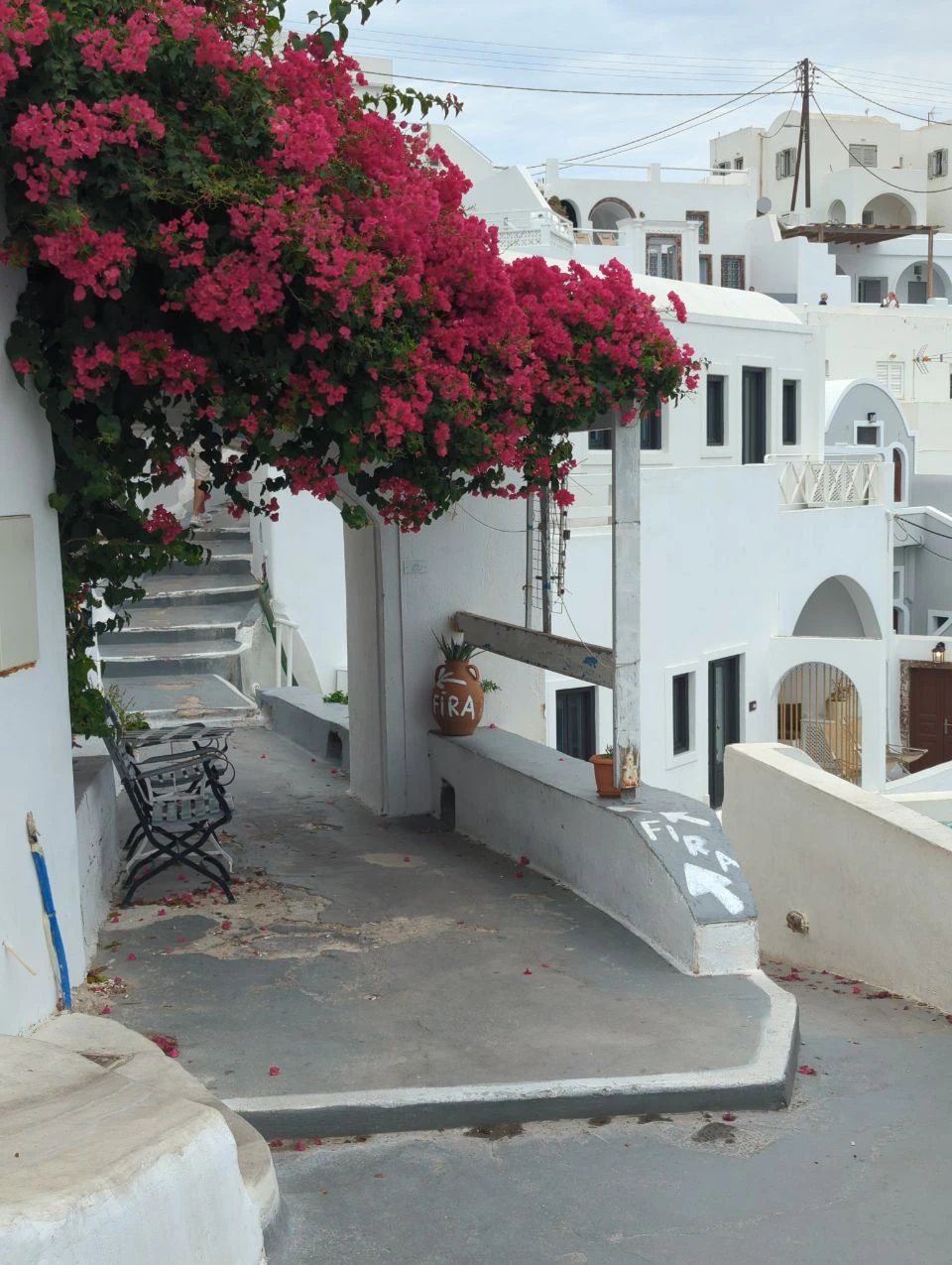
The smaller passage nearby brings you back into the village. White steps, a narrow turn and pink flowers make a much closer scene than the open water. The painted direction towards Fira is a nice detail in the passage photograph: you're looking at a route people use, not a little stage built for visitors. Pause where there's enough room for someone else to walk through.
Stairs can add a lovely sense of movement without anyone needing to perform for the camera. Take turns with the camera so each of you has a photograph in the village, then carry on together. If the passage is busy, photograph the shapes and flowers another time or continue to the next open view. You don't need to occupy the whole stairway for the picture to feel personal.
This southern side also helps you decide whether to keep exploring. Firostefani and Fira lie along the connected caldera walk, but reaching them is a choice to extend the outing, not a required final chapter. If you like the idea of more churches, coloured buildings and views back towards Skaros, the Fira and Firostefani photo walk takes that story further.
The separate walk towards Theoskepasti
If the chapel is the part you're looking forward to, give the walk enough room to feel like an outing of its own. Topoguide describes the descent from Imerovigli to the saddle, past castle remains and towards the lower settlement and Theoskepasti. Its roughly thirty-minute figure is for a one-way route. Leave additional time for photographs and the uphill return, rather than expecting the whole visit to fit into half an hour.
Give yourself time to enjoy looking around on the way back, too. The village sits above you, and returning means climbing steep steps and uneven stretches with little shade. Comfortable walking shoes, water and enough daylight for an unhurried return belong with the camera. Let the chapel's place in the landscape be the reason for going: an open interior is something to confirm, not part of the promise of the walk.
Keep the chapel walk for a day when the conditions and your own energy suit it. Check the current signs before continuing: an old photograph or route description can't tell you whether a section is open today. Respect closures and save the walk for another time if the ground or conditions make it unsuitable. If the route is open and suits you, keep this outing to the walk towards the chapel, leaving the summit and surviving stonework untouched.
If you love a good walk as much as taking photographs, this separate excursion could be a memorable part of your visit. Give it its own time and attention rather than adding it while someone is already tired or a dinner reservation is approaching. Back among the buildings, the contrast is part of the pleasure: after rough ground and open sky, you're among white walls and little turns in the lanes again.
Make room for the person beside you
If you're planning a surprise, agree on the walking before keeping the occasion secret. Another of Anna's accounts, Sean and Krystyne's proposal, includes the very human detail that Krystyne didn't want to take the stairs. It's a useful reminder to choose somewhere the other person will enjoy reaching. You can keep a ring or a photographer's presence a surprise without keeping the effort of the outing a surprise too. If a photographer will capture the moment, agree where you'll meet, the short walk you'll take, where they'll wait and your cue. Settle any access arrangements beforehand so you can give your attention to each other. For more outings built around what you both enjoy, explore our adventure proposal ideas.
If you're travelling with children, you're pregnant or you'd simply enjoy fewer stairs, choose a small part of the village where you can take your time together. Before settling on a favourite photograph, ask where you'll meet, how you'll reach the first scene and whether you'll be climbing repeatedly. Village-side still means hills and steps, so check the actual approach rather than assuming it's step-free. A few views you can enjoy comfortably make a lovely centre for the visit.
It also helps to choose what belongs in the photographs before adding more walking. Perhaps you want one picture of everyone together with the caldera behind, then a few closer moments. Perhaps the blue dome matters much more than Skaros. Say that early. A clear favourite gives the outing a centre, while leaving space for a flowered corner or a view that catches your attention along the way.
Morning colour, bright afternoons and evening Skaros
Daylight has its own pleasures. The contrast between blue paint, white walls and pink flowers can be a reason to bring the camera out well before the evening. A photograph of the church and sea doesn't ask exactly the same things of the light as a close portrait. If you've arrived during a bright part of the day, start with the buildings and details you like, then look for a comfortable position for faces.
A bright-day gallery can be lovely inspiration, especially when you know a little about how it was made. For Jonathan and Be's Imerovigli and Skaros session, Dreamodd describes a light assistant working alongside the photographer, using reflected light for their portraits. If those are the pictures you love, share them when discussing your own session and ask what would suit the light on your day. There's more behind those faces in the sunshine than choosing a village and an hour.
Evening brings a different attraction: warmer light, a changing sky and the possibility of Skaros becoming a strong silhouette. It can also bring more people to the dome and along the paths. Choose evening because you'd enjoy spending that part of the day here, with time to watch the view change. The sun's exact position shifts through the year, so a photograph with it tucked beside the rock isn't a year-round appointment.
Choose an outing you'll enjoy being in, whatever the sky is doing. Wear clothes you can move in and fasten loose hats, scarves or other accessories before heading onto exposed parts of the walk. If wind or rain makes the walk unpleasant, shorten it or choose another time; a narrow village lane isn't necessarily sheltered either. For help choosing the wider shape of your trip, see when to take photos in Santorini.
Arrive with time for the walk itself
A little planning for the journey home lets you enjoy the village without watching the clock quite so closely. The current KTEL timetable names the Fira–Firostefani/Imerovigli service, with departures in both directions. Check the version for your travel date, confirm the stop you need and choose a return that fits your outing. For sunrise or a late finish, first establish whether a suitable bus runs; a bus labelled Oia isn't confirmation that it will make your Imerovigli stop.
A road arrival and a photo meeting point aren't necessarily the same place. Before setting off, look at the pedestrian approach to your agreed landmark and ask about steps if those matter to you. Keep the meeting details available on your phone. Once you're in the village, it's much nicer to spend your attention on the flowers and the sea than on finding someone at a different church with a similar name.
Leave space at the end for whichever part you've enjoyed most. You might want another look at Skaros after the light changes, or simply a few more minutes among the village buildings. The aim is a set of photographs that reminds you of time you liked spending here, not proof that you reached every point on a map.
Put yourselves in the Imerovigli story
If you'd love photographs of you together in these surroundings, tell Travaya which part draws you most: the broad caldera, the blue-and-white village or a few closer moments along the lanes. Share where you're staying and how much walking feels comfortable. You can explore the Santorini photographer options and message Travaya on WhatsApp to discuss a plan that suits your trip.
Imerovigli photo walk FAQs
No. Imerovigli sits high on the caldera rim, but it isn't the island's highest point. Santorini's mountain summit is at Profitis Ilias. Come to Imerovigli for white village buildings and Skaros beside the caldera; keep the mountain outlook as a separate outing if you'd also like a broader view across the island.
If a church is open and you'd love a photograph inside, ask there first. These are places of worship as well as beautiful buildings, so let worshippers and services have the space they need. When a service is taking place, you can enjoy the village around it and ask about photography another time. A lovely exterior alone tells you neither the opening arrangements nor whether indoor photographs are welcome.
It could be a lovely way to put your stay into the photographs, if your hotel agrees. Tell the property what you're planning and ask whether a professional photographer may enter and which areas you can use. A room booking or a wedding photograph from the same hotel doesn't settle those details. Once you have its agreement, you can decide whether the terrace will be the main setting or just one part of your visit.


How to Propose in London

Couple Photoshoots in London

Best Photography Spots in Lisbon: Choose the Look You Love

Our 12 Favourite Places to Propose on Holiday

What Does a Marriage Proposal Mean, and Why Does It Matter?

Why Do We Propose With a Ring? The Meaning Behind the Tradition
ENJOY $20 OFF
Your first photoshoot when you become an email subscriber.
Related Articles

How to Propose in London
Make the surprise feel like you.

Couple Photoshoots in London
Choose the London setting you love, and we’ll shape one relaxed route around it.

Best Photography Spots in Lisbon: Choose the Look You Love
Choose the Lisbon photo setting that suits you, from Alfama lanes and hilltop views to Bica, Belém, MAAT, the Tagus and yellow trams.