
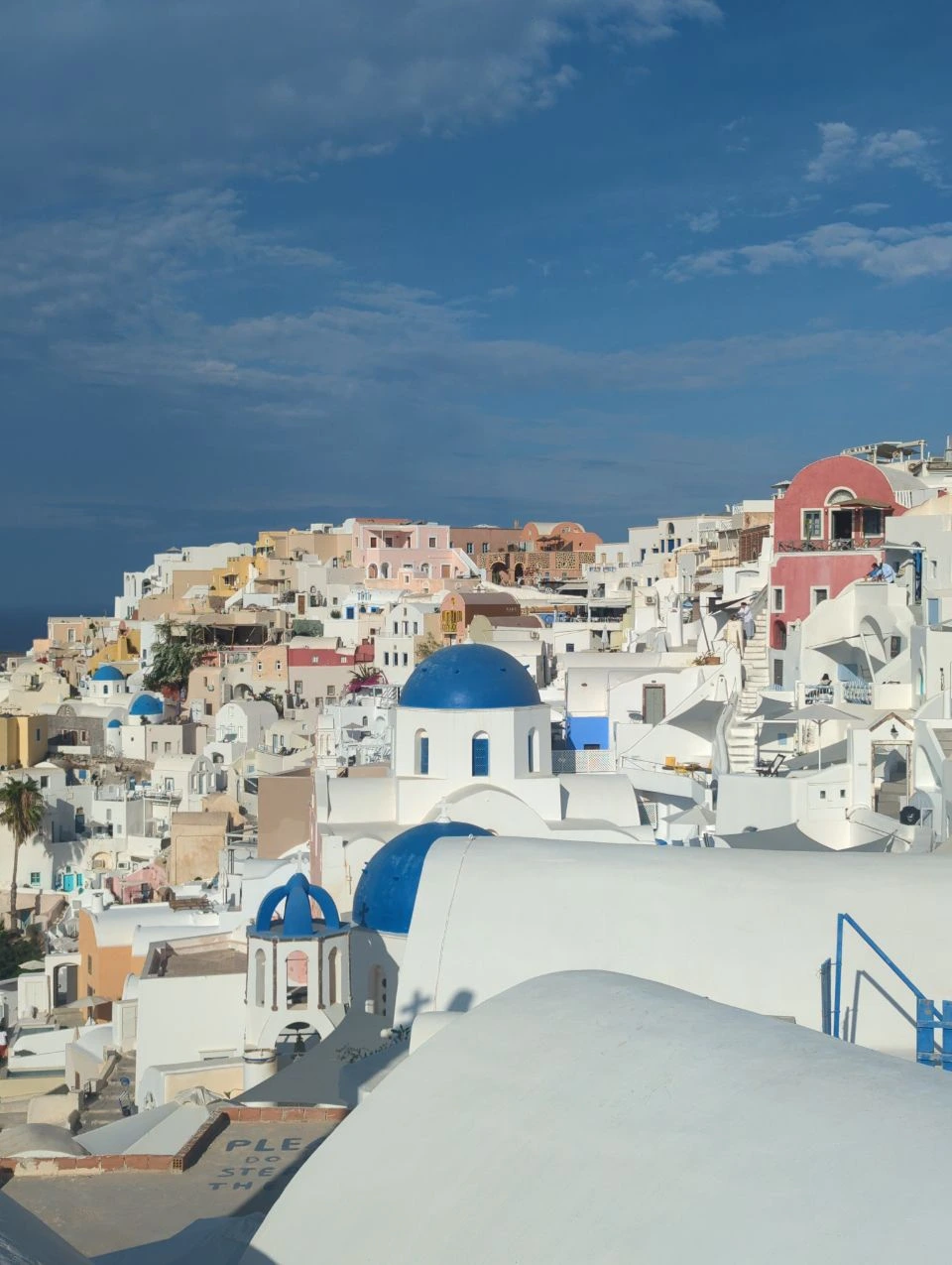
October 3, 2026
Santorini highlights: choose the experiences worth your time
Blue domes and a wide-open caldera are a lovely beginning. Santorini also has a buried town to explore, music inside a former winery and a seaside factory full of island stories. The best part is choosing what you'd enjoy, whether that's boats below Oia, an afternoon in a village or a closer look at the people behind the postcard.
Updated

Table of Contents
Make room for different sides of Santorini
For a first visit, give yourself one caldera experience you're genuinely excited about, then choose something that adds another side of Santorini. Think about the activities you enjoy at home, too. A love of music, food or history can point you towards a part of the island you might otherwise pass by.
You can happily spend longer in one place. A waterfront meal, a slow look at a painted ancient wall or a conversation over a wine tasting can become the part you remember most. Decide which sounds appealing before adding another village to the map. The island has plenty to offer without every outing ending at another sunset lookout.
Oia and Ammoudi: village time and waterfront time
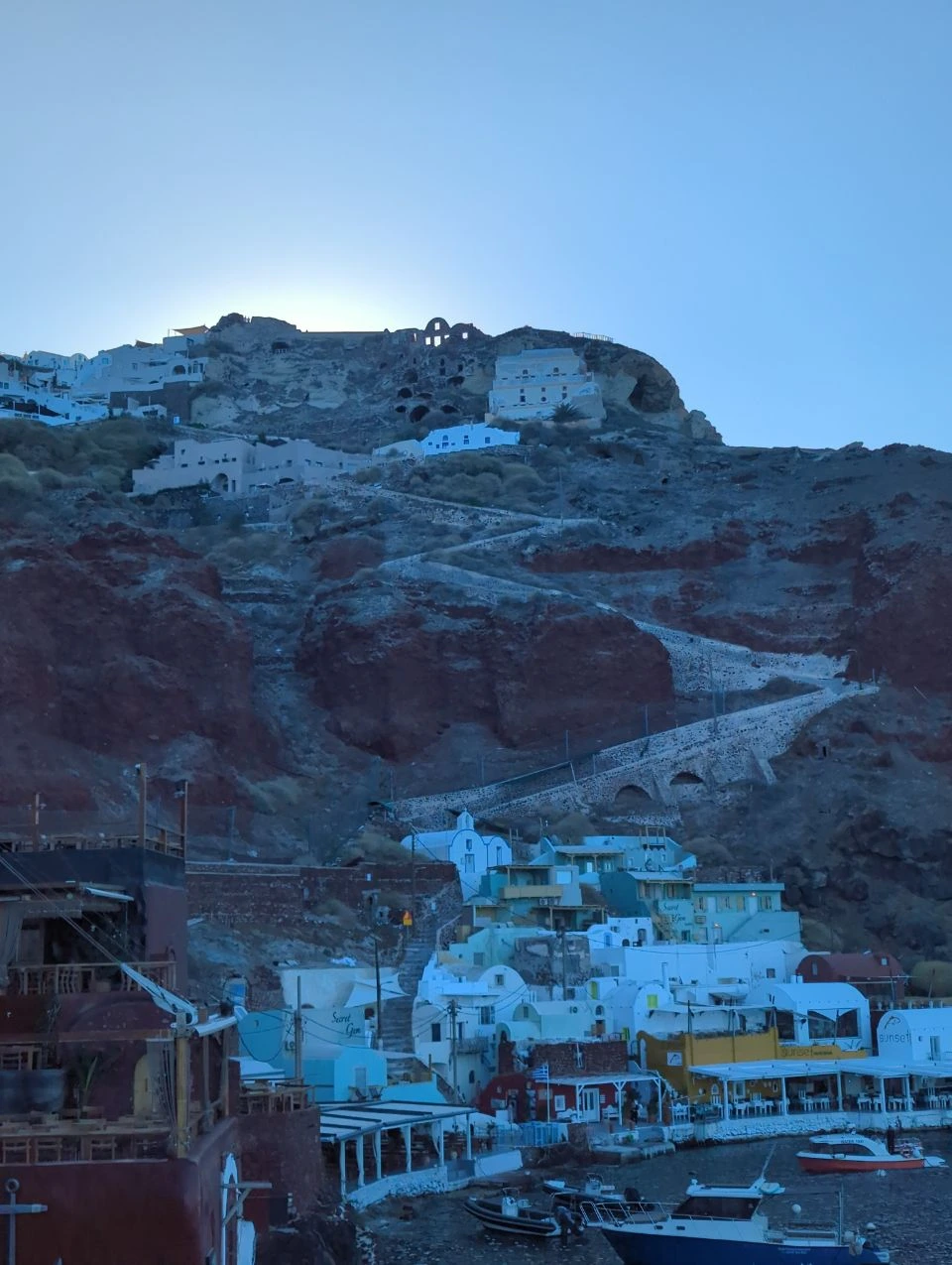
Ammoudi changes the experience. Down at the harbour, boats and restaurant fronts are close, while the cliff and castle rise above them. It's a place to choose because you want to be by the water, perhaps to sit over a meal, rather than because an Oia checklist says the descent comes next. The harbour photograph here looks upwards, which helps explain just how different those two levels feel.
Local photographer Anna Sulte's anniversary story for Jacqueline and Luis follows that change: they started with Oia's caldera views and finished at Ammoudi near sunset. It's a lovely example of choosing two settings with different character. You can take inspiration from their evening, though the harbour may be busier when you visit and your timing may be different.
A meal beside Ammoudi's boats is easier to look forward to when you know how you'll get back up. Under the access rules checked in October 2026, pedestrians may visit the harbour, while general road traffic is restricted. Check the current signs and arrange a permitted return before planning on collection at the water. Keep your outing within the harbour: the path beyond it towards Agios Nikolaos is prohibited, including as a way to reach a swimming spot.
If the climb or transport doesn't suit your day, Oia still offers plenty on its own. Leave time for the village rather than making the harbour a test of whether you've seen it properly. The Oia photo guide goes further into the town's individual settings when you're ready to choose them.
A caldera walk that leaves room for the rest of the day
Choose a stretch that suits how you want to spend the day. A walk around Fira, a continuation towards Firostefani or time on the village side of Imerovigli can each give you that caldera feeling. The full walk to Oia is a separate outing, not something you need to finish to justify putting on comfortable shoes.
Around Imerovigli, Skaros gives the open water a strong, dark shape. You can enjoy seeing the rock from suitable public village paths without making a walk onto it part of the plan. Stay with the views that feel comfortable, leave entrances clear and check whether you're allowed onto hotel terraces or church grounds, even if you've seen them in somebody else's photograph.
This is an especially useful choice if you'd like landscape and culture in the same day. Fira has the Museum of Prehistoric Thera as well as its cliffside streets, so you can spend time with the island's past before returning to the open view. For the individual colour stops and walking choices, use the Fira caldera photo walk.
Akrotiri and the museum: the town and what filled it
The painted walls and household objects give this Bronze Age town a life beyond its age. Its maritime connections help explain those rich finds, preserved beneath volcanic deposits. You can follow the organised visitor paths described in the Ephorate's Akrotiri information, looking into the excavated remains from the designated positions. The pleasure is in piecing together the town from above; the ancient rooms themselves aren't open for you to wander through.
Then there's the other half of the story, in Fira. The Museum of Prehistoric Thera brings together objects and wall paintings that help you picture what filled the town. Furniture casts, vessels and tools speak to everyday life. The restored frescoes introduce people, plants and colour, including the fishermen and saffron gatherers described in the museum's collection.
Seeing a street and then a household object changes the question from “How old is this?” to “What was life here like?” That's the reason to consider both visits. You can visit them on different days: the excavation is near Akrotiri in the south, while the museum fits into a day exploring Fira. Each can also stand alone if one interests you more. Fira also has a separate Archaeological Museum of Thera, so use the full museum name when choosing your visit.
If a day of painted walls and ancient streets sounds appealing, choose the date along with the visit. Akrotiri's hours change by weekday and season, while the Museum of Prehistoric Thera currently closes on Tuesdays. On a wet day, the museum's indoor collections may appeal more than an exposed hillside; Akrotiri has a protective shelter, though neither place is a guaranteed bad-weather option. Check the official visitor information before setting off.
At Ancient Thera, the theatre and market remains share your attention with the open hillside of Mesa Vouno. This is a later settlement, quite different from Akrotiri's sheltered Bronze Age streets. Choose the hillside if being outdoors among the remains is part of the appeal, or Akrotiri if you're drawn to the prehistoric town beneath its protective roof. Both offer a way into the island's past. On the map, keep the excavation separate from modern Akrotiri village and the Akrotiri lighthouse, which are different visits again.
Give an inland village an afternoon of its own
One reason to stay is Symposion, a music and mythology centre in a former winery. The setting already gives you something to be curious about before the instruments enter the story. Its programme includes music presentations, workshops and performances, so a visit can involve listening and learning as well as looking around.
Choose the particular activity that interests you. An instrument-making workshop is a different commitment from a presentation or an evening performance, and they aren't all included in every visit. Look at the current programme, then let that booking give the rest of your village time its shape. You might enjoy the square beforehand and return to the lanes afterwards, without trying to squeeze two other villages around it.
Pyrgos offers a different pleasure. Its hillside lanes build towards the Kasteli, with doors, flowers and church roofs appearing at different levels. Part of the enjoyment is noticing how the village changes as you go higher, then seeing familiar buildings from another direction on the way back. Choose it when the walk through the settlement itself is what you're looking forward to, with pauses along the way.
Emporio draws you into closer spaces. Around the Kasteli, passages turn, stairs rise between houses and vaults or bridges appear overhead. The pale-blue-domed church in the photograph here gives one open view of the village; the enclosed lanes offer another. You can enjoy both without needing to identify every church or find a supposedly secret courtyard.
A café table in Megalochori, the climbing lanes of Pyrgos or Emporio's close passages: choose the village that makes you want to stay a little longer. These are places where people live, work and worship, so leave doorways and steps clear and enjoy the lanes open to visitors; a closed gate marks the end of that detour. The Pyrgos, Megalochori and Emporio guide explores their differences if you're still deciding.
Vlychada's shore and the island's working life
The tall chimney nearby points to another Santorini. The Tomato Industrial Museum “D. Nomikos” occupies the former factory, with machinery, tools, old labels and filmed accounts from people who worked there. It follows the small-fruited tomato from cultivation to processing, showing an island shaped by work as well as visitors.
That may sound like an unexpected holiday subject, but the objects give it life. A label turns a crop into a product; a machine makes the scale of the work visible; a worker's story adds a person to it. If you enjoy food, local history or seeing how things are made, this can be a rewarding reason to come to Vlychada even when swimming isn't your priority.
The museum's advertised experiences give you several ways to get closer to that story: an audio tour, workers' accounts, tomato-paste tasting and sealing a souvenir can. Look for the visit that includes the parts you're curious about, as special activities aren't necessarily available whenever you arrive. Opening is seasonal and the museum currently closes on Mondays, so choose your date from the current programme.
With the museum and dark shore in the same outing, Vlychada gives you two very different ways to spend an afternoon. Choose a return journey that leaves time for both: the checked KTEL timetable lists limited daytime departures back from Vlychada. If you'd like to linger into the evening, arrange another way back before you go, as you may not have a later bus.
A wine visit with something you want to learn
At Santo Wines near Pyrgos, the winery tour and wine tasting are separate services. The winery recommends taking the tour first to learn about production before tasting. Its wine flights offer another way into Santorini's wines, including Assyrtiko, with the caldera setting many visitors picture when they imagine a winery afternoon.
Gaia's Santorini winery gives you a different setting on the east coast, by the sea at Exo Gonia, in a former tomato-processing building. Its tasting choices include wines from Santorini and Nemea, depending on the flight. If you're particularly curious about island-grown Assyrtiko, look at the wines in the selection rather than assuming everything poured was made on Santorini.
You might leave with an interest in the low, basket-trained vines as well as a favourite glass. Ask about the growing and winemaking story, while remembering that a tasting booking doesn't automatically include a vineyard walk. If you'll be drinking, arrange a way home that leaves someone else to do the driving. And if wine simply isn't your thing, the island's music, museums and village cafés offer plenty of other ways to spend a satisfying afternoon.
Decide how much of your day belongs on the water
Picture the part of a boat day you'd enjoy most: time ashore, a swim, or staying aboard while the caldera surrounds you. Ask whether the advertised stops include a landing, an offshore pause or a swimming opportunity, so the outing matches that picture. Then check the departure harbour, vessel, total time away and any included transfers. Knowing how you'll reach the boat and when you'll return helps you leave the rest of the day open for it.
In Dolce Vita Wedding Cinema's account of Benny and Josephine, a planned transfer took them to a private catamaran at Vlychada before their proposal. It's easy to see the appeal of making a special moment part of a day on the water. Their account also describes wind and waves, so let your own choice begin with whether you'd enjoy being aboard. Check the weather and cancellation terms with the operator; a still sea isn't something any photograph can promise.
If boarding, steps or movement on the boat might affect your comfort, discuss the particular vessel with the operator. A reassuring answer needs to be about that boat, not sailing trips in general. You can also keep your holiday on land and enjoy Ammoudi's waterfront or a caldera walk. A cruise is an option, not the missing piece that makes a Santorini visit complete.
Put together a day you'll want to remember
With longer on the island, let different days feel different. An archaeological visit, a village afternoon and time by the south-coast shore don't need to compete for the same stretch of the holiday. These suggestions aren't fixed schedules: your accommodation, transport, opening days and appetite for walking will shape what fits comfortably.
The Akrotiri lighthouse and Profitis Ilias can also be rewarding choices when you particularly want an open horizon or a high island outlook. Treat them as separate outings with a proper return plan, rather than assuming a bus to a nearby village reaches the final viewpoint. The Santorini views guide helps you decide whether that scenery is what you're after.
In the south, you can choose between the dark shore at Vlychada, the stories inside the old tomato factory and Akrotiri's ancient streets. For a bus-based outing, use the current KTEL information to match your chosen visit with that day's outward and return services. Keep Red Beach out of the plan: the municipality's published notice prohibits approach and passage because of rockfalls. The other southern visits offer plenty to be curious about in their own right.
Make room for photographs together
Once you've found the part of Santorini you're most looking forward to, you can give it a place in your photographs too. Explore Santorini photographers and share the setting you have in mind, along with any walking or timing preferences. It can be one lovely part of the holiday, with room left for the things you came to enjoy.
Santorini highlights FAQs
If you've pictured photographs among the ancient remains or museum collections, ask the relevant site about your plans before arranging a professional session. The Ephorate's published visitor rules require permission for professional photography and filming, plus prior approval for drones. Your admission ticket covers the visit, not that permission; ordinary holiday photographs and a professional or commercial shoot are different arrangements.
You can start with curiosity. A guided tasting gives you someone to ask about the glasses in front of you. Tell the host what you usually enjoy and ask how their options differ; choosing a smaller selection you want to understand can be more enjoyable than treating the number of wines as the goal.
The museum states that all its areas are accessible to wheelchair users and pushchairs, which is encouraging if you'd like to spend time with the factory's machines and workers' stories. Contact the museum about your needs and arrival arrangements before choosing the day. The museum's accessibility information applies only to the museum, so check how you'll get there from your accommodation and whether the neighbouring beach suits your needs before adding it to your visit.


How to Propose in London

Couple Photoshoots in London

Best Photography Spots in Lisbon: Choose the Look You Love

Our 12 Favourite Places to Propose on Holiday

What Does a Marriage Proposal Mean, and Why Does It Matter?

Why Do We Propose With a Ring? The Meaning Behind the Tradition
ENJOY $20 OFF
Your first photoshoot when you become an email subscriber.
Related Articles

How to Propose in London
Make the surprise feel like you.

Couple Photoshoots in London
Choose the London setting you love, and we’ll shape one relaxed route around it.

Best Photography Spots in Lisbon: Choose the Look You Love
Choose the Lisbon photo setting that suits you, from Alfama lanes and hilltop views to Bica, Belém, MAAT, the Tagus and yellow trams.