
Talat Noi Photoshoot Guide: Bangkok’s Best Street-Art Route
Talat Noi is the Bangkok route for people who want their photos to feel discovered, not staged. Painted walls, working lanes, shrine colour and old shopfronts change the mood every few minutes, so one easy walk can create a gallery with real rhythm.
Updated
Table of Contents
Why Talat Noi feels so different from Bangkok’s landmark shoots
That’s what makes Talat Noi such a fun place for photos. It doesn’t rely on one famous mural or one perfect angle. The whole walk becomes your gallery. Early morning, around 8:00 to 10:30, is the easiest all-round time, and 60 minutes gives you enough room to enjoy the full Talat Noi story without rushing it.
Temple photos in Bangkok can feel grand and polished. Talat Noi brings you much closer to the city. You hear a workshop opening, wait a moment for a scooter to pass, then step into a pocket of colour that feels as if it was waiting just for you. Bangkok has entered the chat.
The real gift is how quickly the mood changes. A bold mural gives you a playful opening. A plain yellow wall makes the next portraits feel calmer, while the shrine, graffiti and painted doors bring richer colour and texture. Your final gallery can look like several parts of Bangkok, even though you’ve only walked a few hundred metres.
This is for you if you want relaxed couple photos, solo travel portraits or family pictures with energy rather than perfect symmetry. You’ll spend more time walking, laughing and reacting to the street around you, and less time holding one formal pose in the same spot. For a family deciding whether these lanes suit your children, compare the other Bangkok family photoshoot locations.
Talat Noi is also a living neighbourhood. Its homes, garages, shrines and old shopfronts aren’t a film set. That’s part of the charm. When your photographer works with the rhythm of the street, the photographs feel warm and grounded, with just enough everyday Bangkok around the edges.
Talat Noi photoshoot guide: the five-scene walking route
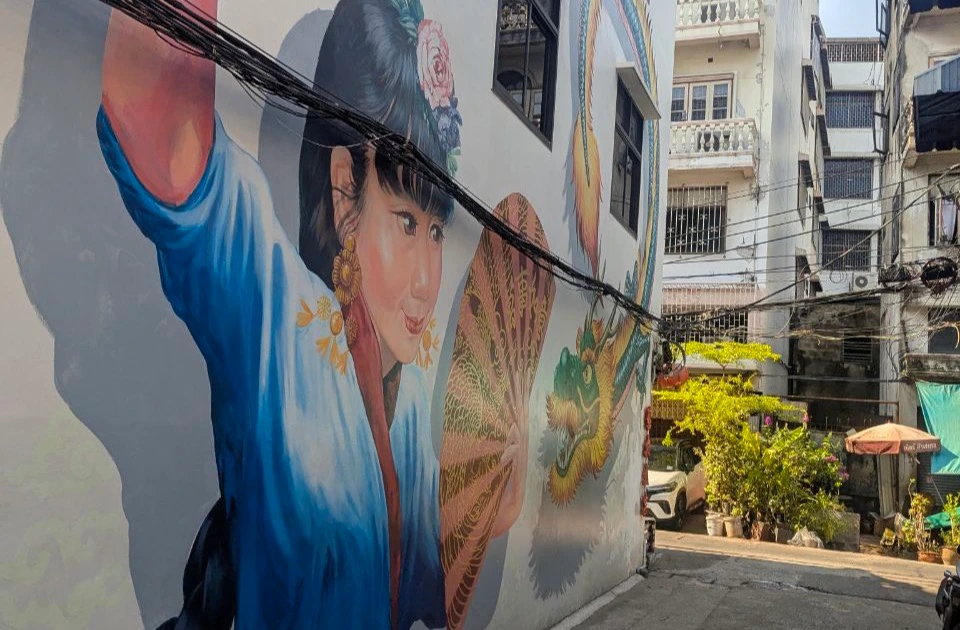
Dragon Wall: the bold opening. The dragon sits in a tucked-away lane near the Soi Chao Sua Son side of the neighbourhood, leading toward Trok San Chao Rong Kueak. It’s a brilliant place for your first wide portrait because the colour instantly says street art without needing much setup. Start with one strong full-length photo, then move closer for a few playful frames. The lane is small, so the best flow is quick and light, with plenty of room left for people passing through.
Best for: a lively opening, solo portraits, couples who love colour and one unmistakable Talat Noi image.
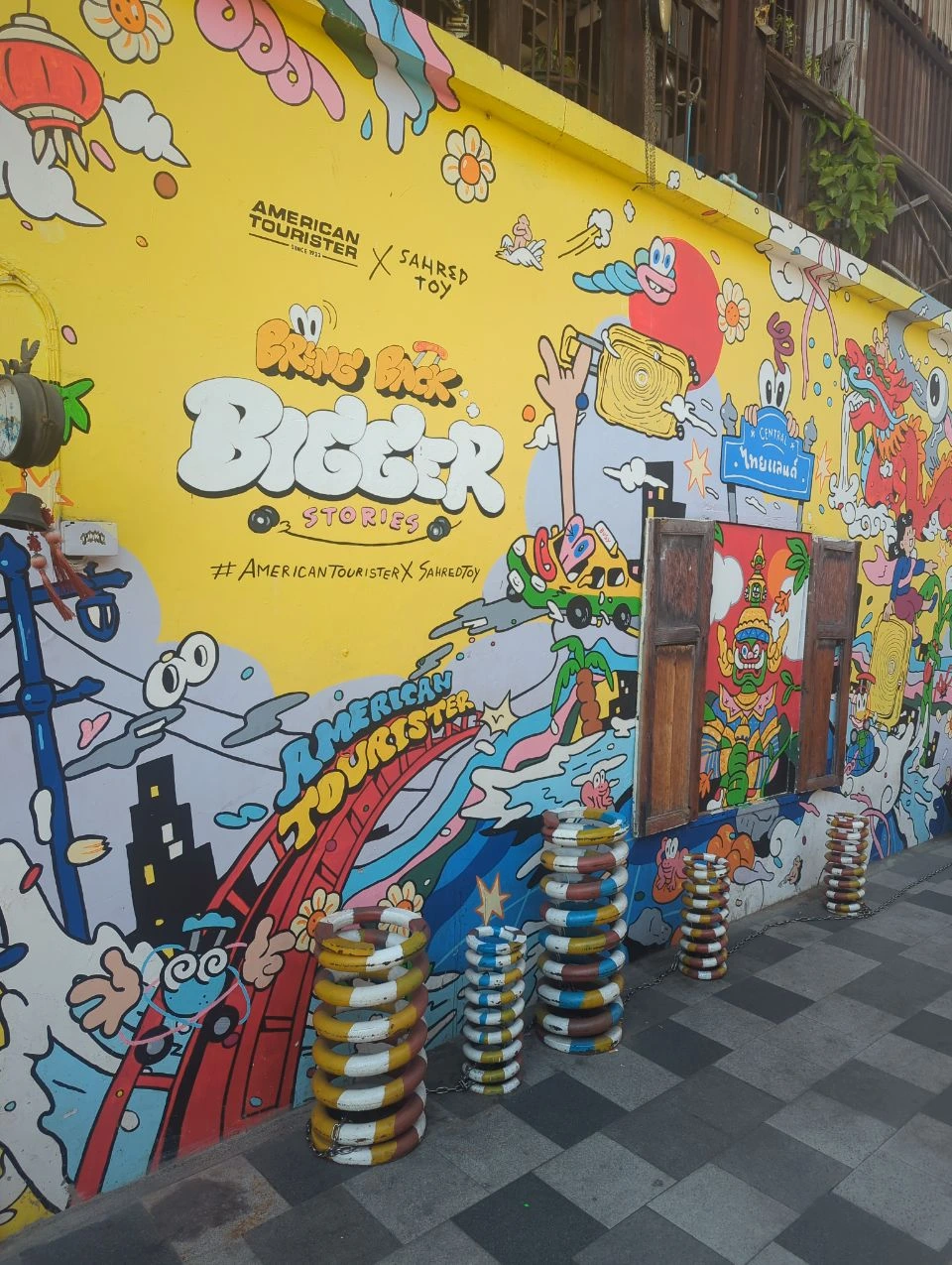
The yellow wall: your clean colour reset. A very narrow passage brings you to a much simpler background. After the detail of the dragon, that flat yellow feels fresh. It puts all the attention back on your face, your clothes and the way you move together. Five minutes here can give your gallery a completely different look. Yellow knows how to do a lot with very little.
Best for: close couple portraits, outfit details, small families and anyone wearing white, denim, cream or black.
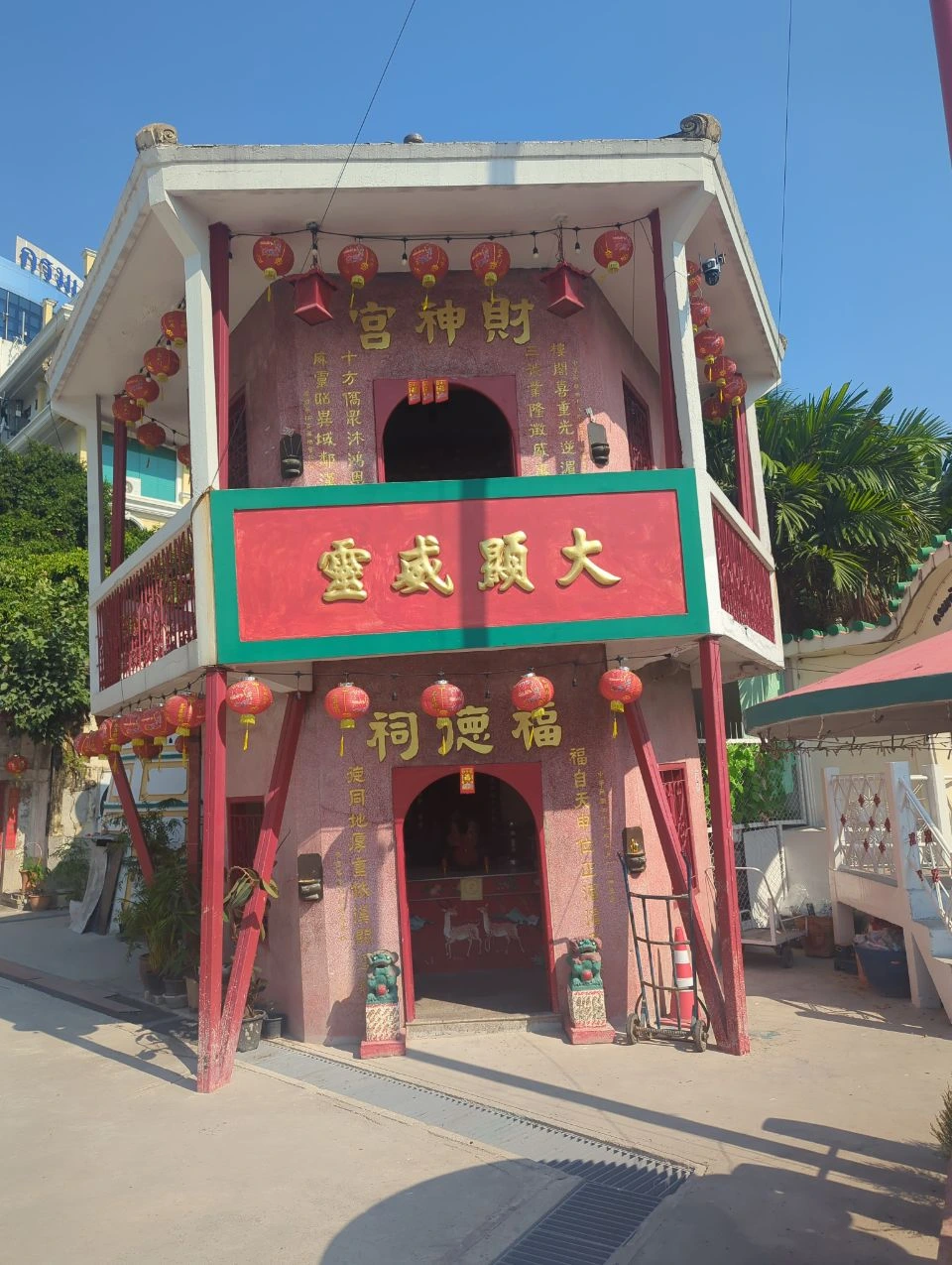
Rong Kuak Shrine: the heart of the route. The mood changes again as red, pink, green, yellow and gold enter the scene. You may notice a red door with Chinese characters, bright painted details and, when current access allows, stairs that create another level around the building. Keep this part of the session gentle. A quiet portrait near the public edge of the shrine often says more than a big pose in the entrance.
This is Rong Kuak, also known as Hon Wong or the Horseshoe Shrine, a historic Hakka shrine on Trok San Chao Rong Kueak. It isn’t Chow Sue Kong, the Hokkien shrine farther south near the river. The names get mixed up online, but they belong to different parts of the neighbourhood story.
Best for: rich colour, respectful portraits, quieter connection and a stronger sense of Bangkok’s Chinese heritage.
The graffiti stretch: where the photos start moving. As you leave the shrine-side lane, the route flows past more yellow and into a longer wall of painted layers. This is where walking shots come alive. Hold hands, look back, bump shoulders, let your child choose the pace. The paint, shutters and workshop details do plenty of work around you, so your poses can stay wonderfully simple.
Best for: candid movement, energetic families, couples who feel better walking than posing and portraits with a little edge.
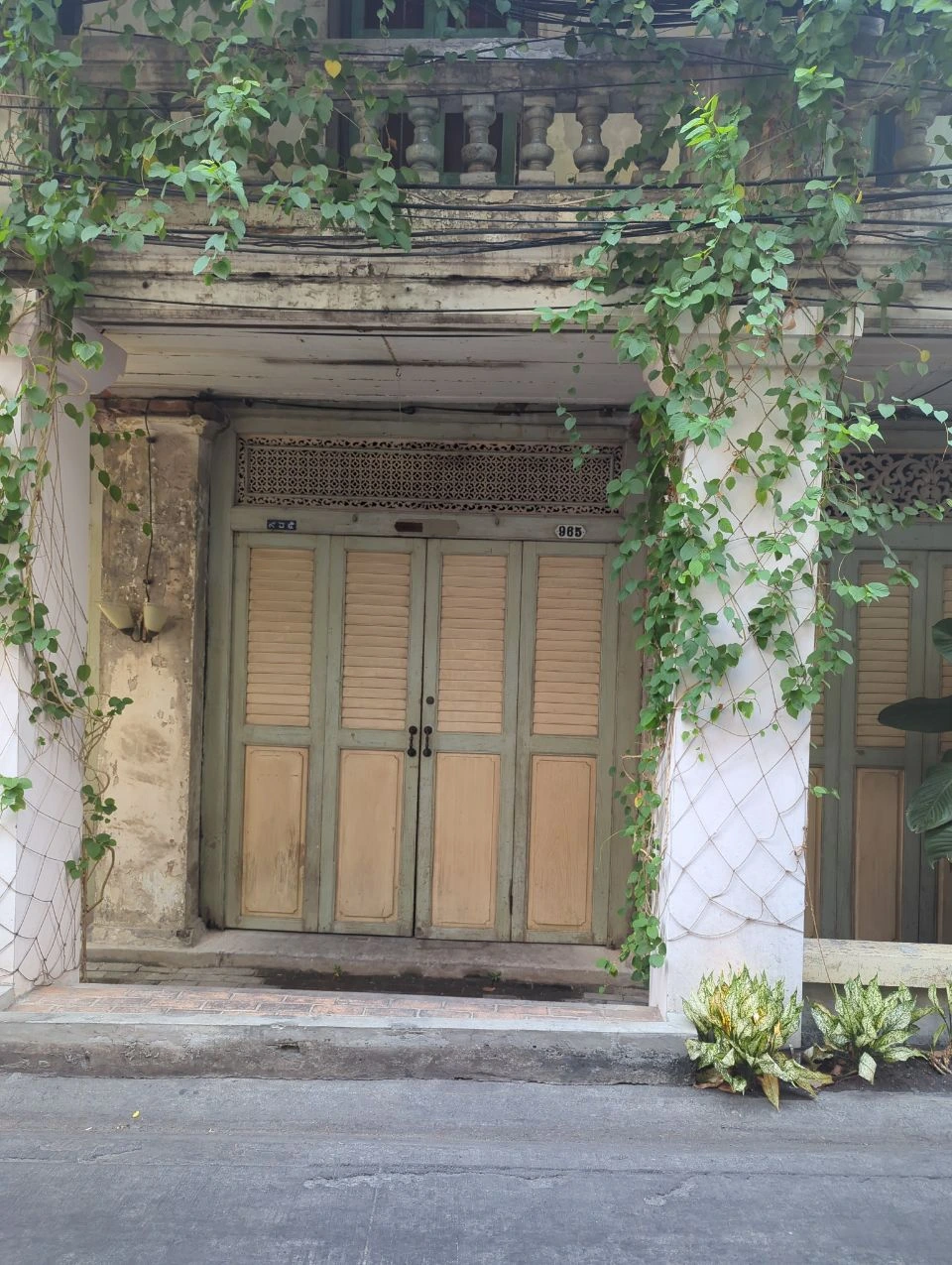
The yellow-green doors: a softer finish toward Song Wat. After the busier graffiti, weathered painted doors bring the colours back down. They’re lovely for a still portrait, a close crop or one final walking photo as you continue toward Song Wat. This is the quiet exhale at the end of the route.
These doors, murals and shutters can change. A shop may be open or a wall may have new paint. That’s why the route matters more than one saved Instagram photo. Another colourful doorway is usually only a turn away.
Best for: calm final portraits, fashion-led details and a natural transition into Song Wat.
The best time depends on the feeling you want
Morning doesn’t mean the neighbourhood is asleep. Garages start opening, residents move between homes and a delivery or scooter can slip through the lane. That working rhythm gives the photographs life. You simply get more little gaps in which the dragon, yellow wall or shrine edge feels calm around you.
Late afternoon gives you a warmer, busier version of Talat Noi. Cafés and shops are more active, Song Wat feels livelier and the last part of your gallery can carry a lovely end-of-day glow. A weekday is the sweet spot if Song Wat matters, since weekends tend to bring more café visitors and traffic.
Here’s the useful twist: golden hour isn’t a magic wand in these lanes. When we scouted the route, the colourful shrine was still receiving strong direct sun around 3:30. Your photographer may start at whichever wall has the cleanest shade, then return to an open corner later. The route can bend. That’s half the fun. Our guide to the best time for a Bangkok photoshoot compares that street-light choice with temple and river settings.
Midday still works when it’s the only time in your plans, especially because the alleys offer pockets of shade. Keep the session compact, build in water and let a nearby café become your reset point. You’ll enjoy the walk far more when the pace matches the temperature. In rainy season, use our Bangkok rainy-season backup guide to agree on suitable nearby cover before the walk.
What “busy” looks like in these lanes
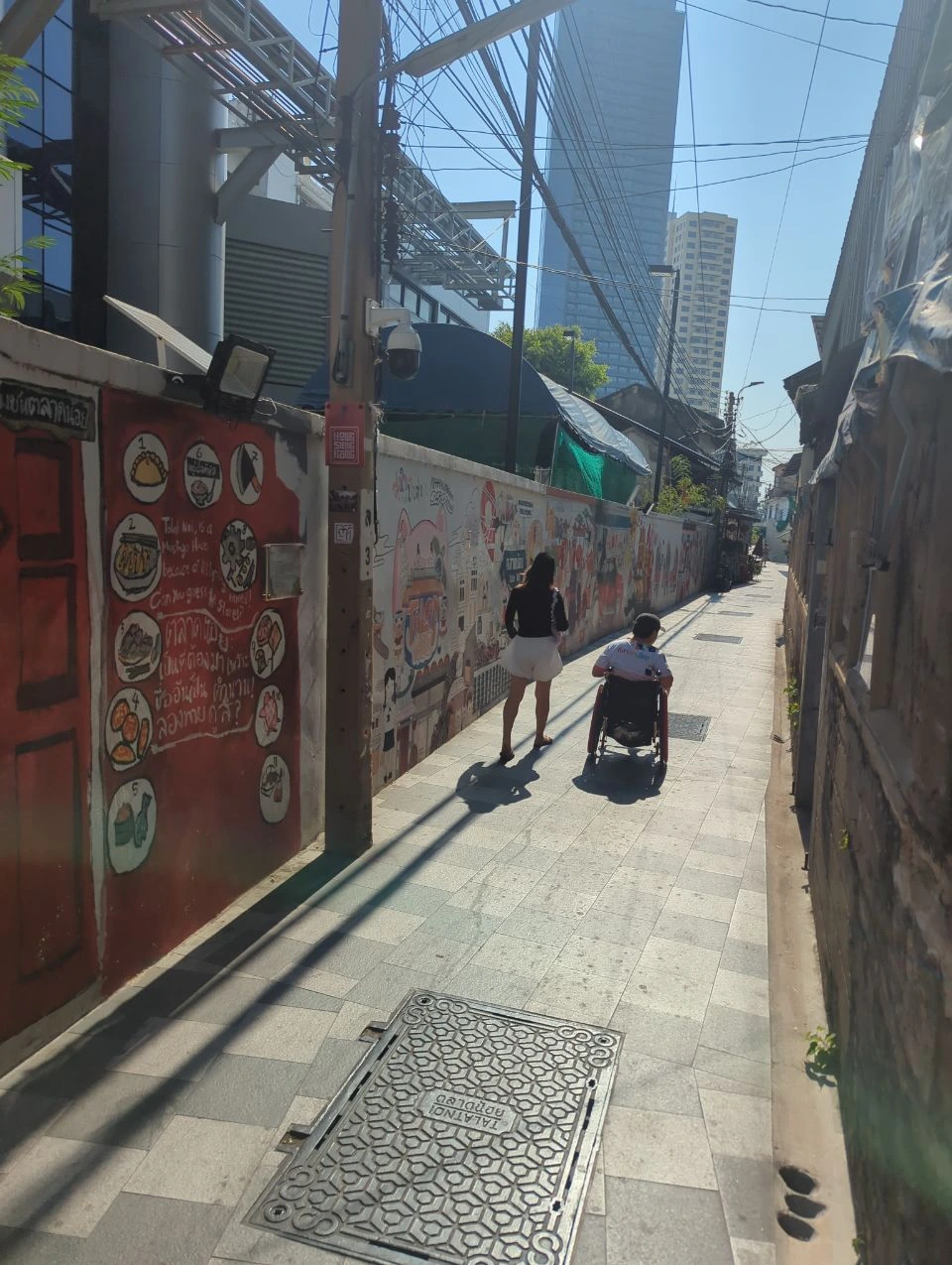
That movement makes the session feel alive. Your photographer can take a close portrait, move to the next wall, then circle back when the lane clears. Clean backgrounds often appear in short windows while you keep moving.
Some photographs can hold a little street life too. A vintage car part, an open workshop or a person disappearing around the next turn can make the picture feel unmistakably Bangkok. The goal isn’t to make Talat Noi look empty. It’s to give you room inside the story that’s already happening.
This is for you if you like photographs that feel spontaneous and connected to a place. If you’d rather have a wide, quiet square and the same grand building behind every pose, one of Bangkok’s temple routes may feel more like you. Either way, knowing the mood you want makes the choice wonderfully easy. Compare Wat Pho and Wat Arun for photos if that landmark-led style appeals more.
How much route fits into 30, 60 or 90 minutes
One hour is the sweet spot. It gives you time for all five Talat Noi scenes, a pause when a scooter passes and enough breathing room at the shrine to stay respectful. You can start bold, soften the mood in the middle and finish with the painted doors, so the finished gallery feels complete rather than rushed.
With 90 minutes, Song Wat becomes a real option. Its historic shophouses, metal doors and cafés add a broader city layer after Talat Noi’s tight alleys. Choose one clear Song Wat ending, such as a shophouse sequence or coffee-street finish.
For a 60-minute shoot, Talat Noi alone usually gives you the stronger story. For 90 minutes, especially on a weekday, the walk into Song Wat can feel like a natural second act.
Your Talat Noi photoshoot guide to respectful street portraits
At Rong Kuak Shrine, keep your voice soft and your poses relaxed. Public-facing areas can offer plenty of colour without stepping into a ritual space. If someone would be clearly recognisable in your photograph, ask first. A friendly nod goes a long way in any language.
Stairs or an upper level may be open during one visit and closed during another. The same is true of a shutter covered in art. Your session becomes much easier when these details feel like bonuses rather than promises. The photographer can confirm the current meeting point and make a quick route check close to your date.
Respect doesn’t make the photographs more formal. It usually does the opposite. You settle into the neighbourhood, stop trying to claim each wall and begin responding to what’s around you. That’s when the gallery starts to feel like your afternoon in Bangkok, not a checklist of backgrounds.
What to wear so the colour still feels like you
Choose lightweight fabric and shoes that feel secure on uneven lanes. You’ll be walking, turning and stepping aside for the occasional scooter, so this is a wonderful day for clothes you can forget about once the camera comes up. Leave the rolling wardrobe rack at the hotel.
If the route includes the shrine, a light layer that covers your shoulders and clothes that reach around your knees keep the stop easy and respectful. One outfit is ideal for a 60-minute session. With 90 minutes, a quick accessory change can shift the look without turning a narrow street into a changing room.
Bring water and keep everything else light. A small bag is easier than several loose items, and free hands make your walking photos feel much more natural. Our guide to what to bring to a Bangkok photoshoot helps keep that bag useful and small.
What the hour actually feels like
The session ends while you still feel good. From the painted doors, you can continue into Song Wat for an iced coffee, find a quiet table and let the whole morning or afternoon settle in. Coffee tastes especially good after five very photogenic streets.
The photographs become part of a day you’ll remember, not one more task between Bangkok sights.
Turn the street-art route into your Bangkok story
Our local photographers can confirm the current meeting point, check which walls are visible and shape the walk around your time and pace. Book your photographer in Bangkok, share whether you love the cleaner morning colours or the livelier late-afternoon feel, and we’ll map out a route that looks like you.
Frequently Asked Questions
Quick answers for planning a Talat Noi street-art photoshoot in Bangkok.
Early morning, roughly 8:00 to 10:30, is the best all-round choice for cooler movement and cleaner frames. A weekday between about 4:00 and 6:00 is a lovely alternative when you want more street energy and a possible Song Wat finish.
Around 60 minutes is ideal for the complete five-scene route. Thirty minutes suits three nearby backgrounds, while 90 minutes gives you enough space to continue into Song Wat.
The Dragon Wall area near Soi Chao Sua Son makes a strong visual start before the route moves into Trok San Chao Rong Kueak. Your photographer should send one confirmed meeting pin because the small lanes and map spellings can be confusing.
No. Rong Kuak, also called Hon Wong, is the Hakka shrine on the compact street-art route. Chow Sue Kong is a separate Hokkien shrine farther south near Soi Phanu Rangsi and the river.
They may look different because murals fade, shutters open and doors are repainted. The route still works beautifully because several colour blocks, shopfronts and painted walls sit close together.
Yes, especially for a small family with children who enjoy walking and exploring. An early, simplified route is easiest with younger children, while a pre-scouted plan helps if you’re bringing a stroller.
Yes, and 90 minutes gives the pairing the nicest pace. In a 60-minute session, Talat Noi alone usually creates a fuller gallery with more time for natural moments.
A short shower can make the painted walls look beautifully rich. Your photographer can shorten the route around steady, public-facing surfaces, or pause with you at a nearby café when its current house rules allow, then continue when the lanes feel comfortable again.


Our Bangkok Shoots:
Book your Bangkok Photographer!
Start BookingWhat to Bring to a Bangkok Photoshoot
Wat Pho or Wat Arun: Which Bangkok Temple Is Better for Photos?
Wat Arun Photoshoot Guide: Best Time, Angles and Crowd Reality
Best Time for a Photoshoot in Bangkok: Heat, Light and Crowds
Best Bangkok Photoshoot Locations: Choose the Backdrop That Feels Like You
Bangkok Family Photoshoot Locations That Work With Children
ENJOY $20 OFF
Your first photoshoot when you become an email subscriber.
Related Articles
What to Bring to a Bangkok Photoshoot
Pack lighter for your Bangkok photoshoot with a simple guide to essentials for your planned route, personal extras and the items best left at your hotel.
Wat Pho or Wat Arun: Which Bangkok Temple Is Better for Photos?
Compare Wat Pho and Wat Arun for photos, from gallery variety and symmetry to crowds, family comfort, traditional outfits and the best hybrid route.
Wat Arun Photoshoot Guide: Best Time, Angles and Crowd Reality
Choose between Wat Arun’s porcelain detail inside the temple and the full sunset view across the river, with practical advice on timing, crowds and routes.