
When Should You Propose During a Holiday: Beginning, Middle or End?
Your holiday itinerary might already have a lovely dinner, a boat trip and a day with absolutely nothing planned. Now you are trying to find the right place in it for a proposal. The beginning, middle and end each offer something different. Start with how you want the days around the question to feel, and the choice becomes much clearer.
Updated

Table of Contents
Look at the days you will actually have together
Then consider three things: when you will feel settled, how much room you want to adjust the plan, and how much of the holiday you would like to spend newly engaged. You might want to ask early while knowing your partner needs a quiet first day after travelling.
There is no universal rule favouring day two, halfway through or the final night. Choose a promising part of your trip before the exact hour.
Mark the fixed parts of the trip first
Then mark one preferred proposal window and one possible alternative. They might be two evenings in the same place, or an afternoon followed by a different plan the next day. An alternative is only useful if it is one you would both enjoy and the people involved can actually accommodate it.
Leave the remaining days as ordinary holiday days. You do not need to arrange a sequence of distractions to make the proposal work. A few things you both want to do will give the trip its own rhythm, and make it easier to notice when you have planned too much.
If almost every day already contains a transfer or a major outing, consider simplifying the proposal setting. A place close to where you are staying may give you more room to enjoy the moment than another journey added to an already full itinerary.
At the beginning: more holiday left to celebrate
Early does not have to mean straight from the airport. Leave enough room for the arrival you expect, including a meal, rest and time to get ready without hurrying. An evening planned around a flight landing on schedule has less breathing room than one on your first full day.
This timing suits you if enjoying the holiday after the proposal matters more than building towards a grand finale. It also leaves later days available as possibilities if your original plan needs changing, although any venue or photographer change still needs to be agreed.
Take the journey into account, especially before an early start
If you are crossing time zones, the NHS explanation of jet lag notes that disrupted sleep can take a few days to settle. That does not create a rule for which day to propose. It is a reason to leave room for how you both tend to feel after travelling, especially when your idea involves getting up before sunrise.
A couple arriving after a short daytime flight might love their first evening out. Another couple may want to wake up without an alarm, find breakfast and decide how energetic they feel. Use what you already know about travelling together.
For a surprise, keep the outing itself believable and comfortable. Saying that you have booked an early excursion gives your partner useful information about bedtime and clothes, even if they have no idea what you hope to ask once you are there.
In the middle: time to settle in and time afterwards
Look for a natural pause in the itinerary. A quieter afternoon before a dinner you already wanted can feel easier than trying to fit the question between two booked excursions. There is room to get ready, linger after the proposal and decide whether you want to call anyone that evening.
The middle is less useful if it falls on a transfer day or your busiest sightseeing day. Count the calm parts of the holiday, rather than dividing the number of nights in half. If a big activity is the centre of your plan, let its practical requirements guide the date.
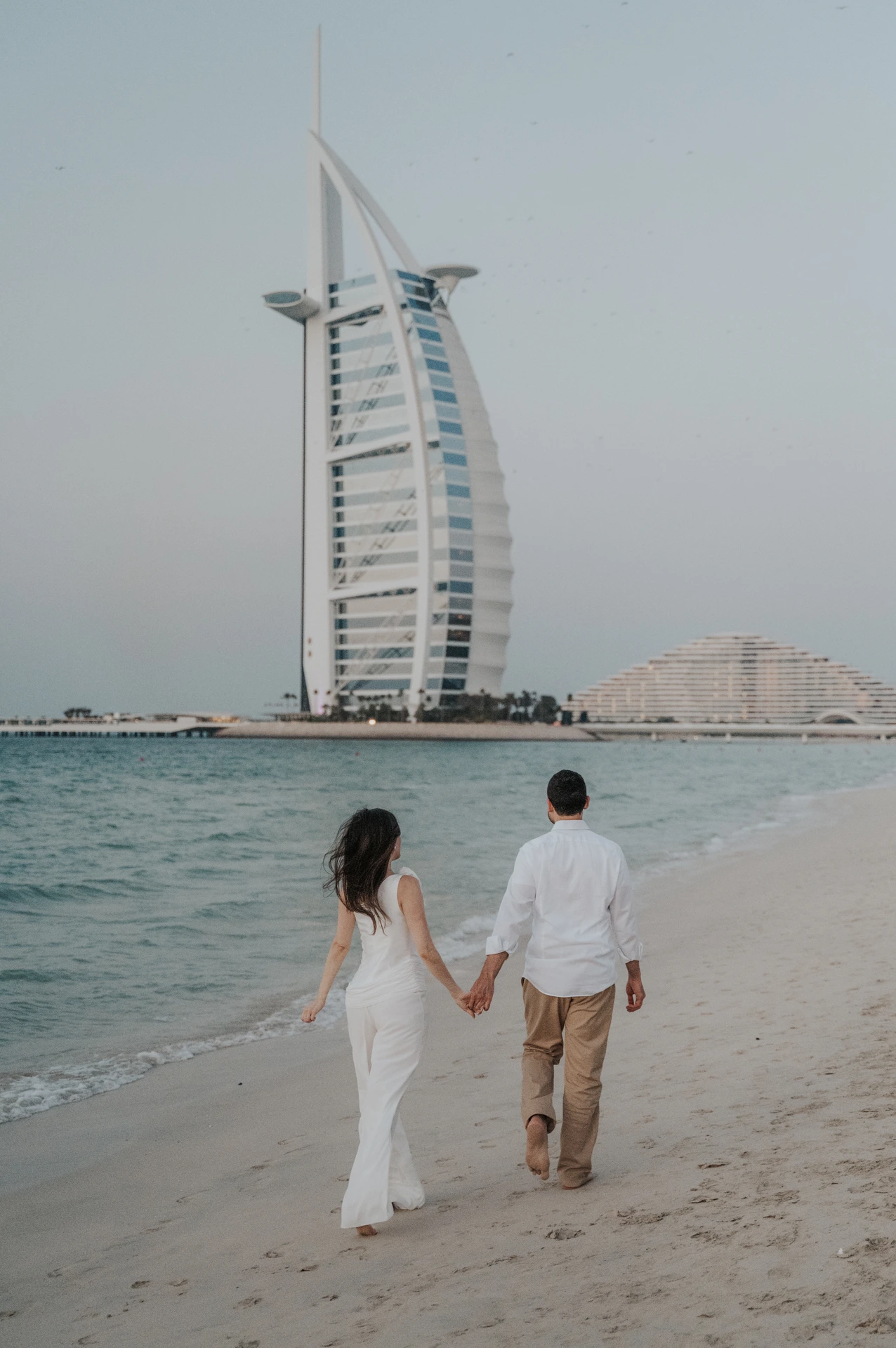
Make room in the holiday for an unhurried walk together.
Give an anniversary a place in the plan
Look at the rest of that date before making it essential. If you will spend most of it changing hotels, the celebration could begin with a note or breakfast and continue with the proposal once you are settled. You can carry the meaning of the occasion into the evening without trying to make every part happen at a particular hour.
Sometimes the place matters more than the date. If the town where you first travelled together is the final stop on your itinerary, you may happily wait to ask there. Knowing which detail you care about most helps you decide what can move if the trip changes.
Towards the end: a meaningful finish, with less room to move
The trade-off is having fewer opportunities to change plans. If the last evening becomes rushed, there may be no other evening left. Consider proposing earlier that day, or on the day before, if that still gives you the ending you want.
Look beyond the question to what happens next. Packing bags, settling a hotel bill and setting an airport alarm can take up more of the evening than expected. Leave a stretch of time that belongs to the two of you, even if it is only a leisurely dinner and an unhurried walk.
Three imaginary trips, three different choices
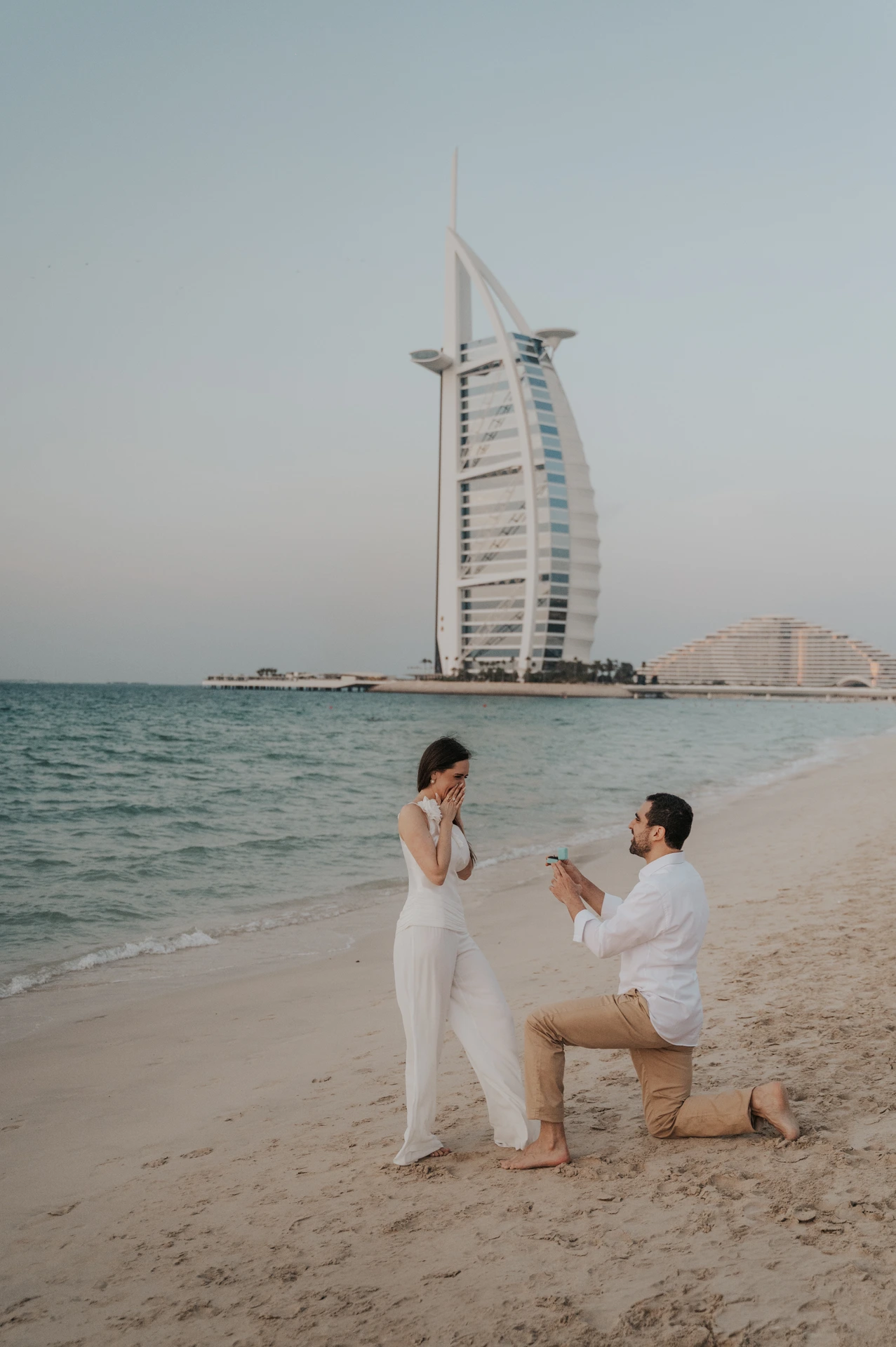
Now imagine seven nights in Dubai, with family arriving halfway through. You would like a quiet proposal first and the option to celebrate with them later. An evening before they arrive, with a skyline setting and dinner afterwards, could become your own little chapter before the group holiday begins.
Finally, imagine a ten-day trip with several hotel changes and a favourite coastal town as the final stop. Proposing there towards the end may mean more than asking earlier at a place you barely know. In this example, the first settled afternoon at that last stop leaves time to enjoy the location without relying on the final night. These are possible itineraries, not a timetable every couple should follow.
Know what would make you move the moment
For the three-night city break above, a delayed first night might mean shifting to the second full day. That choice leaves less holiday afterwards, but could give you a much calmer afternoon. For the family trip, the essential detail may be having time alone; a private outing after the group arrives could still protect that. On the trip with several stops, keeping the meaningful coastal location might be worth changing the dinner plans.
Agree a simple way to communicate a change with anyone helping. You should know whom to contact and what decision needs to be made before leaving the hotel. Keep the alternative modest enough that you can picture enjoying it, even if you are disappointed to lose the first idea.
Flexibility works best when it preserves the part you care about most. That might be the setting, privacy or having the rest of the day together.
Choose your photography window within the holiday
Share your travel dates and the shape of your itinerary with a proposal photographer in Dubai. Explain which day you prefer and any other times you could consider, then agree the actual booking and what happens if plans need to change. A free day in your itinerary does not guarantee the photographer will be available then.
If you are deciding how much time to leave between the proposal and dinner, the guide to 30, 60 or 90 minutes of proposal photography helps you picture the options. Build the rest of the evening around the coverage you agree.
Work backwards from the next reservation
This is where an apparently generous gap can disappear. A photography booking describes the coverage you have arranged; it does not automatically include changing clothes at the hotel or travelling onwards to dinner. Keep those parts separate when you look at the evening.
You might decide that dinner close to the proposal setting feels easier, or move the reservation later once you have discussed the photography. Another couple may prefer to return to the hotel first and dress for a separate celebration. Both can work when the time between them is deliberate.
Leave a little room for the part you cannot schedule: your partner wanting to hear the story again, take a photograph of you, or sit down together before going anywhere else.
Let a special experience influence the date
A shorter experience can shape an evening too. The Souk Madinat abra proposal guide explores how the ride, photography and dinner can fit together. Use it to judge where that kind of evening belongs in your holiday, then confirm the arrangements for your date.
If you are keeping the proposal a surprise for several days, have a simple plan for messages and the ring so you can enjoy the time beforehand. Our guide to keeping a Dubai proposal a surprise covers those details without needing to turn every day into an elaborate distraction.
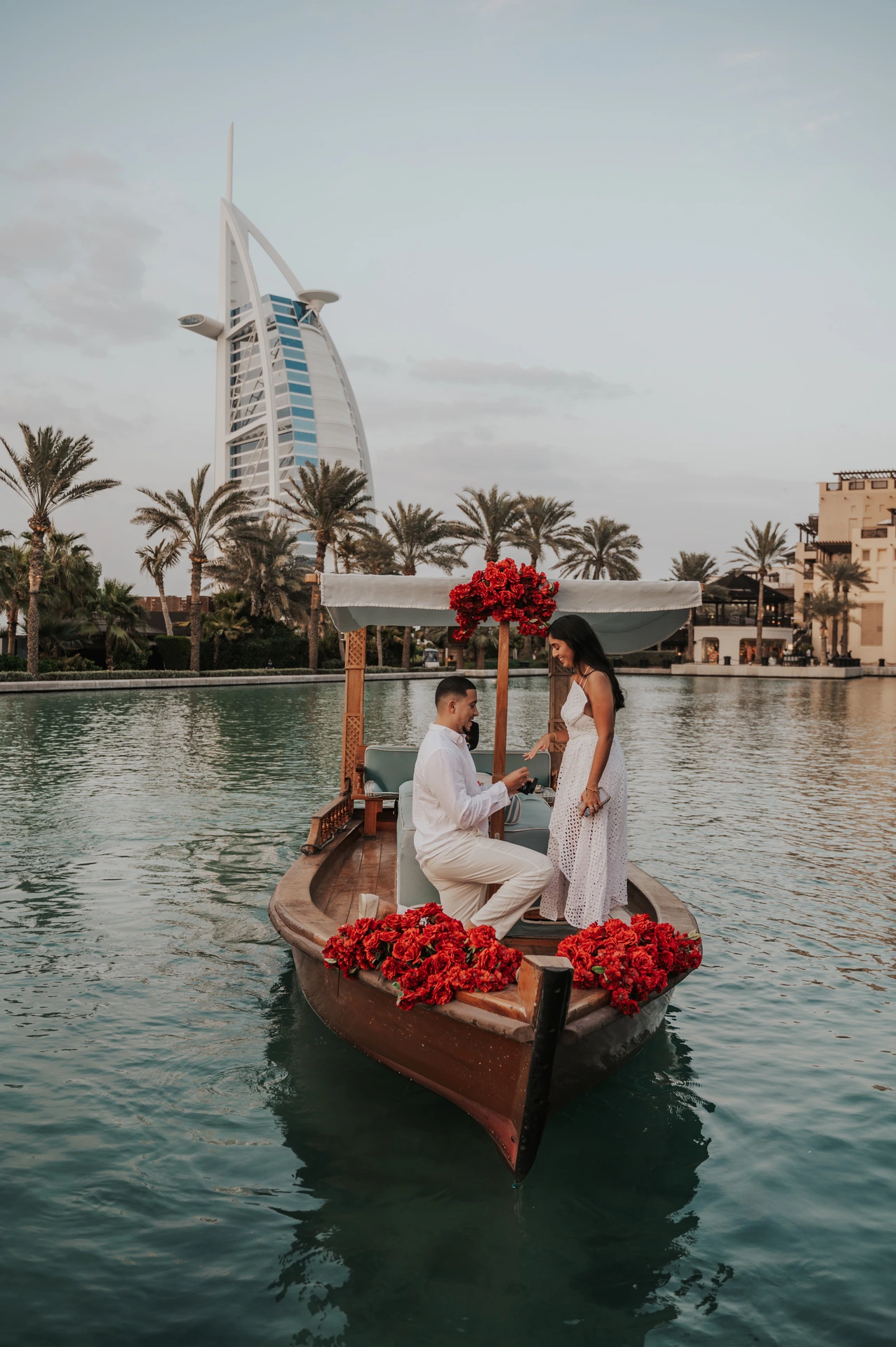
An abra proposal in Dubai: confirm the experience and photography times together.
Treat a weather-dependent activity as more than its headline duration
That difference matters when you are choosing a day. A sunrise flight followed by a full sightseeing programme may leave very little room to enjoy either. You could keep the rest of that day open, or choose a different proposal window if you know you would prefer a slower start.
Decide whether the activity is essential to your question. If it is, ask about the practical options for another date before choosing where it belongs in the trip. If you would be equally happy asking elsewhere, picture that alternative clearly: perhaps an evening walk and dinner later in the holiday.
Keep the two decisions distinct when plans change. You may still want to rearrange the outing, while choosing to propose sooner in a setting that feels comfortable. Any change to transport, photography or a booking needs its own confirmation; an open space in the diary does not arrange it for you.
Leave something lovely on the other side of the question
You do not have to fill every moment with another surprise. Being able to sit together, look at the ring and finally explain why you were so particular about this evening can be a lovely part of the holiday too. Choose a day that gives you space for that conversation.
Planning your own proposal in Dubai?


How to Propose in London

Our 12 Favourite Places to Propose on Holiday

What Does a Marriage Proposal Mean, and Why Does It Matter?

Why Do We Propose With a Ring? The Meaning Behind the Tradition
Can You Propose Without a Ring? Thoughtful Ways to Make It Special

Nervous About Proposing? How to Stay Calm in the Moment
ENJOY $20 OFF
Your first photoshoot when you become an email subscriber.
Related Articles

Dubai Proposal Photography: Do You Need 30, 60 or 90 Minutes?
Choose between 30, 60 and 90 minutes of Dubai proposal photography, with room for the question, reaction and the portraits you want afterwards.

Abra Proposal at Souk Madinat Dubai
A practical guide to planning an abra proposal at Souk Madinat Dubai, with timing, flow, photography, and dinner recommendations.

How to Keep Your Dubai Proposal a Surprise
Practical help with the discreet part of your Dubai proposal: cover stories, supplier messages, ring access, arrival changes and the photographer cue.