
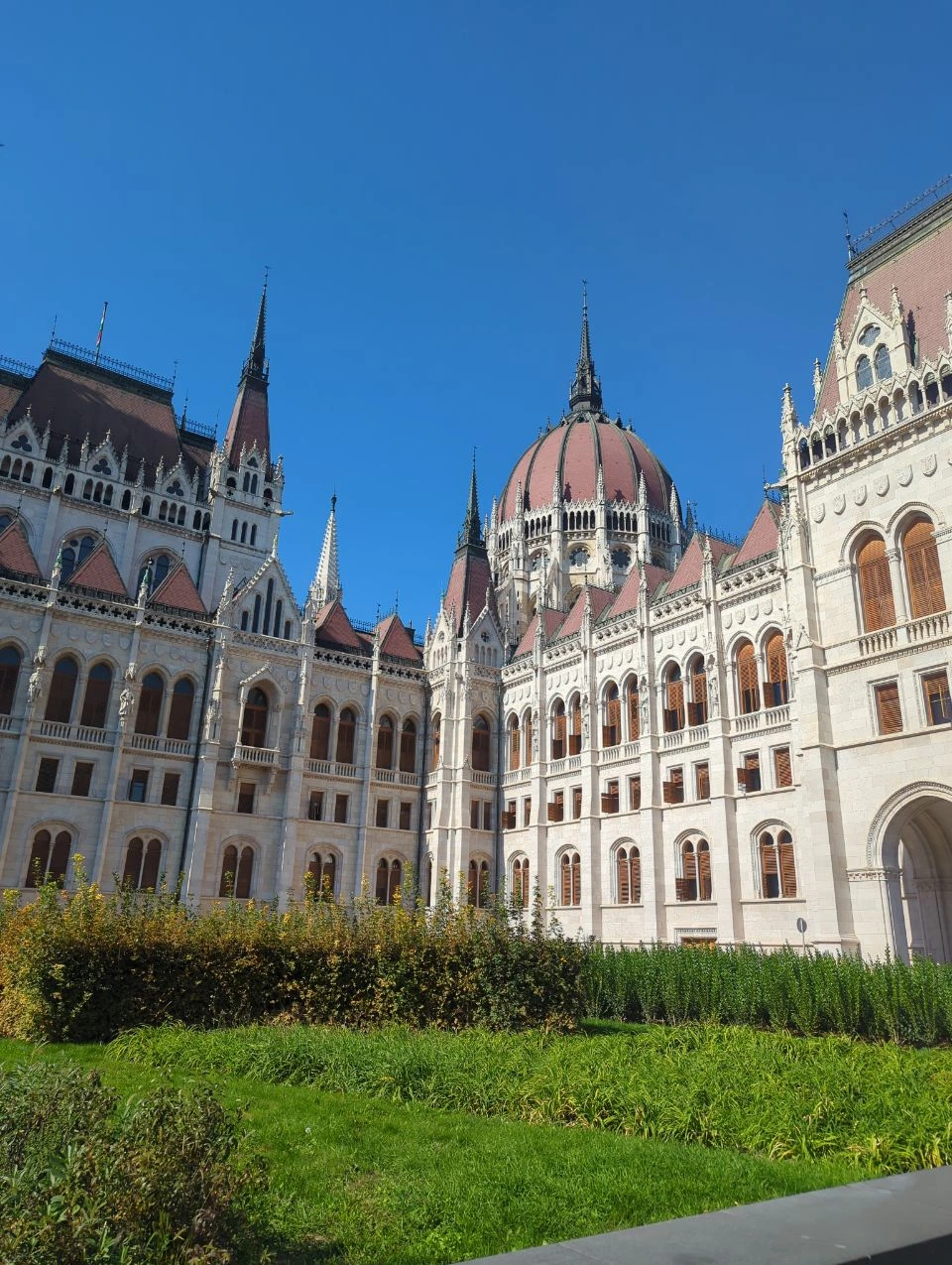
October 6, 2026
Hungarian Parliament photo spots: gardens, trams and river views
Parliament is magnificent from across the Danube, its long façade stretched along the water beneath that reddish dome. Come closer and a different set of photographs appears: pale stone behind a walk across the square, a garden bench surrounded by flowers, little towers rising through green leaves. You can give the building a leading role or let it sit quietly behind a moment together.
The most useful choice is which side of the river suits your pictures. Around Kossuth Lajos Square on the Pest bank, you can move between several intimate scenes near Parliament itself. Across the water on the Buda bank, you have room for the famous whole-building view. This walk starts with the gardens and square, then helps you decide whether to add the panorama.
Updated

Table of Contents
Choose your side of the river
Choose the opposite bank if the long riverfront façade is the photograph you have in mind. The water creates the distance needed to see the building as a whole. That changes the balance: Parliament and the Danube become more prominent, while you decide how much of the foreground to give to people.
Both approaches can belong in the same collection, but allow for the journey between them. A map pin for Parliament takes you to the building, not automatically to the viewpoint across the river. If you only have a short window, choose the side that gives you your favourite picture first. There's plenty of variety within the square and its garden edges without adding a crossing just to complete a list.
Parliament photo spots on Kossuth Square
A walking picture is a lovely way to begin here. Walk alongside each other across a short, clear stretch of paving while the camera stays still. Look towards one another for a few steps, then ahead. The square provides breathing room around you, and the repeating windows make even a small movement feel part of a much larger scene.
For a closer portrait, choose one piece of architecture: a pointed arch, the tall windows above an entrance or a corner with several layers of stonework. This is especially helpful on a phone. Trying to fit the entire façade into the widest setting can make the people look tiny, while one carefully chosen section still says exactly where you are.
The ornate doors and steps may look like obvious places to stand, but chains and fencing limited our approach during the September visit. Build your photograph from the public square and respect the boundaries in place when you arrive. You can line up an entrance behind someone without putting them against the door. A little distance also makes room for a full-length portrait and avoids that awkward feeling of being pressed up against a building.
If the square's shallow water feature has water in it, you might find a smaller reflection much closer to the building than the Danube view. Look from the surrounding paving and try lowering the camera while keeping your footing clear of the edge. A sliver of reflected stone can be enough; it doesn't have to be a complete upside-down Parliament. We noticed the feature during our visit, but its operation and the water's surface are variable, so keep this as an optional detail.
Parliament garden portraits beneath the dome
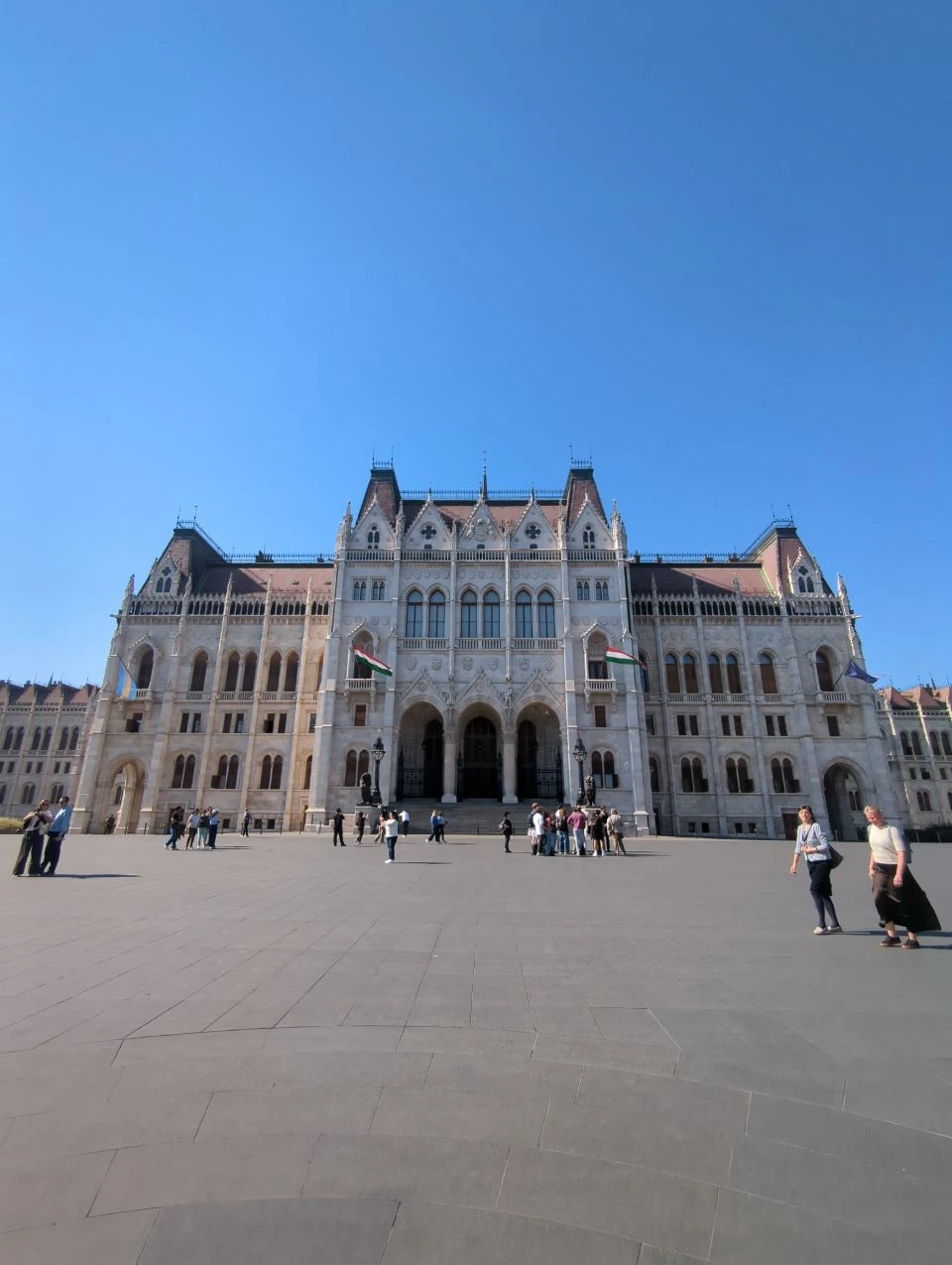
Camera height matters here. From a low position, the greenery can fill so much of the picture that it hides the person you're photographing. Raise the camera a little and you'll see how the top of the planting moves down within the frame. Find a height that leaves the person's face clear and enough room above the dome for the picture to feel comfortable.
Keep both the photographer and the people being photographed on the public path. You can use the raised bed as a foreground without entering it, sitting on its edge or pushing branches aside. Let a few leaves sit at the edge of the picture instead of trying to turn the whole garden into a tunnel around someone's face.
For a pair, turn slightly towards each other and leave a little space between your outlines and the busiest part of the façade. A hand on an arm or a shared glance can feel very natural against all that intricate stone. Flowers may bring colour in season, but the picture doesn't depend on blooms: the dome, greenery and pale walls already give it a strong shape.
Find a quieter feeling at the benches
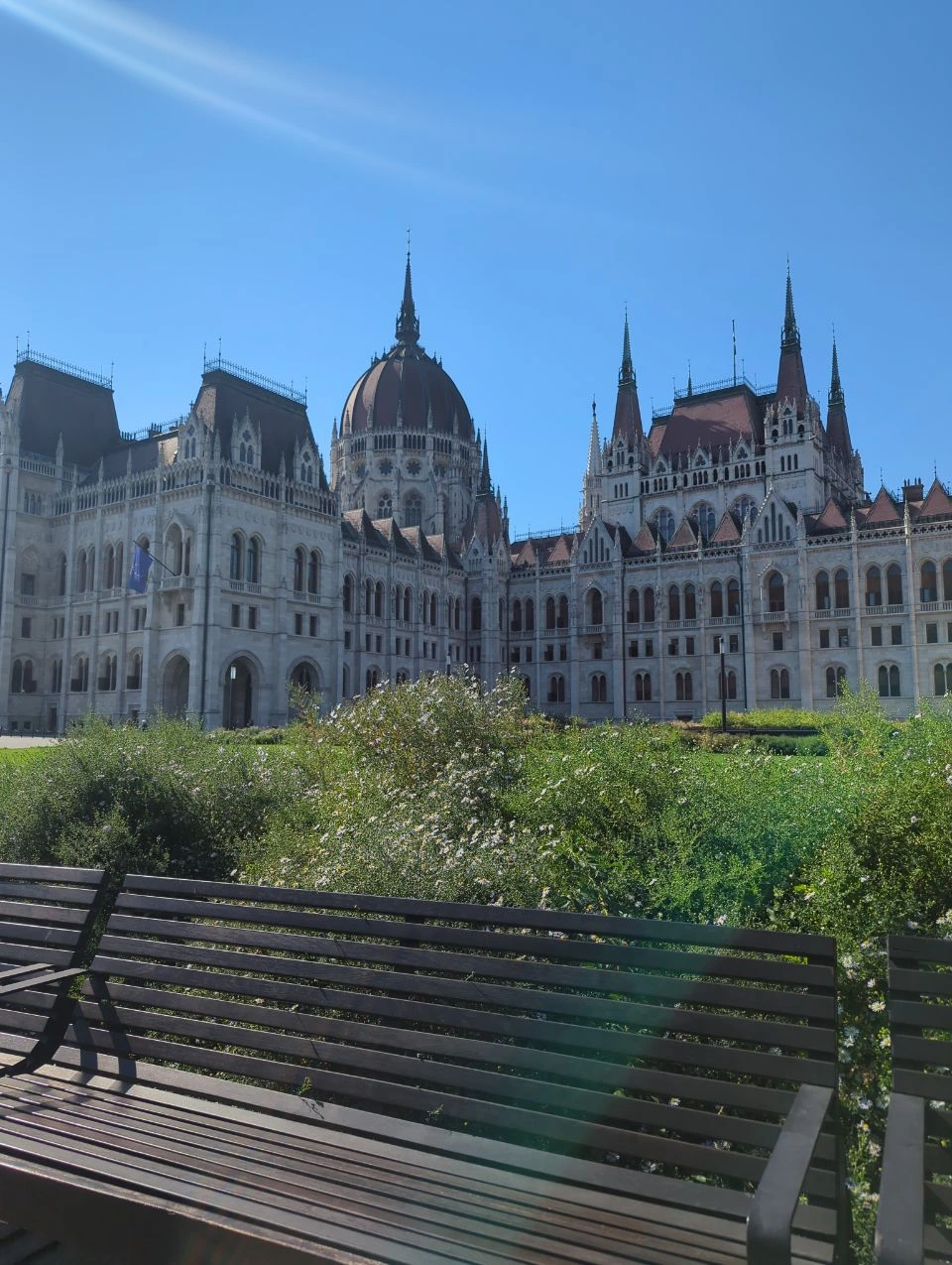
From the photographer's position, check where the dome falls behind your heads. A small move along the path may separate it from a face or shoulder. You don't have to sit directly beneath its highest point; keeping the building slightly to one side can leave room for both the architecture and an easy conversation between you.
Try a wider seated picture that includes the bench, followed by a closer one of the two of you. These tell different parts of the same moment. The wider view shows the garden setting; the closer one holds onto a smile or the way you lean together. There's no need to manufacture a dramatic gesture to make this corner work.
The bench is shared public seating, so availability decides whether it belongs in your walk. If somebody is already enjoying it, continue with the nearby standing garden view and come back only if it suits your route. Think of this as a type of scene to look for, rather than a particular seat you need to claim.
Wait for a tram from the pedestrian path
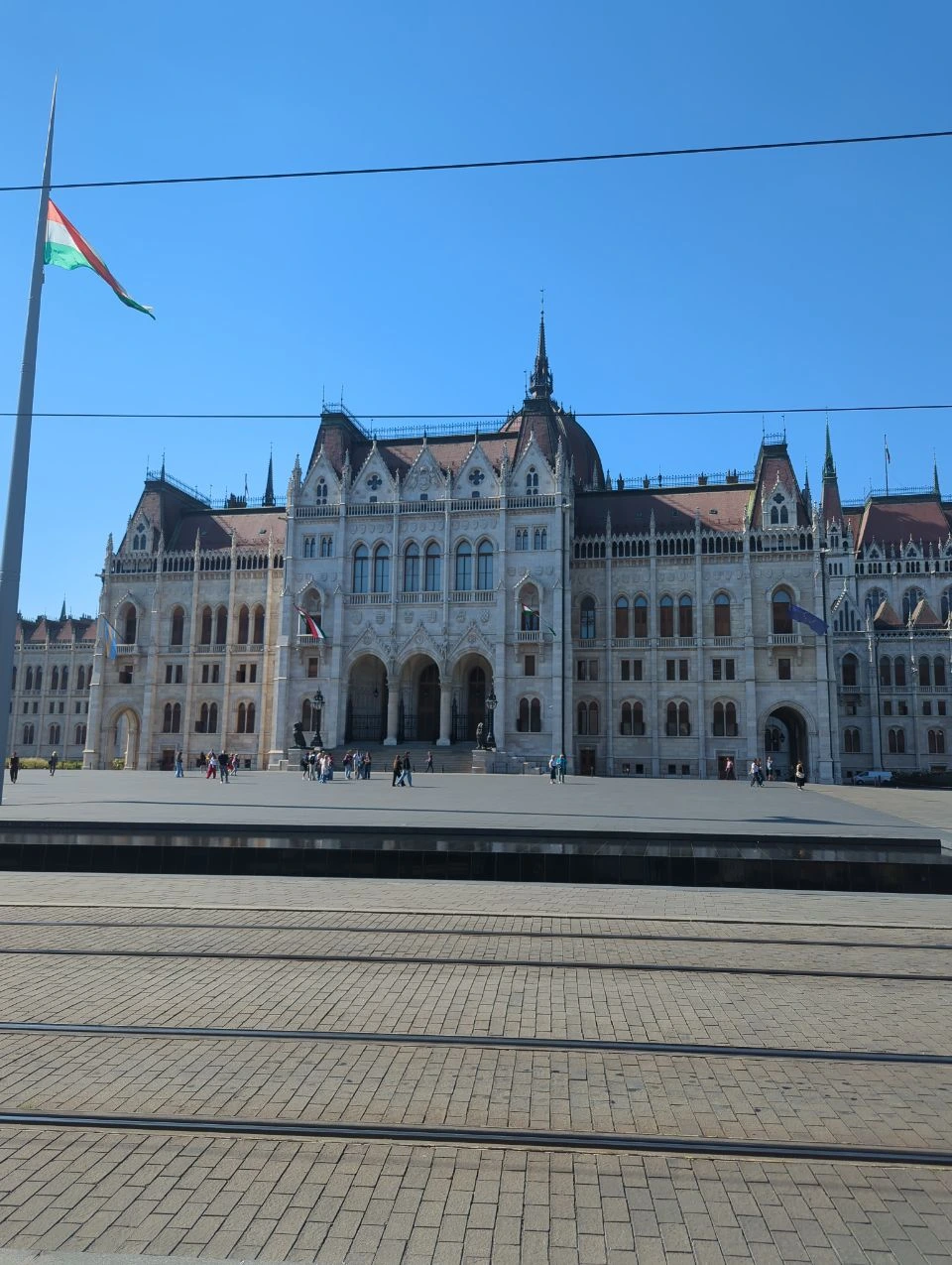
Choose your position on the pedestrian path before waiting for movement. Frame the building, look at what's around the edges and take a test photograph. If you're including people, put them somewhere comfortable and safely clear of the transport corridor. Keep the camera and subjects on the same pedestrian area so nobody needs to dash across for a different angle.
Then let a tram enter the scene if one comes. On a phone, a short burst of pictures can help you choose the moment afterwards. Look for a frame where the vehicle adds colour or movement without swallowing the person you wanted to photograph. You'll often learn more from the test picture than from chasing the next tram down the street.
Keep crossings and the path clear, and skip this stop if the space is too busy to wait comfortably. The city keeps moving around you. You can check current services through BKK's timetables, but there's no need to build your whole photo walk around a particular passing vehicle.
For portraits with people in the foreground, our guide to couple photos with Budapest’s yellow trams explains how to balance all three layers.
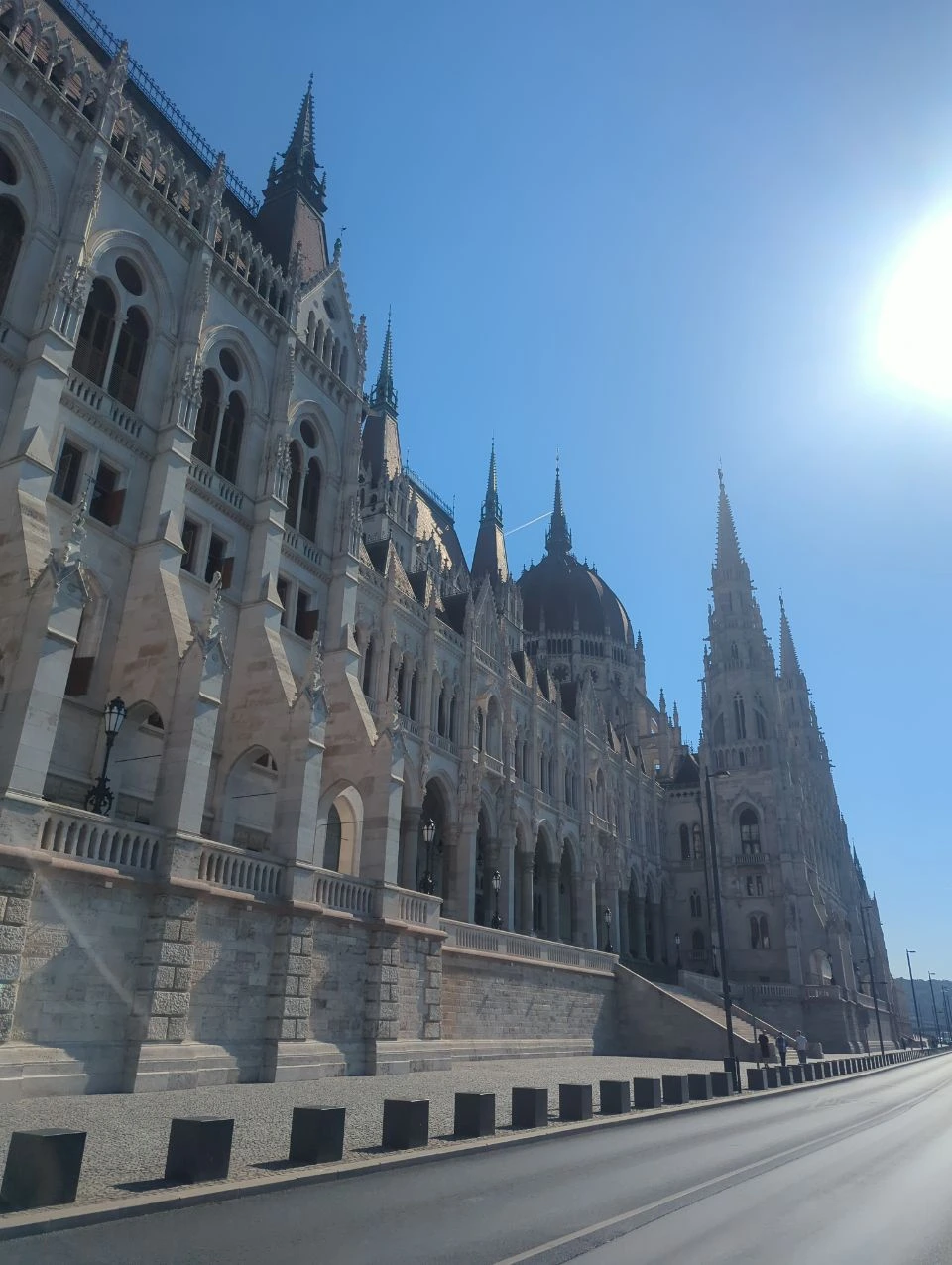
Look closely from the Pest riverside
Use that closeness to enjoy the details. Look along the row of windows rather than trying to force the full building into one frame. The repeated arches can lead your eye towards the dome, while a corner makes the building's depth easier to see. A portrait can borrow just a narrow slice of this stonework behind a shoulder.
For an architectural photograph, hold the phone as level as the composition allows and check the outermost towers before taking the picture. Pointing sharply upwards exaggerates the way tall walls lean together. Sometimes that suits the drama; sometimes a slightly wider view from a permitted path gives the stone a calmer shape.
Stay on the public pedestrian route while finding your angle. The road beside the building isn't a place to gain a few extra steps of camera distance. If the full riverfront still won't fit comfortably, save that photograph for Buda. Here, the reward is seeing the building's texture and height up close.
See the full Parliament façade from Buda
For the building on its own, start by checking the river's horizontal line. Leave enough water below the façade to show its position on the bank and enough sky above the dome to avoid a cramped top edge. An expansive landscape frame works well for this first view. You can then try a closer crop around the dome and its neighbouring towers for a different reading of the same scene.
For people, the camera doesn't have to stand a long way from them just because Parliament is far away. Bring the person comfortably into the foreground and adjust the camera position so the dome remains visible beside them. If you're photographing yourselves on a phone, start with the normal lens and see how much of the building it includes before switching to the widest option.
A reflection is a lovely extra when conditions allow it, but the river doesn't behave like a still ornamental pool. Ripples, wind and passing traffic on the water can break up the shape. A moving surface still gives the photograph a sense of place, so enjoy the view you find instead of waiting indefinitely for perfect symmetry.
Treat this as a separate stop from the square walk. The images accompanying the garden, tram and close-river sections were made beside Parliament on the Pest side; they don't show this opposite-bank viewpoint.
Choose the light for people and stone
When you arrive, look at each other's faces before looking at the whole building. Deep shadows beneath the eyes or an uncomfortable squint are signs to change the angle. Turn slightly, try a garden edge or make the wide architectural photograph first while you find a more comfortable position for portraits. The best spot for the dome may not be the best place to stand facing the camera at that moment.
Under cloud, the softer light can make it easier to photograph faces and pale stone together. Give the picture its interest through the layers you've already found: leaves in front, people in the middle and the building behind. A grey sky doesn't remove the pleasure of the place, but you may want less of it in a close portrait.
For evening photographs, decide whether your priority is the building or people. A lit façade can look striking across dark water while faces in the foreground remain dim. If you're arranging portraits, talk through that difference with your photographer before choosing the time. Don't assume an attractive photograph of the illuminated building proves that the same position will light you beautifully too.
There isn't a verified lighting timetable in this guide. If illumination is essential to your plan, check the current arrangements and leave room to adapt. Twilight, changing clouds and the river itself can give you beautiful variations without every photograph depending on one switch-on moment.
Plan a walk with time to look around
For a relaxed Pest-side wander, we'd allow roughly 45 to 60 minutes for photographs around the square, garden and tram-side path. That's a suggested allowance, not a measured walking time or a session package. You may spend most of it at two places you love. Start with the open square, move to the garden and bench, then decide whether the tram view or close riverside details add something you still want.
If you have closer to half an hour, the square and one garden scene make a coherent short visit. You can capture a sense of scale, then something more intimate, without hurrying through every option. If the Buda panorama is your main reason for coming, reverse the priority and begin across the water instead.
Allow a separate block of time for changing banks, including the route to your transport or bridge and the walk to the next viewpoint. A crossing is part of the outing, not spare minutes between pictures. These Parliament scenes are one possible part of a Budapest photoshoot; choose the stops and pace to fit the session you arrange.
Kossuth Square also has a life beyond sightseeing. The national memorial authority identifies Parliament and its surroundings as a national memorial place with a ceremonial role. If an event or commemoration is taking place, give it space and use another part of your plan. The garden and architectural views offer enough possibilities to enjoy your photographs without treating memorials as portrait props.
Make your Parliament photographs personal
FAQs
Everything you need to know about our service
No. The locations here are exterior scenes around the square, public paths and riverbanks. An interior visit is a separate plan, and you should check the current official visitor information for availability, admission and photography conditions. If you're doing both on the same day, we'd leave a comfortable gap between them so you can finish your photographs without watching the clock. Interior access or permission to photograph there isn't included simply because you've arranged an outdoor session nearby.
Start with the photographs that matter most and ask your photographer to check the exact approach to those positions. A small selection on one bank can avoid an unnecessary transfer, but this guide doesn't verify a continuous step-free route from every station exit or hotel. BKK's planner includes a barrier-free services setting for transport planning. Also discuss standing time, rests and the distance from your drop-off point; a photograph of a bench doesn't guarantee an available seat when you arrive.
Treat wet weather as a change to the plan rather than assuming Parliament's entrances will provide somewhere to shelter. A short light shower may leave you happy to carry on with an umbrella; persistent rain may call for a different time or a shorter walk. Agree those options with your photographer beforehand. Keep a cloth handy for raindrops on a phone lens and look for puddles from ordinary pedestrian positions if you'd like a reflection, without stepping into the road or planting.
Discuss the proposed equipment and setup before fixing the location. A quick handheld portrait and a session that occupies space with stands or several people can have different practical requirements. This guide doesn't establish permission for a particular setup around a working parliamentary building. Your photographer should check the current arrangements for the exact plan and follow any instructions on site. Keep the approach simple if you want the flexibility to move easily between the square, garden and riverside.


How to Propose in London

Couple Photoshoots in London

Best Photography Spots in Lisbon: Choose the Look You Love

Our 12 Favourite Places to Propose on Holiday

What Does a Marriage Proposal Mean, and Why Does It Matter?

Why Do We Propose With a Ring? The Meaning Behind the Tradition
ENJOY $20 OFF
Your first photoshoot when you become an email subscriber.
Related Articles

How to Propose in London
Make the surprise feel like you.

Couple Photoshoots in London
Choose the London setting you love, and we’ll shape one relaxed route around it.

Best Photography Spots in Lisbon: Choose the Look You Love
Choose the Lisbon photo setting that suits you, from Alfama lanes and hilltop views to Bica, Belém, MAAT, the Tagus and yellow trams.