
October 8, 2026
Couple Photos with Budapest’s Yellow Trams: How to Use Them as a Background
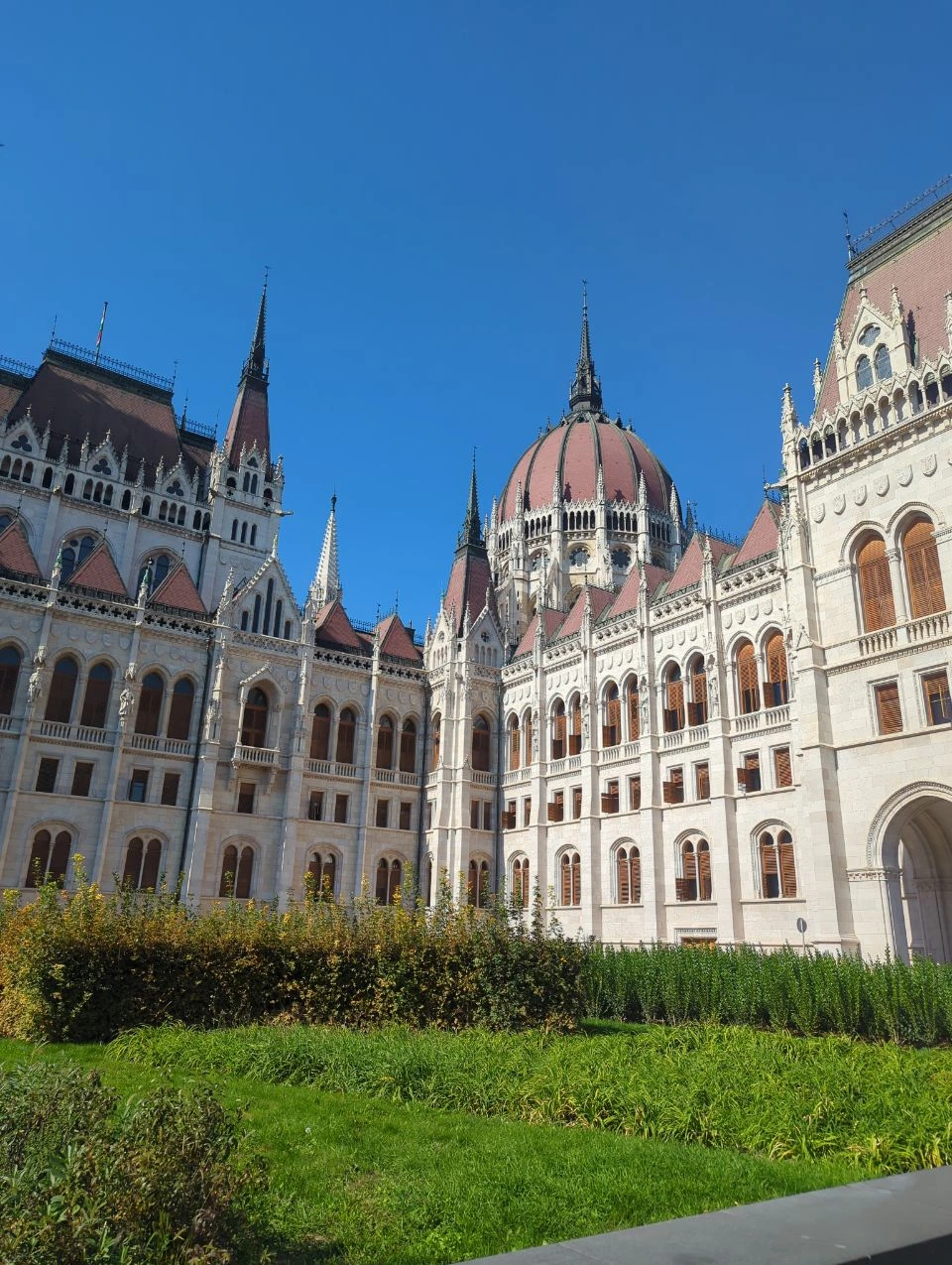
You are standing close together while Budapest carries on around you. Parliament rises beyond the street, Liberty Bridge draws bold green lines through the view, or the patterned roof of the Great Market Hall catches the light. Then you hear the rails and a flash of yellow slips into the background.
That little burst of colour can make a portrait feel unmistakably Budapest. The trick is not to make the tram do all the work. Build the photograph around your connection and the architecture first, then let a passing carriage add movement, colour and a lovely glimpse of everyday city life.
Updated

Table of Contents
Why yellow trams work so well in Budapest couple photos
Movement can also make a quiet moment between two people feel more intimate. If you are standing close together while the city moves behind you, the contrast gives the photograph extra energy. A walking portrait can feel even more rhythmic when a tram travels in the same direction or glides across the frame.
The carriage does not need to be enormous or perfectly centred. A small patch of yellow beneath Parliament or between sections of Liberty Bridge may be all the photograph needs. Even part of a tram can work, especially when the colour contrasts clearly with the architecture.
Think of it as a bonus layer, not the main event. The photograph should still feel complete during a gap in the service. That takes away the pressure to chase a particular carriage, predict an exact arrival or attempt an uncomfortable position just for the timing.
Choose the backdrop by the feeling you want
Liberty Bridge feels bolder and more graphic. Its green structure creates strong lines and repeating shapes, so a yellow tram adds a cheerful pop of colour to an already energetic urban setting.
The Great Market Hall gives you a fuller street scene. Its patterned roof, surrounding façades, pedestrians and passing transport all become part of the picture. It is a lovely option if you prefer photographs that feel lively and observed rather than carefully isolated from the city.
These are not three versions of the same image. Each backdrop gives the tram a different job, from a tiny splash of yellow within a landmark view to a more noticeable part of a bustling street scene.
Keep the tram behind you, not beneath your feet
Tracks, carriageways and active crossings are never posing spots. Cross normally, follow the current signals and signs, and do not stop in the path of a tram or other traffic. Station entrances, platforms and passenger routes need to stay clear too. If an angle depends on stepping somewhere unsafe or restricted, it is simply the wrong angle.
Trams can approach surprisingly quietly when you are concentrating on the camera. You should not have to judge their speed or distance while posing. Stay where ordinary pedestrian behaviour is expected and let your photographer work with the view available from there.
Local signs, live signals, temporary barriers and instructions from transport staff always take priority. This is practical photography guidance, not a complete interpretation of Hungarian transport law.
A little distance often improves the image anyway. Separating you in the foreground, the tram in the middle and the architecture behind it creates depth. It also makes the carriage feel like part of Budapest’s wider cityscape instead of a vehicle crowding the frame.
Parliament: build the photograph in three layers
During a site observation on 30 September 2026, it was possible to include a couple, Parliament and a passing yellow tram from an ordinary pedestrian route. That visit did not establish one exact camera position, a particular route number or a dependable service interval. It simply confirmed that this visual relationship is possible when the live conditions line up.
The photographer can begin by finding a pedestrian position where Parliament reads clearly. Tiny changes in camera height or direction make a big difference here. From one angle, the building looks open and magnificent; from another, its outline can become tangled with signs, street furniture and other vehicles.
Once the architecture feels balanced, a little space can be left in the middle distance for passing transport. The tram does not need to stretch across the whole picture. In a wide frame, a relatively small carriage can provide enough yellow to catch the eye while preserving more of Parliament’s outline.
Patience helps, but this need not become a lengthy wait. Traffic, pedestrians and temporary obstructions can alter the picture from one moment to the next. Your photographer can keep the main composition ready, continue making portraits and use the clearest few seconds when they arrive.
Liberty Bridge: use colour and repeating structure
A site observation on 1 October 2026 recorded an approaching yellow tram against the bridge’s green metalwork. There were short gaps between trams during that visit, but this was not a published timetable and cannot predict the rhythm on another day. The exact pedestrian position was not documented either, so the photographer must compose from whatever legal and comfortable space is available during your session.
The bridge itself does plenty of visual work. Repeating uprights can frame you, diagonal supports can guide the eye towards you, and the roadway creates depth as it narrows into the distance. When a tram appears, its warm yellow colour has a ready-made contrast with the cooler green structure.
Because there are already so many strong lines, clean framing matters. A carriage directly behind someone’s head or cutting awkwardly through your bodies can make the image feel cluttered. Leaving an intentional opening within the ironwork gives the tram somewhere natural to appear.
The bridge must still function as a bridge while you are there. Pedestrians and cyclists may need to pass, and the amount of free space can change quickly. No photograph is worth narrowing the walkway or making other people squeeze around the session.
Great Market Hall: compose a complete street scene
An exterior observation on 1 October 2026 confirmed that the hall’s patterned roof and a passing tram could appear together in a wide photograph. That visit covered the exterior only. It did not verify interior opening times, photography rules or current access conditions.
The photographer can first identify the details that make the hall recognisable, particularly its roof and overall shape. Too much street clutter may weaken those features, while a very tight crop can remove the context that makes the image feel so wonderfully Budapest.
You can occupy an open section of the foreground without needing to dominate the picture. Appearing slightly smaller helps communicate the scale and activity of the location. The tram then joins the flow of the street instead of looking like a separate attraction placed beside you.
This style works particularly well for couples who enjoy photographs that feel spontaneous and observant. Your expressions and body language still matter enormously, but the city gets to tell part of the story too.
If you would also like photographs inside the market, treat that as a separate part of the plan. Being able to see the exterior alongside a tram does not confirm interior access or permission for a professional session.
Four easy ways to include a Budapest tram
A walking portrait feels a little looser. Walk at your normal pace along an available footpath and talk to each other instead of watching the camera continuously. Your photographer can capture several frames as your stride, expressions and spacing naturally change. If a tram passes during the sequence, it becomes part of something that was already happening.
For a wide environmental portrait, you might occupy only a modest part of the image while the building, street and transport establish the location. This works beautifully when the architecture deserves room or the tram is visible only at a distance. The result can feel cinematic without demanding complicated direction.
A longer lens can make separate layers look visually closer together. From a safe pedestrian position, your photographer may use this effect to bring a distant tram, the couple and the landmark into a stronger relationship. It is created through camera position and framing, so nobody needs to move towards the tracks.
These approaches can easily flow into one another. You might begin standing together, walk through the same safe area and finish with a wider portrait. The location stays consistent, but your final gallery gets far more variety.
Let your photographer manage the timing
Once the angle is ready, they can see where a carriage is likely to enter and leave the image. They can also watch for awkward overlaps with signs, pedestrians or other vehicles, then make a short sequence during the cleanest part of the pass.
Those few extra frames are useful because the balance can change in less than a second. One photograph may place the yellow carriage neatly between you and the architecture, while the next hides an important part of the building. A short sequence creates choices without asking you to jump aside, move suddenly or recreate an expression.
The direction should feel calm and simple. You may be asked to hold your position for a moment, continue walking or stay with the same conversation. There is rarely any reason to turn around and search for the tram yourself. Relaxed reactions usually look better and help everyone remain aware of the pedestrian space.
Plan for morning light without expecting an empty city
Morning can make the session feel easier too. Starting before the busiest part of the day gives you time to settle in, understand your photographer’s prompts and try a few variations without feeling rushed.
Local Budapest photographers often offer sunrise sessions, guided posing and planning help. That experience is genuinely useful, but it cannot guarantee empty streets, perfect weather or a particular tram appearing at exactly the right moment.
Budapest is still a working city in the morning. Commuters, visitors, cyclists, deliveries and temporary works can all change the background. A Liberty Bridge observation on 1 October 2026 found relatively quiet conditions during one crossing, but a single visit cannot tell us how busy another morning will be.
A few relaxed minutes at each setting is usually enough. Your photographer can keep making portraits while waiting for a suitable pass, so the session still feels fun even if the tram takes its time.
Check live transport and access information
Once you arrive, the conditions in front of you matter more than an older photograph or location description. Construction barriers can remove a familiar angle, diversions can alter the traffic pattern, and temporary events may affect both public transport and pedestrian space.
General visitor information may not answer every question about commercial photography, tripods or controlled access. A discreet handheld couple session in a public pedestrian area can involve different considerations from a larger production with lighting equipment, assistants or stands. If your plans go beyond a small, unobtrusive session, check the relevant requirements separately.
Weather may change the best approach as well. Rain can create gorgeous reflections and richer colour, but it can also reduce visibility, make surfaces slippery and limit comfortable standing space. A good photographer will adapt the composition to the conditions instead of trying to preserve an angle that no longer works safely.
Plan your Budapest couple photos with Travaya
Ready to add a little yellow-tram magic to your Budapest memories? Explore Travaya’s photographers in Budapest and find someone who can match the setting to your style, work with the available light and keep the whole experience relaxed, safe and genuinely enjoyable.
FAQs about couple photos with Budapest’s yellow trams
No. Even when yellow trams are running, a particular model or historic appearance cannot be promised. If a certain vehicle really matters to you, treat it as a specialist transport request rather than an ordinary background photograph.
Usually not. Live information is helpful for spotting disruptions, but the portrait can be composed before a tram arrives. Your photographer can then work with whichever suitable carriage passes through the prepared frame.
The exterior composition does not confirm interior access. Check current opening times and photography conditions separately, especially if the session involves professional equipment or anything beyond discreet handheld photography.
It depends on the location, equipment and nature of the shoot. Public visitor information may not cover commercial photography or equipment such as tripods and lighting stands. Check the current requirements if the session goes beyond a small handheld setup in an ordinary pedestrian space.
Carry on with the landmark portrait that has already been composed. Parliament, Liberty Bridge and the Great Market Hall are all strong Budapest settings in their own right. The tram is a delightful extra, but your expressions, the architecture and the sense of place are what make the photograph worth keeping.


Our Budapest Shoots:
Book your Budapest couple Photographer!
Start Booking
A Couple Photoshoot at Fisherman’s Bastion: How the Session Unfolds

The Best Budapest Streets for Natural Couple Photos

How to Prepare for a Couple Photoshoot in Budapest

A Romantic Couple Photoshoot at Buda Castle: A Gentle Palace Walk for Two

Photos with the Hungarian Parliament: which side should couples choose?

A Fairytale Couple Photoshoot at Vajdahunyad Castle
ENJOY $20 OFF
Your first photoshoot when you become an email subscriber.
Related Articles

A Couple Photoshoot at Fisherman’s Bastion: How the Session Unfolds
A couple photoshoot at Fisherman’s Bastion can give you loads of variety without needing an elaborate plan. Its pale stone arches, stairways, towers and open terraces create natural opportunities to walk, pause and enjoy each other’s company, with Budapest ready to sweep into the background whenever you want a wider view. You do not need to arrive knowing how to pose. The architecture gives you something to move through and respond to, while your photographer can offer simple prompts as the session unfolds. The result is a connected gallery filled with close portraits, playful moments and expansive city scenes, rather than a string of stiff poses.

The Best Budapest Streets for Natural Couple Photos
You turn a corner, the buildings open slightly and a familiar Budapest landmark appears between the façades. One of you notices it first; the other follows their gaze without breaking stride. The landmark places you in the city without taking over the photograph. You are still walking, talking and looking at each other rather than queuing for a formal pose in front of a monument. That is one of the loveliest ways to photograph a couple in Budapest. A leafy path below the Castle District feels very different from the grand approach to St Stephen’s Basilica, yet both give you space to move and respond naturally. The question is not which backdrop looks most impressive, but where you are most likely to loosen up and enjoy the walk.

How to Prepare for a Couple Photoshoot in Budapest
Budapest can feel completely different from one street to the next. You might walk hand in hand beneath the pale arches of Fisherman’s Bastion, hear a tram rattling beside the Danube, then warm your hands around coffee on a neighbourhood boulevard that feels far removed from the main sights. That variety is exciting, although choosing where to go can feel harder than it needs to. Begin by deciding how you want the photographs to feel, then choose a setting that supports that atmosphere. A little planning goes a long way. The light, crowds, hills, cobbled streets and walking distances can all shape how comfortable you feel. Once those details are working for you, the session becomes less about collecting landmarks and more about enjoying Budapest together.