
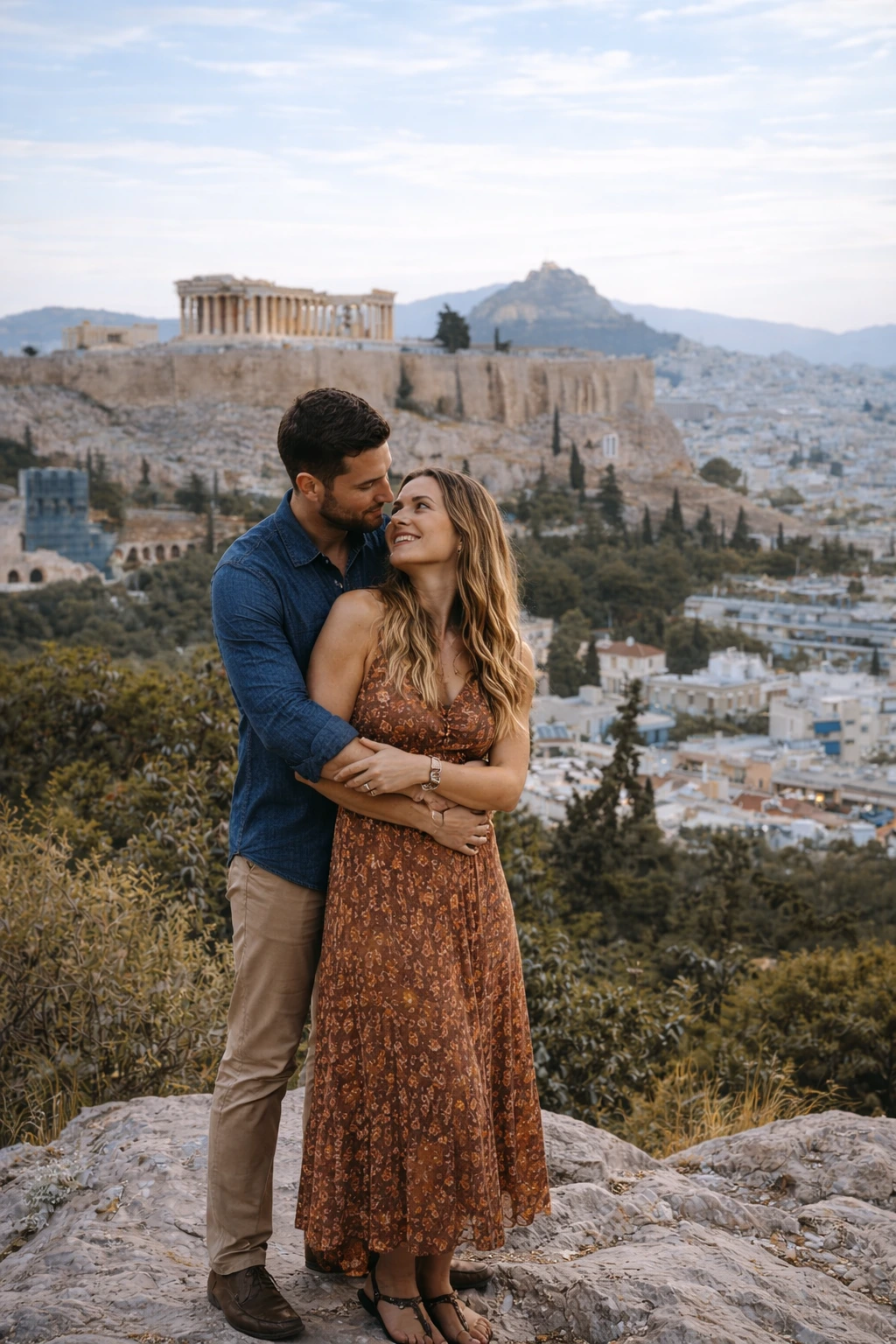
Can You Take Professional Photos at the Acropolis? Current Rules and Better Alternatives
The Parthenon is glowing above you, the camera is ready, and taking your portraits right here feels like the most natural idea in Athens. For a quick holiday frame, it can be. A planned session with a photographer is different, even when the finished photographs are only for you.
That distinction doesn't have to flatten the excitement. Give the right authority a precise plan, keep its reply, and choose a setting that still carries the Acropolis story if the ticketed site isn't the best match. The monument can stay at the heart of the photographs without becoming your studio floor.
The rules and application routes below were checked on 5 September 2026. Keep the written answer for your date and setup because policies, access and the relevant contact details can change.
Updated
Table of Contents
Can you take professional photos at the Acropolis?
The phrase “professional photos” doesn't settle the answer by itself. The form may look dense, so here's the shortest faithful version. Its first page asks for your full name, profession or capacity, postal address, telephone or fax, email and applicant category, plus publisher details where relevant. If the photographs will be published, say whether that's in print, electronically or in another form. The next boxes ask for the title and author, a brief description, copy count, country, languages, whether this is a first publication or republication, and the countries where it will appear.
The photography section gets more specific. Work without people is split into archaeological sites, museum objects or collections and general shots, with relevant counts and duration in days. For museum objects, it also asks whether anything must be moved or a display case opened, and whether a socket is needed. Separate fields cover people pictured for commercial-advertising purposes, aerial photography and underwater photography, each with the purpose and duration.
The final table pairs the competent service with each museum object, individual monument, archaeological site or museum or collection interior or courtyard, before the applicant declaration. In the accompanying email, add the planned date, group size, everyone working at the shoot and the equipment you'll bring. That gives the authority the practical picture behind the boxes.
Treat your entrance ticket as visitor access. For the session, ask the Ephorate of Antiquities of the City of Athens whether permission is needed and what conditions apply. It publishes a Photograph Application and accepts enquiries at [email protected]. Its current site also lists +30 210 9238747 and +30 210 9238724, with public office hours from 07:30 to 14:30, Monday to Friday.
This matters even for a small, private couple, family, maternity or proposal session. Private memories, a photographer's portfolio, a magazine feature and an advertising campaign aren't the same use. Ask the Ephorate to confirm in writing how it will treat your session and which route, if any, applies. Once that answer is in your inbox, the day becomes much easier to shape.
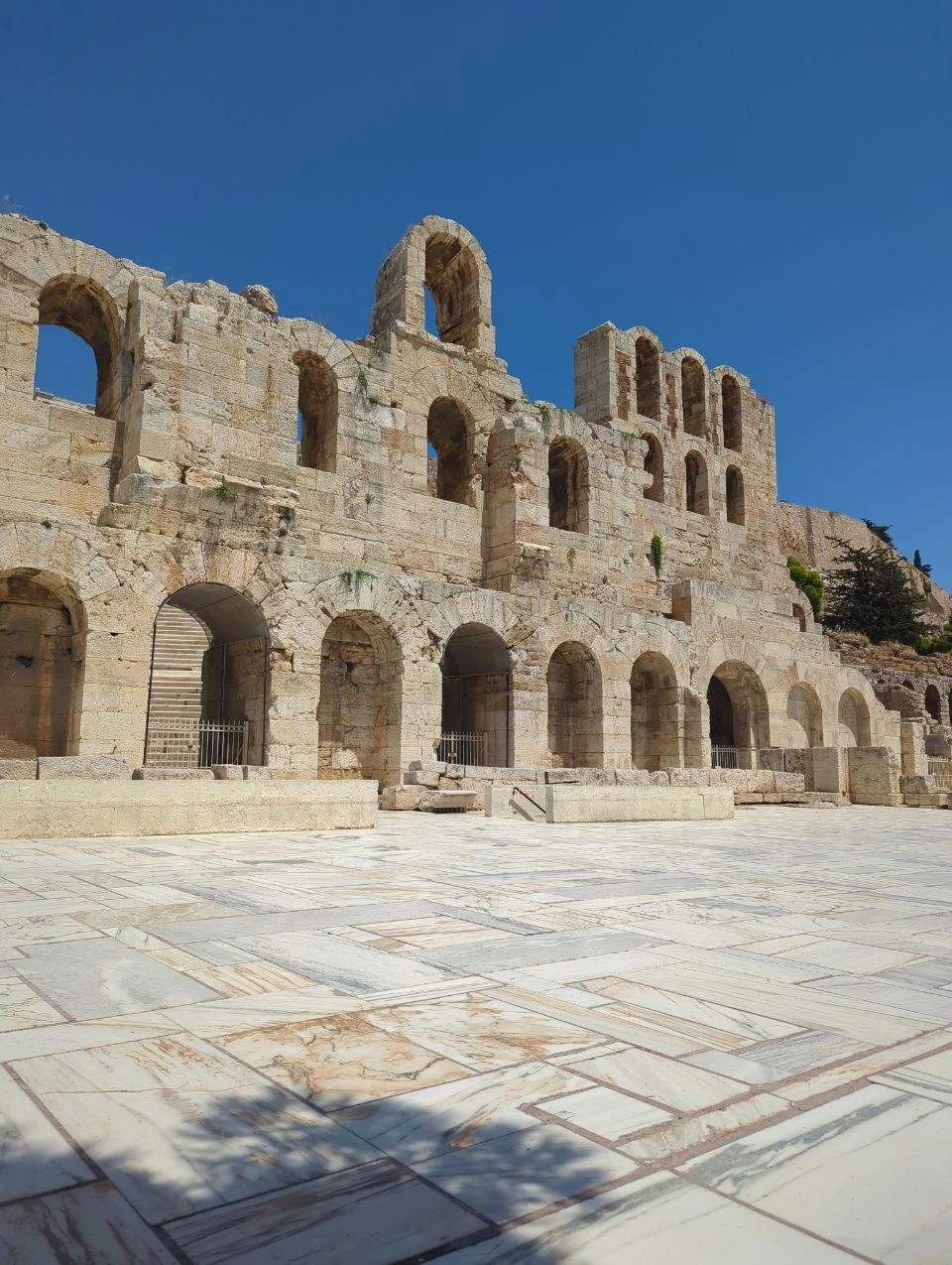

Five things to include in your permission enquiry
Start with the people. Say whether this is one person, a couple, a family or a larger group, then name everyone who will be working rather than visiting. “Private portraits for two travellers with one photographer” creates a much clearer picture than “professional shoot”.
Explain the purpose in one honest sentence. A holiday portrait session has a different aim from a tourism advert, fashion campaign or editorial feature. If this is a proposal, anniversary, maternity shoot or family memory, say so. Specifics make the question easier to answer, not less romantic.
List the camera and any additional equipment. Mention tripods, flash, lighting, reflectors, a drone or assistants if they're part of the plan. Put this detail in the accompanying email because the form doesn't provide a general equipment field. A handheld camera is a different setup from lights and stands, but the written answer should cover the exact one you'll bring.
Name the precise place, date and duration. For the ticketed Acropolis site, its slopes, the Western Hills or Areopagus, give the Athens Ephorate the precise point, proposed date, backup date and likely session length. For the Acropolis Museum, contact the Museum separately through its own written-consent route. For a street-level setting, identify the exact stretch and confirm who manages it.
Describe the intended use. The Athens Ephorate's form asks about electronic publication, commercial-advertising use and publication details. Your accompanying email should also explain private delivery, portfolio use and social media. A straight answer here keeps the permission tied to what will actually happen to the photographs.
You can bring those points together in one short message: “We're planning private portraits for two people on [date] at [exact place] for [duration]. One photographer will use [equipment]. The images will be delivered privately and [state any portfolio, social, editorial or commercial use]. Please confirm whether permission is needed, which application applies and whether any fee or site condition is relevant.”
The Acropolis Museum follows its own photography rules
The Museum's current visitor guidance allows amateur photography and filming for personal use in all areas except the Archaic Acropolis Gallery, without flash, portable lights or a tripod. Its linked detailed regulations contain an additional restriction for the Gallery of the Slopes, so confirm that gallery's status with Museum staff before photographing there. The Museum's policy also says personal visitor photographs can't be published in print or digital form.
Professional photography at the Museum needs prior written consent. Complete the Museum's Application for Photographs – Use and email it to [email protected] at least one month before the desired date; its current contact number is +30 210 900 0900. Any approved photography is limited to specific locations outside exhibition spaces as directed by Museum staff. The Museum states that its prescribed professional-photography fees must be paid in advance, and special technical equipment needs approval too.
Those conditions belong to the Museum only. They don't decide the fees or permission route for the outdoor archaeological site. If both places appear in your idea, contact each responsible body about its own part of the plan. Two precise replies beat one beautifully confident guess.
Three alternatives when professional photos at the Acropolis don't fit
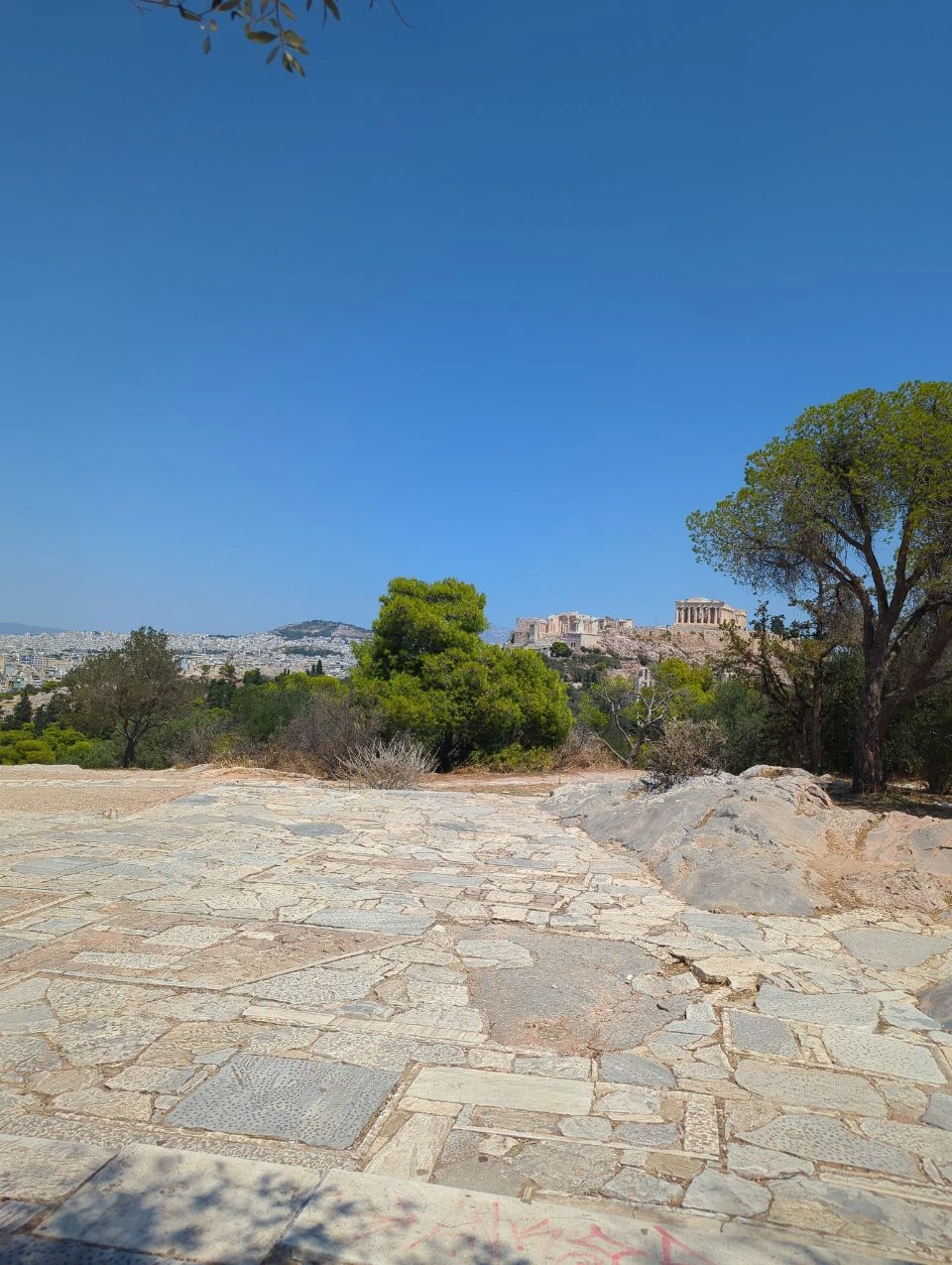
Lower Philopappos: the face-to-face view. At our lower scouted point, coordinates 37.9697774, 23.7203093, the Acropolis and Odeon can sit together with greenery in the foreground, and some relatively flat areas give two people room to stand. The approach still involves a genuine uphill walk, while the higher plateaus add more effort and a wider city angle. The walk takes you through the Western Acropolis Hills, a public green area with an archaeological and historical identity.
Best for: couples who want the Acropolis to read clearly in the background and feel comfortable with a hill walk.
Areopagus: the close, public Athens moment. The rock sits beside the Acropolis and brings ancient stone, the city and the monument into a quick stop. It draws locals and visitors, especially around sunset, so the mood can feel lively rather than private. Wear shoes with good grip and stay on the safer lower sections because the exposed rock is polished, uneven and genuinely slippery.
Best for: a short Acropolis-led portrait with public energy, especially when you're already visiting the area.
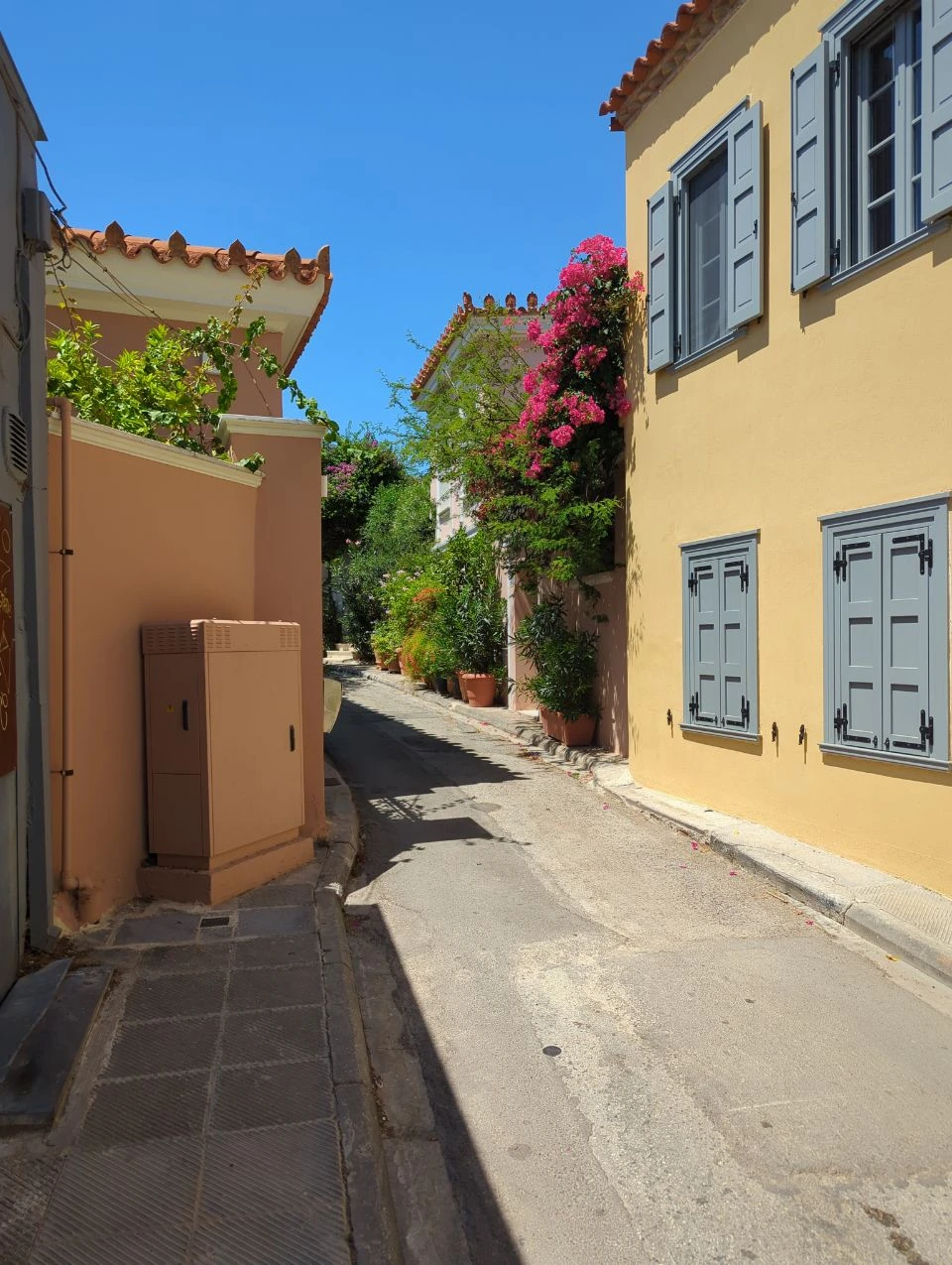
Street-level Athens: the neighbourhood story. Along the Dionysiou Areopagitou pedestrian approach and in respectful parts of Plaka or Anafiotika, the Acropolis appears above trees, pale walls, stone lanes and ordinary city life. These streets suit walking photographs and a wider Athens story rather than one fixed viewpoint. Keep residential doorways and narrow passages clear, and respect barriers.
Best for: travellers who want the Acropolis to appear as one chapter in a warm city walk rather than the only background.
Separate your monument visit from your portrait session
Later, you meet your photographer at the agreed setting. Perhaps the Parthenon appears across the valley at lower Philopappos. Perhaps it rises above a street as you walk through Athens. The camera comes up, you have room to move, and the Acropolis returns to the frame almost like a reveal.
Each half of the day can then find its own rhythm. Your monument visit follows the site's opening hours and visitor routes, while your portraits follow the pace of the chosen setting and the kind of photographs you want.
It can also produce a clearer view of the Acropolis behind you. From inside the site, you're surrounded by the monuments but can't always show their full scale in one portrait. From across the valley or lower in the city, the Acropolis becomes a complete shape in the background. Sometimes distance is exactly what makes the Athens story readable.
A few days before your portraits, recheck the weather and walking conditions. That small check tells you whether a hill still feels comfortable or a street-level setting would make the day more enjoyable.
Make your Athens photo plan feel easy
Professional Photos at the Acropolis FAQs
Possibly, but a visitor ticket doesn't approve a planned photo session. Send the Athens Ephorate the exact location, purpose, people, date, duration, equipment and intended image use, then ask it to confirm the correct route in writing.
No, a professional-looking camera isn't the only factor. Describe the whole session and all additional equipment so the Ephorate can answer for the activity you're actually planning.
Contact the Ephorate of Antiquities of the City of Athens at [email protected] and describe the exact site, people, purpose and intended image use.
No. The Museum has its own policy, application, approved areas and professional-photography fees, and its ticket is separate from the archaeological-site ticket. Contact the Museum directly when it appears in your plan.
No. The answer depends on the exact point, who manages it, whether it forms part of an archaeological or historic area, your equipment and how the photographs will be used. Confirm the named setting rather than relying on the word “outside”.
Yes. Plan the Acropolis as a sightseeing visit and arrange the portrait session separately at an Acropolis-facing setting, giving each part of the day its own pace and written conditions.


Best Time for an Athens Photoshoot: Sunrise, Sunset, Heat, Shade and Crowds
How to Choose an Athens Proposal Location: View, Privacy, Walking and Plan B
Athens Family Photoshoot With Kids: An Easy, Shaded Route
Athens Maternity Photoshoot: Comfortable Locations, Soft Light and Minimal Walking
Best Acropolis Viewpoints for Photos: Areopagus vs Philopappos vs Pnyx vs Lycabettus
A Lisbon Midday Photoshoot: A Shade-First Route Through Arcades, Tiles and Gardens
ENJOY $20 OFF
Your first photoshoot when you become an email subscriber.
Related Articles
Best Time for an Athens Photoshoot: Sunrise, Sunset, Heat, Shade and Crowds
Choose sunrise, a shade-led daytime route or a buffered sunset for your Athens photoshoot, with practical guidance for heat, crowds, wind and walking.
How to Choose an Athens Proposal Location: View, Privacy, Walking and Plan B
Choose between Areopagus, lower Philopappos, National Garden/Zappeion and a private terrace using view, privacy, walking and a nearby Plan B.
Athens Family Photoshoot With Kids: An Easy, Shaded Route
Plan an easy Athens family photoshoot through the National Garden and Zappeion with child-led movement, shaded pauses and a flexible route.