
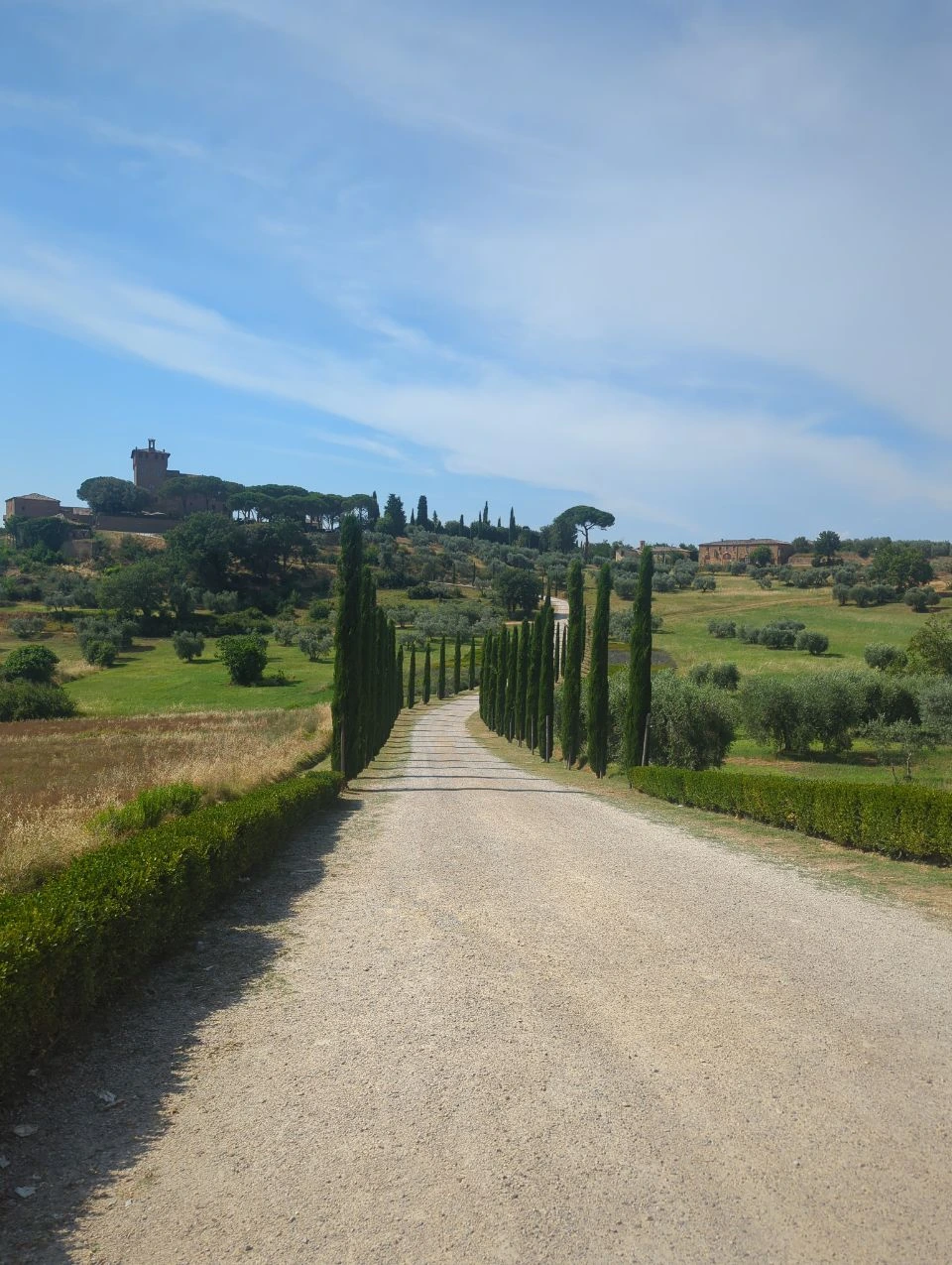
Cypress Avenue, Hilltop Grove or Field Backdrop? Choosing Your Val d’Orcia Couple Photoshoot Look
Photos with Tuscan cypresses can feel formal and cinematic, wonderfully expansive or quietly romantic. The difference often comes down to where the trees sit in relation to you: an avenue creates symmetry and depth, a hilltop grove punctuates the wider landscape, and a softer field backdrop keeps your expressions and connection at the centre.
In this guide, we will walk you through how these three looks affect subject scale, foreground, movement and the variety you can create. We will also explain which options suit a quick scenic stop, which can support a fuller session and what your photographer should check before building the plan around a particular view.
Updated

Table of Contents
First Decide What Should Command the First Glance
Neither approach is more personal or impressive than the other. The useful question is what viewers should notice first: your expressions, the graphic shape of the cypresses or the scale of the rolling Tuscan landscape.
A balanced gallery can include both intimate and wide photographs, but a brief stop may not leave enough time to explore every distance. Before arriving, decide whether your priority is one dramatic landscape image, a recognisable portrait with Tuscan context or a small sequence containing one of each.
Three Looks for Your Tuscany Cypress Photoshoot
Choosing between them is more useful than beginning with a list of famous locations. Once you know the visual result you want, your photographer can look for a safe and permitted setting that delivers it.
The Long Avenue: Formal Symmetry and Depth
Camera distance determines whether the image is primarily about you or the avenue. A closer portrait keeps your faces and connection prominent while the trees form a polished frame. From farther away, the narrowing road and repeated trunks become more powerful, and you may appear as small figures within the geometry.
This setting works particularly well for slow walking photographs, centred stillness, facing-away compositions and one striking wide frame. Its strong lines give simple movement a clear purpose, so elaborate posing is rarely necessary. Your photographer can move closer, adjust your position or work slightly off-centre, but most variations will still depend on the same axis.
That makes an avenue excellent for a concise formal sequence or a major chapter within a fuller gallery. It is less convincing as the only setting if you want many visibly different backgrounds.
The road itself is both the main foreground and the main practical constraint. A clean gravel surface creates depth, but it may also serve residents, farm vehicles or accommodation guests. Palazzo Massaini and Poggio Covili, for example, are managed hospitality properties rather than ownerless portrait locations. A quiet photograph of an empty approach does not prove that an organised session can use it.
The Hilltop Grove: A Wide Val d’Orcia Moment
Outside San Quirico d’Orcia, recognised cypress groupings sit on separate rounded hills. They photograph differently from an avenue. Instead of creating a corridor around you, each grove becomes a distant landmark that can be balanced against the foreground, the sweep of the hill and the sky.
Subject scale matters here. If you stand closer to the camera while the grove remains distant, your faces can still be visible and the trees provide clear landscape context. If both you and the grove are photographed from farther away, the result becomes a broad Val d’Orcia scene with a small human presence.
The foreground can determine whether the composition works at all. Grass, a pale earthen verge or the lower curve of a slope can create depth between the camera, you and the trees. A hard roadside edge, unsuitable field boundary or unsafe standing position may make the same distant view feel cramped or unusable.
A grove usually offers a concentrated set of strong compositions rather than endless variety. A wide establishing image, a closer layered portrait and a walking frame may be enough to capture its character. That limitation makes it a particularly good scenic accent or quick stop when the viewpoint and walking conditions have been checked in advance.
The Field Backdrop: Keep Your Connection at the Centre
This is often the strongest option when expressions, natural interaction and movement matter most. You can walk beside a field, turn towards each other, talk and laugh, then pause for a quieter portrait with the cypresses behind you. Your photographer can move closer for an intimate image or step back to include more of the landscape without repeatedly returning you to one central mark.
Foreground choices are broader than they are in an avenue. Grasses can soften the lower part of the frame, open earth can keep the photograph simple, and a permitted track can introduce a gentle line without imposing strict symmetry. Changing camera height or distance can also make the same trees feel prominent in one photograph and subtle in the next.
This compositional freedom makes a field backdrop the strongest foundation for a varied session. It is also a useful creative alternative when a famous avenue is inaccessible, busy or unsuitable. The result is not an inferior version of the avenue look. It is a more relaxed, couple-led treatment with its own visual strengths.
The flexibility remains visual rather than legal. A beautiful field edge may still be cultivated or privately managed, so the standing position and foreground must be verified even when you remain outside a named estate drive.
Is a Full Tuscany Cypress Photoshoot Right for You?
A hilltop grove is often the clearest quick-stop choice. Its value can be captured through a limited number of alignments, and the composition does not necessarily require approaching the trees themselves. The same feature that limits it during a longer session, its concentrated visual range, becomes an advantage when the goal is one memorable scenic sequence.
An avenue can also work as a short stop, but only when access and safe positioning have been arranged or checked. Its geometry allows walking and centred portraits to be created efficiently. If private signs, active traffic or a blocked entrance make the intended position unavailable, however, the plan needs an immediate alternative.
A field backdrop can suit either format. For a short stop, it works when a verified public or permitted edge already lies conveniently within the session plan. For a fuller session, it offers the most freedom to vary your size in the frame, foreground, movement and relationship to the trees.
Moving between looks uses real session time. Places that appear close on a map may still involve driving, lawful parking and a walk to the usable viewpoint. Prioritising one main cypress treatment and adding no more than one contrasting avenue or grove usually creates a stronger gallery than rushing between several recognisable locations.
For a fuller gallery, pair the main cypress setting with one genuinely different backdrop that is already practical within the session plan. An open hill can add space and movement, while a permitted village-edge setting can introduce stone and architectural texture. Let the photographer compare the driving, lawful parking and walking time before confirming both. If the second backdrop would consume too much of the session, create contrast at the main setting instead by moving from a close field-edge portrait to one wide landscape frame.
Check Access, Permission and the Ground Beneath You
Before building the session around a particular view, your photographer should check each practical decision separately:
- Permission: Confirm whether organised photography is allowed from the intended position and whether the property owner or relevant local authority needs to approve it.
- Safe standing space: Make sure you and the photographer can work without occupying an active road, blocking an entrance or stepping onto cultivated land.
- Parking or drop-off: Identify a lawful place that does not obstruct a gate, property approach or agricultural access.
- Walking conditions: Check the distance, slope and current surface between the stopping point and the photography position.
- Foreground: Confirm that the grass, verge, track or road needed for the composition is both usable and permitted.
- Backup setting: Keep a softer field view or another verified position available if traffic, access or ground conditions change.
A road that appears quiet in photographs may still carry residents, cyclists, guests and farm vehicles. Gates and entrances must remain clear, and neither you nor the equipment should be placed in an active traffic lane simply to preserve perfect symmetry.
The same care applies to fields. Staying on an approved track or usable field edge protects crops, respects working land and gives the photographer a reliable area from which to vary the composition. Signs, gates, tape and temporary boundary markers should be treated as meaningful even when they interrupt the desired view.
Dress for the Walk, Wind and Exposed Farmland
Exposed farmland can also feel windier than nearby villages or sheltered lanes. Choose clothing that still feels comfortable when the air moves and avoid relying on one very light layer for the entire session. A neat jacket, wrap or other easily carried layer can provide warmth between photographs without requiring a full outfit change.
Wind can add movement to hair, dresses and loose fabric, but it can also make complicated clothing harder to manage. Secure anything that could blow away, keep accessories simple and bring only what can be carried without restricting the walk. A small bag for spare shoes, a layer and essential personal items is usually more practical than several loose pieces.
Wet ground changes more than footwear. It may limit where you can stand, make an uphill approach uncomfortable and remove the soft grassy foreground shown in a reference image. If rain has affected a field or track, choosing a firmer permitted edge or a more sheltered composition is better than forcing the original plan.
Match the Setting and Timing to the Conditions
An avenue may enter shade before nearby fields because its tall trees block low light. This can produce an elegant, even atmosphere within the rows, especially when you want polished portraits without strong contrasts. Wind still needs to be assessed at the exact position on the day because tree spacing and direction can change how exposed it feels.
A hilltop grove is particularly effective when you want a graphic landscape shape. Clear evening light may create a bold silhouette, while cloud can make the scene softer and more muted. Because the grove is often distant, changing weather may affect the wider view more than your pose. Strong wind or wet access may still make the exposed slope uncomfortable even when the composition remains visible.
An open field usually provides more freedom to turn towards flattering light and keep faces readable. It works well when you want movement, closer portraits and cypresses that support rather than dominate the image. On a windy day, your photographer may favour a lower angle, a firmer field edge or a position with some shelter instead of the most exposed viewpoint.
Cloud is not automatically a problem. It can soften facial shadows and help preserve detail in both you and the landscape. Wet ground is more limiting because it changes comfort, footwear, safe movement and the usable foreground.
Choose a mood rather than trying to reproduce the exact sunset, crop colour or field texture in a saved photograph. You might prefer bright and airy portraits, gentle warmth, quiet cloud-softened tones or a darker grove against the sky. Your photographer can combine that preference with the day’s access, weather and safest workable setting.
The sunrise-or-sunset comparison for Val d’Orcia helps you connect that mood with the journey and setting.
Which Cypress Look Fits You?
Choose the hilltop grove if you want one expansive Val d’Orcia moment with a strong sense of scale. It is especially effective as a brief scenic sequence, provided the stopping point, walk and foreground have been checked.
Choose the field backdrop if you want your connection to lead the gallery. It offers the most room for close portraits, walking photographs, foreground variety and changes in camera distance while the cypresses continue to establish the setting.
Whichever look you prefer, stay attached to the visual result rather than one famous entrance. That gives your photographer room to respond responsibly if permission, traffic, wind or wet ground changes the original plan.
Plan Your Tuscan Hills Couple Session
Send your photographer one reference image and explain what you want to preserve: the symmetry of a pale road between even cypress rows, the distant scale of a hilltop grove or a gentle cypress background behind your portraits. Mention whether you prefer recognisable faces, a dramatic landscape or a mixture of both.
Explore Travaya’s Tuscan Hills photographers to plan your couple session around the cypress look that feels most like you.
Frequently Asked Questions
Quick answers for planning couple photos among Val d’Orcia’s cypresses
No. A *strada bianca* may still be a private drive, farm entrance or route used by residents and guests. Access for an organised session must be checked separately.
No. A distant grove can create a stronger landscape composition because its dark shape remains clearly separated from the hill and sky. Cypresses can also establish the setting from behind you in a closer portrait.
Often, yes, when the location and conditions allow it. Wear comfortable shoes for the approach and carry delicate footwear in a small bag rather than walking over uneven or wet ground in it.
Because the foreground affects both the composition and the safe working area. Grass or a pale verge can add depth, while mud, a hard roadside edge or a cultivated boundary may restrict where the photograph can be made.
Not necessarily. Field colour and texture change with weather and agricultural work. It is better to choose the balance you want between the couple, cypresses and wider landscape than to depend on a particular crop or surface.


Couple Photoshoots in London

A Romantic Dubai Weekend With Room for One Special Moment

A Couple Photoshoot at Fisherman’s Bastion: How the Session Unfolds

A Romantic Walk Through Pienza’s Stone Streets

The Best Budapest Streets for Natural Couple Photos

Pienza Viewpoints for Couple Photos: Balancing Portraits and Tuscan Scenery
ENJOY $20 OFF
Your first photoshoot when you become an email subscriber.
Related Articles

Couple Photoshoots in London
Choose the London setting you love, and we’ll shape one relaxed route around it.

A Romantic Dubai Weekend With Room for One Special Moment
A relaxed two-day Dubai itinerary for couples, with an arrival evening, Old Dubai, Madinat Jumeirah and space for an optional proposal.

A Couple Photoshoot at Fisherman’s Bastion: How the Session Unfolds
A couple photoshoot at Fisherman’s Bastion can give you loads of variety without needing an elaborate plan. Its pale stone arches, stairways, towers and open terraces create natural opportunities to walk, pause and enjoy each other’s company, with Budapest ready to sweep into the background whenever you want a wider view. You do not need to arrive knowing how to pose. The architecture gives you something to move through and respond to, while your photographer can offer simple prompts as the session unfolds. The result is a connected gallery filled with close portraits, playful moments and expansive city scenes, rather than a string of stiff poses.