
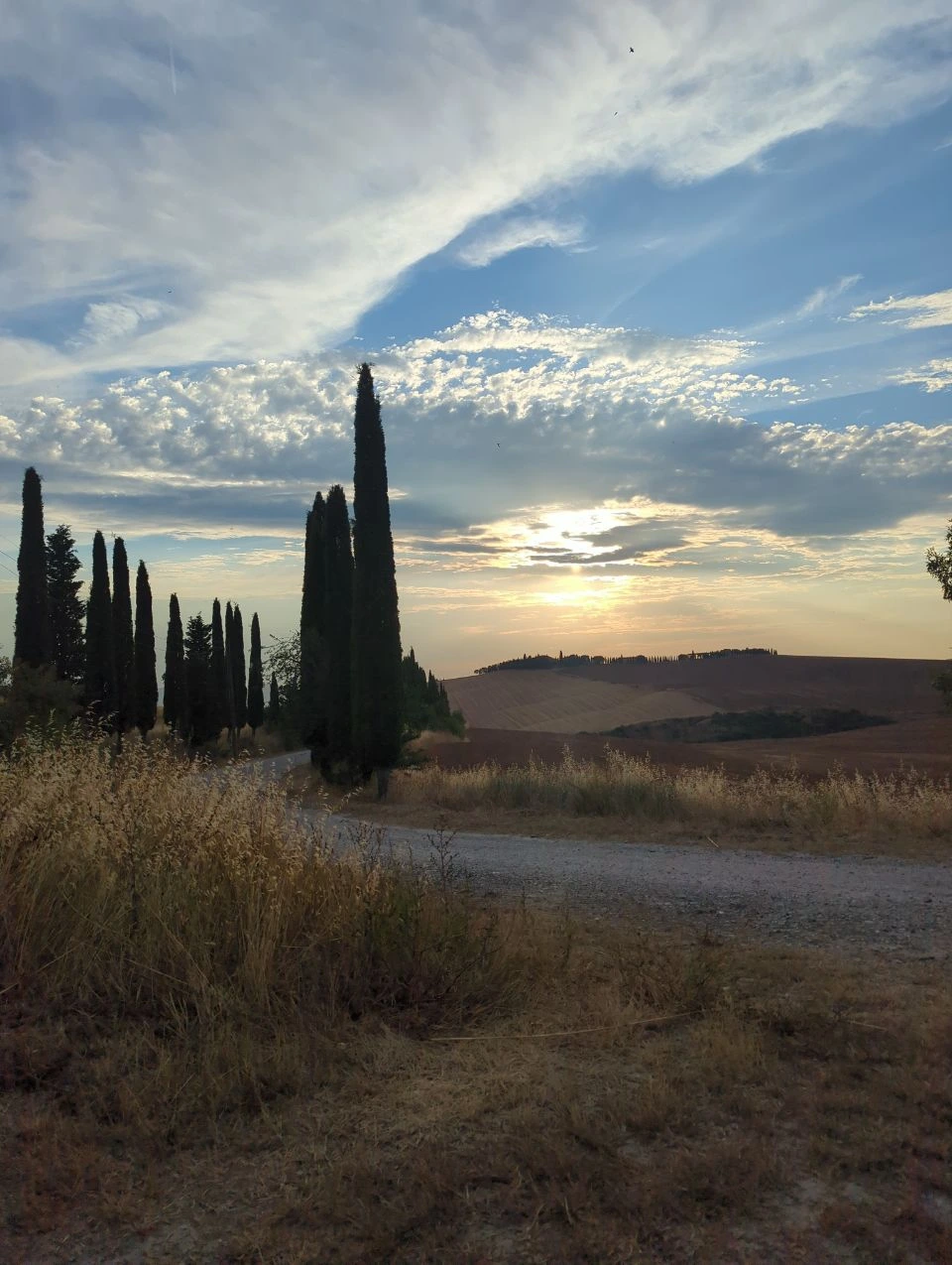
Sunrise or Sunset? When to Plan Your Val d’Orcia Couple Photoshoot
Val d’Orcia changes character at the two ends of the day. At sunrise, the hills can feel hushed and spacious, the air is often cooler and a village lane may briefly seem to belong to just the two of you. At sunset, the landscape becomes warmer and more sociable, with long shadows, moving grasses and a day that flows naturally into dinner.
The simple answer is to choose sunrise for quiet, cooler air and softly layered hills. Choose sunset for warmth, movement and an easier holiday rhythm. Then let your photographer check one thing that matters more than the label on the clock: whether the chosen hill, lane or viewpoint actually faces the useful light.
That last detail is what turns a beautiful idea into a relaxed session. In this rolling landscape, a ridge can hide the sun earlier than expected, and a spot that glows in the evening may remain shaded at dawn. The right time is the one that suits both the atmosphere you want and the shape of the place.
Updated

Table of Contents
Sunrise or Sunset for Your Val d’Orcia Couple Photoshoot?
Sunrise tends to suit couples who love stillness. The valley wakes slowly, the air can be fresh even after a hot day, and the low light can separate one hill from the next. If you picture walking through a quiet lane, standing together above soft layers of countryside or beginning the day with the photoshoot before breakfast, sunrise has a natural rhythm.
Sunset feels different. It usually asks less of your alarm clock and gives you the day to get ready. The light can bring out warm earth, pale tracks and cypresses, while longer shadows reveal the curves of the land. It also makes it easy to treat the session as the first part of an evening together.
Neither time guarantees an empty setting, a clear horizon, mist or a certain colour. Weather, the season, farming activity and other visitors all play a part. The useful choice is the one whose ordinary version you would still enjoy. If the sky is clear rather than misty at sunrise, would the quiet start still feel special? If sunset is soft and cloudy rather than fiery, would you still love the warm end-of-day mood? Your answer is more reliable than a single saved photograph.
Choose Sunrise for Stillness, Cooler Air and Layered Hills
The light often begins gently. Before the sun appears, the sky can hold cool blue and pastel tones. Once the sun clears the horizon, it may skim across slopes rather than falling straight down on them. That sideways light can make distant ridges look like separate layers and give the folds of the landscape more definition.
Cooler air is another practical advantage, especially in warmer months. You can walk a short approach or stand in an open position before the strongest heat arrives. Hair, make-up and clothing may feel easier to manage when neither of you is already warm from sightseeing. The exact temperature still depends on the date and forecast, so think of this as a likely benefit rather than a promise.
Mist is possible in low parts of the valley, particularly when the air and ground conditions align, but it is a gift rather than a booking feature. A clear morning can be just as beautiful, with clean hill lines and the first light touching cypresses or stone. Plan for the atmosphere of dawn, not for one weather effect.
Published couple reportages show how this can work in real life. One sunrise session began in the countryside and continued into Pienza during a roughly two-hour window. Another started among the hills before moving towards the village. These are useful examples of day flow, not fixed itineraries. Their strongest lesson is simple: an early start can create enough visual change without racing between many places.
Sunrise does ask for preparation. Rural tracks and field edges may be dim before first light, so your photographer should confirm the meeting point, legal parking or drop-off, walking surface and access in advance. A small torch, a warm layer and comfortable approach shoes can make the first minutes feel easy. Once the light arrives, the effort of the alarm quickly becomes part of the story you will remember.
Choose Sunset for Warmth, Movement and an Easier Day
As the sun lowers, warmer light can bring out the honey, wheat and terracotta notes in the landscape. Long shadows draw lines across fields and make rounded hills easier to read. That texture is especially effective in wider photographs where you are moving through the scene rather than standing still in the middle of it.
Evening also suits playful movement. A dress can catch the breeze, you can walk along an authorised track, or the two of you can turn into each other while the countryside opens behind you. The light usually changes more noticeably near the end, which gives the session a gentle sense of momentum. Earlier frames may feel bright and open; later ones can become softer and more atmospheric.
The trade-off is that famous roadside views and village edges may have more visitors around sunset, especially in popular travel periods. That does not make the session feel crowded by default. A local photographer can choose a safe, permitted position, work with camera direction and let brief pauses in foot or road traffic shape the wider frames.
Evening warmth also depends on the season. In summer, the air may still hold the heat of the day, while spring and autumn can cool quickly after the sun slips behind a ridge. Bring one layer that looks good with your outfit, and choose footwear that works on the actual surface. Comfort shows in the way you stand close, laugh and move.
The Hill Chooses the Light Before the Clock Does
Val d’Orcia is made of rolling ridges rather than one flat horizon. At dawn, the sun may technically have risen while your chosen side of a hill remains in cool shade. In the evening, another ridge may hide the sun before the published sunset time. A high village edge can hold direct light while a low field below has already become soft and blue.
This is why a local light check is more useful than booking a generic hour before sunset. Your photographer can work backwards from the date, the direction of the view, the height of nearby ridges and the walking time from the meeting point. They can decide whether to begin with open light and finish in shade, or use the shaded period first and wait for the sun to reach the intended background.
Light direction also changes how you look in the photograph. Facing towards the sun may create warm, even light when it is very low. Turning away can produce a bright rim around hair or clothing, while standing sideways can give the scene more shape. Your photographer can adjust the angle within the same spot, but a hill cannot be rotated. Choosing the position and time together protects both the landscape and your expressions.
Allow a little margin around the best-looking minutes. The moments before sunrise and after sunset still hold colour, and they give you space to arrive, walk safely and settle in. The aim is not to sprint after one ray of light. It is to build a session that keeps feeling good as the light changes.
Match the Time to Pienza, an Open Hill or a Cypress Setting
In Pienza, buildings can create shade even when the valley outside is bright. Sunrise may bring quieter streets and gentle light along one lane while another remains cool. Sunset can warm west-facing stone and let you finish near a village edge, but the useful light may disappear quickly once it drops behind roofs or a ridge. The village gives you architectural options if the distant view becomes hazy or cloud covers the horizon.
An open hill gives the sky and landscape a larger role. Sunrise can reveal soft layers as the valley wakes, while sunset can draw longer shadows across the curves. Here, wind and temperature are more noticeable because there is less shelter. The most comfortable choice may depend as much on the forecast as on colour.
A cypress setting needs an orientation check. Trees can become a strong dark shape against a bright sky, or catch light along their edges. The effect changes with the camera direction and the sun’s path. Rather than deciding that every cypress lane belongs to sunset, ask which side is accessible and how the light meets it on your date.
Val d’Orcia is a lived, agricultural landscape. A beautiful field, drive or farm approach may be privately managed, even when it looks open from the road. Your photographer should confirm where you can stand, where a driver can stop and whether permission is needed. Time the session around a verified setting, not the other way round.
Plan the Session Around Comfort, Travel and What Comes Next
Sunset works well when you want a slower start to the day or already have evening plans nearby. It can be harder if you are driving a long distance after dark, need to return a hire car at a fixed time or have dinner booked before the light has finished changing. A simple calendar check can save more stress than chasing the most dramatic sky.
Give your photographer your accommodation area, date, transport plan and walking comfort before choosing the exact time. Mention whether you prefer village paving, a short rural approach or a setting at your own villa or agriturismo. These details let them suggest a realistic meeting point and protect the time you spend together in front of the camera.
It also helps to decide what you want after the session. Sunrise can end with coffee and a full day ahead. Sunset can lead into dinner, a glass of wine or a quiet drive back through the valley. When the photoshoot belongs naturally inside your trip, it feels less like an appointment and more like one of the best parts of it.
A Simple Sunrise vs Sunset Decision
Choose sunset if you want an easier start to the day, warmer end-of-day colour, longer shadows and a session that flows into dinner. It is often the happier choice when you would feel rushed or tired before dawn.
If you are still split, answer three questions together. Which ordinary outcome would you prefer: a clear, cool morning or a softly cloudy evening? Which time fits your sleep, transport and plans without friction? Which direction does the verified setting face? The answer that wins two of those three is usually the right one.
Keep the final plan simple. One well-chosen rural setting or one compact village area can offer wide views, movement and close photographs as the light changes. You do not need to collect every famous pin before the sun moves on.
Plan Around the Light You Love
Share your date, accommodation area and the feeling you want most: quiet dawn, warm evening, village stone or open hills. A local Tuscan hills photographer can check the sun direction, approach and access, then shape a relaxed plan around the light that suits you.
Send a few words about your ideal atmosphere and how early you are genuinely happy to start. We will help you turn that preference into a simple Val d’Orcia session plan.
Frequently Asked Questions (FAQs)
Quick answers for choosing sunrise or sunset in Val d’Orcia
Sunrise is often quieter at popular viewpoints and in village streets, but an empty setting is never guaranteed. Your photographer can also use camera direction, timing and a less obvious permitted position to create a calm feeling.
No. Mist depends on temperature, humidity, wind and the shape of the land. Treat it as a beautiful possibility rather than part of the booking. Clear dawn light can still reveal the hills in delicate layers.
Sunset often retains more of the day’s warmth, especially in summer, while sunrise commonly begins cooler. The date, altitude, wind and forecast matter, so check the actual conditions and bring a layer that works with your outfit.
Sometimes. The result can still be very different because ridges, trees and buildings change when direct light reaches the usable position. A local orientation check will show whether sunrise, sunset or soft shade suits that exact setting.
There is no universal meeting time. Your photographer should work back from the date, the approach and the surrounding hills. Arriving before the key light gives you time to walk safely and settle in, while staying briefly after sunset can add soft blue and pastel tones.


Couple Photoshoots in London

A Romantic Dubai Weekend With Room for One Special Moment

A Couple Photoshoot at Fisherman’s Bastion: How the Session Unfolds

A Romantic Walk Through Pienza’s Stone Streets

The Best Budapest Streets for Natural Couple Photos

Pienza Viewpoints for Couple Photos: Balancing Portraits and Tuscan Scenery
ENJOY $20 OFF
Your first photoshoot when you become an email subscriber.
Related Articles

Couple Photoshoots in London
Choose the London setting you love, and we’ll shape one relaxed route around it.

A Romantic Dubai Weekend With Room for One Special Moment
A relaxed two-day Dubai itinerary for couples, with an arrival evening, Old Dubai, Madinat Jumeirah and space for an optional proposal.

A Couple Photoshoot at Fisherman’s Bastion: How the Session Unfolds
A couple photoshoot at Fisherman’s Bastion can give you loads of variety without needing an elaborate plan. Its pale stone arches, stairways, towers and open terraces create natural opportunities to walk, pause and enjoy each other’s company, with Budapest ready to sweep into the background whenever you want a wider view. You do not need to arrive knowing how to pose. The architecture gives you something to move through and respond to, while your photographer can offer simple prompts as the session unfolds. The result is a connected gallery filled with close portraits, playful moments and expansive city scenes, rather than a string of stiff poses.