
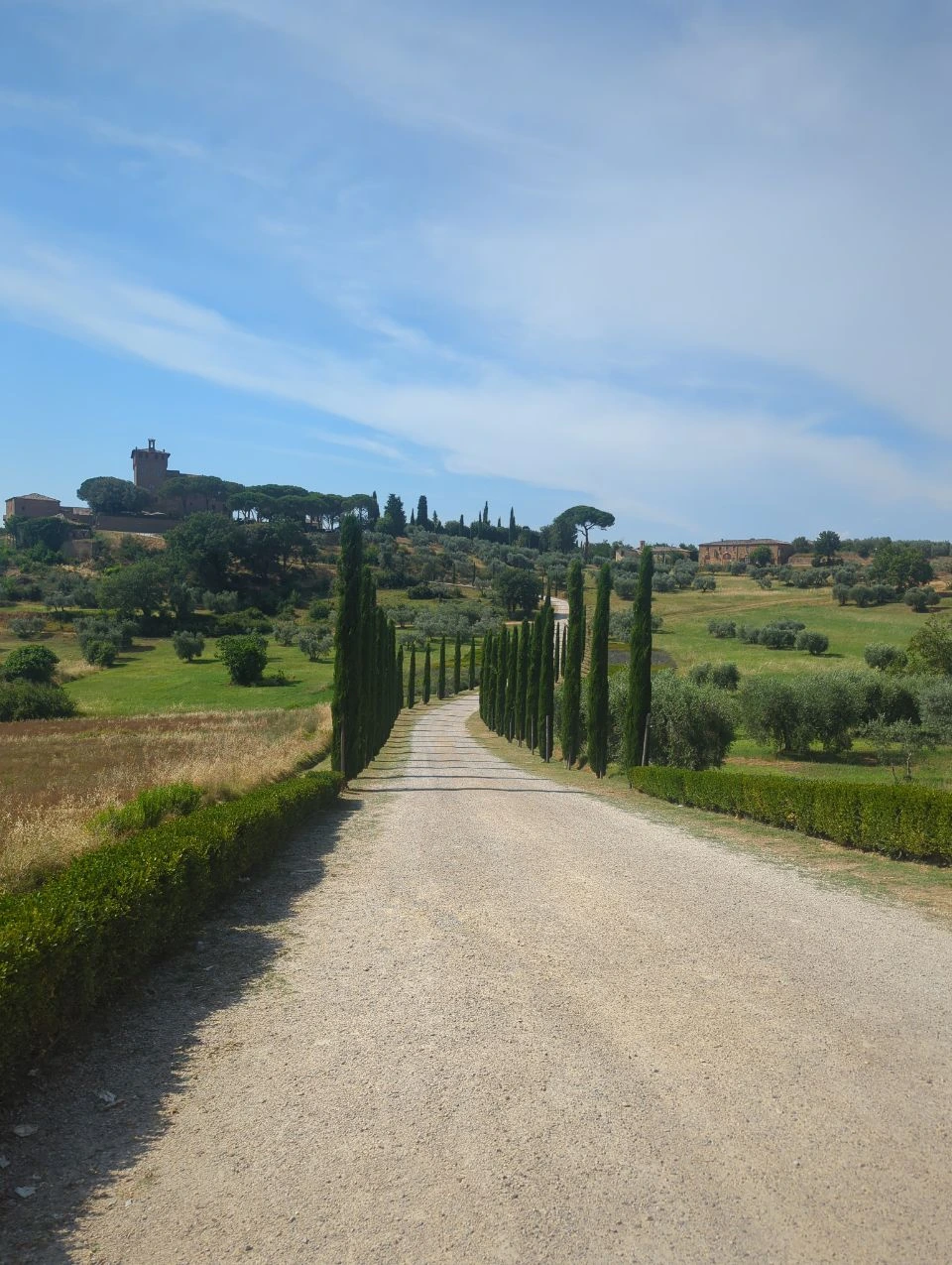
How to Plan a Couple Photoshoot at Your Tuscan Villa or Agriturismo
Using your Tuscan accommodation for a couple photoshoot can make the experience wonderfully simple. You can finish getting ready in your room, meet your photographer outside and begin somewhere familiar instead of navigating rural roads to another location.
The property already carries meaning because it is part of your trip. Its architecture, gardens and surrounding landscape may also offer enough variety for a complete session without travelling elsewhere.
Updated

Table of Contents
Can the Entire Photoshoot Take Place at Your Villa?
Beside the building, doorways, steps and textured walls can create intimate architectural portraits. A more open area allows for wider compositions, walking photographs and natural interaction. Add a third stop only if it provides a clearly different backdrop without requiring a long or uncomfortable walk.
Get Written Approval for Your Villa or Agriturismo Photoshoot
You can keep the request simple:
> We’re planning a small couple session with one photographer on [date], from approximately [time] to [time]. Could you please confirm how the property classifies professional photography, whether photography is permitted in [named areas], where the photographer should enter and park, and which guest, agricultural or staff areas we must avoid?
Make sure the response covers professional photography rather than casual holiday pictures. If your room will appear in the session, include it in the request. Treat every other interior, loggia or covered terrace as unavailable unless it is included in the written response.
If you have booked the property for exclusive use, check whether staff, maintenance teams or owners will still need access. If the accommodation is shared, expect other guests to use communal areas because permission to photograph there does not reserve them for the session.
An agriturismo is both accommodation and a working environment. Housekeeping, gardening, irrigation, food preparation, deliveries, maintenance and agricultural vehicles may affect access during your stay. Check which features will actually be usable on your date instead of relying on listing photographs or broad labels such as villa, farmhouse or agriturismo.
Build a Short Route Around Your Tuscan Villa
1. Your booked room or a permitted façade, doorway, staircase or shaded wall.
2. A garden path, lawn, planted courtyard or landscape edge included in the host’s response.
3. An optional terrace, viewpoint or sheltered architectural space.
Your room can function primarily as a base for water and make-up. If the interior has suitable light and is included in the plan, it may also support a few photographs. Otherwise, a quiet spot immediately outside can provide an equally gentle start.
Choose the final stop for comfort rather than spectacle. A sheltered wall or quiet garden boundary may produce a more natural ending than a dramatic viewpoint that is windy, crowded or difficult to reach.
Plan the Light, Weather and Walking Conditions
An exposed garden may become more comfortable later, while a shaded façade could work earlier. East-facing spaces often receive direct morning light, while west-facing spaces are more likely to receive it later in the day. Breakfast, dinner preparation or other activity can still make the best-looking time impractical.
Hill shadow deserves particular attention. The sun can disappear behind a ridge well before the published sunset time. The sky may remain bright and flattering, but the warm backlight you expected could already be gone.
Ask the host when direct sun usually leaves the spaces you are considering. A recent phone photograph taken near the proposed hour may reveal more than an old listing image because it can show the current vegetation, furniture and seasonal conditions.
Use that information to arrange the route. Photograph an exposed view before it falls into shadow, then move towards the building as the light softens. Reverse the order when the property faces another direction.
Cloud does not necessarily spoil the session. Overcast conditions can soften facial shadows and create even light across architecture and gardens. The goal is to respond to the property as it appears that day rather than reproduce its promotional photographs.
For brief rain, a permitted loggia, deep doorway, bright room or covered terrace may keep the session moving. Strong wind may make the sheltered side of the building preferable and favour simple clothing over loose accessories. During hot weather, begin in shade, carry water and keep time spent in direct sun short. Stop, shorten or reschedule for lightning, severe gusts, flooded tracks or dangerously slippery surfaces.
Stable shoes are sensible on gravel, grass and uneven stone. If you want formal footwear for a static portrait, carry it and change near the relevant spot. A full outfit change is possible when your room remains accessible, although a jacket, scarf or overshirt can add variation with less interruption.
For more on choosing the hour around the terrain, compare sunrise and sunset for a Val d’Orcia photoshoot.
Book a Photographer for Your Tuscan Villa Session
Once the available locations are clear, visit the Tuscan Hills photographers page and share your date, accommodation details and access information. Your photographer can then shape a smooth route around the property, conditions and the way you want the session to feel.
Frequently Asked Questions
Quick answers for planning a couple photoshoot at a Tuscan villa or agriturismo
As a practical rule of thumb, allow around 30 minutes for one concentrated area, about 60 minutes for two nearby zones and 90 minutes when the route includes three distinct areas or a full outfit change. Add a buffer if the spaces are far apart or if guest activity, farm work or vehicle access may interrupt the sequence. Confirm the final booking length with your photographer after the host approves the route.
Send a short phone video or recent photographs of the approved areas, along with notes about walking distances, stairs, shade and any mobility concerns. This helps the photographer choose the order of locations and identify which spaces need to be checked again on arrival.
Yes. Allow ten minutes for a final walk-through with the photographer, especially after rain, maintenance work or changes to outdoor furniture. Reorder or remove any stop that has become inaccessible, unsafe or disruptive to guests.
Not necessarily. Ask who controls the lane, field edge or viewpoint and obtain separate permission when it falls outside the accommodation.
If you intend to publish the photographs, tell the host before the session and ask whether the property has any conditions concerning recognisable interiors, architecture or private areas. Separately, ask the photographer how the images may be used in their portfolio, website or social media and what consent applies.


Couple Photoshoots in London

A Romantic Dubai Weekend With Room for One Special Moment

A Couple Photoshoot at Fisherman’s Bastion: How the Session Unfolds

A Romantic Walk Through Pienza’s Stone Streets

The Best Budapest Streets for Natural Couple Photos

Pienza Viewpoints for Couple Photos: Balancing Portraits and Tuscan Scenery
ENJOY $20 OFF
Your first photoshoot when you become an email subscriber.
Related Articles

Couple Photoshoots in London
Choose the London setting you love, and we’ll shape one relaxed route around it.

A Romantic Dubai Weekend With Room for One Special Moment
A relaxed two-day Dubai itinerary for couples, with an arrival evening, Old Dubai, Madinat Jumeirah and space for an optional proposal.

A Couple Photoshoot at Fisherman’s Bastion: How the Session Unfolds
A couple photoshoot at Fisherman’s Bastion can give you loads of variety without needing an elaborate plan. Its pale stone arches, stairways, towers and open terraces create natural opportunities to walk, pause and enjoy each other’s company, with Budapest ready to sweep into the background whenever you want a wider view. You do not need to arrive knowing how to pose. The architecture gives you something to move through and respond to, while your photographer can offer simple prompts as the session unfolds. The result is a connected gallery filled with close portraits, playful moments and expansive city scenes, rather than a string of stiff poses.