
October 8, 2026
Budapest’s Overlooked Photo Spots: Small Detours with a Different Perspective
You could stand directly in front of Parliament and let its scale steal the show. Or you could step back, soften the view with flowers and keep your connection at the heart of the frame. Both photographs say Budapest, but they tell completely different stories.
Even familiar landmarks can feel personal when you change the composition. Instead of racing between attractions, choose one part of the city and explore it from different directions. A side angle, a strip of water, a natural frame or a few extra metres of distance may be all you need to create photographs that feel recognisably Budapest without looking like postcards.
Updated

Table of Contents
A Different View Starts with Stronger Layers
Distance also controls how much attention a building receives. When you stand close to a grand façade, its scale can dominate the photograph. Step farther away and the architecture becomes part of a wider scene, leaving more room for expressions, movement and smaller moments.
Straight-on views tend to emphasise symmetry. A side angle can reveal receding columns, neighbouring façades or paths that guide the eye through the frame. The landmark remains recognisable, but it no longer has to fill every available space.
Test a Landmark Before Moving On
Walking beside a building, pausing on a step or sharing a quiet comment can feel more natural than standing still in front of its entrance. These low-pressure actions are particularly helpful during the first few minutes, when you may still be getting used to the camera.
Moving sideways might reveal a cleaner background or a less familiar face of the building. Stepping back can reduce its scale, while moving closer may leave only one recognisable detail in view. A lower camera position can place more sky around a dome or tower, and a diagonal angle can turn steps or railings into useful leading lines.
This short period of exploration often produces more variety than leaving for another landmark before you’ve settled into the session.
Photograph the Basilica and Opera from the Side
A side street isn’t guaranteed to be quiet. People may still be moving through central Budapest, but the narrower framing gives your photographer more control over the background. Calm conditions sometimes occur in the morning, though they’re best treated as a pleasant possibility rather than part of a fixed plan.
The Hungarian State Opera offers a different kind of elegance. From an oblique angle, its columns, carved stone, lamps and entrance steps can recede through the image and create a strong sense of direction. Pausing where those lines are most visible allows the architecture to support the portrait rather than sit squarely behind it.
Your photographer will need to work from suitable public positions, keep entrances clear and allow visitors to pass comfortably. The exact angle may therefore change according to access and activity on the day.
Let Parliament Sit Farther Back
A seated composition can feel especially relaxed. You might share a comment, look towards the skyline or rest a hand on your partner’s arm. These small gestures create warmth without requiring an elaborate pose.
Benches, flowers and planted borders are useful when available, but they aren’t essential. An open foreground or standing position can work just as well, provided Parliament remains visible without making you appear lost beside it.
Use Greenery and Changing Levels Around Castle Hill
Changes in level offer another way to add depth. One person might walk slightly ahead on a staircase, pause above the other or glance back at a turn. The repeated steps guide the eye and create a natural reason to move without demanding complicated posing.
A compact sequence can begin beside structured stone, continue near a planted edge and finish along a suitable path. These backgrounds feel distinct, even though they may sit within the same general area.
Paths and gardens around Castle Hill can change or close, so the precise route should be based on what’s open, comfortable and practical on the day. Mention mobility needs, long clothing or a preference to avoid steps before the route is chosen.
Supportive footwear is useful on stairs, gravel and uneven paths. If you’d prefer dressier shoes in the photographs, you can carry them and change at a suitable spot rather than wearing them throughout the walk.
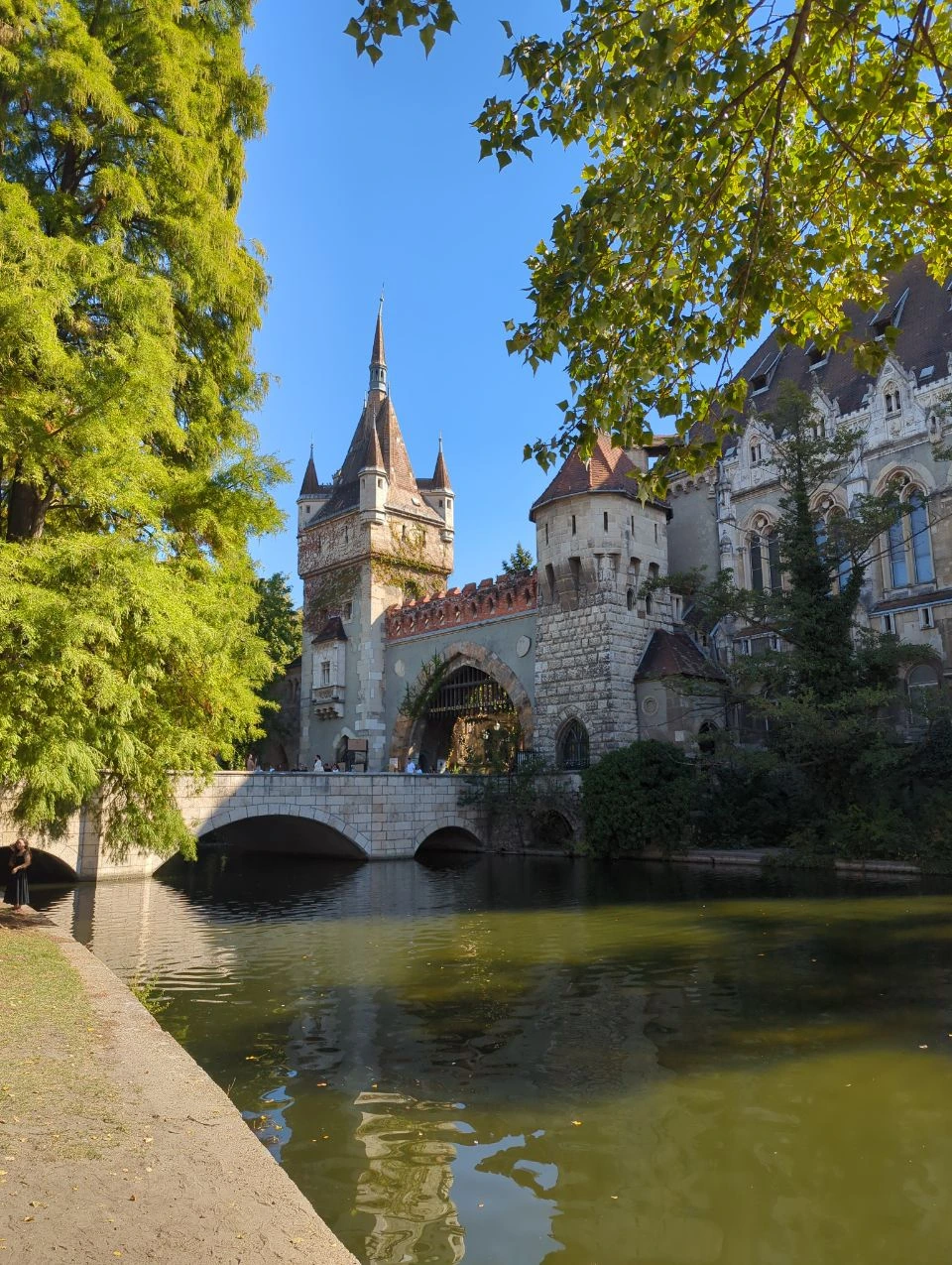
Frame Vajdahunyad Castle Through Trees and Water
The water doesn’t need to produce a perfect reflection. It may appear still and luminous on one day, then darker, textured or partly obscured on another. Each condition can work when the composition responds to what’s actually there.
The trees also change the atmosphere. Full foliage can create a soft, enclosed view, while bare branches produce cleaner, more graphic lines. Both can feel cinematic in different ways.
A quiet pause beside the water may be enough to complete the composition. Events, seasonal changes and path conditions can affect the precise view, so it’s better to treat the setting as flexible rather than depend on one exact position.
Build Variety with Two or Three Nearby Changes
Start by choosing the atmosphere you care about most. Architecture suits a polished, urban gallery with stone, columns and strong lines. Greenery and water create a gentler mood, even when the setting remains public. If you’re unsure, think about which photograph you’d most like to frame at home.
Once an area has been confirmed as practical, begin with an easy walking frame. Continue with the strongest architectural or layered composition, then finish with a quieter close portrait. This gives the session a natural progression from movement to more deliberate framing and finally to a relaxed ending.
Let the session length determine how ambitious the plan becomes. With less time, protect one strong area and explore it properly. With more time, add a nearby variation only when it offers a genuinely different result. The aim isn’t to count landmarks but to leave enough space for conversation, movement and unplanned moments.
Plan the Proposal Before the Surprise
The sequence can stay simple: approach the agreed area, use the cue, stop in position and ask the question. Afterwards, remain there for the first reaction, embrace and look at the ring before moving into portraits. Those unscripted seconds are often among the most meaningful photographs of the session.
Once the initial emotion has settled, a nearby side angle or short walking sequence can continue the story through the newly engaged portraits.
Adapt When the Light, Foliage or Crowd Changes
When conditions shift, start by changing direction or tightening the crop. If that isn’t enough, look for another foreground, such as a tree line, railing or planted edge. Your photographer might also wait briefly for a workable gap in the crowd. If the position is closed, unsafe or uncomfortably busy, moving to a nearby alternative is the right choice.
Fog, cloud and clear light can all produce beautiful results. They simply create different moods and require different decisions about exposure, distance and background.
You should never feel pressured to wait in an uncomfortable crowd, balance on an unsafe surface or force a proposal into a position that no longer feels right. Protecting the experience matters more than copying a planned frame.
Plan Your Budapest Photoshoot
Explore the available sessions and start planning with a Budapest photographer. Share the kind of atmosphere you love and any practical requirements, and your photographer can help shape a comfortable route around the conditions on the day.
FAQs
Morning may offer calmer conditions, but an empty street can’t be guaranteed. The side composition works because of its layered façades, trees and architectural details, not because it depends on complete quiet.
Photographs can be taken from suitable public areas when access allows. Your photographer will choose a position that keeps entrances clear and works around visitors.
Yes, but mention your mobility needs before the route is planned. Paths, closures and access conditions can change, so your photographer should select comfortable public positions that don’t rely on staircases.
No. Calm water may create a soft reflection, while ripples and darker water add texture. The composition can be adjusted to suit the conditions rather than depending on a perfect mirrored view.
Agree on the location, stopping point and cue with your photographer in advance. After asking the question, stay in position for the first reaction, embrace and ring photographs before moving on.
Your photographer should change the angle, use a nearby alternative or move elsewhere. No photograph is worth forcing an unsafe or uncomfortable situation.


Our Budapest Shoots:
Book your Budapest couple Photographer!
Start Booking
A Couple Photoshoot at Fisherman’s Bastion: How the Session Unfolds

The Best Budapest Streets for Natural Couple Photos

How to Prepare for a Couple Photoshoot in Budapest

A Romantic Couple Photoshoot at Buda Castle: A Gentle Palace Walk for Two

Photos with the Hungarian Parliament: which side should couples choose?

A Fairytale Couple Photoshoot at Vajdahunyad Castle
ENJOY $20 OFF
Your first photoshoot when you become an email subscriber.
Related Articles

A Couple Photoshoot at Fisherman’s Bastion: How the Session Unfolds
A couple photoshoot at Fisherman’s Bastion can give you loads of variety without needing an elaborate plan. Its pale stone arches, stairways, towers and open terraces create natural opportunities to walk, pause and enjoy each other’s company, with Budapest ready to sweep into the background whenever you want a wider view. You do not need to arrive knowing how to pose. The architecture gives you something to move through and respond to, while your photographer can offer simple prompts as the session unfolds. The result is a connected gallery filled with close portraits, playful moments and expansive city scenes, rather than a string of stiff poses.

The Best Budapest Streets for Natural Couple Photos
You turn a corner, the buildings open slightly and a familiar Budapest landmark appears between the façades. One of you notices it first; the other follows their gaze without breaking stride. The landmark places you in the city without taking over the photograph. You are still walking, talking and looking at each other rather than queuing for a formal pose in front of a monument. That is one of the loveliest ways to photograph a couple in Budapest. A leafy path below the Castle District feels very different from the grand approach to St Stephen’s Basilica, yet both give you space to move and respond naturally. The question is not which backdrop looks most impressive, but where you are most likely to loosen up and enjoy the walk.

How to Prepare for a Couple Photoshoot in Budapest
Budapest can feel completely different from one street to the next. You might walk hand in hand beneath the pale arches of Fisherman’s Bastion, hear a tram rattling beside the Danube, then warm your hands around coffee on a neighbourhood boulevard that feels far removed from the main sights. That variety is exciting, although choosing where to go can feel harder than it needs to. Begin by deciding how you want the photographs to feel, then choose a setting that supports that atmosphere. A little planning goes a long way. The light, crowds, hills, cobbled streets and walking distances can all shape how comfortable you feel. Once those details are working for you, the session becomes less about collecting landmarks and more about enjoying Budapest together.