
Table of Contents
Plan a Rome Family Photoshoot That Fits Your Kids
That is exactly why planning family photos in Rome begins with more than a famous backdrop. The Colosseum may be your dream view, but the best route is the one that gives your children room to be themselves and still protects the photographs you care about most.
Start with your family’s movement budget: how far everyone will happily walk, how often you’ll want to pause and whether the children feel better exploring an open park or following a short city route. Then build the session in three simple chapters: everyone together, children in motion and smaller family connections.
You don’t need to race through Rome to create a gallery that feels full of it. You need the right part of the city at the right hour for your family.
Plan a family photoshoot in Rome with kids around their best hour
Then place the session against the fixed points in your day. Museum tickets, lunch reservations, naps and travel time all affect how much energy is left for photographs. When you can, schedule the session before the longest sightseeing block rather than after it. The photoshoot should feel like a lovely part of your holiday, not the final task on a day that has already asked everyone to walk across half the city.
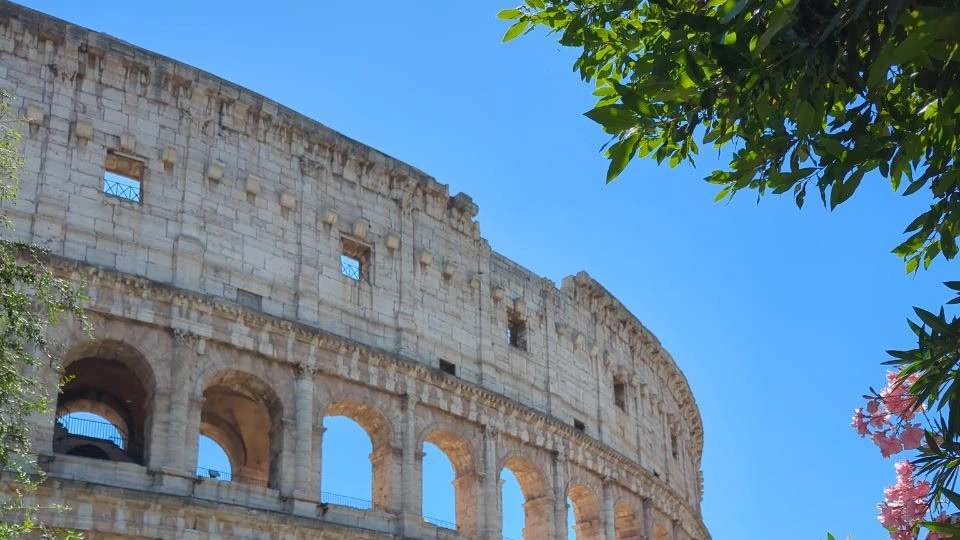
Early morning is often a strong choice. Stone streets are cooler in warmer months, the flow around famous landmarks is usually easier to work with and children who wake early can have their best energy before Rome fully gets going. Yet early never means private. Even Travaya’s 06:30 Colosseum scouting found other visitors already using the viewpoint.
An early alarm also has to earn its place. If waking a child before dawn will leave them exhausted, choose a later hour and a setting with shade, a contained route or a more flexible background. A relaxed family at the Orange Garden or Villa Borghese will give you far more than a famous square reached at the wrong point in everyone’s day.
Summer makes the timing decision more noticeable. Open stone around the landmarks absorbs heat, while Villa Borghese and the Orange Garden offer trees and pockets of shade. In cooler months, a later morning can be beautifully comfortable and much kinder to the family schedule. Cloud can widen your options too, softening open squares that are less forgiving under direct sun.
Think of light as one part of the plan, not the boss of it. Your photographer can work with a variety of conditions. Your child’s normal rhythm is much harder to negotiate with, and frankly has a stronger personality.
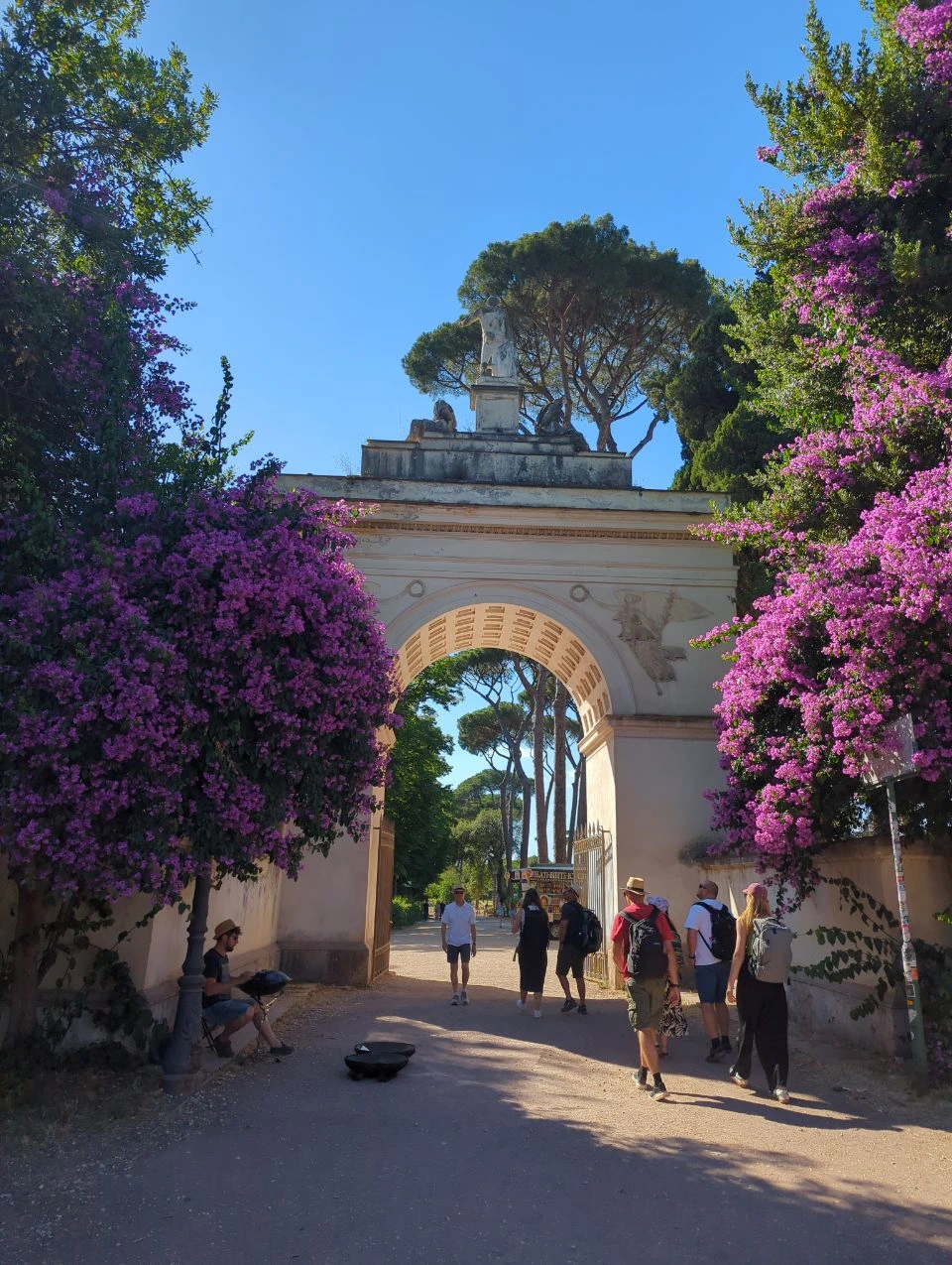
Choose the hour when your children feel most like themselves, then fit the route to Rome.
Choose the location by your family’s movement budget
Choose Villa Borghese and Pincio for spacious exploration. This is the broadest option: trees, water, paths, smaller architecture and a city view can all become part of the story. It suits children who settle into photographs by walking, noticing and doing. The trade-off is that the park is much larger than it first appears on a map.
Choose the Orange Garden for compact greenery and a skyline. Shade, benches, a tree-lined avenue, warm walls and a Rome view sit comparatively close together. It gives active children something to explore without requiring a long park loop.
Choose the Colosseum and Monti for one icon plus movement. Begin with the unmistakable ancient-Rome view, then let nearby lanes, doors, cobbles and a street fountain bring the photographs back to your family. This works well when the monument matters, but you don’t want every image to feel formal.
Choose Piazza Navona and the Pantheon for a contained old-centre story. Piazza Navona offers water, architecture and changing angles within one long square. The Pantheon adds monumental columns after a relatively short connection through the centre.
Choose Trevi or the Spanish Steps when one famous backdrop matters most. These locations are visually powerful, so a short, carefully timed plan can be enough. They give children less free-running room and ask for a more exact meeting point, but the reward is instant Rome.
The useful question is not “Which place is best?” It is “Which place lets our family move in a way that still feels good?” Once you answer that, the backdrop becomes much easier to choose.
Tip: Pick the background your family would be most disappointed to miss. Then choose the shortest route that gives you that view plus one place where the children can move.
Villa Borghese and Pincio give active families room
A real family session in the park began with time in a rowboat, then continued through paths, temples, fountains and the Pincio view. You don’t need to repeat that itinerary, and activities always need a current availability check. What the example shows is how one park can hold several kinds of family photographs: doing something together, walking, pausing by water and finally opening the background to the city.
The most important planning detail is the exact loop. Villa Borghese is a route area, not a single photo pin. Travaya’s sample between the Pincio terrace, the lake and a nearby arch contains meaningfully more walking than the compact Orange Garden route, even before you add photographs, detours or a child’s pace.
That matters with a pushchair. The park has broad and paved paths, but parts of the wider area include slopes, steps and long internal distances. One family may arrive near the upper area and follow a gentle loop. Another may climb from Piazza del Popolo and experience a completely different route. “Villa Borghese is stroller-friendly” is too broad to be genuinely useful. “This meeting point and this loop work with your stroller” is the conversation you want. Our Villa Borghese family photoshoot guide compares those compact and wider park plans.
Pincio can give the park story a recognisable Rome ending. The terrace opens above Piazza del Popolo, while nearby corners add benches, plants, stone and changing height. Travaya’s scouting found that the higher points improve the city context, but some approaches include steps. If a skyline is important, tell your photographer before the route is set so the family starts on the right side of the hill.
Villa Borghese is an especially lovely fit when your children look most natural while they’re doing something. They can lead the walk, hold hands, look for boats or curl up beside you on a bench. The park supplies new backgrounds while the family’s activity provides the continuity.
Bring the route back to one simple decision: do you want a small green loop or a fuller park story? Both can look varied. The fuller version simply spends more of the family’s movement budget.
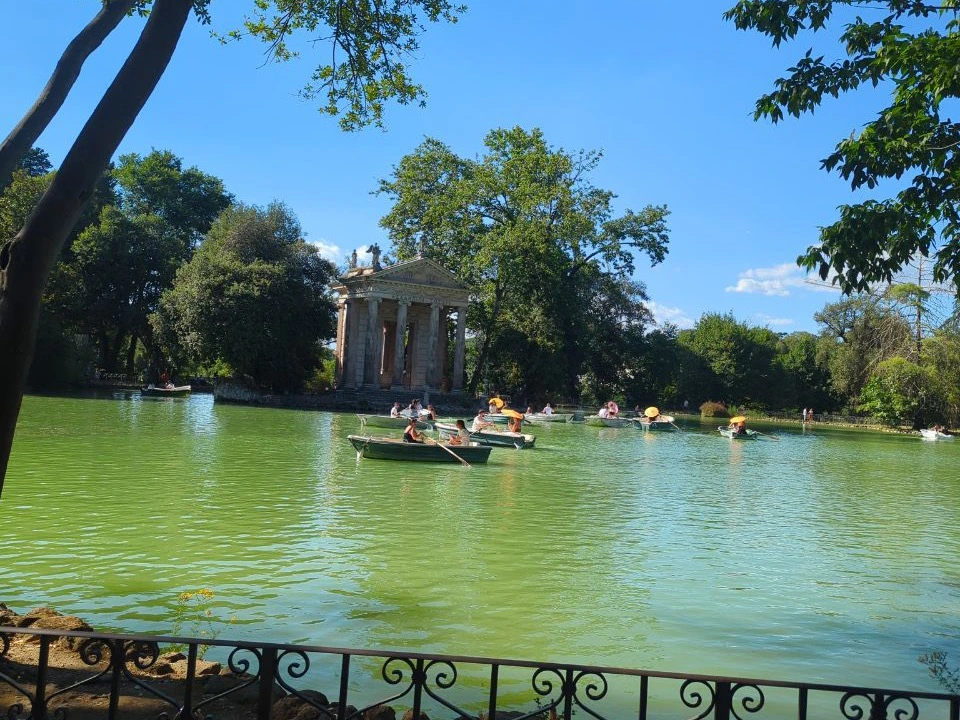
Villa Borghese can create several chapters inside one park, but the exact loop decides the walking load.
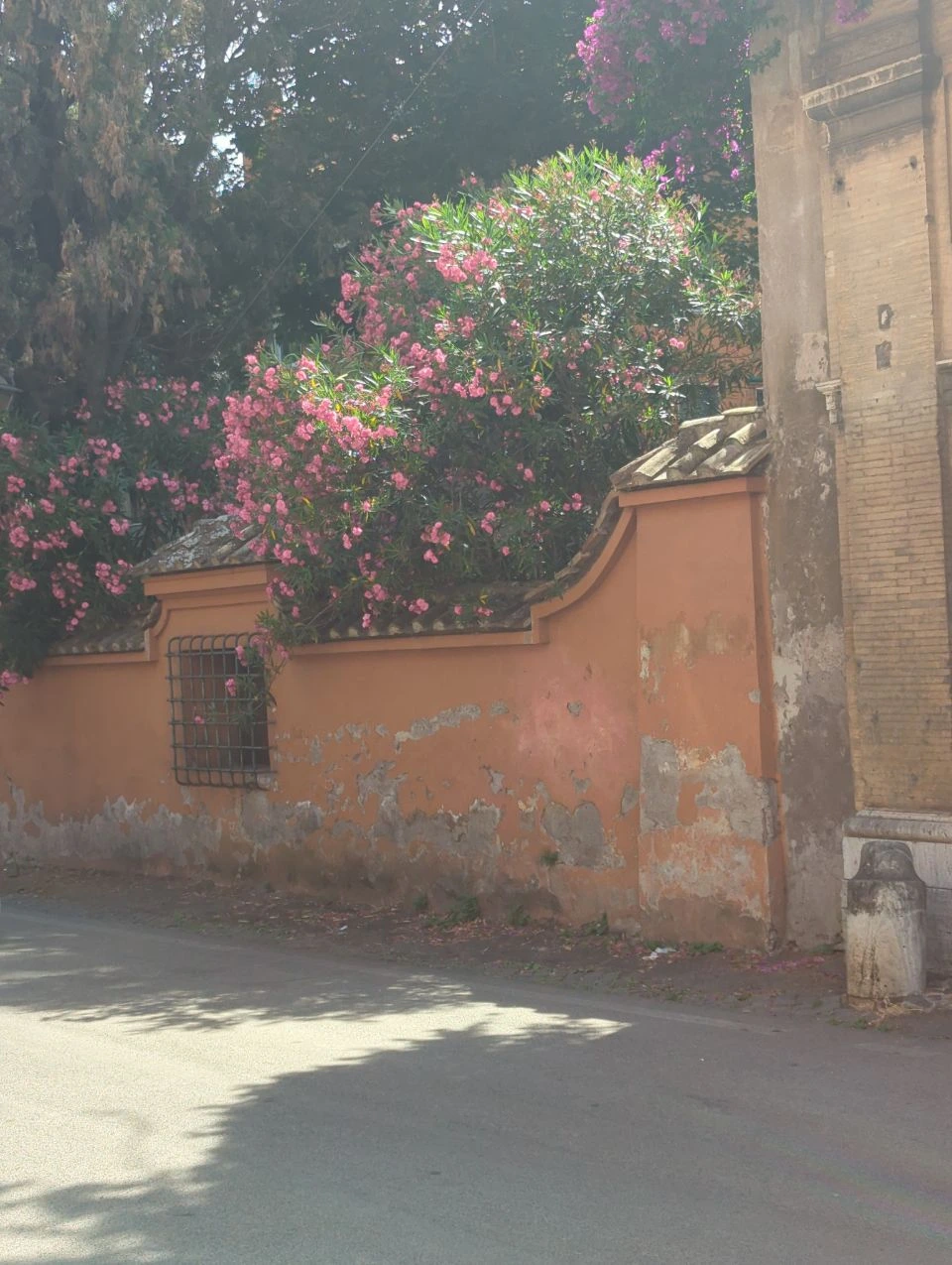
Orange Garden keeps greenery and skyline close
Travaya’s scouting found several useful looks within a very small area: the viewpoint, a yellow wall with flowers nearby and a quieter mix of gates, greenery and warm-toned surfaces. In route modelling, those pins sat only a few minutes of pure walking apart. The family still needs time to stop and photograph, of course, but it is a very different commitment from crossing a larger section of Villa Borghese.
This is a strong choice for a family that wants children to move without turning the session into a long walk. It also works well when one person prefers regular sitting pauses or when a pushchair needs to stay close. The garden itself may feel contained, although the Aventine hill and some approaches can involve slopes or steps. Choose the drop-off and meeting point with that in mind.
The garden has gates and changing access times, so the live plan should be checked close to the date. There is no need to build the whole article around opening-hour arithmetic. Your photographer simply needs to confirm that the chosen light and the current gate schedule still agree with each other.
The Orange Garden gives you a softer version of Rome: trees overhead, warm colour at street level and domes across the horizon. For families who want one view, one green walk and minimal transition, that can be exactly enough.
Colosseum and Monti mix one icon with a street story
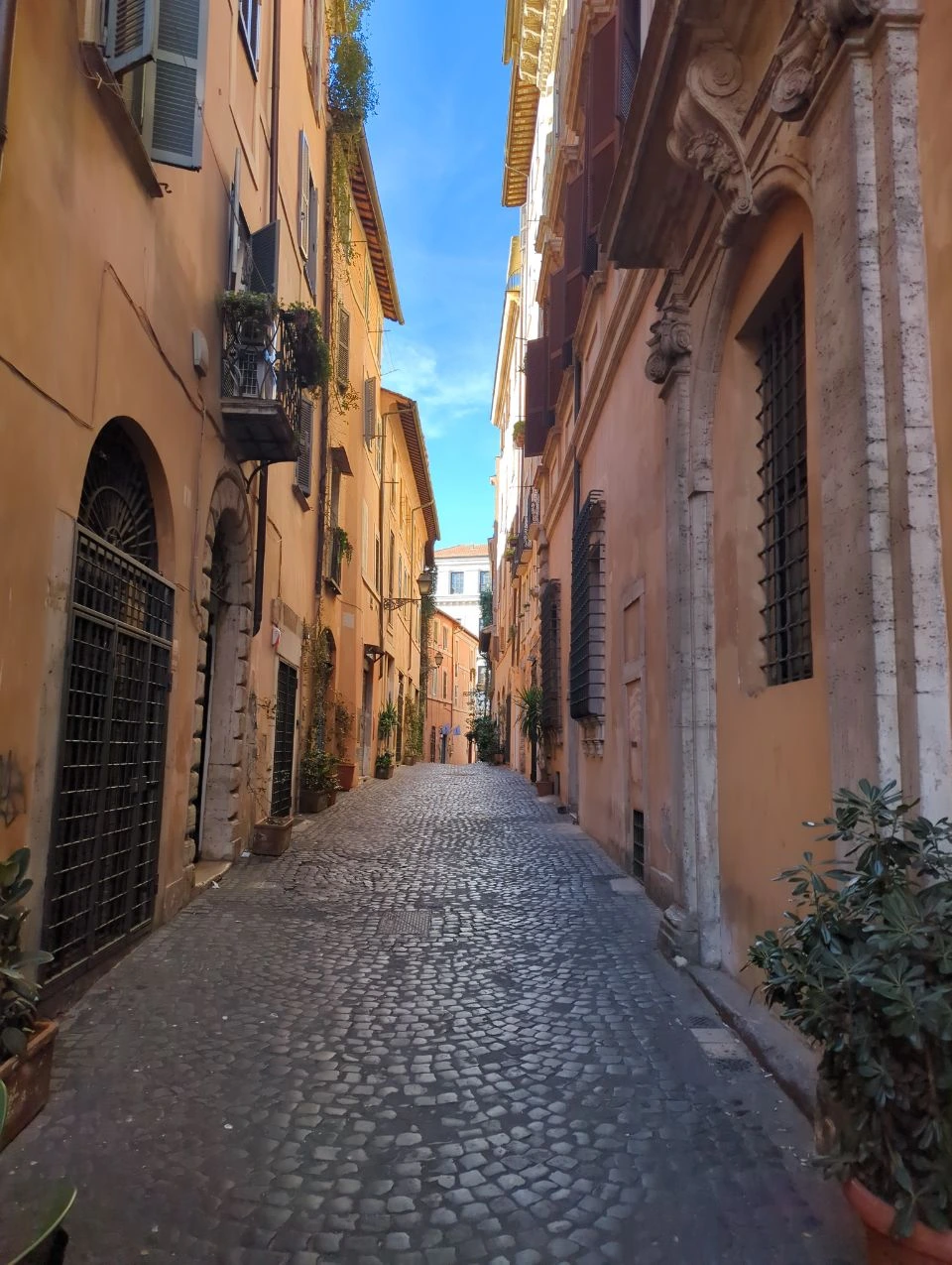
An elevated view can keep more of the Colosseum visible behind the family. Once that essential photograph is secure, Monti changes the energy. A real Rome family session moved from the elevated icon to a cobbled lane, walking photographs and a street fountain. Another local route uses ivy, old doors and everyday street details within the neighbourhood.
That combination is useful because the Colosseum and Monti play different roles. The monument establishes Rome. The streets give children something to do. They can walk between parents, look into a doorway, pause at a fountain or lead everyone around a corner. The gallery gains variety without asking the family to perform against the same ancient wall for an hour.
The transition is still a real walk. A representative route between an upper Colosseum point and central Monti is longer than it can appear in a tightly cropped map, and the cobbles change how it feels with a pushchair or little legs. Exact viewpoints matter, so avoid building the day around a fixed internet claim such as “five minutes away”.
Early timing improves your chances of cleaner compositions, but it does not give you the Colosseum alone. That is part of photographing a living city. A skilled photographer uses height, timing and tighter frames while Rome wakes around you. The aim is a clear family story, not evidence that the rest of the city overslept.
Choose this route when the Colosseum is non-negotiable and your children enjoy a short walk with visual discoveries. If they need open running space or frequent benches, a park route may feel better. If they have only a small amount of walking to give, stay with one Colosseum area and let different heights and angles create the variety.
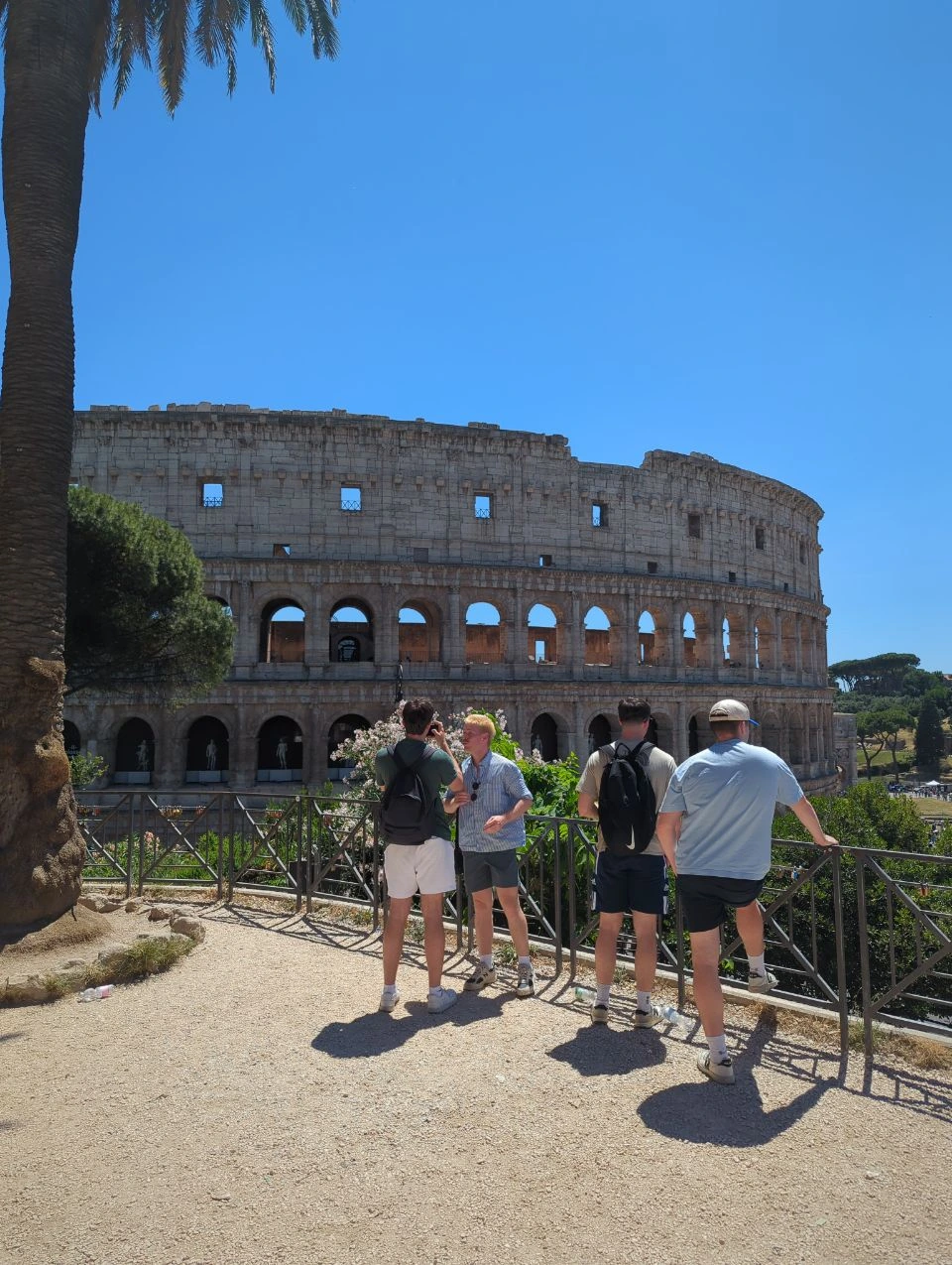
One Colosseum view and nearby Monti streets can balance landmark scale with family movement.
Piazza Navona and Pantheon keep old Rome contained
This is not park-sized running space, but it gives children more visual freedom than a single monument viewpoint. They can circle back, point at a fountain or walk between adults while the architecture changes behind them. That makes the square a strong choice for a family that enjoys gentle movement and observation.
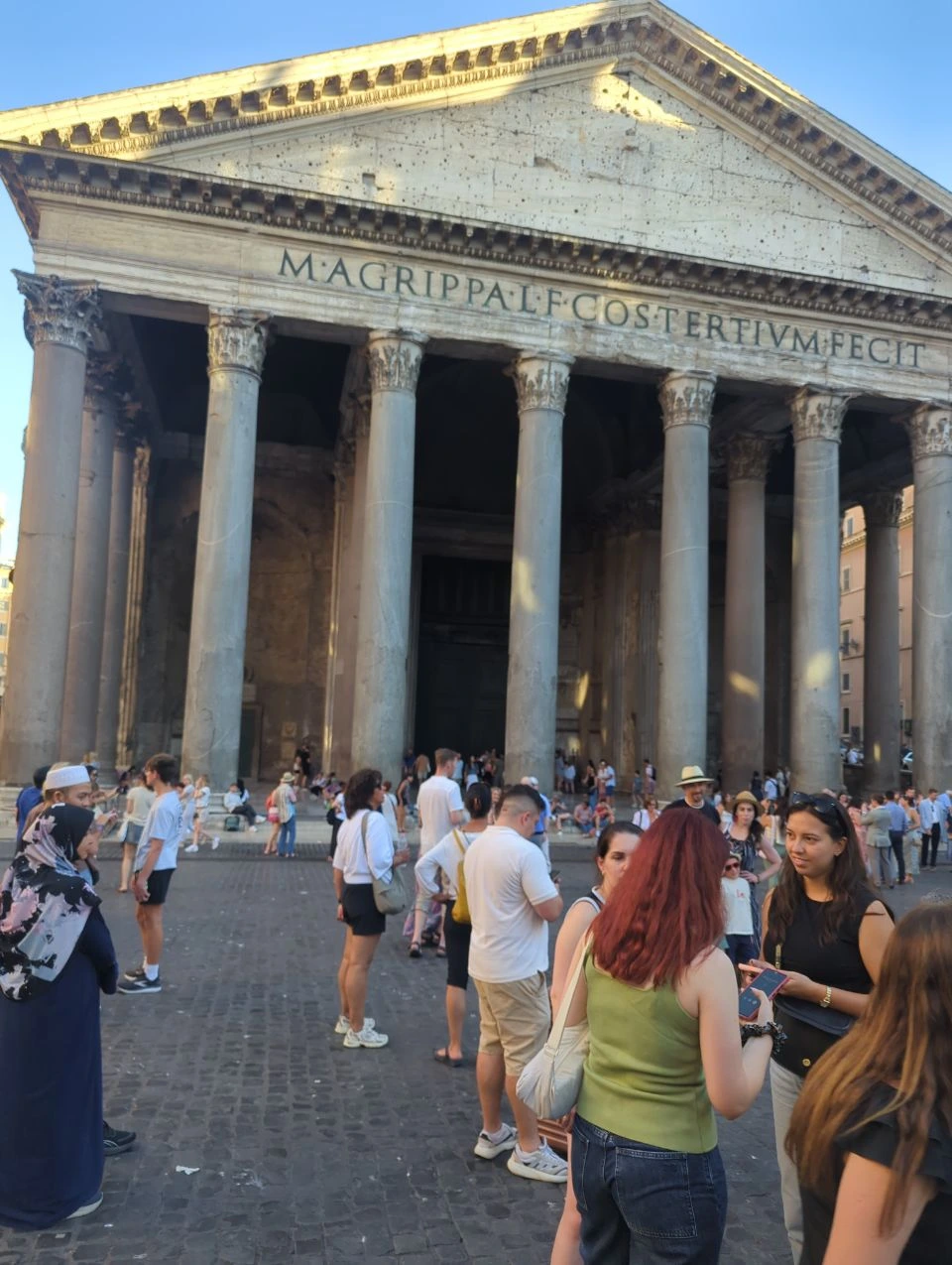
The Pantheon adds a different scale nearby. Its exterior portico and columns immediately change the geometry of the photographs. The connection from Piazza Navona is relatively short for central Rome, but it still passes through living old-centre streets. Cobbles, crossings and pedestrian flow make a pushchair route different from the clean line shown on a phone.
Treat the Pantheon interior as a separate sightseeing plan. For the photoshoot, the exterior already gives you monumental Rome without adding an entrance, queue or indoor transition.
This route works beautifully when you want several recognisable details without the size of Villa Borghese or the climb around a hill viewpoint. Stay inside Piazza Navona for the most contained version. Add the Pantheon when its columns bring a genuinely different chapter that your family will enjoy walking to. Our Pantheon and Piazza Navona photo route shows how the two settings fit together.
Trevi and the Spanish Steps reward a precise plan
Because the architecture does so much work, these can be short, focused choices. That is helpful for a family with a small movement budget. You do not need a long route to prove you were in Rome. You need a precise meeting point, a realistic plan for the season and one or two backup angles nearby.
Trevi’s useful light and crowd window can be narrow. On one clear scouting morning, Travaya found direct sun and hard facial shadows by 08:30. That is a field observation, not a year-round appointment, but it shows why “go in the morning” is incomplete advice. The sun angle changes with the date, and current public access around the basin can change too. See our Trevi Fountain photoshoot guide for the positions and planning details to check.
The Spanish Steps offer more height choices, but the level change is part of the setting. Decide whether the family is meeting above, below or at a nearby point before anyone arrives with a pushchair, tired legs or dress shoes. The steps can organise people across different levels, yet the session should never depend on a route that somebody in the family cannot enjoy. Our Spanish Steps photoshoot guide helps you compare those levels and practical limits.
Choose these landmarks when the one famous frame matters more than free movement. Secure the group photograph early, then use a nearby street, facade or closer portrait to soften the formality. Rome stays unmistakable, while the family becomes the focus again.
Give the session three energy chapters
Begin with everyone together while the group is fresh and close. If grandparents, cousins or several households are joining, make the full group and any essential formal combination first. A terrace, broad path, steps or fountain edge can create natural levels without arranging everybody in one flat line. For several households or grandparents, see our guide to planning a multi-generational family photoshoot in Rome.
Then move into children in motion. Let them walk between parents, lead the family down a path, watch the water or investigate a Roman doorway. These prompts take pressure off children because they are doing something rather than being asked to smile continuously. They also give the gallery its sense of place and holiday movement.
Finish with smaller connections. Parents with each child, siblings together, grandparents and grandchildren, a hand held while walking or a quiet cuddle on a bench often become the frames families return to most. With the essential large group already covered, this last chapter can follow the energy that is actually present.
The order is flexible. A shy child may need to explore before joining the full group, and a baby may decide that the smallest family portrait needs to happen immediately. Think of the chapters as a shared plan, not a performance schedule.
For a larger family, send the photographer a short must-have list before the day. Keep it to the relationships that genuinely matter. A focused list lets the photographer work efficiently while still noticing the spontaneous moments you could never have written down.
Build the route around strollers, heat, naps and pauses
At Villa Borghese, the right upper-area loop may work comfortably while a climb from Piazza del Popolo does not. At the Orange Garden, a good drop-off can protect the compact nature of the route. In Monti, cobbles and crossings are part of the atmosphere. Around the Spanish Steps, deciding where the family begins prevents an unnecessary climb.
Bring water and one familiar, simple snack. In warm weather, sunscreen, a hat and a small wipe or spare top can be useful. Comfortable shoes matter on Rome’s cobbles, even when everyone changes into smarter footwear for a few frames. You do not need a production kit. You need the same small things that help your family enjoy a walk. Our guide to what to wear for a Rome photoshoot helps the family choose clothes that suit the walk.
Use pauses as part of the session. A drink on a bench, a minute watching a fountain or a child sitting beside a parent can all become photographs. Rest is not lost shooting time when it belongs naturally in the family story.
If a nap is reliable, plan around it rather than hoping Rome will distract the child through it. A pre-nap morning can work beautifully. A post-nap session can be equally good when the route stays compact. In hot weather, a shaded park or garden may let you use a family-friendly hour that an exposed square would not.
The same thinking applies to the number of locations. Ask what the next stop adds. A city view after park photographs, or Monti streets after the Colosseum, can create a meaningful second chapter. Another landmark reached only because it fits on a checklist may spend more family energy than it adds to the gallery. Compare Rome photoshoot durations with that movement budget before adding a second chapter.


Save the Rome family photoshoot route matcher
Keep the best setting by movement, stroller needs and family pace together while you plan.
Save on Pinterest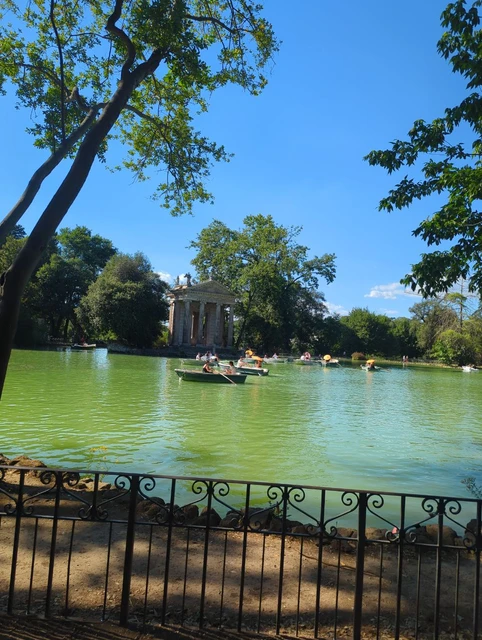
Plan your family photoshoot in Rome with kids
A Rome route that fits your family
Plan a session around the way your children move, the view you care about and the pace that lets everyone enjoy Rome.
Family Photoshoot in Rome With Kids FAQ
Quick answers about locations, timing, strollers, routes and photographing a larger family.
The best place is the one that matches your family’s movement. Choose Villa Borghese and Pincio for open exploration, the Orange Garden for compact greenery and a view, Colosseum and Monti for an icon-plus-street story, or Piazza Navona and Pantheon for contained old-centre variety. Trevi and the Spanish Steps suit a shorter, more structured landmark plan.
It can be, provided the meeting point and loop are chosen for your stroller. Villa Borghese has many broad or paved paths, but the wider park and Pincio area also contain long internal distances, slopes and some steps. Tell the photographer how you plan to arrive and whether your child will nap in the pushchair, then build a suitable section rather than assuming the whole park is flat.
Start with the period when your children are normally rested, then adjust for the location, season and wider sightseeing day. Early morning often brings cooler conditions and more manageable landmark backgrounds, especially in summer. A later session can be the better choice when it fits naps and family energy, particularly on a compact or shaded route.
Yes. The Colosseum can give you the essential Rome photograph, while Monti adds cobbled lanes, doors, walking frames and everyday street texture. The exact viewpoint determines how much transition is involved, so plan the sequence around your children’s pace and any pushchair needs. You can also stay in one Colosseum area when a shorter route will feel better.
There is no useful universal number. One coherent area can create a complete story through wide groups, close connections, walking, water, paths and changing angles. Add a second location when it brings something meaningfully different, such as a skyline after a park or street texture after a monument, and when the transition fits comfortably into the family day.
Bring water, one familiar snack and the few everyday items that help your children enjoy a walk. Comfortable footwear is especially useful on cobbles. In warmer weather, sunscreen, hats, wipes or a spare top may help. Share stroller, carrier, nap and mobility details before the route is set so the photographer can choose a practical meeting point.
A useful flow is to photograph the complete family and essential formal combinations while everyone is fresh, then move into walking and child-led frames before finishing with smaller relationships. Send the photographer a short must-have grouping list in advance. The order can flex around babies, shy children and older relatives, but protecting the hardest-to-repeat full group early is often valuable.


Our Rome Shoots:
Book your Rome Photographer!
Start BookingWhat to Wear for a Rome Photoshoot: An Outfit That Moves With You
Villa Borghese Family Photoshoot Guide: Toddlers, Lake and a Pincio Finish
Trevi Fountain Photoshoot Guide: Sunrise, Crowds and the Pantheon Route
Trastevere Photoshoot Guide: Streets, Colour and Quiet Corners
Sunrise or Sunset for a Rome Photoshoot?
Spanish Steps Photoshoot Guide: Choose Your Route, Light and Pace
ENJOY $20 OFF
Your first photoshoot when you become an email subscriber.
Related Articles
What to Wear for a Rome Photoshoot: An Outfit That Moves With You
Choose a Rome photoshoot outfit that feels like you, reads clearly beside the city and moves comfortably through cobbles, seasons and the real route.
Villa Borghese Family Photoshoot Guide: Toddlers, Lake and a Pincio Finish
A relaxed Villa Borghese family photoshoot with toddler-friendly space, a calm lake chapter and Rome spreading out below you from Pincio.
Trevi Fountain Photoshoot Guide: Sunrise, Crowds and the Pantheon Route
Plan a Trevi Fountain photoshoot with clear advice on sunrise, crowds, access and the beautiful walking route to the Pantheon.