
October 9, 2026
Lisbon Engagement Photos That Feel Like You
Lisbon gives you plenty to work with: patterned pavements, faded façades, yellow trams, steep streets and the broad silver-blue sweep of the Tagus. It is tempting to squeeze all of it into one session. But the photographs you care about most probably will not be the ones with the most landmarks. They will be the ones that still feel recognisably yours.
This guide is for couples planning an engagement session in Lisbon after the proposal. The best sessions start with the two of you. Let Lisbon supply the light, movement and texture around your story.
Updated

Table of Contents
Engagement sessions and proposal photography have different purposes
The engagement may have happened recently, or the session may simply celebrate this stage of your relationship while you are in Lisbon. Either way, there is time to talk about how much direction you would like and what you hope to recognise in the finished gallery.
Proposal photography tells a different kind of story. It records the act of asking the question and involves extra coordination around timing and discretion.
Start with what you want the gallery to say about you
A playful gallery might contain walking, teasing, conversation and plenty of movement. An intimate one may spend more time on close portraits, small gestures and quiet pauses. A polished gallery might use cleaner architectural lines, more deliberate compositions and a little extra direction. If you want everything to feel unhurried, a compact route will probably suit you better than several transfers across the city.
Decide how strongly you want Lisbon to appear. Perhaps you want the city to be an unmistakable character, with broad views, recognisable architecture and street life around you. Perhaps you would rather have it as a quieter layer, appearing through warm stone, tiled walls, river light or a passing tram while your expressions remain the focus. Both can feel equally personal; they simply create different galleries.
Be honest about how you both feel in front of a camera. Natural photographs can still involve gentle direction. Your photographer might place you where the light is flattering, then ask you to walk towards the river while finishing the conversation you were already having. The direction creates a useful starting point, while your movement and interaction keep the result from feeling stiff.
If one of you enjoys being photographed and the other would happily hide behind a pastel de nata, say so beforehand. The session can begin with walking rather than close portraits, giving you time to settle before the camera moves nearer. You do not both need the same kind of encouragement.
You may also have preferences around digital or film photography if your photographer offers both. Choose the finish you love rather than treating one format as better than the other. Film is not automatically more romantic, and digital is not automatically more formal. Look instead at the colour, texture and pacing of the photographer’s work.
By the end of the conversation, you should be able to replace “We want natural photographs in pretty places” with something clearer: “We want a warm, playful gallery with plenty of movement, Lisbon visible but not dominating, and enough gentle guidance that we both feel comfortable in front of the camera.”
Choose a Lisbon atmosphere before choosing a landmark
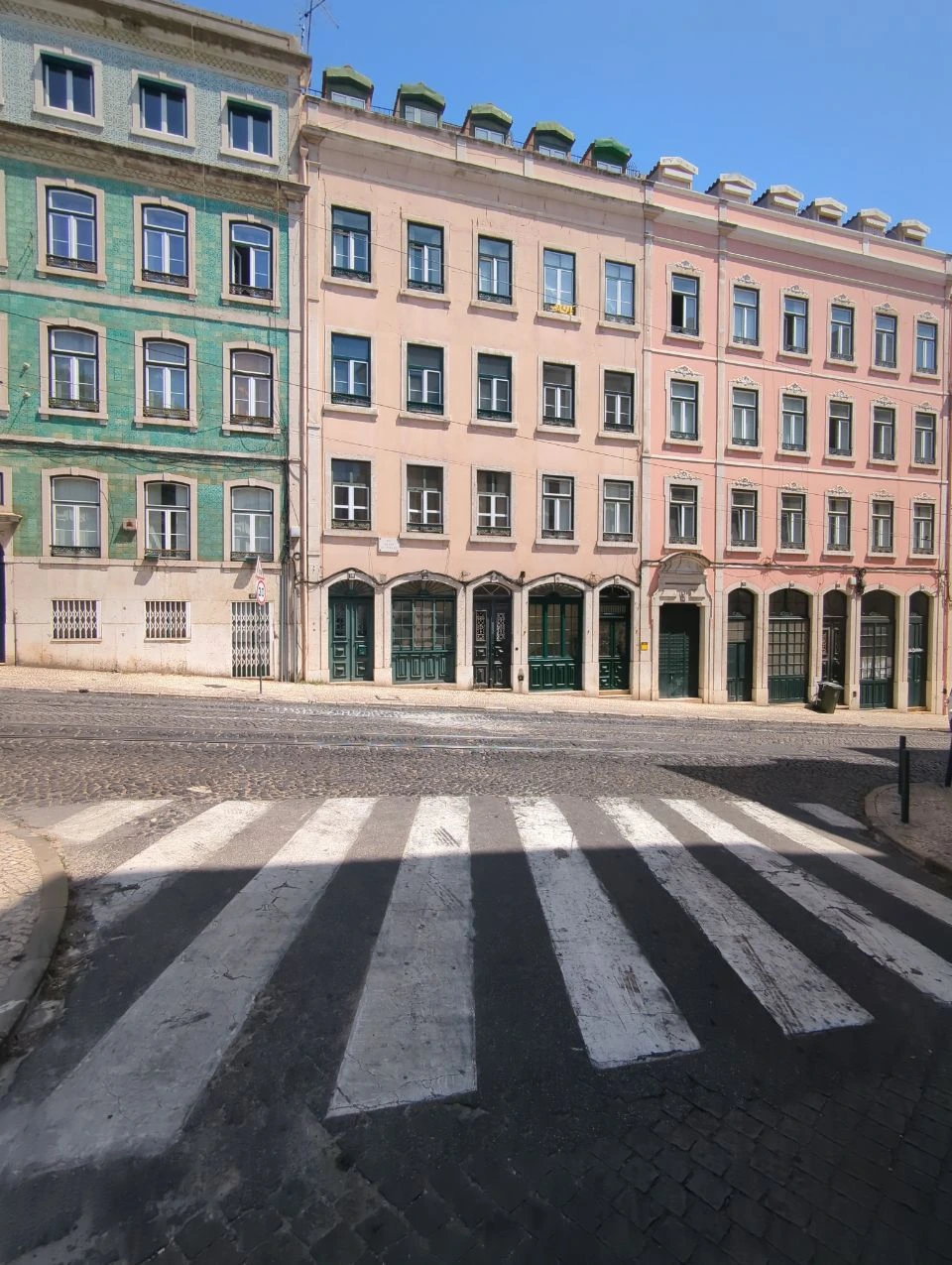
Historic streets can bring closeness, movement and layers of texture. Picture one of you stepping ahead on a sloping stretch of calçada, then turning back to offer a hand as tiles, balconies and laundry layer the frame. Narrow roads and lived-in façades can make Lisbon feel present without requiring a monumental backdrop. This suits couples who want the session to resemble a wander through the city rather than a formal portrait appointment.
In Chiado or around Praça do Comércio, open space and strong architectural lines can give the photographs a cleaner, more polished feel. One expansive frame might establish the setting before the session returns to the smaller rhythm of walking and talking in the surrounding streets.
The Tagus changes the scale completely. A riverfront setting creates breathing room, distant horizons and wider environmental portraits. Around the MAAT riverfront, the water, bridge and contemporary architecture can sit within the same composition.
Belém can provide recognisable heritage context without turning the afternoon into a monument checklist. You might walk beneath the trees, pause with the river behind you and allow the stone, gardens and historic architecture to enter the frame naturally.
For a softer feel, look for greenery and shade alongside Lisbon’s stone streets. A tree-lined stretch, garden edge or planted terrace can offer a slower pace and some relief from hard light, although seasonal conditions will affect how green or shaded a particular spot feels.
Santa Luzia brings together tiles, flowers, rooftops and river views within a small area.
Instead of asking which Lisbon setting is objectively best, decide which quality matters most to you. If the city could add only one thing to your photographs, would you choose energy, intimacy, elegance, openness or texture? That answer is more useful than a saved folder containing twelve unrelated landmarks.
Let one compact part of Lisbon tell a fuller story
One coherent area can still tell a full story. You might arrive feeling slightly tentative and begin with a wide frame that establishes Lisbon. Walking photographs help you warm up. A café stop or playful stretch of street brings more movement. A seated pause changes the pace. By the time the photographer moves closer to expressions, hands or clothing details, you have had time to forget about performing.
This emotional progression matters more than the number of backdrops. Arrival, movement, playfulness and quiet closeness can all happen within neighbouring streets when light, perspective and distance are allowed to change.
Around MAAT, previous visits have provided space for walking, seated portraits and wide river views without travelling far. A nearby pier was blocked during one field visit, which is a useful reminder to build the route around an area rather than one exact platform or viewpoint. Then a closure changes the frame, not the whole afternoon.
Decide which trade-off suits you better: more photographs in fewer settings, with time to settle and vary the compositions, or fewer photographs spread across more locations. If you are happiest when wandering, a connected route may feel effortless. If long walks drain your energy, choose a shorter route with deliberate pauses. The distance you can comfortably cover is part of the creative plan, especially because Lisbon’s inclines and paving can alter the pace quickly in formal clothes.
Treat trams, lifts and funiculars as a bonus rather than something the whole session relies on. They can add plenty of Lisbon character when they are running smoothly, but the route should still work if one is delayed, crowded or unavailable.
Dress for the date, the palette and the walk
Start with formality. You do not need identical outfits, but you should look as though you are attending the same date. If one of you wears a sharply tailored evening look and the other dresses for a casual coffee run, the mismatch may become more noticeable than either outfit. Coordinating the level of formality usually matters more than matching colours.
You can then connect the outfits through depth of colour or texture. Two neutral looks might share similarly soft tones without becoming duplicates. A textured jacket can balance a flowing dress. Darker colours can appear more graphic against pale stone, while softer shades may sit gently alongside muted façades.
Contrast can be equally intentional. In the Chiado, Bairro Alto and Bica session, a red dress stood out against subdued building colours and yellow trams. The point is not that you should wear red. It is that your clothes influence the overall look of the gallery. A strong colour becomes a recurring focal point, while a quieter palette allows the surroundings and expressions to share attention more evenly.
Footwear deserves a decision of its own. Hills, cobbles and patterned paving may be beautiful in photographs but difficult during a long walk. If formal shoes matter to the finished portraits, consider wearing practical shoes between frames or limiting the distance covered in them.
Keep outfit changes to a minimum unless each one has a clear purpose and there is somewhere practical to change. One thoughtfully chosen outfit often creates a more coherent gallery than several hurried looks. Styling support varies between photographers, so confirm whether it is available if you would find it useful.
Most importantly, wear something that still resembles you. The aim is an elevated version of a date you could plausibly enjoy, not a costume borrowed from somebody else’s Lisbon mood board.
The Lisbon couple photo outfit guide helps you choose colours, patterns, shoes and layers for the whole route.
Rank the photographs you would regret missing
Before the session, each of you should jot down the three types of photograph you would most hate to miss. You might choose a wide frame with recognisable Lisbon context, a close portrait, walking and movement, one polished announcement image or a detail with personal meaning. Individual portraits may also matter to you.
Compare your choices afterwards. The overlap becomes the heart of the brief. If you both choose movement and close portraits, those deserve protected attention. If one of you wants a sweeping Lisbon view while the other cares more about a quiet photograph of the two of you, both priorities can fit.
Think about scale as well as subject. The wide frame remembers Lisbon; the close frame remembers the look you gave each other there. Medium frames reveal body language and clothing, while details can preserve a ring, a meaningful fabric choice or the way you hold hands. Those details should support the story rather than replace photographs of you together.
Discuss individual portraits at the same time. Some couples love having a few strong photographs of each partner. Others want almost every image to focus on them together.
If you already know how you want to use the photographs, tell your photographer. An announcement image may need a clear composition with room for text. A photograph intended for your home may call for a particular orientation or a quieter atmosphere. Sharing that purpose gives the photographer a practical target without scripting every frame.
Protect the mood from weather, crowds and changing access
Start by thinking about how you feel about busy streets. If you enjoy city energy, passing people and traffic may add movement to the photographs. If you want greater intimacy, agree that the photographer can use tighter compositions, moving frames or a nearby alternative when a wider setting becomes busy.
An earlier start may reduce crowd pressure in some places, but it cannot guarantee privacy, empty backgrounds, access or a particular quality of light. Flexible framing is more dependable than building the entire session around a deserted square.
The same flexibility helps at riverfronts, gardens and viewpoints. Temporary works may appear or a path may close. Plan for the atmosphere you want rather than relying on one installation, flower bed or standing position.
For cafés, museums, monuments and ticketed sites, check professional-photography permission, equipment or entry conditions, opening times and temporary changes directly with the relevant venue or official source. Visit Lisboa can help with visitor information and events, while Lisboa.pt should take precedence for relevant municipal notices.
For buses, trams, funiculars and lifts, CARRIS provides current route planning, service updates and real-time information. A final check close to the session is more reliable than an older article or saved itinerary.
These checks should protect the experience rather than dominate it. Once you know the route has alternatives, you can stop worrying about what comes next and return your attention to each other.
Plan your Lisbon engagement session with Travaya
When you know how you want the afternoon to feel, find a photographer in Lisbon who can shape it into a route and gallery that suit you both.
Frequently asked questions about Lisbon engagement photos
There is no single correct interval. Work backwards from how you intend to use the photographs. If they are for announcements, invitations or a wedding website, allow time for the session, gallery delivery and any design or printing. If the photographs are simply a record of your engagement or a day in Lisbon, you can choose the date according to your travel plans and preferred atmosphere. Confirm the photographer’s delivery schedule before relying on a particular deadline.
That varies between couples, but it helps to avoid expecting your most intimate portraits in the first few minutes. Beginning with walking, conversation or another easy activity gives you time to adjust to the photographer’s presence. If either partner tends to feel self-conscious, mention it in advance so the session can begin with more space and movement before progressing to closer frames.
A small, considered selection can help you explain what you respond to, particularly when you identify the reason. You might like the closeness of a composition, the amount of Lisbon visible, the colour palette or the sense of movement. Avoid asking for exact copies of another couple’s photographs. Your photographer still needs room to respond to your appearance, relationship, route and the conditions on the day.
Look beyond individual favourite images and study complete galleries if they are available. Ask how the photographer approaches direction, changing weather, busy locations and route planning. Confirm what the booking includes, how and when the photographs are delivered, whether travel or entrance costs are separate, and whether film, styling support or extra coverage is available if those things matter to you.
No. A skilled photographer can give clear, manageable direction without asking you to memorise poses. It is more useful to explain whether you prefer gentle prompts, detailed guidance or a largely observational approach. You can also mention anything that affects your comfort, including mobility requirements, sensitivity about particular angles or a preference for less physical affection in public. That information helps the photographer create suitable situations rather than relying on a standard sequence.


Our Lisbon Shoots:
Book your Lisbon couple Photographer!
Start Booking
How to Choose One Alfama Street for Your Couple Photos

How to Choose an Azulejo Background for Your Lisbon Couple Photos
How to Recognise an Overlooked Lisbon Couple Photo Spot
Praça do Comércio Couple Photos: Choose the Arcade, Arch or River View

Belém Tower Couple Photos: Three Ways to Make the Most of Water, Light and Views
Which Tagus Waterfront Setting Suits Your Lisbon Couple Photos?
ENJOY $20 OFF
Your first photoshoot when you become an email subscriber.
Related Articles

How to Choose One Alfama Street for Your Couple Photos
Alfama can make you want everything at once: patterned tiles, worn doors, steep steps, slivers of sky and lanes that seem to fold into each other. Trying to collect every postcard detail, however, can leave you spending more of your session watching your footing and changing locations than enjoying the person beside you. Start with one main street and one backup spot just around the corner. One street will not suit every couple. If recognisable landmarks are central to the photographs you want, several locations may make sense. But if you love Alfama for its faded tilework, close lanes, weathered details and intimate atmosphere, one carefully chosen pocket can offer plenty of variety without turning the session into a route march.

How to Choose an Azulejo Background for Your Lisbon Couple Photos
You have found three tiled façades in Lisbon, and all three look beautiful on your phone. One has an intricate blue-and-white motif, another is gloriously colourful, and the third feels unmistakably Portuguese. The real question is not which wall is prettiest. It is which one suits the photograph you want, what you are wearing and the way you hope to remember the day. The best choice makes the image feel unmistakably Lisbon while leaving room for you to look like yourselves. Someone viewing the photograph should notice a shared glance, a hand at a waist or the movement of a dress before beginning to inspect the tile pattern. To choose well, consider the intended composition, how the motif behaves from camera distance, your outfits, the usable pavement, nearby entrances and the conditions on the day.
How to Recognise an Overlooked Lisbon Couple Photo Spot
A pedestrian wanders into the background. The sun slips away from the tiled wall. A delivery van settles into the neat patch of street you had pictured using. Nothing dramatic has gone wrong, but the photograph you imagined five minutes ago has vanished. That is Lisbon for you: gorgeous, lively and always changing. Choosing a couple photo spot here takes more than finding somewhere lovely on a map. The useful question is whether a corner offers flattering light, safe movement, varied compositions and an easy alternative when conditions shift. When it does, you can keep walking, chatting and enjoying each other’s company until your shoulders drop, the camera fades into the background and the photographs start to feel unmistakably like the two of you.