
Table of Contents
Rome Wakes One Icon at a Time
That change is the joy of a sunrise portrait route. You begin with one of Rome’s grandest views, come closer as you walk through the old centre and finish beneath columns that have watched mornings arrive for nearly two thousand years.
The strongest version is wonderfully focused: an optional approach through Via della Dataria, Trevi first, the streets around Via delle Muratte and Piazza di Pietra in the middle, then the Pantheon exterior. Add the Spanish Steps when their staircase geometry matters enough to earn the extra walk. You’ll come home with icons, yes, but also with the small glances and half-awake laughter that make the morning feel like yours.
Why order matters in a Rome sunrise photoshoot
That’s why the stop order matters more than collecting the longest possible list of landmarks. Trevi’s full-fountain view needs foreground space, so it earns the earliest part of the route. The streets work beautifully as Rome begins moving because you can step closer, walk together and use the activity as part of the story. The Pantheon still carries its scale when the light is brighter, making it a natural finish.
Give every stop one job. Let the opening frame say Rome. Let the middle remember how you felt walking through it. Let the last photographs breathe beneath the columns.
The early alarm suddenly feels less like travel admin and more like the first scene of a very good day. Rome has plenty of icons. This morning only needs the ones that belong together.
The route at a glance
This short street sits just east of Trevi. Use it when your hotel, taxi or meeting point brings you in from that side and you’d like a few walking frames before the fountain. It settles you into the camera without spending the hero location’s fastest-changing minutes.
Best for: an easy pre-Trevi approach and a softer beginning before the grand reveal.
Trevi Fountain: the unmistakable opening
The water, sculpture and Palazzo Poli backdrop give you the photograph that immediately says Rome. Start wide while the photographer has the most choices, then move into side views and closer portraits as the square changes.
Best for: your main icon, a dramatic first chapter and the widest portrait of the morning.
Via delle Muratte and Piazza di Pietra: the human middle
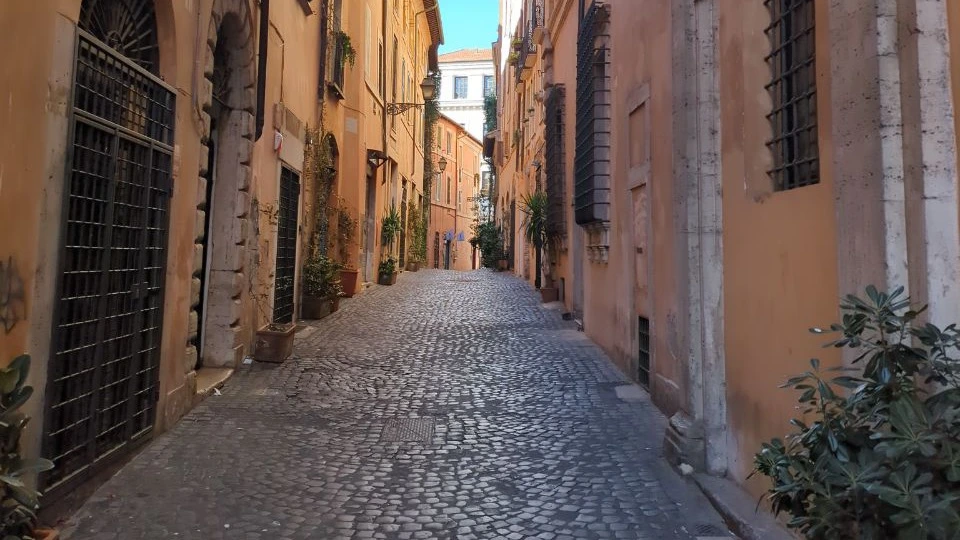
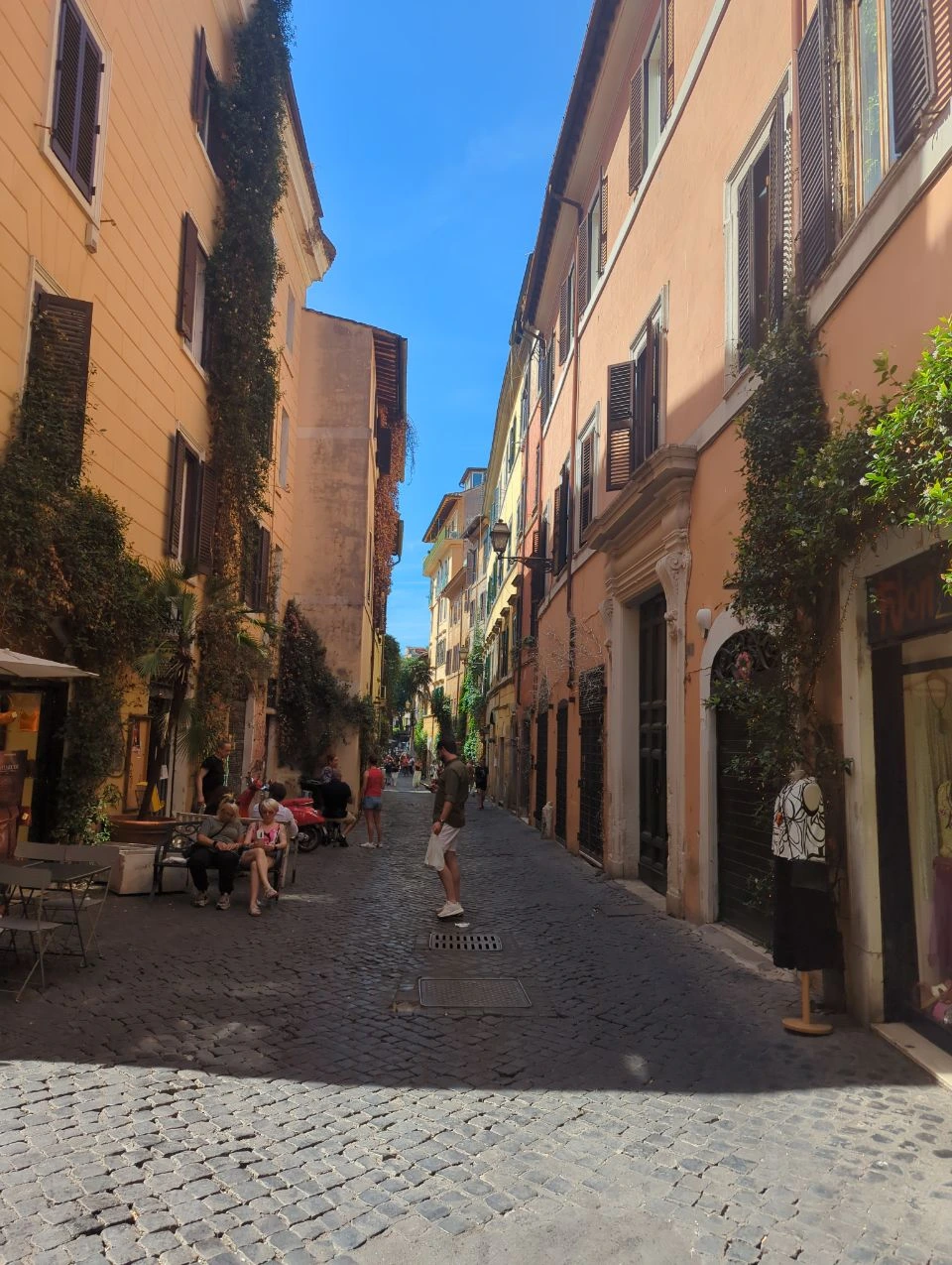
These westbound streets lead naturally towards the Pantheon. Walking, old doors, morning shutters, warm walls and the columns at Piazza di Pietra bring the gallery closer after Trevi’s scale.
Best for: hand-holding, movement, laughs and portraits that feel like a Roman morning rather than a landmark stop.
Pantheon: the monumental finish
The portico, inscription and rows of columns change the whole shape of the photographs. The light may be brighter here, yet the deep architecture still gives you strong exterior portraits and room to slow down.
Best for: stately final frames, close portraits beneath the columns and a finish with real architectural weight.
Spanish Steps: the optional northern start
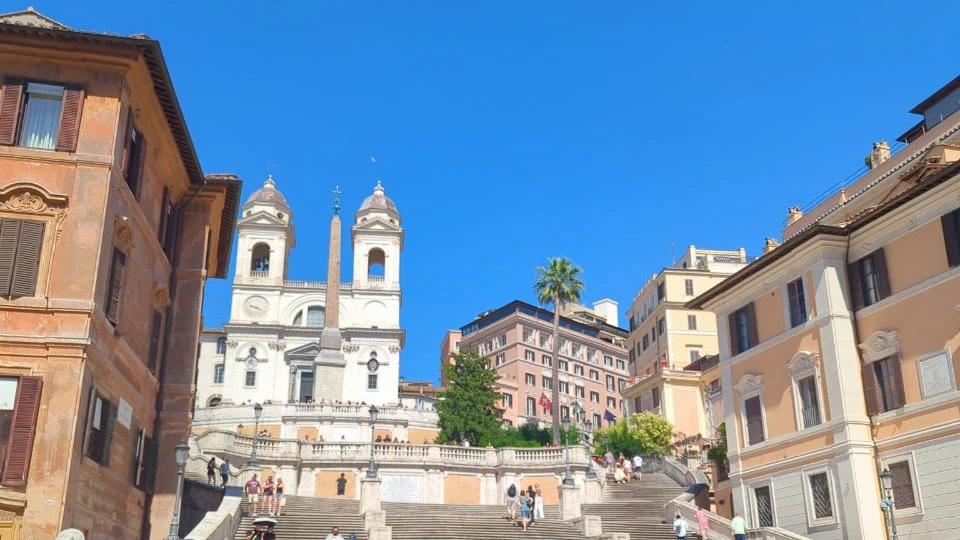
The steps and Barcaccia fountain add lines, levels and a second major icon. They work best before Trevi, giving you a north-to-west route through the centre, or as part of an alternative Trevi-to-Pincio story.
Best for: a longer morning when the staircase is genuinely one of your must-have Rome backgrounds.
Tip: Count walking twice: once for the map, then again for the portraits you’ll make along the way.
Begin at Trevi while the widest frame still has room
Trevi belongs first because the square is compact and the fountain is huge. A portrait that includes the full basin, sculpture and Palazzo Poli needs more room than a close frame beside the water. The photographer will usually secure that broad relationship first, then use side positions, water details and tighter portraits as more people arrive. Our Trevi Fountain photoshoot guide explains how to use those wide and closer positions.
Sunrise gives you more choices, not a private booking of the square. During one Travaya observation at about 06:00, the central viewpoint was already busy, but side positions became available as visitors took their photographs and moved on. Another observation at 06:45 estimated more than 300 people. The lesson isn’t that one clock time always works. It’s that Trevi’s useful window can move quickly, especially in summer.
Light changes just as fast. On one clear morning, Travaya found strong direct sun and hard facial shadows by about 08:30. A local sunrise reportage shows the gentler sequence before that: fountain illumination against a cooler sky, then pale daylight and warmer reflections across the surrounding walls.
Meet at an exact landmark near the square, not simply “at Trevi”. Your photographer can choose the best active position for that date and guide you into the first frame while the sky changes. Begin with the full-fountain photograph you care about most. Once that’s safe, the morning can loosen up.
The closest controlled basin area follows separate rules from the wider public square. From 2 February 2026, tourists and non-residents pay €2 to enter that closest area between 09:00 and 22:00. Sunrise portraits normally use the surrounding public piazza before the paid window. The official page says hours can change for maintenance or public order, so the live access check belongs in the final planning for your date.
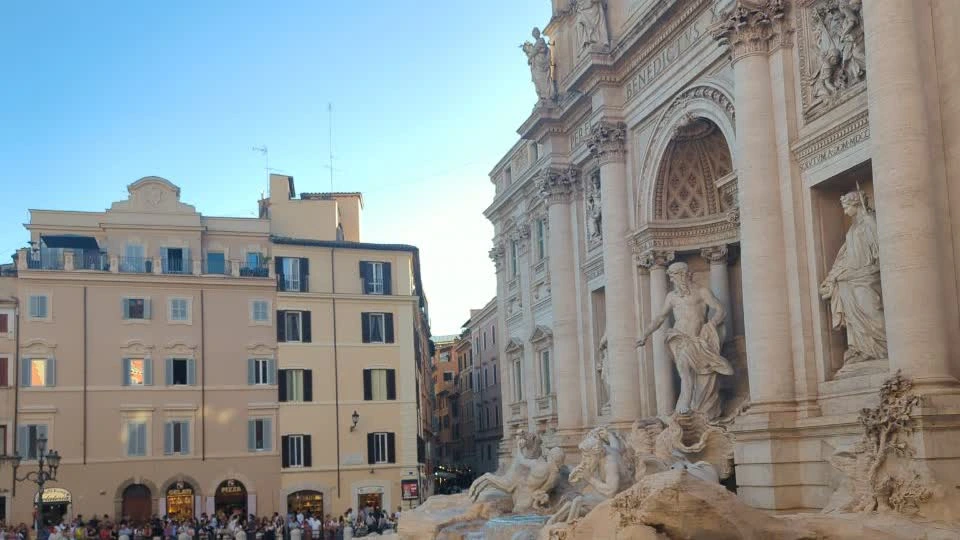
Trevi belongs early because its widest portrait window changes quickly.
Where Via della Dataria actually fits
The mapped walk from a central point on Via della Dataria to Trevi is roughly 0.37 kilometres, or about four minutes without photographs. That makes it ideal when you want to begin gently. You can walk, turn towards each other, settle your hands and stop thinking about what to do with the camera. Then Trevi appears and the route has its first reveal.
This is for you if your hotel or taxi brings you in from the east, or if you know you’ll enjoy five quiet minutes before the main landmark. It’s also a lovely start for a solo portrait session, when a few movement frames can help you find your rhythm before standing in a grand piazza.
If Trevi’s widest view is your absolute priority, meet closer to the fountain and use Dataria only when it fits naturally. The street should help the route, not make you spend the fastest-changing light walking towards it.
After Trevi, turn west. Via delle Muratte, Piazza di Pietra and the lanes approaching Piazza della Rotonda create the true connection to the Pantheon. One tiny direction choice, and the whole morning suddenly makes more sense.
Walk west through Muratte and Piazza di Pietra
The direct route from Trevi to Pantheon is roughly 0.68 kilometres and about eight to nine minutes of pure walking. A photoshoot should take longer for the best possible reason. You may stop beside an old doorway, walk twice through a pocket of reflected light or pause at Piazza di Pietra when its columns open between the surrounding buildings.
This middle chapter changes the photographs from monument-led to people-led. Hold hands and walk. Let your jacket sit over one shoulder. Look at the street ahead, then back at each other. The route gives you something real to do, so your expressions can arrive without a countdown.
Rome wakes around these frames. A bar is setting out chairs. A delivery moves through the end of a lane. Fresh water has left a shine on the cobbles. None of that takes away from the morning. It gives the photographs a time and a place.
Via delle Muratte is the clear departure from Trevi. Piazza di Pietra adds a striking wall of ancient columns. The smaller streets nearer the Pantheon offer warm stone, balconies and a glimpse of the monument before the piazza opens. You’re not filling time between landmarks. You’re making the part of the gallery that remembers how it felt to be there together.
Wear shoes you can enjoy walking in. If you want heels or dressier footwear for a few portraits, carry them and change at the set points. Rome’s cobbles already have enough personality for everyone. See what to wear for a Rome photoshoot for the other practical choices before an early walk.
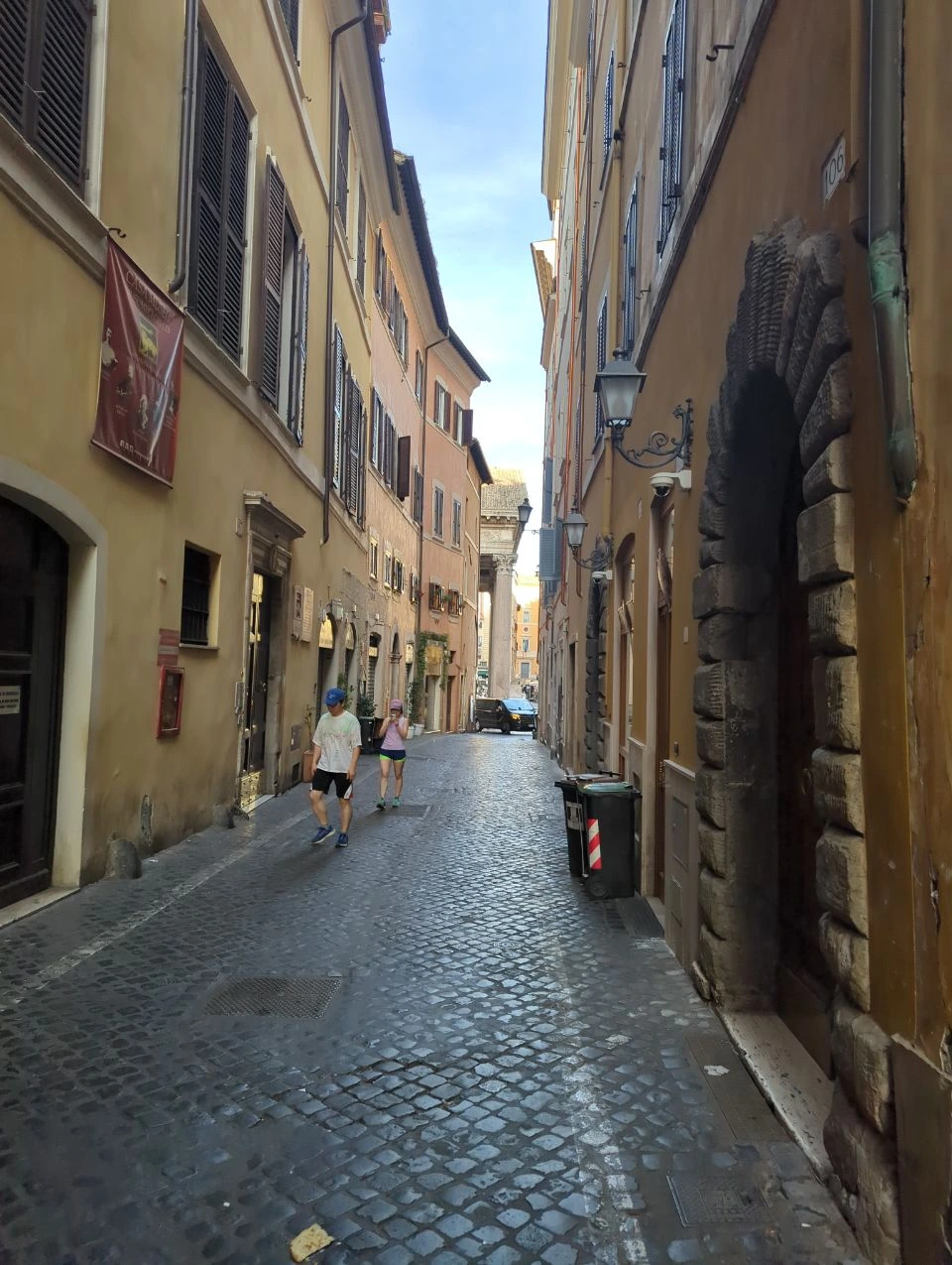
The streets between Trevi and the Pantheon give the gallery its closest, most personal chapter.
Finish beneath the Pantheon columns
This contrast is why the route works. You can begin with wide fountain portraits, come closer in the streets and finish with stronger lines and quieter poses. The gallery changes without needing a car, a costume change or a dash across the city.
During one Travaya observation at 07:00, roughly 20–30 people were in the Pantheon area and a photoshoot was still workable. The previous evening, the columns had been packed. Conditions change by date and season, yet the comparison shows why Pantheon can often handle the later place in a sunrise route better than Trevi.
Start in the piazza if you want the portico, inscription and full height. Move closer for portraits between or beside the columns. A side view creates depth through the repeating stone, while a position near the approaching street can place the Pantheon at the end of a very Roman perspective.
Sunrise portraits here are exterior-led. The interior follows its own opening and ticket arrangements, so keep that visit as a separate part of the day. Outside, you already have everything the route needs: ancient scale, the deep portico and a piazza slowly becoming part of modern Rome again. If you would rather centre a separate walk on this part of Rome, compare our Pantheon and Piazza Navona photo route.
The walk from Via della Dataria through Trevi to the Pantheon is about 1.05 kilometres and roughly 13 minutes without stops in route modelling. That number is a baseline, not a session promise. Photographs, crossings and those irresistible little streets give the morning its real pace.
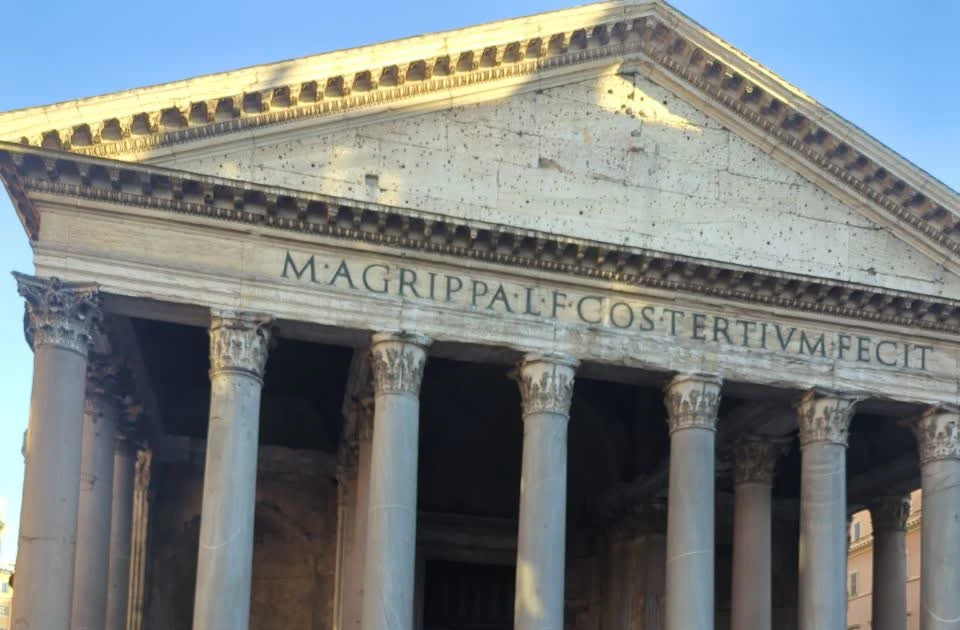
The Pantheon changes the gallery from water and movement to columns and monumental calm.
Add the Spanish Steps when the extra walk earns its place
If you want the Spanish Steps, the cleanest version begins there. Use the Barcaccia fountain, lower steps and rising lines while the area is at its calmest. Then walk south towards Trevi and continue west to the Pantheon. Pure route modelling puts Spanish Steps→Trevi→Pantheon at about 1.48 kilometres and 19 minutes, before a single photograph is made.
That extra distance is worthwhile when the staircase is one of the backgrounds you would genuinely miss. It adds levels, symmetry and a more polished city feeling before Trevi’s water and the Pantheon’s columns. You can photograph from below, use the balustrades and include Trinità dei Monti without turning the section into a full tour of every step. Our Spanish Steps photoshoot guide explains those positions and the rules around the staircase.
A documented June session used a different story: Trevi, Spanish Steps and Pincio in one hour. That route ends with greenery and a skyline rather than the Pantheon. It’s a lovely example of why you choose a direction before the morning begins.
Choose Spanish Steps→Trevi→Pantheon when all three are must-haves and you enjoy the walk. Choose Dataria→Trevi→Pantheon when you want the tightest historic-centre flow. Choose Trevi→Spanish Steps→Pincio when a city view and greenery matter more than ancient columns.
Rome gives you several beautiful mornings. Trying to squeeze them all into one is the only part that feels unromantic.
Set your Rome sunrise photoshoot time by date
For Trevi with fountain lights beneath a cooler sky, begin before sunrise. If your priority is the first warm colour on stone, your photographer may bring the start closer to sunrise itself. A winter session can offer a much kinder alarm, while summer gives you the delicious strangeness of finishing a whole Roman adventure before many hotel breakfasts have opened.
Check the actual sunrise time, then decide how much pre-sunrise colour you want at Trevi. The photographer can work backwards from that first frame and your chosen route. If Spanish Steps are included, the morning begins earlier because those portraits happen before Trevi. If Via della Dataria is only a four-minute approach, it can sit much closer to the fountain window.
Cloud changes the mood without taking away the route. The shift from blue to warm light may feel softer, while Trevi’s water, Rome’s ochre streets and the Pantheon columns still give every chapter its own look. You’re planning around a living morning, not ordering an orange sky from room service.
Confirm the start again a few days before the session alongside the weather and current access. The alarm may still look ambitious. The fountain will make a very persuasive counterargument.
What quieter Rome really feels like
That living texture is often lovely. Wet cobbles catch the first colour. A worker at the far edge of the square makes the architecture feel even bigger. When somebody enters the background, your photographer can wait a beat, move to a side angle or bring you closer. Sunrise gives more choices and shorter pauses. It never needs to pretend Rome has been closed for the occasion.
You feel the city arrive as you walk. Trevi’s water fades behind you. Coffee begins to smell better than it has any right to at that hour. By the Pantheon, chairs are appearing around the piazza and your early appointment is turning into the start of a proper Roman day.
Then comes the reward. Finish the last portraits, find a table nearby and order cappuccino and cornetti while the streets fill. You have already heard Trevi in the blue light, walked through the first open shutters and stood beneath the Pantheon columns. Breakfast tastes particularly good after that.


Save the Rome sunrise portrait route
Keep the stop order, walking ranges and optional Spanish Steps start together while you plan.
Save on Pinterest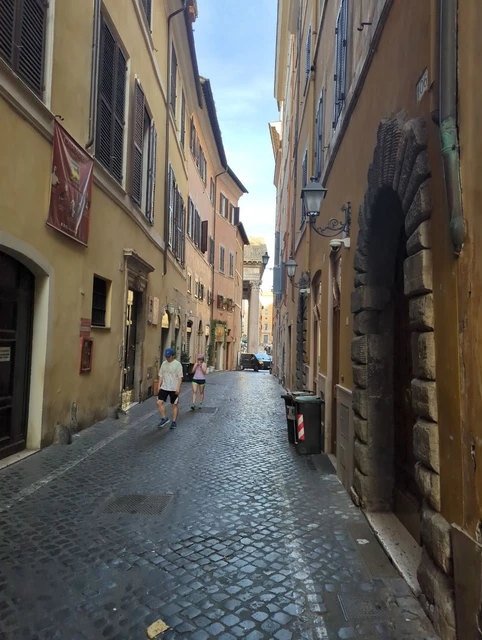
Plan your Rome sunrise photoshoot
Your Rome morning, in the right order
Begin with the icon you love, keep the walking realistic and let the streets become part of the story.
Rome at Sunrise FAQ
Quick answers about Trevi timing, walking distances, Spanish Steps and cloudy mornings.
Start in relation to sunrise on your exact date, usually before or around first light. Trevi can suit a pre-sunrise beginning when the fountain lights sit beneath a cooler sky. Seasonal start examples range from roughly 05:15 in high summer to 07:15 in midwinter, so let your first stop set the clock.
No, an empty Trevi is never guaranteed. Sunrise usually gives your photographer more choices and shorter waits for a useful background. Travaya has observed a busy centre around 06:00 and a much larger crowd at 06:45 on specific mornings, so the best plan uses exact timing, side positions and brief openings rather than relying on emptiness.
The direct route covers around 0.68 kilometres, normally eight to nine minutes on foot without stops. During a portrait session, allow longer because Via delle Muratte, Piazza di Pietra and the approaching lanes are useful photo settings. The transition is part of the gallery, not time lost between two landmarks.
Via della Dataria fits before Trevi. It sits east/south-east of the fountain and is about four direct-walk minutes away in route modelling. Use it as a short warm-up when your meeting point comes from that direction. After Trevi, head west through Via delle Muratte and Piazza di Pietra to reach the Pantheon.
Yes, most naturally as the first stop before Trevi. The direct walk from Spanish Steps to Trevi takes roughly 10–15 minutes, while the full Spanish Steps→Trevi→Pantheon chain is about 19 pure-walk minutes before photographs. Add it when the staircase is a true must-have and begin early enough to protect Trevi’s changing window.
The dated rule effective from 2 February 2026 charges tourists and non-residents €2 for the closest controlled basin area from 09:00 to 22:00. Sunrise portraits normally use the wider public piazza earlier. Check the official fountain site before your date because maintenance and public-order needs can change access.
The route still works beautifully. Cloud can soften the change between stops and bring out colour in Trevi’s water, Rome’s warm walls and the Pantheon stone. You may get less orange sky, but the gallery still changes from fountain scale to close street portraits and strong architectural lines.


Our Rome Shoots:
Book your Rome Photographer!
Start BookingWhat to Wear for a Rome Photoshoot: An Outfit That Moves With You
Villa Borghese Family Photoshoot Guide: Toddlers, Lake and a Pincio Finish
Trevi Fountain Photoshoot Guide: Sunrise, Crowds and the Pantheon Route
Trastevere Photoshoot Guide: Streets, Colour and Quiet Corners
Sunrise or Sunset for a Rome Photoshoot?
Spanish Steps Photoshoot Guide: Choose Your Route, Light and Pace
ENJOY $20 OFF
Your first photoshoot when you become an email subscriber.
Related Articles
What to Wear for a Rome Photoshoot: An Outfit That Moves With You
Choose a Rome photoshoot outfit that feels like you, reads clearly beside the city and moves comfortably through cobbles, seasons and the real route.
Villa Borghese Family Photoshoot Guide: Toddlers, Lake and a Pincio Finish
A relaxed Villa Borghese family photoshoot with toddler-friendly space, a calm lake chapter and Rome spreading out below you from Pincio.
Trevi Fountain Photoshoot Guide: Sunrise, Crowds and the Pantheon Route
Plan a Trevi Fountain photoshoot with clear advice on sunrise, crowds, access and the beautiful walking route to the Pantheon.