
October 10, 2026
The Best Photo Spots in Budapest: Choose Your View, Light and Atmosphere
Budapest gives you grand river views, pale stone terraces, green iron bridges, Austro-Hungarian architecture and quiet parkland. You do not need to fit all of them into one photoshoot. In this guide, we will compare the best photo spots in Budapest, explain how to combine them and show you what to check before finalising your plans.
Updated

Table of Contents
What Do You Want Budapest to Feel Like in Your Photographs?
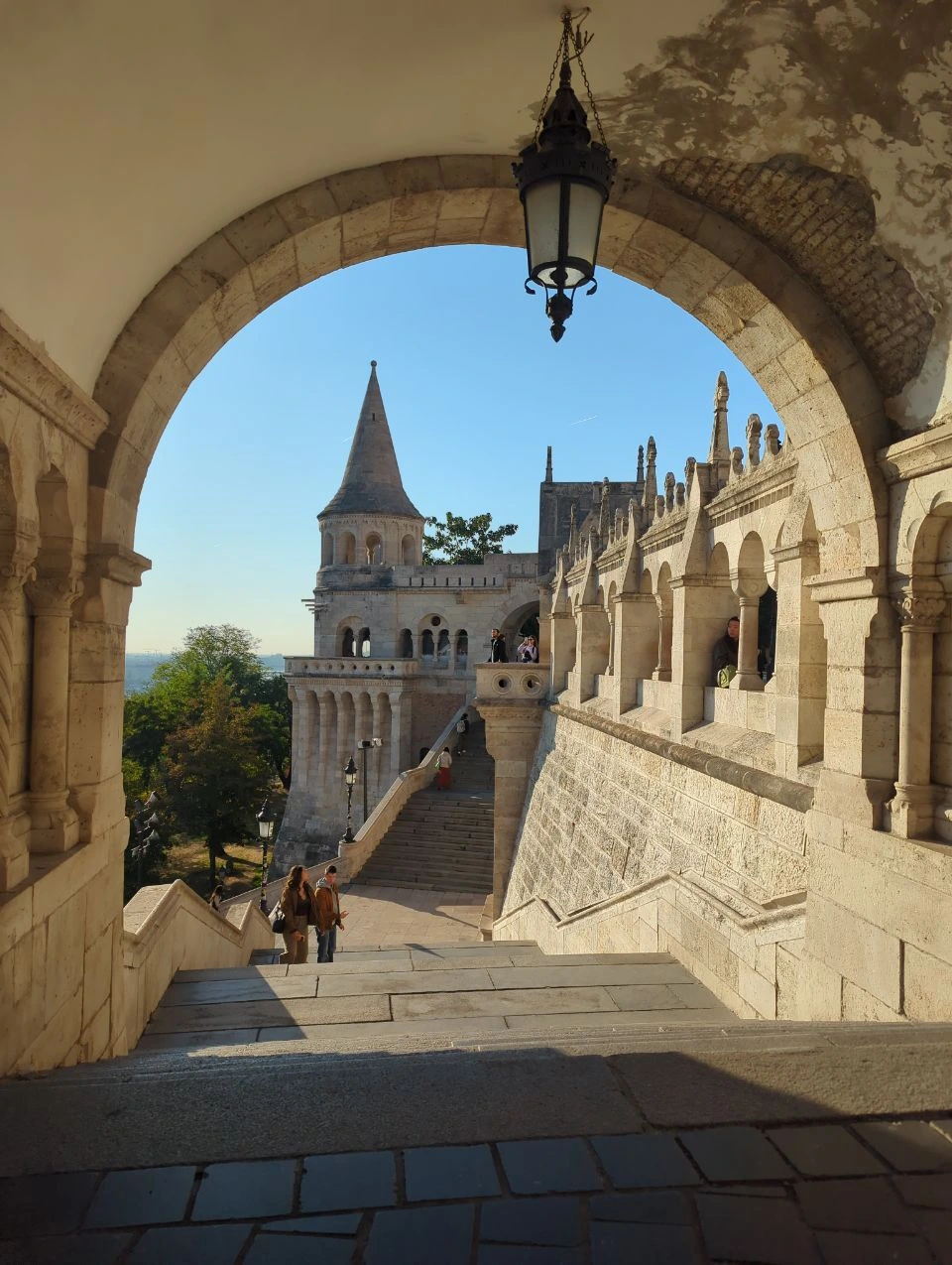
Fisherman’s Bastion suits photographs that feel romantic, light and unmistakably Budapest. Its arches and balconies place the skyline behind you, while the pale stone creates an elegant setting.
Parliament brings a grander sense of scale. Nearby planting, seasonal flowers, benches and open space can soften its formal architecture and give the photographs a more personal feel.
Liberty Bridge offers something bolder. Its green ironwork, curves and repeating lines suit energetic portraits with colour, geometry and a stronger urban edge.
City Park feels calmer and more atmospheric. Around Vajdahunyad Castle, you can move between dark architectural details, trees, paths and wider views across the water.
Choose Fisherman’s Bastion for pale romance, Parliament for elegant scale, Liberty Bridge for colour and movement, or City Park for a softer story shaped by architecture, trees and water.
Buda or Pest: Which Side Suits Your Photographs?
Fisherman’s Bastion creates the most ornate photographs, with pale arches and turrets repeatedly opening towards the city. The terraces around Buda Castle feel broader and more stately, allowing palace walls and open views to carry the scene. Between them, the Castle District’s gates, stone lanes and quieter façades can provide a gentler transition.
In Pest, you will stand much closer to the city’s grand buildings and busy streets. Parliament, St Stephen’s Basilica and the Hungarian State Opera create photographs centred on architecture, while doors, lamps, planting and nearby streets provide smaller details. Instead of looking across Budapest, you are standing within its rhythm.
The contrast is not absolute. Buda becomes more intimate when you turn into a narrow street or move close to a weathered wall. Pest can open suddenly towards the Danube and a broad horizon. In general, Buda offers higher viewpoints and layered city views, while central Pest places façades, street movement and architectural details closer to you.
Fisherman’s Bastion: Pale Stone, Arches and Skyline Depth
An arch can hold the distant Pest skyline inside a clean stone border. Photographing across separate levels can create a more layered image, with you on a balcony and repeating arches leading towards you. Lower stairs and turrets bring the architecture closer, shifting attention from the full panorama to shape and movement.
A wide frame may place you as a small figure within the architecture. A closer portrait can use a column, curve or pale wall without losing the character of the location. Before planning a particular composition, check which part of the Bastion appears in the photograph. An opening you have seen online may belong to a different access zone from the public stairs or lower approaches.
Direction matters here. During one late-September visit, adjacent sides of the Bastion produced noticeably different conditions, with brighter stone in one direction and more even shade in another. That does not mean one side is always better. It shows why your photographer may turn away from the expected view when the light on your face matters more than the skyline.
Sunrise can bring softer light, but it does not guarantee an empty setting. On 1 October 2026, the most recognisable openings were already crowded around sunrise. Conditions became easier after part of the first crowd left, but that was one morning rather than a dependable daily pattern. If a famous opening is busy, a nearby terrace, lower level or different camera direction may produce a better photograph than waiting in one place.
Parliament and the Danube: Grand Architecture with a Softer Foreground
Planting around the building can add colour below the dome and create a gradual transition into the architecture. A bench may support a quieter seated portrait with Parliament visible at a distance. A tighter composition containing only part of the dome or façade can also work when expression or movement should lead the image.
Flowers and foliage change with the seasons, so do not build the entire plan around one exact planted foreground. A low wall, open paving, a line of trees or the river’s edge can provide a useful alternative.
Moving towards the Danube gives the photographs more space. Water and open sky separate you from the opposite bank, while Parliament, the bridges and the Buda hills form different layers in the distance. This feels especially refreshing after several close portraits among columns, doors and façades.
Chain Bridge and Liberty Bridge: City Views or Graphic Movement
During a field visit on 30 September 2026, an open area on the Pest riverbank allowed a more complete bridge composition than the pedestrian route across the bridge. The surroundings may look different when you visit, but the practical lesson remains useful: if you want the whole bridge, step back far enough to let its complete shape enter the frame.
Photographing from the bridge produces a different result. Pedestrians, cables, stonework and movement become part of the scene, while the complete structure is harder to show. This can work beautifully for a walking portrait, but it is not the strongest approach when the full bridge is your priority.
Liberty Bridge is better suited to close structural framing. Its green ironwork, curves and repeating angles can surround you without requiring the entire span to appear. The result often feels bolder and more contemporary than a wide river view.
A passing tram can add energy and an immediate sense of Budapest, but the portrait should not depend on catching it. The pedestrian walkway, metal structure and changing perspective already provide plenty of options.
Both bridges are active public crossings. Stay within shared pedestrian areas, leave room for other people, keep clear of the roadway and do not climb onto the ironwork.
City Park and Vajdahunyad: A Greener, More Atmospheric Budapest
Vajdahunyad Castle feels darker and more layered than Fisherman’s Bastion. Towers, arches, sculptures and mature trees can give the architecture a mysterious quality, especially when shadows and foliage remain part of the image. It is romantic, but in a richer and moodier way than the pale terraces of Castle Hill.
Despite its appearance, Vajdahunyad is not a surviving medieval fortress. It was created for Hungary’s 1896 Millennium celebrations as an architectural ensemble representing different periods of Hungarian design. Its Romanesque, Gothic, Renaissance and Baroque references explain why its courtyards and façades can look so varied. It remains an operating museum complex, so exterior and interior access need to be considered separately.
Moving towards the water turns the castle from a close architectural setting into part of a broader landscape. Trees can frame the view while the turrets sit farther back across the lake. Water levels, foliage and clear sightlines may change, so the precise composition will need some flexibility.
Beyond the castle walls, the session can become more relaxed. You can walk beneath trees, pause where a path curves towards the water or create a quiet portrait without a recognisable landmark. These gentler images give the gallery breathing room between darker stonework and grand city architecture.
The Museum of Ethnography offers a contemporary finish to the same route. Its planted roof covers more than 7,000 square metres and rises towards views of City Park and Heroes’ Square. The curves and landscaping feel completely different from Vajdahunyad’s historic references, creating variety without leaving the district. The roof is free to visit, but its published safety and use rules still apply.
A natural progression through City Park begins with Vajdahunyad’s architectural details, opens towards the water and trees, then finishes around the paths or contemporary landscaping of the museum roof.
Which Other Budapest Photo Spots Are Worth Considering?
St Stephen’s Basilica gives you two useful visual directions. The broad steps and main façade feel formal and monumental, while the side streets can provide lamps, coloured walls, shade and closer architectural details. Light and visitor movement change during the day, so arrive with more than one possible camera direction.
The Hungarian State Opera works best as a short detail stop. Columns, lamps, carved surfaces and entrance steps can add elegance to a central Pest gallery without taking over the session. Events, tours and visitor movement may affect how much of the entrance is practical.
Margaret Island is worth considering when you want Budapest to recede and the photographs to feel green and unhurried. Choose a specific garden, shaded path or riverside area before adding it to your route. The island is too large to treat as one general photo stop.
Széchenyi Baths offers warm yellow architecture, arched windows and an unmistakable old-Budapest atmosphere. Contact the baths directly before planning professional photographs there, as an exterior portrait, personal photography during a paid visit and an organised session may be treated differently.
The Little Princess Statue can add a playful detail to a riverside walk. Its small scale and public setting make it better suited to one observational photograph than a long portrait sequence. It is most useful when it already lies along your route.
The historic M1 metro could add tiled walls, period signage and a more intimate underground layer. This option remains conditional until you have confirmed the exact station, current BKK rules and the conditions on the day.
Build a Photo Story Without Photographing the Whole City
Begin with an overview that establishes Budapest through a skyline, complete bridge or wider architectural setting. Move closer for a portrait in which your expression or connection becomes more important than the landmark. Add a detail using an arch, lamp, column, carving or section of ironwork. Then introduce movement by walking through a safe public space or allowing city life to continue in the background.
You do not need a complicated pose. Walking, turning towards the light or pausing naturally can stop the gallery from feeling like a collection of static landmark portraits. The city can appear clearly in some frames and remain a quieter supporting presence in others.
For a proposal, separate the private moment from the widest landmark photograph. Choose a safe, accessible place where your partner can arrive naturally and where the photographer can wait without drawing attention to the camera. Keep a nearby portrait setting in reserve in case the preferred background becomes crowded.
Once the question has been asked, move into wider city views, architectural details and walking photographs rather than trying to create every image in the proposal position. This keeps the proposal natural while still giving you a broader Budapest story afterwards.
For the surprise itself, compare these Budapest proposal locations by the atmosphere and room each gives you.
Match the Location to the Light, Crowds and Time Available
Crowds affect each composition differently. A busy viewpoint may prevent a clean wide photograph while still allowing a close portrait against a wall, column or narrow opening. If your first choice is occupied, change the scale or direction instead of waiting indefinitely for an empty landmark.
Your available time should determine how much of the city you attempt. Castle Hill can provide skyline views, pale architecture, stairs and street details. Central Pest can connect Parliament, the Basilica and the Opera, subject to current route conditions. City Park can support its own complete visual progression.
When choosing the order, begin with the least flexible photograph. Secure the view that depends on a clear sightline or particular light, then move towards details and walking portraits that can adapt more easily.
One well-chosen area will usually feel calmer than crossing Budapest to collect unrelated landmarks. Add another district only when it provides a clear visual change and you have enough time for the journey without rushing the photographs themselves.
Check Access Before Finalising Your Plans
Castle Hill contains public streets, terraces, stairs and ticketed areas rather than one single access zone. At Fisherman’s Bastion, paid admission to the upper viewing level applies from 2 January to 23 December in 2026. Published hours are 09:00 to 19:00 from January to May and 09:00 to 21:00 from June to September. Hours from October to December should be confirmed before your visit.
Buda Castle terraces and surrounding routes may also be affected by events, maintenance or temporary diversions.
Central Pest contains active civic, cultural and visitor spaces. Parliament has security boundaries, the Opera may have events or tours, and popular Basilica entrances can become busy. Check current conditions instead of relying on an older walking itinerary.
In City Park, Vajdahunyad’s exterior setting, museum entry, the Museum of Ethnography roof and Széchenyi Baths each have different arrangements. Review the roof’s current rules, contact the baths directly about professional photography and check whether any planned interior requires separate permission.
Use current BKK maps and timetables for the final journey. If stairs or step-free access matter, verify the complete route rather than relying on a lift seen at one entrance. One visible lift cannot confirm that every connection is accessible or that the equipment will be working on the day.
Keep one nearby alternative for any photograph that depends on admission, a clear entrance or a managed space. A changed route, closed level or event restriction can then lead to another suitable frame instead of disrupting the whole session.
Plan Your Budapest Photoshoot
Not sure which setting will give you the photographs you have in mind? Explore Travaya’s photographers in Budapest and share the atmosphere, locations and timing you are considering. We will help you shape a relaxed plan around the parts of Budapest that suit you.
FAQs About Budapest Photo Spots
One hour can work well when you stay within a focused area such as Castle Hill, central Pest or City Park. Allow more time if you want outfit changes, a proposal followed by portraits or photographs in separate districts. Travel time should sit outside the moments you most want to photograph.
Choose clothes that let you walk comfortably and suit the setting. Soft or neutral colours work well against Fisherman’s Bastion, while richer tones can stand out around City Park or Liberty Bridge. Avoid carrying unnecessary bags, and bring comfortable shoes if your route includes cobbles, stairs or long riverside paths.
Light rain, cloud or wind does not automatically prevent good photographs, but it may change the route and camera direction. Covered arches, sheltered streets, close architectural details and tree-lined paths can provide alternatives to exposed viewpoints. Heavy rain may require a revised time or location.
No. Budapest’s public streets, terraces, riverbanks, bridges and parks offer enough variety for a complete gallery. An interior should be included only when it contributes something specific and its admission and photography rules have been confirmed.
Yes, if the session length and route allow it. Choose a practical changing point in advance and avoid moving across the city solely for a second outfit. A change works best when it also marks a clear shift in mood, such as moving from formal architecture to a greener or more relaxed setting.


Our Budapest Shoots:
Book your Budapest Photographer!
Start Booking
Budapest Viewpoints for Photography: Compare the Skyline, Foreground and Feel

Buda Castle District Photo Spots: A Walk Through Terraces, Gateways and Gardens

Budapest Tram and Metro Photography: How to Frame Viewpoints, Movement and Station Design

A Couple Photoshoot at Fisherman’s Bastion: How the Session Unfolds

The Best Budapest Streets for Natural Couple Photos

How to Prepare for a Couple Photoshoot in Budapest
ENJOY $20 OFF
Your first photoshoot when you become an email subscriber.
Related Articles

Budapest Viewpoints for Photography: Compare the Skyline, Foreground and Feel
Budapest has no shortage of elevated views, but the highest point will not necessarily produce the photograph you love most. Each viewpoint changes how the skyline, foreground and people fit together. This guide compares the city’s main options so you can find a setting that suits the photographs you want to create.

Buda Castle District Photo Spots: A Walk Through Terraces, Gateways and Gardens
Budapest’s Castle District may look grand at first, but it offers far more than distant skylines and formal portraits. Within the same wider area, you can move from quiet streets and detailed stonework to arches, palace terraces, sculpture and planted gardens. In this guide, we’ll show you how to build a varied photo walk while adapting to the weather and whatever is accessible on the day.

Budapest Tram and Metro Photography: How to Frame Viewpoints, Movement and Station Design
Budapest gives you three distinct ways to photograph its public transport. You can frame a tram beneath Parliament or within the green ironwork of Liberty Bridge, slow down for the historic details of M1, or use M4’s deep spaces and repeating structures to create a more architectural image. There’s a particular satisfaction in preparing the composition, then watching a tram arrive at exactly the right moment. You don’t need to cover the whole network to produce a varied set of photographs. In this guide, you’ll learn how to choose the right visual approach, photograph movement safely from public areas and recognise when a simple personal photograph may be becoming a planned production.