
Table of Contents
The Rome Photo Spots That Put You First
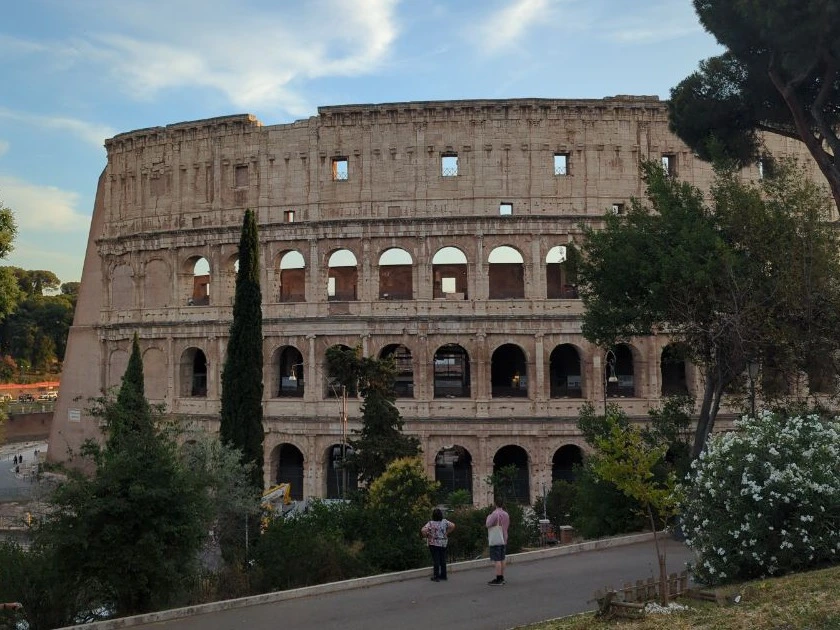
Move a little farther away and everything changes. The Colosseum appears through trees, a riverside path opens beneath an angel-lined bridge, or a warm street gives you room to walk before ancient stone appears behind you.
This is where Rome becomes especially photogenic. The city is still instantly recognisable, but you have space to laugh, move and look like yourselves. In this guide, we’ll walk you through the best types of locations, who they suit and how to combine them without spending half your photoshoot crossing the city.
What Makes a Rome Location Brilliant for Portraits?
The sweet spot is a setting with one strong Roman clue and enough breathing room around you. That clue might be St Peter’s dome, the Colosseum’s arches, an angel statue, umbrella pines, an ancient road or a warm cobbled street.
One real Rome photoshoot at Janiculum began near busy Piazzale Garibaldi. The photographer crossed the road for a cleaner view of St Peter’s dome, then continued beneath the trees towards the Fontanone. Around the Colosseum, Colle Oppio creates similar flexibility through planted stairs, ledges and paths. Beside the Tiber, the lower river level opens a long foreground beneath the crowds on the bridge.
These are not secret places. They are clever, people-friendly ways to photograph Rome, with enough variety nearby to create a full gallery rather than one postcard frame.
Start With What You Want to Do in the Photograph
Rome’s largest monuments often become easier to photograph from farther away because you can fit more of their full shape into the frame. The official Colle Oppio information describes terraces and avenues with close views of the Colosseum and Palatine. From that elevated distance, the Colosseum remains magnificent without overpowering you.
From the lower Tiber, the angels of Ponte Sant’Angelo, Castel Sant’Angelo and St Peter’s dome can appear in beautifully layered backgrounds. Monti offers a softer Roman signature through ochre walls, cobbles, a travertine fountain and occasional Colosseum views.
Light matters too. Open bridges, riverbanks and terraces can feel bright in direct midday sun, while walls, trees and shaded lanes offer softer options. Shade moves by date and season, so your photographer will follow the best light on the day.
Finally, keep the route connected. Colle Oppio and Monti can form one story. The Orange Garden, Santa Sabina and nearby Aventine details belong naturally together. The lower Tiber and Ponte Sant’Angelo create another strong pairing. Coppedè and the Appian Way are farther out and work better as destinations of their own.
Tip: Let the landmark breathe
A little distance can reveal the monument’s full shape, create a cleaner full-body composition and give you much more freedom to move.
Six Rome Photo Spots Where You Stay Centre Stage
Colle Oppio and the Colosseum side angles
One staircase is framed by green leaves and pink and white flowers, with the Colosseum appearing through the planting. Higher up, a wall creates a seated option, while another elevated position reveals more of the monument beside a tree.
A recent portrait session used the elevated view, surrounding paths and a lower ledge without travelling far. That produced wide Colosseum frames, walking photographs, close portraits in greenery and a seated moment without changing locations.
The park currently lists opening hours from 07:00 until dusk, although access and temporary works can change. Some routes include gravel, slopes or steps. One useful upper angle sits behind a gate, so check the current gate hours before the session. Our Colosseum photoshoot guide compares those exterior positions and access details.
Colle Oppio suits couples, engagements, solo portraits and families who want movement. For maternity sessions or limited mobility, the gentler paths and ledges are more suitable than a stair-led route.
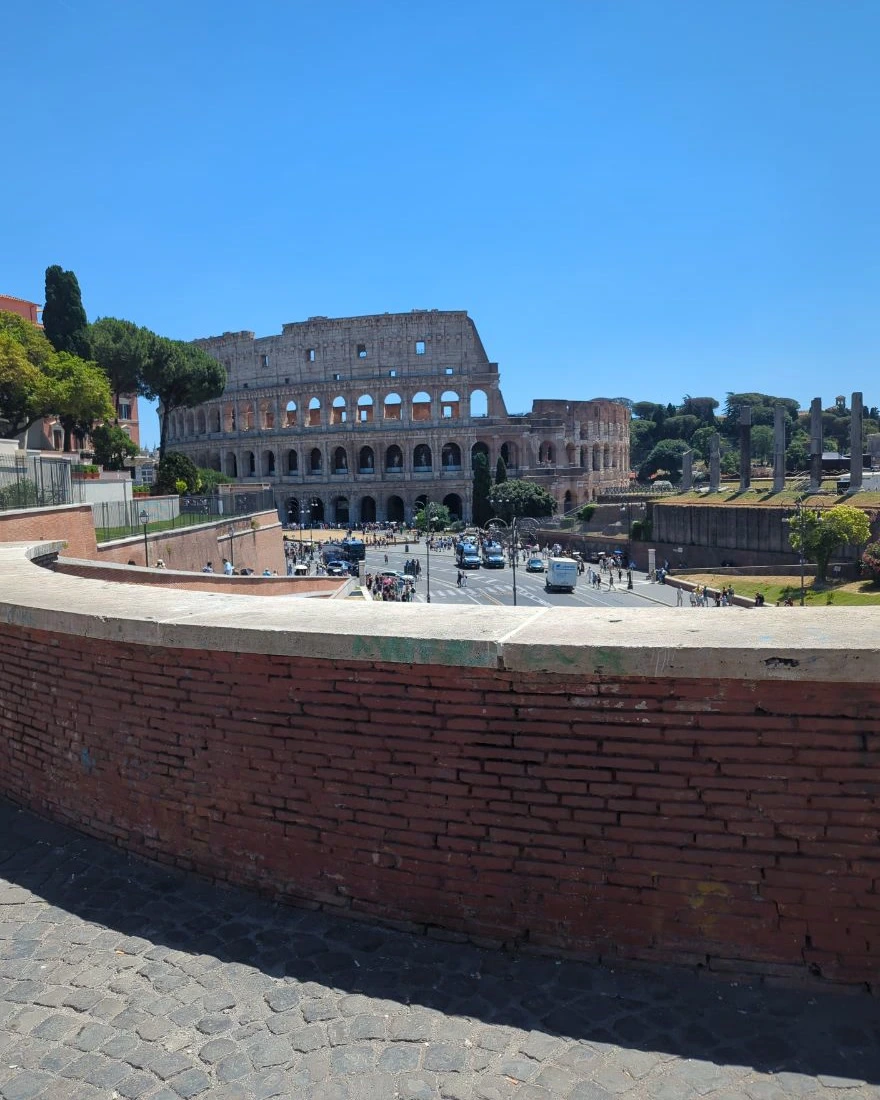
A little distance lets the Colosseum stay unmistakable while the people remain the heart of the frame.
Forum edges, a bridge lane and a roofscape terrace
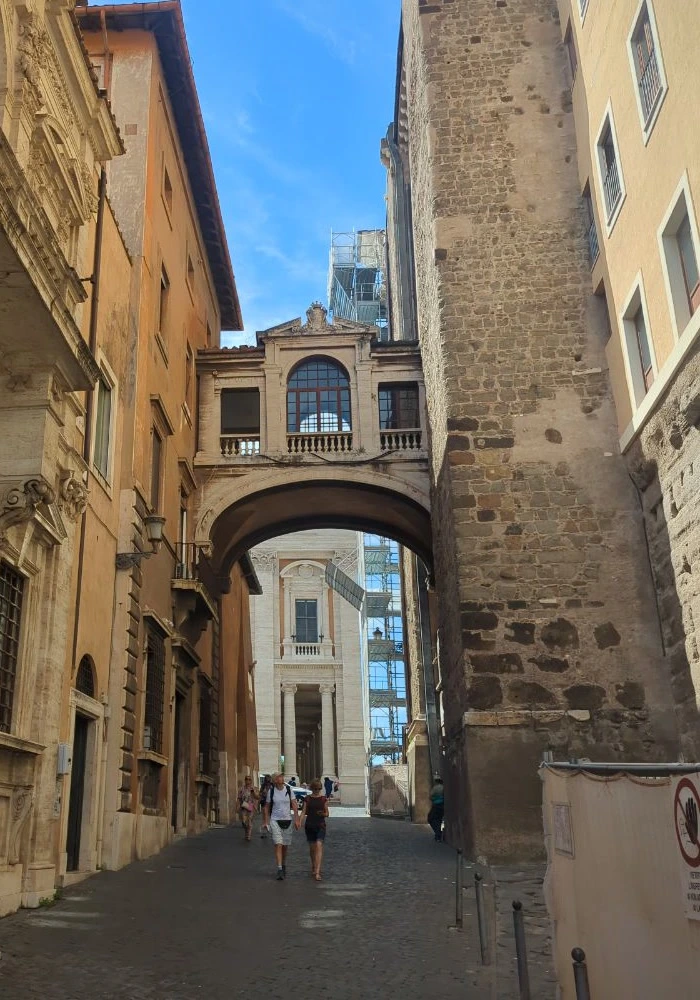
The route passes shaded recesses beside an iron fence, followed by a long lane beneath a bridge connecting the buildings overhead. Marble, warm façades and unusual windows create a strong walking perspective before the lane reaches a broad Forum edge suitable for solo, couple, seated or family frames.
Just beyond the ruins, a small green terrace looks across Rome’s roofs and domes, including St Peter’s in the distance. Its bench and balustrade create a softer final chapter without adding another attraction.
Keep this sequence outside the ticketed archaeological interior. The official Roman Forum and Palatine page lists controlled entrances and seasonal hours. These exterior edges suit couples and solo travellers especially well. Families can use the broader lane and terrace when the slopes, nearby traffic and steps are manageable for everyone.
Aventine walls and the Orange Garden edges
The official Orange Garden information confirms the view across the Tiber towards St Peter’s dome. A recent session combined the garden with the Fontana del Mascherone, Santa Sabina’s façade and movement beneath the pines, creating far more variety than one lookout alone.
The Aventine is a beautiful choice for couples, maternity sessions and families who want greenery in a compact area. The walls flatter soft fabrics, while benches and low edges offer easy seated frames. The dome and umbrella pines keep the gallery unmistakably Roman.
The area is gated and uses seasonal opening hours, so the exact date should be checked. Flowers and foliage also change through the year. The famous keyhole is fun to visit, but its tiny view offers less portrait variety than the surrounding walls, trees, gates and city edge.
The lower Tiber below Ponte Sant’Angelo
Turismo Roma explains that the lower Lungotevere crosses the city below street level and away from road intersections. The riverbank provides a broad foreground beside the water, with views towards the bridge, Castel Sant’Angelo, overhanging trees and St Peter’s dome.
The official Ponte Sant’Angelo page confirms the ten angel statues that give the route its rhythm. One real session began on the riverbank, changed sides and later used the bridge steps and angel lines, producing several distinct perspectives around the same group of landmarks.
This setting works especially well for couples, solo travellers and relaxed portraits after a proposal. It can also work well for families when the chosen access suits everyone.
River-level approaches may involve stairs, uneven surfaces and exposure to direct sun. High water, works or events can also affect access, so the photographer should verify the exact route for your date and mobility needs.
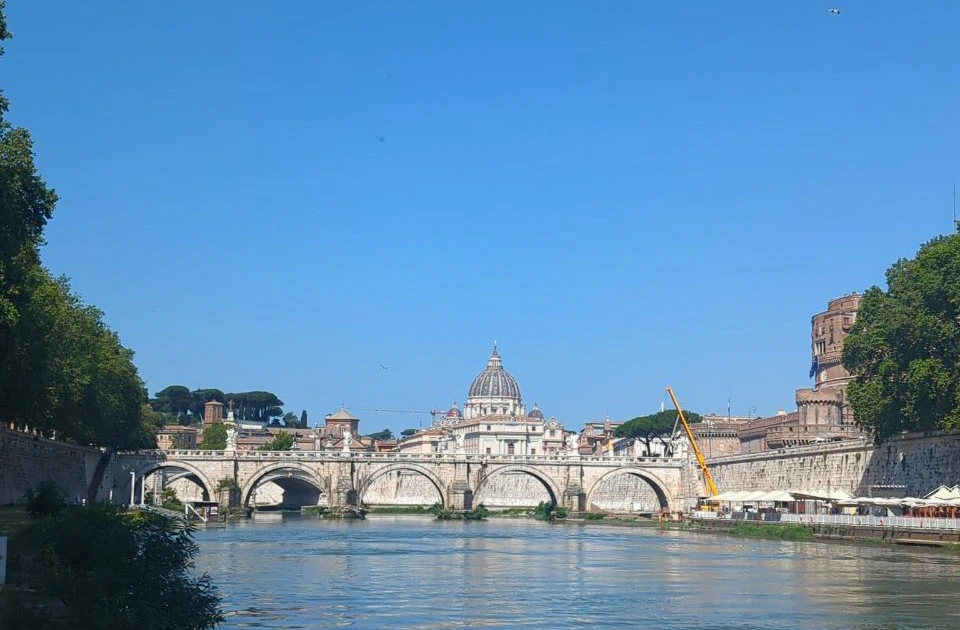
Below street level, the river gives you room to move while the bridge, castle and dome keep Rome unmistakable.


Hidden Rome Photo Spots That Work for Portraits
Save these portrait-friendly Rome angles, route ideas and quieter foregrounds while you plan.
Save on Pinterest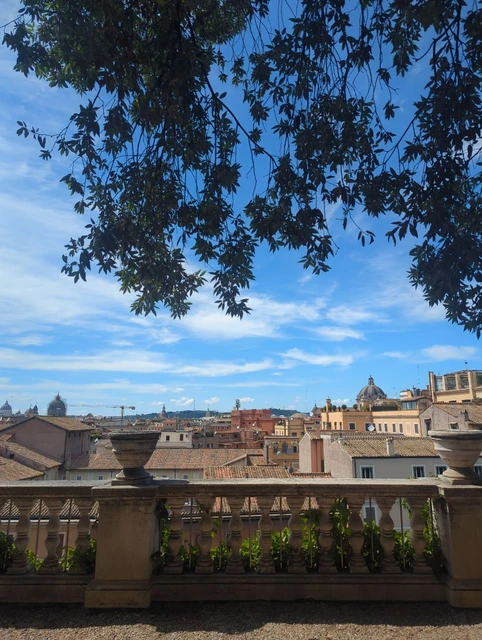
Janiculum beyond the central terrace
During a real proposal session, Piazzale Garibaldi was busy, so the photographer used a dome view across the street before continuing beneath the trees to the monumental fountain. The Fontanone adds five grand archways and a broad basin. Its front is freely visible, while the garden behind requires separate reservation access.
Janiculum suits proposals, cinematic couple sessions, solo skyline portraits and families with older children. It deserves its own time because reaching it usually involves transport or a climb. Midday plans should also account for the daily noon cannon and the gathering around it.
Monti streets with one Roman anchor
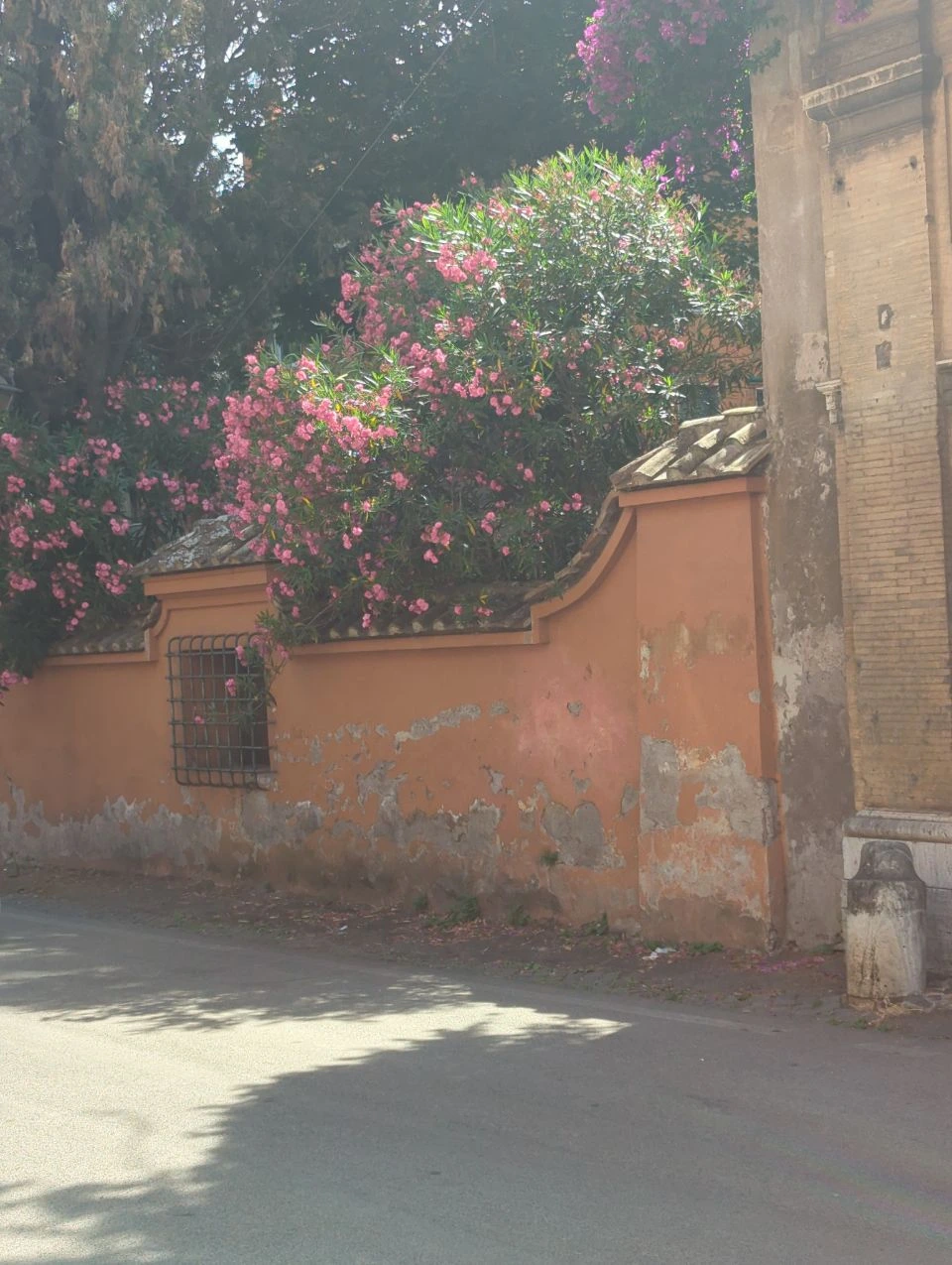
The official Piazza Madonna dei Monti page describes a lively meeting place with lived-in buildings, a church and travertine fountain. It is a real neighbourhood rather than an empty film set, which gives photographs warmth and energy.
Choose one lane with enough width and one clear Roman anchor, such as a distant Colosseum view, church façade, fountain or long cobbled perspective. Morning usually brings calmer lanes, while later hours add cafés, scooters and neighbourhood life. Solo travellers may love that editorial energy, while couples and families benefit from a carefully selected street with comfortable room to move.
The best Monti portraits feel like a graceful walk through the neighbourhood. Keep doorways clear and ask before using café furniture or other private details as part of the scene.
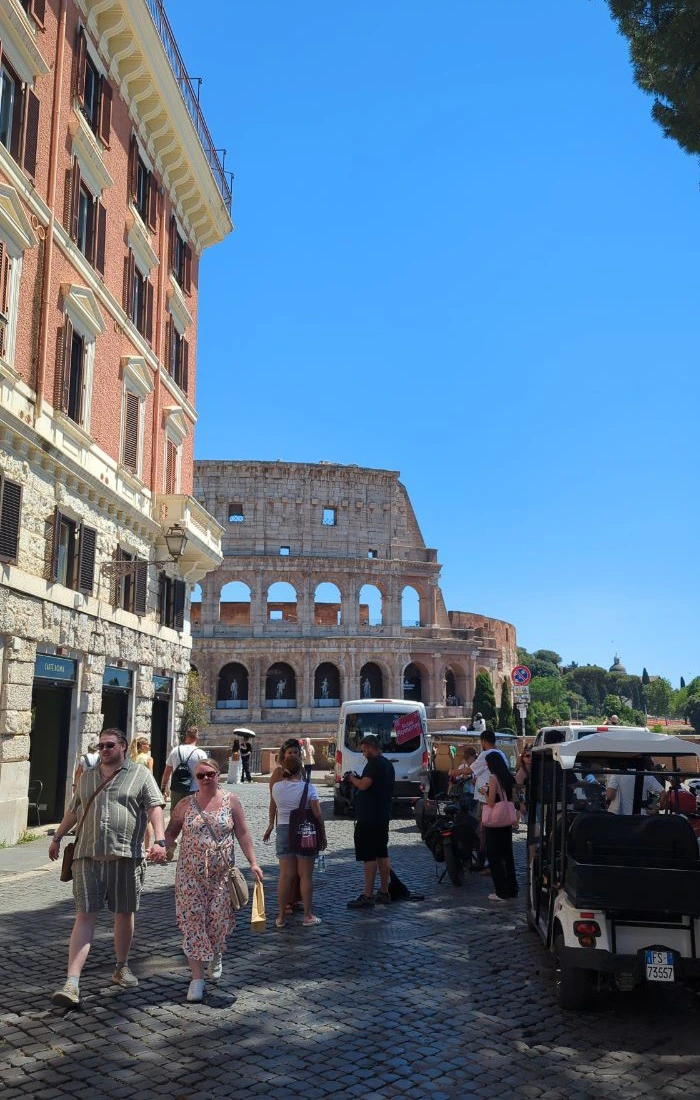
Monti brings Rome closer to human scale, with warm walls, cobbles and everyday city life around you.
Give Coppedè or the Appian Way their own story
Quartiere Coppedè forms a compact architectural world around Piazza Mincio. Turismo Roma describes 26 small palaces and 17 villas, plus a grand entrance arch, hanging lamp, Fountain of the Frogs and a playful mixture of Art Nouveau, Art Deco, Greek, Gothic, Baroque and medieval references.
It is a brilliant choice for an editorial solo session, engagement portraits or a couple who prefers ornate architecture to ancient ruins. Because the setting already contains plenty of pattern, simpler clothing helps you remain the focus.
The Appian Way offers the opposite mood. The official Appian Way page describes a long ancient road of large basalt stones, countryside and roadside monuments. Nearby Caffarella Park can connect into walks of more than six kilometres.
Appia offers room for full-body movement, families, flowing fabric and an ancient landscape that central Rome cannot recreate. It also brings rougher surfaces, open exposure and separate transport logistics.
Choose Coppedè for ornate urban character or Appia for spacious ancient countryside. If your priority is a Colosseum curve, dome or riverside view, a connected central route will make more sense.
Turn Your Favourite Spots Into One Easy Route
Ancient-centre layers can start at Colle Oppio, continue through one Monti lane and finish along a public Forum edge. The gallery moves naturally from greenery and the Colosseum to warm streets, ancient details and roofscape. Compare our Colosseum and Roman Forum photo route before deciding how much of that ancient-centre connection fits.
The Aventine loop can begin beside the Orange Garden walls, continue through the tree path and city view, then finish near Santa Sabina or another verified old-stone detail. It is compact, green and particularly comfortable for a slower session.
The river-and-dome route can begin below Ponte Sant’Angelo, move towards the bridge’s angels and castle, then finish with a suitable street texture on the Vatican side. The mood shifts from spacious and cinematic to architectural and intimate.
Janiculum often works best as its own route. Combine the dome angle, tree avenue, Fontanone and skyline rather than adding it to the end of a long central walk.
Pick the visual world you love most and let the nearby settings provide the variety. Your gallery will feel richer, and you will spend much more of the session enjoying Rome rather than travelling through it. Use our guide to Rome photoshoot durations to match that one visual world to the time you book.
Choose the Best Light for Your Rome Route
Midday works best when the route has genuine shade. Parts of Colle Oppio, the Forum edges and the Orange Garden can offer useful tree cover, although shade varies by season and time of day. Open riverbanks, bridges and skyline points can remain bright, so a mixed route gives the photographer more options.
Late afternoon warms Rome’s walls beautifully, but popular viewpoints become livelier as sunset approaches. Tree-lined approaches and closer portraits can be especially useful at Janiculum or the Orange Garden before the final skyline frame. Compare sunrise and sunset for a Rome photoshoot for the atmosphere and walking plan you prefer.
Cloud can be a gift for exposed locations because it allows the photographer to work in more directions. After light rain, stone and cobbles often deepen in colour, although slippery surfaces and river conditions need extra care.
Access should be checked close to the session. Colle Oppio currently lists opening from 07:00 to dusk, the Orange Garden uses seasonal hours and the ticketed Forum has controlled entrances. Gates, restorations, events and high water can also affect the exact plan.
Match the Location to Your Pace and Personality
Families usually need width, comfort and fewer transitions. Colle Oppio offers broad paths with Colosseum views, while the Orange Garden combines trees, walls, benches and a skyline within a compact area. The lower Tiber can hold a group beautifully when the chosen stairs and river conditions suit everyone. Our Rome family photoshoot guide helps match those spaces to your children and the pace of the day.
For maternity or babymoon portraits, keep the route gentle. Aventine walls, benches and trees offer variety without a long crossing. Short Monti lanes can work well, and Janiculum becomes easier with transport to the right starting point. Our Rome maternity and babymoon photoshoot guide helps you plan the pauses, arrival and easy finish around that choice.
Solo portraits can lean into Rome’s more editorial settings. Monti and Coppedè bring architecture close, while Colle Oppio and the lower Tiber create bold full-body compositions with generous negative space. Walking, turning, leaning against a wall and changing your gaze are enough to give the gallery movement.
Stable shoes are useful for Rome’s cobbles, gravel, slopes and stairs, especially on Appia’s large basalt stones. You can always carry smarter shoes for selected frames. Colours such as cream, navy, olive, rust, muted blue and soft pink sit beautifully against warm stone and greenery, while simpler outfits balance Coppedè’s detailed architecture. See what to wear for a Rome photoshoot for outfit and shoe choices that work through the route.
Above all, choose somewhere that lets you relax. The best setting is the one where you can move comfortably and still feel like yourself.
Let Rome Set the Scene for Your Story
For a Rome photoshoot with Travaya, your local photographer can turn your favourite visual style and any walking or mobility needs into one realistic route, choose the strongest light and plan a smooth journey between locations, so you can simply enjoy being together in Rome.
Plan a Rome Route That Keeps You in the Picture
Tell us your date, who is joining you, favourite Rome backdrop and walking needs. We’ll help you find a local photographer and shape a portrait-friendly route.


Our Rome Shoots:
Book your Rome Photographer!
Start BookingWhat to Wear for a Rome Photoshoot: An Outfit That Moves With You
Villa Borghese Family Photoshoot Guide: Toddlers, Lake and a Pincio Finish
Trevi Fountain Photoshoot Guide: Sunrise, Crowds and the Pantheon Route
Trastevere Photoshoot Guide: Streets, Colour and Quiet Corners
Sunrise or Sunset for a Rome Photoshoot?
Spanish Steps Photoshoot Guide: Choose Your Route, Light and Pace
ENJOY $20 OFF
Your first photoshoot when you become an email subscriber.
Related Articles
What to Wear for a Rome Photoshoot: An Outfit That Moves With You
Choose a Rome photoshoot outfit that feels like you, reads clearly beside the city and moves comfortably through cobbles, seasons and the real route.
Villa Borghese Family Photoshoot Guide: Toddlers, Lake and a Pincio Finish
A relaxed Villa Borghese family photoshoot with toddler-friendly space, a calm lake chapter and Rome spreading out below you from Pincio.
Trevi Fountain Photoshoot Guide: Sunrise, Crowds and the Pantheon Route
Plan a Trevi Fountain photoshoot with clear advice on sunrise, crowds, access and the beautiful walking route to the Pantheon.