
Table of Contents
Let One Rome Evening Unfold in Three Moods
A beautiful Rome evening isn't one long hour in the dark. It's a story with three moods: easy movement in the last soft daylight, closer portraits under a deepening blue sky, and one glowing landmark saved for the end. Plan those parts well and your photos will feel like a date in Rome, not a race between monuments.
What a Rome evening couple photoshoot actually feels like
As the sun drops, the session becomes quieter without becoming stiff. Café windows brighten and fountain water catches little points of light. You naturally stand closer because the best frames now come from small things: your hands meeting, your partner leaning in, the look you share when the square disappears for a second.
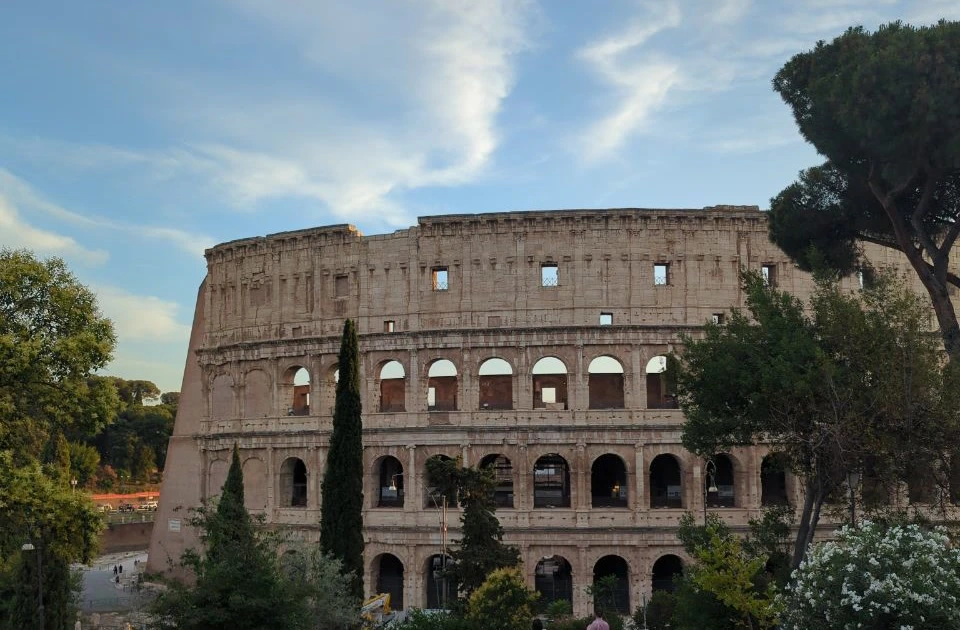
Then comes the night chapter. This is where one landmark earns its place. It could be the Colosseum glowing behind you, the lights of Castel Sant’Angelo across the river or Trevi’s water shining against pale stone. Your photographer may slow the pace, move you into a pocket of good street light or add a gentle light for one crisp final portrait.
The trick is to plan backwards. Choose the illuminated scene you want at the end, then build the earlier part of the walk around it. If the Colosseum is your final frame, begin near Campidoglio or the Roman Forum. If you want the river and Castel Sant’Angelo glowing behind you, begin around the Pantheon and Piazza Navona. Your route should carry you towards the best night image, not leave you checking maps while blue hour slips away. Compare our Rome couple photoshoot locations if you are still choosing the setting for that final feeling.
That's what makes the evening feel easy. Every part of the light has a job, every stop changes the gallery, and you never need to collect landmarks just because they're famous.
How to time your Rome evening couple photoshoot
For a 90-minute session that moves from daylight into city lights, meeting roughly 45 to 60 minutes before sunset is a strong starting point. You get enough natural light for walking and playful frames, you stay together through the short blue transition, and you finish after the landmark lights have started to matter.
For a focused 60-minute session, roughly 20 to 30 minutes before sunset can work beautifully when the route is compact. Trevi to the Spanish Steps is one example. A tight Colosseum route is another. You'll get a smaller daylight chapter, but still enough change for an evening story.
Blue hour is a lovely name, but it's rarely a full hour. Rome’s civil twilight after sunset is roughly half an hour on typical seasonal reference dates, and the richest blue part may be shorter. Buildings, cloud and the direction of your view all change what you see. City lights also follow live schedules and sensors, so there's no trustworthy universal minute when every monument suddenly switches on.
That's why the final stop needs a little flexibility. Nearby street lamps, fountains or lit shop windows can already work while the main landmark is waking up. You keep taking photographs while the light catches up.
If you want a true night-only gallery, that's possible too. Start after the blue has mostly left the sky and make artificial light part of the look from the beginning. The photographs will feel darker and bolder, with slower movement and more careful face light. It's a different experience from sunset, which is exactly why it can be so good.
Photographed by Travaya Photographers
Four Rome routes that grow more beautiful as the light falls
Ancient Rome: Campidoglio to the illuminated Colosseum. Begin near Campidoglio or a Forum-edge view while the sky still holds warmth. You can use rooftops, columns and the ruins below before walking along Via dei Fori Imperiali. The Colosseum then becomes the final chapter as its arches start to glow.
The direct route is about 1.5 kilometres and roughly 20 minutes of pure walking before any photographs. In a 90-minute session, those minutes can become part of the story: wide Forum views, slow walking on Via dei Fori, closer frames against stone and one grand Colosseum finish. For a one-hour version, keep the start closer to the Forum and let the Colosseum cluster do more of the work. Our Colosseum and Roman Forum photo route explains the exterior connection; for this evening version, keep the illuminated Colosseum as the finish.
This route is for you if you want scale. The final frames can make you feel small inside Rome’s history, then come close enough for city lights to soften behind your faces. It's bold and unmistakable.
Baroque Rome: Pantheon to Piazza Navona and Ponte Sant’Angelo. This route starts with the Pantheon’s columns while there's still enough sky light to see their depth. From there, you move through smaller streets to Piazza Navona, where fountains and people bring warmth and movement. The evening ends on Ponte Sant’Angelo with the castle, angels and river light behind you.
The route is about 1.5 kilometres, with around 18 minutes of pure walking. Ninety minutes gives it room to breathe. Pantheon feels strong, Navona feels playful, and the bridge naturally slows everything down. By the river, a close embrace suits the scene better than another big movement prompt. Our Pantheon and Piazza Navona photo route adds the street connections and exterior positions for the earlier part of that walk.
This is for you if you want romance without making every photograph sweet and delicate. You get stone, water, fountains, narrow streets and one luminous ending. The bridge-level views are already strong, so the lower river path can stay optional when shoes, access or the live evening feel make street level the happier choice.
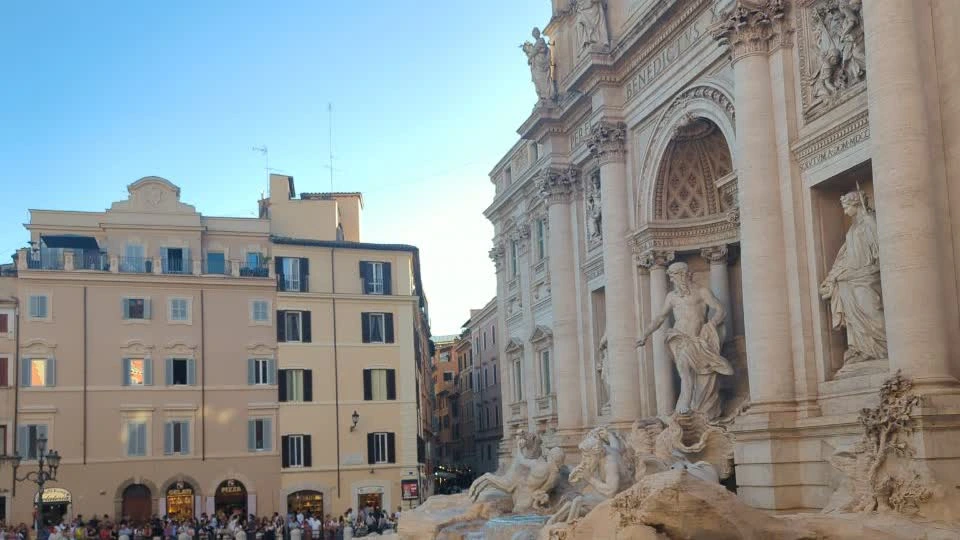
The compact icons: Trevi Fountain to the Spanish Steps. Trevi and the Spanish Steps are less than a kilometre apart, with roughly 11 minutes of direct walking. That makes them a strong one-hour pairing when you want famous Rome and plenty of energy around you.
Trevi gives you illuminated water, pale stone and closer frames. The streets towards the Spanish Steps add shop windows, doorways and walking photographs. Piazza di Spagna changes the shape again with the Barcaccia, the rise of the steps and the ochre buildings around the square. Our Spanish Steps photoshoot guide helps you choose between the base-level scenes and a few higher views.
Evening is social here, especially in warmer months. Your photographer can use side angles, tighter portraits and brief openings in the foreground. The result feels alive, like you stepped into Rome on one of its best nights.
The closest Trevi basin area currently operates from 09:00 to 22:00 for tourists and non-residents with a €2 contribution, and sitting on the basin edge is not allowed. You can check the current Trevi access details before your date. That inner area is only one part of the location, and its entry contribution does not create private portrait space. Our Trevi Fountain photoshoot guide compares the portrait positions around that access boundary.
The intimate story: Theatre of Marcellus, the Jewish Ghetto and Campidoglio. This route is roughly one kilometre, with about 14 minutes of pure walking. It begins with ancient stone and a wider view, then slips into human-sized streets where the two of you can carry the photographs and the monuments play a supporting role.
The Theatre of Marcellus gives the first part scale. The Ghetto brings doorways, warm walls, quiet touches and the feeling of wandering without an agenda. A Campidoglio or Forum-view finish adds the night glow without changing the whole session into a landmark tour.
This is for you if you want Rome to feel lived-in. It suits couples who like candid walking, close conversation and a gallery that feels more like a film of their evening than a collection of postcards. A cloudy sky works especially well here because soft light on the streets can be just as romantic as a bright orange sunset.
A Rome evening route should move naturally from soft daylight towards one illuminated landmark.
Flash or no flash? Here's what changes in your photographs
Photographs made with the light already in the city feel natural and full of mood. A street lamp warms the side of your face. Trevi’s glow reflects softly from the water. A bar window turns an ordinary corner into the best spot on the route. These frames feel like the night really looked.
As the sky darkens, that existing light asks for a calmer rhythm. You may pause for a beat, walk more slowly or hold an embrace while the photographer takes the frame. A little grain or gentle movement can be part of the charm. It makes the photograph feel alive.
A small continuous light gives the photographer more control while keeping the effect soft. It helps your eyes and skin stay clear when the background is brighter than your faces. Because it's visible before the photograph is taken, it's easy to adjust without turning the moment into a production.
Subtle flash can do something different. It freezes an expression, keeps a moving dress crisp and separates you from a dark street or glowing monument. Used well, it does not have to look like a nightclub snapshot. It can be so gentle that you mostly notice how clear your faces look against the deep blue or black sky.
The most satisfying answer is often a mix. Use the real city light for the walk, the close moments and the atmosphere. Bring in a little added light for the final hero frames. You get the truth of the evening and the kind of crisp portrait you may want to print.
One more reassuring detail: you don't need to bring a tripod. Night photo tours need them because their guests are photographing static buildings with long exposures. Your photographer's kit already handles the portrait side of the evening.
You can still move after dark, just in a different rhythm
Before sunset, movement can be big and loose. Walk quickly, turn, dance, cross the piazza and let a coat or dress catch the air. This part gets you out of your head. By the time the light begins to fall, the camera no longer feels like a stranger.
During blue hour, movement becomes smaller. You might walk towards the camera at half speed, brush shoulders, turn your partner or stop with your foreheads together. The photograph still has motion, with the soft rhythm of a real evening.
At full night, one still frame can feel more powerful than ten walking shots. Imagine standing on Ponte Sant’Angelo with the castle glowing behind you. Your partner pulls you closer, the river is dark below, and for one second the whole city seems to hold still too. That's not stiffness. That's the photograph knowing when to breathe.
Flash can bring a burst of movement back into the final chapter. A quick turn, a laugh or a little dress movement can stay crisp while the street lights glow around you. The point isn't to freeze you into poses. It's to change the rhythm with the light.
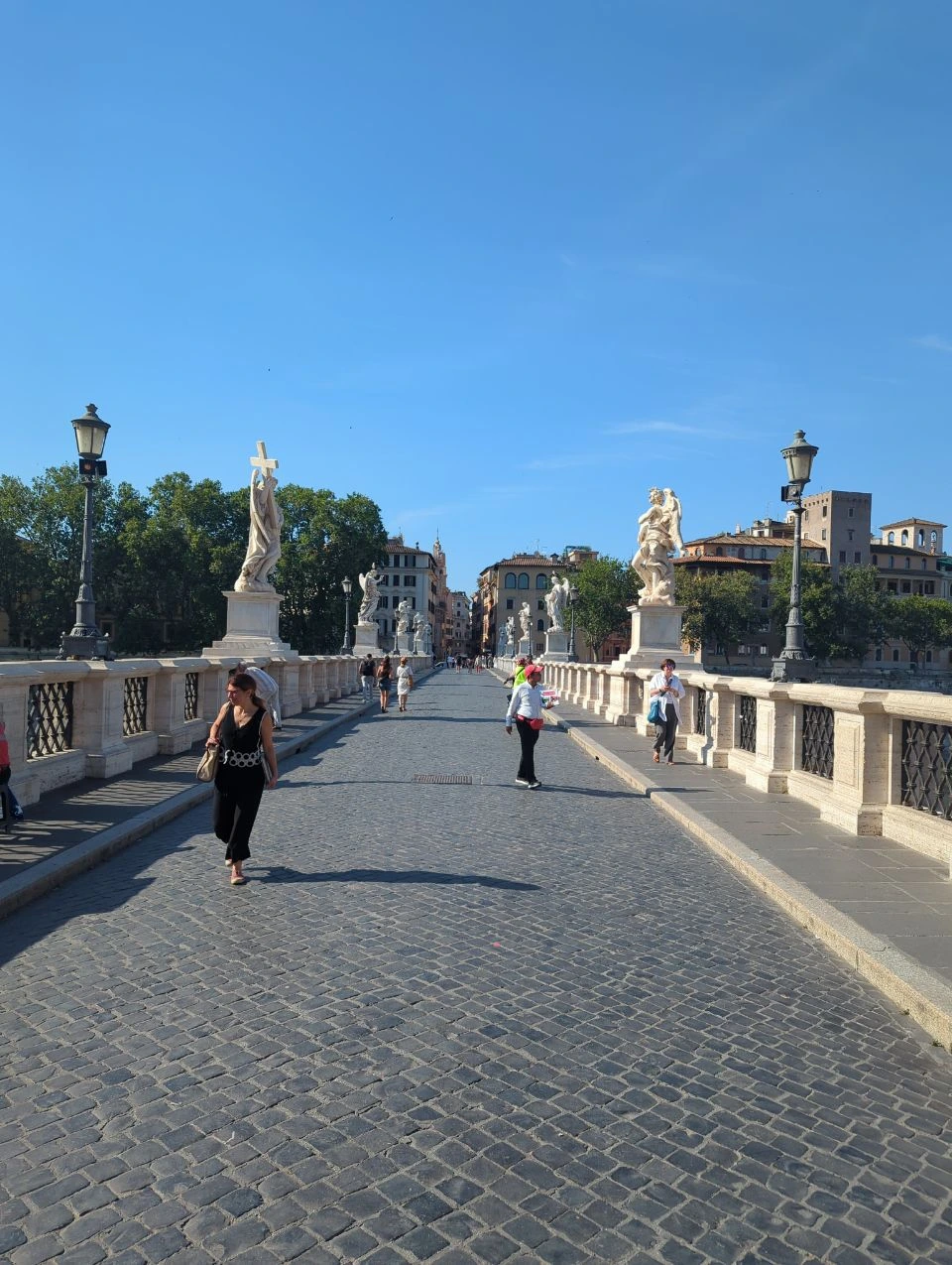
Ponte Sant’Angelo provides an open riverside setting for walking portraits in Rome.
Keep the evening easy from first cobblestone to final taxi
Bring one small bag at most. City-centre attractions are lively, and official travel guidance notes that petty theft is more common around major sights. The calm response is simple: carry less, keep the bag in sight and let the photographer know where your phone or room key is before you start moving. Nothing needs to sit unattended on a wall while everyone looks at the camera.
Rome’s sampietrini are beautiful and wonderfully committed to testing formal footwear. Shoes you can walk in will make the session feel better. If heels or polished shoes matter to the look, carry them for the still frames and wear the sensible pair between stops. Your feet don't need to suffer for romance. They've already come to Rome.
The route should also end somewhere useful. Finish at Castel Sant’Angelo before a riverside dinner, at the Colosseum before a short ride back or around the Spanish Steps when your evening continues in the centre. That way the final photograph is not followed by a confused 25-minute walk in the wrong direction.
Rome’s official taxis are white, carry a roof `TAXI` sign, Roma Capitale markings and a licence number. The city also runs ChiamaTaxi on `060609` and through an app. The official Rome taxi page has the current details. Plan the pickup near your final stop and the photoshoot flows straight into the rest of your night.
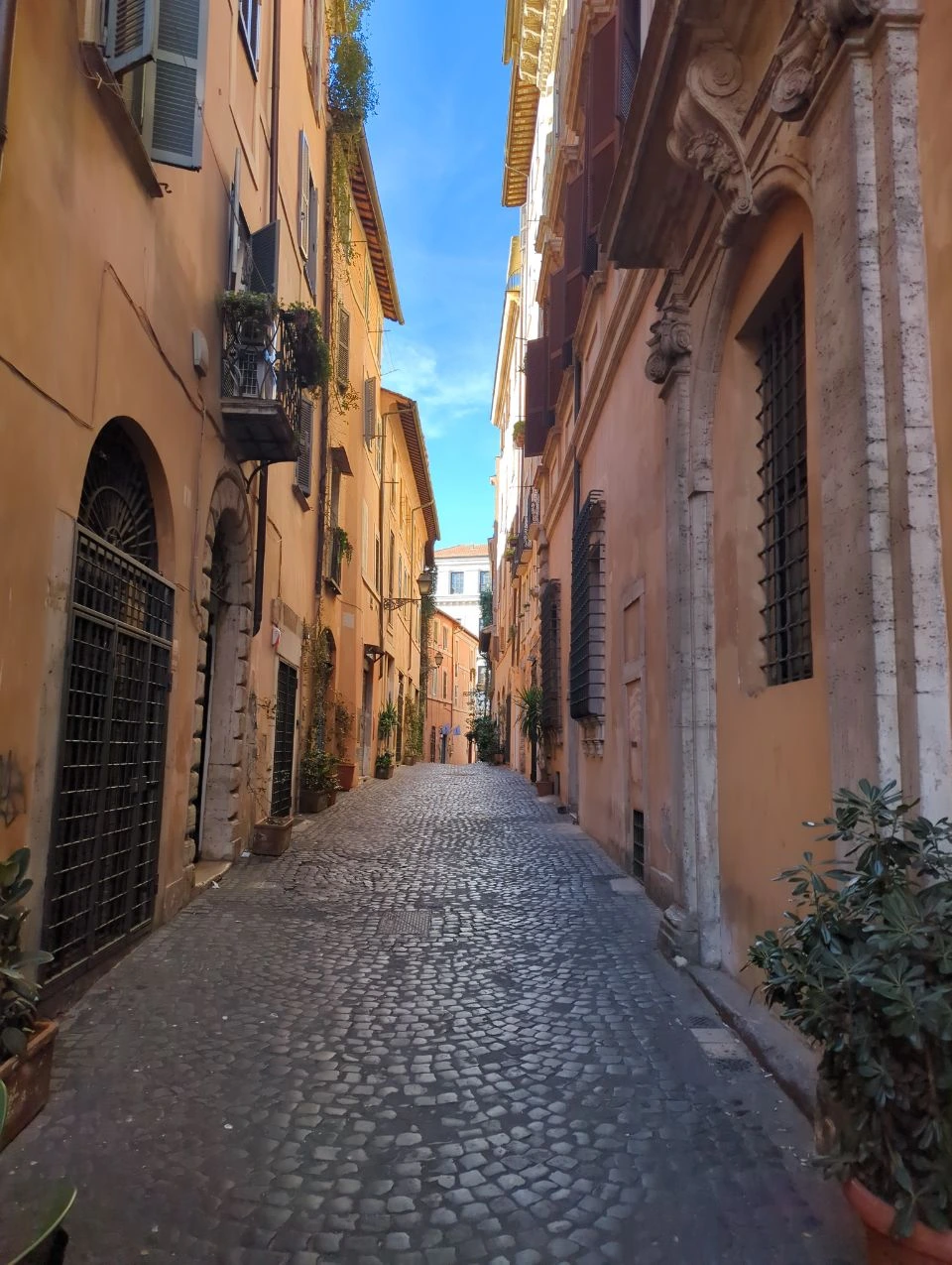
Photographed by Travaya Photographers
Evening outfits should catch the light without taking over
Solid colours read clearly under mixed city light. Cream and soft neutrals glow against deep blue sky. Black and navy feel elegant beside pale stone. Burgundy, emerald and other rich colours hold their own against warm monument lights without shouting.
Tiny busy patterns can lose their shape once the light falls. A clean shirt, a dress with movement or a structured jacket gives the photographer more to work with. A small metallic detail can catch a street lamp beautifully. You only need a glint, not a disco ball.
Add a light layer in spring, autumn and winter. Rome can feel mild before sunset and surprisingly fresh half an hour later, especially near the river or on an open terrace. When you feel comfortable, your shoulders relax and your photographs look like you. See what to wear for a Rome photoshoot for comfortable shoes and layers to carry that look through the walk.
Cloud, rain and a sunset that never turns orange
As darkness arrives, the city lights matter more than the missing orange horizon. Fountains still glow. The Colosseum still gains depth. Café windows still turn warm. Your session simply moves from a soft opening into a stronger night finish.
Light rain can add reflections to Rome’s stone streets and make headlights and lamps stretch across the ground. A shorter route, a portico edge and shoes with grip keep that version easy. Pantheon and the lanes around Navona are especially useful when the plan needs quick sheltered pauses.
The goal isn't to force the original weather idea. It's to keep the feeling you wanted. Romantic, lively, elegant or a little dramatic can all survive a different sky.
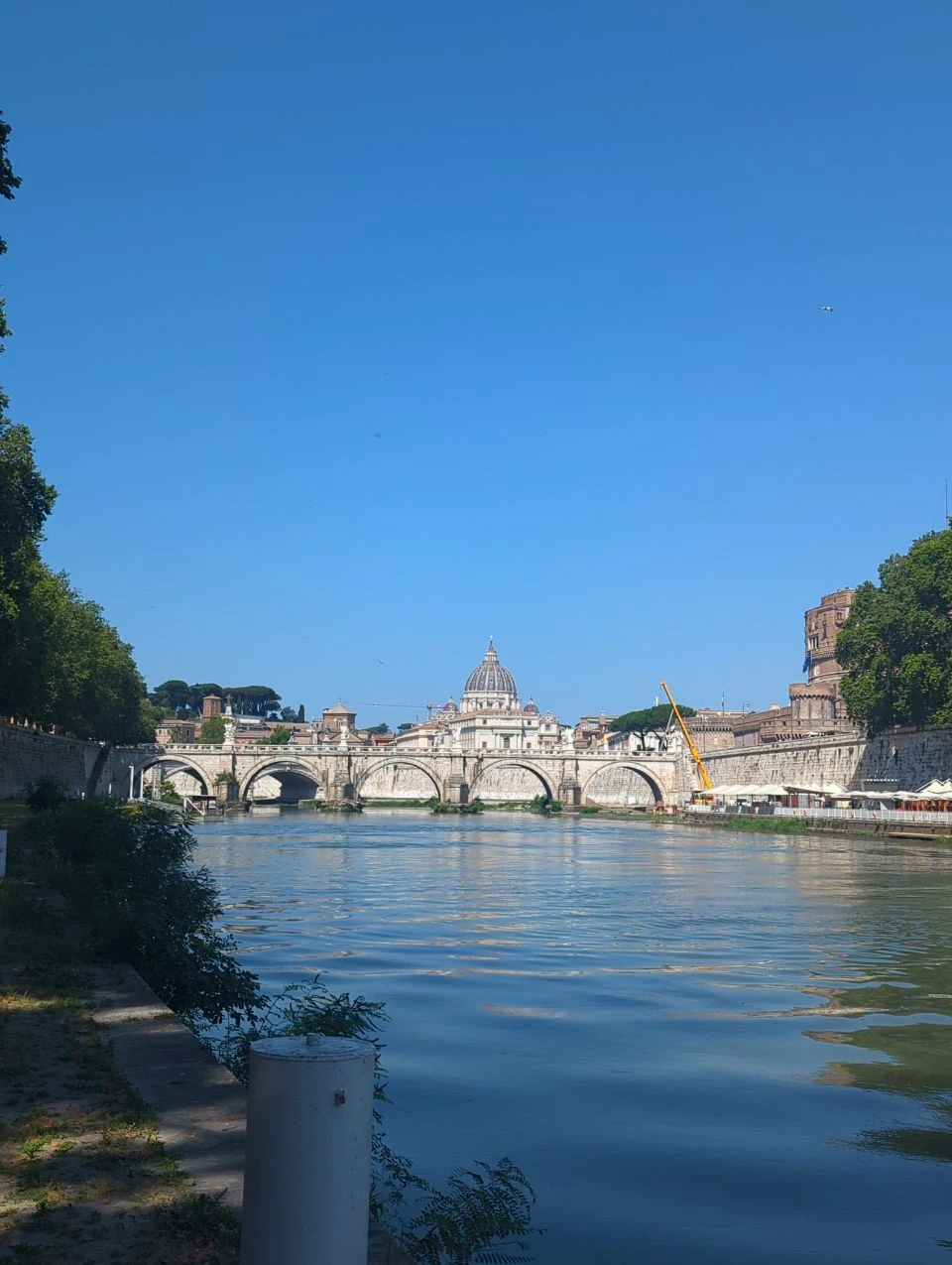
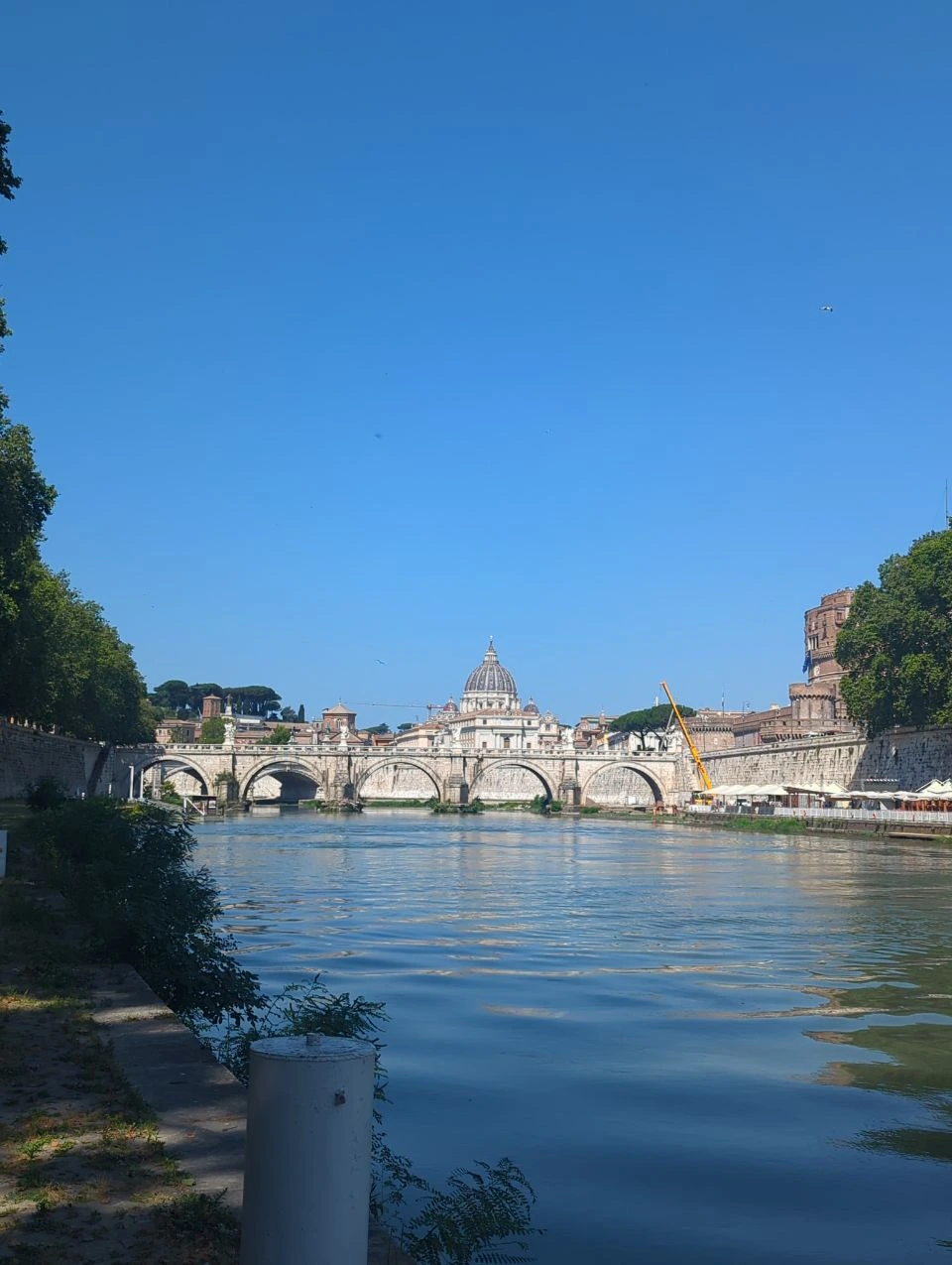
Reflections on the Tiber lead towards Ponte Sant’Angelo and St Peter’s dome.
The night should end while you still want one more photograph
Maybe you walk into dinner still talking about the ridiculous dance prompt that somehow looked amazing. In winter, you can finish early enough for a long dinner. In summer, the late sunset turns the whole session into your evening plan.
That post-shoot hour is part of the memory. You're dressed up, already in one of Rome’s best areas and completely past wondering what to do with your hands. There's no need to rush back to the hotel. Let the photographs become the first half of a date you'll talk about for years.
Plan your Rome evening couple photoshoot around the light you love
You can plan your Rome photoshoot with Travaya, then turn one beautiful walk into the part of Rome you keep.
Rome Evening Couple Photoshoot FAQ
Quick answers about start time, blue hour, session length, flash, movement, landmarks, Trevi access and what to bring.
Set the start from the real sunset on your date. Roughly 45 to 60 minutes before sunset works well for a 90-minute route, while 20 to 30 minutes before sunset suits a focused one-hour session with a nearby night finish. Your route matters as much as the clock. A skyline start needs more daylight than a Trevi-to-Spanish-Steps walk, and a true night session can begin after the blue has mostly left the sky.
Usually not. In Rome, the after-sunset civil-twilight period is often around half an hour, and the richest blue colour may last for a shorter part of it. Cloud, buildings and your direction all change what the camera sees. Treat blue hour as a transition, not an appointment that waits for you.
Yes, when you choose one compact route and one illuminated finish. Trevi to the Spanish Steps, a focused Colosseum cluster or Theatre of Marcellus to a nearby Campidoglio view can all create a real light change in one hour. Choose 90 minutes when you want the fuller story, especially for Campidoglio to the Colosseum or Pantheon to Ponte Sant’Angelo.
Possibly, and usually for only a few frames. Existing street and monument light can carry the atmosphere, while a gentle continuous light or subtle flash keeps your faces clear for a few stronger night portraits. If you have a strong preference for soft natural-looking light or a bolder editorial finish, share it before the session. The route and movement can then support that look.
Yes. The walk simply slows as the light falls. You can still hold hands, turn, laugh and move towards the camera, but the photographer may ask for shorter steps or a brief pause at the end of the movement. Some final night frames may be deliberately still because the illuminated background is doing more of the storytelling. A few flash-assisted frames can bring crisp movement back too.
Choose the Colosseum for scale, Castel Sant’Angelo for river light and romance, or Trevi for glowing water and iconic Rome. The strongest choice is the landmark that fits the feeling you want at the end. Pantheon and Navona build beautifully towards Castel Sant’Angelo, while Forum-edge views lead naturally to the Colosseum.
Yes, with current access rules to keep in mind. The controlled inner-basin area currently operates from 09:00 to 22:00 for tourists and non-residents with a €2 contribution, subject to live changes, and sitting on the basin edge is not allowed. The wider location still offers several portrait angles. Evening crowds remain part of the live scene, so your photographer may use side positions, closer frames and the connecting streets as well as the main fountain view.
Bring one small bag, a light layer, a charged phone and shoes that work on cobbles. If you want formal footwear, carry it for the still photographs and walk between stops in the comfortable pair. Leave extra shopping, large backpacks and a second wardrobe at the hotel unless your photographer has planned a specific change point. Less to carry means more of the evening belongs to the two of you.


Our Rome Shoots:
Book your Rome Photographer!
Start BookingWhat to Wear for a Rome Photoshoot: An Outfit That Moves With You
Villa Borghese Family Photoshoot Guide: Toddlers, Lake and a Pincio Finish
Trevi Fountain Photoshoot Guide: Sunrise, Crowds and the Pantheon Route
Trastevere Photoshoot Guide: Streets, Colour and Quiet Corners
Sunrise or Sunset for a Rome Photoshoot?
Spanish Steps Photoshoot Guide: Choose Your Route, Light and Pace
ENJOY $20 OFF
Your first photoshoot when you become an email subscriber.
Related Articles
What to Wear for a Rome Photoshoot: An Outfit That Moves With You
Choose a Rome photoshoot outfit that feels like you, reads clearly beside the city and moves comfortably through cobbles, seasons and the real route.
Villa Borghese Family Photoshoot Guide: Toddlers, Lake and a Pincio Finish
A relaxed Villa Borghese family photoshoot with toddler-friendly space, a calm lake chapter and Rome spreading out below you from Pincio.
Trevi Fountain Photoshoot Guide: Sunrise, Crowds and the Pantheon Route
Plan a Trevi Fountain photoshoot with clear advice on sunrise, crowds, access and the beautiful walking route to the Pantheon.