
Table of Contents
Choose the Rome That Sounds Like the Two of You
Rome can give you both, but not every location asks the same thing from you. The Colosseum creates awe. Trastevere rewards movement and play. Villa Borghese makes space for pause. A sunset viewpoint invites stillness. Your best location is the place where your natural way of being together already makes sense, with Rome speaking exactly as loudly as you want it to.
How to choose your Rome couple photoshoot location
Some couples love a little theatre. They want a wide frame beneath the Colosseum, a bold kiss beside Trevi or a dress that moves beautifully against pale stone. Others relax once they can walk, talk and discover the next corner together. They tend to feel at home in Trastevere or between the Pantheon and Piazza Navona. Some want greenery, quiet conversation and enough room to breathe. Villa Borghese or a panoramic garden may suit them better than a busy piazza.
It helps to think of Rome through five relationship rhythms. Awe belongs to ancient scale and grand architecture. Wandering works through connected streets and piazzas. Play comes naturally around warm walls, café corners and unexpected details. Pause needs greenery, benches and a slower route. Stillness appears at viewpoints, beside the river and in the few minutes when daylight begins to fade.
You do not have to fit neatly into one of them. Most couples are a mix. Choose the rhythm that should lead, then let a nearby street, staircase, river edge or garden add a second note without turning the photoshoot into a race.
The other useful choice is how loudly Rome should speak. Put the city at full volume and choose the Colosseum, Trevi Fountain or another instantly recognisable view. Turn it down slightly and work with Pantheon approaches, the streets around Piazza Navona or a bridge with the skyline behind you. Let your connection lead and choose Trastevere, Villa Borghese or a quieter viewpoint where the location frames the moment rather than becoming the whole moment.
Tip: Choose one sentence that describes the finished gallery, such as “grand and unmistakably Rome,” “warm and playful in the streets” or “quiet, green and romantic.” That sentence is more useful than a list of six landmarks.
Colosseum or Trevi when you want Rome to lead
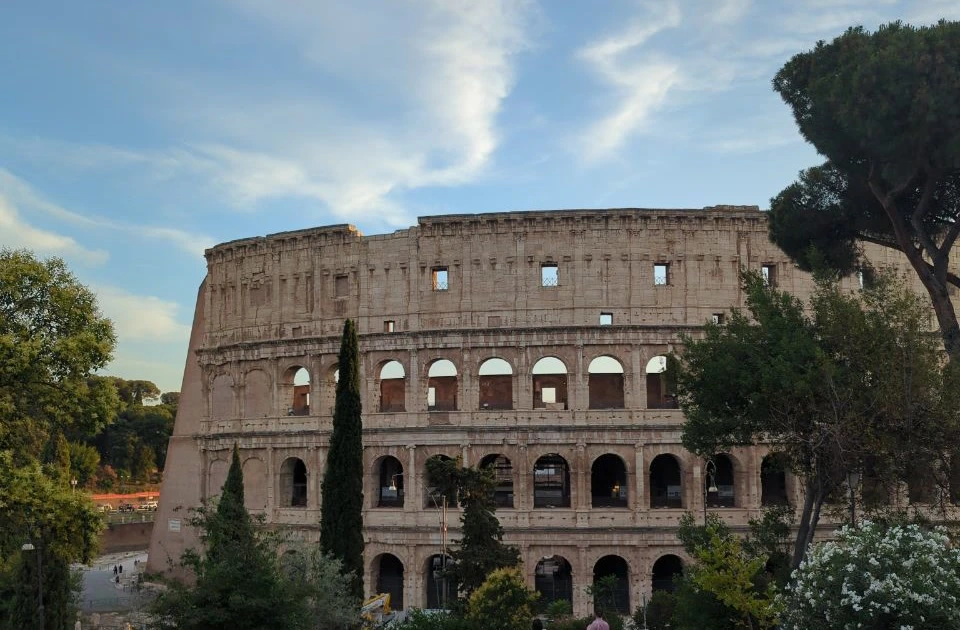
The Colosseum is about scale. From close by, its arches rise above you and give the photographs weight and texture. From a more distant or elevated position, the whole structure can sit clearly in the background while you still have room to walk, turn towards each other or simply stand together without disappearing into the architecture. Nearby walls, cobbled streets, cypress trees and views towards the Roman Forum can vary the gallery without leaving the ancient-Rome world.
Choose it if the feeling you want is bold, cinematic and travelled. It suits couples who enjoy a wide environmental portrait as much as a close photograph. The best version is usually not a long archaeological tour. One strong viewpoint, one useful walking stretch and perhaps a Forum layer can give the session a beginning, middle and finish without spending half your time changing areas. Our Colosseum photoshoot guide helps you choose those exterior positions.
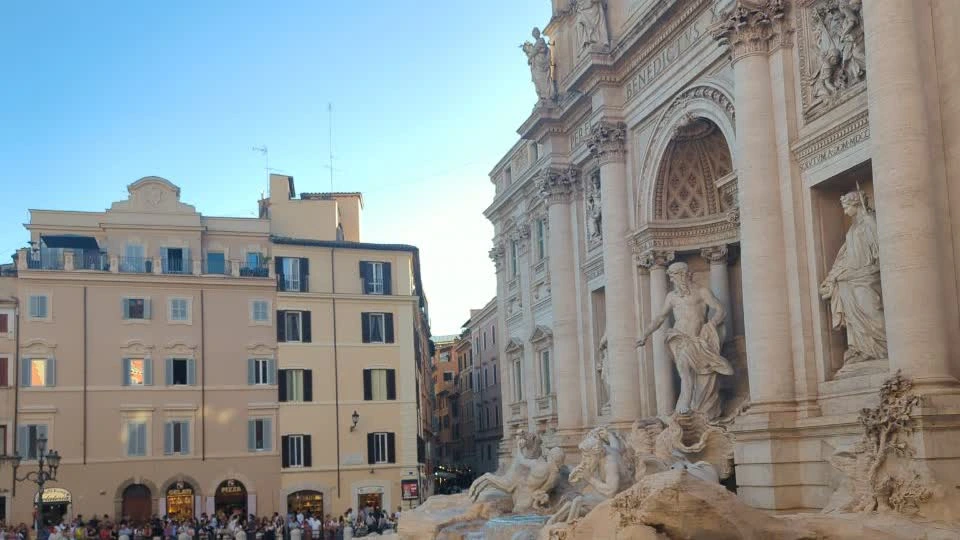
Trevi is more theatrical. Water, sculpture and pale Baroque stone fill the frame before you have done anything at all. Close photographs feel energetic and glamorous; wider ones carry the unmistakable architecture. It works beautifully for couples who like a little movement, a celebratory mood and the feeling of being right inside central Rome.
It is also a compact, famous public space. Arriving early can improve your chances of a little more room, but it never buys private use of the fountain. A good session here depends on flexible angles, quick responses and accepting a touch of city life. Sometimes the strongest photograph comes from stepping away from the obvious centre and using the fountain as a layer rather than fighting for the exact same position as everyone else. Our Trevi Fountain photoshoot guide explains the positions and access details to plan around.
The streets around Trevi can help the story breathe. A doorway, narrow lane or coffee stop gives you a closer, more personal scene after the grandeur of the fountain. If you only have 30 minutes, that contrast is often more valuable than trying to add another major landmark.
Choose the Colosseum when you want ancient scale and space around you. Choose Trevi when you want water, sculpture and a lively central-Rome moment. If both matter equally, a longer early session with a planned transfer can work, but make the travel time an intentional choice. Two icons are not automatically twice the story.
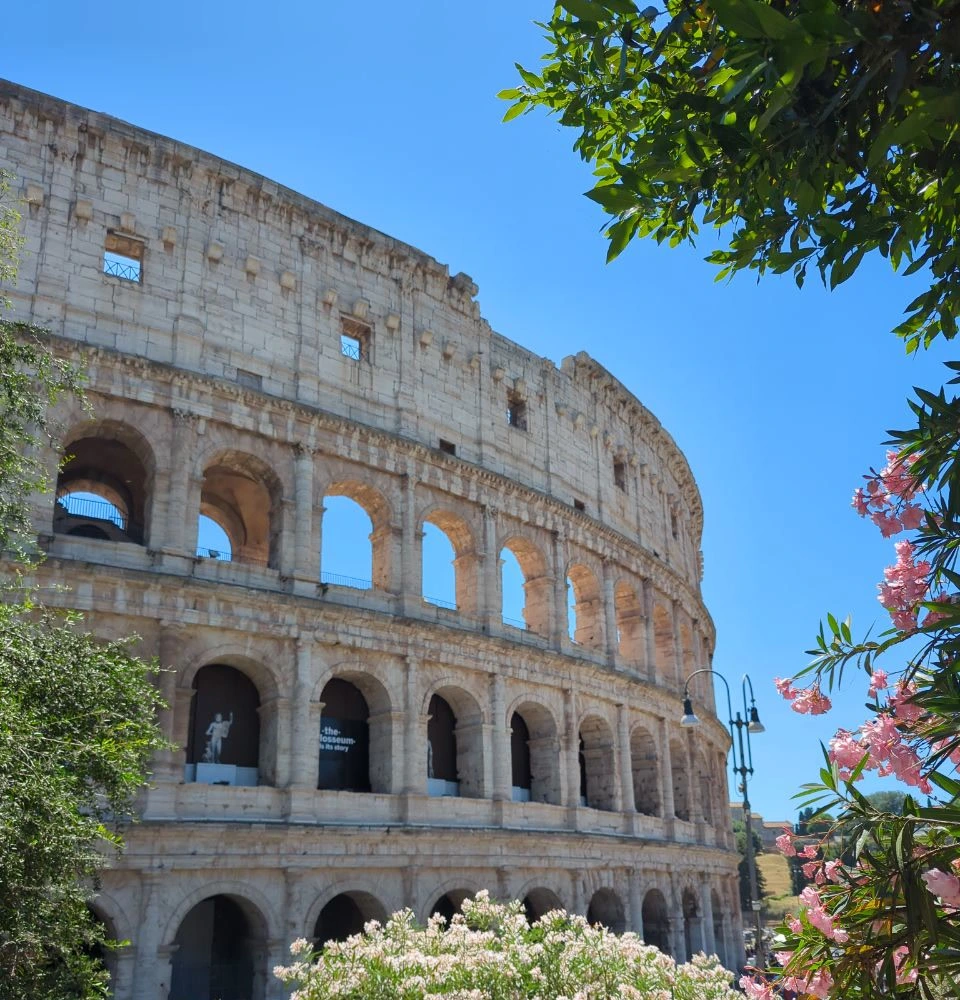
A little distance keeps the Colosseum powerful while leaving space for the two of you to move.
Pantheon and Piazza Navona for a classical wandering story
The Pantheon's columns, portico and huge doors give the first frames structure. Then the surrounding lanes bring the camera closer: cobbles, ochre walls, old shutters, café edges and small changes of light. Piazza Navona opens the story again with fountains, façades and a long view through the square.
That alternation is what makes the route so useful for couples. You can begin with a composed architectural portrait, walk and talk through the streets, then finish somewhere more open. The moments between the landmarks are not dead travel time. They are often where shoulders drop, jokes return and photographs begin to feel like the two of you rather than two people visiting a monument. Our Pantheon and Piazza Navona photo route shows how those architectural and street scenes connect.
Choose this part of Rome if you like elegant architecture but do not want the session to feel too formal. It has enough visual variety for a full hour, especially when the route stays tight. It is a public, active centre, so the atmosphere will include residents, visitors and café life. That can be part of the warmth rather than a problem to remove.
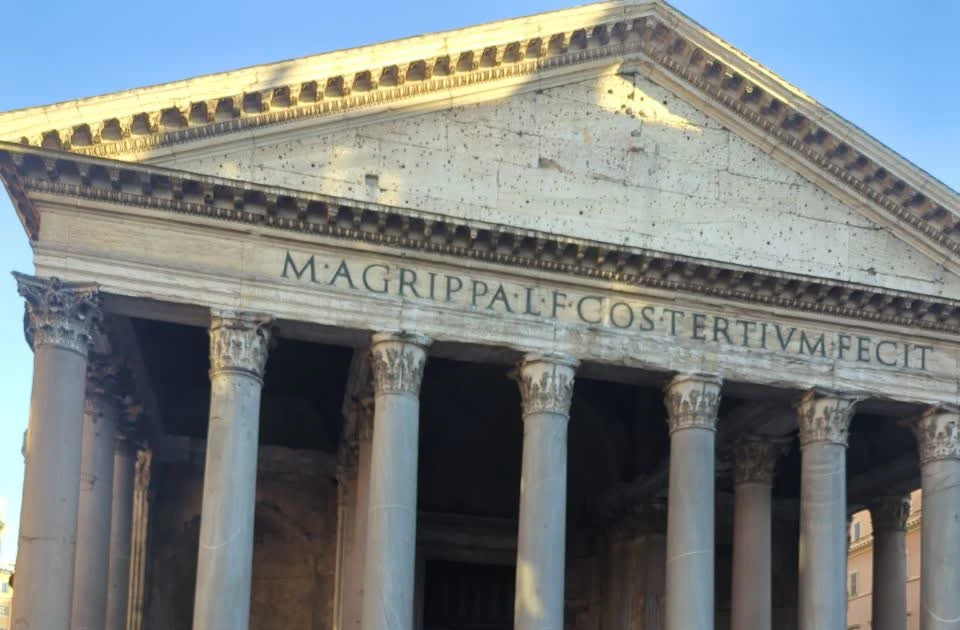
In central Rome, the walk between landmarks can carry as much feeling as the landmarks themselves.
Trastevere when the way you move is the story
This is often the easiest match for couples who say they are not comfortable posing. You have something natural to do: walk, turn a corner, look into a window, stop for an espresso or make each other laugh while the photographer follows the movement. A hand on a shoulder or a glance across the street can carry the photograph because the background supports the moment without demanding attention.
The neighbourhood is not a private film set. Deliveries, scooters, residents and restaurant preparations belong to its character. Some lanes may be calm for a minute and busy the next. That lived-in quality is exactly why Trastevere feels different from Trevi or the Colosseum. The aim is not to empty it, but to find pockets of space and use the energy well.
Choose Trastevere if your version of romance is playful, textured and a little less polished. It also works when you prefer a later start and do not need every photograph to contain a famous monument. The finished gallery still feels deeply Roman, just through colour, street life and closeness rather than a headline view. Our Trastevere photoshoot guide helps you turn that mood into a compact neighbourhood walk.
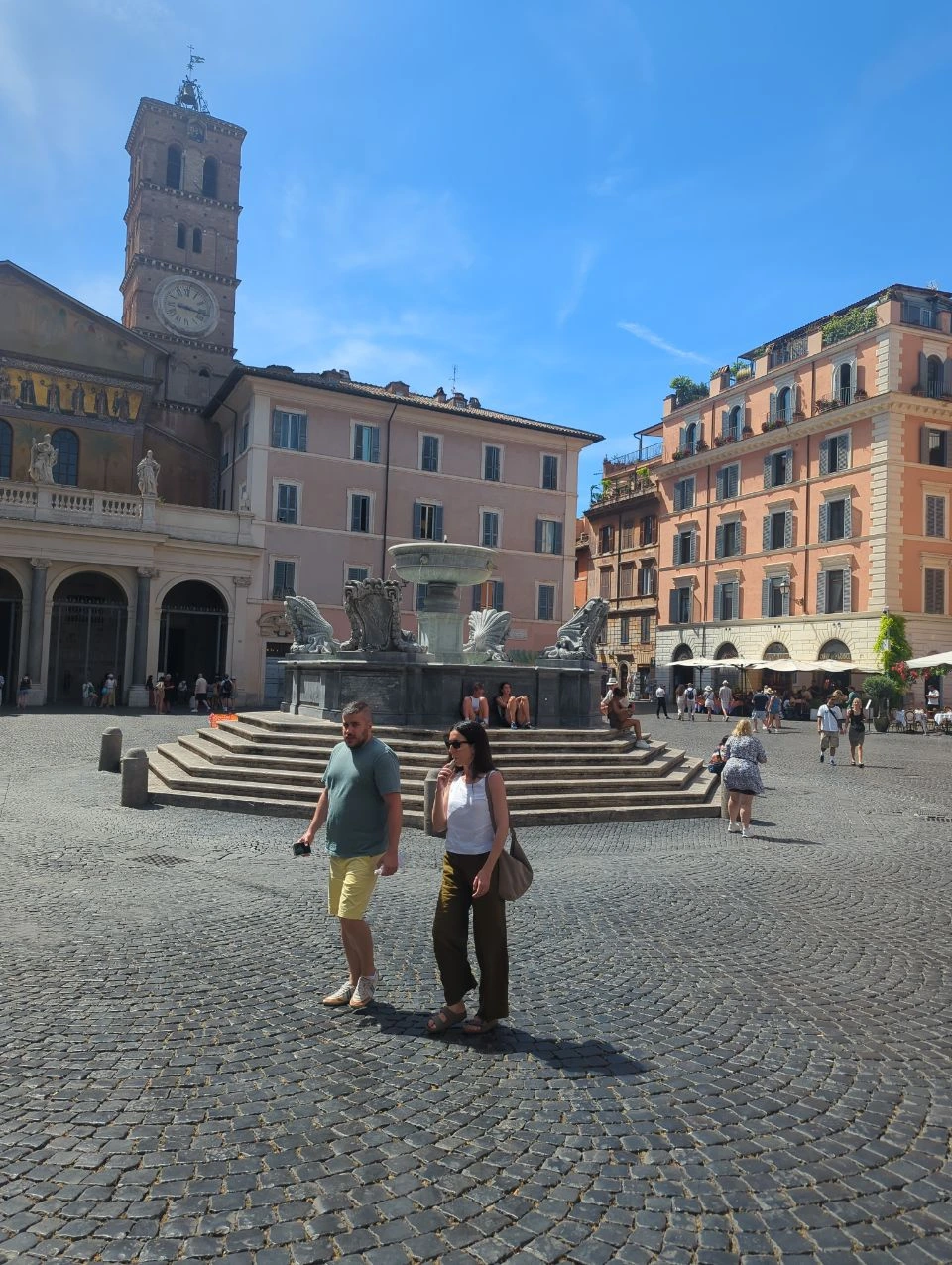


Which Rome couple photoshoot style feels like you?
Save this guide to compare Colosseum scale, central piazzas, Trastevere streets, Villa Borghese greenery and sunset views before choosing your session.
Save on Pinterest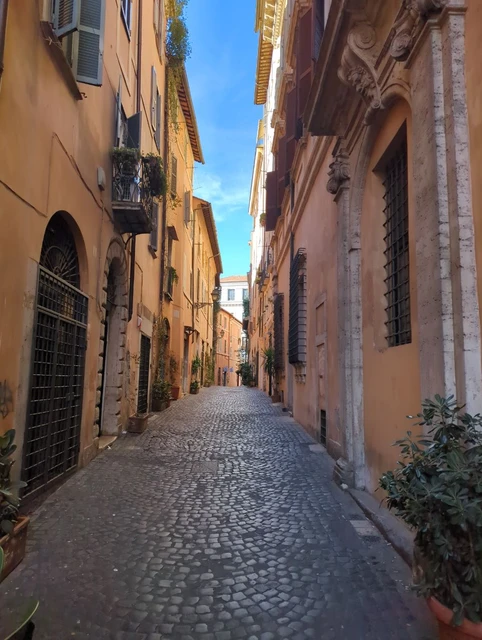
Villa Borghese when romance feels unhurried
This location suits couples whose best moments happen after they have had time to settle. You can walk side by side, sit for a while, talk beneath the trees and let the session move gently between open paths and closer portraits. Benches and shaded areas can make pauses part of the experience rather than an interruption.
It is a particularly good choice when comfort matters. Perhaps one of you is pregnant, you want to wear shoes that are not made for long cobbled routes, or you simply dislike the idea of hurrying from one central icon to another. The park still involves walking, and not every surface or access point is identical, so the exact meeting place and route should match your needs. If you are planning pregnancy portraits, our Rome maternity and babymoon photoshoot guide adds the comfort and arrival decisions to check.
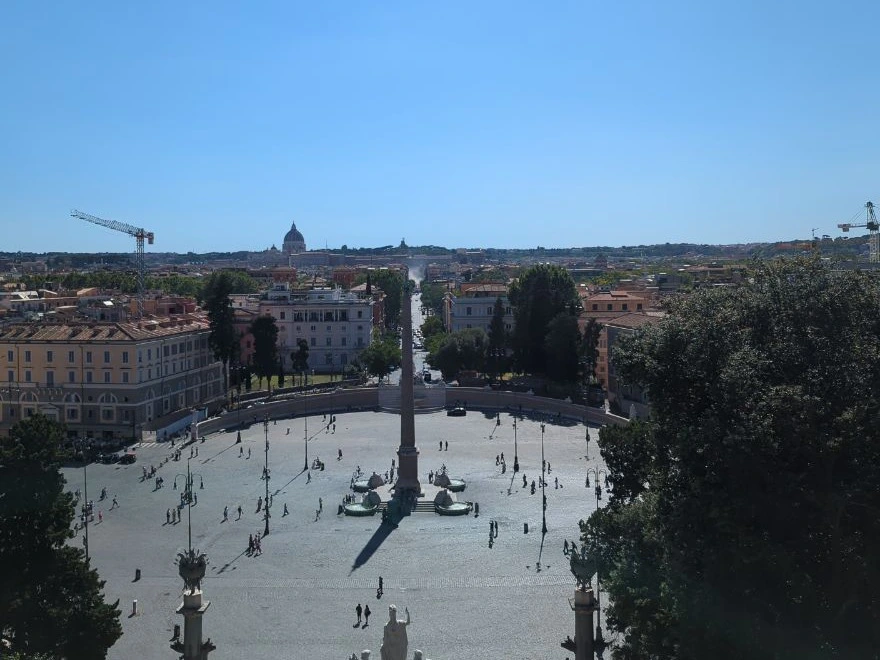
Pincio can add a panoramic opening or finish. It overlooks Piazza del Popolo and connects naturally with the park, giving you rooftops and skyline before the gallery becomes greener and more intimate. The levels, ramps and small stairways around the viewpoint are worth considering if you want the gentlest possible route.
Choose Villa Borghese when your romance feels calm, conversational and spacious. It may not shout Rome in every close frame, but the combination of Pincio, classical details, trees and water gives the full gallery a sense of place.
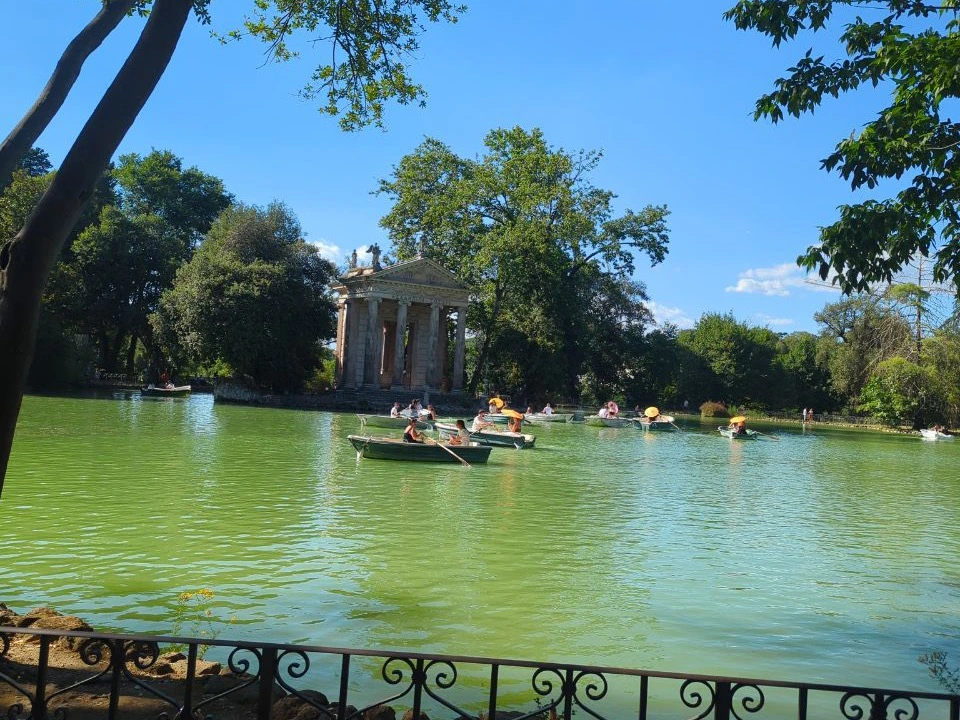
Green paths and places to pause let the session unfold without a cross-city rush.
Sunset viewpoints and river light for closeness
Pincio is the easiest way to combine this feeling with Villa Borghese. The official Rome tourism site highlights its sunset view over the city, and Piazza del Popolo sits dramatically below. Starting in the park and finishing at the terrace can make the light change feel like part of the story. Work backwards from the current park and access times rather than assuming every gate or route stays available all evening.
The Orange Garden on the Aventine offers another romantic visual world: trees, garden paths and a dome-led city view. It can suit couples who want a quieter, more contemplative frame and are happy to build the session around one hill rather than collecting central landmarks. Current opening times matter here too, particularly if the photoshoot sits close to sunset.
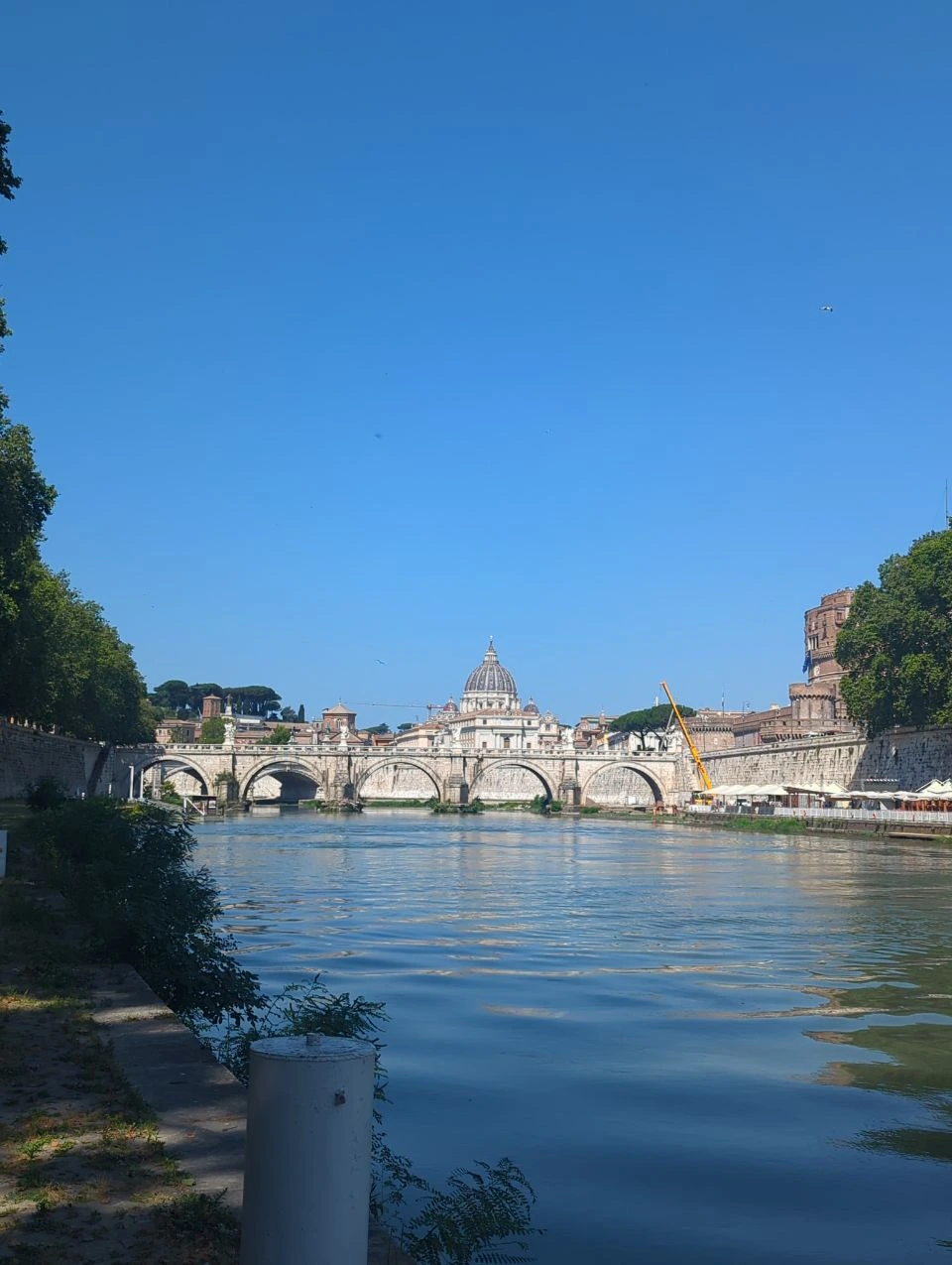
The river offers a different kind of stillness. Around Ponte Sant'Angelo, the bridge lines, angel statues, Castel Sant'Angelo and the Tiber create several connected compositions. Daylight can begin with stone and water, while the deeper evening brings a more cinematic mood. The lower river level, bridge and nearby streets change the angle without asking for a transfer across Rome.
This area suits couples who want architecture and atmosphere but prefer not to centre the session on Trevi. It can feel polished, reflective and unmistakably Roman. Because lighting, river conditions and access can change, treat any illuminated night view as a mood to plan for, not a guaranteed effect. Our Rome evening couple photoshoot guide helps you plan the route and light changes around that final mood.
Choose a sunset viewpoint when you want the photographs to feel expansive but intimate. Choose the river when reflections, bridge lines and evening movement sound more like you. Both work best when you leave enough time to arrive before the most beautiful light rather than chasing it up a hill.
Match 30, 60 or 90 minutes to your Rome couple photoshoot
Thirty minutes is one clear visual idea. Choose a single Colosseum viewpoint, Trevi plus its closest useful street, a focused Trastevere pocket or the bridge-and-river world around Castel Sant'Angelo. There is time for a strong environmental portrait, natural walking and closer photographs, but very little room for a late arrival, long transfer or elaborate outfit change. This is the right choice when you already know the one Rome feeling you want.
Sixty minutes gives one connected area time to become a story. The Pantheon can lead through cobbled lanes to Piazza Navona. Pincio can open into Villa Borghese. A Colosseum viewpoint can connect with nearby Roman streets and Forum layers. In Trastevere, an hour lets you move beyond one photogenic corner and settle into the neighbourhood's rhythm. The backgrounds change while the gallery still feels coherent.
Ninety minutes buys breathing room before it buys more landmarks. The first ten minutes no longer need to produce everything. You can pause, change the pace, wait briefly for a useful opening in a public place or make a small outfit adjustment. It is also the best fit when one of you needs gentler walking, when you want photographs around a proposal before and after the question, or when two compatible visual chapters genuinely matter.
A 90-minute session might combine an ancient-Rome chapter with a short planned transfer to central Baroque Rome. It might also stay in one broad area and simply feel luxurious: Pincio, the park, a pause by the lake and a calm finish. More time does not have to mean more distance.
Look at the minutes you will actually photograph. Rome traffic, taxi availability, cobbles, hills and crowded crossings do not care that a route looked close on a map. If a transfer takes 15 minutes of a 60-minute session, it needs to create something valuable enough to justify losing a quarter of your time together.
Thirty minutes works when the decision is precise. Sixty minutes is the sweet spot for one natural route. Ninety minutes is for a slower experience or a carefully chosen second world. The best duration protects the way you want to feel, because calm photographs rarely come from spending the whole session checking the clock. Compare Rome photoshoot durations with the walking, pauses and visual chapters you want.
Let light and public-space energy refine the choice
Early central Rome can offer softer light and better odds of working freely around Trevi, the Spanish Steps, the Pantheon and the Colosseum. The city is still public and active, even at sunrise, but the atmosphere often feels gentler than later in the day. If you love famous architecture and do not mind an early alarm, the trade can be worthwhile.
Street-led sessions can become more interesting as Rome wakes. Trastevere gains café life, movement and a lived-in pulse. Piazza Navona can feel warmer when the city is present around you. By the river or at a viewpoint, later light may matter more than having the cleanest possible background.
Privacy is different from emptiness. No public Rome location can promise either. A quieter camera position, a park path or a side street may help you feel less watched, but another person can still enter the scene. A good photographer works with timing, angle and patience, then lets some city energy remain when it adds to the story.
Weather deserves a flexible plan as well. Arches, porticoes, tree cover and connected streets can give a route places to adapt, but they are not a guarantee of staying dry. Choose a visual world with several useful corners and agree on a practical weather decision before the session.
Let the photoshoot become part of your Rome date
After an early Trevi or Pantheon session, find breakfast and order the thing you would normally talk yourselves out of. Leave Trastevere with nowhere urgent to be and stay for coffee or lunch. Follow a Villa Borghese walk with a slow afternoon in the park. Finish at Pincio or by the river, then turn the evening into aperitivo or dinner.
That small ritual changes the memory. The photoshoot stops feeling like an appointment squeezed into Rome and becomes part of the day you shared there. Years later, the pictures may bring back the coffee, the walk and the ridiculous joke just as clearly as the landmark behind you.
Plan a couple session that feels like you
Choose your Rome, then enjoy it together
Share your date, favourite location style and the way you want the session to feel. We'll help shape an easy couple photoshoot around you.
Rome Couple Photoshoot Location Questions
Quick answers about locations, privacy, timing, duration, routes and what to wear.
The best place is the one that matches how you are together. Choose the Colosseum for ancient scale, Trevi for Baroque drama, Pantheon and Piazza Navona for an elegant walking story, Trastevere for playful street photographs, Villa Borghese for a calm green pace or a viewpoint for quiet skyline moments.
The Colosseum works better when you want wide frames, ancient stone and a powerful sense of scale. Trevi works better when you want water, sculpture and lively central-Rome theatre. Both are public and popular, so the strongest choice is the atmosphere you prefer rather than the landmark you think you ought to collect.
Yes, especially when your idea of romance is warm, playful and lived-in. Its doors, ivy, ochre walls, cafés and narrow lanes make walking and conversation part of the photographs. It is an active neighbourhood rather than a private set, which gives the gallery character but calls for flexible angles.
No public location in Rome guarantees privacy. Park paths, quieter street pockets and carefully chosen viewpoint angles may feel less exposed than Trevi or a central piazza, particularly when timed thoughtfully. Tell your photographer if feeling observed worries you so the route can favour movement, side positions and places with more breathing room.
Early sessions can give you softer energy and better odds around famous central locations. Later sessions suit street life, river atmosphere and sunset viewpoints. The best time depends on the setting you choose, the light you love and whether an early start would help or hurt the experience.
It is technically possible in a longer session with planned transfers, but it creates three different visual worlds and uses valuable time in transit. Most couples get a more coherent, relaxed gallery by choosing one hero area and adding variety through nearby streets, views or gardens.
Choose 30 minutes for one precise setting, 60 minutes for one connected route and 90 minutes for a slower pace or a carefully chosen second chapter. If you are unsure, 60 minutes usually gives enough time to relax and create variety without turning the session into a city tour.
Dress for the location, walking surface and season before thinking about trends. Flowing or polished outfits can hold their own against the Colosseum or Trevi, while softer textures often suit parks and streets. Wear shoes you can genuinely walk in, or bring a comfortable pair for the transitions, and coordinate colours without dressing identically.


Our Rome Shoots:
Book your Rome Photographer!
Start BookingWhat to Wear for a Rome Photoshoot: An Outfit That Moves With You
Villa Borghese Family Photoshoot Guide: Toddlers, Lake and a Pincio Finish
Trevi Fountain Photoshoot Guide: Sunrise, Crowds and the Pantheon Route
Trastevere Photoshoot Guide: Streets, Colour and Quiet Corners
Sunrise or Sunset for a Rome Photoshoot?
Spanish Steps Photoshoot Guide: Choose Your Route, Light and Pace
ENJOY $20 OFF
Your first photoshoot when you become an email subscriber.
Related Articles
What to Wear for a Rome Photoshoot: An Outfit That Moves With You
Choose a Rome photoshoot outfit that feels like you, reads clearly beside the city and moves comfortably through cobbles, seasons and the real route.
Villa Borghese Family Photoshoot Guide: Toddlers, Lake and a Pincio Finish
A relaxed Villa Borghese family photoshoot with toddler-friendly space, a calm lake chapter and Rome spreading out below you from Pincio.
Trevi Fountain Photoshoot Guide: Sunrise, Crowds and the Pantheon Route
Plan a Trevi Fountain photoshoot with clear advice on sunrise, crowds, access and the beautiful walking route to the Pantheon.